Colorado Notice of Dishonored Check - Civil - Keywords: bad check, bounced check
Understanding this form
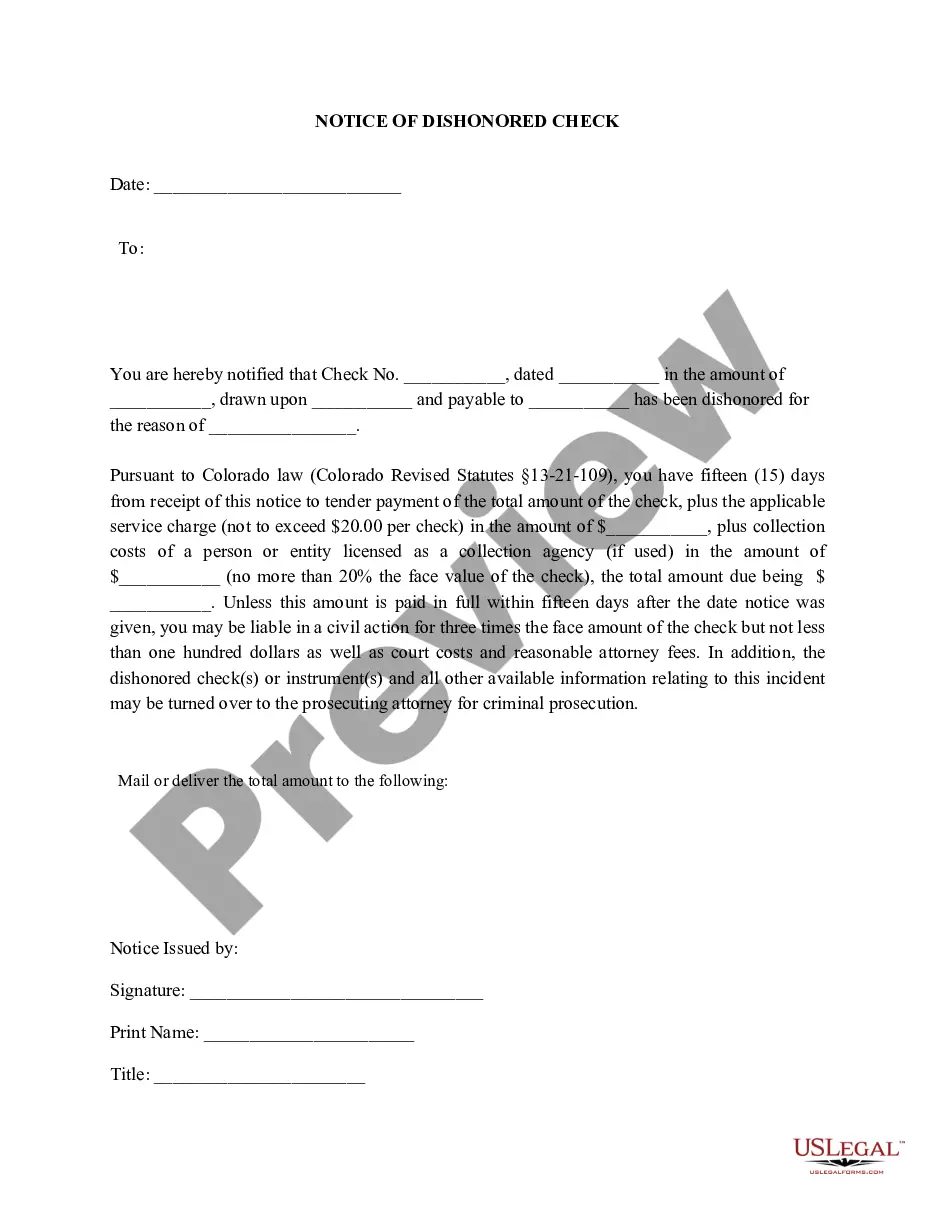
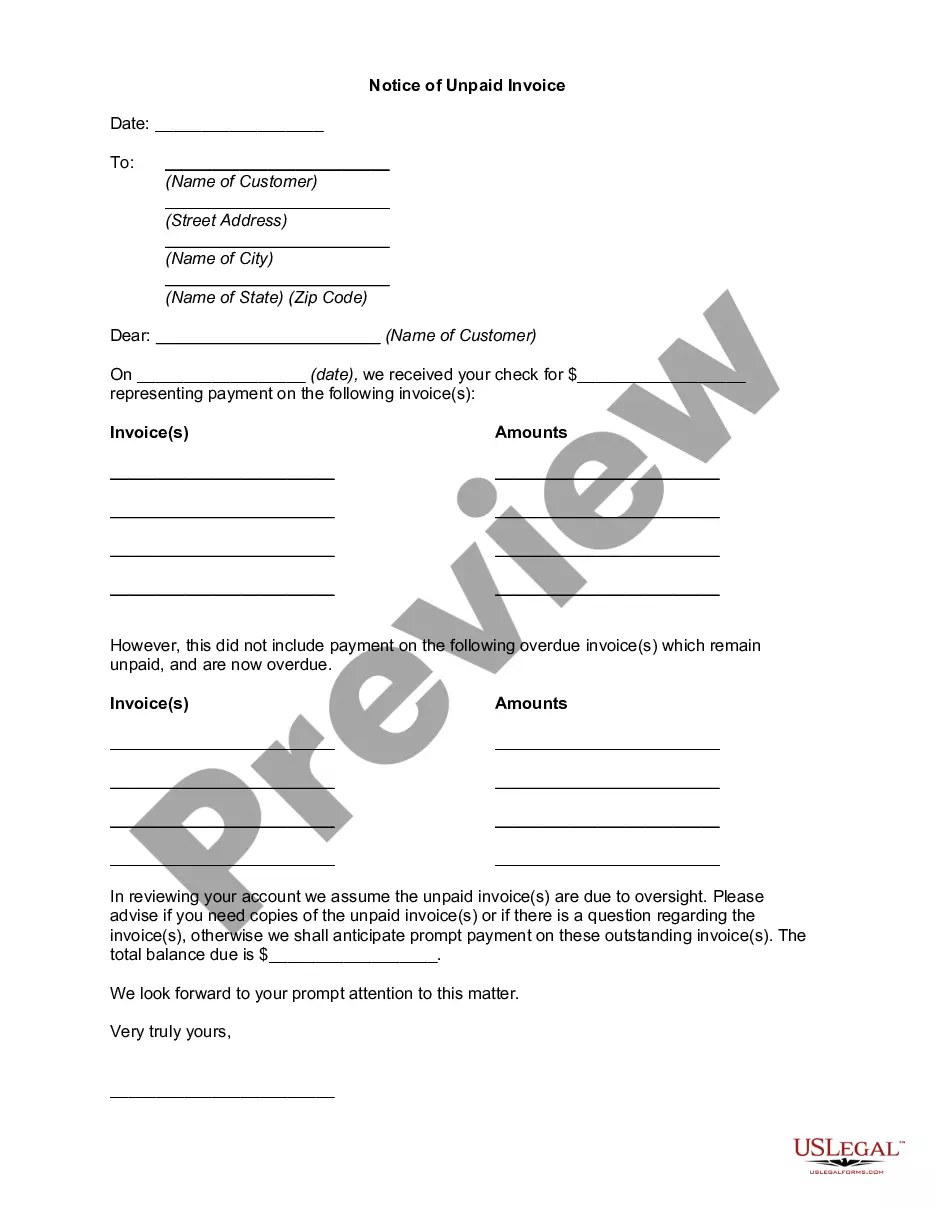
This Notice of Dishonored Check - Civil is a formal notification served to inform a debtor that a check they issued has been dishonored or bounced due to insufficient funds or a non-existent account. This form is crucial for businesses and individuals in managing bad check situations, allowing them to document and address the issue legally before pursuing further recovery actions.
Key components of this form
- Debtor's name and contact information.
- Details of the dishonored check, including the check number and amount.
- Date on which the check was presented for payment.
- Statement indicating the reason for dishonor (e.g., insufficient funds).
- Instructions on how the debtor can remedy the situation.


Situations where this form applies
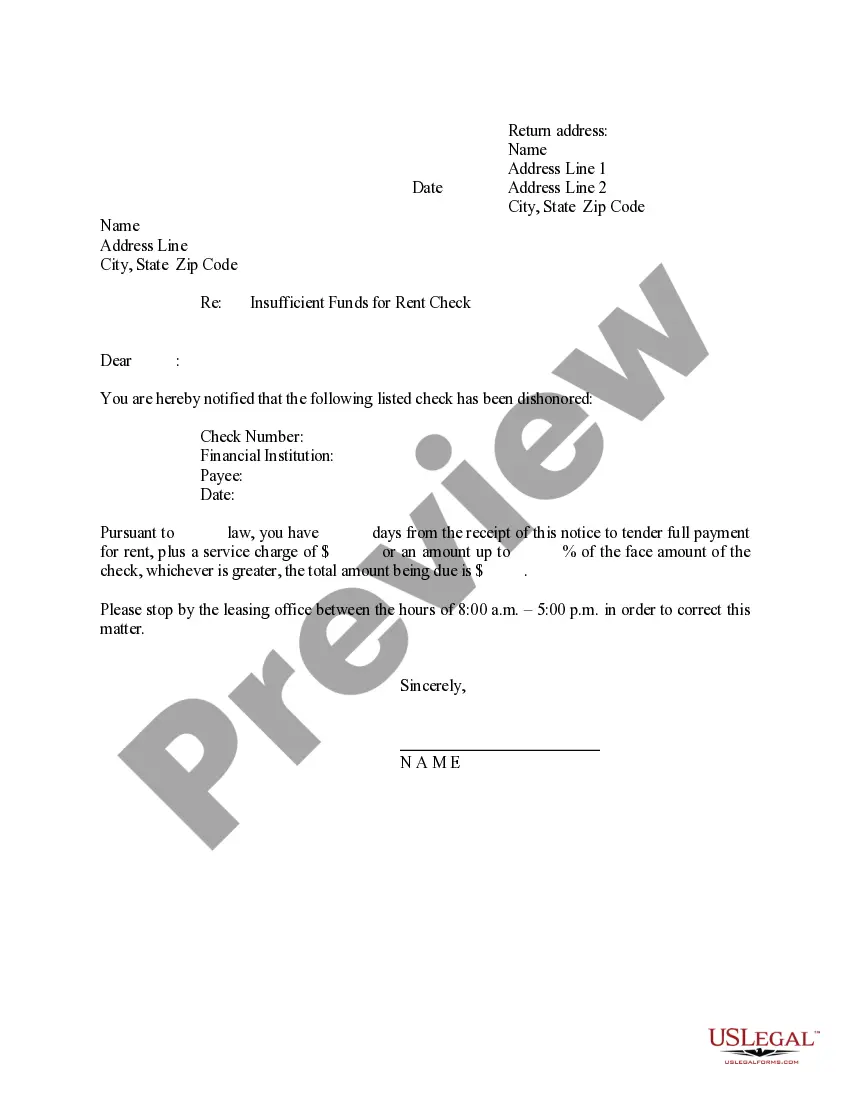
This form should be used when a check received has bounced, meaning that it cannot be cashed due to a lack of sufficient funds in the debtor's account or because the account is closed. It is typically used in business transactions or personal situations where payment via check was expected, and is necessary for notifying the debtor to ensure they are aware of the issue and provide an opportunity for repayment.
Who this form is for
This form is intended for:
- Business owners who have received a bad check from a customer.
- Individuals who have accepted a check that has bounced.
- Collections agencies acting on behalf of creditors.
How to prepare this document
- Identify the debtor's full name and address.
- Enter the details of the dishonored check, including the amount and check number.
- Specify the date when the check was presented for payment.
- Clearly state the reason for the check's dishonor.
- Add any necessary instructions or deadlines for repayment.
Does this document require notarization?
Notarization is generally not required for this form. However, certain states or situations might demand it. You can complete notarization online through US Legal Forms, powered by Notarize, using a verified video call available anytime.
Get your form ready online
Our built-in tools help you complete, sign, share, and store your documents in one place.
Make edits, fill in missing information, and update formatting in US Legal Forms—just like you would in MS Word.
Download a copy, print it, send it by email, or mail it via USPS—whatever works best for your next step.
Sign and collect signatures with our SignNow integration. Send to multiple recipients, set reminders, and more. Go Premium to unlock E-Sign.
If this form requires notarization, complete it online through a secure video call—no need to meet a notary in person or wait for an appointment.
We protect your documents and personal data by following strict security and privacy standards.

Make edits, fill in missing information, and update formatting in US Legal Forms—just like you would in MS Word.

Download a copy, print it, send it by email, or mail it via USPS—whatever works best for your next step.

Sign and collect signatures with our SignNow integration. Send to multiple recipients, set reminders, and more. Go Premium to unlock E-Sign.

If this form requires notarization, complete it online through a secure video call—no need to meet a notary in person or wait for an appointment.

We protect your documents and personal data by following strict security and privacy standards.
Common mistakes
- Failing to include all relevant details of the dishonored check.
- Not sending the notice via a method that provides proof of delivery.
- Using vague language that may confuse the debtor about the seriousness of the situation.
Why complete this form online
- Convenient access to legally drafted forms that meet local requirements.
- Editable templates allow customization to fit specific situations.
- Immediate download saves time and reduces paperwork hassles.
Legal use & context
- This form serves as official notice for the dishonored check and can be used in future legal proceedings if necessary.
- It aids in documenting the attempt to collect payment before escalating to court actions.
Quick recap
- The Notice of Dishonored Check serves as a formal communication of a bounced check.
- It is essential for initiating the process of recovering owed funds.
- Key components include debtor information and details about the dishonored transaction.
Looking for another form?
Form popularity
FAQ
The term 'bounced check' originates from the action of the check being 'bounced' back to the issuer by the bank. This occurs when the funds are lacking for the transaction to proceed. Knowing this terminology can be beneficial, especially when dealing with bad checks, and it highlights the importance of referencing the Colorado Notice of Dishonored Check - Civil for any legal implications.
Yes, a returned check is synonymous with a bounced check. In both cases, the bank does not process the check for reasons such as insufficient funds. If you find yourself dealing with a returned check situation, the Colorado Notice of Dishonored Check - Civil can guide you on the proper steps to take, ensuring you understand your rights regarding bad checks.
The terms 'bounced cheque' and 'dishonored cheque' essentially refer to the same situation; however, 'bounced cheque' is often used in everyday conversation. Both indicate that a check was not accepted by the bank due to issues like insufficient funds. Being aware of these terms can help you address issues with bounced checks effectively and leverage the Colorado Notice of Dishonored Check - Civil when necessary.
Another common name for a dishonored check is a bad check. This term highlights the implications for the issuer and the recipient. If you're navigating issues with bad checks, consider resources such as the Colorado Notice of Dishonored Check - Civil to understand your rights and obligations.
A dishonored check is often referred to as a bounced check because it 'bounces back' to the issuer when the bank refuses to honor it. This refusal typically occurs due to insufficient funds in the account. Understanding the term is key, especially when dealing with the legal aspects under Colorado Notice of Dishonored Check - Civil, particularly if you're managing bad checks or bounced checks.
A check may be returned for reasons such as insufficient funds, a closed account, or a request from the account holder to stop payment. These returns are typically noted on your bank statement, which can affect your financial standing. If you find yourself facing a bounced check, it is crucial to address the issue promptly. Using a platform like uslegalforms can guide you through the process of managing a Colorado Notice of Dishonored Check - Civil effectively, ensuring you take the right steps moving forward.
A bank can dishonor a check for several reasons, including if the account has insufficient funds, if the check has been altered, or if the signature does not match the account holder's records. Additionally, if the check is stale-dated or post-dated, the bank may refuse to honor it. Knowing the specific circumstances that lead to a bounced check can help you avoid these situations. Consider consulting resources like the Colorado Notice of Dishonored Check - Civil to gain further insights and protect your interests.
A check can be dishonored due to insufficient funds in the account, a closed account, or a stop payment order issued by the account holder. When a bank cannot process the check, it is marked as a bad check or bounced check. This situation can occur for various reasons, and it often leads to the need for a Colorado Notice of Dishonored Check - Civil, which can outline the necessary steps to resolve the issue. Understanding these causes can help you manage your finances better and prevent future problems.
A check might be returned or dishonored due to several circumstances. Common reasons include insufficient funds, wrong or mismatched signatures, or improper endorsements. Furthermore, if the account is closed, the bank will also refuse to honor the check. Understanding these scenarios can help you maintain proper financial practices and avoid a Colorado Notice of Dishonored Check - Civil.
When a check is dishonored, it signifies that the bank could not process it for payment. This can occur for multiple reasons, such as insufficient funds, a closed account, or incorrect details on the check. A dishonored check often leads to legal implications, including the issuance of a Colorado Notice of Dishonored Check - Civil. Being informed about these terms helps you navigate potential financial disputes effectively.