California Letter from Landlord to Tenant as Notice of Default on Commercial Lease
Understanding this form
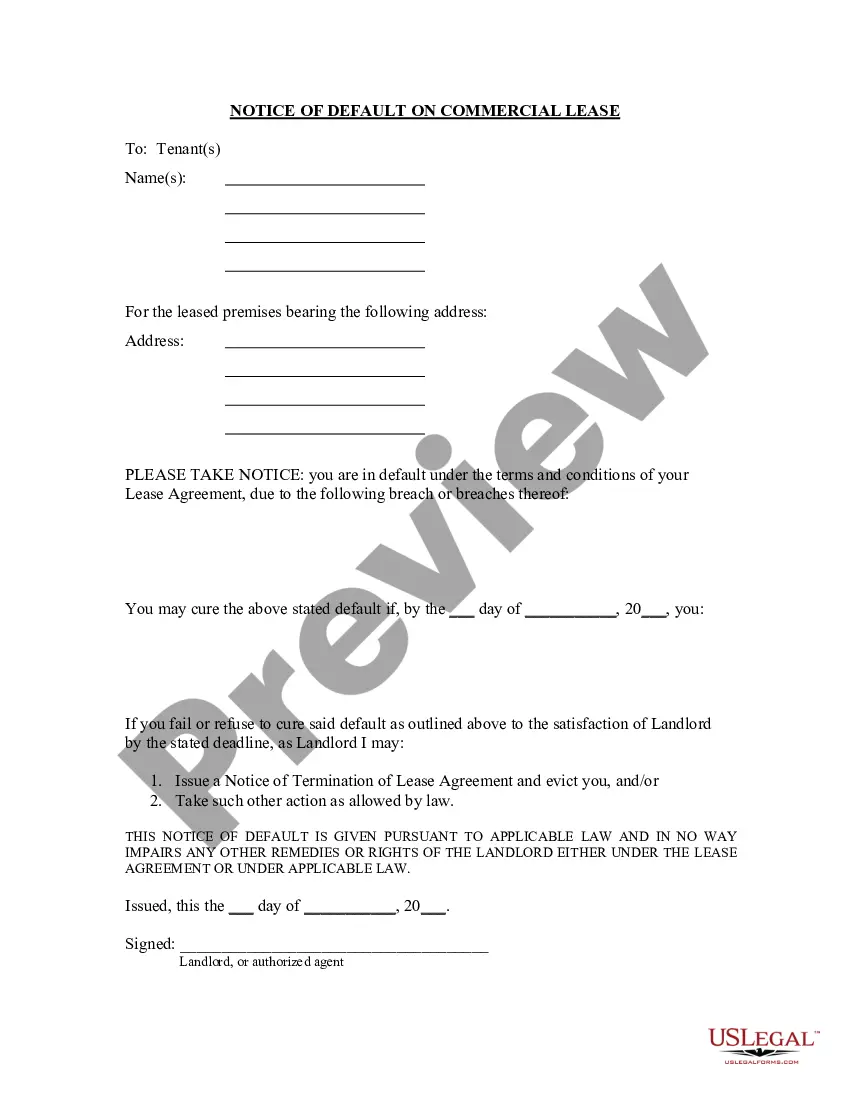
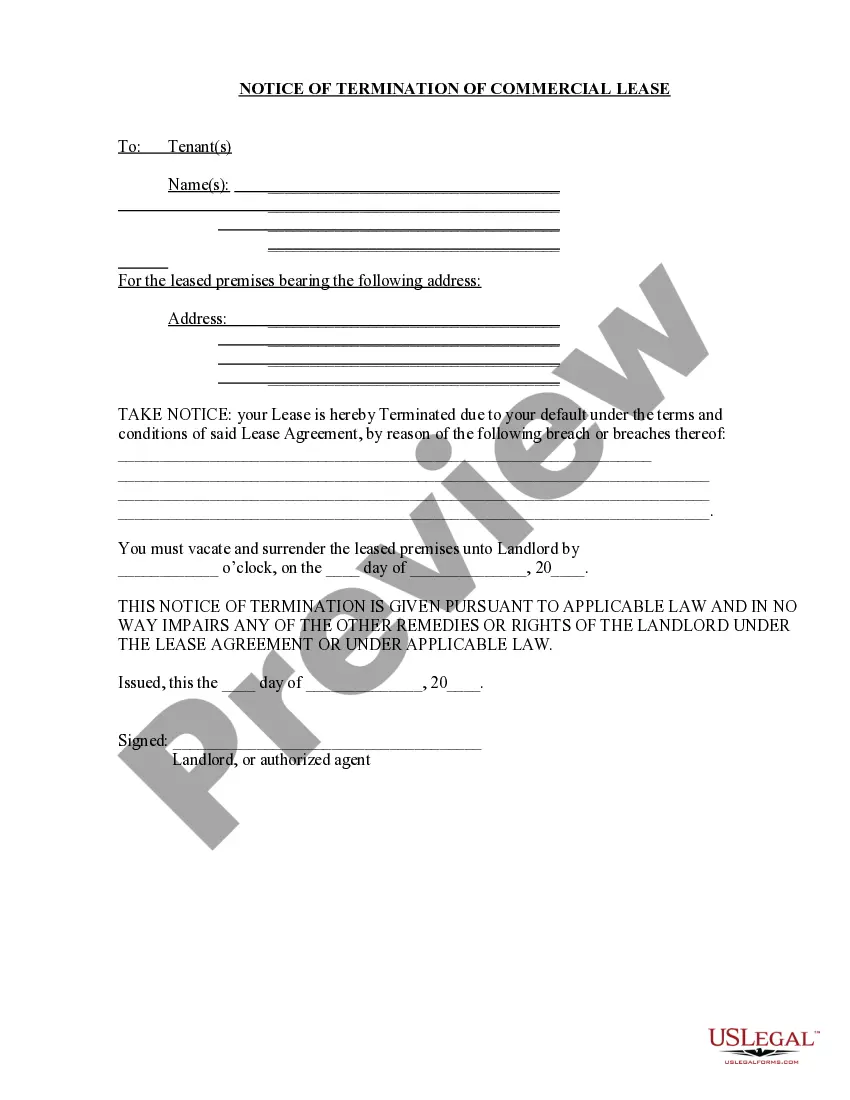
The Letter from Landlord to Tenant as Notice of Default on Commercial Lease is a formal communication from a landlord to a tenant. Its purpose is to inform the tenant of specific breaches of the lease agreement and to specify a deadline for remedying these breaches. Unlike general eviction notices, this letter serves as a warning and an opportunity for the tenant to correct the issues before further action is taken, such as eviction. This form is essential for landlords to ensure legal compliance before pursuing eviction or other remedies under the law.
Main sections of this form
- Identification of the tenant and landlord.
- Specific breaches of the lease agreement identified by the landlord.
- Deadline for the tenant to remedy the breaches.
- Consequences if the tenant fails to comply with the notice.
- Signature of the landlord or authorized agent.


Common use cases
This form should be used when a landlord needs to formally notify a tenant of a default on their commercial lease, such as failure to pay rent or not adhering to other lease terms. It is crucial to issue this notice before taking further legal action, such as eviction proceedings. Using this letter can provide the tenant with the opportunity to fix any issues while also protecting the landlord's rights under the lease agreement and applicable laws.
Who can use this document
- Commercial landlords who need to address specific lease breaches with tenants.
- Property management companies acting on behalf of landlords.
- Legal professionals advising landlords in tenant law matters.
How to complete this form
- Identify and fill in the names of the landlord and tenant.
- Specify the details of the breaches of the lease agreement.
- Set a clear deadline by which the tenant must remedy the breaches.
- Include a statement of the consequences if the tenant does not comply.
- Sign and date the letter as the landlord or authorized agent.
Notarization requirements for this form
This form does not typically require notarization unless specified by local law. It is advisable to check local regulations for any additional requirements that may apply to the notice of default in your jurisdiction.
Get your form ready online
Our built-in tools help you complete, sign, share, and store your documents in one place.
Make edits, fill in missing information, and update formatting in US Legal Forms—just like you would in MS Word.
Download a copy, print it, send it by email, or mail it via USPS—whatever works best for your next step.
Sign and collect signatures with our SignNow integration. Send to multiple recipients, set reminders, and more. Go Premium to unlock E-Sign.
If this form requires notarization, complete it online through a secure video call—no need to meet a notary in person or wait for an appointment.
We protect your documents and personal data by following strict security and privacy standards.

Make edits, fill in missing information, and update formatting in US Legal Forms—just like you would in MS Word.

Download a copy, print it, send it by email, or mail it via USPS—whatever works best for your next step.

Sign and collect signatures with our SignNow integration. Send to multiple recipients, set reminders, and more. Go Premium to unlock E-Sign.

If this form requires notarization, complete it online through a secure video call—no need to meet a notary in person or wait for an appointment.

We protect your documents and personal data by following strict security and privacy standards.
Common mistakes to avoid
- Failing to specify the exact breaches clearly.
- Providing an insufficient deadline for the tenant to respond.
- Not signing the notice or including the landlord's name.
- Misunderstanding local laws regarding notice requirements.
Why use this form online
- Easy access to professionally drafted, state-specific templates.
- Saves time compared to drafting a notice from scratch.
- Quick and secure downloading for immediate use.
- Editable fields allow for customization to suit specific needs.
- The notice functions as a formal warning and is an essential step before any eviction processes.
- Failure to follow proper notification procedures may result in delayed or dismissed legal actions.
- Documentation of the notice helps establish a clear timeline and communication record.
Summary of main points
- A Letter from Landlord to Tenant as Notice of Default on Commercial Lease is crucial for formalizing lease violations.
- Prompt issuance can protect the landlordâs rights and facilitate compliance by the tenant.
- Understanding the specific requirements and legal implications is essential for effective use of this form.
Looking for another form?
Form popularity
FAQ
When a business defaults on a lease, the landlord may initiate several actions, including eviction or seeking monetary damages. Initially, the landlord will issue a California Letter from Landlord to Tenant as Notice of Default on Commercial Lease, allowing the tenant to correct the issue, typically within a specified time frame. Failure to resolve the default can lead to further legal action. Understanding the consequences of lease default can help businesses navigate this challenging situation effectively.
The default clause in a commercial lease outlines the circumstances under which a tenant is considered in default of the lease agreement. This usually includes failure to make rent payments or violating lease provisions. When a default occurs, the landlord typically sends a California Letter from Landlord to Tenant as Notice of Default on Commercial Lease to formally notify the tenant. It is essential to review this clause carefully to understand the potential implications.
A commercial lease may become void under various circumstances, such as failure to meet lease terms or illegal activity on the premises. When landlords do not follow proper eviction procedures or fail to provide the necessary California Letter from Landlord to Tenant as Notice of Default on Commercial Lease, this could weaken their position. Additionally, if a lease includes specific conditions that are not upheld, it could render the lease void. It's crucial to understand these elements to avoid future disputes.
For a tenant to default means they have not fulfilled their obligations as outlined in the lease agreement. This can involve unpaid rent or failure to comply with lease terms. Understanding the meaning of tenant default is crucial, as it can result in various legal actions and impact the tenant's business operations.
A commercial tenant default letter is a formal notice sent by a landlord to inform a tenant of a lease violation or overdue payment. This letter typically outlines specific issues and provides a timeline for the tenant to remedy the situation. Utilizing a California Letter from Landlord to Tenant as Notice of Default on Commercial Lease can help landlords ensure proper communication and avoid escalation.
Yes, California landlord-tenant law does apply to commercial leases, but the regulations differ from residential leases. Commercial leases offer more flexibility regarding terms and enforcement. Both landlords and tenants should familiarize themselves with these specific laws to ensure compliance and protect their rights within the commercial context.
If a tenant defaults on a commercial lease, the landlord typically has the right to take action, which can include issuing a default notice. This notice serves as a first step toward potential eviction or lease termination. Tenants should take such notices seriously and consider communicating promptly with their landlord to address the situation.
The landlord default clause outlines the responsibilities of the landlord and specifies what constitutes a default on their part. This may include failure to maintain common areas or not providing essential services agreed upon in the lease. Understanding this clause is essential for tenants, particularly when considering using a California Letter from Landlord to Tenant as Notice of Default on Commercial Lease.
'Tenant default' refers to a situation where the tenant fails to meet the obligations outlined in the lease agreement. This can include non-payment of rent or violating specific lease clauses. Understanding the implications of tenant default is crucial for both parties, as it can lead to serious consequences like eviction or lease termination.
A default notice letter is an official document sent by a landlord to notify a tenant about a failure to adhere to lease terms. In California, this letter serves as a reminder of overdue rent or violations of the lease agreement. When using a California Letter from Landlord to Tenant as Notice of Default on Commercial Lease, it clearly states the issues and provides the tenant with an opportunity to rectify the situation.