California Assignment of Deed of Trust by Individual Mortgage Holder
What this document covers
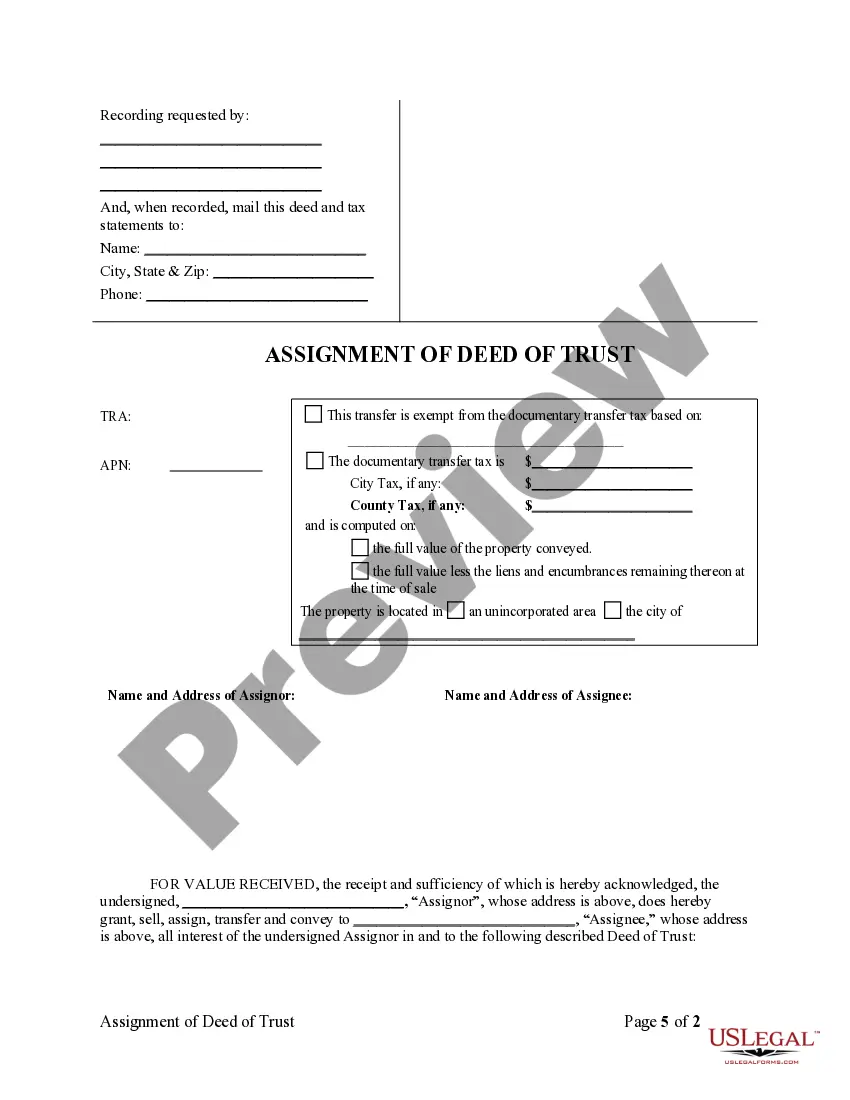
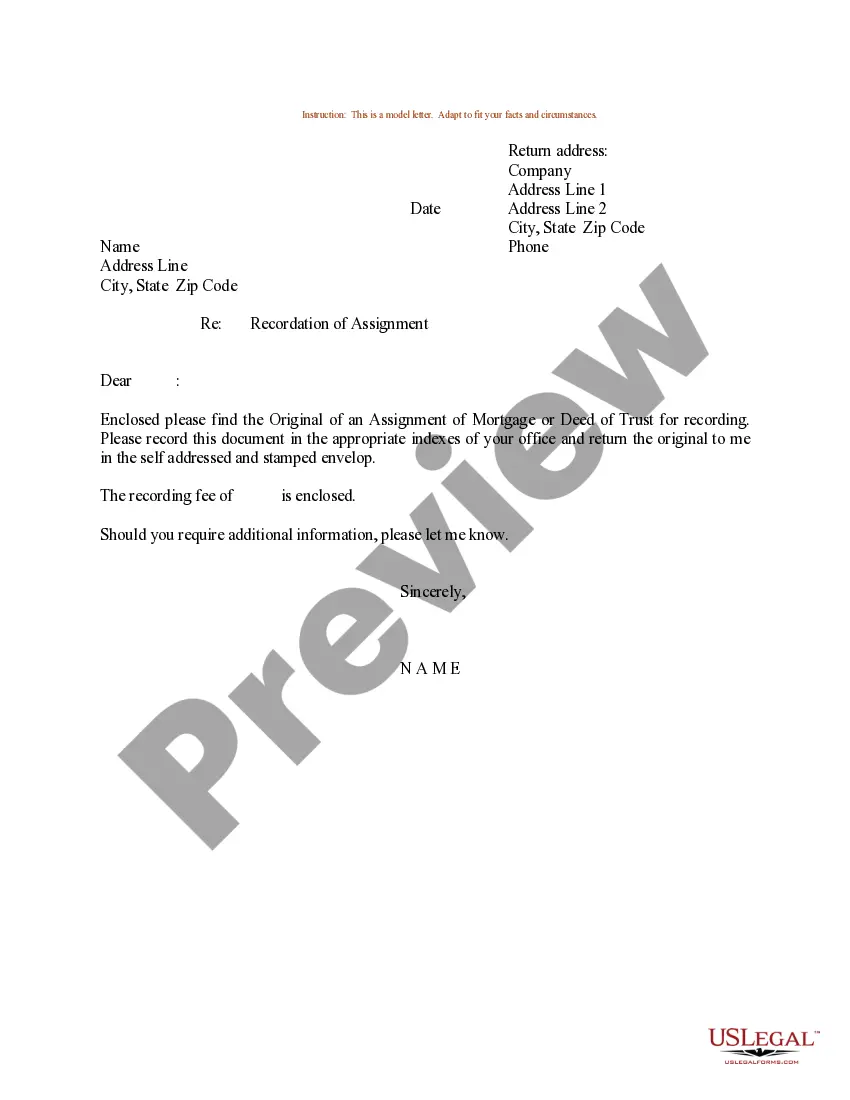
The Assignment of Deed of Trust by Individual Mortgage Holder is a legal document that allows the owner of a deed of trust or mortgage to assign their interest to a third party. This form specifically applies when the current holder is an individual, differentiating it from similar assignments that may involve multiple parties or entities.
Main sections of this form
- Identification of the assignor and assignee
- Description of the property secured by the deed of trust
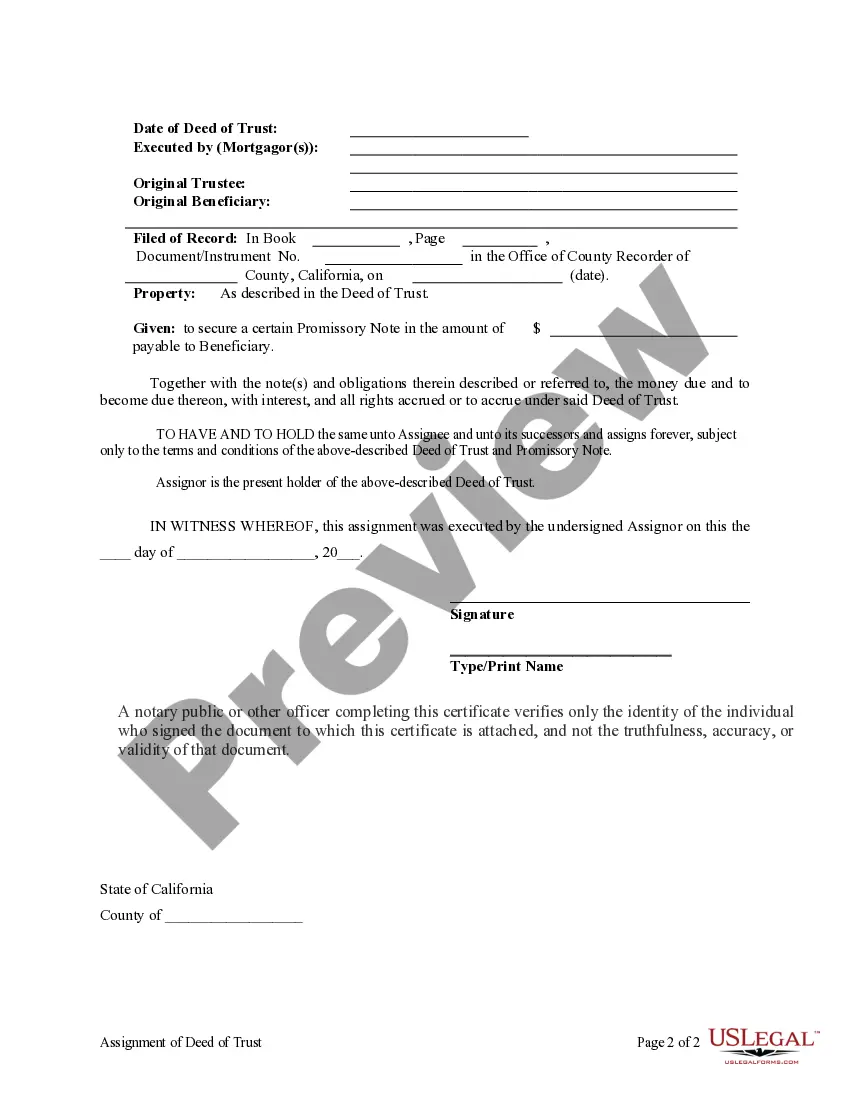
- Details of the original deed of trust or mortgage
- Confirmation of the assignorâs right to assign the deed
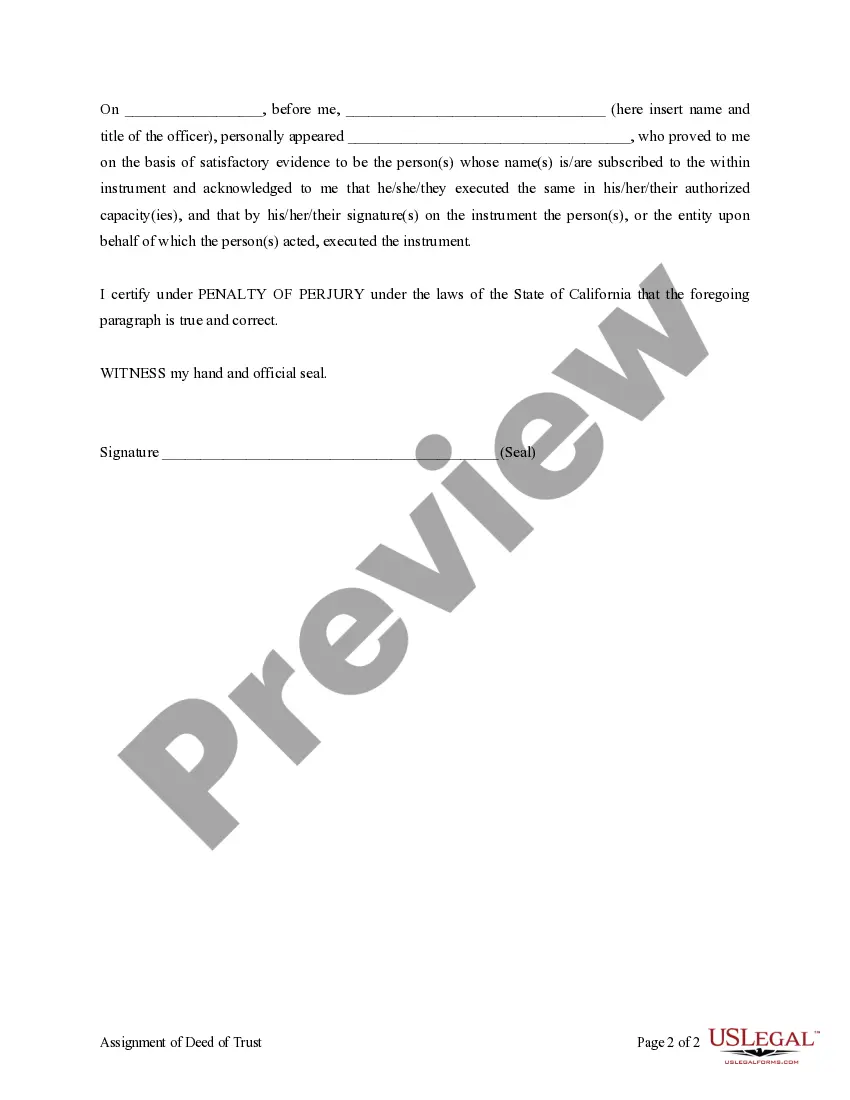
- Signature lines for the assignor and a notary, if required



When to use this form
This form is appropriate to use when an individual mortgage holder wishes to transfer their interest in a deed of trust to another party. Common situations include selling the mortgage, refinancing, or facilitating estate planning by transferring ownership of financial interests in real property.
Who can use this document
- Individual mortgage holders looking to assign their deed of trust
- Investors purchasing mortgages or deeds of trust
- Estate executors managing the transfer of property interests
- Legal professionals assisting clients in property transactions
Completing this form step by step
- Identify the assignor (current deed holder) and assignee (new holder).
- Provide a detailed description of the property associated with the deed of trust.
- Reference the original deed of trust, including its date and recording details.
- Ensure the assignor signs the document in the presence of a notary, if required.
- File the completed form with the appropriate local authorities if mandated by local regulations.
Is notarization required?
This form must be notarized to be legally valid. US Legal Forms provides secure online notarization powered by Notarize, allowing you to complete the process through a verified video call.
Get your form ready online
Our built-in tools help you complete, sign, share, and store your documents in one place.
Make edits, fill in missing information, and update formatting in US Legal Forms—just like you would in MS Word.
Download a copy, print it, send it by email, or mail it via USPS—whatever works best for your next step.
Sign and collect signatures with our SignNow integration. Send to multiple recipients, set reminders, and more. Go Premium to unlock E-Sign.
If this form requires notarization, complete it online through a secure video call—no need to meet a notary in person or wait for an appointment.
We protect your documents and personal data by following strict security and privacy standards.
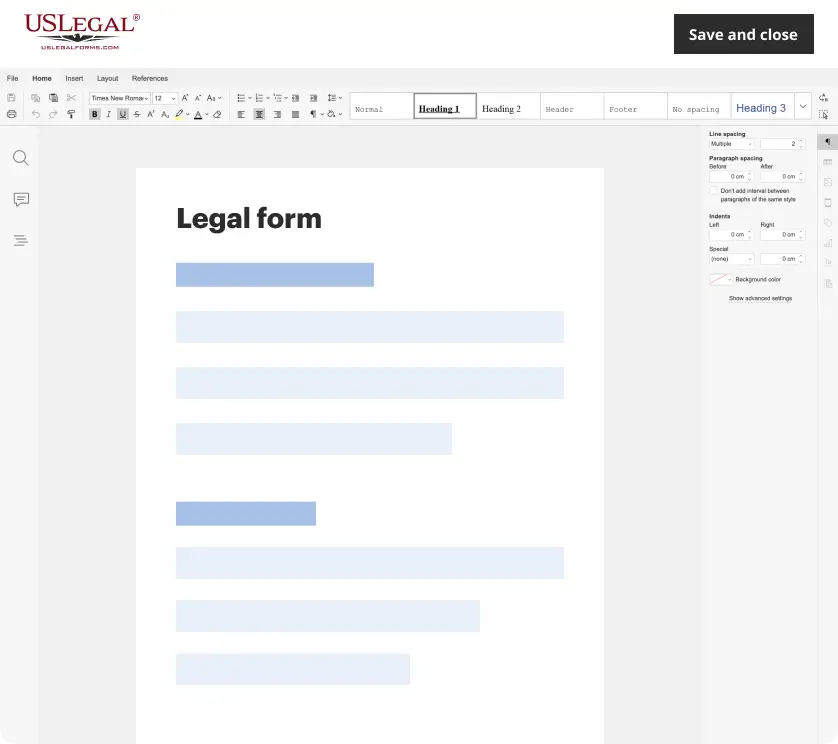
Make edits, fill in missing information, and update formatting in US Legal Forms—just like you would in MS Word.
Download a copy, print it, send it by email, or mail it via USPS—whatever works best for your next step.
Sign and collect signatures with our SignNow integration. Send to multiple recipients, set reminders, and more. Go Premium to unlock E-Sign.

If this form requires notarization, complete it online through a secure video call—no need to meet a notary in person or wait for an appointment.
We protect your documents and personal data by following strict security and privacy standards.
Common mistakes
- Failing to provide complete and accurate property descriptions.
- Not obtaining required signatures or notarization.
- Leaving out important identifying information about the parties involved.
- Not recording the assignment with local authorities when necessary.
Advantages of online completion
- Convenience of downloading and completing the form from home.
- Editability allows you to customize the document as needed.
- Access to forms drafted by licensed attorneys ensures legality and compliance.
Looking for another form?
Form popularity
FAQ
To file a deed of trust in California, start by obtaining a deed of trust form, which you can find through various legal resources or online platforms like USLegalForms. Fill out the form accurately, including all necessary details and signatures. Once completed, submit the deed to the county recorder's office for recording, ensuring your California Assignment of Deed of Trust by Individual Mortgage Holder is properly filed.
Yes, a trust deed must be recorded in California for it to be enforceable against third parties. Recording the deed provides public notice of the ownership and any encumbrances on the property. This step is crucial for protecting your interests as a mortgage holder and ensures your California Assignment of Deed of Trust by Individual Mortgage Holder is legally valid.
A deed of trust may be deemed invalid in California if it lacks essential elements such as the signature of all parties involved or if it was not properly recorded. Additionally, if the trust deed does not meet the legal requirements outlined in California law, it may be challenged. To avoid issues, ensure your California Assignment of Deed of Trust by Individual Mortgage Holder is executed and recorded correctly.
To file a deed in California, begin by obtaining the appropriate form for your deed type. After completing the form, you must sign it in front of a notary public. Then, you will need to submit the deed to the county recorder's office in the county where the property is located. This process ensures that your California Assignment of Deed of Trust by Individual Mortgage Holder is legally recognized.
To transfer property from a trust to an individual in California, you typically must execute a deed from the trustee to the individual. This process requires appropriate documentation to ensure that the transfer is legal and binding, and it may need to be recorded with local authorities. Using services like US Legal Forms can simplify this process by providing the necessary forms and guidance for the California Assignment of Deed of Trust by Individual Mortgage Holder.
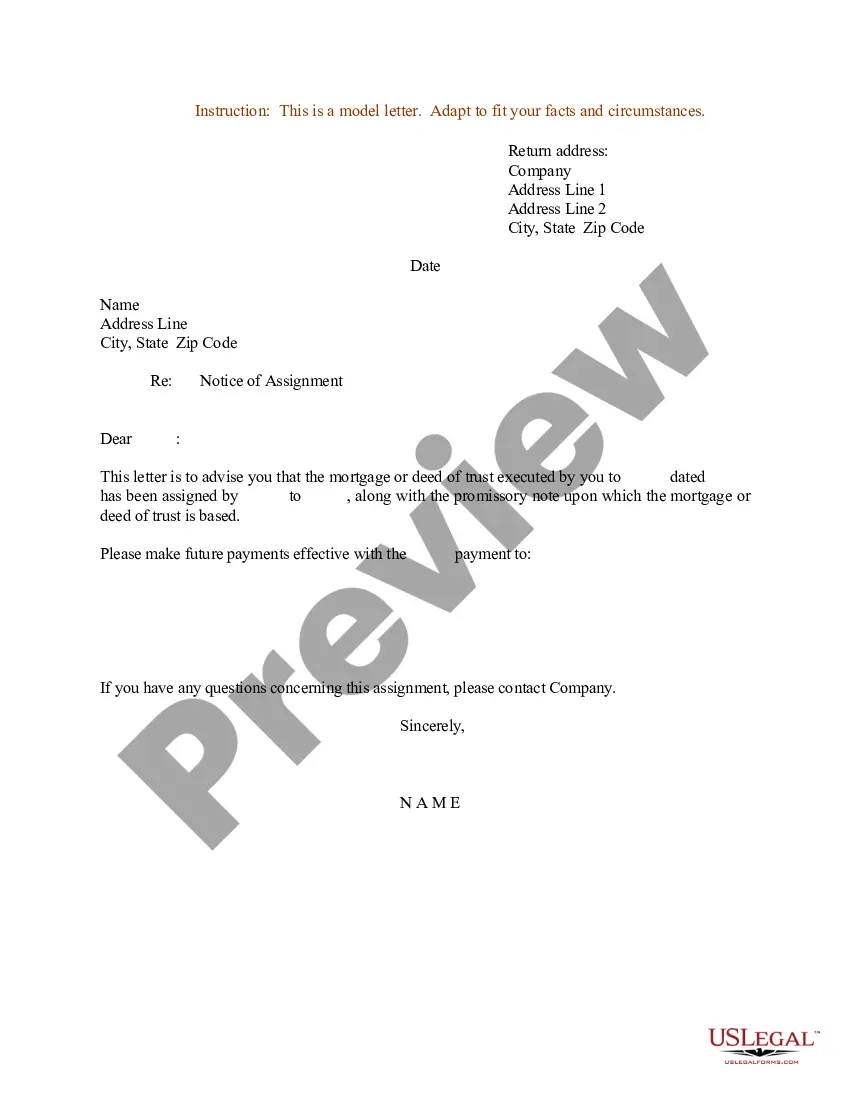
An assignment of a mortgage means that the original lender passes their rights and interests to a new lender. This process may occur for various reasons, including selling the mortgage or renegotiating terms. Understanding your rights regarding the California Assignment of Deed of Trust by Individual Mortgage Holder can empower you to effectively manage your financial obligations and ensure you understand who to contact for payments.
A deed of assignment specifically relates to the transfer of rights under a contract or agreement, while a deed of transfer involves the conveyance of property ownership. In real estate, the distinction is crucial, as each deed carries specific legal implications. Understanding these differences, especially regarding the California Assignment of Deed of Trust by Individual Mortgage Holder, equips you to make informed decisions about your real estate transactions.
An assignment of deed of trust in California refers to the process of transferring interest in a property from one lender to another. This process involves executing an assignment document and typically must be recorded with the county recorder's office. Knowing the implications of the California Assignment of Deed of Trust by Individual Mortgage Holder can help you manage your mortgage effectively and ensure that you remain informed throughout the process.
The assignment of a mortgage is not the same as the deed itself; they serve different roles in real estate transactions. While the deed conveys ownership of property to a buyer, the assignment represents the transfer of the lender's interest. Understanding the nuances between these terms, particularly in the context of the California Assignment of Deed of Trust by Individual Mortgage Holder, can clarify your options when dealing with your mortgage.
The assignment of a mortgage deed of trust occurs when the lender transfers its interest in the property to another party. This transfer helps ensure that the new lender receives the rights to collect payments and enforce security interests. In California, the California Assignment of Deed of Trust by Individual Mortgage Holder often involves a formal process to document this change in ownership. Familiarity with this process can protect your rights as a borrower.