Arizona Amendment of Residential Lease
What this document covers
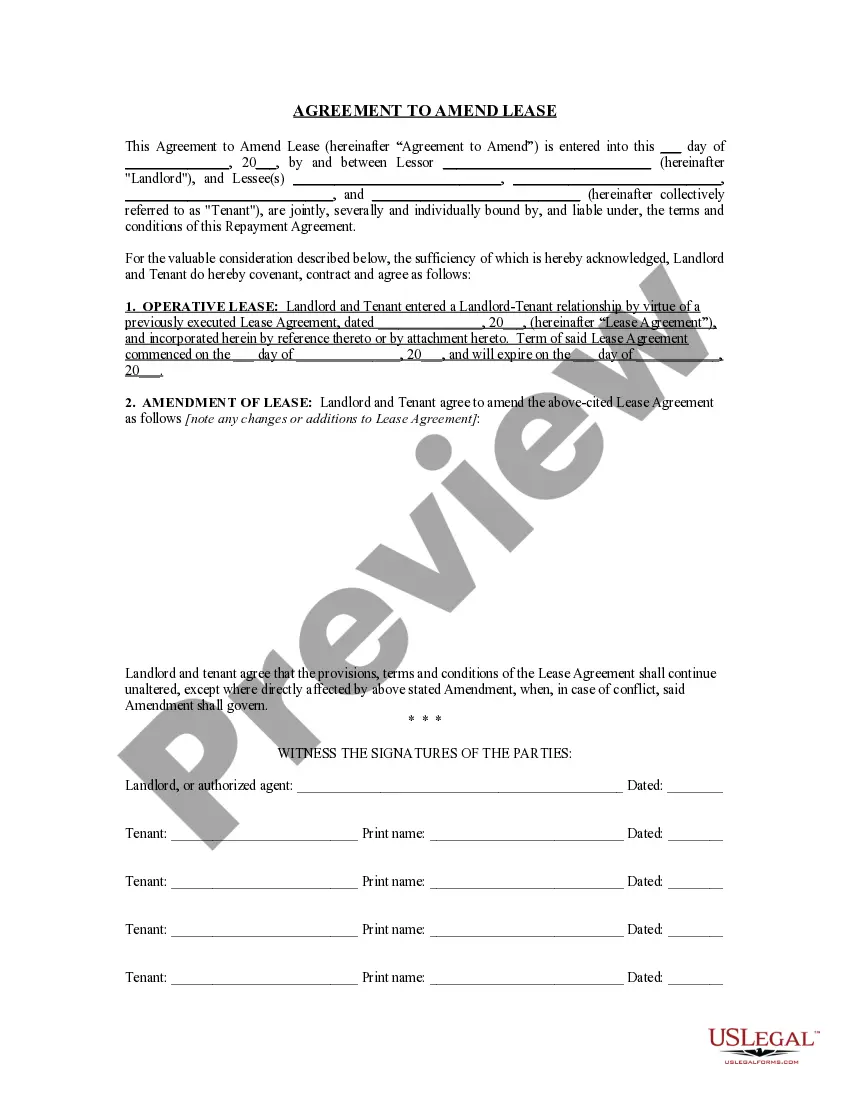
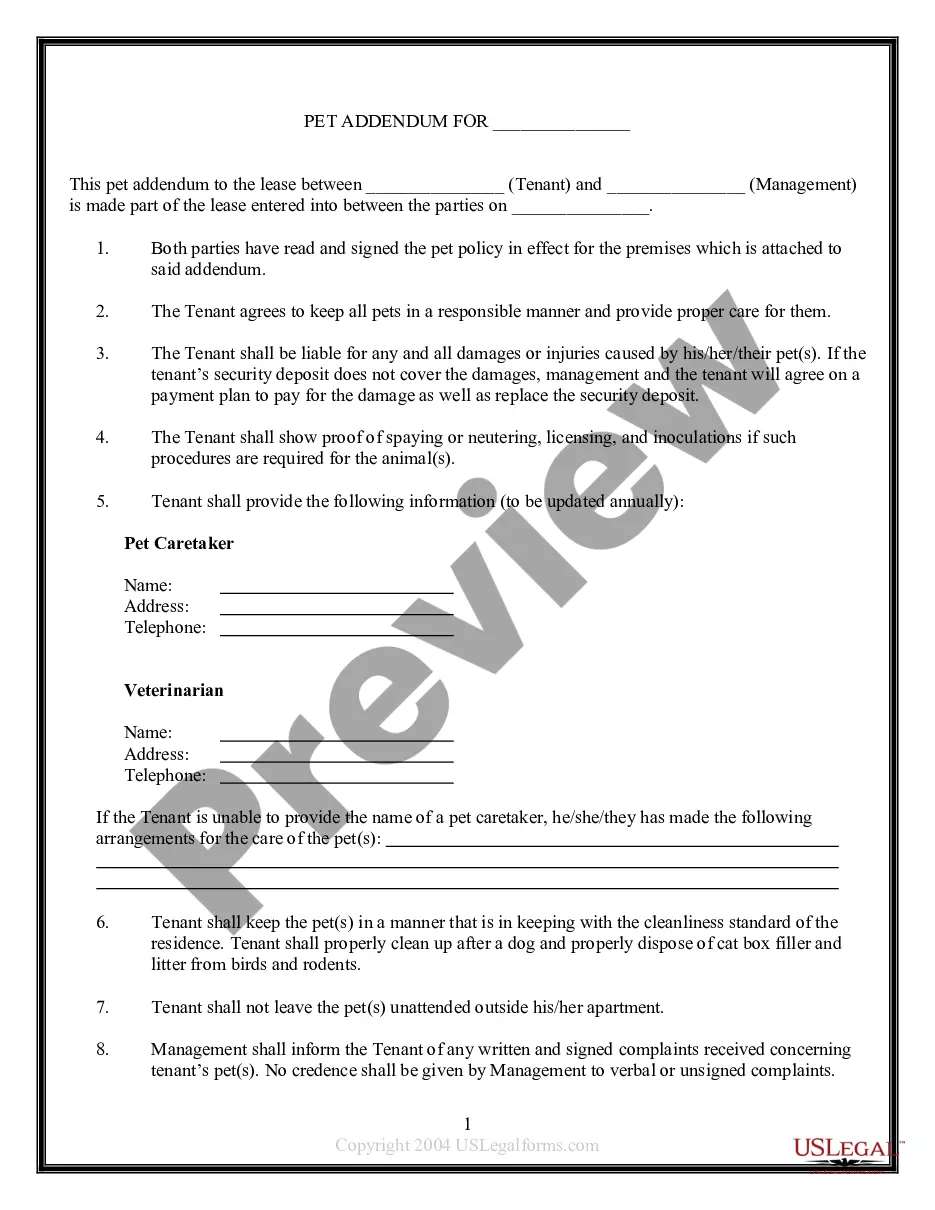
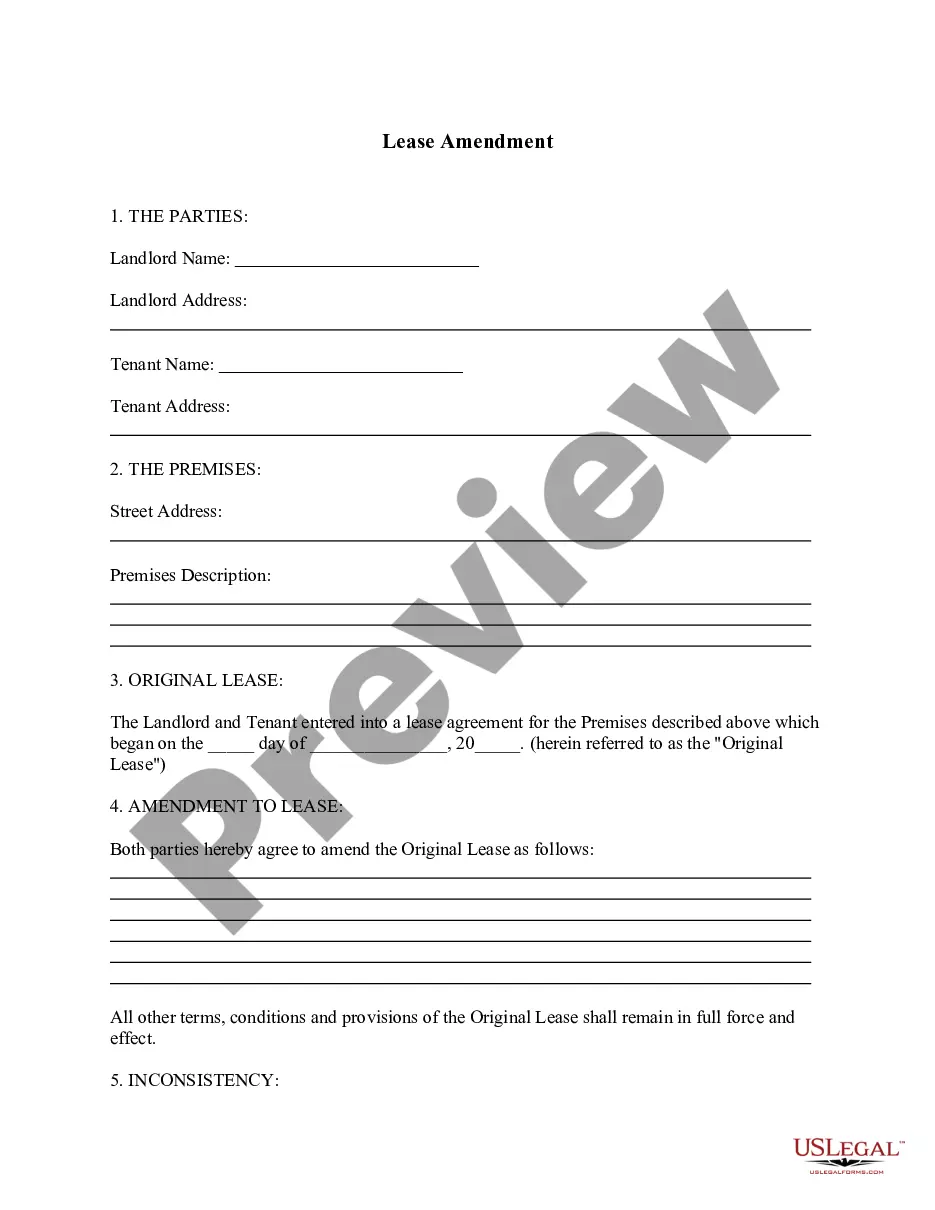
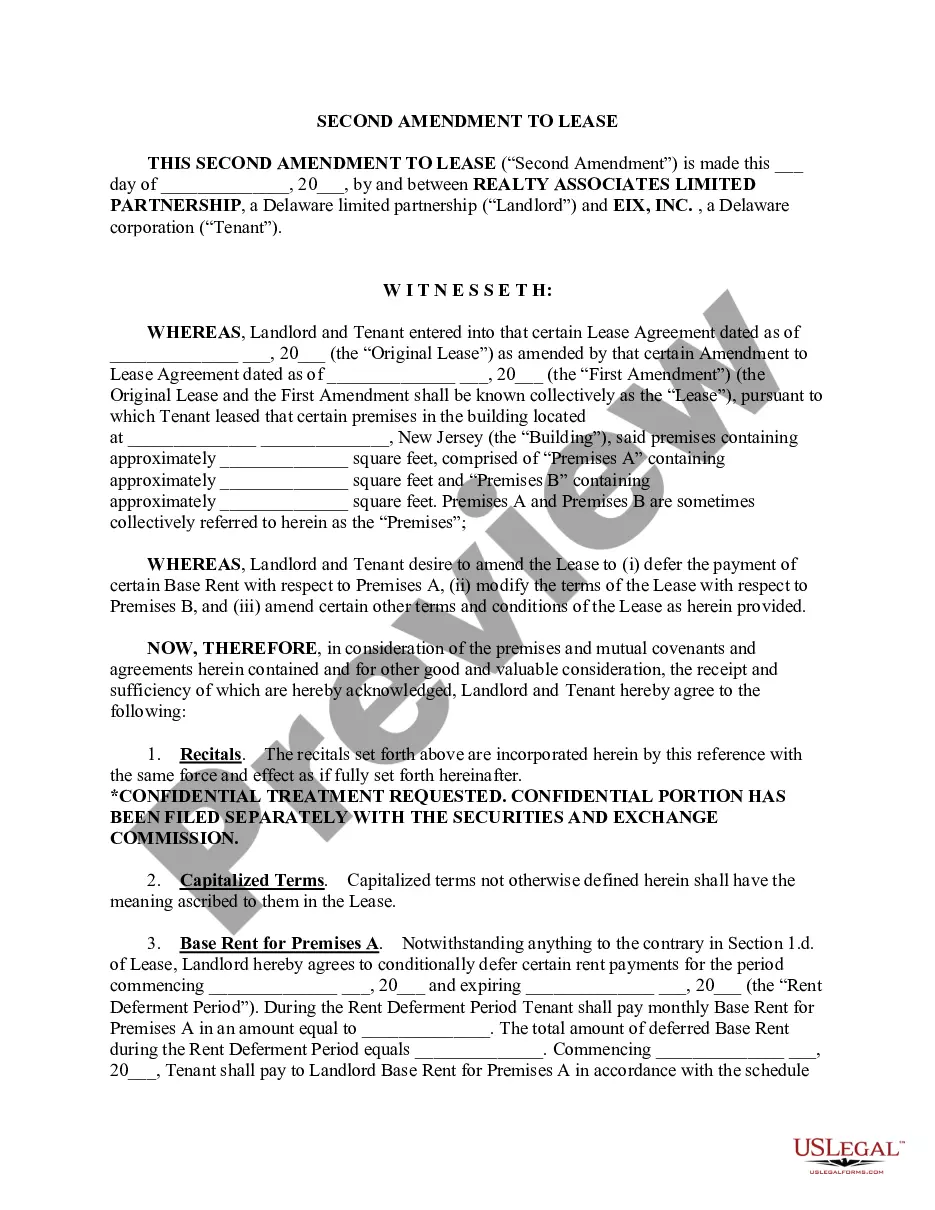
The Amendment of Residential Lease is a legal document used to modify the terms of an existing residential lease agreement. This form allows landlords and tenants to make specific changes, ensuring that both parties are clear on the new arrangements. It differs from a complete lease renewal as it only addresses amendments rather than replacing the entire lease contract.
Key components of this form
- Date of agreement
- Identification of parties (landlord and tenants)
- Reference to the original lease agreement
- Specific amendments being made
- Signatures of all parties involved
Common use cases
This form is useful in various scenarios, such as when landlords and tenants agree to change rental terms like the amount of rent, lease duration, or conditions related to repairs. For example, if the tenant needs to extend their lease or if the landlord wants to increase the rent, an amendment will clearly document these changes.
Who can use this document
This form is intended for:
- Landlords looking to update lease terms
- Tenants who need modifications to their lease
- Real estate professionals assisting clients with lease agreements
- Property management companies managing lease agreements
How to prepare this document
Follow these steps to complete the Amendment of Residential Lease:
- Identify all parties by providing their full names and addresses.
- Clearly state the date of the original lease and the date this amendment is made.
- Refer to the specific terms of the original lease being amended.
- Detail the amendments agreed upon by both parties.
- Ensure all parties sign and date the document to make it legally binding.
Notarization guidance
In most cases, this form does not require notarization. However, some jurisdictions or signing circumstances might. US Legal Forms offers online notarization powered by Notarize, accessible 24/7 for a quick, remote process.
Get your form ready online
Our built-in tools help you complete, sign, share, and store your documents in one place.
Make edits, fill in missing information, and update formatting in US Legal Forms—just like you would in MS Word.
Download a copy, print it, send it by email, or mail it via USPS—whatever works best for your next step.
Sign and collect signatures with our SignNow integration. Send to multiple recipients, set reminders, and more. Go Premium to unlock E-Sign.
If this form requires notarization, complete it online through a secure video call—no need to meet a notary in person or wait for an appointment.
We protect your documents and personal data by following strict security and privacy standards.

Make edits, fill in missing information, and update formatting in US Legal Forms—just like you would in MS Word.

Download a copy, print it, send it by email, or mail it via USPS—whatever works best for your next step.

Sign and collect signatures with our SignNow integration. Send to multiple recipients, set reminders, and more. Go Premium to unlock E-Sign.

If this form requires notarization, complete it online through a secure video call—no need to meet a notary in person or wait for an appointment.

We protect your documents and personal data by following strict security and privacy standards.
Mistakes to watch out for
- Failing to include all tenant names if multiple tenants are involved.
- Not referencing the original lease correctly.
- Leaving out necessary signatures.
- Using vague language that could lead to misunderstandings.
Why complete this form online
- Convenient access to forms eliminates the need for legal consultations for simple amendments.
- Downloadable forms can be easily customized to meet specific needs.
- Reliability of forms drafted by licensed attorneys ensures legal soundness.
Quick recap
- The Amendment of Residential Lease allows for specific modifications to an existing lease agreement.
- It's important for both landlords and tenants to agree on terms and document them clearly.
- Ensure compliance with state-specific legal requirements for enforceability.
Looking for another form?
Form popularity
FAQ
In Arizona, tenants generally are required to give a 30-day notice before the end of a lease unless otherwise specified in the lease agreement. Some landlords may require a 60-day notice, particularly in longer lease agreements, so it is vital to check the terms of your Arizona Amendment of Residential Lease. Knowing your obligations can help avoid complications during your move-out process. If you have questions about notice periods or lease terms, USLegalForms offers helpful templates and guidance.
To break your lease without penalty, you should explore legal grounds permitted by Arizona law, such as a violation of the rental agreement by the landlord or serious personal circumstances. The Arizona Amendment of Residential Lease may offer protection if applied correctly. It is essential to document your situation and give proper notice to your landlord. If you need assistance navigating these waters, consider using USLegalForms for guidance and resources.
The best excuse to break a lease includes valid reasons recognized by the Arizona law, such as domestic violence, uninhabitable living conditions, or a significant change in circumstances. Citing the Arizona Amendment of Residential Lease may strengthen your case when negotiating with your landlord. Always document your reasons and communicate clearly with your landlord to discuss your situation. Resources like USLegalForms can help in drafting communication or legal documents.
To exit a lease early in Arizona, tenants should first review their lease agreement for any early termination clauses. Often, landlords may allow an Arizona Amendment of Residential Lease if both parties agree. Additionally, legal reasons such as job relocation or health issues might provide grounds to terminate the lease. Consulting an attorney or a service like USLegalForms can help clarify options and ensure compliance with state laws.
In Arizona, once a lease expires, tenants typically have a five-day grace period to vacate the premises unless otherwise specified in the lease agreement. If the tenant continues to stay without an updated agreement, they may be considered a holdover tenant, which can lead to legal ramifications. It's crucial to communicate with your landlord or consult the Arizona Amendment of Residential Lease for clarity on your situation. Resources like uslegalforms can assist you in understanding your options moving forward.
A landlord in Arizona cannot take retaliatory action against a tenant for exercising their legal rights, such as reporting safety violations or joining a tenant union. They also cannot unlawfully enter the rental property without prior notice, or discriminate based on protected classes. Familiarizing yourself with the Arizona Amendment of Residential Lease will empower you to recognize unfair practices. You can seek help through platforms like uslegalforms to understand your rights better.
In Arizona, a landlord has the right to refuse to renew your lease, given they provide proper notice. However, they must adhere to the conditions laid out in the Arizona Amendment of Residential Lease to ensure that their actions are legal. This means that they cannot deny renewal based on race, gender, or other protected characteristics. Knowing your rights as a tenant helps you navigate these situations better.
Yes, a landlord can refuse to renew a lease in Arizona, but they must follow specific legal guidelines. Under Arizona law, if the lease is a month-to-month agreement, either party may terminate it with a written notice. For fixed-term leases, the landlord cannot refuse renewal based on discriminatory reasons or retaliation. Understanding the Arizona Amendment of Residential Lease can offer insight into tenant rights and obligations.
An amendment to a lease agreement in Arizona refers to a formal change or addition to the original lease terms. This can include modifications such as rent increases, changes to responsible parties, or adjustments in lease duration. Utilizing an Arizona Amendment of Residential Lease can help clarify these changes and protect the rights of both tenants and landlords.
Yes, a landlord can choose not to renew a lease in Arizona, as long as they comply with the notice requirements outlined in the lease agreement. Tenants should be aware of their rights regarding lease renewals and terminations. In these situations, an Arizona Amendment of Residential Lease might be used to address any points of contention or to negotiate new terms.