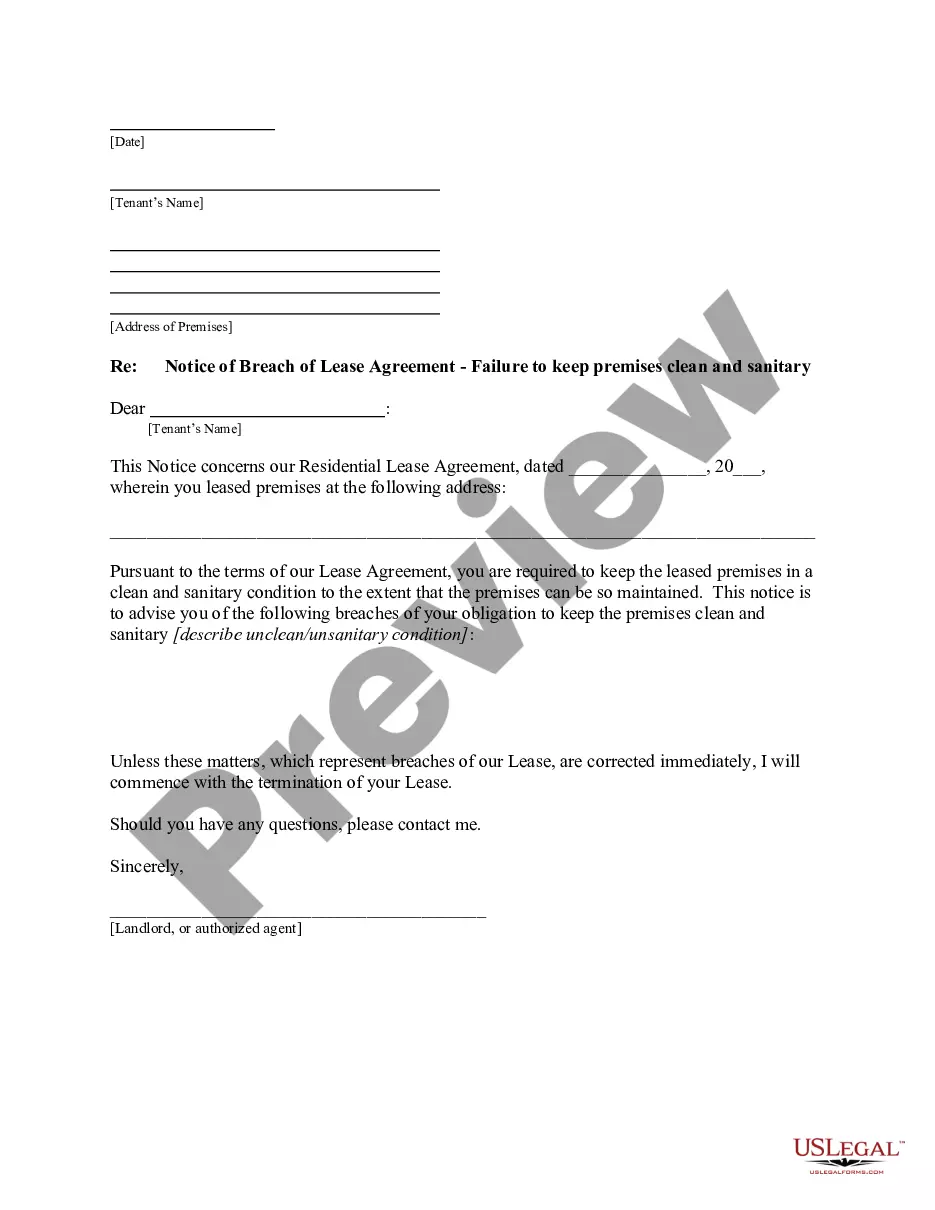
Arizona Residential Lease Renewal Agreement
About this form
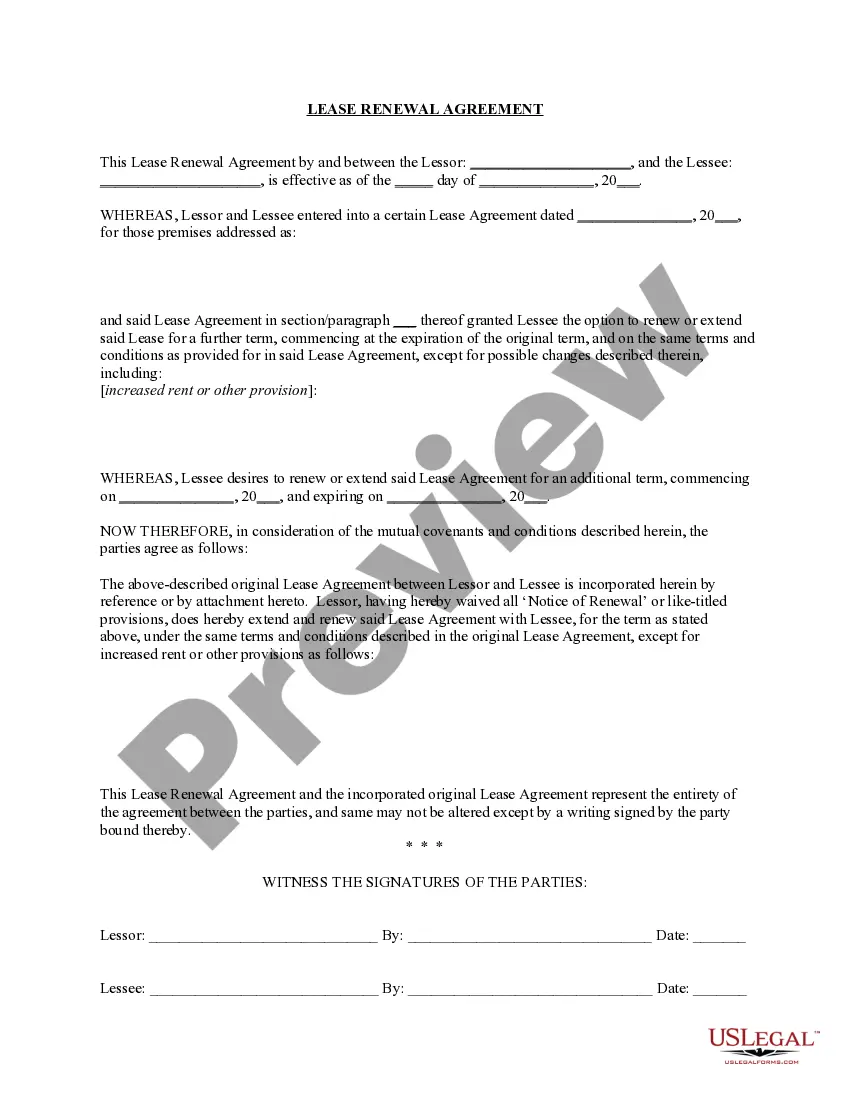
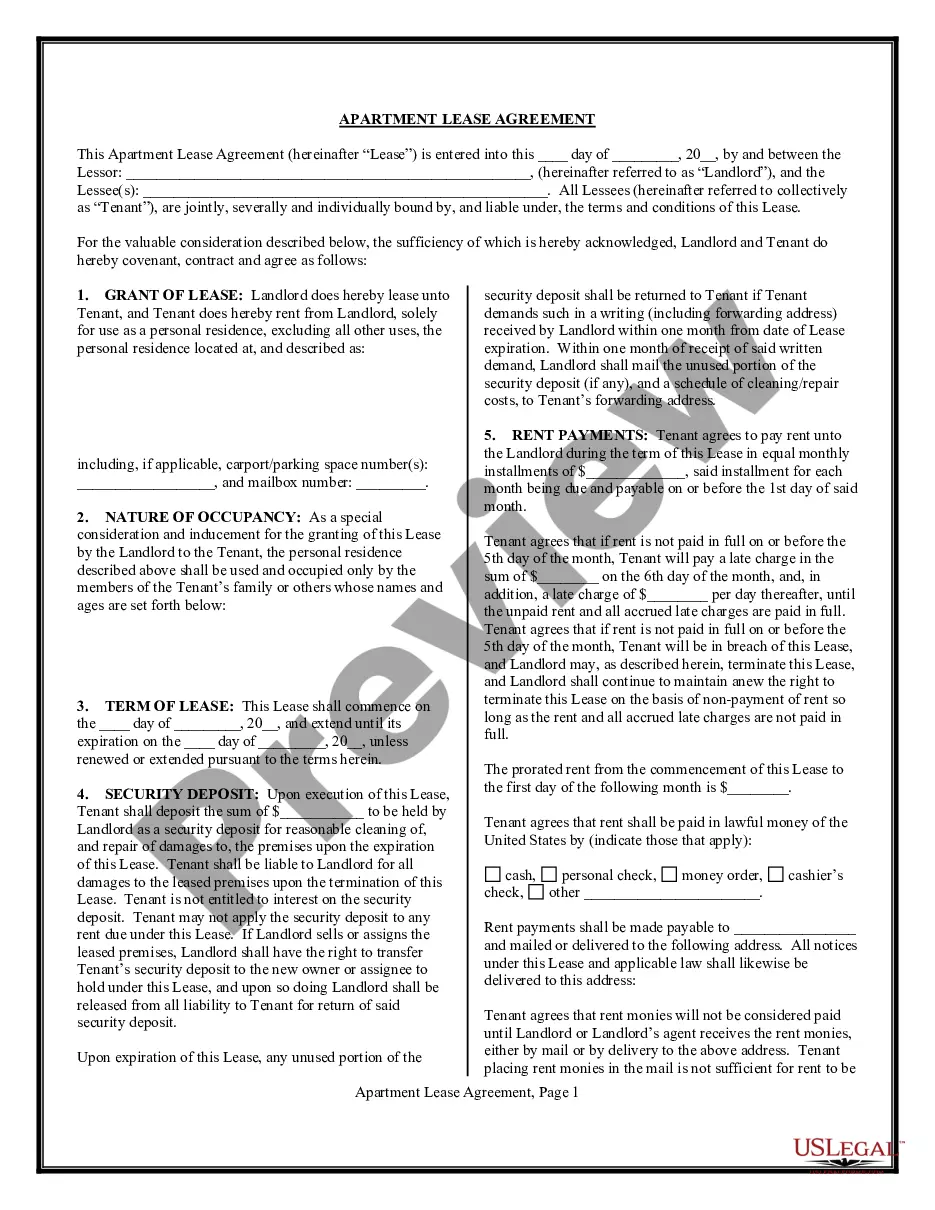
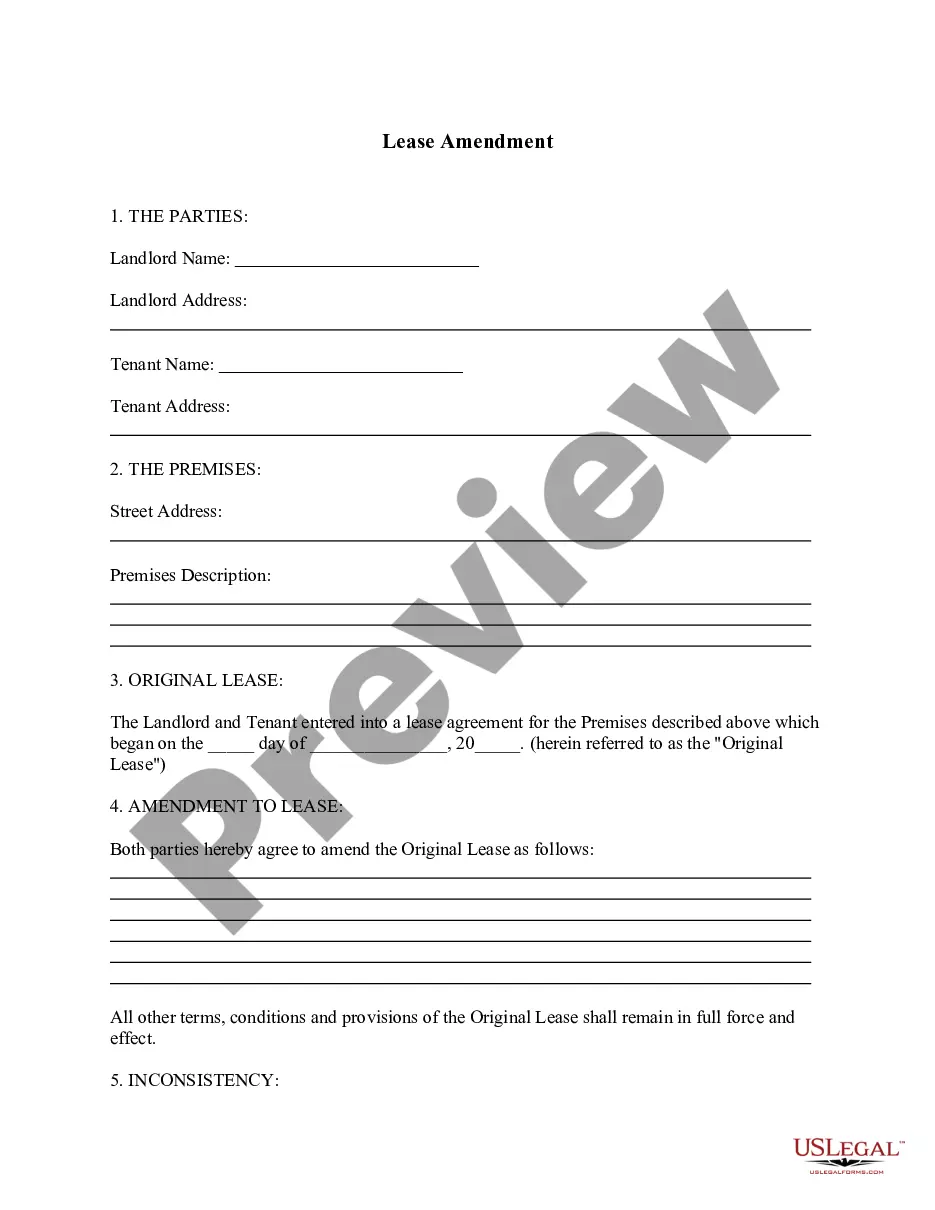
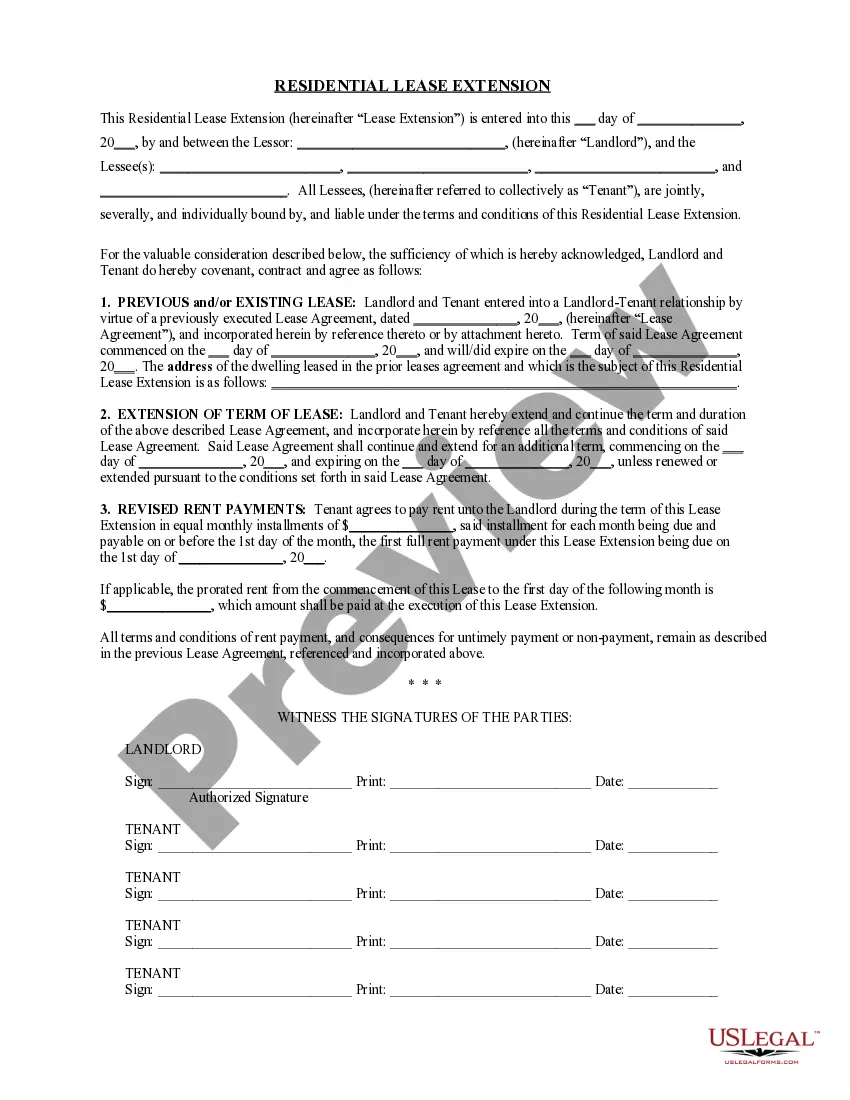
The Residential Lease Renewal Agreement is a legal document used to extend the terms of an existing residential lease for an additional period. This agreement may also include modifications to the lease conditions. It is tailored to meet state statutory laws, ensuring compliance and protection for both the lessor and lessee during the renewal process.
What’s included in this form
- Identification of the parties involved: Lessor and Lessee
- Effective date of the renewal agreement
- Reference to the original Lease Agreement date
- Property address covered by the lease
- Signatures of both parties, confirming agreement
When to use this form
This form is necessary when a current lease is about to expire, and both the landlord and tenant wish to continue their rental relationship for an additional term. It is particularly useful if there are changes in rental terms, such as an increase in rent or modifications to property rules.
Intended users of this form
- Lessees looking to extend their living arrangement
- Lessor landlords needing to formalize the renewal of a lease
- Real estate agents managing rental properties
Steps to complete this form
- Identify all parties involved by filling in the names of the Lessor and Lessee.
- Specify the effective date of the renewal agreement.
- Refer to the original Lease Agreement date for continuity.
- Enter the address of the property being leased.
- Both parties should sign and date the agreement, indicating their acceptance.
Does this form need to be notarized?
This form does not typically require notarization unless specified by local law.
Get your form ready online
Our built-in tools help you complete, sign, share, and store your documents in one place.
Make edits, fill in missing information, and update formatting in US Legal Forms—just like you would in MS Word.
Download a copy, print it, send it by email, or mail it via USPS—whatever works best for your next step.
Sign and collect signatures with our SignNow integration. Send to multiple recipients, set reminders, and more. Go Premium to unlock E-Sign.
If this form requires notarization, complete it online through a secure video call—no need to meet a notary in person or wait for an appointment.
We protect your documents and personal data by following strict security and privacy standards.

Make edits, fill in missing information, and update formatting in US Legal Forms—just like you would in MS Word.

Download a copy, print it, send it by email, or mail it via USPS—whatever works best for your next step.

Sign and collect signatures with our SignNow integration. Send to multiple recipients, set reminders, and more. Go Premium to unlock E-Sign.

If this form requires notarization, complete it online through a secure video call—no need to meet a notary in person or wait for an appointment.

We protect your documents and personal data by following strict security and privacy standards.
Common mistakes
- Failing to reference the original lease properly.
- Not entering the correct effective date for the renewal.
- Missing signatures from one or both parties.
Benefits of completing this form online
- Convenient access to legal forms anytime, anywhere.
- Edit and customize the form easily for specific needs.
- Reliable templates developed by licensed attorneys.
Main things to remember
- This agreement helps ensure both parties understand their continued obligations.
- It can be modified as needed when renewing a lease.
- Complete all fields accurately to maintain an effective legal document.
Looking for another form?
Form popularity
FAQ
Yes, a landlord in Arizona can refuse to renew a lease for several reasons, including prior lease violations. However, they cannot do so based on discriminatory reasons. For tenants, it is beneficial to review the Arizona Residential Lease Renewal Agreement for any stipulations regarding lease renewal or termination terms, ensuring you are well-informed.
In Arizona, landlords may begin the eviction process if a tenant is more than 5 days late on rent. They are required to provide a notice to the tenant, informing them of the overdue rent and the potential for eviction. Having a clear understanding of the provisions in your Arizona Residential Lease Renewal Agreement can help prevent misunderstandings regarding payment timelines.
Once a lease expires in Arizona, a tenant may stay if the landlord agrees, but there is no legal requirement. Typically, landlords expect tenants to vacate by the end of the lease term. If you find yourself in this situation, reviewing your Arizona Residential Lease Renewal Agreement can clarify your rights and any potential for month-to-month tenancy.
Yes, a landlord in Arizona can choose not to renew a lease. However, they must not discriminate or retaliate against a tenant for exercising their rights. It's important to understand the terms stated in your Arizona Residential Lease Renewal Agreement for any specific clauses regarding renewal. Always communicate openly with your landlord about your intentions.
To write an effective email for lease renewal, start with a clear subject line that indicates your intention. In your message, include your current lease details, express your wish to renew, and ask about any changes in the terms. Using an Arizona Residential Lease Renewal Agreement template from USLegalForms can streamline this process, ensuring your email covers all necessary points.
In Arizona, a landlord must provide tenants with a written notice to vacate before requiring them to move out. For month-to-month leases, this notice is typically 30 days. However, for lease violations, a shorter notice of 5 days may apply. Ensure you reference your Arizona Residential Lease Renewal Agreement for specific terms that may differ.
In Arizona, a tenant may remain in the rental property after the lease expires only if the landlord agrees. Often, if no new agreement has been signed, the tenant may operate on a month-to-month basis. This transition period is crucial for both parties, especially when considering the implications of an Arizona Residential Lease Renewal Agreement.
In Arizona, email can be considered written notice if both parties agree to this form of communication. It's essential to confirm that your landlord accepts email as a legitimate method for delivering notices. Keeping clear records of communications will support your position when navigating matters related to the Arizona Residential Lease Renewal Agreement.
In Arizona, the requirement for a 60-day notice depends on the type of lease agreement you have. For month-to-month leases, a standard 30-day notice is sufficient. However, if your lease explicitly states a longer notice period, you must adhere to that agreement. Understanding this aspect will help you manage your Arizona Residential Lease Renewal Agreement more effectively.
To terminate a lease in Arizona, you must provide proper notice based on the lease type. For a month-to-month lease, a 30-day written notice is usually required. If you have a fixed-term lease, consult your agreement for specific termination clauses. Handling this process correctly is crucial when dealing with an Arizona Residential Lease Renewal Agreement.