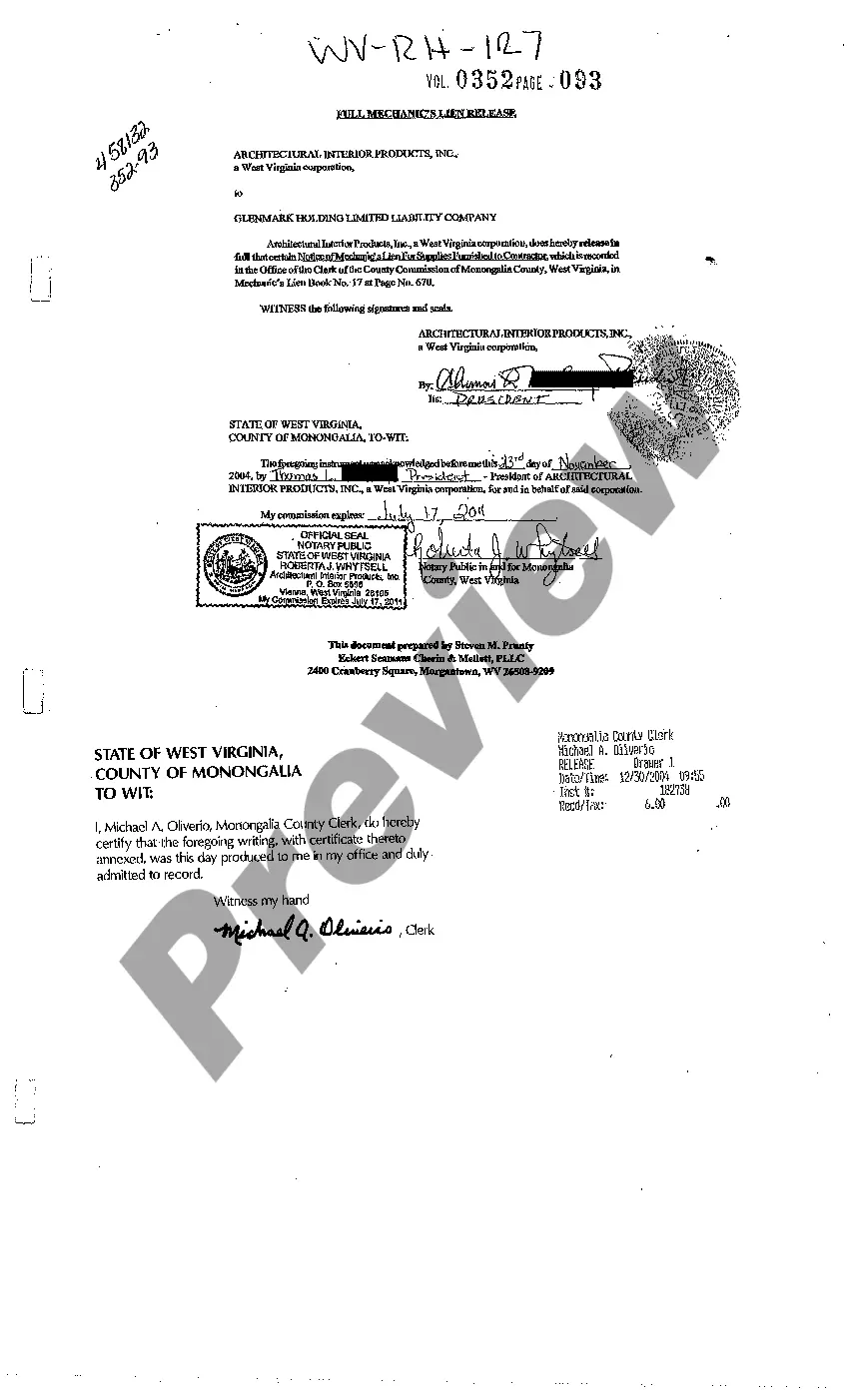
Virginia Construction Lien Law
Description

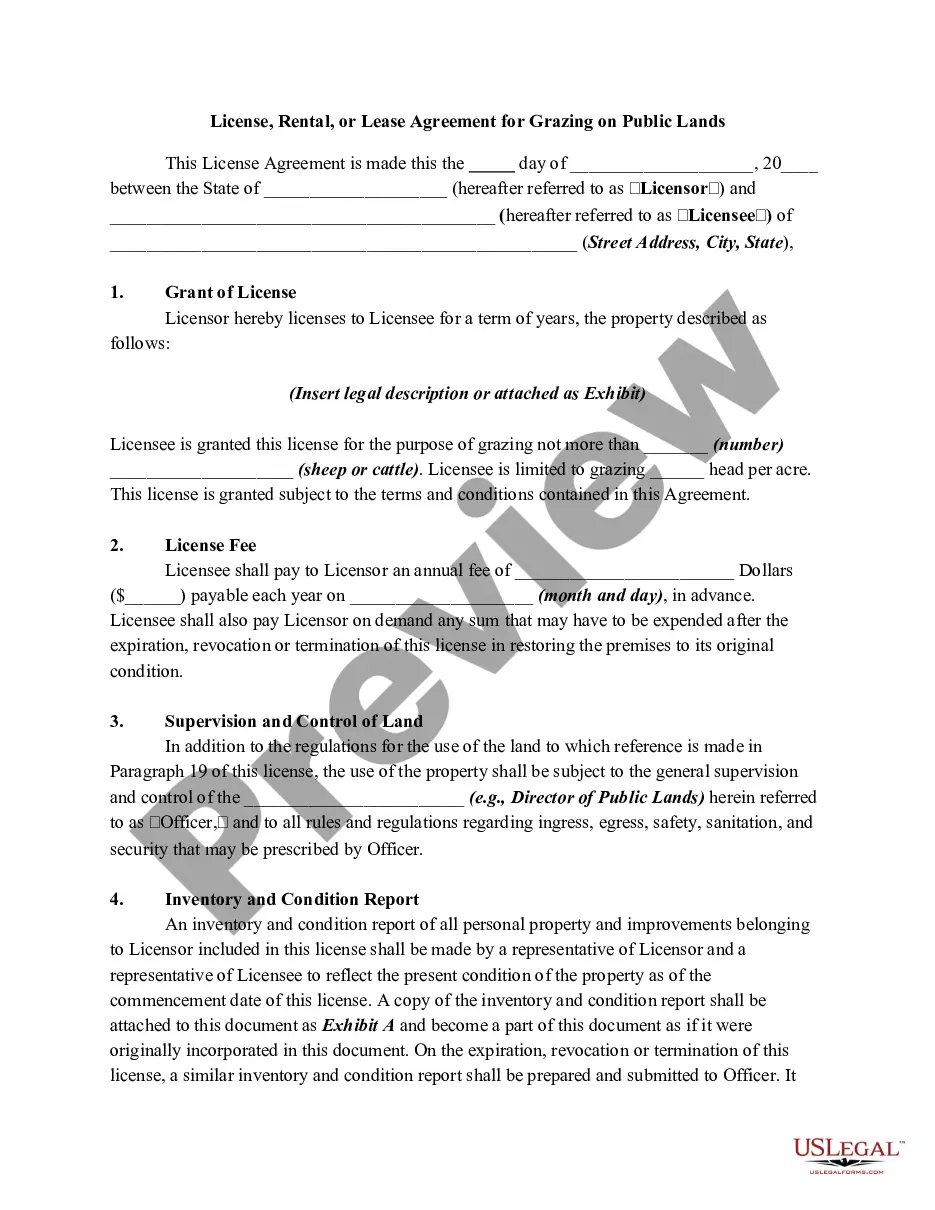







How to fill out West Virginia Full Mechanic's Lien Release?
There's no longer any reason to waste time searching for legal documents to adhere to your local state requirements.
US Legal Forms has compiled all of them in a single location and enhanced their availability.
Our platform offers over 85,000 templates for any business and individual legal situations organized by state and purpose. All forms are expertly crafted and validated for accuracy, so you can be confident in acquiring the latest Virginia Construction Lien Law.
Choose the preferred subscription plan and either create an account or sign in. Complete your subscription payment using a credit card or PayPal to proceed. Select the file format for your Virginia Construction Lien Law and download it to your device. Print your form to fill it out manually or upload the sample if you prefer to use an online editor. Preparing legal documentation under federal and state laws is quick and easy with our platform. Try US Legal Forms today to keep your paperwork organized!
- If you are acquainted with our service and already possess an account, ensure your subscription is valid prior to obtaining any templates.
- Log In to your account, select the document, and click Download.
- You can also access all previously acquired documents whenever necessary by clicking the My documents tab in your profile.
- If you've never utilized our service before, the process will involve a few more steps to finish.
- Here's how new users can discover the Virginia Construction Lien Law in our library.
- Review the page content thoroughly to ensure it includes the sample you require.
- To do this, make use of the form description and preview options if available.
- Use the Search field above to find another sample if the prior one didn't suit you.
- Click Buy Now adjacent to the template title once you locate the fitting one.
Form popularity
FAQ
Filing a lien in Virginia involves several key steps, as outlined by Virginia construction lien law. First, you need to prepare a lien notice that clearly describes the work performed and identifies the property. Then, file this notice with the appropriate court or land records office within the specified time frame to protect your rights effectively.
To place a lien on a house in Virginia, a contractor must ensure they have completed the necessary work or supplied materials. They also need to follow specific procedural steps, including drafting a lien notice and filing it within the applicable time limits set by Virginia construction lien law. Ensuring compliance with these requirements is essential for the lien to be enforceable.
In Virginia, the priority of a mechanic's lien is significant as it determines the order of payment in the event of a property sale. Generally, mechanics’ liens take precedence over most other claims made against the property, especially those recorded after the lien is filed. Understanding this priority can help contractors secure their financial interests effectively.
Virginia construction lien law is defined under the Virginia Code, specifically Title 43. It outlines the rights and obligations of contractors, subcontractors, and property owners regarding the filing and enforcement of mechanic's liens. Understanding these statutes can help all parties navigate the complexities of construction projects and ensure compliance.
Under Virginia construction lien law, the standard time limit for filing a mechanic's lien is typically 90 days for contractors and 150 days for subcontractors and suppliers. This time frame begins from the date the project is completed or the last materials are supplied. Therefore, it is vital for all parties involved in a construction project to be aware of these important deadlines.
The 150-day rule in Virginia construction lien law establishes a time limit for subcontractors and suppliers. These individuals must file their liens within 150 days from the last day they provided labor or materials. Failing to adhere to this rule can result in the loss of lien rights, making it essential for contractors to understand their timelines.
According to Virginia construction lien law, contractors generally have a limited time frame to file a lien. Specifically, they must file their lien within 90 days after the completion of the work or delivery of materials. It is crucial for contractors to keep track of these deadlines to protect their right to payment.
To fill out a construction lien waiver under Virginia construction lien law, start by identifying the parties involved, including the property owner and the contractor. Next, clearly indicate the amount being waived and the relevant project details. Ensure that all signatures are obtained, as this document requires the contractor's consent to be valid. Finally, keep a copy for your records while sending the original to the property owner or relevant parties, helping to protect your rights.
If you wish to challenge a builder's lien in Virginia, you have options to consider. First, review the lien’s details to ensure it complies with state law and is valid. You may also file a written objection or seek legal assistance to contest the lien's validity. Utilizing resources like US Legal Forms can guide you in understanding Virginia construction lien law and provide necessary forms for your defense.
A mechanic's lien in Virginia allows contractors and suppliers to secure payment for work performed on a property. When properly filed, this lien acts as a legal claim against the property, ensuring the owner addresses the unpaid debts. If the lien remains unresolved, the property may even be subject to a foreclosure action. A solid grasp of Virginia construction lien law can empower you in managing these situations effectively.