Authorization Letter For Honorable Dismissal Sample
Description
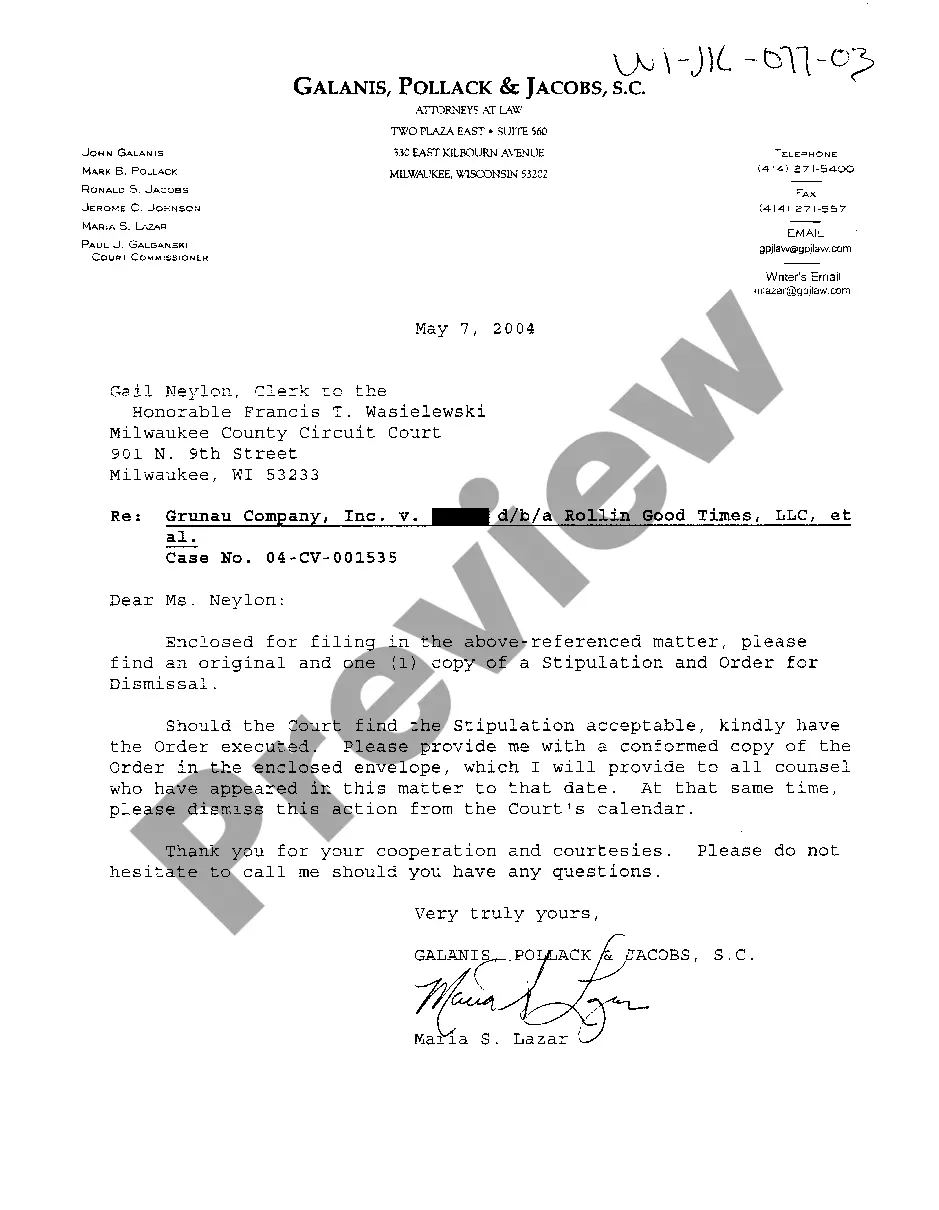
How to fill out Wisconsin Letter For Copy Of Stipulation And Order For Dismissal?
The Authorization Document For Honorable Dismissal Example you observe on this page is a versatile legal template created by experienced lawyers in accordance with national and local laws.
For over 25 years, US Legal Forms has supplied individuals, entities, and attorneys with more than 85,000 confirmed, state-specific forms for every business and personal situation. It’s the quickest, easiest, and most trustworthy way to acquire the documents you require, as the service ensures bank-level data safety and anti-malware measures.
Subscribe to US Legal Forms to have verified legal templates for all of life’s circumstances readily available.
- Search for the document you require and review it.
- Browse through the example you sought and preview it or examine the form description to confirm it meets your requirements. If it doesn’t, use the search function to find the accurate one. Click Buy Now when you’ve located the template you need.
- Register and Log In.
- Select the pricing plan that fits you and set up an account. Use PayPal or a credit card to make a swift payment. If you already possess an account, Log In and check your subscription to proceed.
- Acquire the editable template.
- Choose the format you prefer for your Authorization Document For Honorable Dismissal Example (PDF, DOCX, RTF) and download the sample onto your device.
- Complete and sign the paperwork.
- Print out the template to finish it manually. Alternatively, use an online multifunctional PDF editor to quickly and precisely complete and sign your form with a valid signature.
- Download your documents once more.
- Utilize the same document again whenever necessary. Open the My documents tab in your profile to redownload any previously acquired forms.
Form popularity
FAQ
The judge instructs the jury about the relevant laws that should guide its deliberations. (In some jurisdictions, the court may instruct the jury at any time after the close of evidence. This sometimes occurs before closing arguments.) The judge reads the instructions to the jury.
Jury instructions are instructions given by the judge to a jury at the end of the presentation of evidence to explain to the jury what the applicable laws are. While juries are triers of fact, meaning that they decide what happened, the judge must explain to the jury which laws apply.
Jury instructions should ideally be brief, concise, non-repetitive, relevant to the case's details, understandable to the average juror, and should correctly state the law without misleading the jury or inviting unnecessary speculation.
The jury instructions explain the law in the case and guide the jurors when they look at the evidence. The instructions come from many years of legislation and court case law, binding the parties in the case as well as the jurors.
A request to be excused must be made in writing to the court that issued the summons and must be supported by appropriate documentation. Requests for excuse should be directed to the Jury Commissioner's Office. Your service is required as a prospective juror for a minimum of one day.
Jury instructions often cover the following issues: Introduction to the trial process: An overview of the trial process, the roles of the judge, jury, attorneys, and witnesses, and the importance of the jury's role in the legal system.
Arizona law disqualifies non-citizens, non-residents, convicted felons whose civil rights have not been restored, and people under 18 years of age from jury service.
If the trial judge determines that the confession was voluntarily made it shall be admitted in evidence and the trial judge shall permit the jury to hear relevant evidence on the issue of voluntariness and shall instruct the jury to give such weight to the confession as the jury feels it deserves under all the ...