Wisconsin Transfer Death Deed With Life Estate
Description
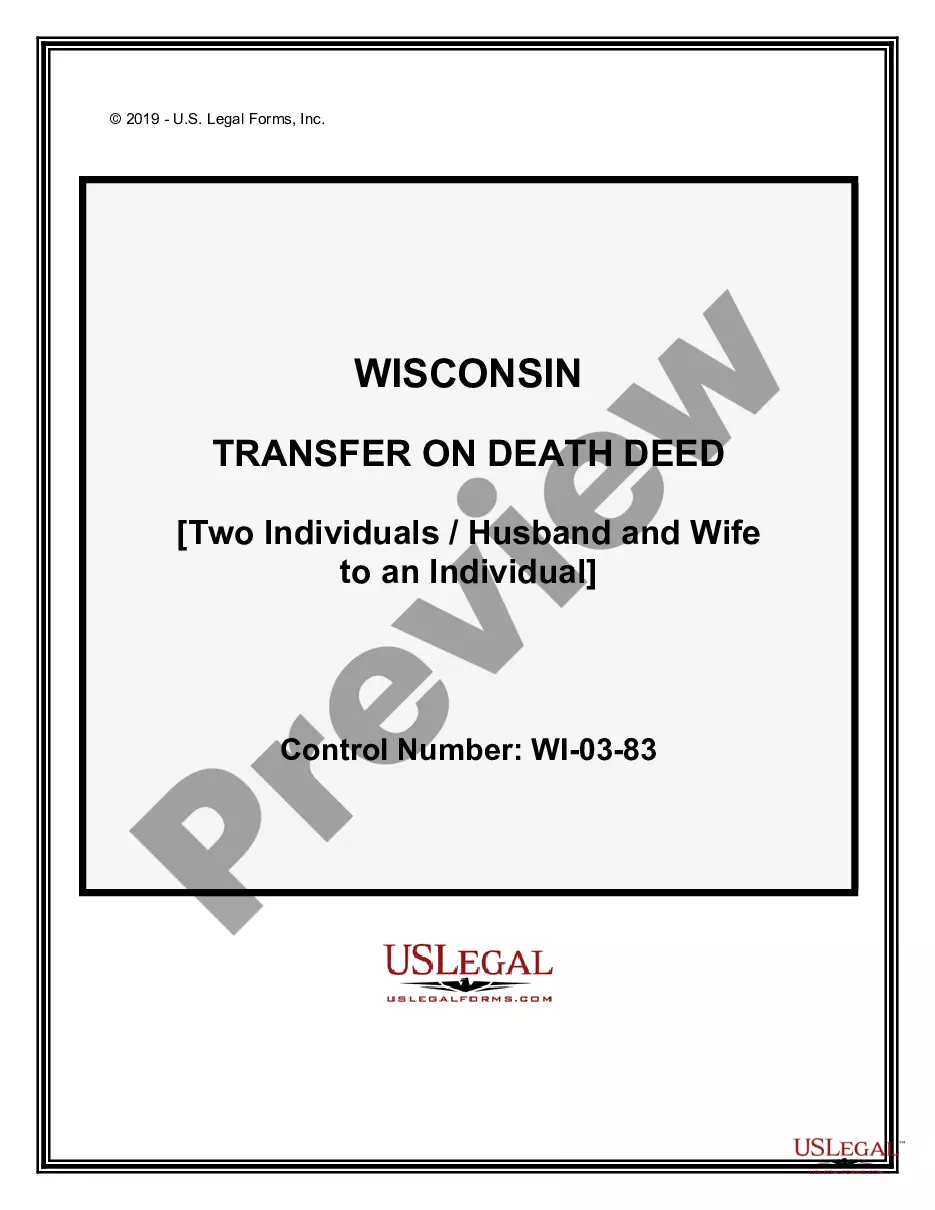


Get your form ready online
Our built-in tools help you complete, sign, share, and store your documents in one place.
Make edits, fill in missing information, and update formatting in US Legal Forms—just like you would in MS Word.
Download a copy, print it, send it by email, or mail it via USPS—whatever works best for your next step.
Sign and collect signatures with our SignNow integration. Send to multiple recipients, set reminders, and more. Go Premium to unlock E-Sign.
If this form requires notarization, complete it online through a secure video call—no need to meet a notary in person or wait for an appointment.
We protect your documents and personal data by following strict security and privacy standards.

Make edits, fill in missing information, and update formatting in US Legal Forms—just like you would in MS Word.

Download a copy, print it, send it by email, or mail it via USPS—whatever works best for your next step.

Sign and collect signatures with our SignNow integration. Send to multiple recipients, set reminders, and more. Go Premium to unlock E-Sign.

If this form requires notarization, complete it online through a secure video call—no need to meet a notary in person or wait for an appointment.

We protect your documents and personal data by following strict security and privacy standards.
Looking for another form?
How to fill out Wisconsin Transfer On Death Deed Or TOD - Beneficiary Deed From Two Individuals To An Individual?
The Wisconsin Transfer Death Deed With Life Estate displayed on this page is a versatile official template crafted by experienced attorneys in compliance with national and local regulations.
For over 25 years, US Legal Forms has offered individuals, companies, and legal experts more than 85,000 authenticated, state-specific documents for any business and personal circumstance. It’s the quickest, simplest, and most dependable method to obtain the necessary paperwork, as the service ensures bank-level data protection and anti-malware safeguards.
Select the format you prefer for your Wisconsin Transfer Death Deed With Life Estate (PDF, DOCX, RTF) and save the document on your device.
- Search for the document you require and review it.
- Browse the file you searched and preview it or examine the form description to confirm it meets your needs. If it doesn’t, utilize the search feature to find the correct one. Click Buy Now once you have found the template you require.
- Register and Log In.
- Choose the pricing plan that fits you and create an account. Use PayPal or a credit card to make a quick payment. If you already possess an account, Log In and verify your subscription to continue.
- Obtain the editable template.
Form popularity
FAQ
A life estate deed in Wisconsin allows a property owner to retain the right to use and enjoy their property during their lifetime while transferring the remainder interest to another party. This arrangement can simplify the transfer process after your passing, as it avoids probate. By leveraging a Wisconsin transfer death deed with life estate, you can effectively plan your estate and ensure your wishes are honored without unnecessary delays.
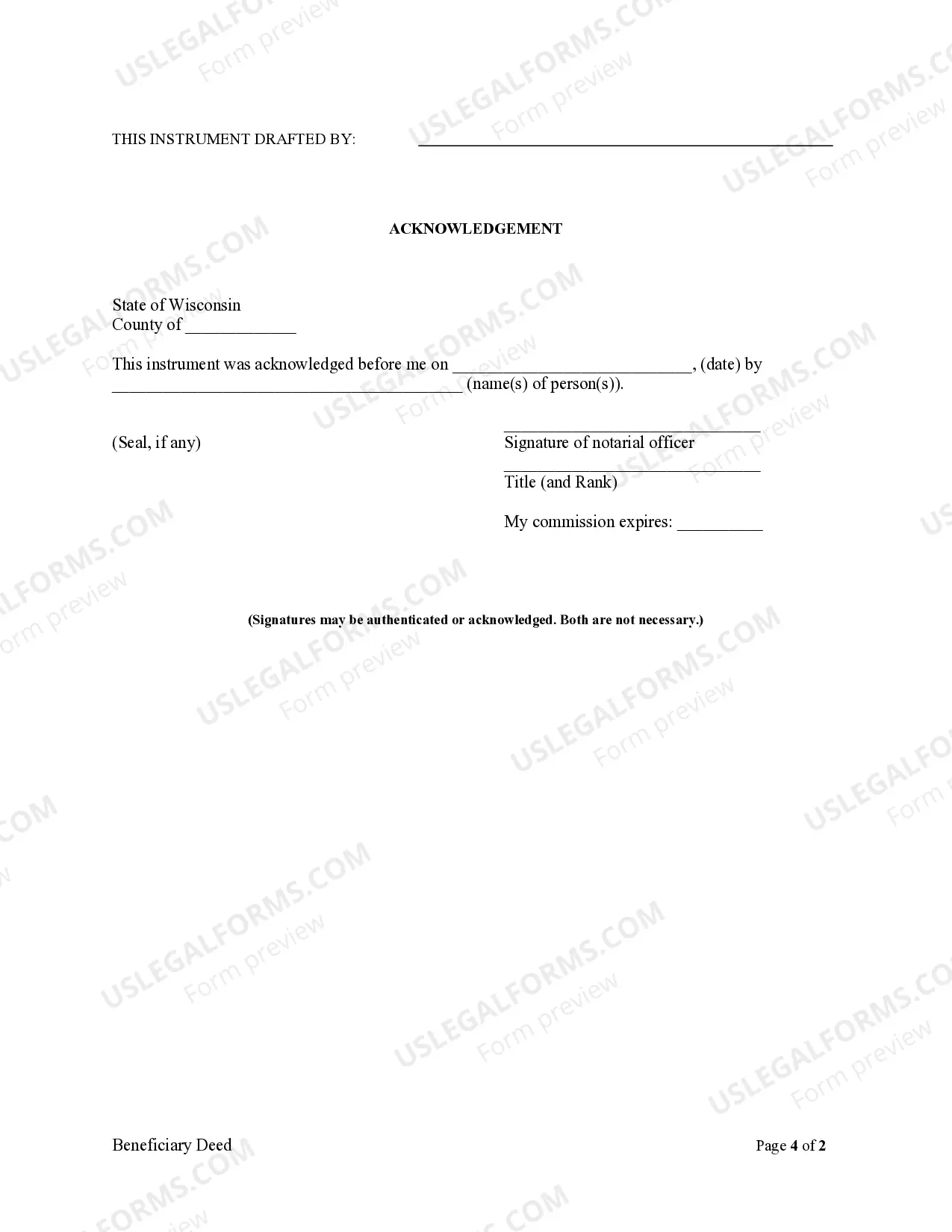
To obtain a Wisconsin transfer death deed with life estate, you first need to complete the required form, which you can find on the Wisconsin Department of Revenue website or through legal resources. After filling out the deed, you must have it signed in front of a notary public. Finally, you need to record the deed with your local county register of deeds to ensure its validity and effectiveness.
Transferring a life estate deed involves preparing a new deed that outlines the transfer of property rights. You need to clearly define the terms of the transfer and obtain the necessary signatures from all parties involved. After signing, you must record this deed with the local register of deeds to make the transfer official. For assistance with this process, US Legal Forms provides valuable resources and templates for managing your Wisconsin transfer death deed with life estate.
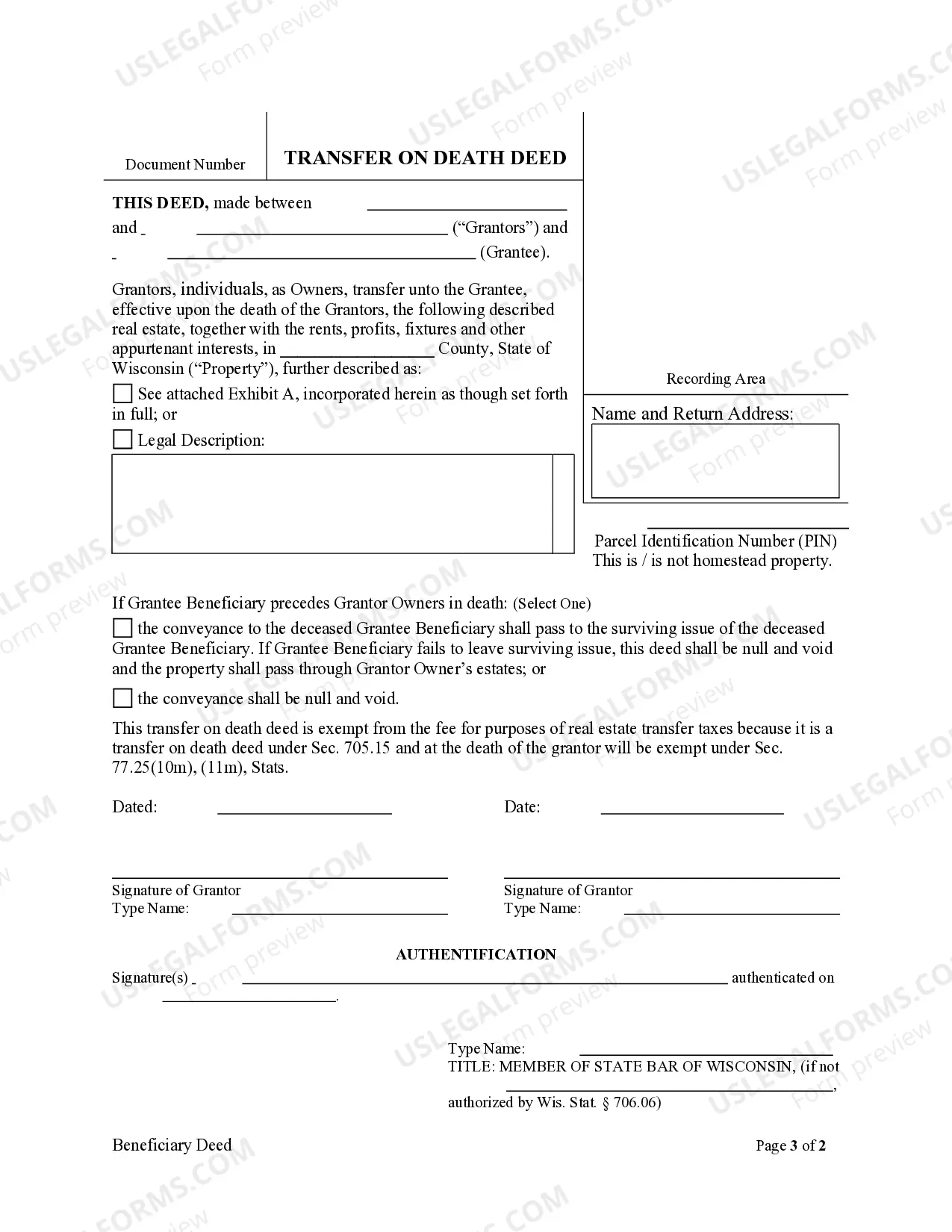
Filling out a transfer on death deed form requires you to provide specific information, such as your name, the property description, and the names of your beneficiaries. Ensure that all details are accurate and complete to avoid complications later. Additionally, you must sign the form in the presence of a notary before recording it with the county. US Legal Forms offers easy-to-follow templates that can guide you through filling out the Wisconsin transfer death deed with life estate form correctly.
No, a transfer on death deed and a life estate are not the same. A transfer on death deed allows you to designate beneficiaries to receive the property after your death, while a life estate grants someone the right to use the property during their lifetime, with ownership passing to another person afterward. Understanding these differences is vital for estate planning. For further clarity on creating a Wisconsin transfer death deed with life estate, consider resources from US Legal Forms.
To create a transfer on death deed in Wisconsin, you must complete a specific form that names the beneficiaries who will receive the property upon your death. It is crucial to sign the deed in front of a notary and then record it with the local register of deeds to make it valid. This process allows you to maintain control of your property during your lifetime while ensuring a smooth transfer to your beneficiaries. Using US Legal Forms can simplify this process, offering reliable templates and guidance for your Wisconsin transfer death deed with life estate.
Yes, Wisconsin does allow a transfer on death deed, which is a practical tool for estate planning. The Wisconsin transfer death deed with life estate enables property owners to transfer their property directly to beneficiaries without going through probate. This process simplifies the transfer and can save time and costs for your loved ones. If you want to learn more about how to implement this, US Legal Forms offers resources to guide you through the process.
A transfer on death deed is not the same as a life estate, even though both involve the transfer of property. The Wisconsin transfer death deed with life estate allows the property owner to designate a beneficiary who will receive the property upon their death. In contrast, a life estate grants one person the right to use the property during their lifetime, while the property eventually passes to another party. Understanding these differences can help you make informed decisions about estate planning.