Washington Lease Agreement With Guarantor
Description
Get your form ready online
Our built-in tools help you complete, sign, share, and store your documents in one place.
Make edits, fill in missing information, and update formatting in US Legal Forms—just like you would in MS Word.
Download a copy, print it, send it by email, or mail it via USPS—whatever works best for your next step.
Sign and collect signatures with our SignNow integration. Send to multiple recipients, set reminders, and more. Go Premium to unlock E-Sign.
If this form requires notarization, complete it online through a secure video call—no need to meet a notary in person or wait for an appointment.
We protect your documents and personal data by following strict security and privacy standards.

Make edits, fill in missing information, and update formatting in US Legal Forms—just like you would in MS Word.

Download a copy, print it, send it by email, or mail it via USPS—whatever works best for your next step.

Sign and collect signatures with our SignNow integration. Send to multiple recipients, set reminders, and more. Go Premium to unlock E-Sign.

If this form requires notarization, complete it online through a secure video call—no need to meet a notary in person or wait for an appointment.

We protect your documents and personal data by following strict security and privacy standards.
Looking for another form?


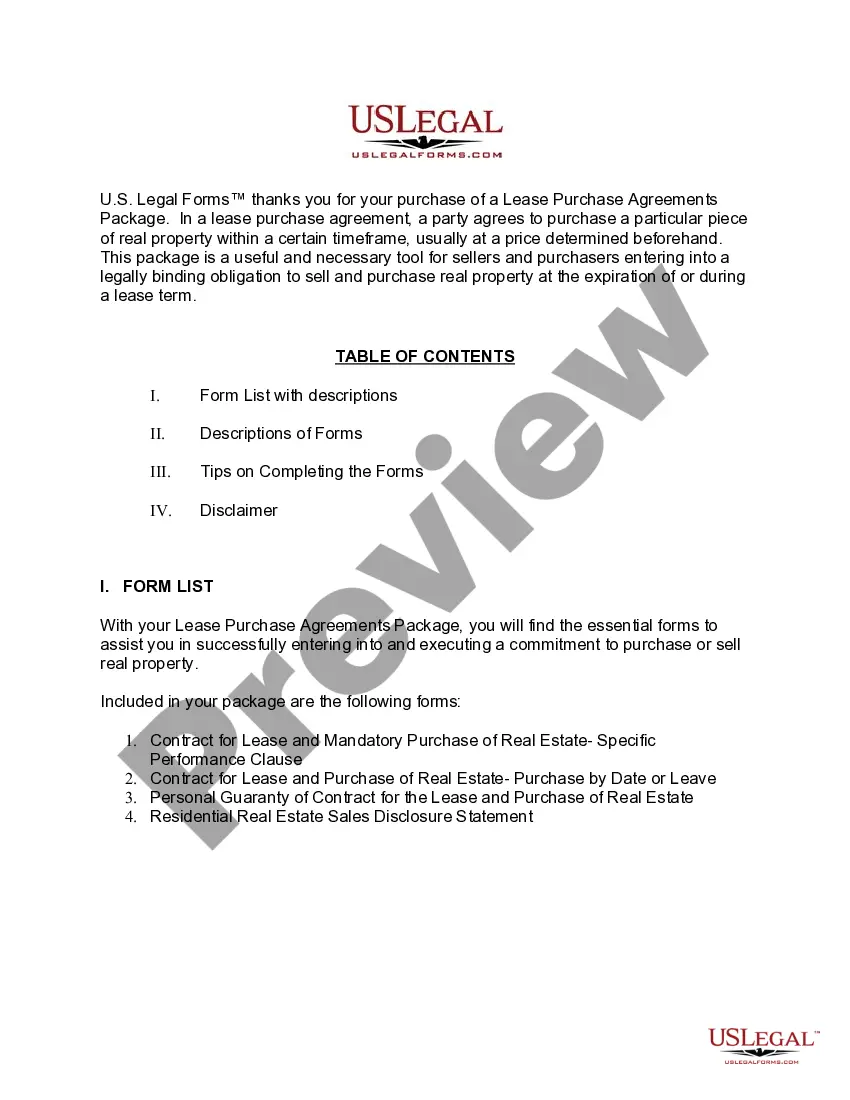
How to fill out Washington Lease Purchase Agreements Package?
What is the most reliable service to acquire the Washington Lease Agreement With Guarantor and other current iterations of legal documents? US Legal Forms is the solution!
It is the largest collection of legal forms for any situation. Each template is well-prepared and verified for adherence to federal and local laws. They are categorized by region and state of application, making it easy to find what you need.
US Legal Forms is an excellent choice for anyone needing to manage legal paperwork. Premium users benefit even more as they can edit and approve previously saved documents electronically at any time using the built-in PDF editing feature. Try it out today!
- Experienced users of the platform only need to Log In to the system, verify if their subscription is active, and hit the Download button next to the Washington Lease Agreement With Guarantor to obtain it.
- Once saved, the template remains accessible for future use within the My documents section of your account.
- If you do not have an account in our library yet, here are the steps you should follow to create one.
- Template compliance check. Before downloading any form, you must ensure it meets your requirements and adheres to your state or county regulations. Review the form description and use the Preview option if it’s available.
Form popularity
FAQ
A tenancy guarantor guarantees rent payments and other tenancy obligations that make up the tenancy agreement. Legally, tenancy guarantors are said to stand surety. Whilst a guarantor must be at least 18, they can come from any walk of life and can have different relationships with a tenant.
A guarantor is responsible for the rent and any other charges incurred during the lease term if the tenant cannot pay. However, this individual doesn't live at the property or have a right to occupy it. A cosigner, on the other hand, is a roommate or spouse of the tenant that lives in the apartment.
A guarantor is someone who agrees to pay your rent if you don't pay it, for example a parent or close relative. If you don't pay your landlord what you owe them, they can ask your guarantor to pay instead. If your guarantor doesn't pay, your landlord can take them to court.
Under the Landlord and Tenant (Convenants) Act 1995 (LTCA 1995), a lease cannot be assigned by a tenant to that tenant's guarantor, even if the guarantor agrees.
The most important difference between a cosigner and a guarantor is that a cosigner is immediately responsible for paying rent, just as the tenant is. A guarantor is only responsible for paying rent when the tenant fails to do so themselves.
