Tenant Failure Facilities For The Environment
Description


Get your form ready online
Our built-in tools help you complete, sign, share, and store your documents in one place.
Make edits, fill in missing information, and update formatting in US Legal Forms—just like you would in MS Word.
Download a copy, print it, send it by email, or mail it via USPS—whatever works best for your next step.
Sign and collect signatures with our SignNow integration. Send to multiple recipients, set reminders, and more. Go Premium to unlock E-Sign.
If this form requires notarization, complete it online through a secure video call—no need to meet a notary in person or wait for an appointment.
We protect your documents and personal data by following strict security and privacy standards.

Make edits, fill in missing information, and update formatting in US Legal Forms—just like you would in MS Word.

Download a copy, print it, send it by email, or mail it via USPS—whatever works best for your next step.

Sign and collect signatures with our SignNow integration. Send to multiple recipients, set reminders, and more. Go Premium to unlock E-Sign.

If this form requires notarization, complete it online through a secure video call—no need to meet a notary in person or wait for an appointment.

We protect your documents and personal data by following strict security and privacy standards.
Looking for another form?

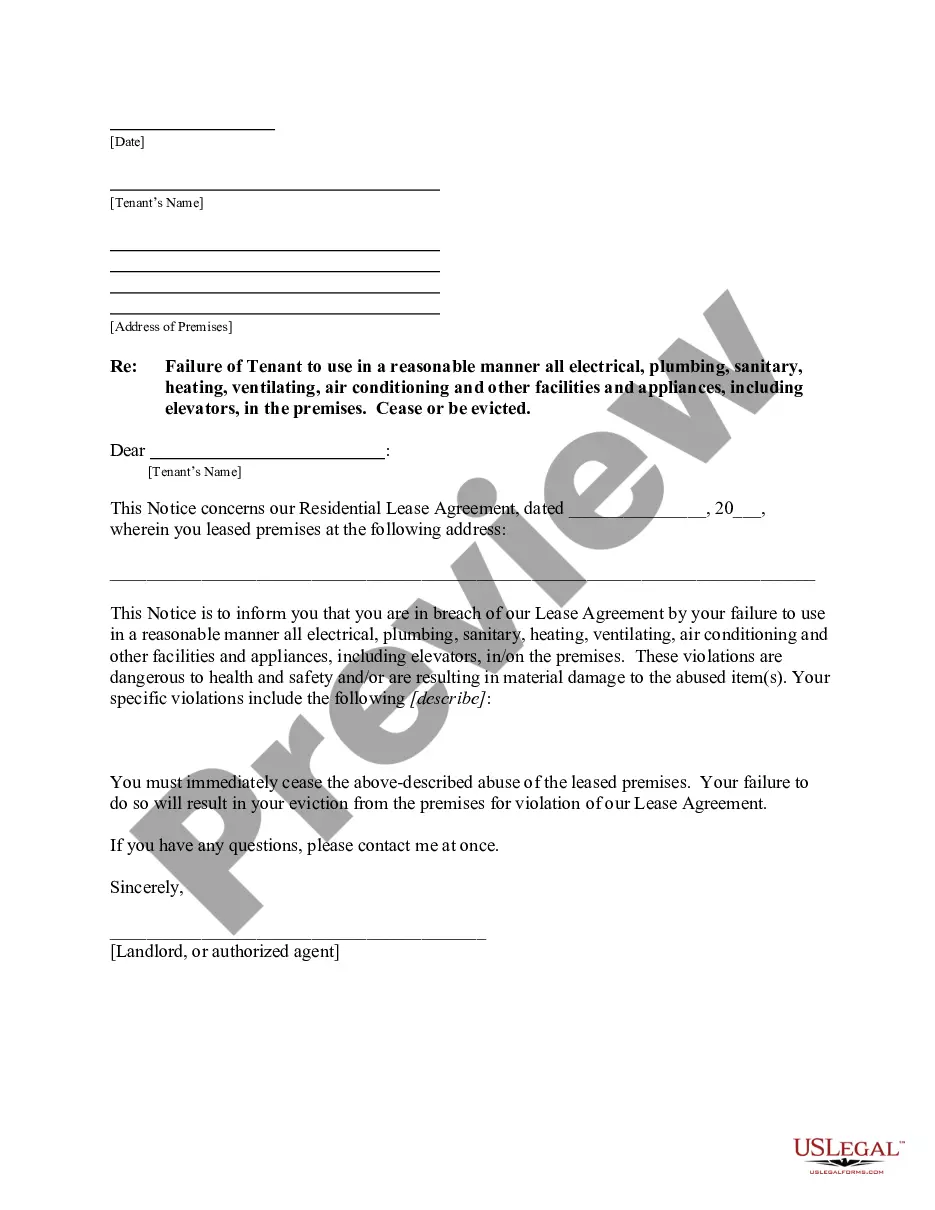
How to fill out Vermont Letter From Landlord To Tenant For Failure To Use Electrical, Plumbing, Sanitary, Heating, Ventilating, Air Conditioning And Other Facilities In A Reasonable Manner?
- Log in to your US Legal Forms account. If you're a returning user, ensure your subscription is active.
- Preview the form’s details to confirm it meets your needs and adheres to local regulations.
- Utilize the Search function to find alternative templates if the first option doesn’t suit your requirements.
- Select and click the 'Buy Now' button to choose your preferred subscription plan. Create an account if you haven’t already.
- Complete your purchase by entering your payment details or using PayPal for convenience.
- Download the form directly to your device, and access it later through the 'My Forms' section in your account.
In conclusion, US Legal Forms streamlines the process of acquiring tenant failure facilities for the environment forms. With its extensive library and user-friendly interface, you can create legally sound documentation tailored to your needs.
Try US Legal Forms today and take the stress out of legal paperwork!
Form popularity
FAQ
Landlord negligence occurs when a landlord fails to fulfill their legal obligations, resulting in harm to you or your property. This includes ignoring safety hazards or not complying with health codes, which ultimately concerns tenant failure facilities for the environment. If you experience such issues, consulting a legal expert may be wise to understand your options.
You can sue an apartment complex for various reasons, including breach of lease, failure to address repair requests, or unsafe living conditions. Each of these issues reflects potential tenant failure facilities for the environment, impacting your quality of life. Collecting evidence and seeking legal advice can enhance your chances of a successful outcome.
In Michigan, landlords must follow specific laws regarding tenant rights. Illegal actions include retaliating against tenants for exercising their rights, failing to maintain the property, and locking tenants out without proper notice. Familiarizing yourself with these laws can help you identify any potential tenant failure facilities for the environment.
You may be able to sue your landlord for unhealthy living conditions if they breach their responsibility to provide safe housing. Unhealthy conditions, like persistent leaks or structural issues, often indicate tenant failure facilities for the environment. To strengthen your case, gather evidence and document your communications with your landlord regarding the issues.
Yes, you can sue a landlord for unsanitary conditions if they fail to maintain the property in a habitable state. Unsanitary conditions can significantly impact your health and wellbeing, thus representing tenant failure facilities for the environment. It is essential to document any issues, such as mold or pest problems, and communicate them to your landlord before considering legal action.
Liability for damages due to environmental hazards can involve several parties, including property owners, tenants, and even contractors. If actions contributed to the hazards, each party may face some level of responsibility. Staying informed about these liabilities can help you navigate tenant failure facilities for the environment wisely.
Liability for environmental cleanup typically falls on the current property owner, but it can extend to previous owners or tenants under specific circumstances. It’s vital to understand your responsibilities regarding cleanup obligations. Partnering with professionals can help you manage tenant failure facilities for the environment effectively.
When purchasing a property, the buyer generally bears the responsibility for inspecting for environmental hazards. This task often involves hiring professionals to assess potential risks. Knowing how to navigate these inspections is crucial, as tenant failure facilities for the environment can significantly impact property value.
Federal regulations related to environmental hazards are administered primarily by agencies like the Environmental Protection Agency (EPA). They enforce safety standards and ensure compliance to protect public health and the environment. Understanding these regulations can help you address any tenant failure facilities for the environment effectively.
The responsibility for environmental hazards often falls on the property owner or tenant. When issues arise, it's essential to identify who uses or manages the space. These individuals must ensure compliance with regulations and take actions to mitigate any tenant failure facilities for the environment.