Ladybird Deed Vermont Withholding
Description
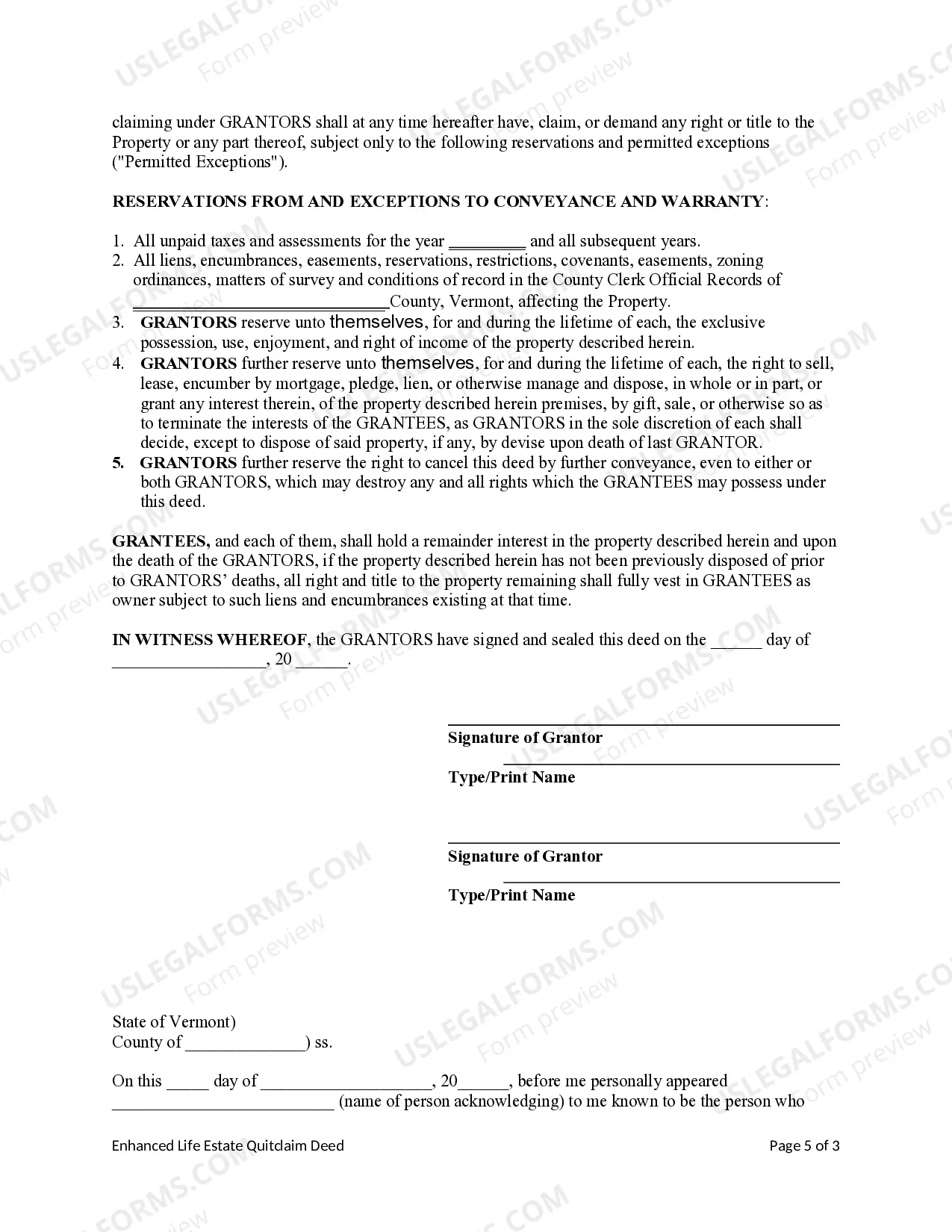
Get your form ready online
Our built-in tools help you complete, sign, share, and store your documents in one place.
Make edits, fill in missing information, and update formatting in US Legal Forms—just like you would in MS Word.
Download a copy, print it, send it by email, or mail it via USPS—whatever works best for your next step.
Sign and collect signatures with our SignNow integration. Send to multiple recipients, set reminders, and more. Go Premium to unlock E-Sign.
If this form requires notarization, complete it online through a secure video call—no need to meet a notary in person or wait for an appointment.
We protect your documents and personal data by following strict security and privacy standards.

Make edits, fill in missing information, and update formatting in US Legal Forms—just like you would in MS Word.

Download a copy, print it, send it by email, or mail it via USPS—whatever works best for your next step.

Sign and collect signatures with our SignNow integration. Send to multiple recipients, set reminders, and more. Go Premium to unlock E-Sign.

If this form requires notarization, complete it online through a secure video call—no need to meet a notary in person or wait for an appointment.

We protect your documents and personal data by following strict security and privacy standards.
Looking for another form?

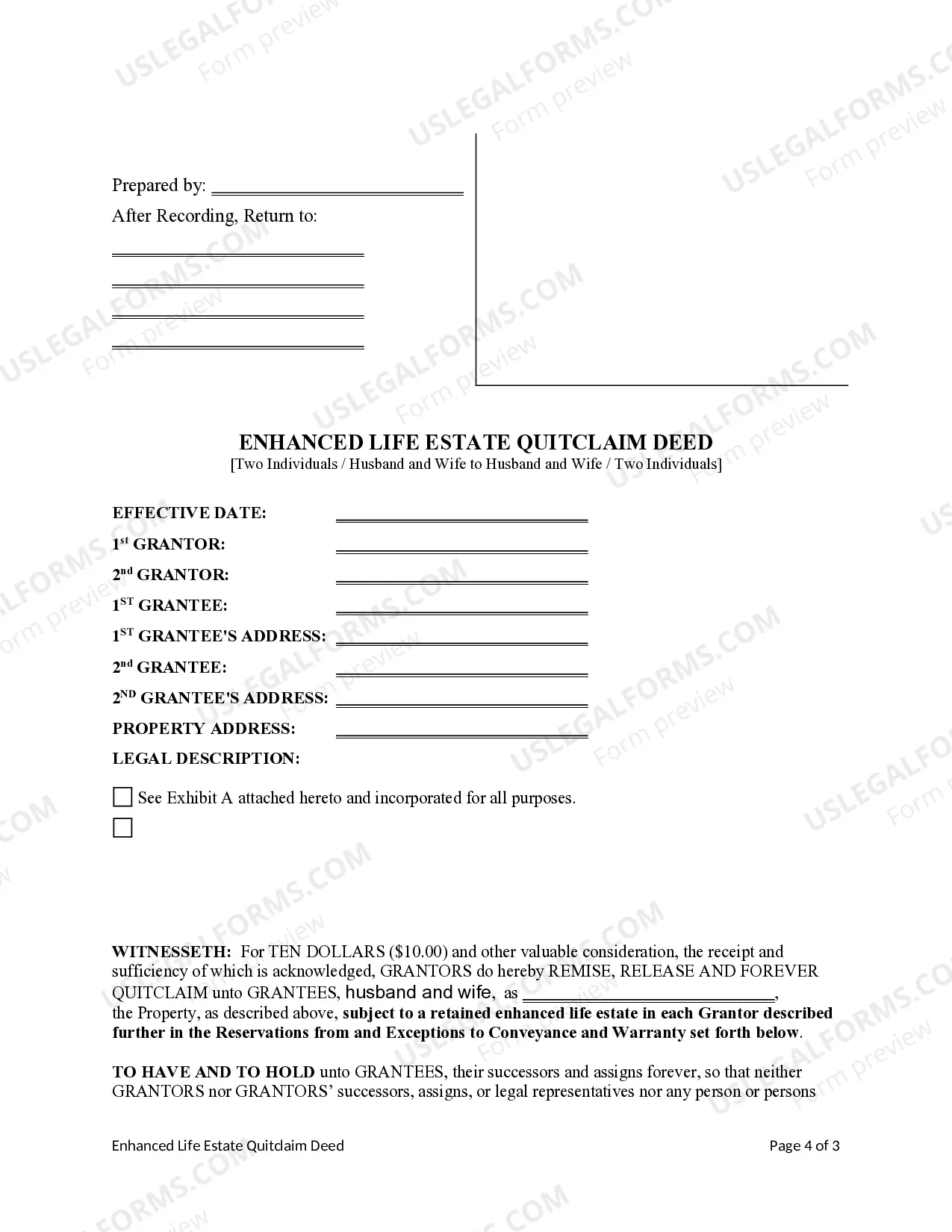
How to fill out Vermont Enhanced Life Estate Deed (a.k.a. Lady Bird Deed) From Two Individuals / Husband And Wife To Two Individuals / Husband And Wife.?
Regardless of whether it's for professional reasons or personal issues, everyone eventually must deal with legal matters in their lifetime. Completing legal documents requires meticulous care, beginning with selecting the right template. For instance, if you choose an incorrect variant of a Ladybird Deed Vermont Withholding, it will be declined once submitted. Thus, it is essential to have a reliable source of legal documents such as US Legal Forms.
If you wish to acquire a Ladybird Deed Vermont Withholding template, follow these simple steps.
With an extensive US Legal Forms catalog available, you won’t have to waste time searching for the right template online. Utilize the library’s user-friendly navigation to find the appropriate form for any situation.
- Obtain the template you require by utilizing the search bar or catalog navigation.
- Review the form’s description to ensure it aligns with your situation, state, and area.
- Click on the form’s preview to examine it.
- If it is the incorrect form, return to the search feature to locate the Ladybird Deed Vermont Withholding template you need.
- Download the template if it fulfills your criteria.
- If you possess a US Legal Forms account, just click Log in to access previously saved documents in My documents.
- If you don’t have an account yet, you can acquire the form by clicking Buy now.
- Choose the correct pricing option.
- Complete the profile registration form.
- Select your payment method: opt for a credit card or PayPal account.
- Choose the file format you desire and download the Ladybird Deed Vermont Withholding.
- Once downloaded, you can complete the form using editing software or print it and fill it out manually.
Form popularity
FAQ
One disadvantage of using a Lady Bird deed alone is that it's not the most flexible solution. The document may need additional work if you wish to leave your assets to multiple beneficiaries. New circumstances may make you change your mind about your initially chosen beneficiary or the transfer.
Disadvantages. The downside is that property transferred via a lady bird deed will be subject to a new tax assessment that could (and often does) result in higher property taxes generally.
When a transfer is made by deed, the buyer or transferee is liable for the transfer tax.
Although there are variations of the Lady Bird Deed that exist in other states, Vermont has been just one of six states that recognize an Enhanced Life Estate Deed. (The 5 other states include Texas, Florida, Michigan, North Carolina, and West Virginia.)
When real estate is sold in Vermont, state income tax is due on the gain from the sale, whether the seller is a resident, part-year resident, or nonresident. If the seller is a nonresident, the buyer is required to withhold 2.5% of the sale price and remit it to the Vermont Department of Taxes.