Va State Inspection Checklist For Vehicles
Description
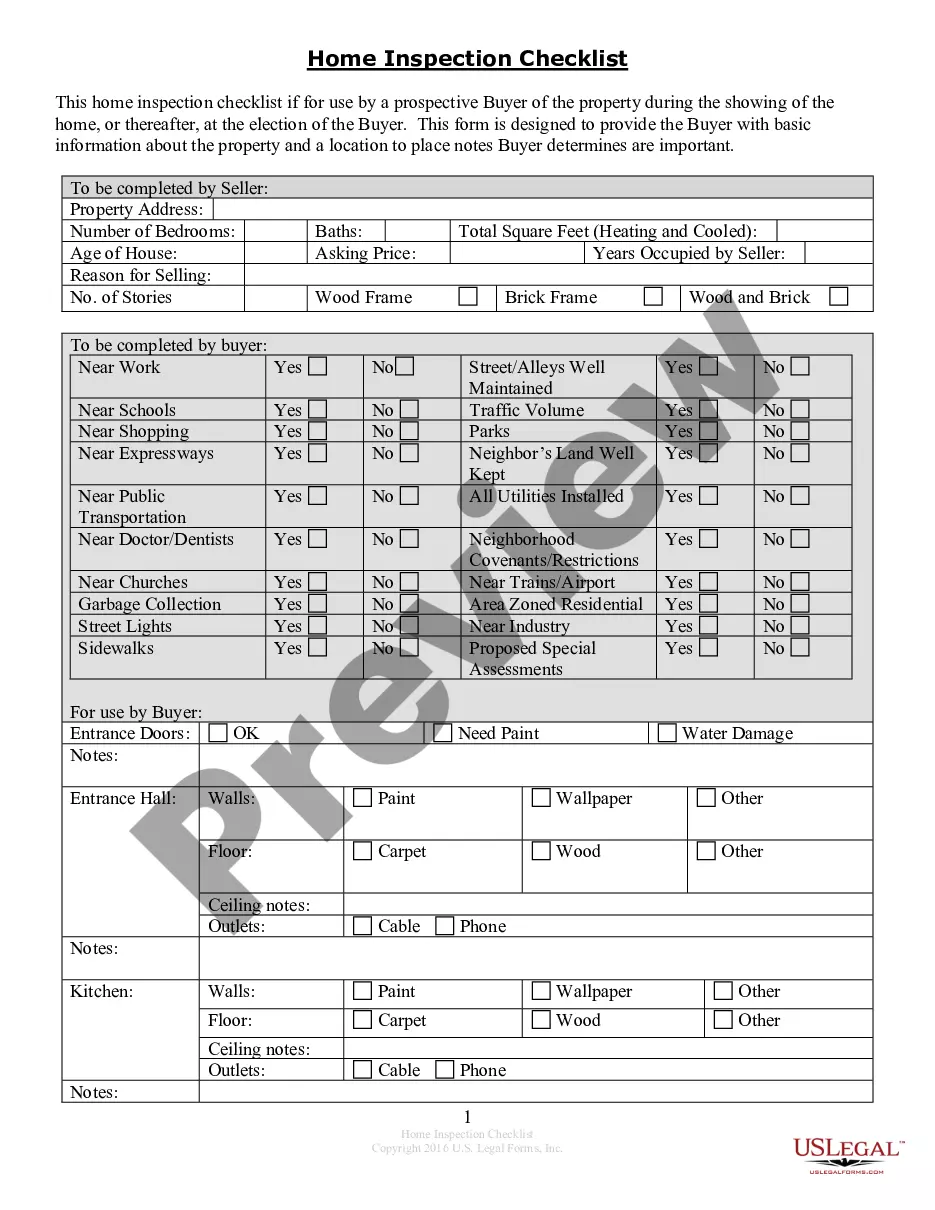
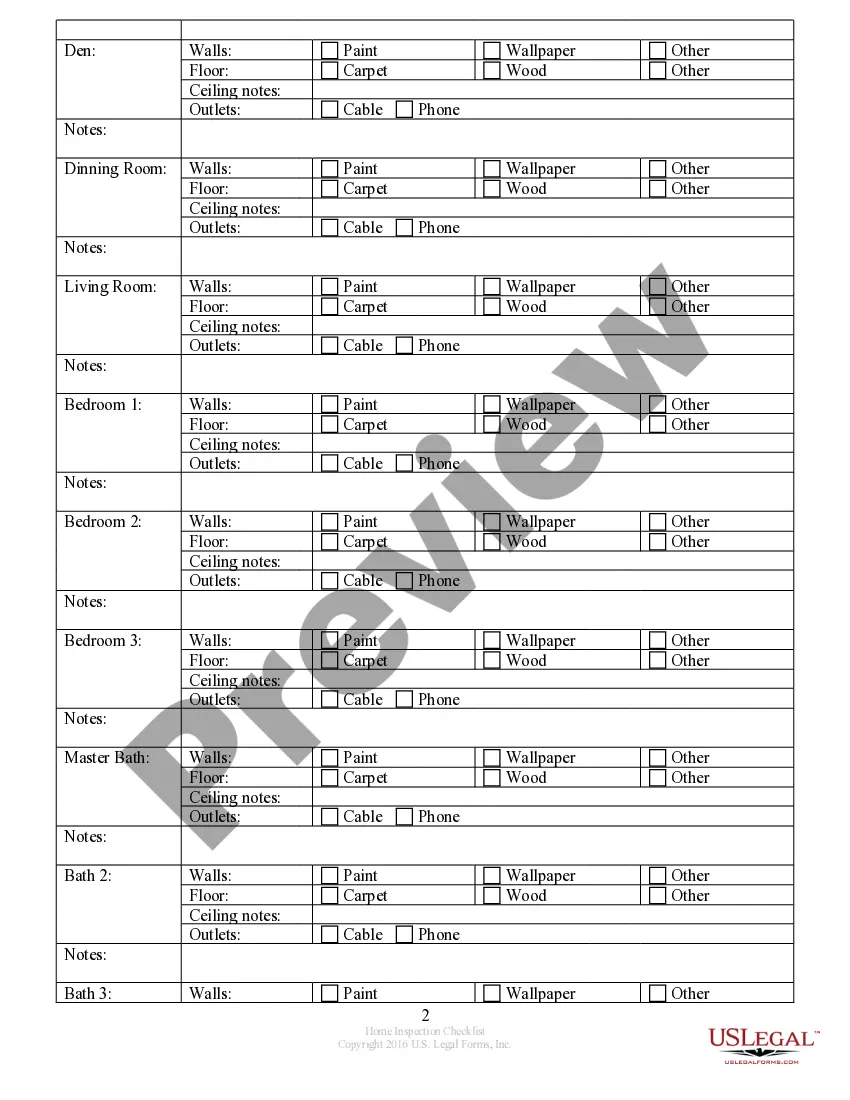
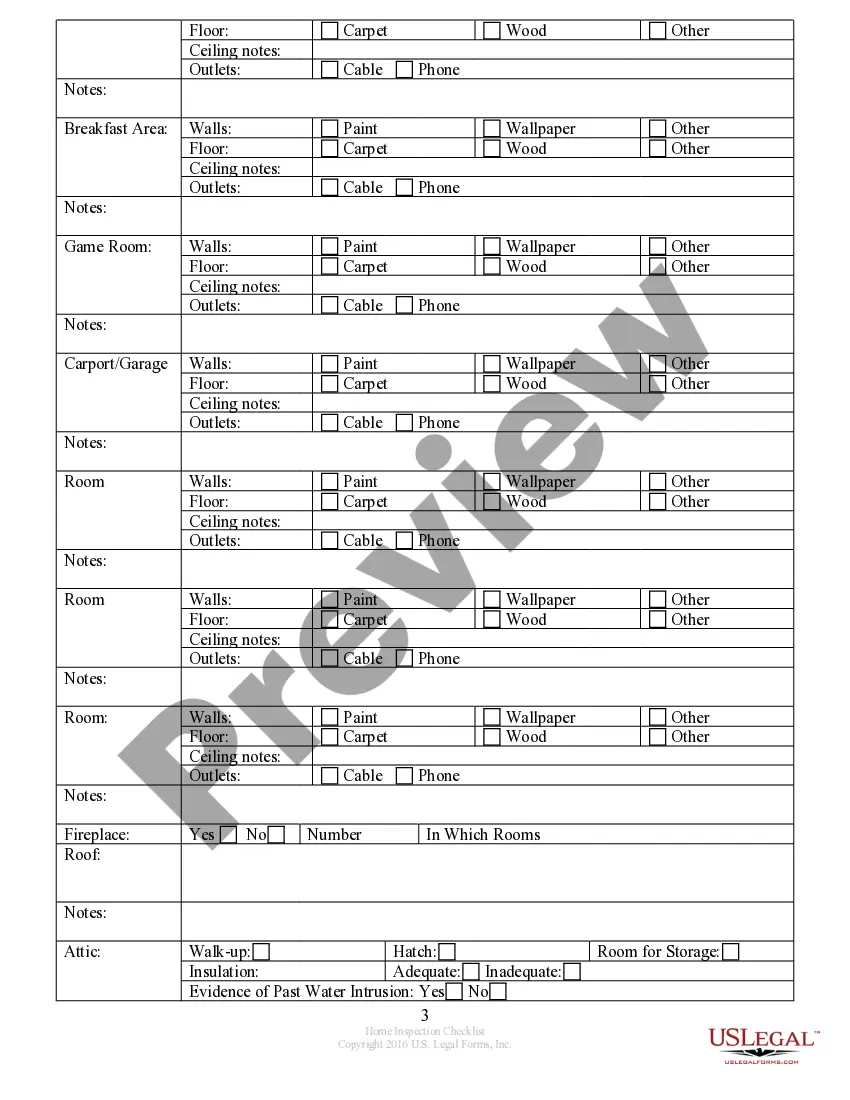
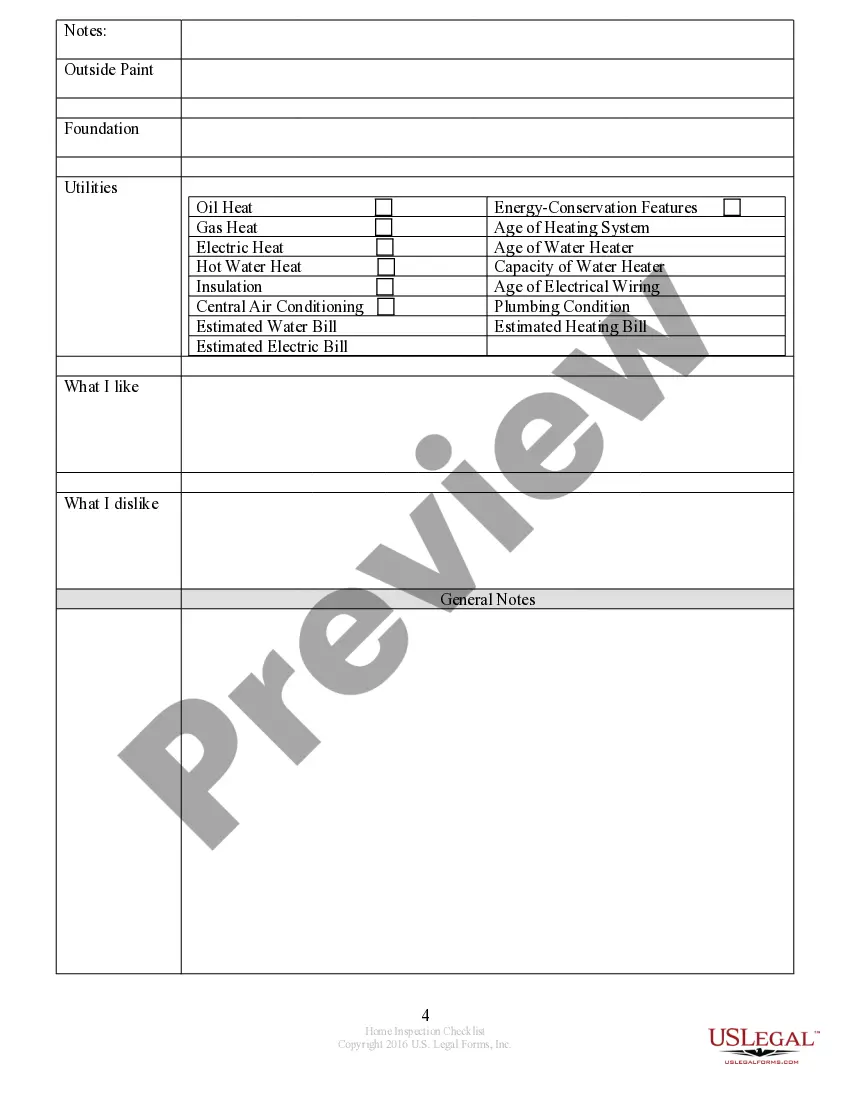

How to fill out Virginia Buyer's Home Inspection Checklist?
The Virginia State Inspection Checklist for Automobiles you view on this page is a versatile legal document designed by experienced attorneys in accordance with federal and local laws.
For over 25 years, US Legal Forms has supplied individuals, organizations, and lawyers with more than 85,000 validated, state-specific documents for various business and personal circumstances. It is the quickest, simplest, and most reliable method to obtain the necessary paperwork, as the service assures bank-grade data security and anti-malware safeguards.
Register with US Legal Forms to gain access to verified legal templates for all of life's scenarios.
- Search for the document you require and examine it.
- Browse through the file you sought and preview it or check the form description to confirm it meets your needs. If it doesn’t, use the search bar to find the correct one. Click on Buy Now once you locate the template you require.
- Register and Log In.
- Choose the pricing option that best suits you and set up an account. Use PayPal or a credit card to quickly process payment. If you already possess an account, Log In and confirm your subscription to proceed.
- Retrieve the editable template.
- Select the format you prefer for your Virginia State Inspection Checklist for Vehicles (PDF, Word, RTF) and download the template onto your device.
- Complete and sign the document.
- Print out the template to fill it out manually. Alternatively, use an online multifunctional PDF editor to efficiently and accurately complete and sign your document with a legally-binding electronic signature.
- Redownload your documents as needed.
- Reaccess the same document anytime required. Open the My documents tab in your profile to redownload any documents you previously acquired.
Form popularity
FAQ
No law-enforcement officer shall stop a motor vehicle due to an expired vehicle inspection sticker until the first day of the fourth month after the original expiration date.
As of July 1, 2019, Virginia drivers have to pay a little bit more for their annual vehicle inspections due to a bill passed earlier this year. The bill, HB 2514, raises the price of mandatory annual Virginia vehicle inspections from $16 to $20.
The vehicle shall not have any mechanical problems, such as engine, brake, or transmission problems or engine, radiator, or transmission fluid leaks that would create a safety hazard for the applicable test, or bias test results.
The basic Virginia state inspection involves testing the operation of: The driver's seat; airbags, seat belts, and doors. Brakes and parking brake. Headlights and exterior lights, including turn signals and the license plate light. All four tires, wheels and rims. The horn, rear-view and side-view mirrors.
Your windshield and other glass will be checked for cracks or chips, as well as the operation of the drivers door window. Your wipers, blades, and defrosters will also be inspected. Exhaust and emission system components are also on the list for inspection.