Joint Tenant Tenancy For Sale
Description
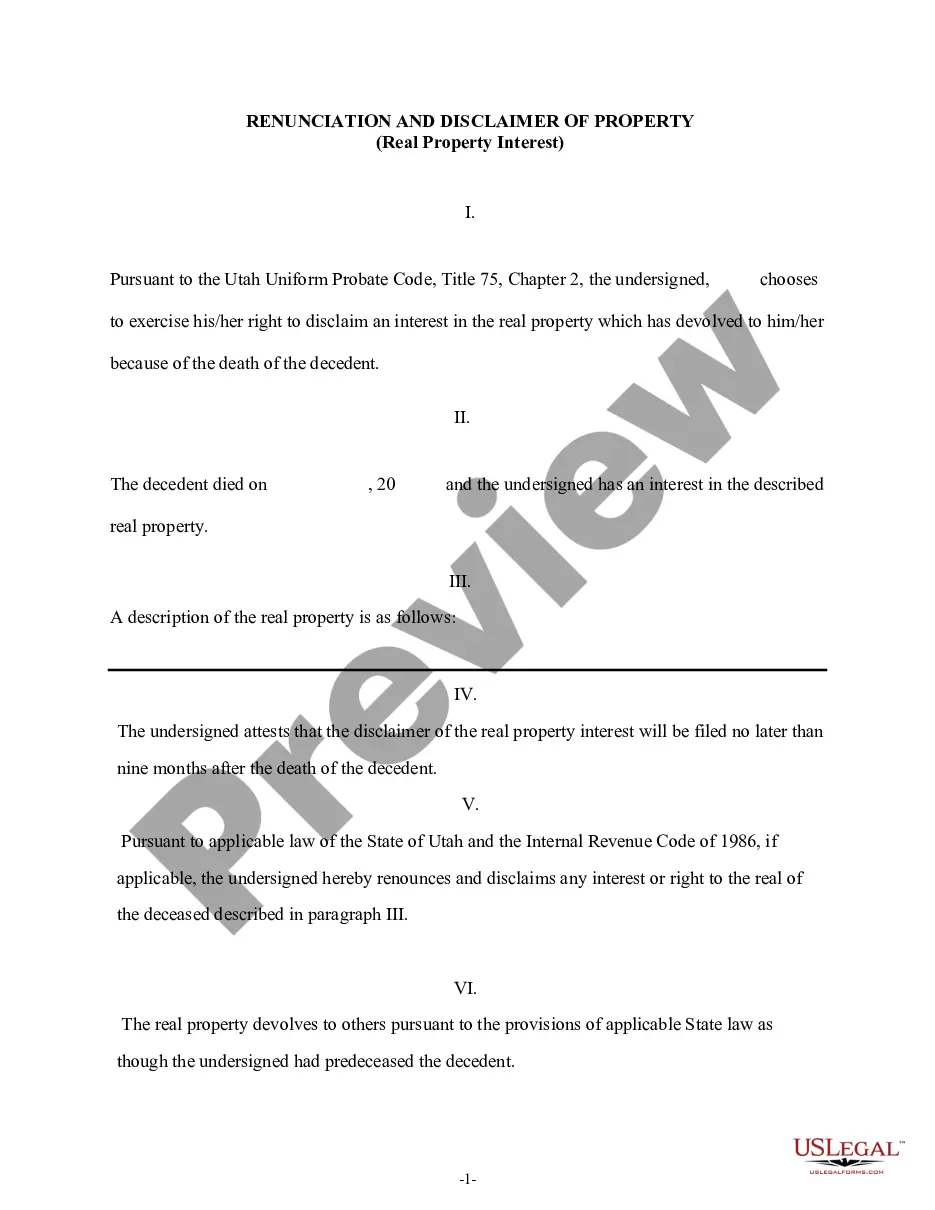
Get your form ready online
Our built-in tools help you complete, sign, share, and store your documents in one place.
Make edits, fill in missing information, and update formatting in US Legal Forms—just like you would in MS Word.
Download a copy, print it, send it by email, or mail it via USPS—whatever works best for your next step.
Sign and collect signatures with our SignNow integration. Send to multiple recipients, set reminders, and more. Go Premium to unlock E-Sign.
If this form requires notarization, complete it online through a secure video call—no need to meet a notary in person or wait for an appointment.
We protect your documents and personal data by following strict security and privacy standards.

Make edits, fill in missing information, and update formatting in US Legal Forms—just like you would in MS Word.

Download a copy, print it, send it by email, or mail it via USPS—whatever works best for your next step.

Sign and collect signatures with our SignNow integration. Send to multiple recipients, set reminders, and more. Go Premium to unlock E-Sign.

If this form requires notarization, complete it online through a secure video call—no need to meet a notary in person or wait for an appointment.

We protect your documents and personal data by following strict security and privacy standards.
Looking for another form?

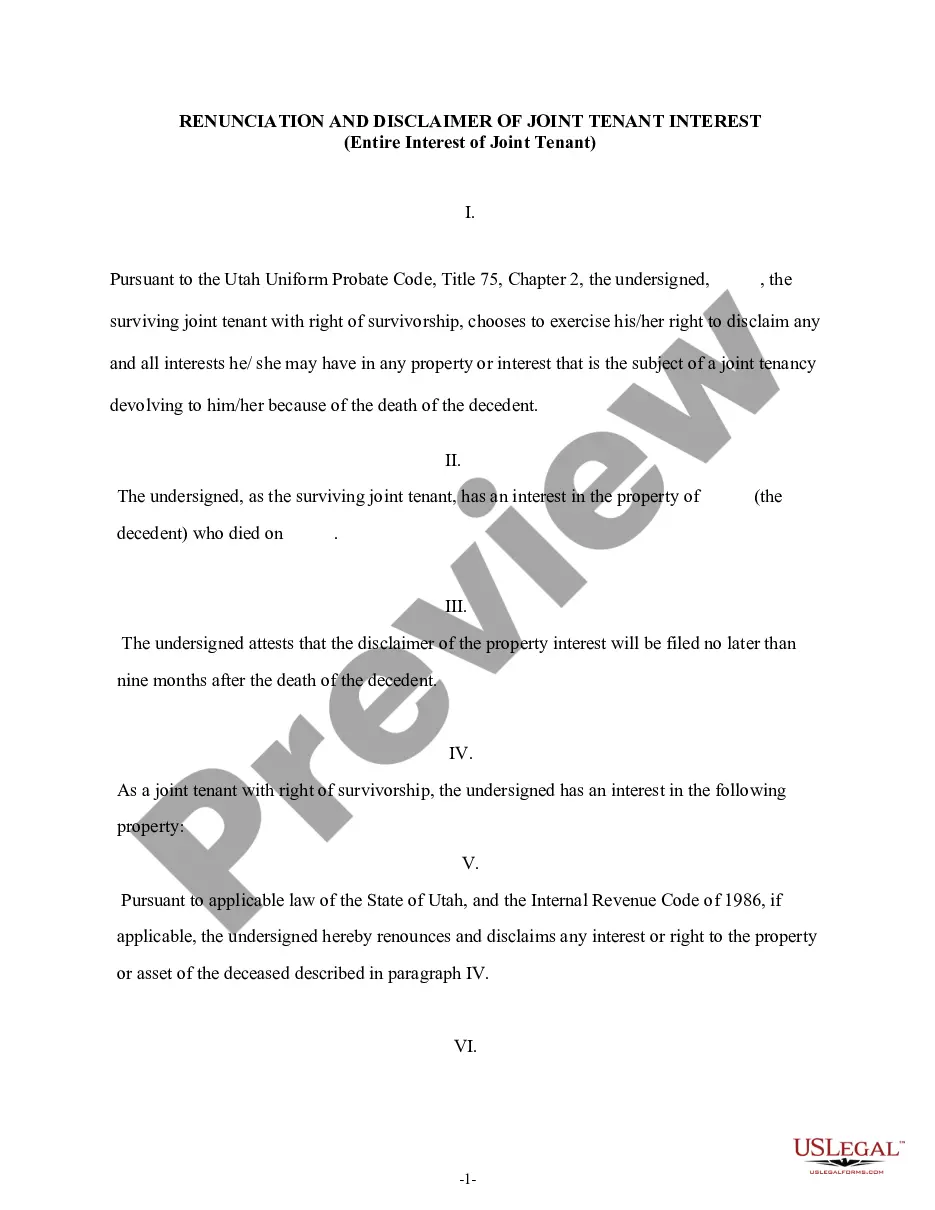
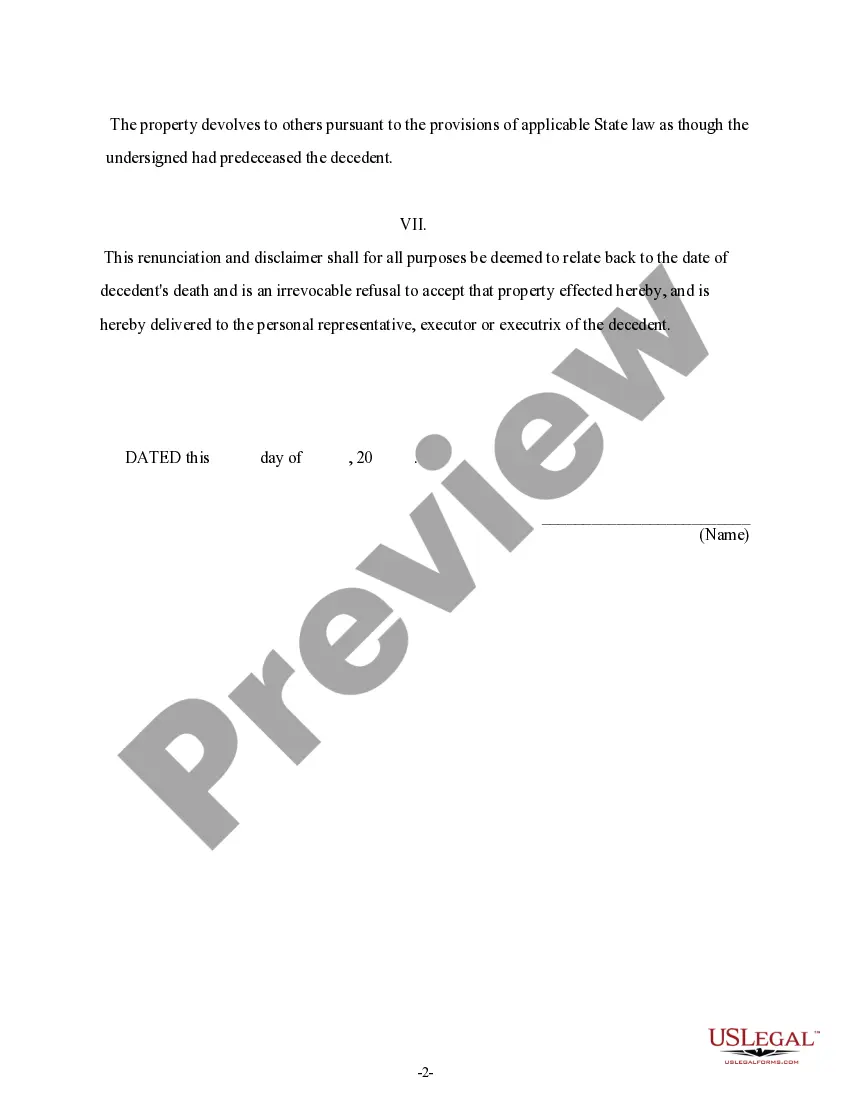
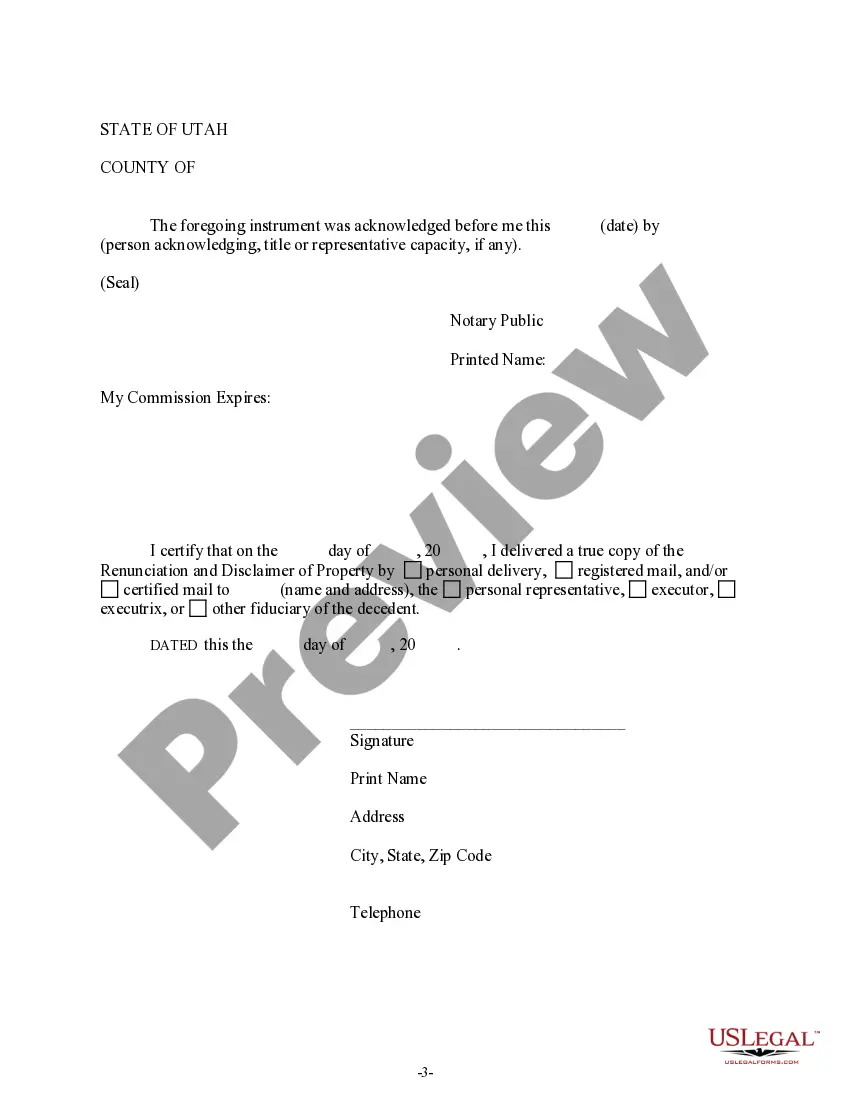
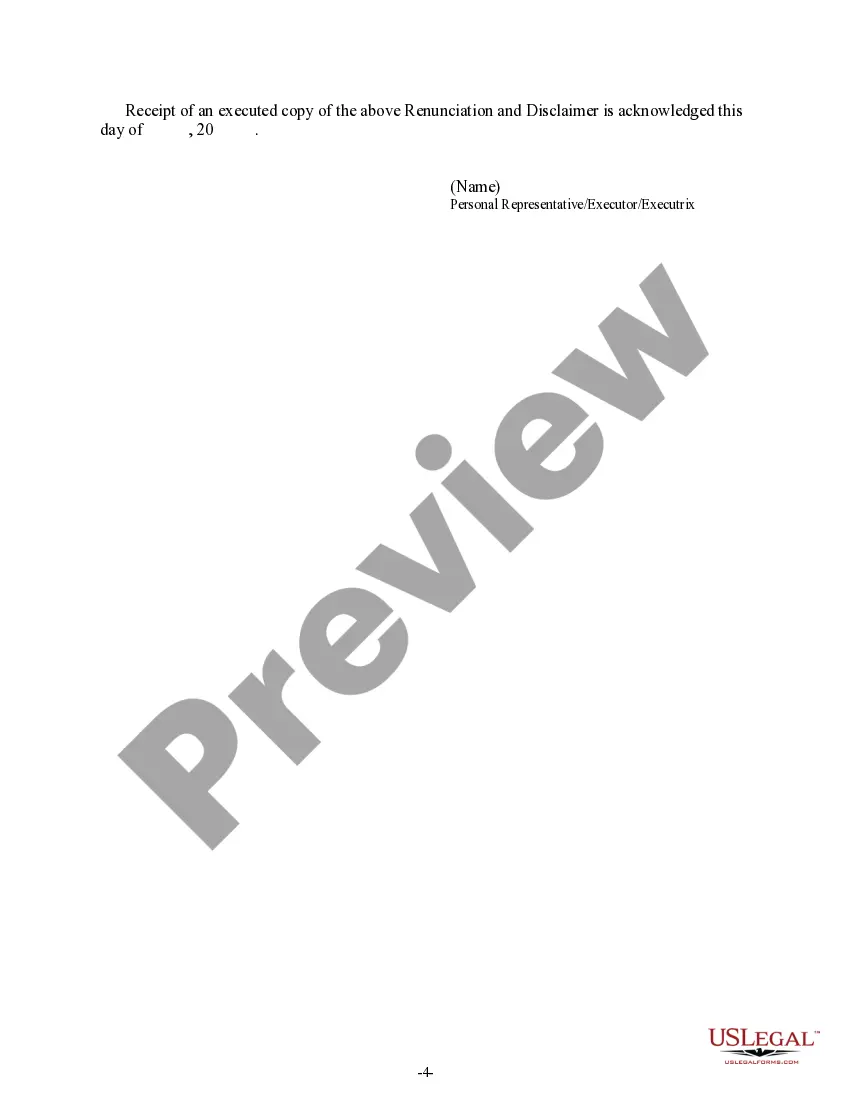
How to fill out Utah Renunciation And Disclaimer Of Joint Tenant Or Tenancy Interest?
- If you're a returning user, log in to your account to access forms and click the Download button for the needed template. Ensure your subscription is active; renew it if necessary.
- For first-time users, begin by reviewing the form's Preview mode and description to confirm that it meets your requirements and complies with local laws.
- If the form does not fit your needs, utilize the Search tab to find alternative templates that might work better for you.
- Purchase your selected document by clicking the Buy Now button, and choose your preferred subscription plan. You'll need to create an account for full access.
- Complete the payment process by entering your credit card information or using PayPal. After payment, download your document directly.
- Store the form on your device for future use, easily accessible from your profile under My Forms whenever needed.
With US Legal Forms, you benefit from a remarkable collection of legal forms, ensuring you have access to a broader array of templates than other services at similar costs.
Take control of your legal needs today! Start by visiting US Legal Forms and find the precise documentation to support your investment decisions.
Form popularity
FAQ
In a joint tenant tenancy for sale, both partners hold equal rights to the property. If one partner wants to sell but the other does not, the selling partner may face challenges. Typically, the selling partner can request a court order to force the sale, but this can be a lengthy process. Utilizing resources from US Legal Forms can help navigate these situations by providing the proper legal forms to facilitate communication and resolution between both parties.
When someone buys you out of a house, the amount you receive depends on the property's current market value and your ownership share. Typically, this figure reflects your percentage of ownership in the joint tenant tenancy for sale, adjusted for any outstanding debts or expenses associated with the property. It’s important to evaluate all aspects of the sale to ensure you receive a fair payout.
To buy someone out of a joint tenancy, you first need to determine the fair market value of the property. Then, you can negotiate a buyout amount that both parties agree upon. Once you reach an agreement, complete the necessary paperwork to transfer ownership. This process is crucial when considering a joint tenant tenancy for sale, as it ensures a clear and fair transition.
The downsides of joint tenancy include potential conflicts between co-owners and limited flexibility in managing the property. If one owner wants to sell or refinance, they may require consent from others, which can hinder decisions. Before deciding on joint tenant tenancy for sale, assess the compatibility of all owners involved.
If one owner dies in a joint tenancy arrangement, the property automatically transfers to the surviving owner(s) through the right of survivorship. This means that the deceased's share does not go through probate, making the process quicker and more straightforward. This aspect is often a major draw for those considering joint tenant tenancy for sale.
A significant disadvantage of joint tenancy ownership is that all owners have equal rights, which can lead to challenges if one person wants to sell their share. Furthermore, if one co-owner faces financial trouble, creditors may place liens on the property. Therefore, when considering joint tenant tenancy for sale, weigh these risks carefully.
Avoiding joint ownership can protect you from potential legal disputes and financial complications with your co-owners. If disagreements arise, they can become costly and time-consuming to resolve. If you're contemplating joint tenant tenancy for sale, consider alternatives that may offer you more control and flexibility.
Joint tenancy can have various tax implications, especially regarding the transfer of ownership. For instance, if one owner dies, the property may not go through the probate process, simplifying estate taxes. However, you should consult a tax professional before pursuing joint tenant tenancy for sale to ensure you understand any potential financial impact.
Joint ownership can lead to complications in decision-making, especially if owners disagree on the property's management. You might face issues like divided interests during a sale or difficulties when one owner wants to exit the agreement. Additionally, if you aim to find joint tenant tenancy for sale, you should be mindful of these complexities.
One significant disadvantage of joint tenancy ownership is the potential for disputes among co-owners. If disagreements arise, they can complicate decisions regarding the property's management or sale. Additionally, if one owner incurs debt, creditors may be able to claim their share of the property. Understanding these risks can help you assess whether joint tenant tenancy for sale is the right choice for your situation.