Liability Insurance For Child Care
Description
Get your form ready online
Our built-in tools help you complete, sign, share, and store your documents in one place.
Make edits, fill in missing information, and update formatting in US Legal Forms—just like you would in MS Word.
Download a copy, print it, send it by email, or mail it via USPS—whatever works best for your next step.
Sign and collect signatures with our SignNow integration. Send to multiple recipients, set reminders, and more. Go Premium to unlock E-Sign.
If this form requires notarization, complete it online through a secure video call—no need to meet a notary in person or wait for an appointment.
We protect your documents and personal data by following strict security and privacy standards.

Make edits, fill in missing information, and update formatting in US Legal Forms—just like you would in MS Word.

Download a copy, print it, send it by email, or mail it via USPS—whatever works best for your next step.

Sign and collect signatures with our SignNow integration. Send to multiple recipients, set reminders, and more. Go Premium to unlock E-Sign.

If this form requires notarization, complete it online through a secure video call—no need to meet a notary in person or wait for an appointment.

We protect your documents and personal data by following strict security and privacy standards.
Looking for another form?






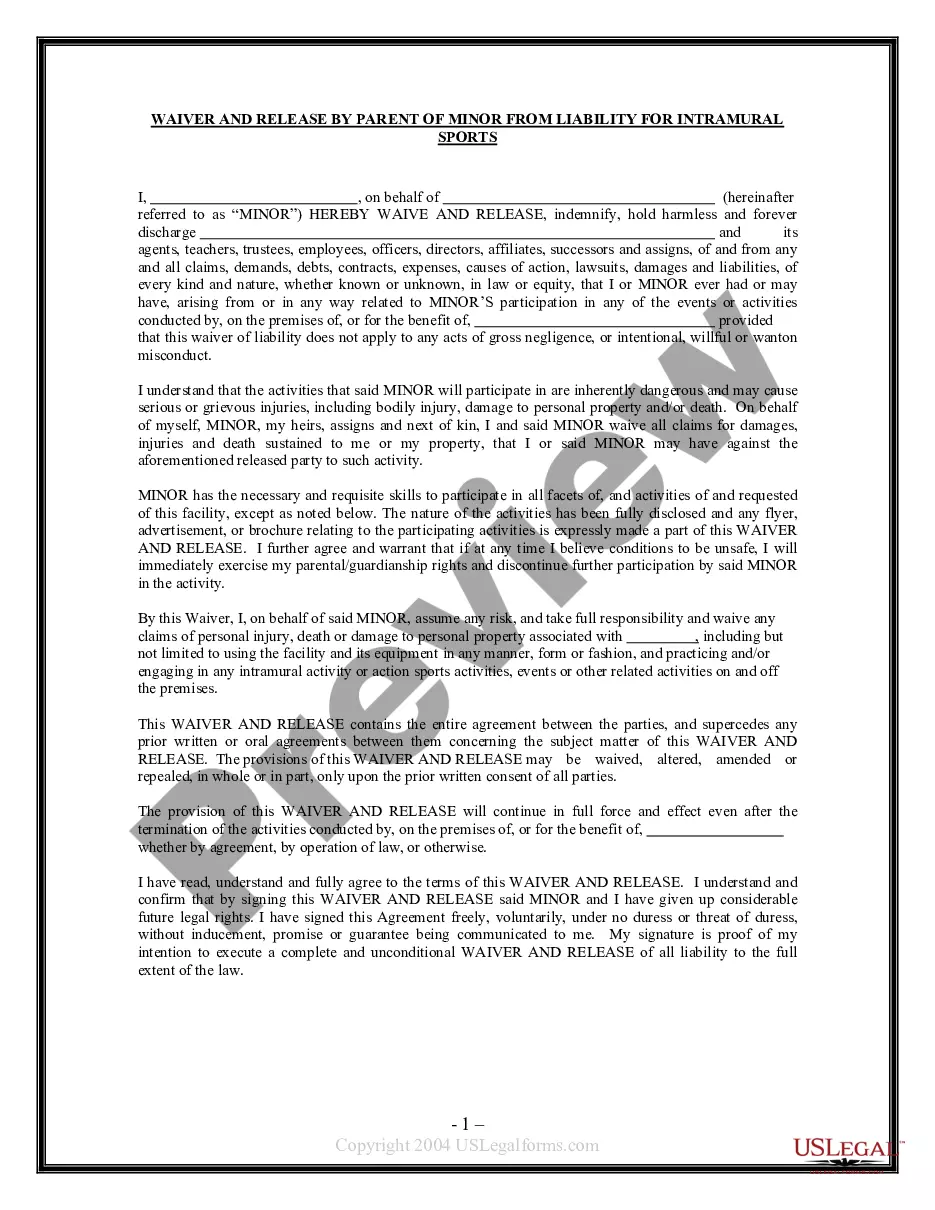
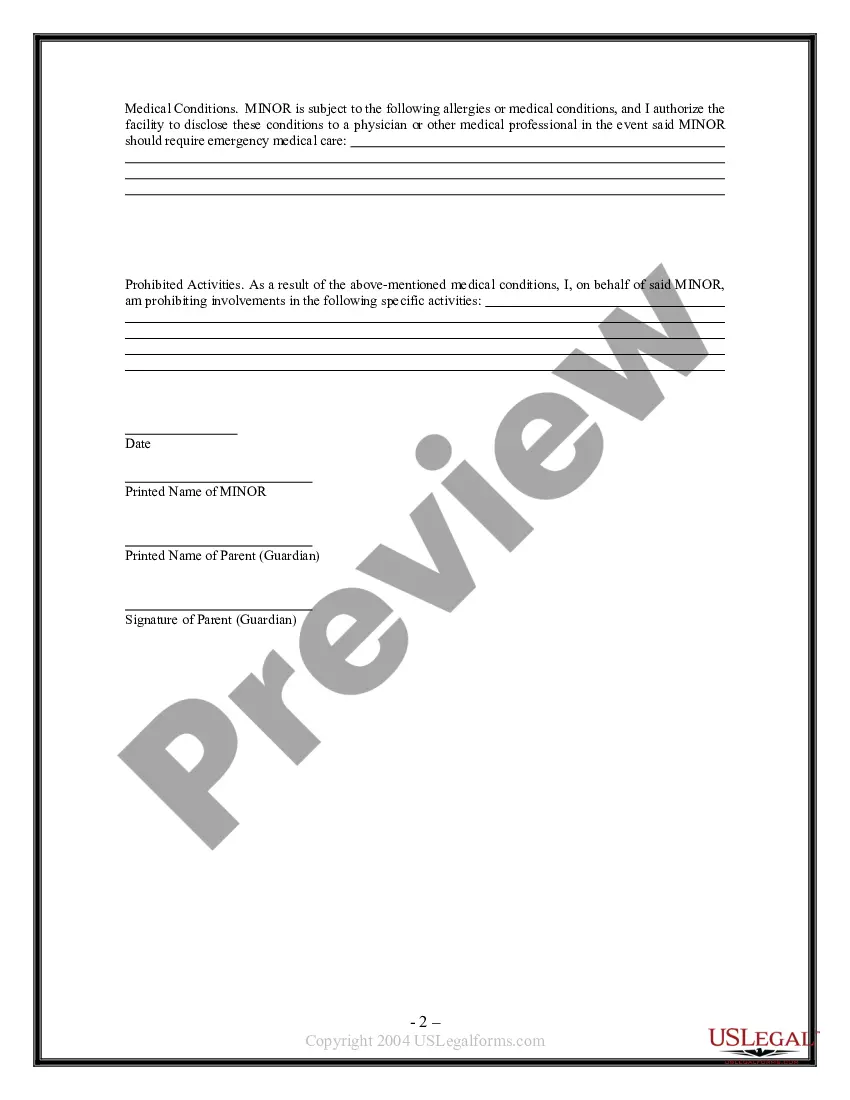
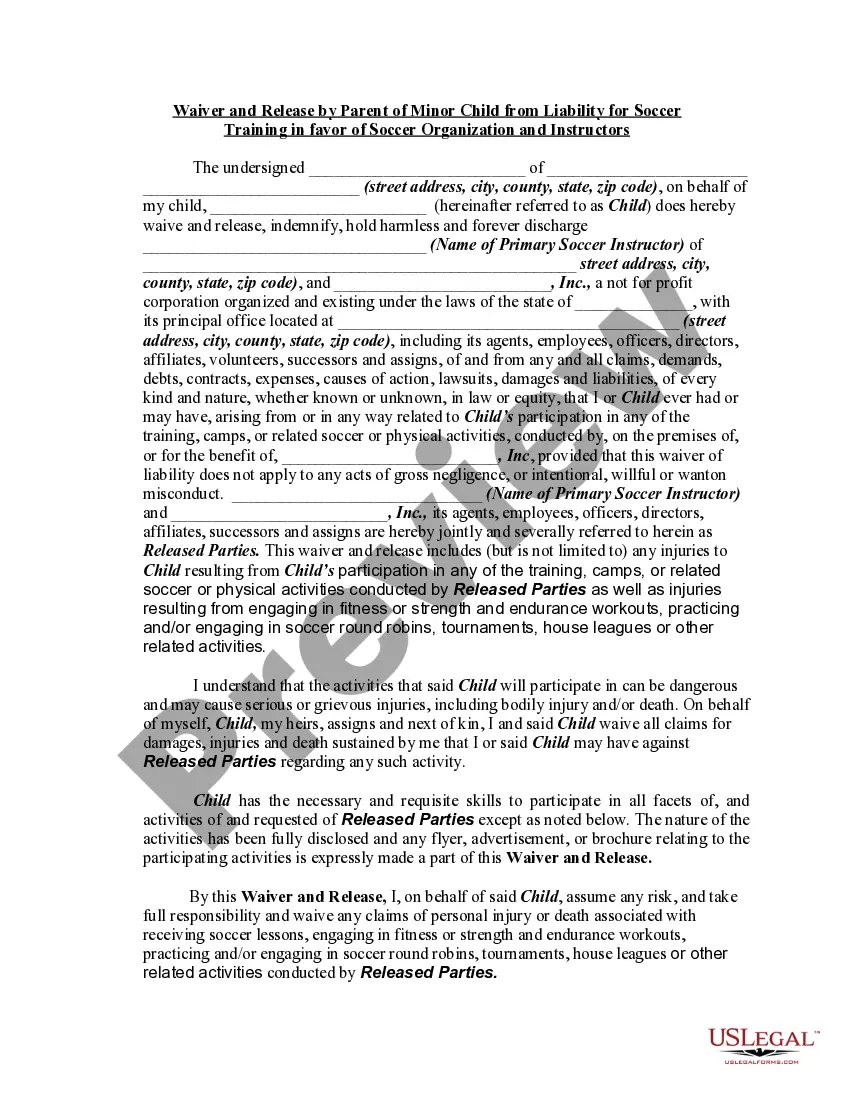
How to fill out Waiver And Release From Liability For Minor Child For Intramural Sports?
How can you obtain professional legal documents that comply with your state's regulations and prepare the Liability Insurance For Child Care without hiring an attorney.
Numerous online services provide templates to address various legal situations and requirements. However, it can require time to determine which of the offered samples meet both your needs and legal standards.
US Legal Forms is a trustworthy platform that assists you in finding official documents written in accordance with the most recent updates to state law, while also saving money on legal services.
If you lack a US Legal Forms account, follow the guidance below: Review the page you have accessed to confirm if the form meets your requirements. Utilize the form description and preview options if they are offered. If needed, look for another template in the header for your state. Click the Buy Now button once you identify the right document. Select the most appropriate pricing plan, then sign in or create an account. Choose the payment method (either by credit card or via PayPal). Adjust the file format for your Liability Insurance For Child Care and click Download. The obtained templates remain yours: you can always return to them in the My documents section of your profile. Join our platform and prepare legal documents yourself, just like a seasoned legal professional!
- US Legal Forms is not an ordinary web library.
- It comprises over 85k verified templates for diverse business and personal situations.
- All documents are organized by area and state to facilitate your search process.
- Moreover, it integrates with powerful tools for PDF editing and electronic signatures, allowing users with a Premium subscription to conveniently complete their documentation online.
- Acquiring the required paperwork takes minimal time and effort.
- If you have an account already, Log In and ensure your subscription is up to date.
- Download the Liability Insurance For Child Care using the appropriate button beside the document's name.
Form popularity
FAQ
Calculating personal liability insurance for child care involves assessing several factors. First, consider the number of children in your care and the activities they engage in. It's crucial to evaluate potential risks that could arise from these activities. Finally, you can use online calculators or consult an insurance agent for precise estimates tailored to your specific needs.
The daycare liability clause is a provision in contracts that details the responsibilities and liabilities of daycare providers in the event of an accident. This clause serves to protect both the provider and the parents by clearly outlining how liability is handled. It is crucial for daycare operators to include a comprehensive liability clause to align their policies with liability insurance for child care.
Yes, child care is considered a potential liability due to the risks involved in caring for children. Providers may face various situations that could lead to liability claims, making it essential to have appropriate liability insurance for child care. By securing this insurance, daycare providers can focus on nurturing and educating children without undue stress about potential risks.
Yes, liability insurance for child care typically includes coverage for children while they are in the care of the provider. This insurance helps protect against claims from parents for injuries sustained by their children during daycare activities. It's important to verify the specifics of coverage with your insurance provider to ensure comprehensive protection.
The liability protection clause is a critical component of a contract that outlines the extent of coverage and protection offered to child care providers. This clause serves to limit liability in case of accidents or injuries occurring on the premises. Having a clear liability protection clause is vital for securing suitable liability insurance for child care.
If a child is hurt at daycare, liability insurance for child care is typically responsible for covering medical expenses and related costs. The daycare provider's liability insurance will often handle claims arising from such incidents. However, it is important to review the terms of the insurance policy and service agreements to understand coverage specifics.
The liability clause in a service agreement outlines the responsibilities of each party regarding potential damages or injuries that may occur during the service period. This clause is crucial for child care providers as it specifies who is responsible in case of accidents, safeguarding both the provider and the parents. Including a strong liability clause helps solidify the foundation of liability insurance for child care.
The general liability code for daycare refers to the classification used by insurance companies to categorize the risks associated with providing child care services. It helps determine the appropriate liability insurance for child care policies. Understanding this code is essential to ensure adequate coverage and compliance with state regulations.
If the incident is not your fault, you still have options to claim liability insurance for child care. Start by notifying your insurance company about the incident, providing evidence that you were not at fault. Your insurer can help you navigate the process, which may involve contacting the at-fault party's insurance to seek compensation. Document everything thoroughly to support your claim.
Typically, you have a limited time frame to file a liability claim for child care, often referred to as the statute of limitations. This time period varies by state, so it's crucial to understand the laws in your area. Generally, it’s best to act quickly, as timely filing can influence the outcome of your claim. If you're unsure, consulting with a legal expert can provide clarity.
