Liablity Waiver
Description
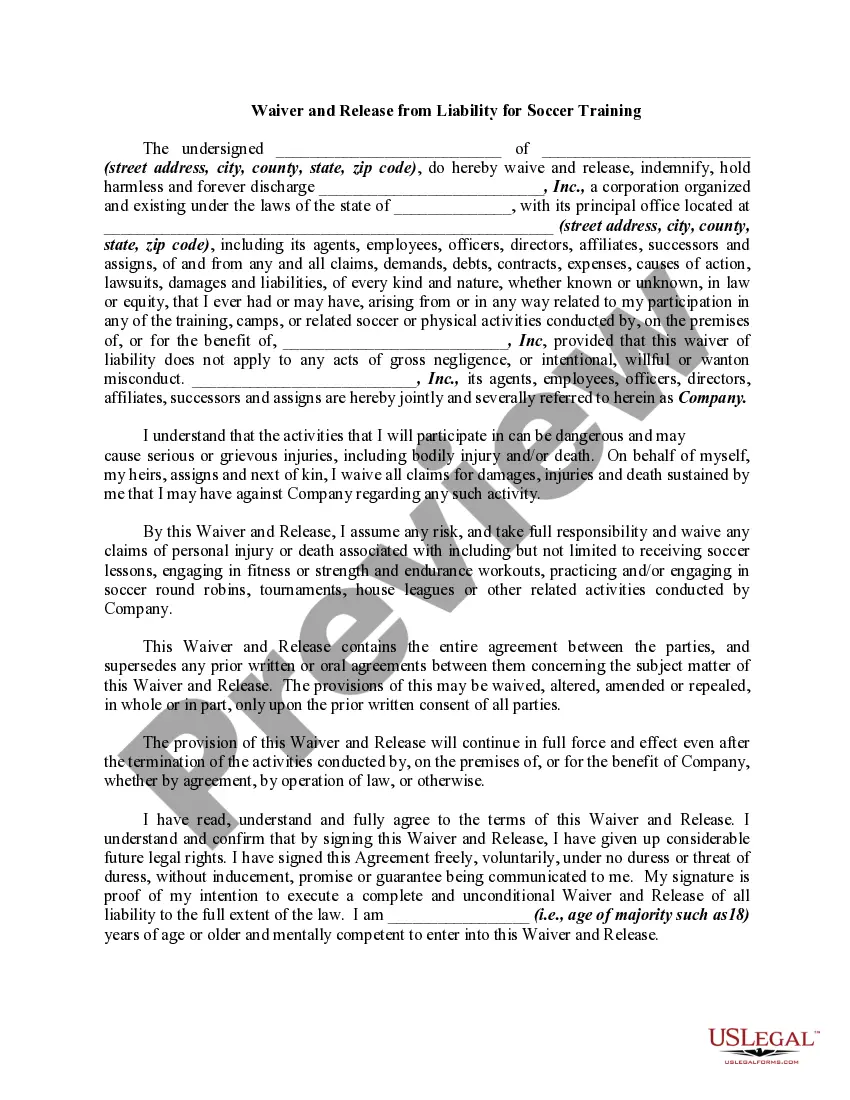
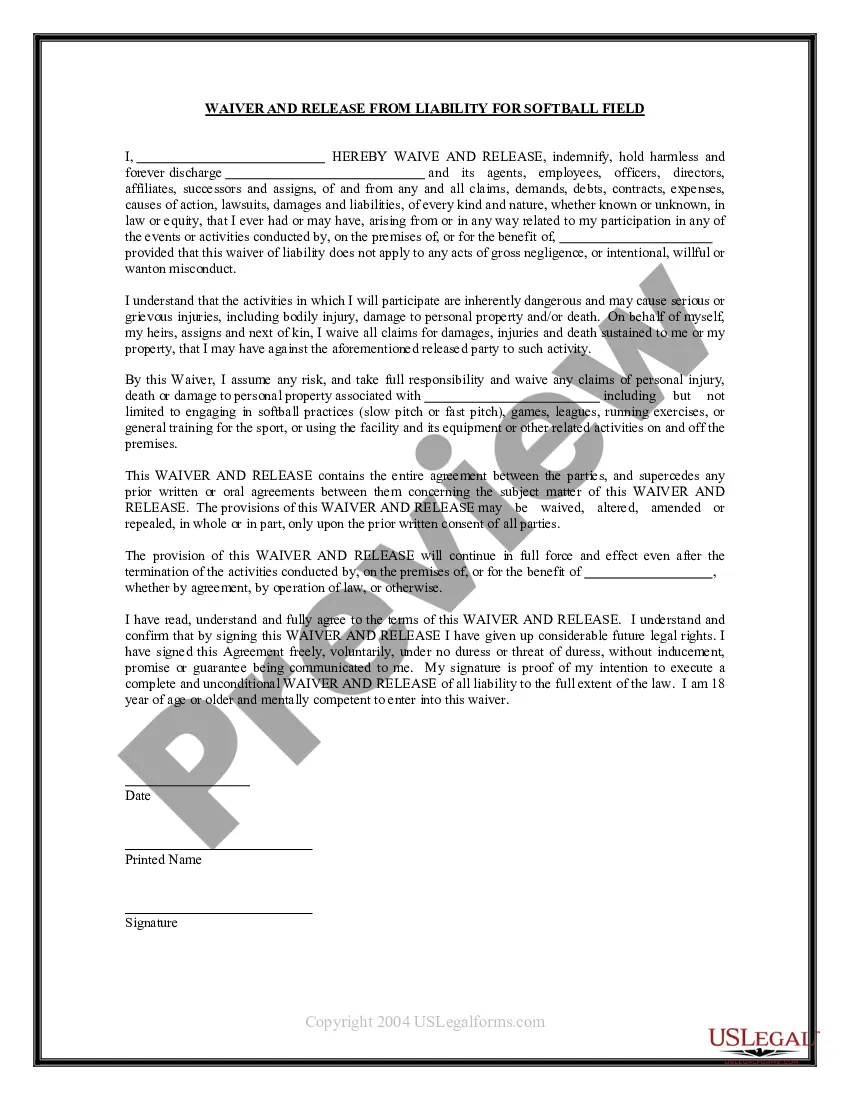
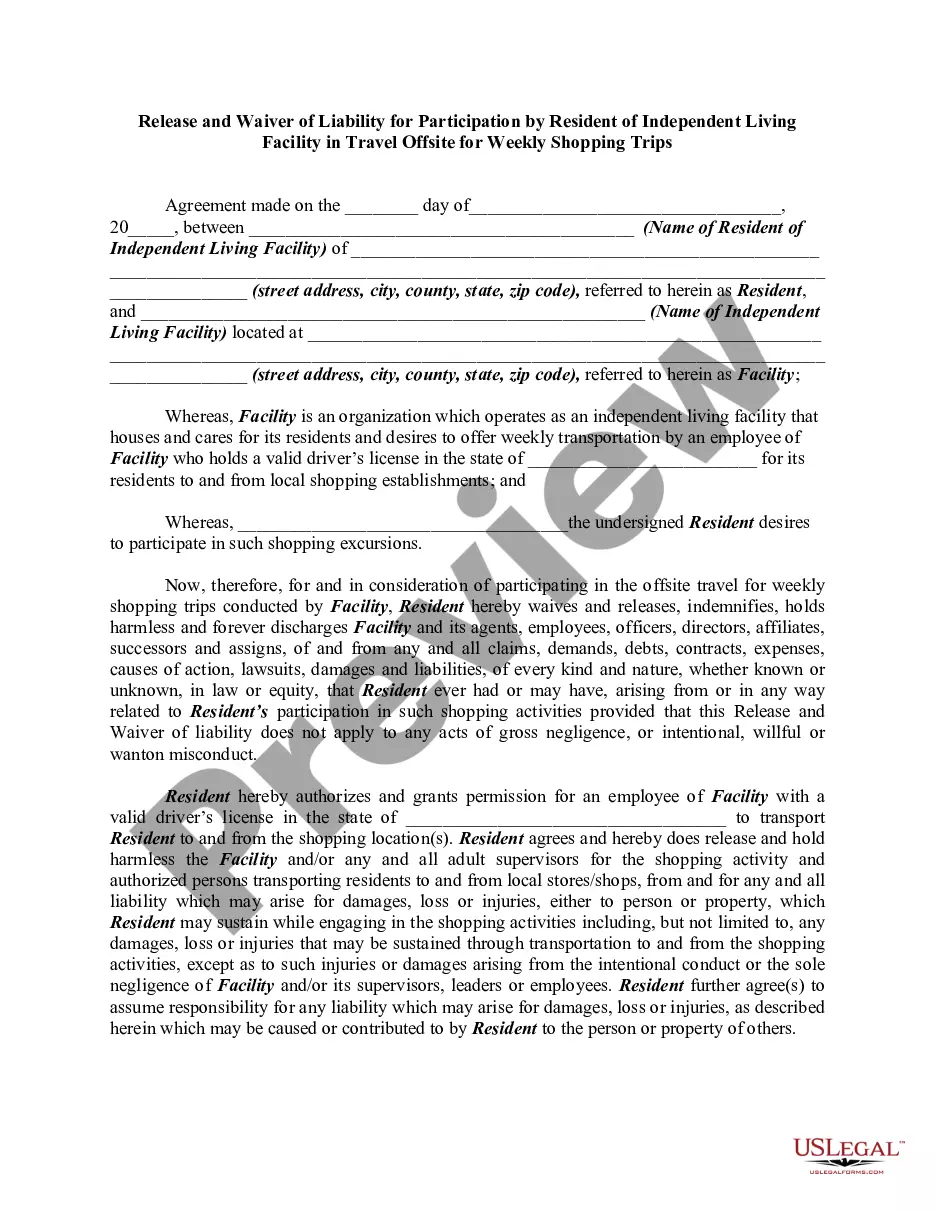
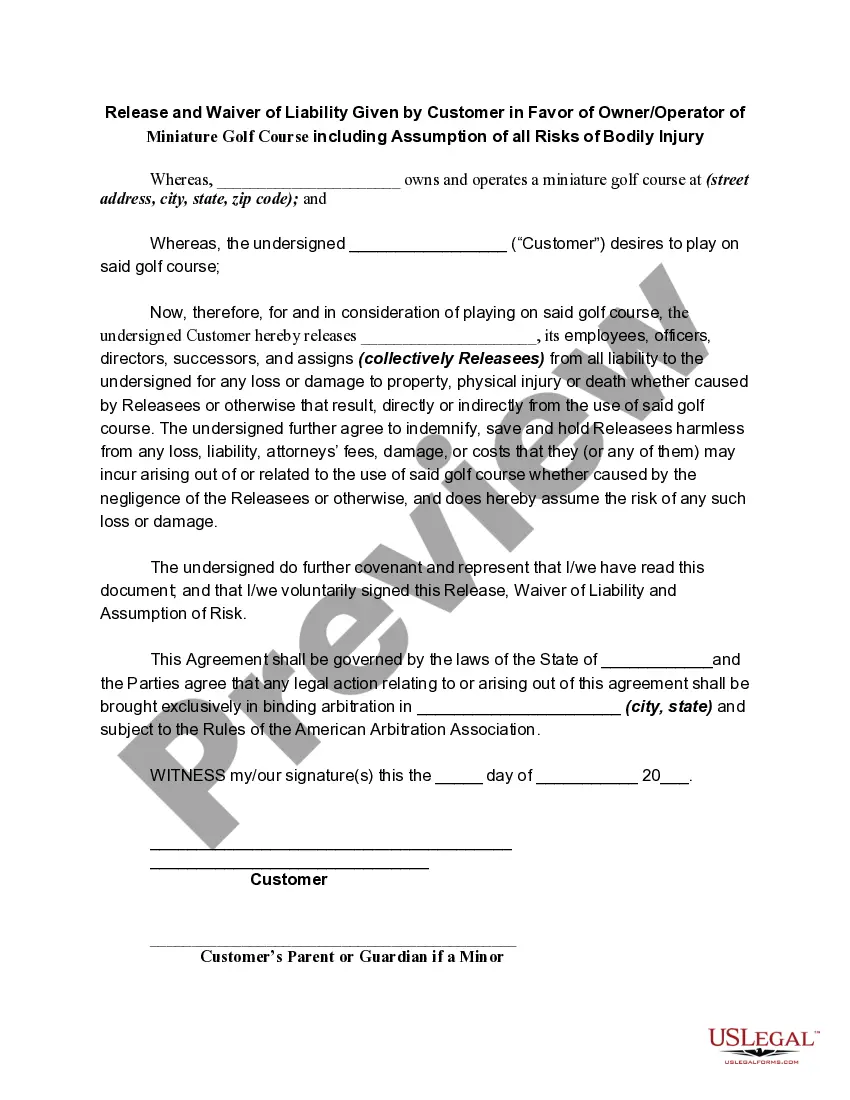
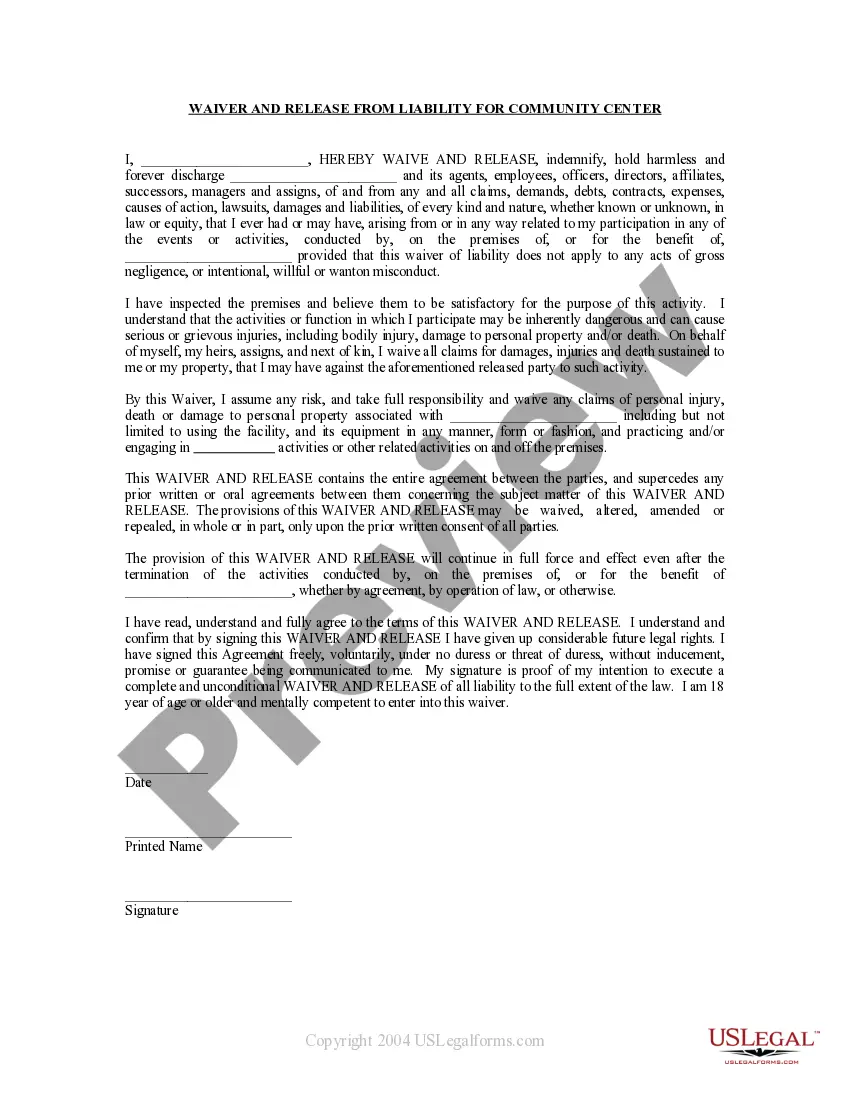
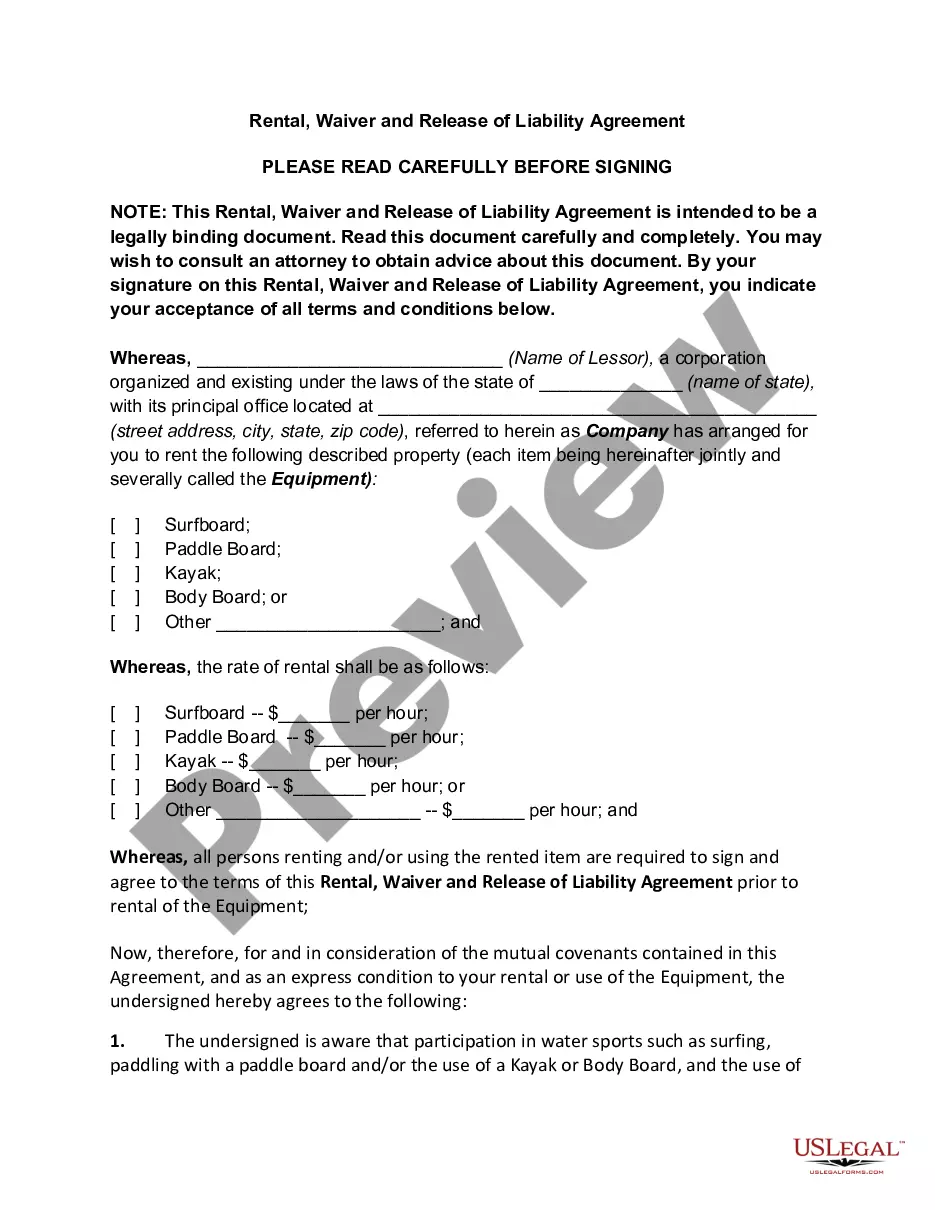

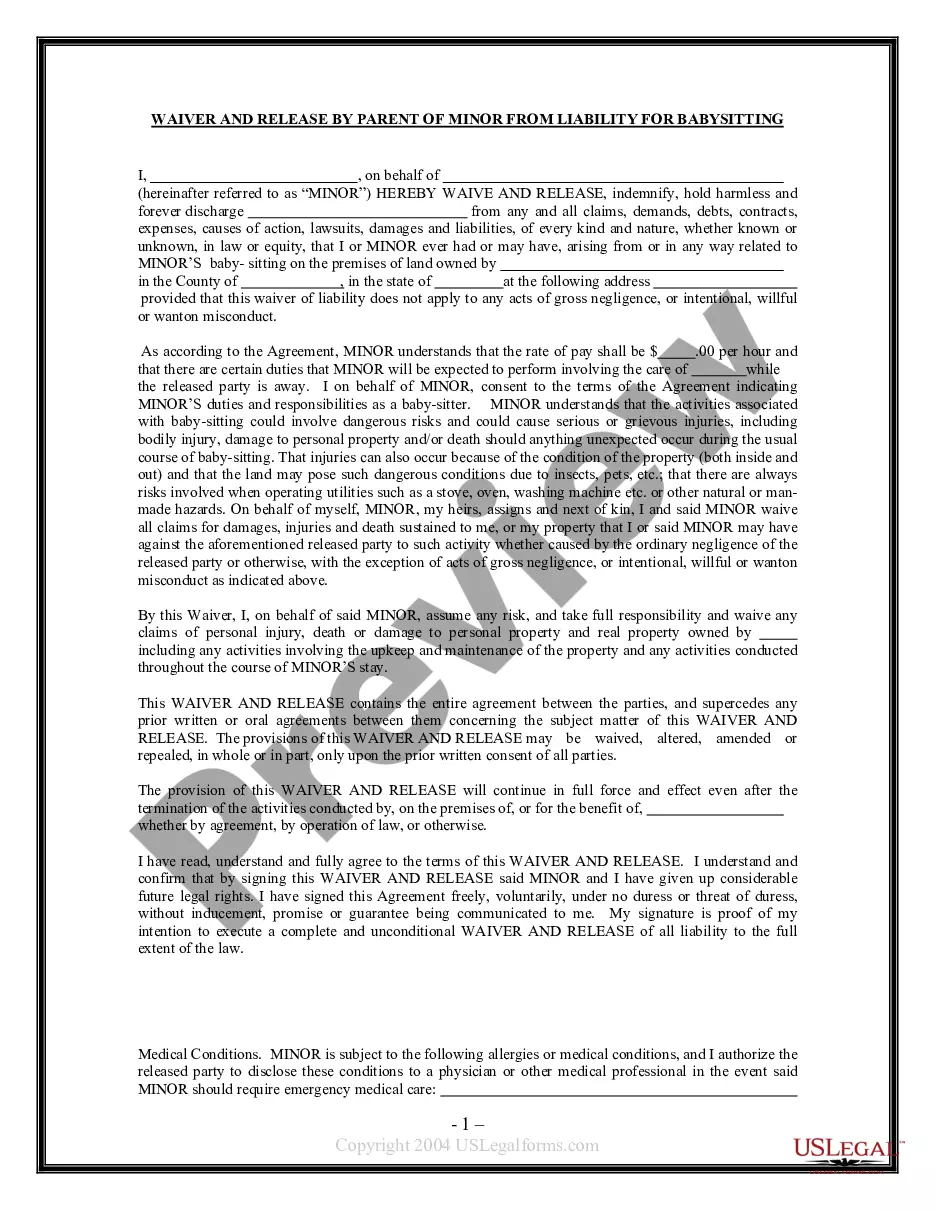
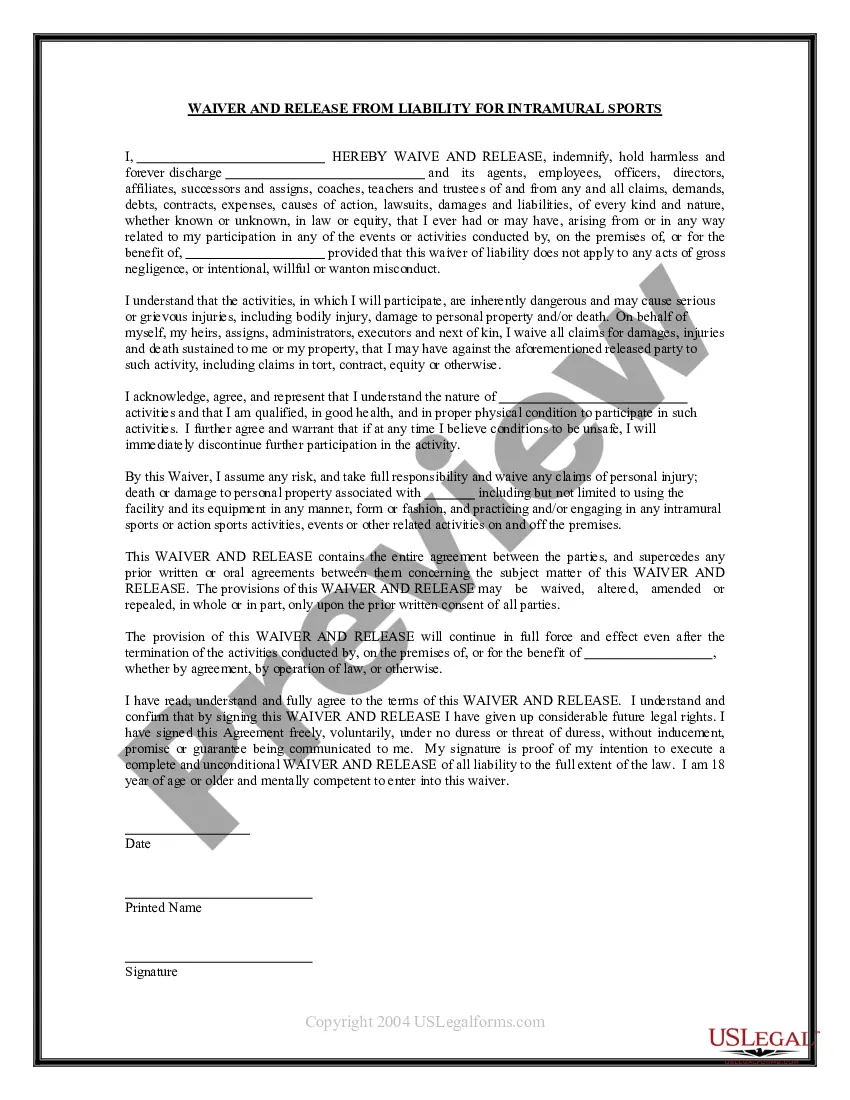
How to fill out Waiver And Release From Liability For Adult For Intramural Sports?
- Start by logging in to your US Legal Forms account if you’re a returning user. Make sure your subscription is active; renew it if necessary.
- For first-time users, visit the website and familiarize yourself with the form categories available. Use the search function to locate the specific liability waiver you need.
- Review the form preview and description to ensure it meets your specific requirements and complies with your local laws.
- Select the appropriate liability waiver. If adjustments are needed, search for alternative templates that fit your criteria.
- Proceed to purchase by clicking the 'Buy Now' button. Choose the subscription option that suits your needs, and create an account for access.
- Complete your transaction by entering your payment information, either through credit card or PayPal.
- Download the completed liability waiver form to your device. You can always access it later through the 'My Forms' section in your profile.
US Legal Forms provides an extensive collection of over 85,000 legal documents, offering more options than many competitors. This empowers users to find the right form efficiently.
Take control of your legal needs today! Explore US Legal Forms for quick access to reliable liability waivers and expert assistance.
Form popularity
FAQ
Limitations of liability can be enforceable in court, but their effectiveness can vary based on jurisdiction. Courts typically uphold these limitations if they are reasonable and clearly stated. When creating a liability waiver, ensure that your limitations of liability are well-defined and compliant with applicable laws to enhance their likelihood of being accepted in court.
Waivers can provide a level of protection against lawsuits, but they do not guarantee complete immunity. Generally, if a liability waiver is properly drafted, it may prevent participants from suing for injuries sustained during the activity outlined. However, waivers may not protect you from claims resulting from gross negligence or intentional misconduct.
Waivers do not always hold up in court, as their enforceability depends on various factors. Courts will examine the language used in the waiver, its clarity, and whether it complies with state laws. It's essential to draft liability waivers carefully, ensuring they are specific and comprehensive to increase their chances of being upheld.
To create a release of liability waiver, start by clearly outlining the activities involved and the risks associated with them. Specify the parties involved and include clear language that indicates participants are waiving their rights to sue. Consider using a reliable platform like US Legal Forms to access templates and ensure your liability waiver adheres to legal standards, providing peace of mind.
A liability waiver may not cover all forms of negligence or intentional harm. Courts may find certain clauses unenforceable if they are deemed unreasonable. Additionally, a liability waiver often cannot protect against gross negligence or violations of public policy. When drafting a liability waiver, it is crucial to understand these limitations to ensure it provides adequate protection.
A liability waiver is generally enforceable when it is clear, voluntary, and signed by an informed party. Essential elements include explicit language that outlines potential risks and the acknowledgment of those risks by the signer. Crafting such waivers through services like USLegalForms ensures that you adhere to legal standards and effectively communicate the waiver's intentions.
Liability waiver insurance is essential for businesses and organizations that expose themselves to potential legal claims, such as sports facilities, event organizers, or recreational providers. This insurance protects against lawsuits stemming from incidents covered by waivers. Additionally, leveraging USLegalForms can guide you in understanding your obligation and needs regarding liability waivers and their associated insurance.
Liability waivers are often enforceable, but their enforceability can vary by state and context. Courts typically consider aspects like clarity, fairness, and whether the signer fully understood the terms. Utilizing platforms like USLegalForms can help you draft effective liability waivers that stand a better chance of being upheld in court.
Not necessarily. A liability waiver generally aims to limit the ability to sue for certain incidents, but it does not eliminate the right to take legal action entirely. If a waiver is deemed enforceable, it may restrict lawsuits for specified risks, yet individuals can still pursue legal claims under specific conditions, especially if negligence or misconduct is involved.
Yes, liability waivers can be legally binding if they meet specific criteria. For a waiver to be enforceable, it must clearly state the rights being waived, be voluntarily signed, and not contravene public policy. However, the legal standing of a liability waiver can depend on the jurisdiction and the circumstances surrounding its signing.