Release Waiver
Description
Get your form ready online
Our built-in tools help you complete, sign, share, and store your documents in one place.
Make edits, fill in missing information, and update formatting in US Legal Forms—just like you would in MS Word.
Download a copy, print it, send it by email, or mail it via USPS—whatever works best for your next step.
Sign and collect signatures with our SignNow integration. Send to multiple recipients, set reminders, and more. Go Premium to unlock E-Sign.
If this form requires notarization, complete it online through a secure video call—no need to meet a notary in person or wait for an appointment.
We protect your documents and personal data by following strict security and privacy standards.

Make edits, fill in missing information, and update formatting in US Legal Forms—just like you would in MS Word.

Download a copy, print it, send it by email, or mail it via USPS—whatever works best for your next step.

Sign and collect signatures with our SignNow integration. Send to multiple recipients, set reminders, and more. Go Premium to unlock E-Sign.

If this form requires notarization, complete it online through a secure video call—no need to meet a notary in person or wait for an appointment.

We protect your documents and personal data by following strict security and privacy standards.
Looking for another form?





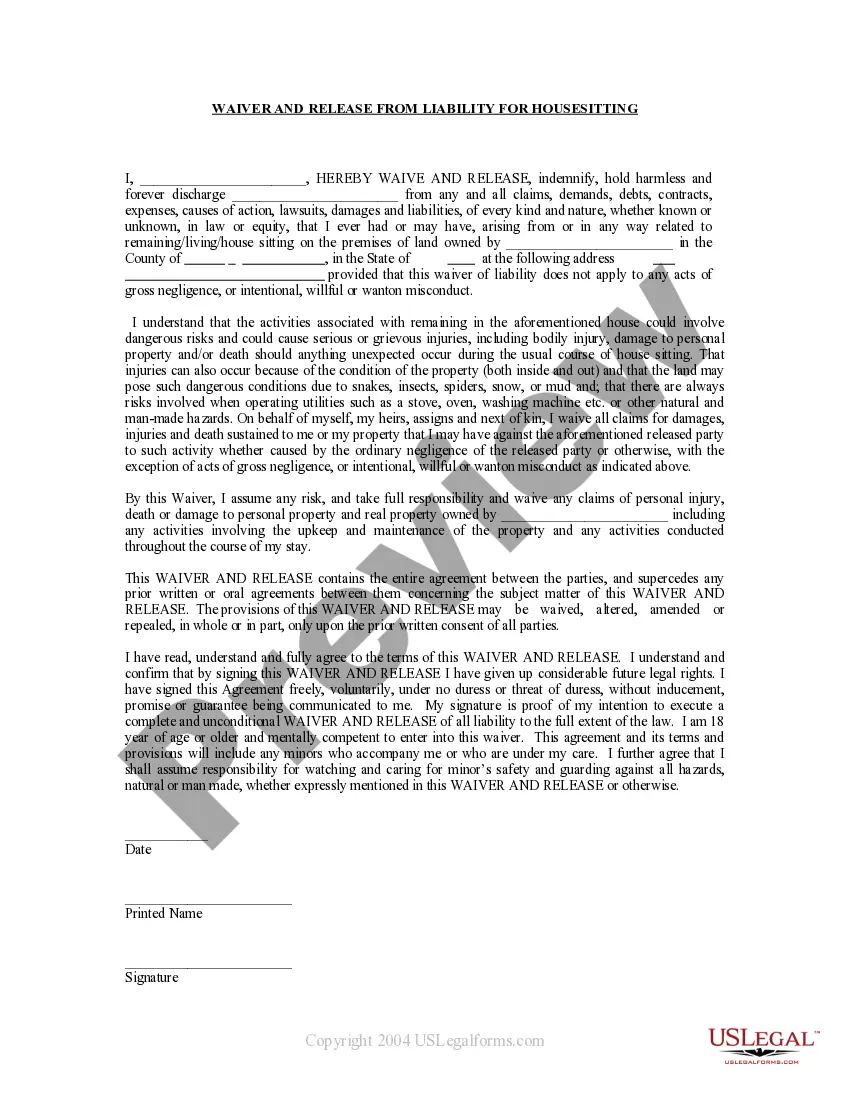
How to fill out Waiver And Release From Liability For Adult For House Sitting?
- If you're a returning user, log in to your account. Make sure your subscription is active, and download the desired release waiver template by clicking the Download button.
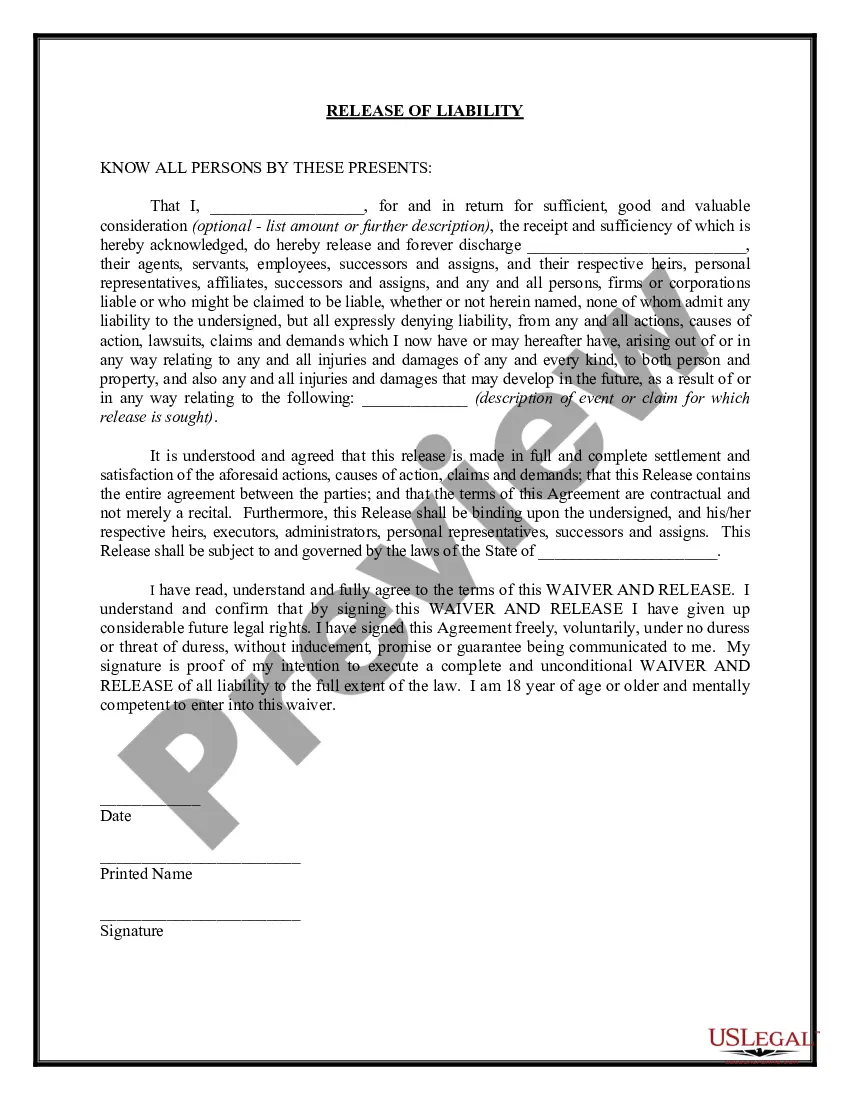
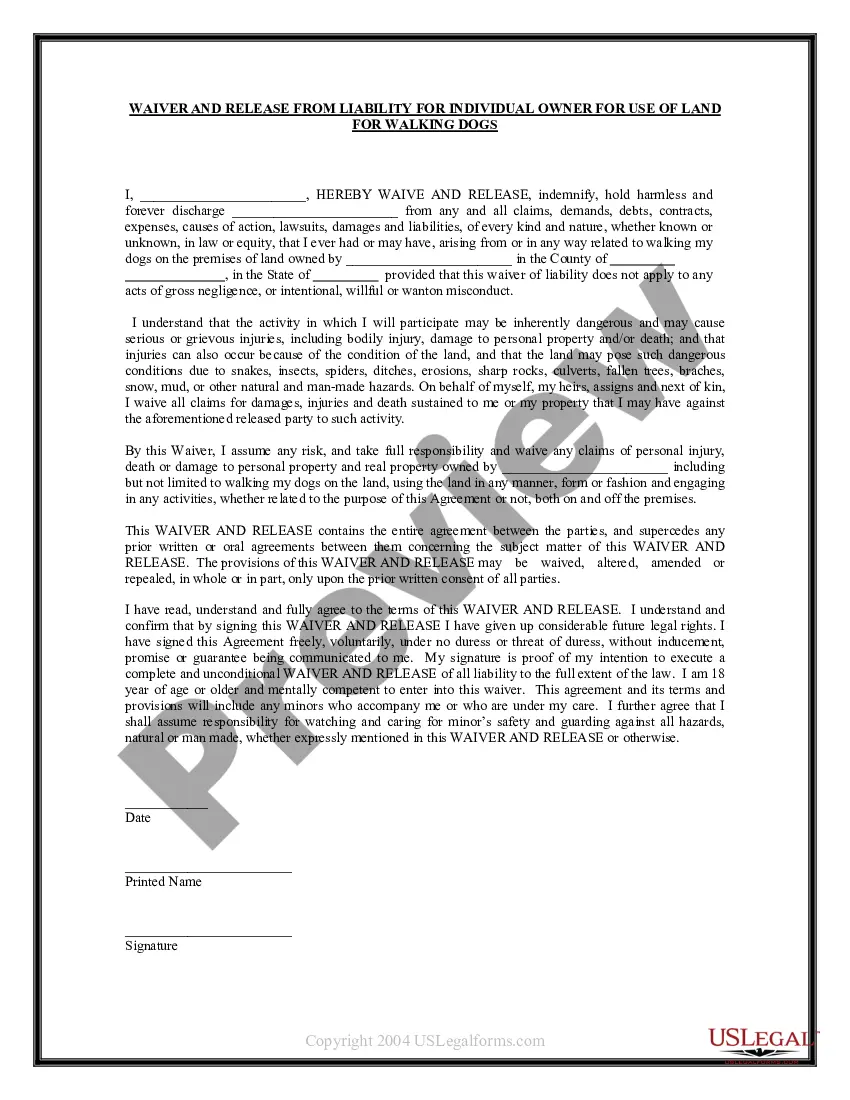
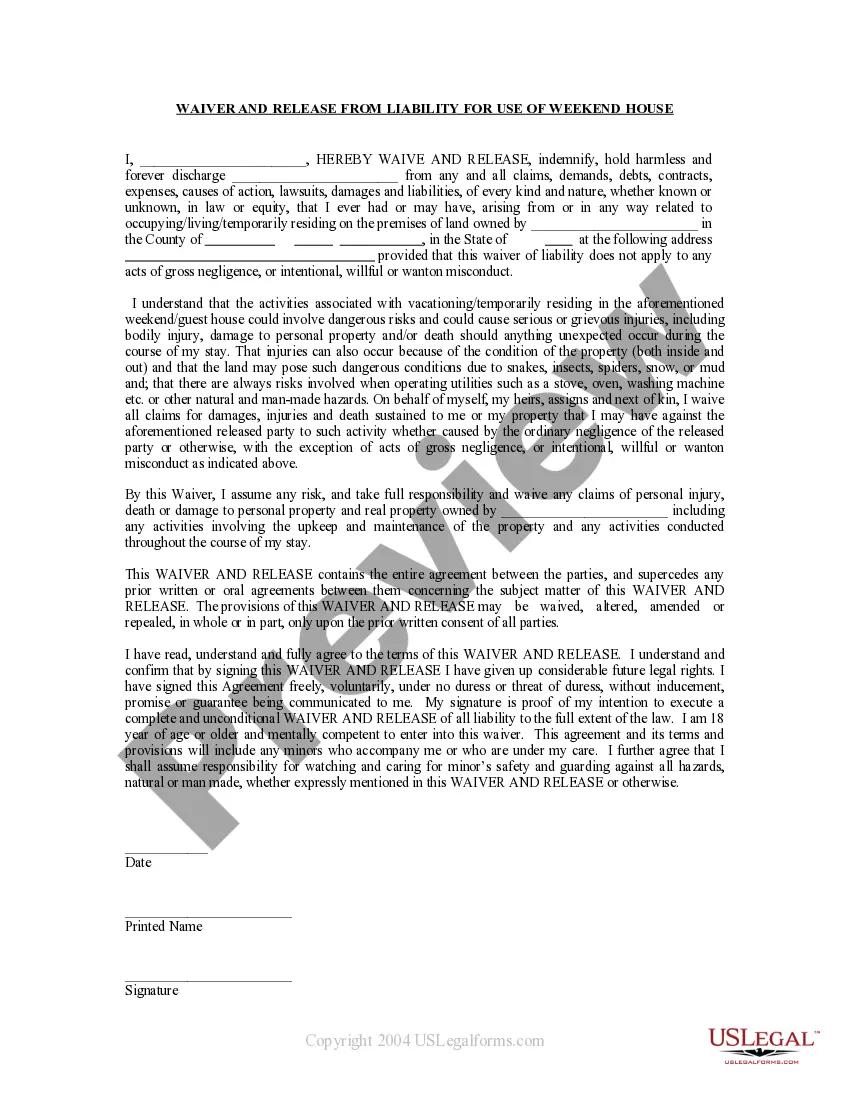
- For first-time users, start by reviewing the form description and Preview mode to find the right release waiver that fits your local jurisdiction.
- Search for alternative templates if needed using the Search tab above. Ensure the chosen form aligns with your requirements before proceeding.
- Select the document by clicking the Buy Now button, and choose the subscription plan that best suits you. You’ll need to create an account to access all features.
- Complete your purchase by providing credit card details or using a PayPal account to finalize your subscription.
- Download your release waiver and save it to your device. For continued access, find it in the My documents section of your profile.
With US Legal Forms, you’re empowered to create legally sound documents efficiently. Their extensive library boasts over 85,000 forms and packages, surpassing competitors' offerings.
Start simplifying your legal documentation process today with US Legal Forms. Don’t wait—get the right release waiver now!
Form popularity
FAQ
A release waiver is a legal document that protects an organization from liability by having participants acknowledge and accept the risks of an activity. When individuals sign a release waiver, they agree not to hold the organization responsible for injuries or damages that may occur. This tool is essential for businesses and sports organizations to manage risk effectively.
A waiver becomes legal when it meets specific criteria, such as being clear, unambiguous, and voluntarily signed by all parties involved. It should detail the rights being waived and the risks associated with the activity. Additionally, using templates from resources like US Legal Forms can help ensure that your waiver complies with applicable laws.
You can create your own release waiver, but understand that it needs certain components to be valid. This includes a clear explanation of the activities involved, acknowledgment of risks, and disclaimers that protect you from liability. To simplify the process, consider using professionally crafted templates available on platforms like US Legal Forms.
Yes, you can write up your own release waiver, but it’s crucial to ensure it contains all necessary elements to be enforceable. The waiver should clearly outline the rights being waived, risks involved, and space for signatures. Additionally, using a template from a trusted source like US Legal Forms can help ensure you include all essential details.
Generally, a release waiver does not need to be notarized to be effective, but some situations may require it. Notarization can add an extra layer of legitimacy, especially for certain legal contexts or high-risk activities. It’s essential to check local laws or consult a legal professional to determine if notarization is necessary for your specific situation.
A simple example of a release waiver is when someone participates in a sports activity, like a rock climbing class. Before starting, they may need to sign a document that states they understand the risks involved and agree not to hold the organization responsible for injuries. This document helps protect the organization while ensuring participants acknowledge potential hazards.
While you do not necessarily need a lawyer to write a waiver, consulting one can ensure your document is comprehensive and legally binding. If you're unfamiliar with legal language, a lawyer can offer peace of mind and address any specific concerns. However, many individuals successfully use templates available on platforms like US Legal Forms to create effective release waivers tailored to their needs.
You can find trustworthy waiver templates on platforms like US Legal Forms, which offer a variety of legal documents tailored to your needs. These templates are designed by legal professionals and cover various scenarios involving release waivers. Additionally, these platforms often include guidance on how to customize the documents. This way, you can ensure your waiver is legally sound and effective.
To write a simple waiver, you'll want to focus on clarity and brevity. Begin with a title that indicates the document is a waiver, then state the specific activity and risks involved. Follow this with a declaration where the signer acknowledges these risks and agrees not to hold you liable. By using resources such as US Legal Forms, you can find templates that help guide you in creating a simple waiver.
Writing a simple waiver involves drafting a brief document that outlines the nature of the activity and the associated risks. You should clearly state that the signer understands these risks and agrees to waive any claims. Using simple language ensures that the signer comprehends the agreement fully. Consider using a trusted platform like US Legal Forms for templates that streamline this process.