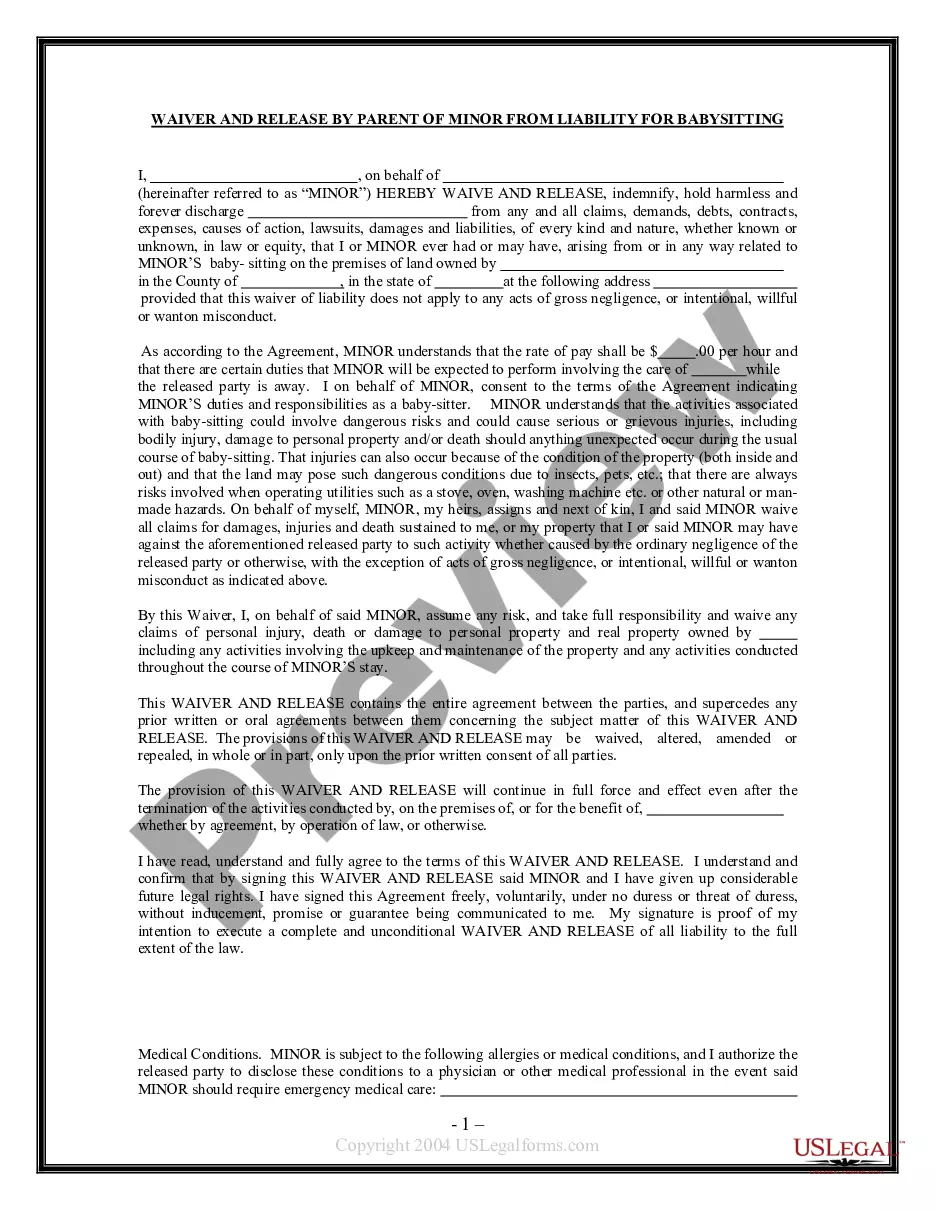
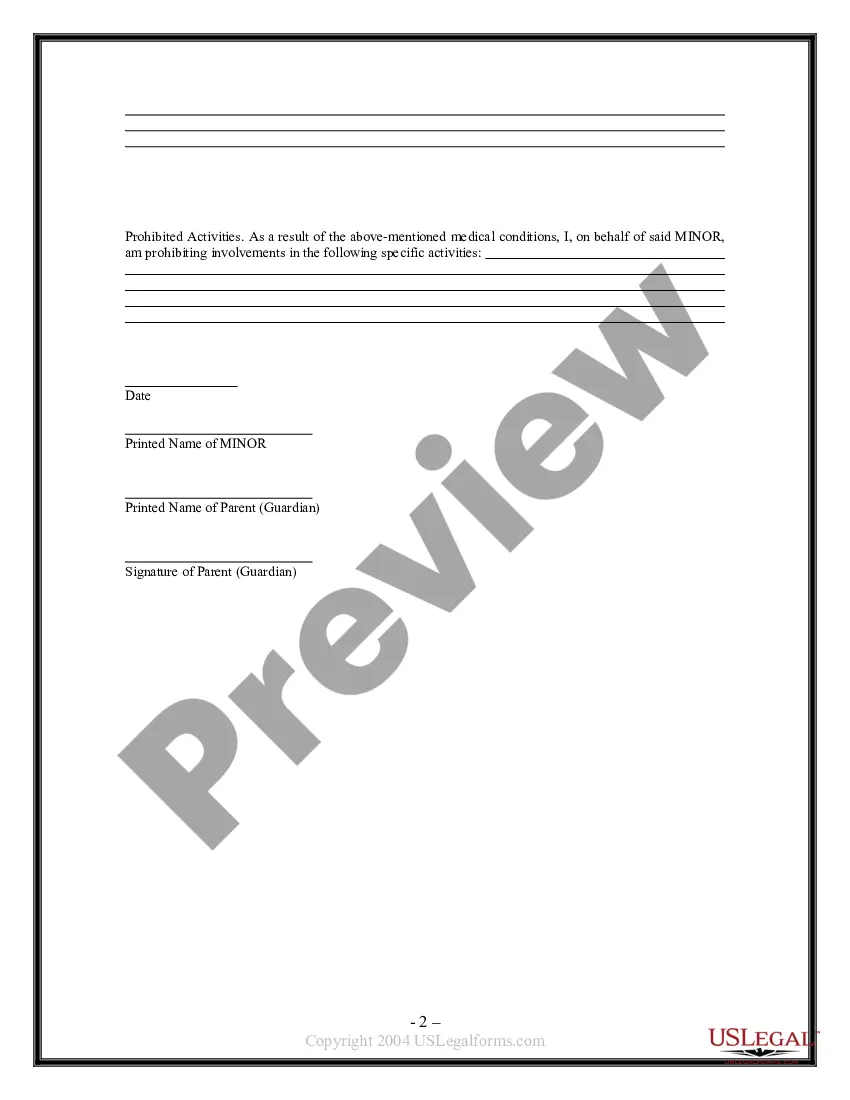
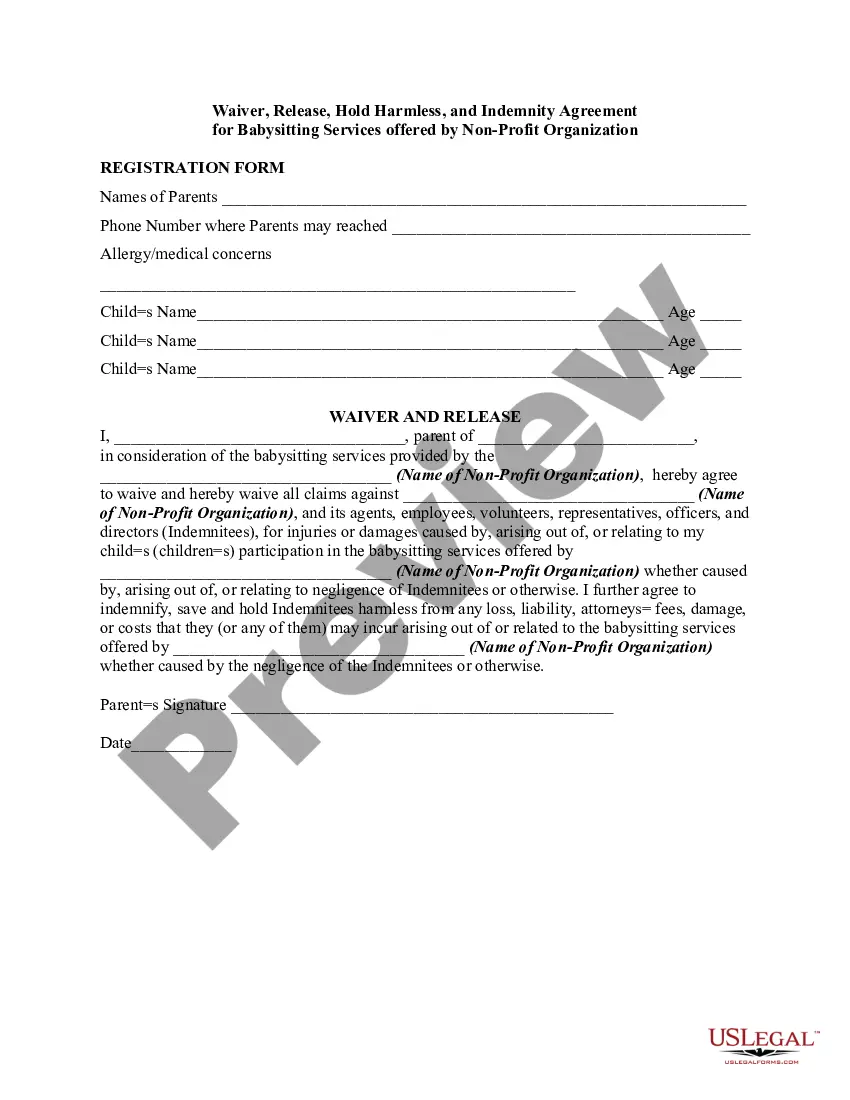
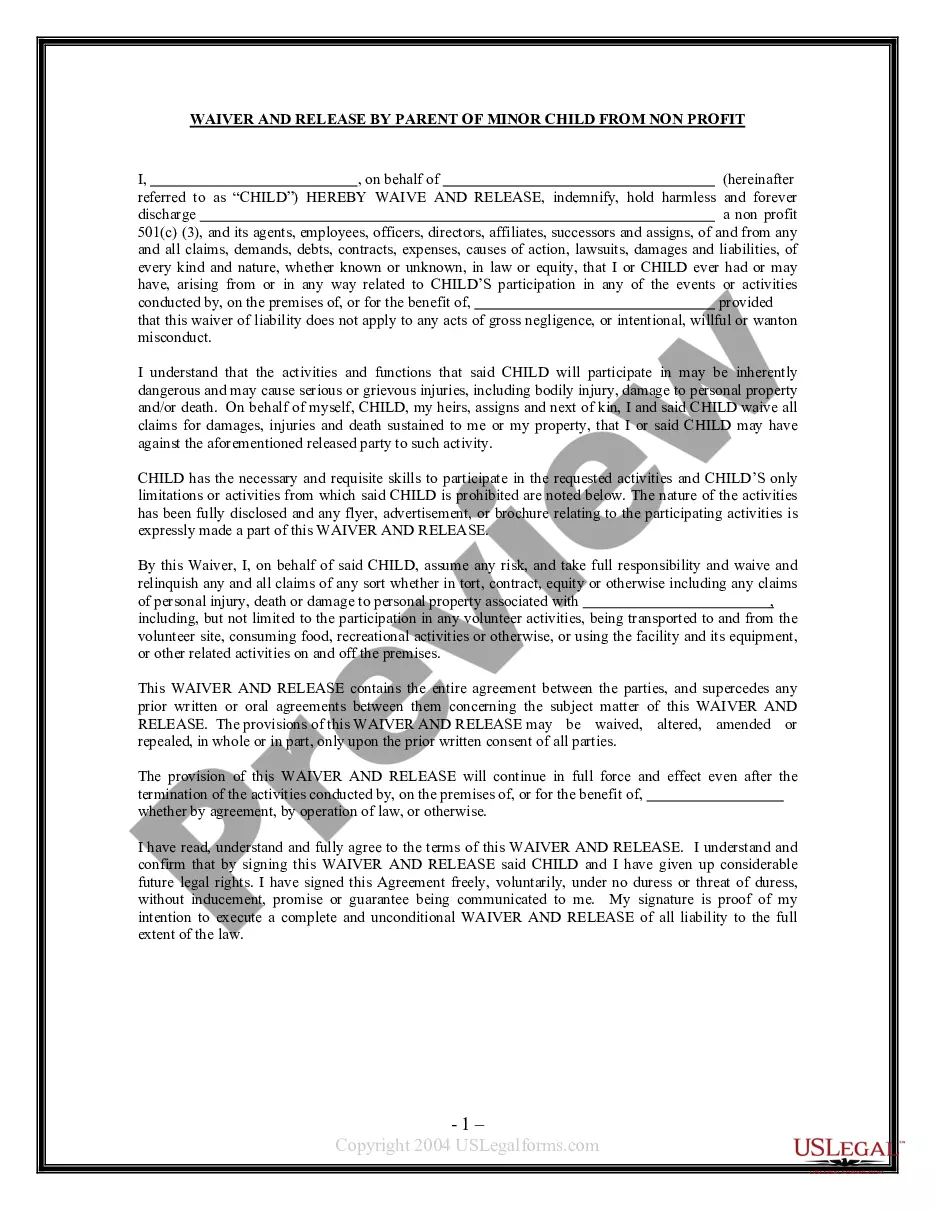
Liability Waiver For Babysitting
Description

How to fill out Waiver And Release From Liability For Minor Child For Babysitting?
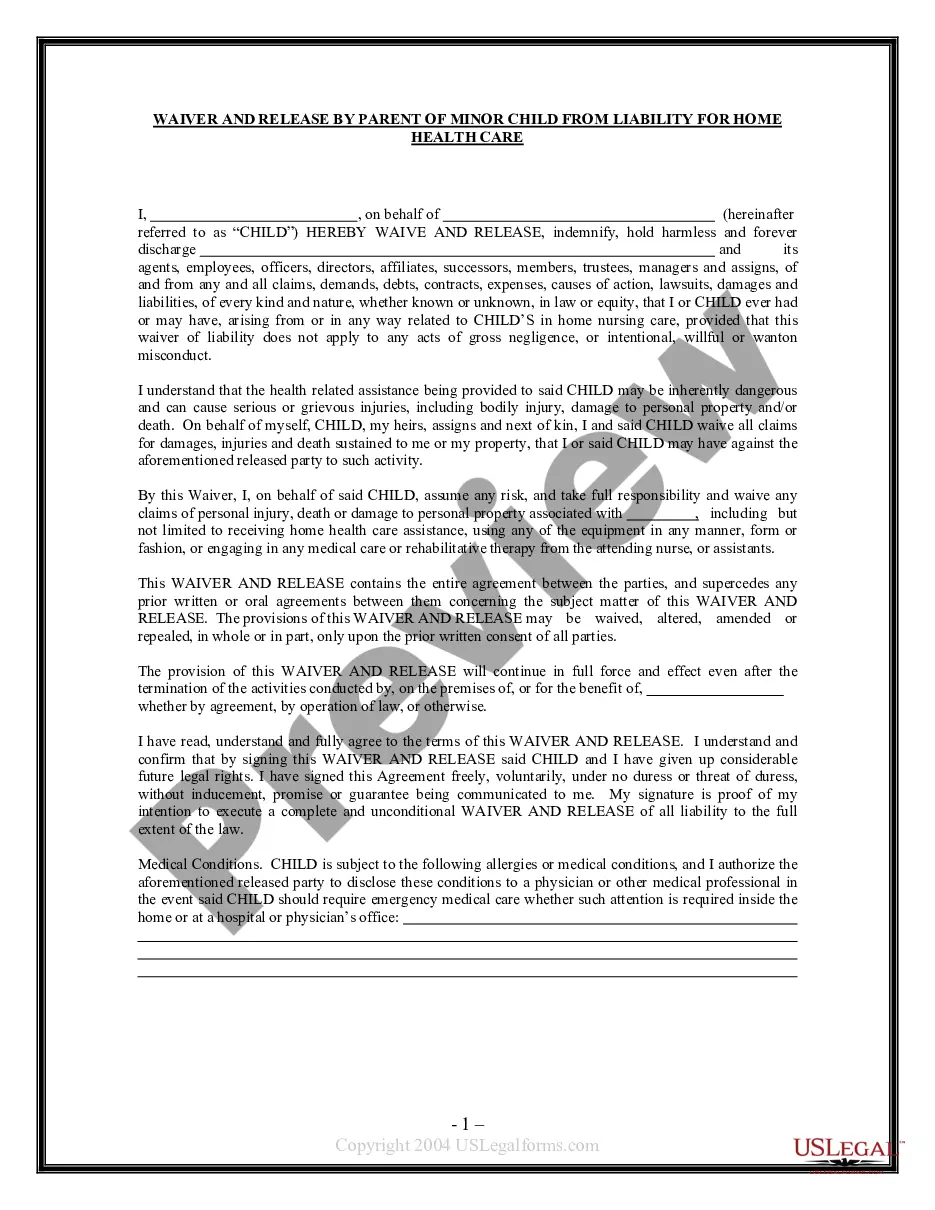
The Liability Waiver for Babysitting present on this page is a reusable official template created by professional attorneys in compliance with federal and local laws and regulations.
For over 25 years, US Legal Forms has offered individuals, businesses, and legal practitioners more than 85,000 authenticated, state-specific forms for various business and personal scenarios. It is the fastest, simplest, and most dependable method to acquire the necessary paperwork, as the service ensures bank-level data security and anti-virus protection.
Subscribe to US Legal Forms to have reliable legal templates for all of life’s circumstances at your fingertips.
- Search for the document you require and examine it.
- Look through the file you sought and preview it or check the form description to confirm it meets your requirements. If it does not, utilize the search bar to find the suitable one. Click Buy Now once you have found the template you need.
- Subscribe and Log In.
- Choose the pricing plan that fits you and create an account. Use PayPal or a credit card to make a swift payment. If you already possess an account, Log In and verify your subscription to continue.
- Acquire the fillable template.
- Select the format you prefer for your Liability Waiver for Babysitting (PDF, Word, RTF) and download the document to your device.
- Complete and sign the paperwork.
- Print the template to finalize it manually. Alternatively, use an online multi-functional PDF editor to quickly and accurately fill out and sign your form with a legally-binding electronic signature.
- Download your documents again.
- Reopen the same document whenever necessary. Access the My documents tab in your profile to redownload any previously obtained forms.
Form popularity
FAQ
If you earn income from babysitting, you generally need to report it on your tax return. This includes any earnings beyond a certain threshold. Utilizing a liability waiver for babysitting not only protects you legally but can also aid in documenting your income. Keeping accurate records of your earnings and expenses will help ensure compliance with tax regulations.
Yes, you can sue someone for unpaid babysitting services. To strengthen your case, having a signed liability waiver for babysitting can offer evidence of your agreement and the terms involved. This document establishes the expectations and responsibilities of both parties. It is advisable to consult legal guidance to navigate the process effectively.
The 2441 form, also known as the Child and Dependent Care Expenses form, relates to the tax deductions you can claim for childcare services. If you hire a babysitter and want to claim a tax benefit, you will need to fill out this form. Ensure you retain a liability waiver for babysitting as additional documentation when filing your taxes.
A liability waiver for babysitting usually states that the caregiver is not responsible for any injuries or accidents that occur during the babysitting session. It outlines the risks involved in childcare, such as accidents or illnesses, and requires the parent to acknowledge and accept these risks. This document serves as a legal safeguard for both parties.
For babysitting, you should typically fill out a liability waiver for babysitting to protect yourself and your assets. This waiver details the responsibilities and risks involved in childcare, providing peace of mind for both parents and caregivers. Additionally, consider tax forms based on how you classify your babysitter, such as a 1099 or a W-2.
When hiring a nanny, you can choose to classify them as either a 1099 independent contractor or a W-2 employee. Typically, if you have control over their work hours and methods, a W-2 classification is appropriate. This decision affects tax responsibilities and other legal aspects, including the need for a liability waiver for babysitting to protect against certain risks.
In many cases, liability waivers for babysitting can be legally binding if they are appropriately structured. This means they must clearly express the intent of the parties involved and outline the risks being accepted. However, individual circumstances and laws can affect their enforceability. It's advisable to seek legal advice to ensure compliance and protection.
The effectiveness of a liability waiver for babysitting in court typically hinges on how well it is drafted. Courts look for clear, explicit terms and an understanding of the risks involved. Consistency and compliance with state laws also play critical roles. Therefore, creating a comprehensive waiver with proper legal guidance increases its chances of holding up.
Yes, babysitters can be held liable for incidents that occur while supervising children. This liability may arise from failure to provide adequate care or from neglecting specific safety protocols. Having a well-drafted liability waiver for babysitting can help clarify responsibilities and limitations of liability between the parties involved.
Yes, someone can sue you for babysitting, even if you have a liability waiver for babysitting in place. Lawsuits can stem from various issues, such as alleged negligence or accidents that occur while babysitting. It's essential to be aware of your responsibilities and take necessary precautions to minimize risks.