Release Agreement
Description
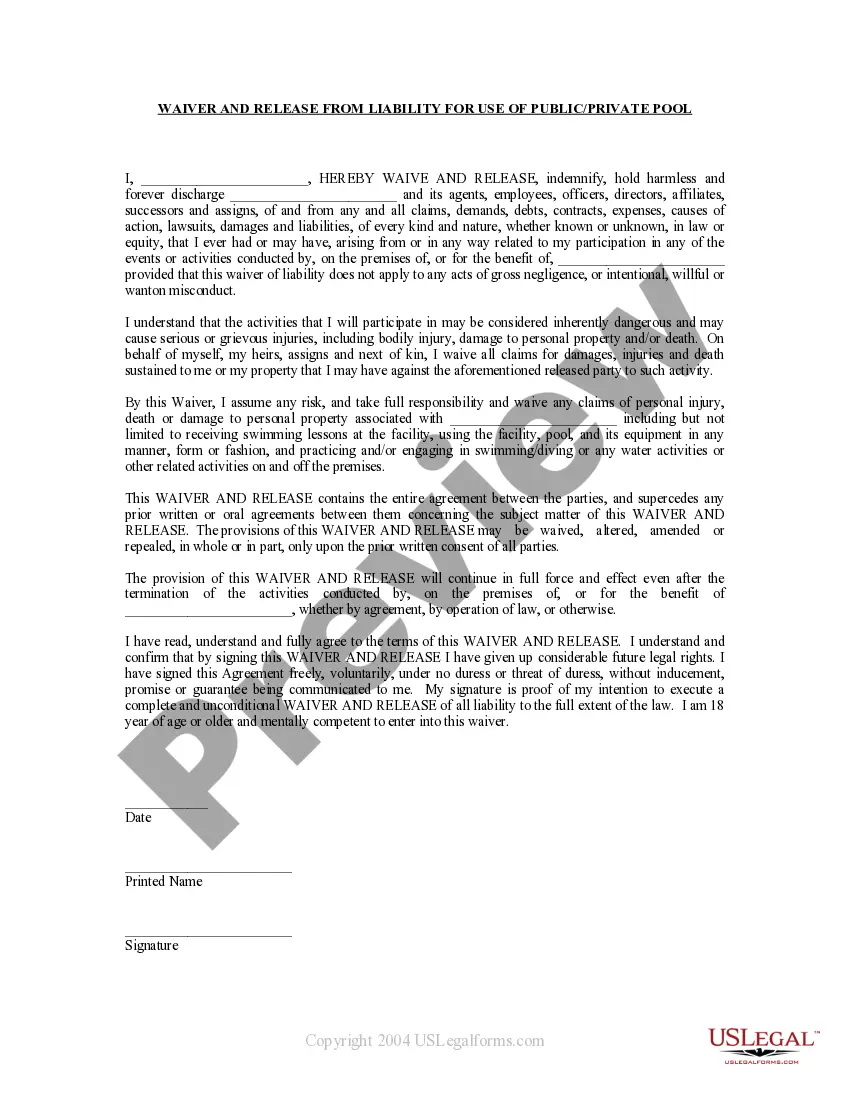
How to fill out Waiver And Release From Liability For Adult For Community Center?
- Log in to your US Legal Forms account to access your dashboard. Ensure your subscription is active—if not, consider renewing it.
- Browse through the Preview mode and read the form descriptions to confirm you've selected the right release agreement for your needs.
- Utilize the Search feature to find any additional templates if your first choice doesn't meet your requirements.
- Proceed to purchase the document by clicking the Buy Now button and selecting your preferred subscription plan. Creating an account will grant you access to the resources available.
- Complete your transaction by entering your payment details using either a credit card or PayPal.
- Download the release agreement to your device for immediate use, or access it later under 'My Forms' in your profile.
In conclusion, US Legal Forms simplifies the process of drafting a release agreement with a user-friendly system and a plethora of resources. By following these steps, you'll have your legal document ready in no time. Get started today.
Explore the extensive library at US Legal Forms now and ensure your legal agreements are handled with confidence.
Form popularity
FAQ
While a release agreement and a settlement often relate to legal disputes, they are not the same. A settlement typically involves a negotiated resolution where parties agree on compensation or terms, while a release focuses on relinquishing specific legal claims. Both documents may coexist, but understanding their distinct roles is essential. For clarity in developing these agreements, U.S. Legal Forms offers valuable tools and templates.
In legal terms, a release indicates that one party has voluntarily surrendered their right to make a claim against another party. This document outlines the specific rights being waived and helps prevent any future disputes related to those rights. Understanding the nuances of a release agreement is crucial, as it can significantly impact your legal standing. To ensure accuracy and compliance, consider using resources like U.S. Legal Forms to draft your release.
A release agreement serves to formalize the relinquishing of certain rights or claims between parties. The primary purpose is to ensure that one party does not pursue legal action against another regarding the specified matter. By signing a release agreement, all involved parties clearly understand the terms and conditions, providing a level of security and peace of mind. Utilize platforms like U.S. Legal Forms to access templates that make creating a release agreement straightforward and trustworthy.
While a release agreement does not always require notarization to be valid, having it notarized is highly recommended. Notarization helps prevent potential disputes by verifying the identities of the signers and their willingness to enter into the agreement. It can also lend additional credibility to your release agreement in case of legal scrutiny. Consider using services from US Legal Forms to ensure your release agreement is properly drafted and, if necessary, notarized.
Determining if a document needs notarization depends on its type and purpose. Generally, legal agreements, such as release agreements, often require notarization to avoid disputes. You can check your local laws or consult with a legal professional for clarity. Additionally, resources like US Legal Forms can provide insights on specific documents and their notarization requirements.
A document can still be valid even if it is not notarized, but the enforceability may vary depending on the type of agreement and jurisdiction. For example, simple contracts may not require notarization, while release agreements often benefit from it to confirm authenticity. To increase the reliability of your document, consider having it notarized, especially for significant agreements. Platforms like US Legal Forms provide templates that guide you through the notarization process.
For a release agreement to be enforceable, it must be clear, specific, and voluntary. The parties involved should fully understand the terms and conditions laid out in the release agreement. Additionally, both parties must sign the agreement, and notarization can provide extra validation of their consent. Using a reputable platform like US Legal Forms can help ensure that your release agreement meets all necessary legal standards.
Certain agreements, such as release agreements, often need notarization to be legally binding. Notarization adds an extra layer of protection, ensuring the agreement is authentic and the parties involved have willingly signed it. In particular, documents related to real estate transactions, wills, and powers of attorney commonly require notarization. Always check the specific requirements for your state to ensure compliance.
Writing a release agreement involves outlining the parties involved, describing the rights being relinquished and including any limitations or conditions. Ensure the language is simple and clear to avoid confusion. Platforms like USLegalForms can provide templates to guide you through the process.
A valid release agreement typically requires consent from all parties, clear language detailing the rights being released, and signatures to indicate agreement. In some cases, you may also need witnesses for the document to be enforceable. Always consult legal resources to ensure compliance.