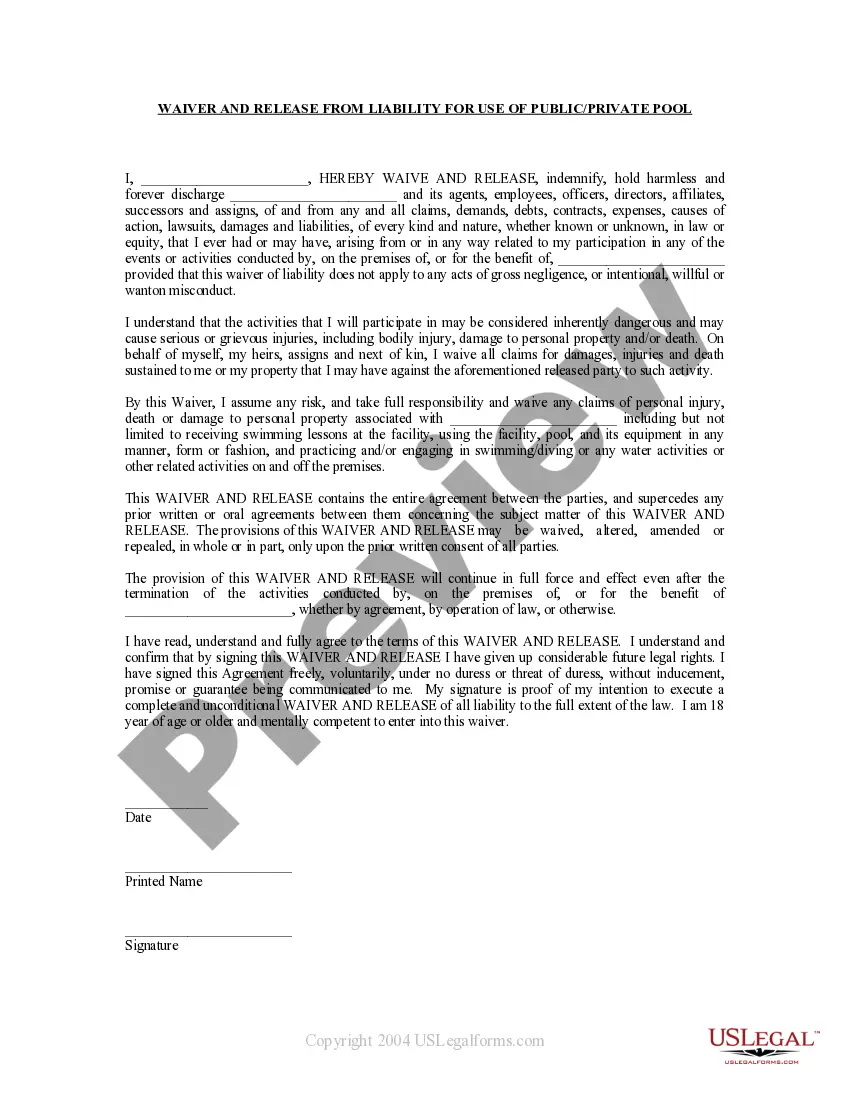
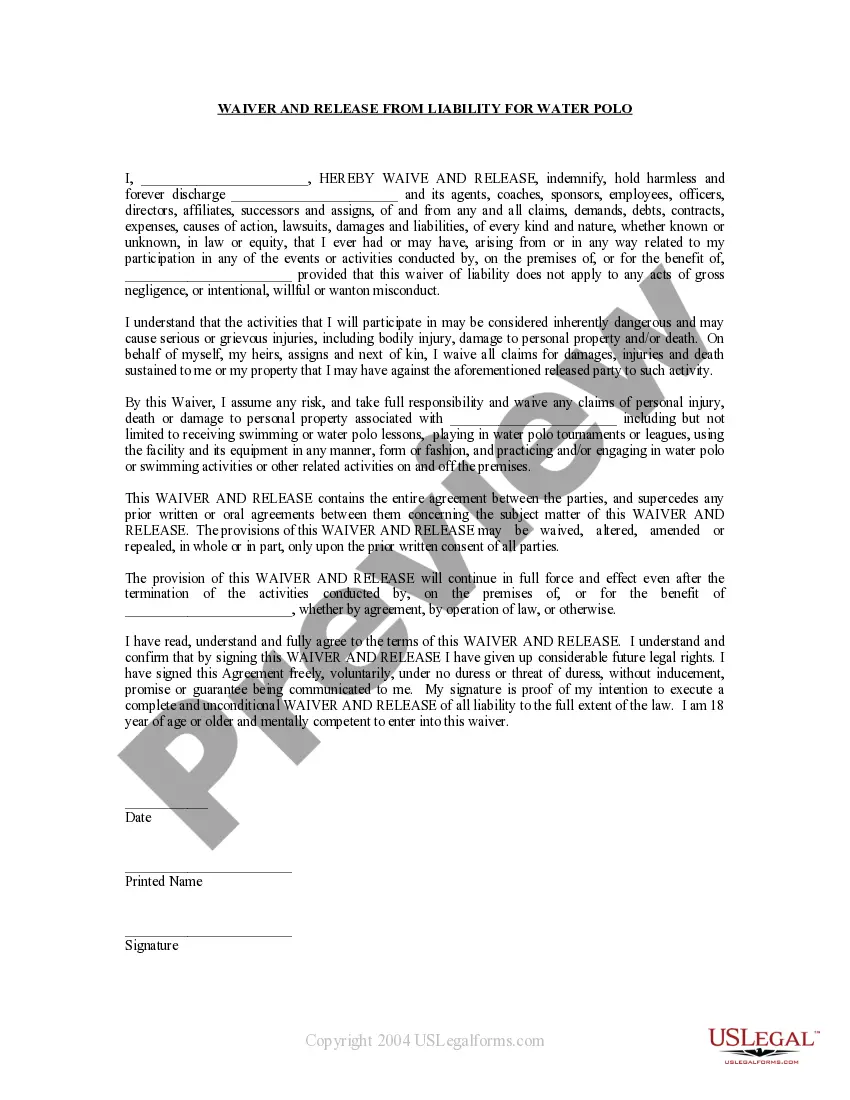
Pool Waiver For Neighbors
Description
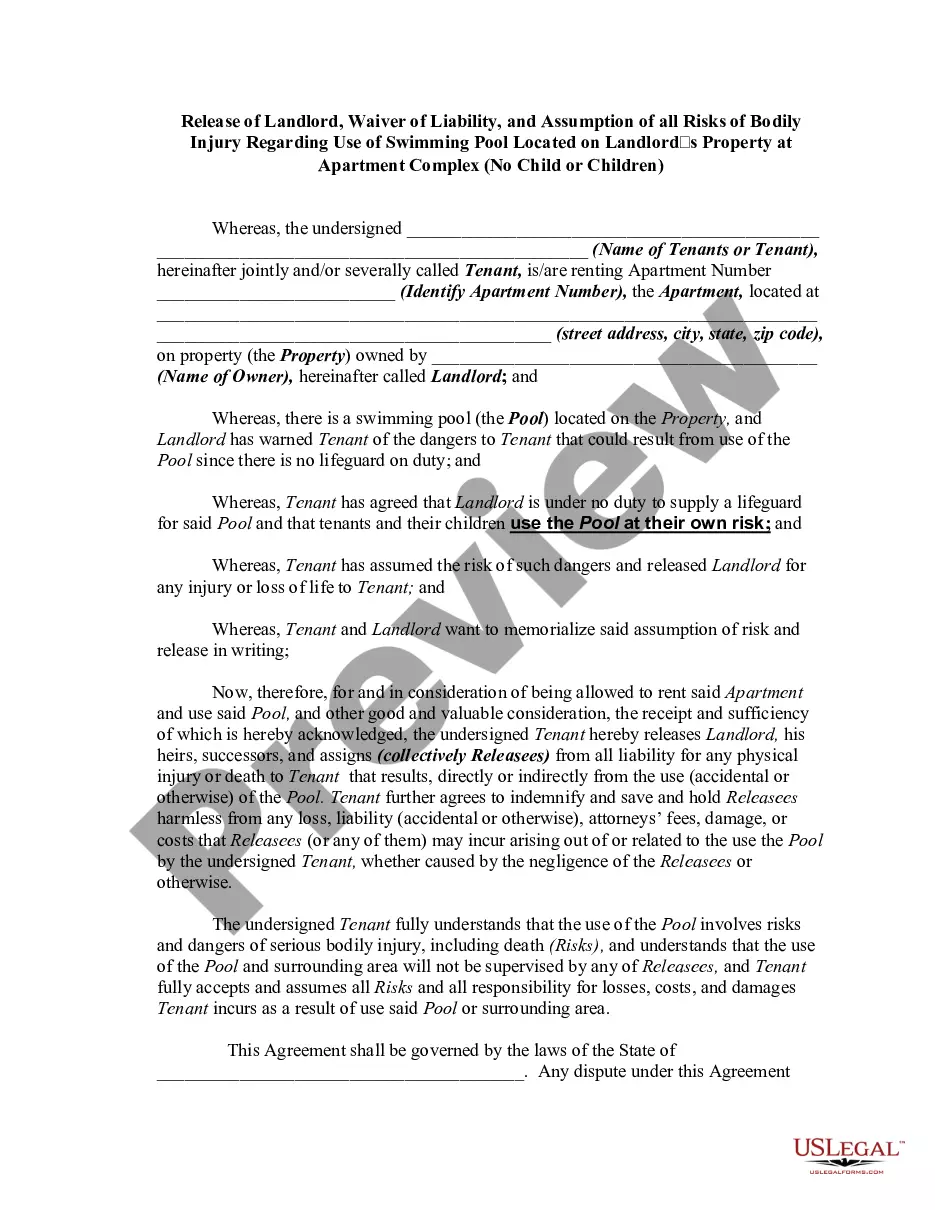
Get your form ready online
Our built-in tools help you complete, sign, share, and store your documents in one place.
Make edits, fill in missing information, and update formatting in US Legal Forms—just like you would in MS Word.
Download a copy, print it, send it by email, or mail it via USPS—whatever works best for your next step.
Sign and collect signatures with our SignNow integration. Send to multiple recipients, set reminders, and more. Go Premium to unlock E-Sign.
If this form requires notarization, complete it online through a secure video call—no need to meet a notary in person or wait for an appointment.
We protect your documents and personal data by following strict security and privacy standards.

Make edits, fill in missing information, and update formatting in US Legal Forms—just like you would in MS Word.

Download a copy, print it, send it by email, or mail it via USPS—whatever works best for your next step.

Sign and collect signatures with our SignNow integration. Send to multiple recipients, set reminders, and more. Go Premium to unlock E-Sign.

If this form requires notarization, complete it online through a secure video call—no need to meet a notary in person or wait for an appointment.

We protect your documents and personal data by following strict security and privacy standards.
Looking for another form?


Form popularity
FAQ
A pool waiver for neighbors is a legal document that outlines the risks associated with using a private pool and protects the pool owner from being liable for injuries. It serves to inform users of potential dangers and establishes the responsibilities of both parties. Having a clear waiver fosters trust and transparency between neighbors.
In most cases, a properly drafted pool waiver for neighbors can hold up in court. Courts generally uphold waivers that are clear, concise, and voluntarily signed. However, if the waiver lacks essential information or is found to be unreasonable, it may be challenged.
To write a good pool waiver for neighbors, start by clearly outlining the risks associated with using the pool. Use straightforward language that both parties can understand, and make sure to include a section for signatures and dates. It helps to seek advice from professionals or check platforms like USLegalForms for effective templates.
For a pool waiver for neighbors to be legally binding, it must have essential components such as mutual consent, clarity in the terms, and an understanding of the inherent risks. Moreover, both parties should sign voluntarily, without any coercion. Including the right details keeps the waiver valid in court.
You can certainly draft your own pool waiver for neighbors, but it’s best to ensure it covers all necessary elements. A well-written waiver should clearly describe the risks and responsibilities involved. Utilizing templates or resources like USLegalForms can simplify this process and ensure legal compliance.
Yes, signing a pool waiver for neighbors can be legally binding if it meets certain criteria. The waiver should be clear, specific, and comprehensively outline the risks involved. The understanding and consent of both parties enhance its enforceability.
Signing a pool waiver for neighbors typically means you agree not to hold the other party responsible for certain risks associated with using their pool. However, it does not completely eliminate your right to sue. If you experience negligence or misconduct, you may still have the grounds to pursue a legal claim.
The distance you can build a pool from a neighbor's property line varies by local laws and ordinances. Generally, a minimum set-back distance is enforced to ensure safety and privacy. Utilizing a pool waiver for neighbors can help you articulate your plans and foster positive relations while adhering to these regulations.
No, your neighbor cannot drain pool water onto your property without your permission, as this can lead to property damage. It's essential to have a clear understanding of property lines and drainage laws. If you have concerns, consider drafting a pool waiver for neighbors to establish responsibilities.
Building a pool house in your backyard is generally permissible, but local zoning laws and covenants may apply. Check with your municipality for guidelines, as regulations can vary significantly. A pool waiver for neighbors can also serve as an added layer of protection, ensuring your project aligns with community standards.