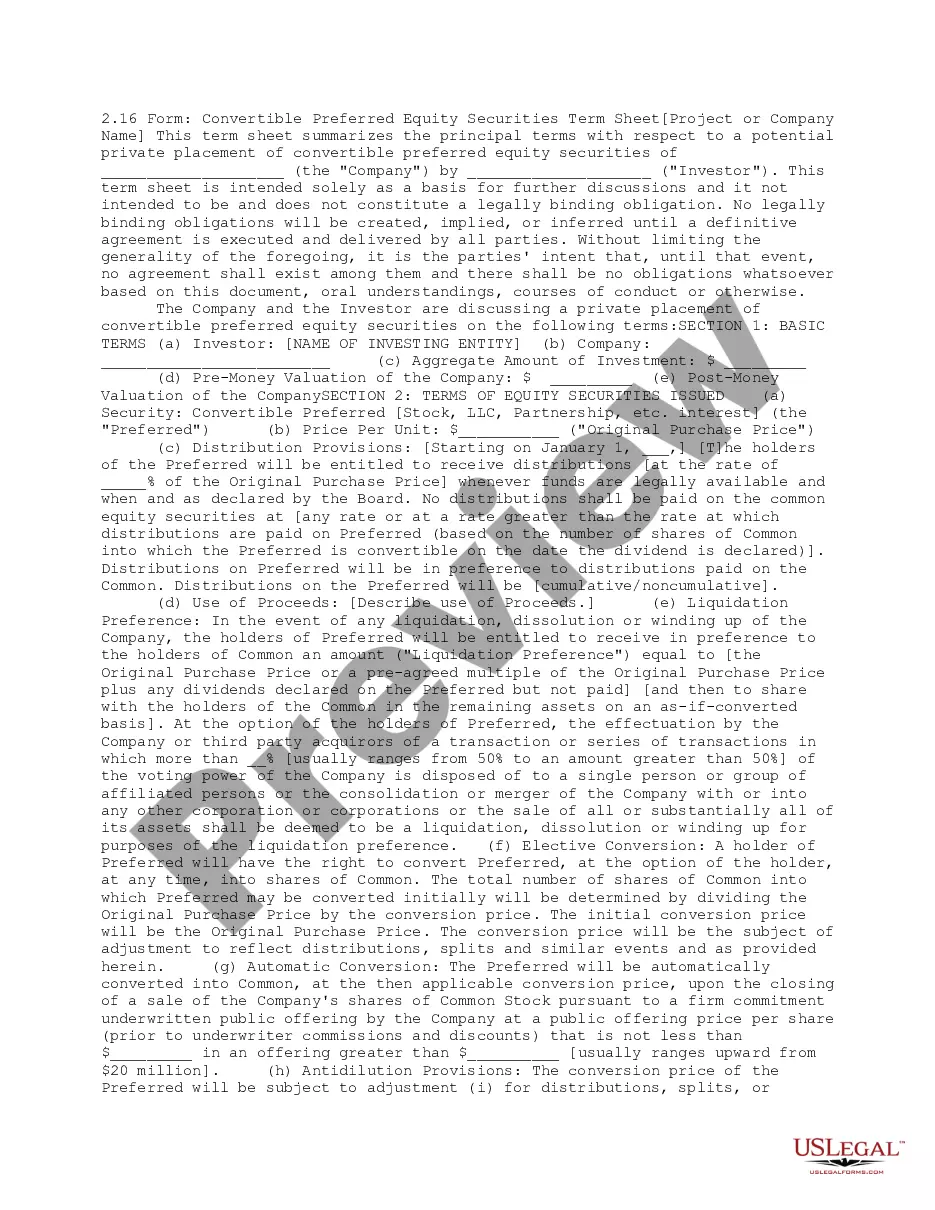
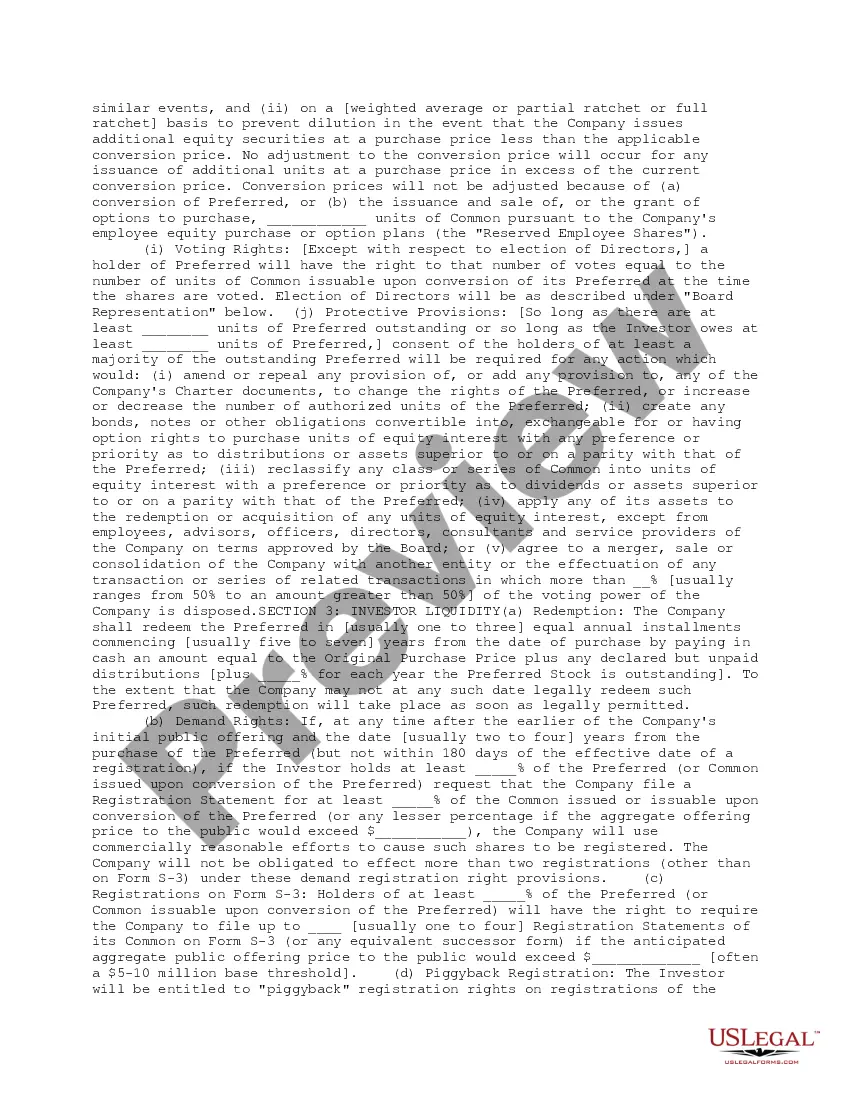
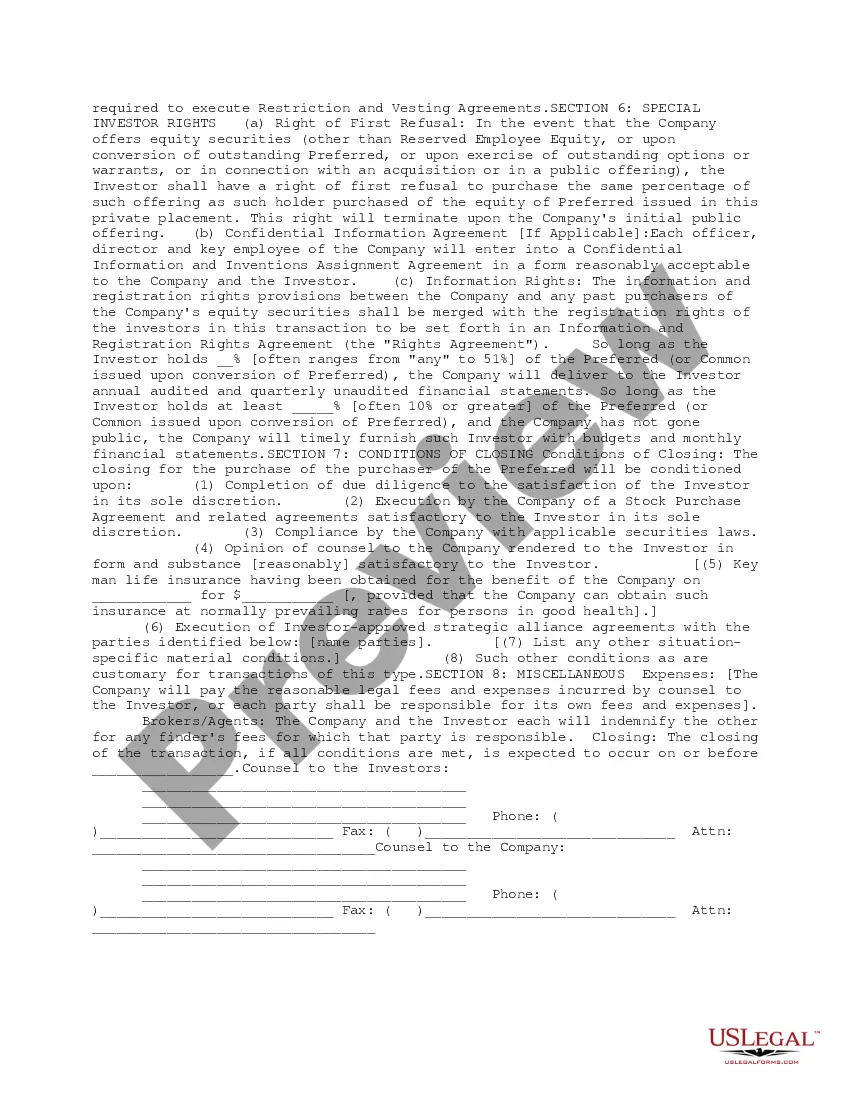
Preferred Equity Real Estate Term Sheet Fortune
Description

Get your form ready online
Our built-in tools help you complete, sign, share, and store your documents in one place.
Make edits, fill in missing information, and update formatting in US Legal Forms—just like you would in MS Word.
Download a copy, print it, send it by email, or mail it via USPS—whatever works best for your next step.
Sign and collect signatures with our SignNow integration. Send to multiple recipients, set reminders, and more. Go Premium to unlock E-Sign.
If this form requires notarization, complete it online through a secure video call—no need to meet a notary in person or wait for an appointment.
We protect your documents and personal data by following strict security and privacy standards.

Make edits, fill in missing information, and update formatting in US Legal Forms—just like you would in MS Word.

Download a copy, print it, send it by email, or mail it via USPS—whatever works best for your next step.

Sign and collect signatures with our SignNow integration. Send to multiple recipients, set reminders, and more. Go Premium to unlock E-Sign.

If this form requires notarization, complete it online through a secure video call—no need to meet a notary in person or wait for an appointment.

We protect your documents and personal data by following strict security and privacy standards.
Looking for another form?







Form popularity
FAQ
A typical VC term sheet outlines the key terms and conditions for a venture capital investment. It includes important details such as the amount of investment, equity ownership, and valuation of the company. Understanding the preferred equity real estate term sheet fortune can help you secure favorable terms in your negotiations. For those navigating the venture capital landscape, using a reliable platform like US Legal Forms can guide you through creating compliant and effective term sheets.
The term sheet of preferred shares serves as a crucial document outlining the specific terms and conditions of the investment. It includes details like return rates, distribution priorities, and exit strategies, all essential for understanding your investment as highlighted in the preferred equity real estate term sheet fortune. A well-structured term sheet enables investors to assess the risk and expected rewards more effectively.
Preferred equity in real estate terms refers to a hybrid form of financing that gives investors certain advantages, typically structured in a preferred equity real estate term sheet fortune. It offers fixed returns to investors before any distributions are made to common shareholders. This structure allows real estate projects to secure funding while protecting investors' interests.
An example of preferred equity could be a real estate project where investors provide upfront capital in exchange for a fixed return on their investment, outlined in the preferred equity real estate term sheet fortune. This return often comes before common equity holders receive any distributions. For instance, a multifamily property might issue preferred equity to fund renovations while ensuring investors receive priority returns.
A term sheet for preference shares details the terms under which these shares will be issued. It includes information on dividend payments, conversion rights, and liquidation preferences, making it a key document for investors. When exploring the preferred equity real estate term sheet fortune, understanding this term sheet can provide deeper insights into investor rights and obligations. This clarity can foster a more transparent investment environment.
A term sheet and a letter of intent are both preliminary documents but serve different purposes. A term sheet focuses on specific investment terms, while a letter of intent outlines a broader proposal or intention to enter into a deal. If you’re navigating the preferred equity real estate term sheet fortune, recognizing the distinction between these documents can streamline negotiations and enhance clarity. Each plays a vital role in the investment process.
A term sheet for shares outlines the basic terms and conditions of an investment. This document serves as a blueprint for the final agreement, detailing aspects like the investment amount, type of shares, and rights of shareholders. When dealing with a preferred equity real estate term sheet fortune, this document is crucial, as it helps clarify expectations and protect all parties involved. Understanding its components can aid in making informed investment decisions.
Preferred equity represents ownership in a company and has a higher claim on assets than common equity. This capital is often listed as a separate line item on the balance sheet. When looking at preferred equity real estate term sheet fortune, it’s essential to understand how it can impact financial stability and returns for investors. Preferred equity can provide important insights into a company’s structure and financial health.
Preferred equity typically appears in the shareholders' equity section of the balance sheet. Unlike debt, preferred equity is considered a form of capital that does not require regular interest payments, making it a flexible funding option in a preferred equity real estate term sheet. This placement reflects its unique nature, allowing investors to stake a claim without exerting undue financial pressure. Properly categorizing preferred equity can clarify a company’s financial structure and attract potential investors.
Preferred equity refers to an ownership stake in a company or property that provides investors with a preferential claim on earnings and assets, usually ahead of common equity holders. In the context of a preferred equity real estate term sheet, it often outlines the terms of investment, distribution of profits, and the rights of preferred equity holders. This structure can provide stability and reduce risk for investors while enhancing capital for real estate projects. Understanding preferred equity can help you make informed decisions about your investments.
