Lemon Law Explained
Description
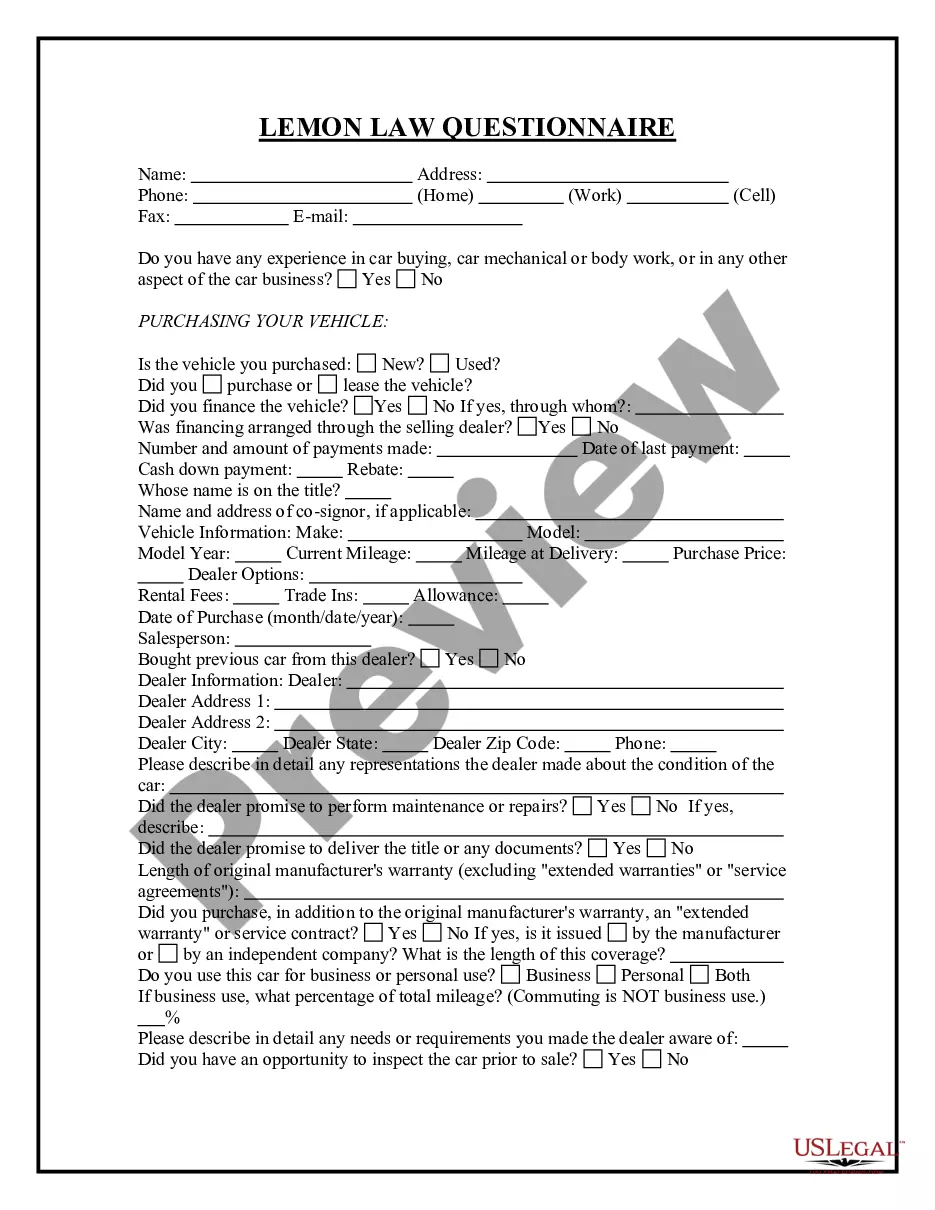
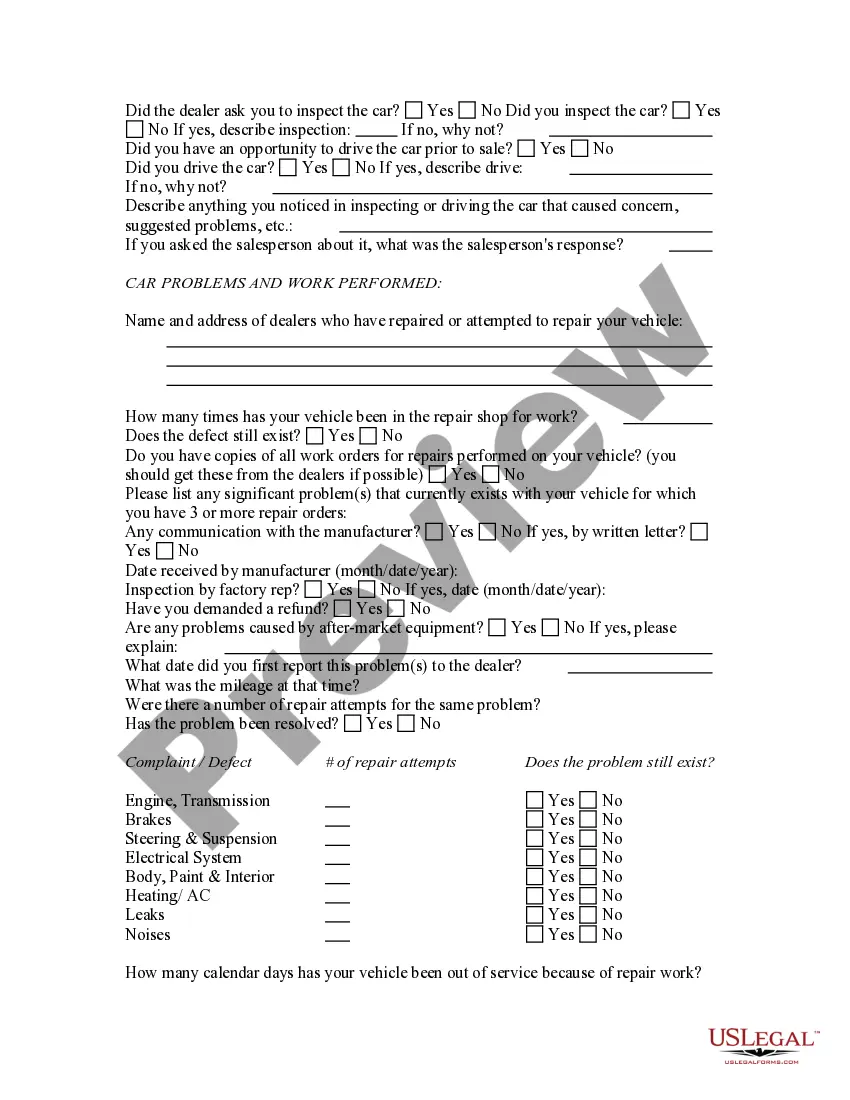
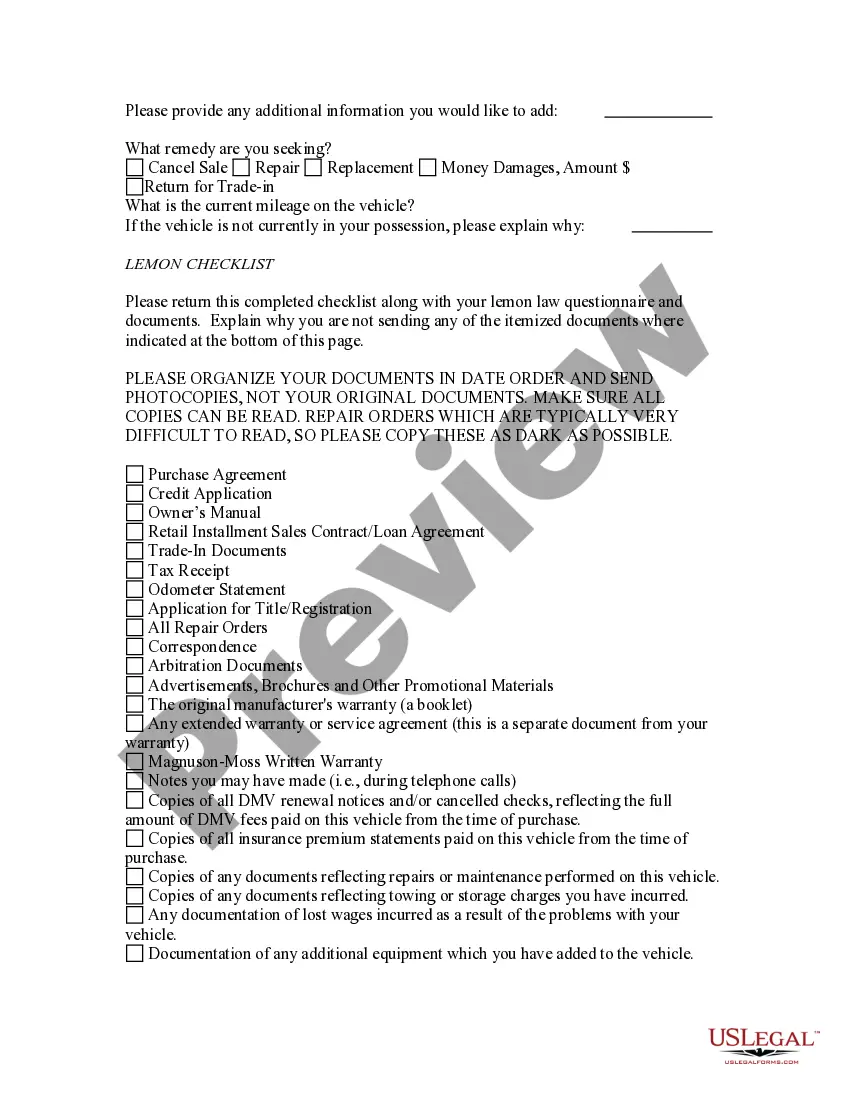
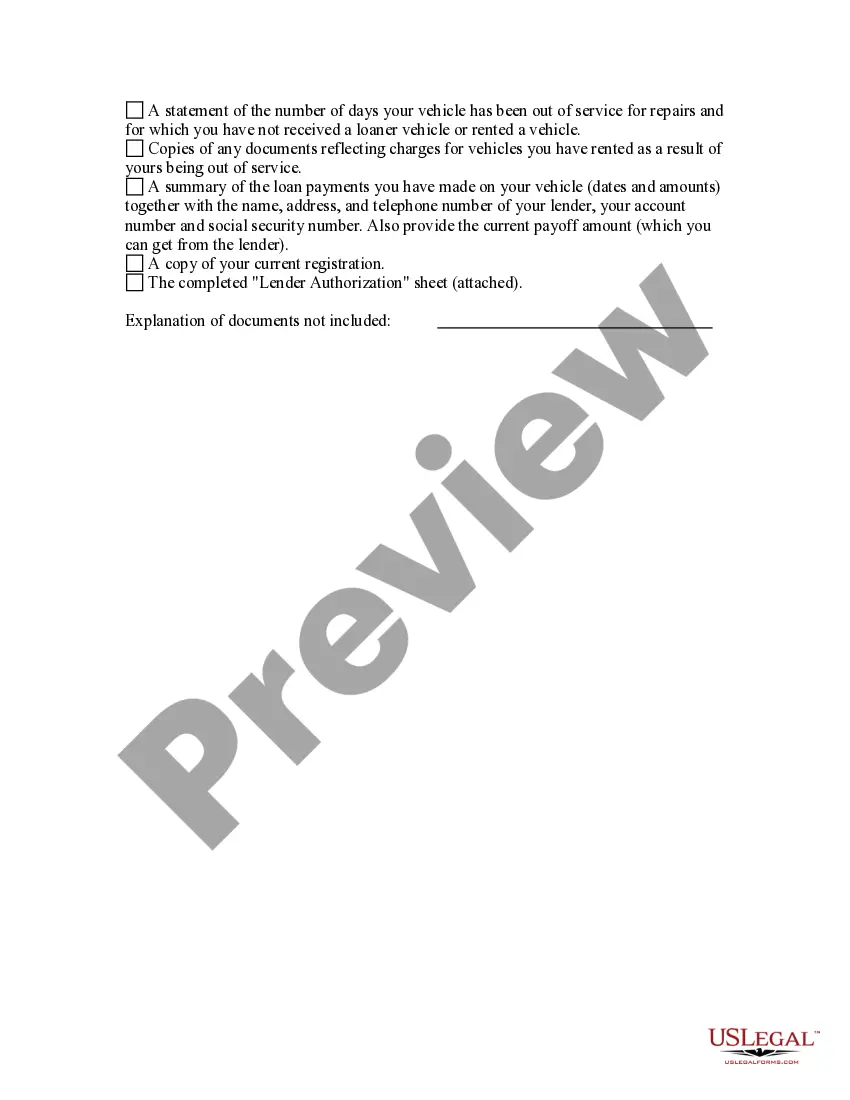
Get your form ready online
Our built-in tools help you complete, sign, share, and store your documents in one place.
Make edits, fill in missing information, and update formatting in US Legal Forms—just like you would in MS Word.
Download a copy, print it, send it by email, or mail it via USPS—whatever works best for your next step.
Sign and collect signatures with our SignNow integration. Send to multiple recipients, set reminders, and more. Go Premium to unlock E-Sign.
If this form requires notarization, complete it online through a secure video call—no need to meet a notary in person or wait for an appointment.
We protect your documents and personal data by following strict security and privacy standards.

Make edits, fill in missing information, and update formatting in US Legal Forms—just like you would in MS Word.

Download a copy, print it, send it by email, or mail it via USPS—whatever works best for your next step.

Sign and collect signatures with our SignNow integration. Send to multiple recipients, set reminders, and more. Go Premium to unlock E-Sign.

If this form requires notarization, complete it online through a secure video call—no need to meet a notary in person or wait for an appointment.

We protect your documents and personal data by following strict security and privacy standards.
Looking for another form?



How to fill out Automobile Lemon Law Questionnaire?
The Lemon Law Clarified you observe on this page is a reusable legal framework crafted by expert attorneys in accordance with federal and state regulations.
For over 25 years, US Legal Forms has supplied individuals, organizations, and legal practitioners with more than 85,000 authenticated, state-specific documents for any commercial and personal situation.
Fill out and sign the document. Print the template to complete it manually. Alternatively, use an online multi-functional PDF editor to swiftly and accurately fill out and sign your form with a legally-binding electronic signature. Download your paperwork one more time. Utilize the same document again whenever needed. Open the My documents tab in your profile to redownload any previously acquired forms. Register for US Legal Forms to have authenticated legal templates for all of life's circumstances at your service.
- Browse for the document you require and examine it.
- Look through the file you searched and preview it or check the form description to verify it meets your needs. If it does not, use the search feature to find the appropriate one. Click Buy Now once you have discovered the template you seek.
- Subscribe and Log In.
- Choose the pricing plan that fits you and create an account. Use PayPal or a credit card to make a swift payment. If you already have an account, Log In and verify your subscription to proceed.
- Obtain the fillable template.
- Select the format you desire for your Lemon Law Clarified (PDF, Word, RTF) and download the sample to your device.
Form popularity
FAQ
Lemon law in Minnesota applies to vehicles that have substantial defects affecting their use, safety, or value. To qualify, the vehicle must be under warranty and have undergone a reasonable number of repair attempts without success. This law aims to protect consumers from faulty cars, ensuring they can seek a replacement or refund. For a thorough understanding, you can explore our resources on Lemon law explained and find guidance through the US Legal Forms platform.
In Arizona, there is no specific law that allows you to return a used car simply because you changed your mind. However, if the vehicle has defects that qualify under Lemon Law, you may have the right to seek a refund or replacement within the first two years or 24,000 miles. Understanding the Lemon Law explained can help you navigate your options effectively. Utilizing resources from platforms like US Legal Forms can also make this process smoother.
A car is considered a lemon in Arizona if it has a substantial defect that persists after multiple repair attempts. This defect must significantly impact the vehicle’s safety, use, or value. The state law requires that the problem be reported within a certain period or mileage limit. A thorough understanding of how Lemon Law is explained can help you identify if your vehicle qualifies.
Winning a Lemon Law case can be challenging, but it is not impossible. The outcome often depends on the documentation and evidence you provide, including repair records and communications with the manufacturer. Consulting with an expert who can explain Lemon Law can significantly improve your chances of success. Platforms like US Legal Forms offer resources that can simplify the process.
In Arizona, for a vehicle to qualify under Lemon Law, it must have a defect that substantially impairs its use, value, or safety. The law applies to new vehicles and requires that the problem be reported within the first two years or 24,000 miles. If the manufacturer fails to repair the defect after a reasonable number of attempts, you may be entitled to a replacement or refund. Lemon law explained can guide you through this process effectively.
To classify a car under Lemon Law, it must have a significant defect that affects its use, value, or safety. This defect must occur within a specific time frame or mileage limit, which varies by state. Additionally, the manufacturer must be unable to fix the issue after a reasonable number of attempts. Understanding how Lemon Law is explained can help you determine if your vehicle qualifies.
Under Ontario law, there is no cooling-off period for motor vehicle contracts, so be sure of your decision before you sign. In most cases, the contract will be binding. Read and understand the contract and bill of sale before signing. If you don't understand something, ask questions.
The law introduced by the Quebec National Assembly says that anyone who has bought a new vehicle that has been subject to three unsuccessful attempts to repair it in three years or 60,000 km (37,000 miles) can ask a court to cancel the sale, reduce the price or force the automaker to buy the vehicle back.
A dealership can hold a car for a maximum of 30 days. However, there are a few repairs that are more intricate than others. If your vehicle is in the shop for any of these, you might want to talk to the car dealership before making any drastic choices.
This contract is final and binding once you have signed it unless the motor vehicle dealer has failed to comply with certain legal obligations.