Car Lemon Law In Virginia
Description
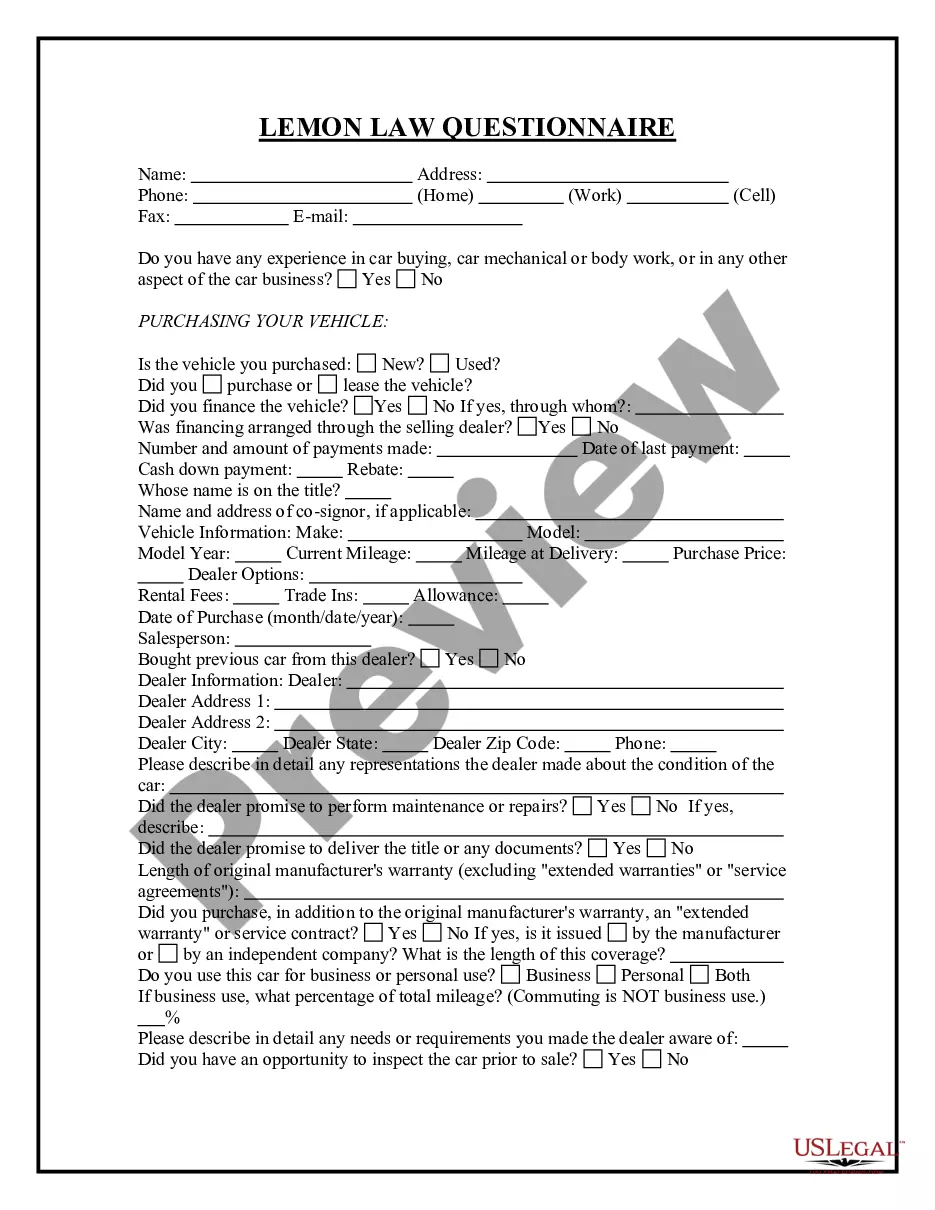
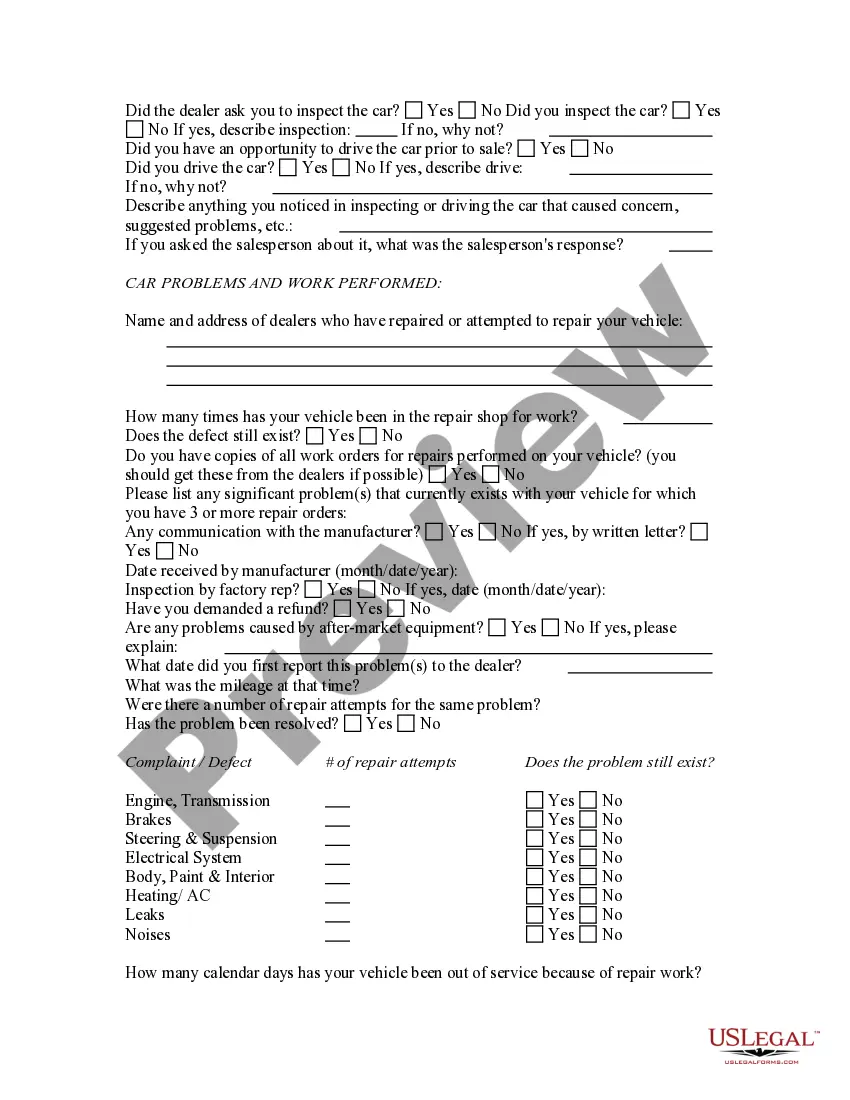
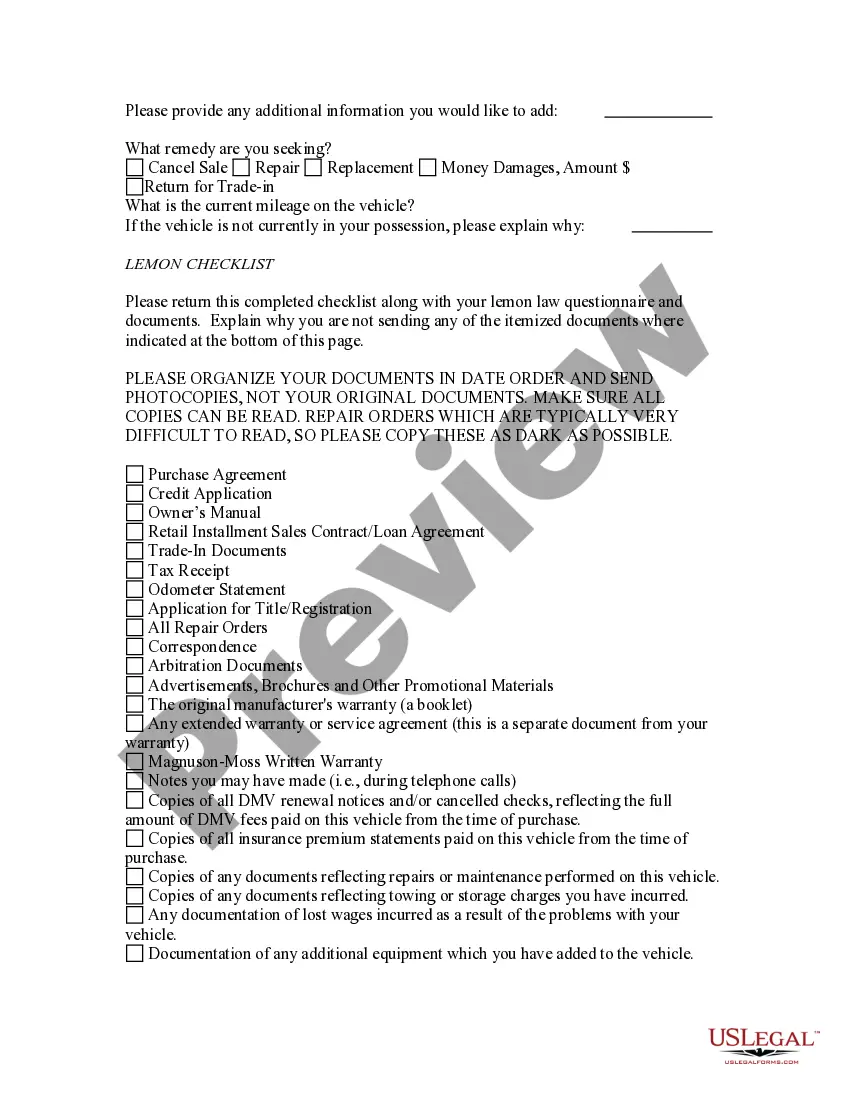
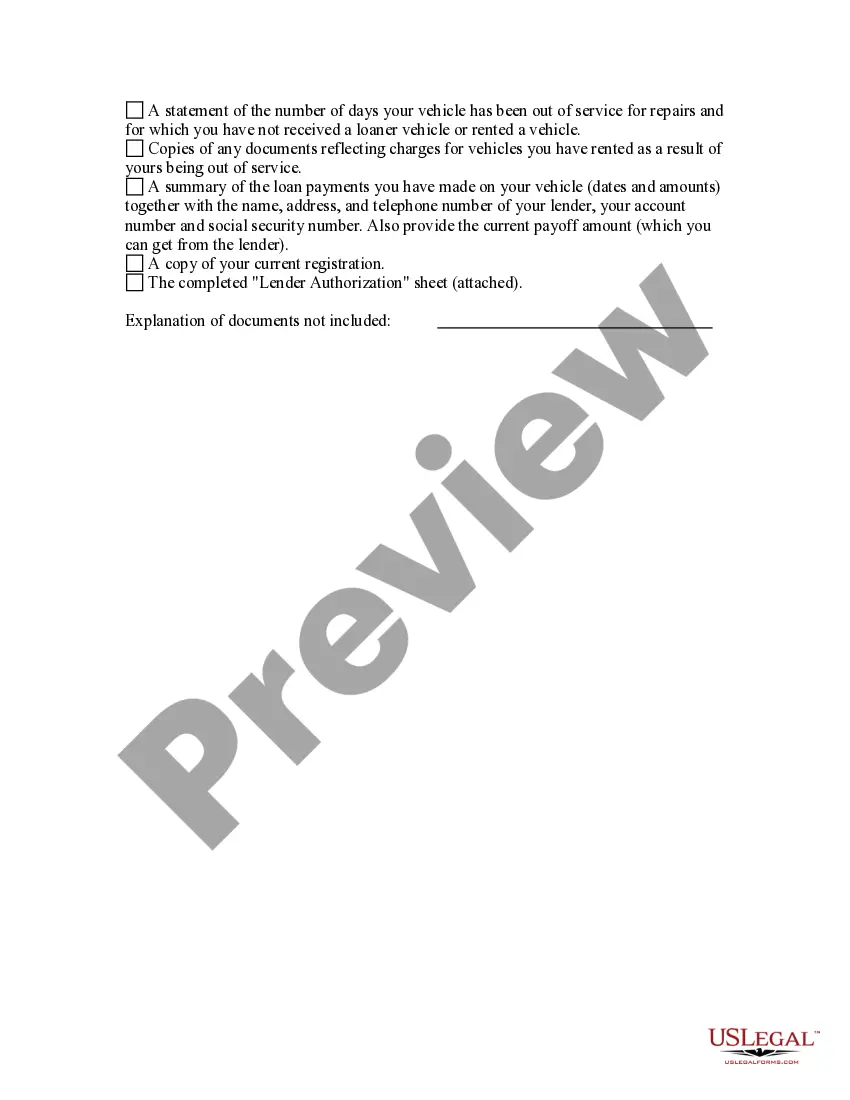
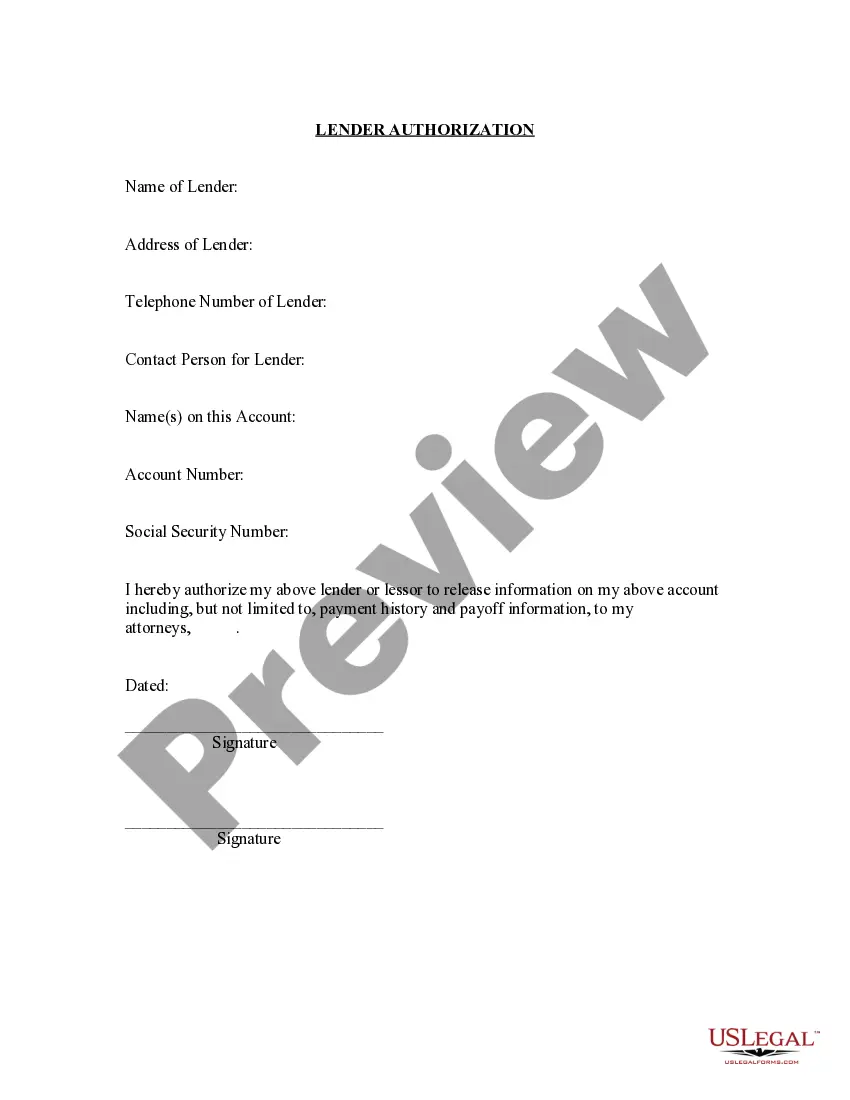
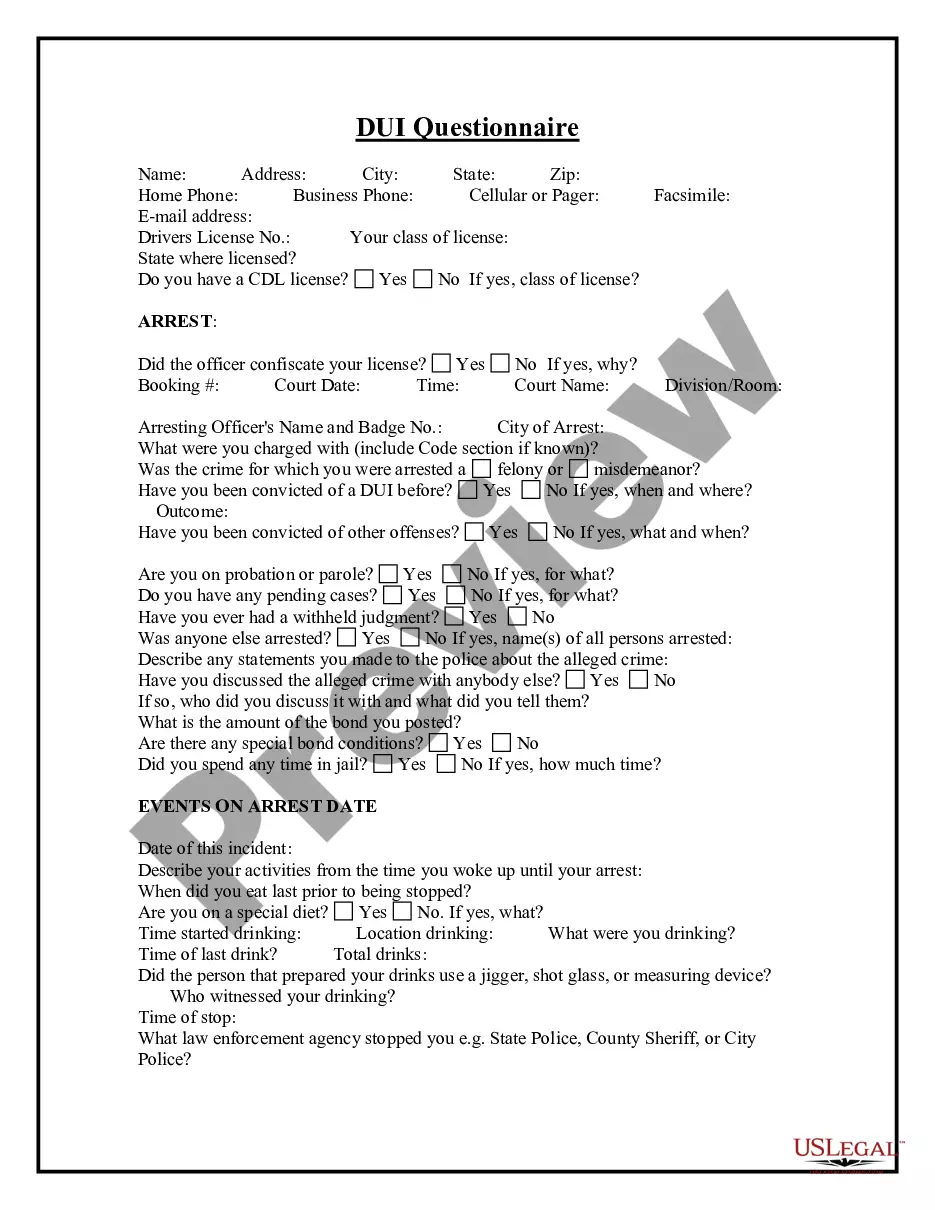
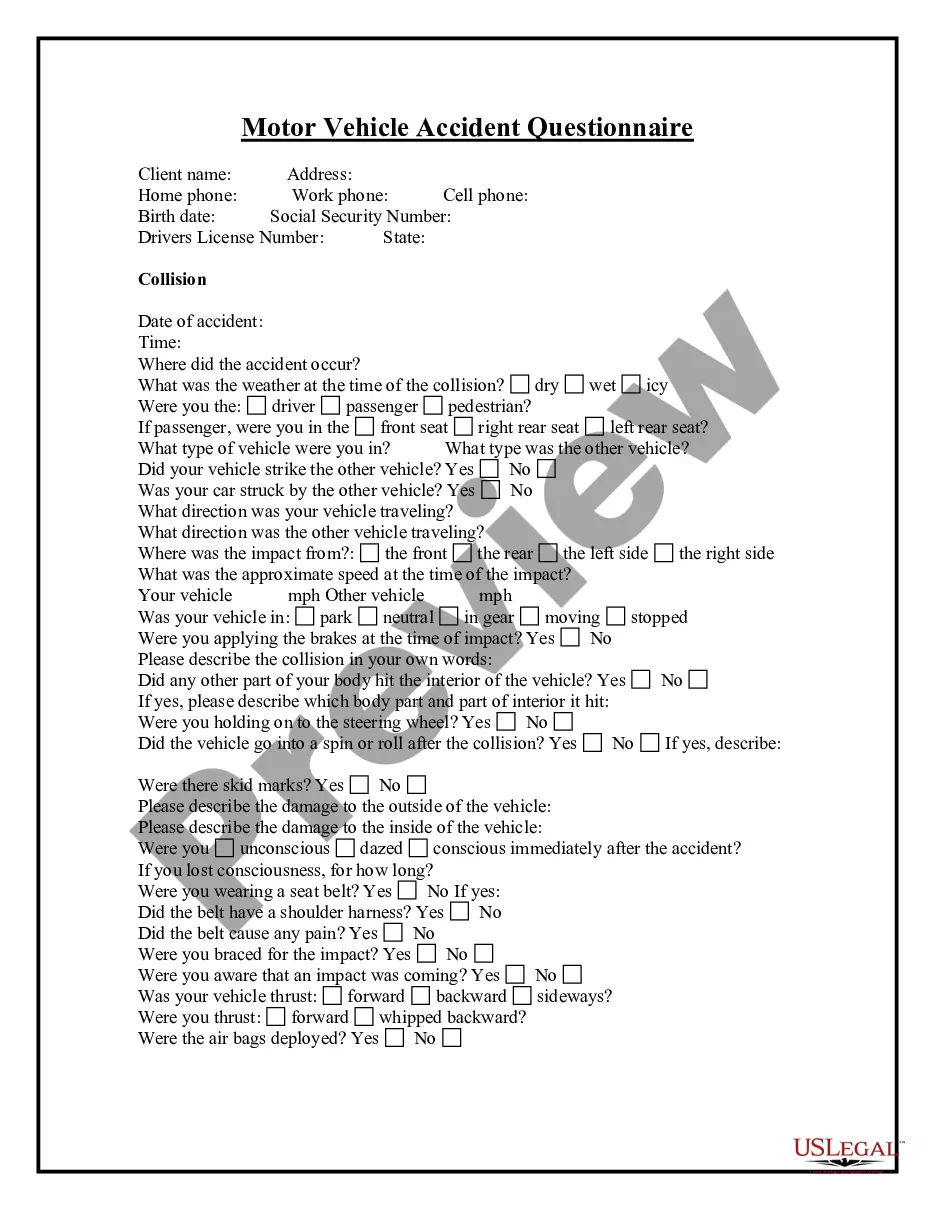
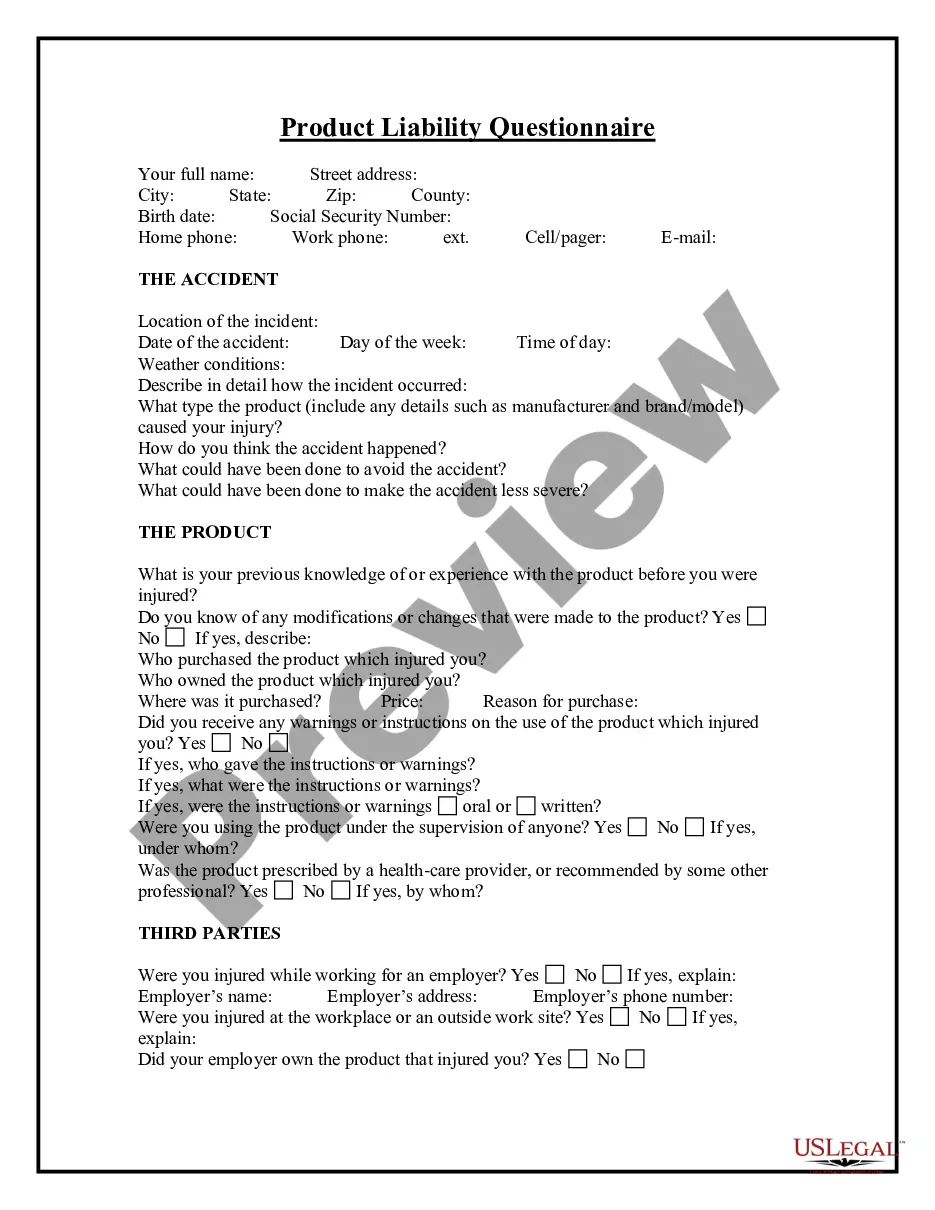
Get your form ready online
Our built-in tools help you complete, sign, share, and store your documents in one place.
Make edits, fill in missing information, and update formatting in US Legal Forms—just like you would in MS Word.
Download a copy, print it, send it by email, or mail it via USPS—whatever works best for your next step.
Sign and collect signatures with our SignNow integration. Send to multiple recipients, set reminders, and more. Go Premium to unlock E-Sign.
If this form requires notarization, complete it online through a secure video call—no need to meet a notary in person or wait for an appointment.
We protect your documents and personal data by following strict security and privacy standards.

Make edits, fill in missing information, and update formatting in US Legal Forms—just like you would in MS Word.

Download a copy, print it, send it by email, or mail it via USPS—whatever works best for your next step.

Sign and collect signatures with our SignNow integration. Send to multiple recipients, set reminders, and more. Go Premium to unlock E-Sign.

If this form requires notarization, complete it online through a secure video call—no need to meet a notary in person or wait for an appointment.

We protect your documents and personal data by following strict security and privacy standards.
Looking for another form?








How to fill out Automobile Lemon Law Questionnaire?
Utilizing legal form examples that comply with federal and local regulations is crucial, and the web provides countless selections to pick from.
However, what's the benefit in squandering time hunting for the suitable Car Lemon Law In Virginia template on the internet if the US Legal Forms online repository already has such documents gathered in one location.
US Legal Forms is the leading online legal resource with more than 85,000 editable templates created by attorneys for any professional and personal situation.
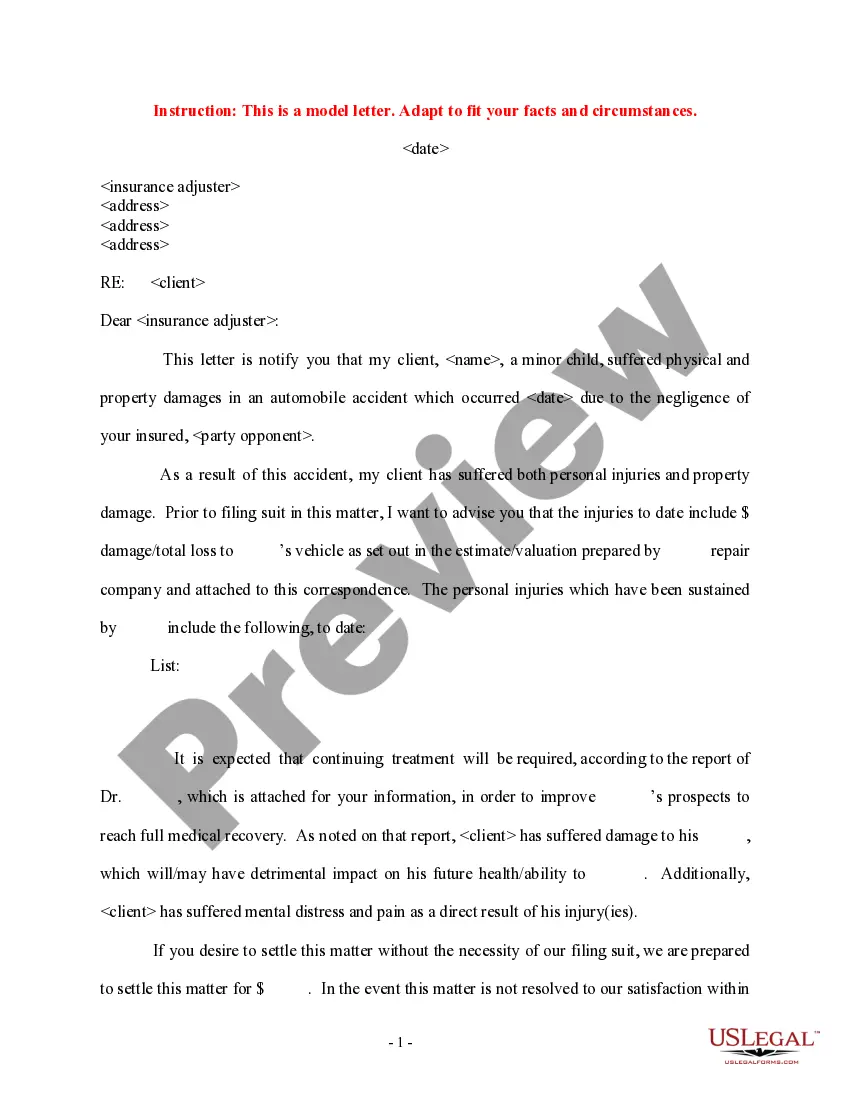
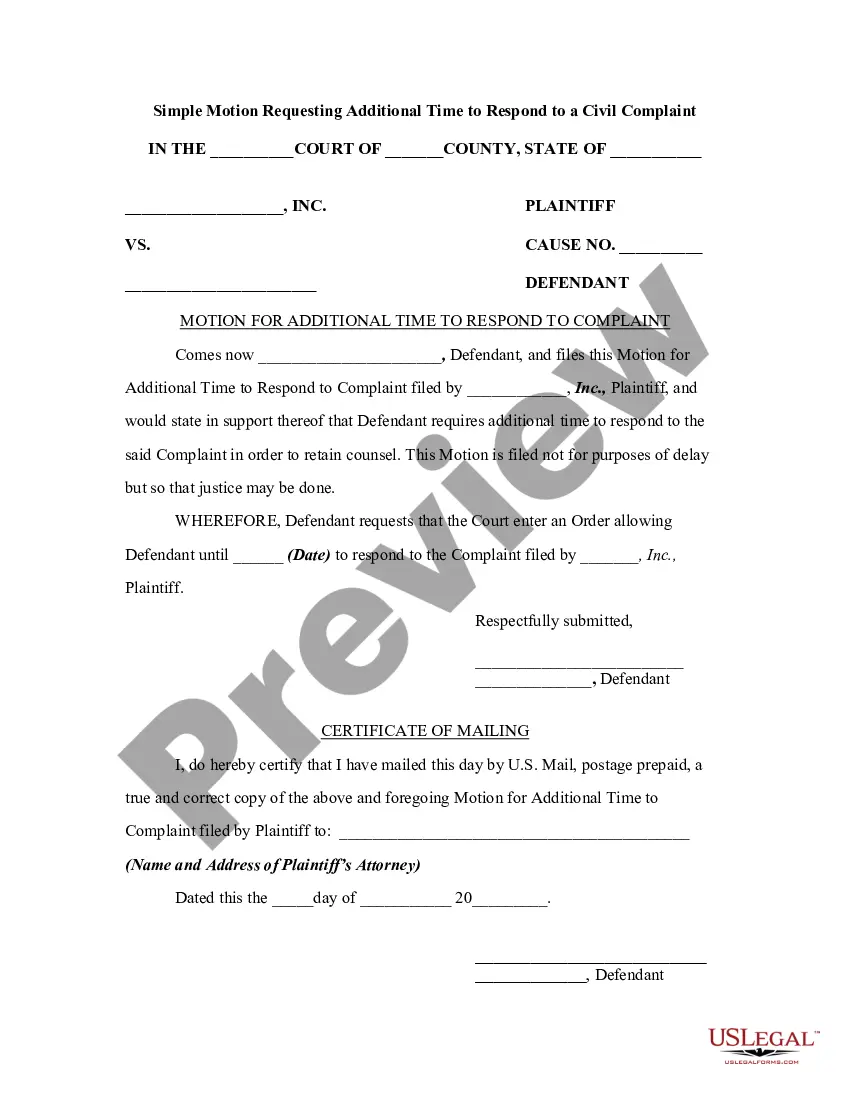
Review the template using the Preview option or through the text description to ensure it fulfills your needs.
- They are simple to navigate with all documents categorized by state and intended use.
- Our experts stay informed on legislative updates, so you can always trust that your paperwork is current and compliant when acquiring a Car Lemon Law In Virginia from our site.
- Getting a Car Lemon Law In Virginia is fast and straightforward for both existing and new users.
- If you already possess an account with an active subscription, Log In and save the needed document template in your desired format.
- If you are a newcomer to our website, follow these steps.
Form popularity
FAQ
To determine if a car qualifies as a lemon under the Car Lemon Law in Virginia, you need to consider specific criteria such as the number of repair attempts and the severity of the issues. Typically, if a vehicle has been in the shop for repairs multiple times for persistent problems within a certain period, it may fall under this law. Keeping detailed records of all repairs is essential in this process. For further clarity, you can consult resources on platforms like US Legal Forms to help you understand your rights and the steps to take.
In Virginia, the determination of whether a car is a lemon typically involves the manufacturer, dealerships, or a certified inspector. Under the Car Lemon Law in Virginia, if a vehicle has repeated issues that substantially affect its use or safety, these parties may help assess the situation. Consumers can also seek legal advice to navigate the claims process, ensuring their rights are protected. Utilizing platforms like US Legal Forms can simplify this by providing the necessary forms and guidance related to lemon law claims.
To expedite a lemon law case, ensure that you maintain detailed records of all repairs, communications, and incidents. Submitting complete and organized documentation can help your case move faster. Additionally, seeking help from legal resources such as USLegalForms can provide templates and guidance that assist with the process. Being thorough will greatly enhance your chances of a swift resolution.
The duration to settle a lemon lawsuit can vary significantly based on several factors, including the complexity of the case and the willingness of the manufacturer to negotiate. Typically, these cases can be resolved in a few months, but some may take longer. It's advisable to keep thorough records and seek assistance from platforms like USLegalForms to expedite your process. Being proactive can make a real difference.
Under Wisconsin law, vehicles are deemed lemons if they have defects that substantially impair use or safety within the first year or 12,000 miles. Manufacturers must be given a reasonable opportunity to fix these defects as per the car lemon law in Virginia and other states. If they fail to do so, consumers may pursue claims. Stay informed about the nuances of lemon laws in your state to protect your rights.
In Virginia, a vehicle qualifies under the lemon law if it has persistent defects that the manufacturer cannot repair after a reasonable number of attempts. The problems must occur within the first 18,000 miles or the first 18 months, whichever comes first. Understanding these qualifications can greatly benefit you if you're dealing with a lemon. For more details and guidance, check resources like USLegalForms.
Winning a lemon law case can vary depending on the specifics of your situation. Generally, if your claim meets the criteria set by the car lemon law in Virginia, your chances of success increase significantly. It is essential to present clear evidence of the defects and the repair attempts made. Utilizing resources from platforms like USLegalForms can help streamline the documentation process.
In Kansas, a vehicle qualifies for the lemon law if it has defects that impair its use, value, or safety. The issues must occur within the warranty period, and the manufacturer has a reasonable number of attempts to fix the problem. If they fail, you may have a valid lemon law claim. However, specific conditions apply that may differ from the car lemon law in Virginia.