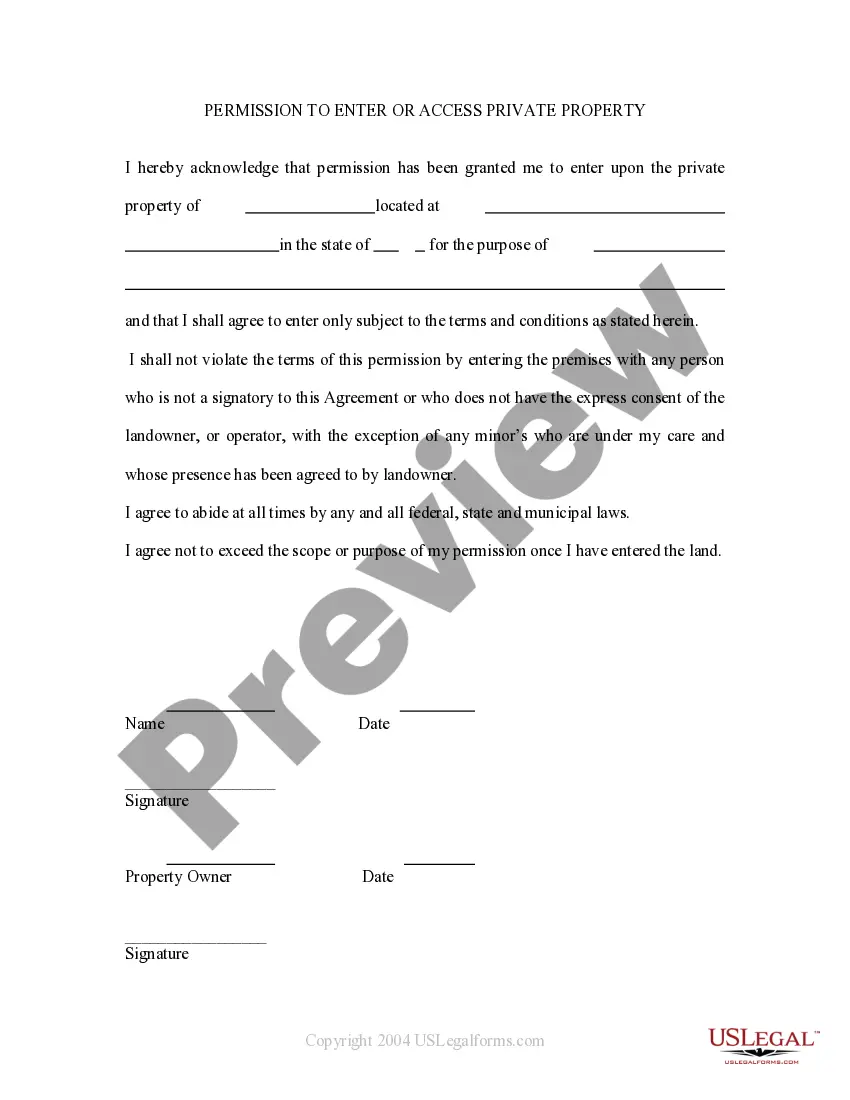
Letter Of Permission To Access Property
Description
Get your form ready online
Our built-in tools help you complete, sign, share, and store your documents in one place.
Make edits, fill in missing information, and update formatting in US Legal Forms—just like you would in MS Word.
Download a copy, print it, send it by email, or mail it via USPS—whatever works best for your next step.
Sign and collect signatures with our SignNow integration. Send to multiple recipients, set reminders, and more. Go Premium to unlock E-Sign.
If this form requires notarization, complete it online through a secure video call—no need to meet a notary in person or wait for an appointment.
We protect your documents and personal data by following strict security and privacy standards.

Make edits, fill in missing information, and update formatting in US Legal Forms—just like you would in MS Word.

Download a copy, print it, send it by email, or mail it via USPS—whatever works best for your next step.

Sign and collect signatures with our SignNow integration. Send to multiple recipients, set reminders, and more. Go Premium to unlock E-Sign.

If this form requires notarization, complete it online through a secure video call—no need to meet a notary in person or wait for an appointment.

We protect your documents and personal data by following strict security and privacy standards.
Looking for another form?
How to fill out Permission To Enter Or Access Private Property?
Regardless of whether for commercial reasons or personal matters, everyone eventually has to navigate legal issues at some point in their lives.
Completing legal documents necessitates meticulous care, beginning with selecting the correct form template.
With an extensive catalog from US Legal Forms available, you won't need to invest time searching the internet for the appropriate template. Benefit from the library’s user-friendly navigation to find the suitable template for any circumstance.
- Locate the template you require using the search bar or by browsing the catalog.
- Review the details of the form to confirm it aligns with your circumstances, jurisdiction, and county.
- Click on the form's preview to inspect it.
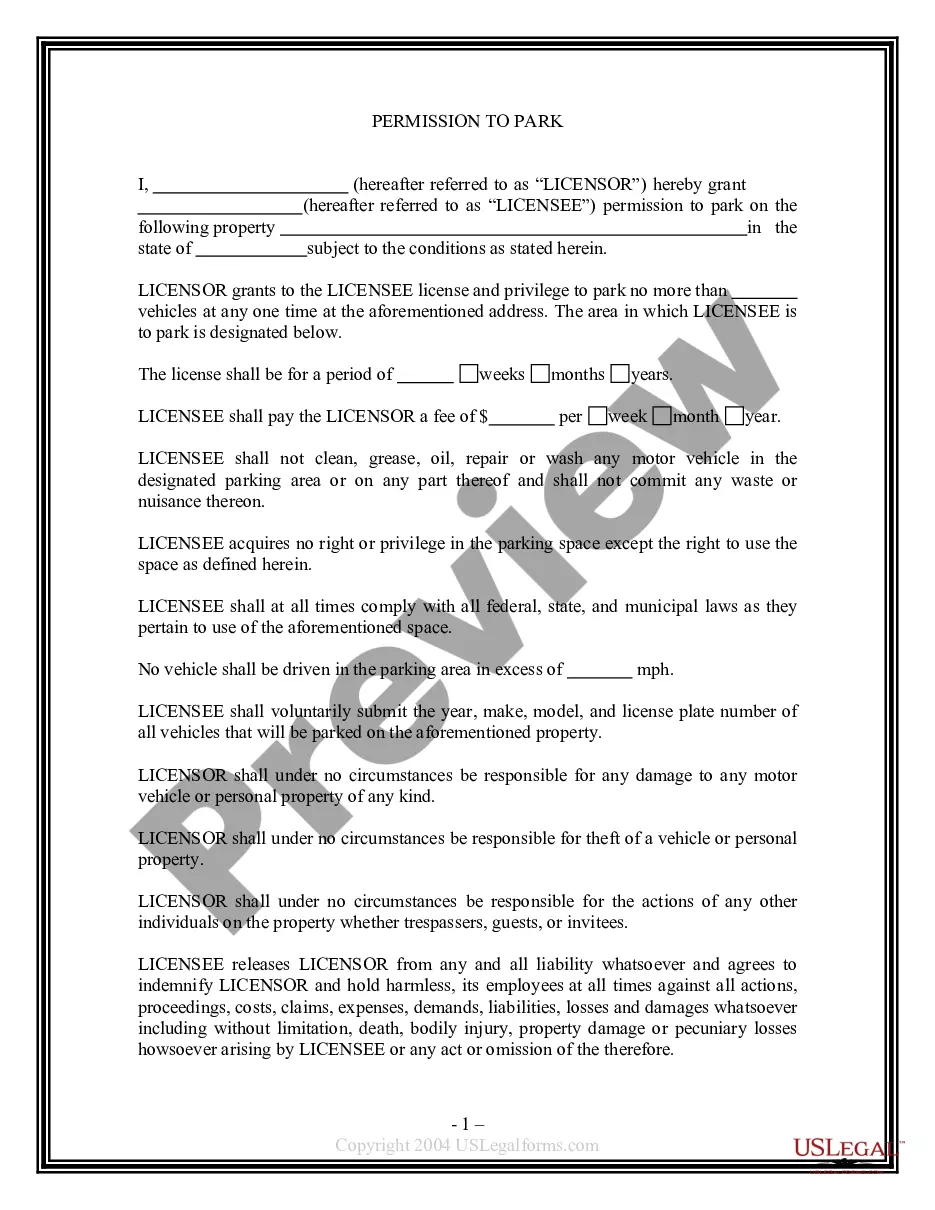
- If it is the wrong form, return to the search feature to locate the Letter Of Permission To Access Property template you need.
- Retrieve the file once it meets your specifications.
- If you possess a US Legal Forms account, simply click Log in to access previously saved templates in My documents.
- If you do not yet have an account, you can obtain the form by clicking Buy now.
- Select the suitable pricing option.
- Complete the profile registration form.
- Choose your payment method: either use a credit card or your PayPal account.
- Select the document format you prefer and download the Letter Of Permission To Access Property.
- After downloading, you can fill out the form using editing software or print it to complete it manually.
Form popularity
FAQ
To write a simple permission letter, first, include your name and the date at the top. Clearly state what you are permitting, including any relevant details such as the location and timeframe. Sign the letter to finalize it. Using templates from US Legal Forms can streamline this process, allowing you to convey your permission clearly and professionally.
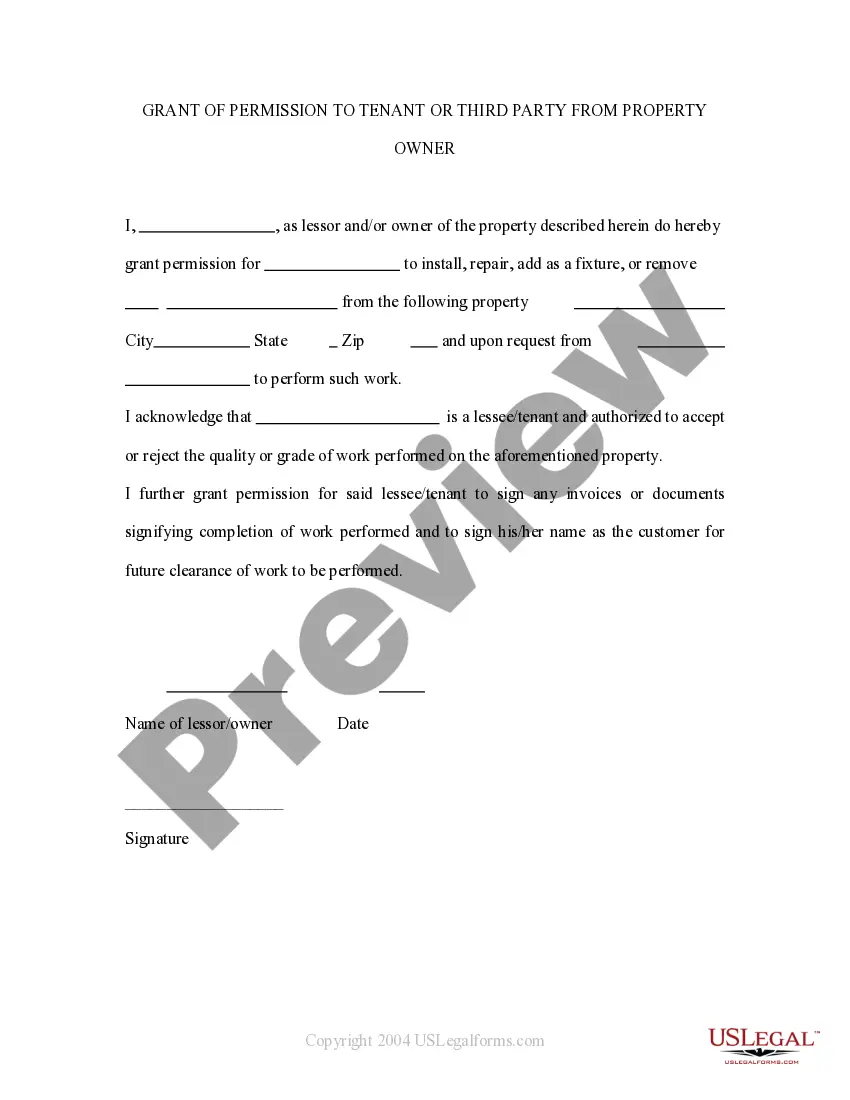
When writing an authorization letter for a tenant, start with your name, contact information, and the date. State that you are granting the tenant permission to access specific areas of the property. Be precise about the duration and conditions of the authorization. A well-crafted template available on US Legal Forms can help you create a professional letter quickly.
To write a good letter of request, begin with a polite greeting and a clear statement of your request. Be specific about what you need and include all necessary details, such as dates and purpose. Finally, conclude with an expression of gratitude and your contact information. Using a structured format for a Letter of permission to access property can enhance the letter's effectiveness.
An example of asking for permission is writing a letter to the property owner, clearly stating your intentions. For instance, you might say, "I am writing to request permission to access your property for a scheduled inspection on May 10th." Such clarity in a Letter of permission to access property fosters goodwill and helps facilitate a positive response.
Yes, you typically need permission to access private property. Entering private land without the owner's consent can lead to legal issues. To avoid such complications, it’s advisable to obtain a Letter of permission to access property. This document protects you and ensures that you have the right to enter the premises.
To write a simple permission letter, start by clearly stating your intent to request access to the property. Include the purpose of your visit and specify the dates and times you wish to access the property. Make sure to sign the letter and provide your contact information. Consider using a template for a Letter of permission to access property to ensure you cover all essential details.
A simple letter of authorization should include your name, contact information, and the name of the person you are authorizing. Clearly outline the purpose of the authorization related to property access, and state any limitations or conditions. Keep it concise while ensuring all essential information is included.
An authorization letter for property should outline the rights you grant to the authorized party. Begin with your contact details, specify the individual or entity being authorized, and clearly state the actions they are permitted to take regarding the property. Make sure to include any limitations or deadlines to ensure clarity.
To draft a letter of permission request, clearly express your purpose in the opening. State the specific access you are seeking for the property, along with reasons why you need it. Providing context helps the recipient understand and consider your request, increasing your chances of approval.
When writing a letter of permission to use property, clarity is key. State the property’s location and detail what uses you are allowing, such as 'permission to hold events' or 'access for maintenance.' Be sure to include the time frame for this permission and any conditions that apply, ensuring everything is well documented.