Wrongful Death Penalty Convictions
Description

Get your form ready online
Our built-in tools help you complete, sign, share, and store your documents in one place.
Make edits, fill in missing information, and update formatting in US Legal Forms—just like you would in MS Word.
Download a copy, print it, send it by email, or mail it via USPS—whatever works best for your next step.
Sign and collect signatures with our SignNow integration. Send to multiple recipients, set reminders, and more. Go Premium to unlock E-Sign.
If this form requires notarization, complete it online through a secure video call—no need to meet a notary in person or wait for an appointment.
We protect your documents and personal data by following strict security and privacy standards.

Make edits, fill in missing information, and update formatting in US Legal Forms—just like you would in MS Word.

Download a copy, print it, send it by email, or mail it via USPS—whatever works best for your next step.

Sign and collect signatures with our SignNow integration. Send to multiple recipients, set reminders, and more. Go Premium to unlock E-Sign.

If this form requires notarization, complete it online through a secure video call—no need to meet a notary in person or wait for an appointment.

We protect your documents and personal data by following strict security and privacy standards.
Looking for another form?







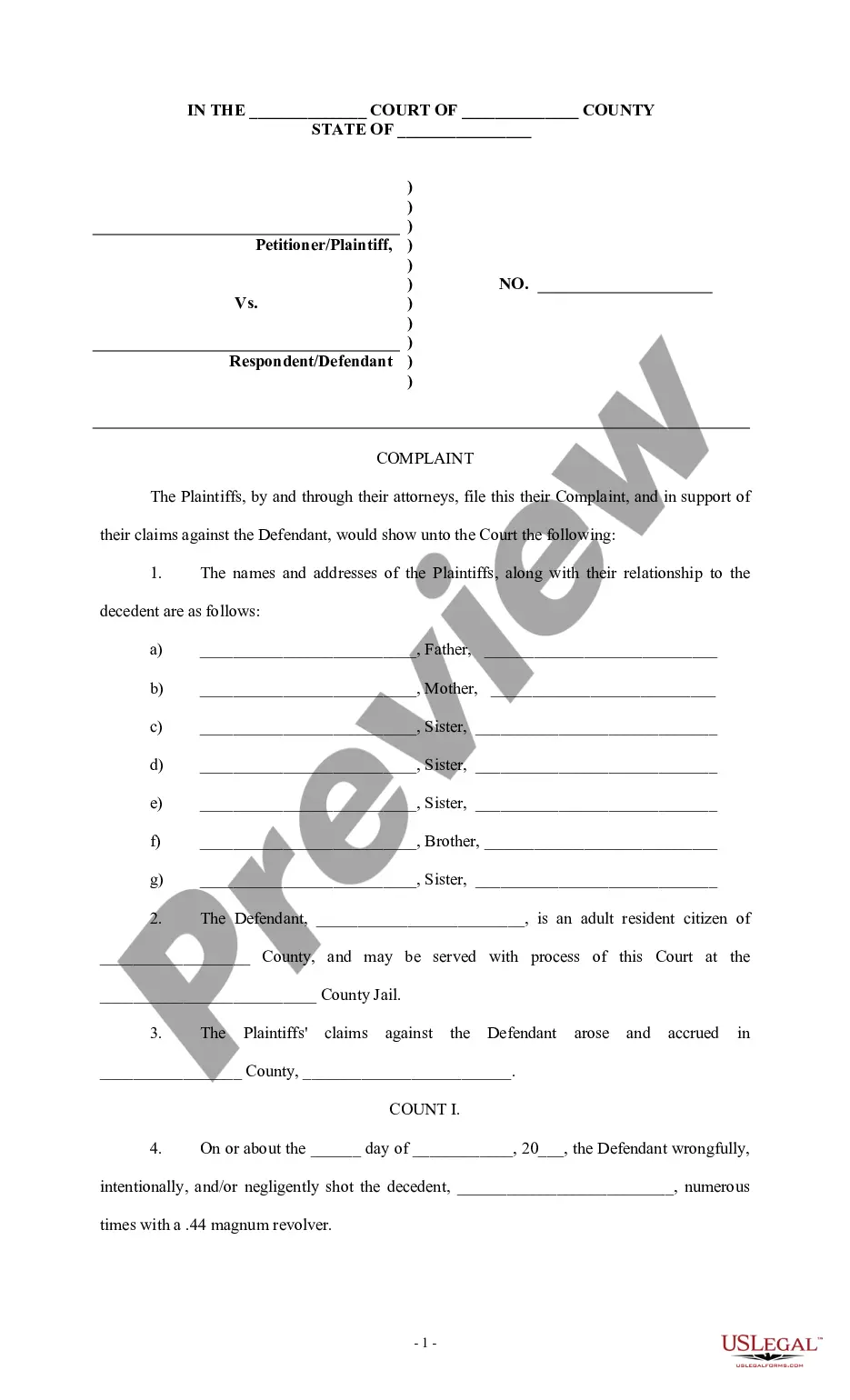
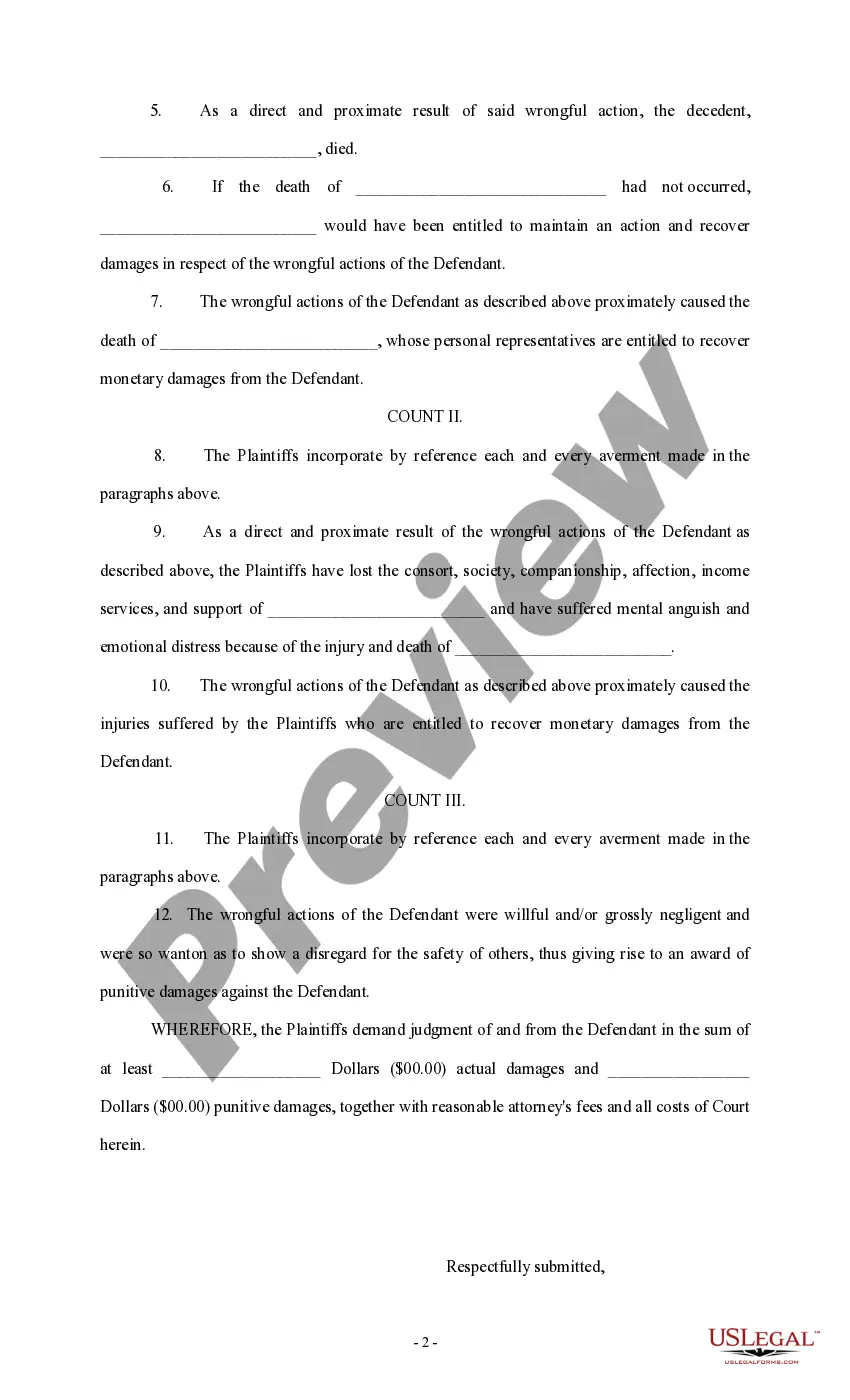
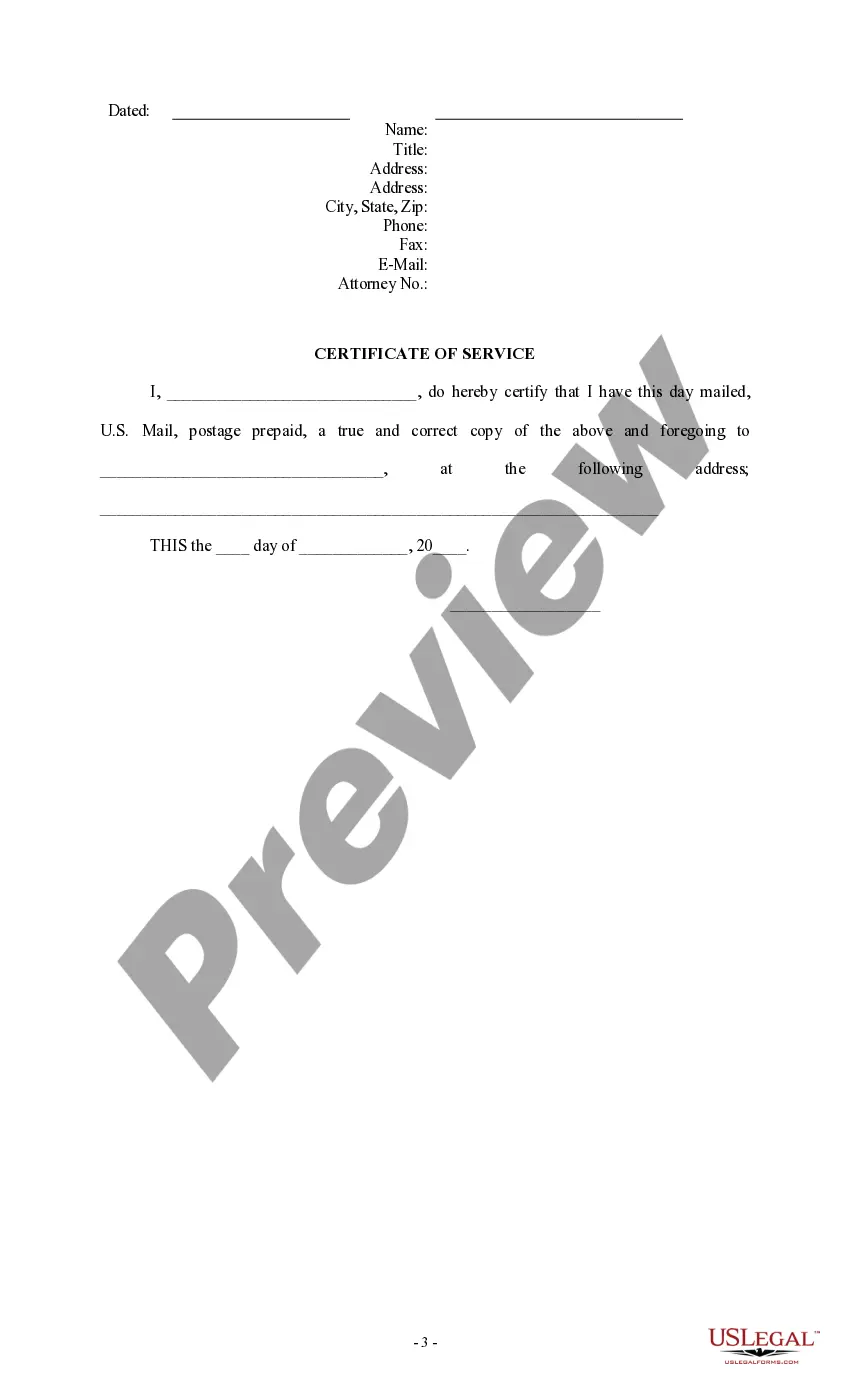
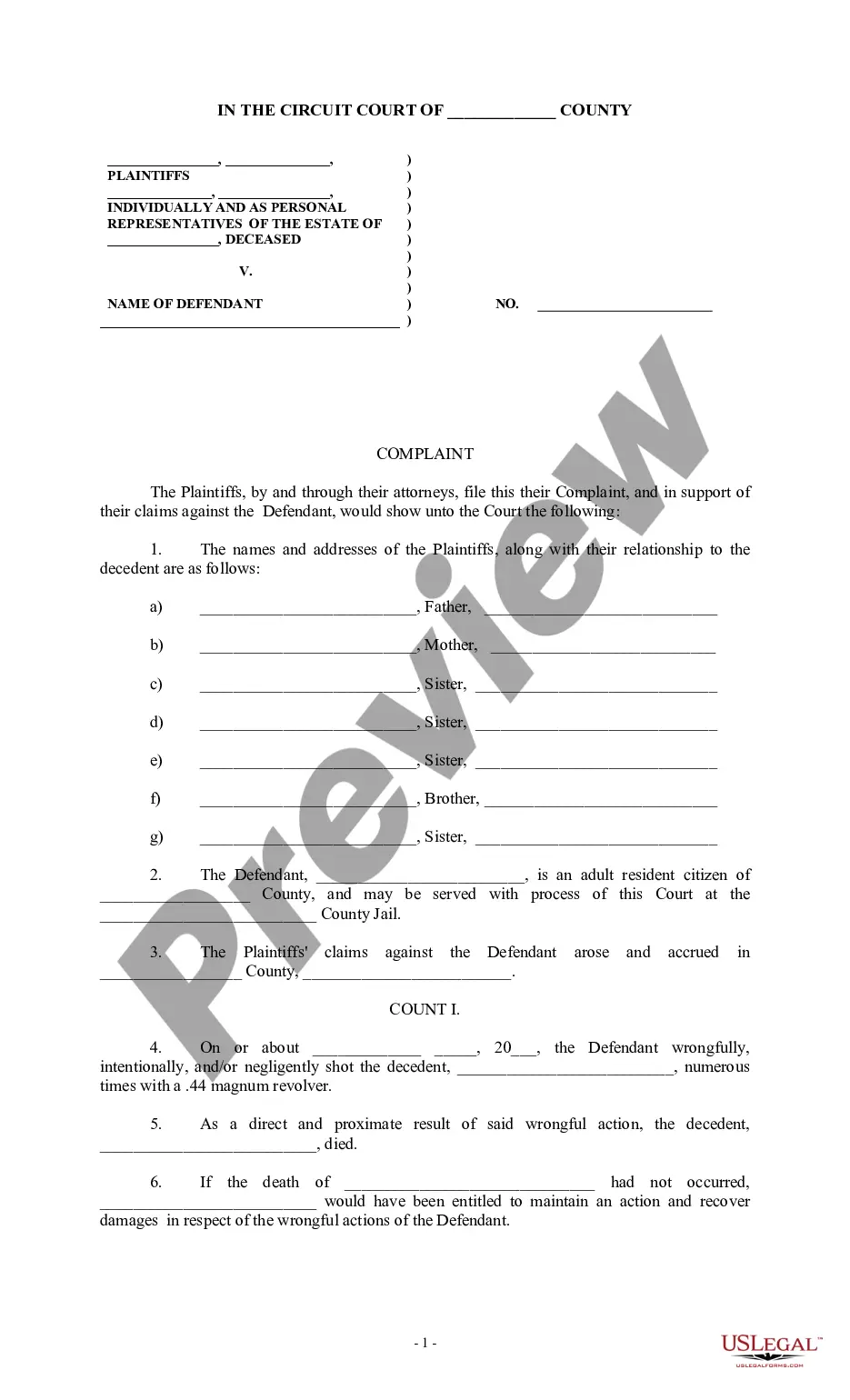
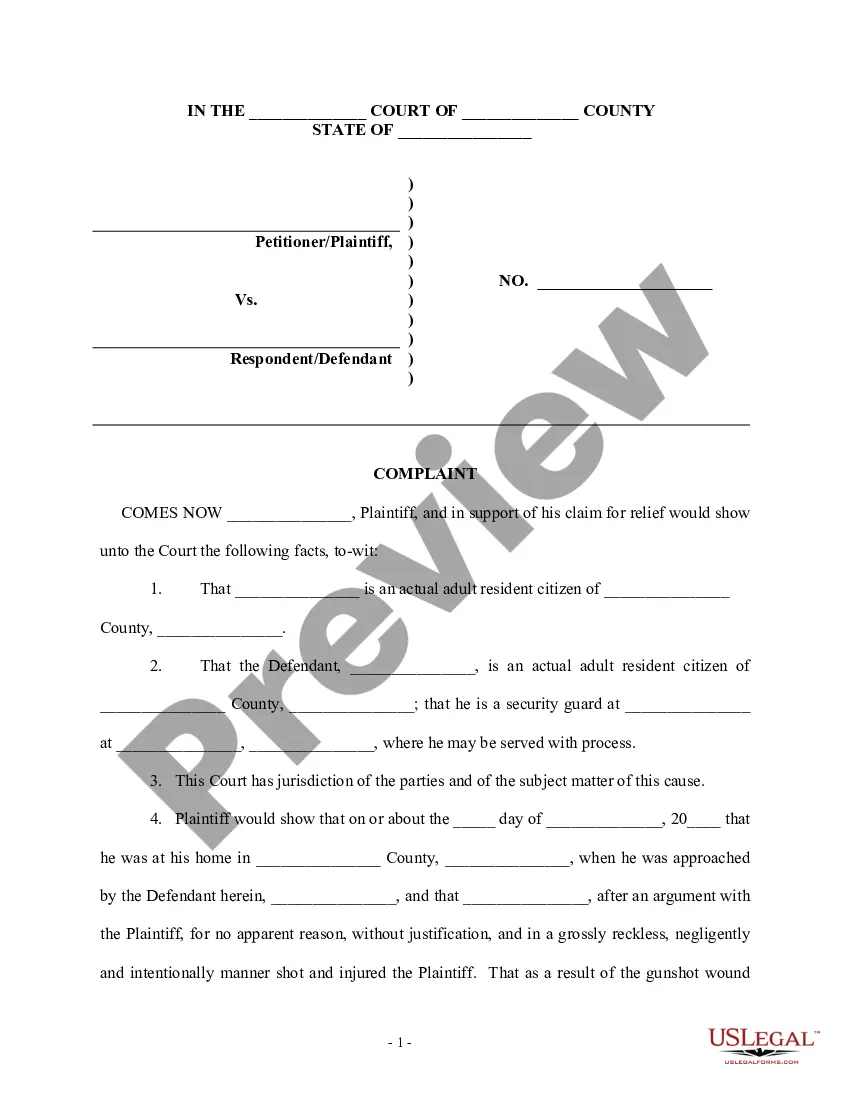
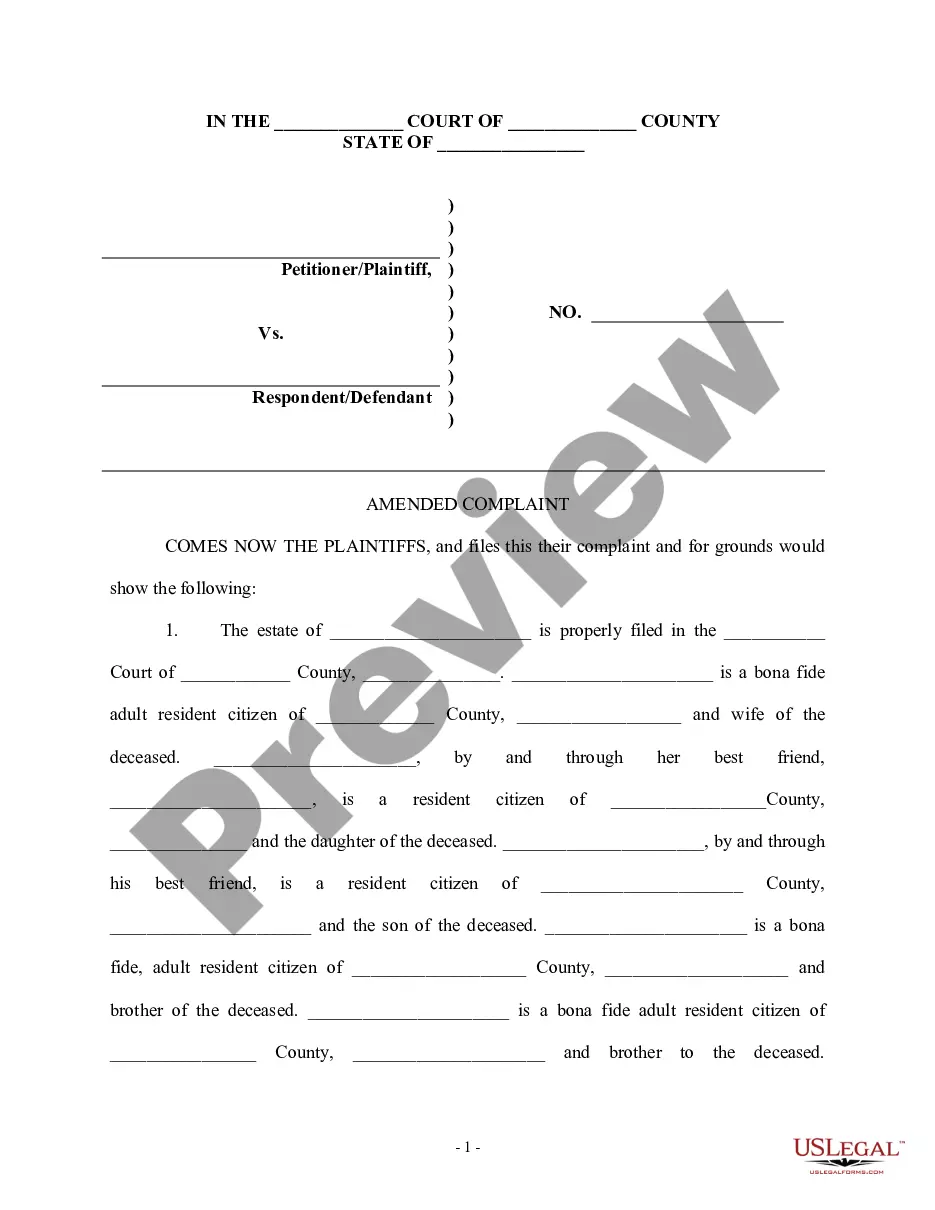
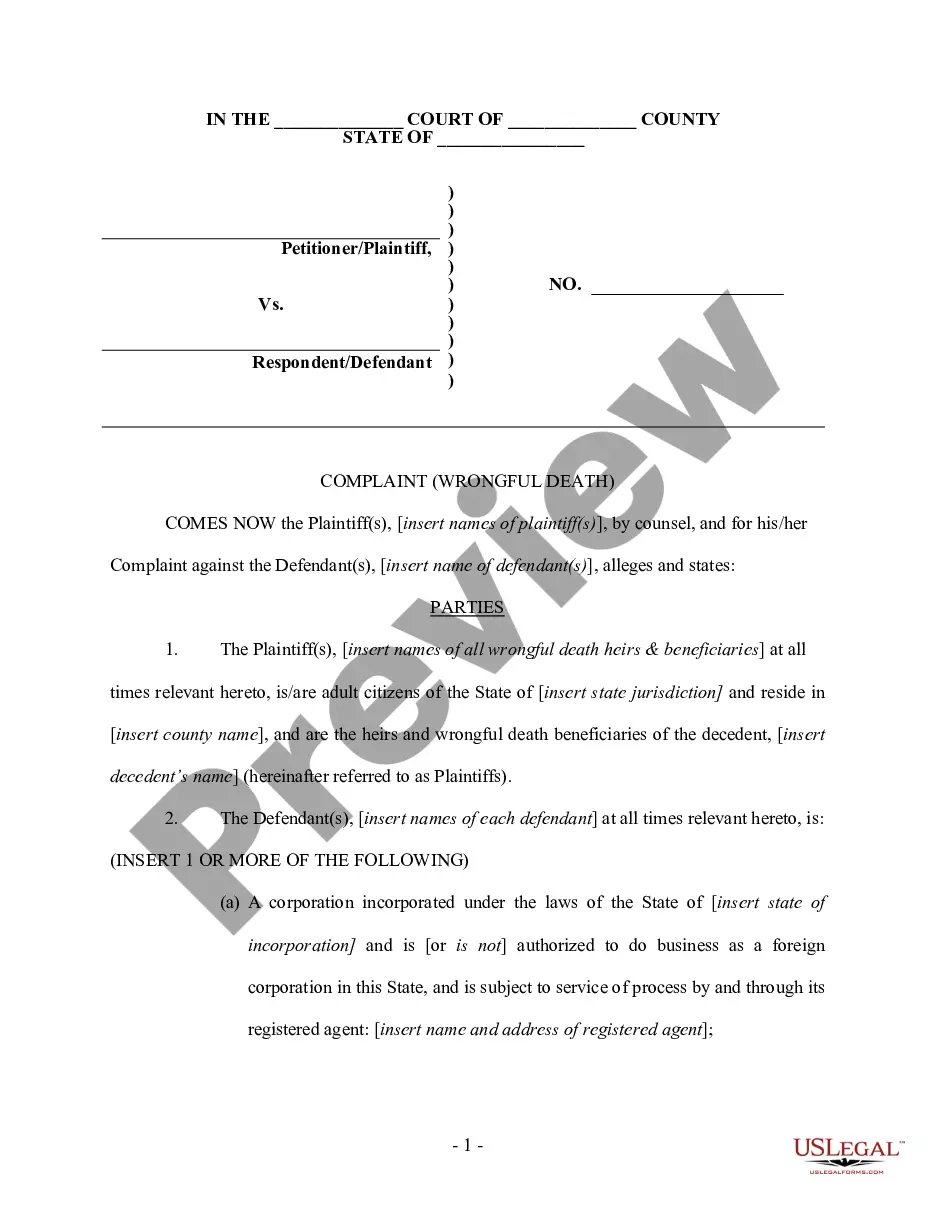
How to fill out Complaint For Personal Injury And Wrongful Death Due To Shooting / Violence?
- If you're a returning user, log into your account and ensure your subscription is up to date. Locate the required form template and download it directly to your device.
- For newcomers, begin by checking the Preview mode to review the form description. Confirm that it aligns with your needs and complies with your local jurisdiction's requirements.
- Use the Search tab to find other templates if your initial choice is unsuitable. Explore variations until you find the correct one.
- Click on the Buy Now button to select your preferred subscription plan. You'll need to register for an account to access the vast library.
- Make the payment by entering your credit card information or using your PayPal account to complete your purchase.
- Download your completed form from the My Forms section in your profile for future reference.
With US Legal Forms, you gain access to over 85,000 customizable legal documents and the assurance of expert support for form completion. This empowers you to ensure that your legal documents are both precise and compliant.
Don't navigate the complexities of wrongful death penalty convictions alone. Start using US Legal Forms today and take the first step toward securing the documents needed for your case.
Form popularity
FAQ
A wrongful death suit often arises in cases where negligence leads to a person's death. For instance, if a medical professional provides substandard care that results in a patient's death, the family may file a wrongful death suit against that provider. These suits highlight the necessity of accountability and justice for victims and their families, especially when wrongful death penalty convictions occur.
An example of wrongful death penalty is the case of Greg Taylor, wrongfully convicted of murder in North Carolina. He spent 17 years in prison before DNA evidence proved his innocence, showcasing the serious impact of wrongful death penalty convictions. This case serves as a reminder of the importance of thorough investigations before executing justice.
When addressing the death penalty, it's crucial to consider its ethical implications and the possibility of wrongful death penalty convictions. Writers often discuss cases where innocent individuals have faced execution, drawing attention to flaws in the legal process. By informing readers about these issues, we can advocate for reform and a more just legal system.
A notable case is that of Cameron Todd Willingham, who was executed in Texas for allegedly setting a fire that killed his three children. After his execution, new evidence emerged suggesting that the fire was accidental, highlighting the grave risks associated with wrongful death penalty convictions. This case underscores how the justice system can err, leading to irreversible consequences for innocent individuals.
Opposition to the death penalty comes from a diverse range of individuals and organizations, including human rights advocates, legal experts, and faith-based groups. Many of these entities focus on the risk of wrongful death penalty convictions and the moral implications of taking a life as punishment. Their efforts aim to promote justice systems that prioritize rehabilitation over retribution, fostering a more humane approach to criminal justice.
Appealing a death sentence usually takes place on several grounds, including ineffective legal counsel, new evidence, or procedural errors during the trial. Many wrongful death penalty convictions occur due to inadequate defense or misconduct by law enforcement, which should be addressed in an appeal. It's essential to work with experienced legal professionals when exploring these grounds.
The deterrence argument against the death penalty suggests that capital punishment reduces crime rates by instilling fear of severe consequences. However, many studies question this notion, highlighting the occurrence of wrongful death penalty convictions as evidence that the system is flawed. Ultimately, alternative solutions may be more effective in preventing crime while upholding ethical standards.
Appealing the death penalty involves a complex legal process that typically begins after the sentencing has occurred. You must file a notice of appeal, and then your legal team will gather evidence and provide arguments focused on wrongful death penalty convictions. This process can vary by state, but it generally requires a thorough examination of trial records and procedural issues.
To take action against the death penalty, you can start by educating yourself and others about wrongful death penalty convictions. Engage with organizations that oppose capital punishment, attend rallies, and participate in advocacy campaigns. Supporting legal reforms and writing to lawmakers can also help shift the conversation towards alternatives that prioritize justice and rehabilitation.
The false conviction rate for the death penalty is unsettling, with studies suggesting that a significant number of individuals sentenced to death were wrongfully convicted. These wrongful death penalty convictions often stem from flawed evidence, mistaken identity, or inadequate legal representation. Understanding this rate can be crucial in advocating for reforms in the justice system.