Summary Judgment For Debt Collection
Description
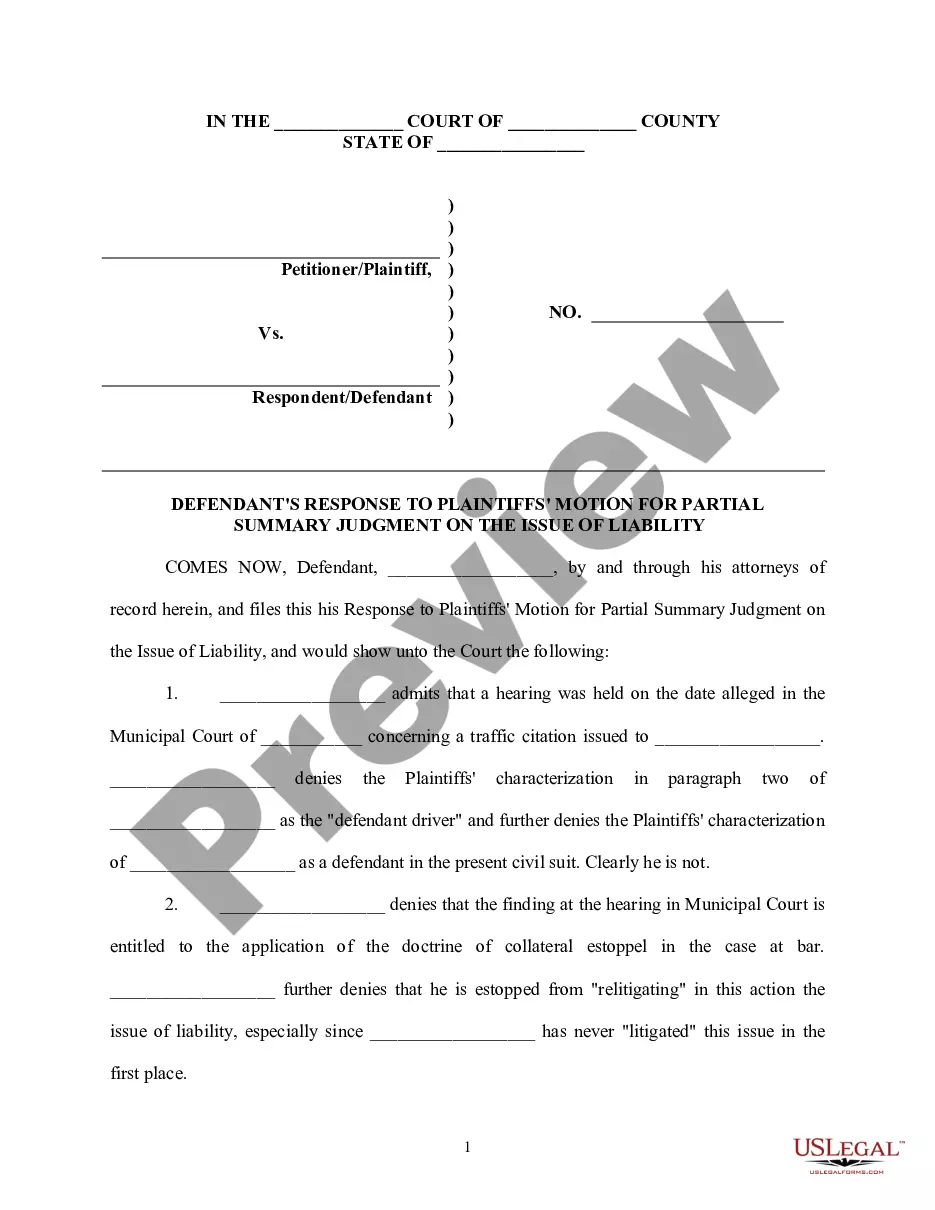
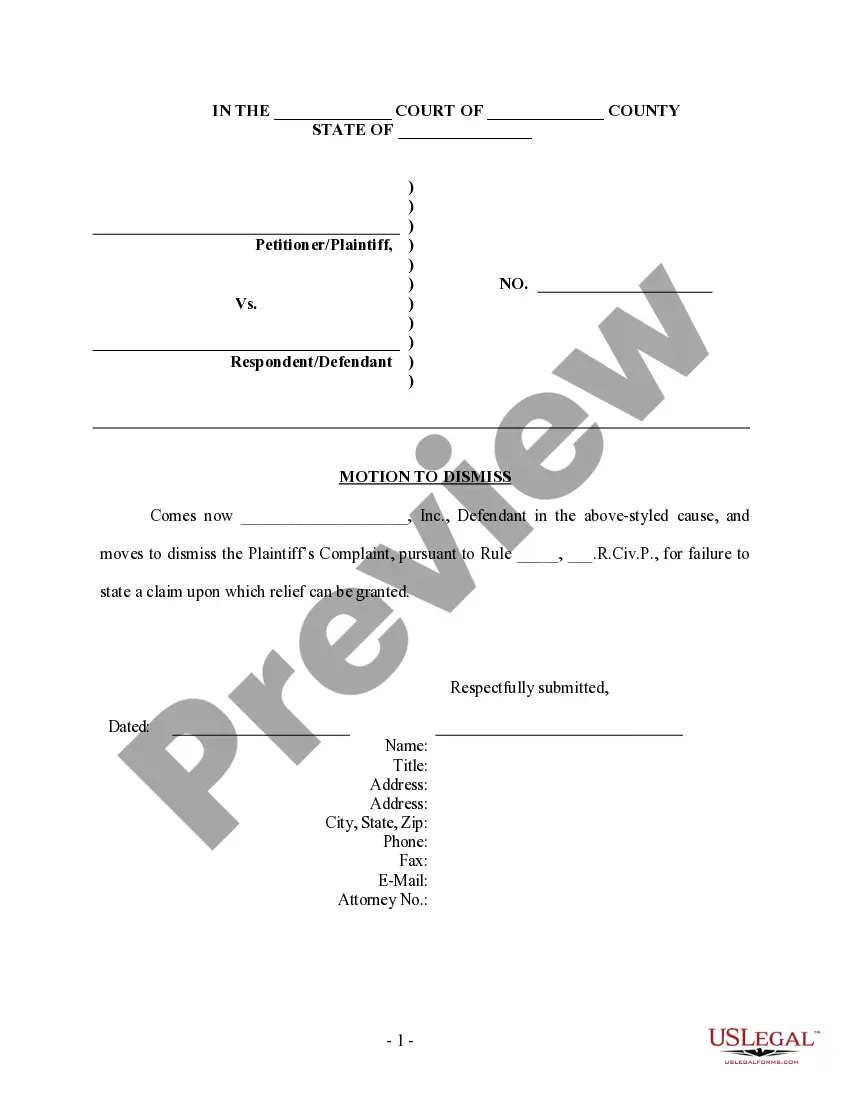
Get your form ready online
Our built-in tools help you complete, sign, share, and store your documents in one place.
Make edits, fill in missing information, and update formatting in US Legal Forms—just like you would in MS Word.
Download a copy, print it, send it by email, or mail it via USPS—whatever works best for your next step.
Sign and collect signatures with our SignNow integration. Send to multiple recipients, set reminders, and more. Go Premium to unlock E-Sign.
If this form requires notarization, complete it online through a secure video call—no need to meet a notary in person or wait for an appointment.
We protect your documents and personal data by following strict security and privacy standards.

Make edits, fill in missing information, and update formatting in US Legal Forms—just like you would in MS Word.

Download a copy, print it, send it by email, or mail it via USPS—whatever works best for your next step.

Sign and collect signatures with our SignNow integration. Send to multiple recipients, set reminders, and more. Go Premium to unlock E-Sign.

If this form requires notarization, complete it online through a secure video call—no need to meet a notary in person or wait for an appointment.

We protect your documents and personal data by following strict security and privacy standards.
Looking for another form?
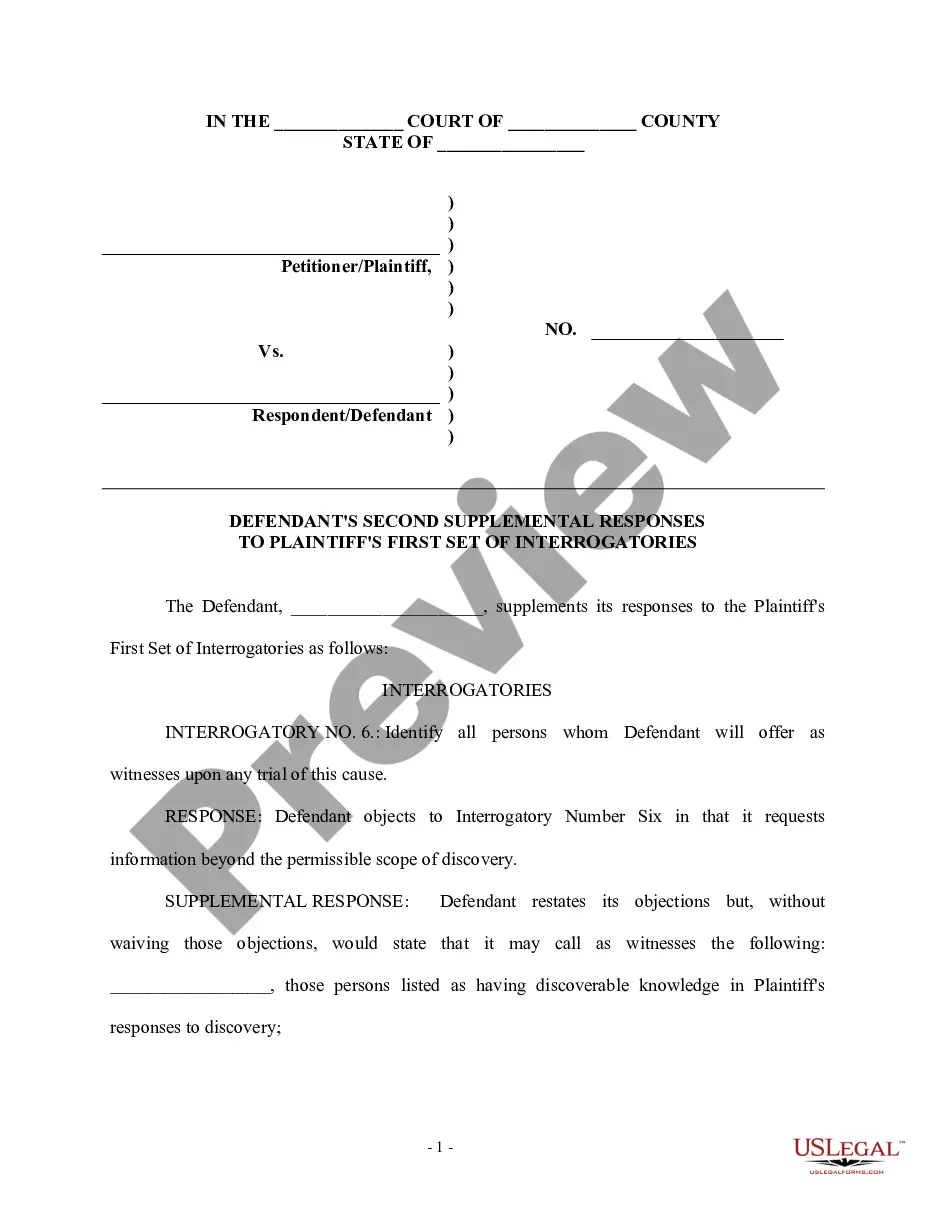



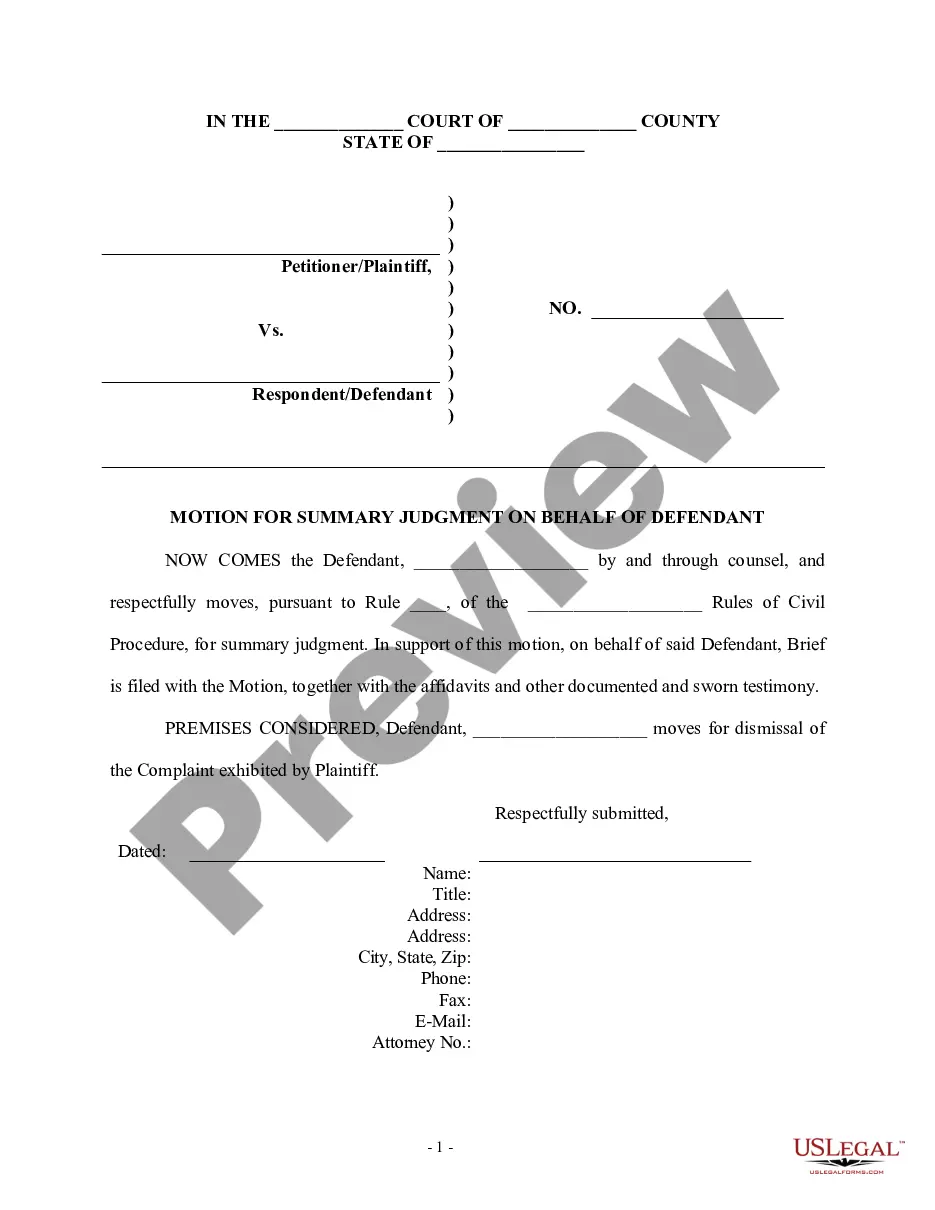
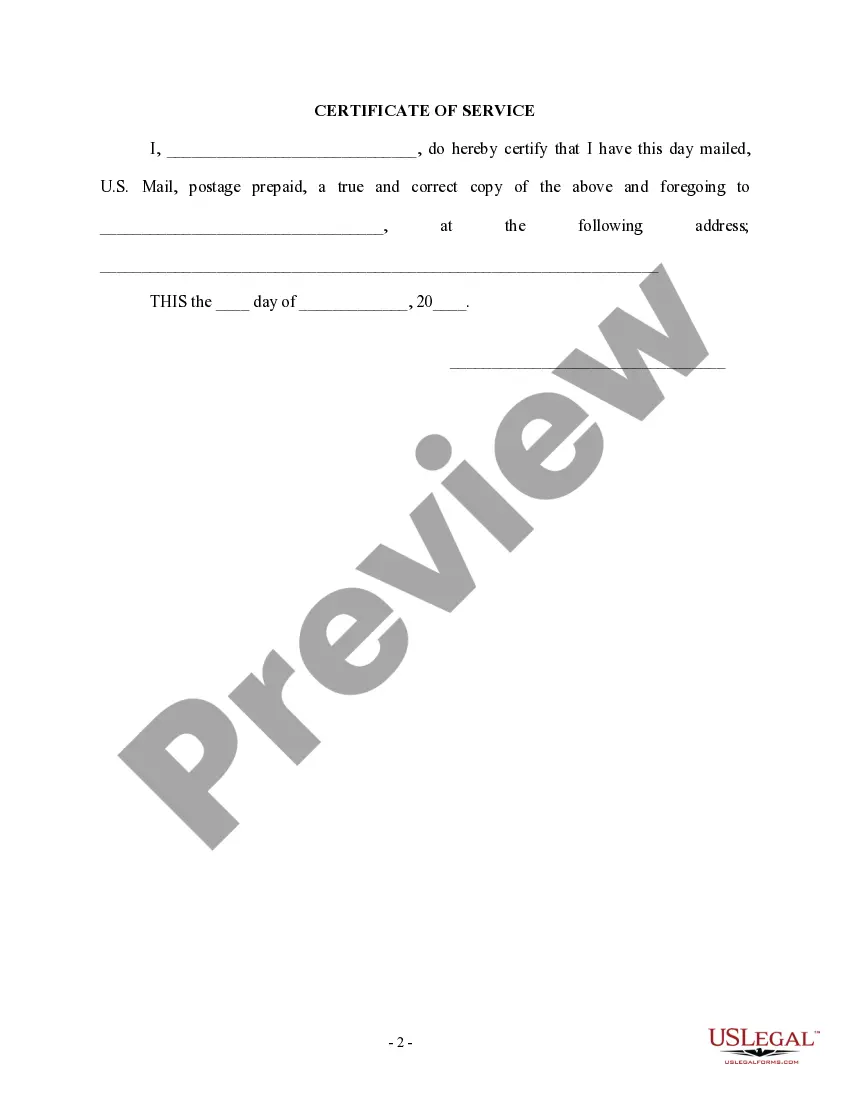
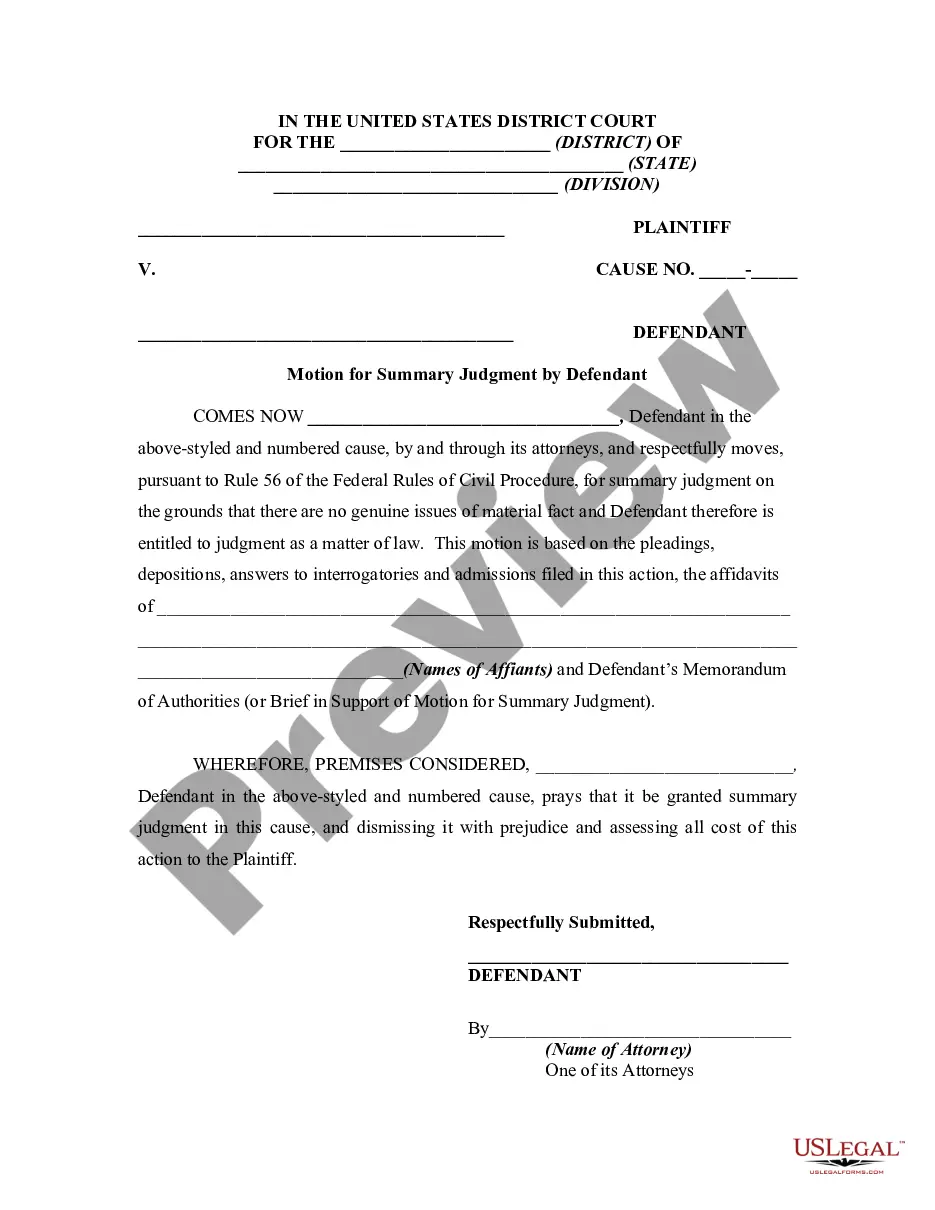
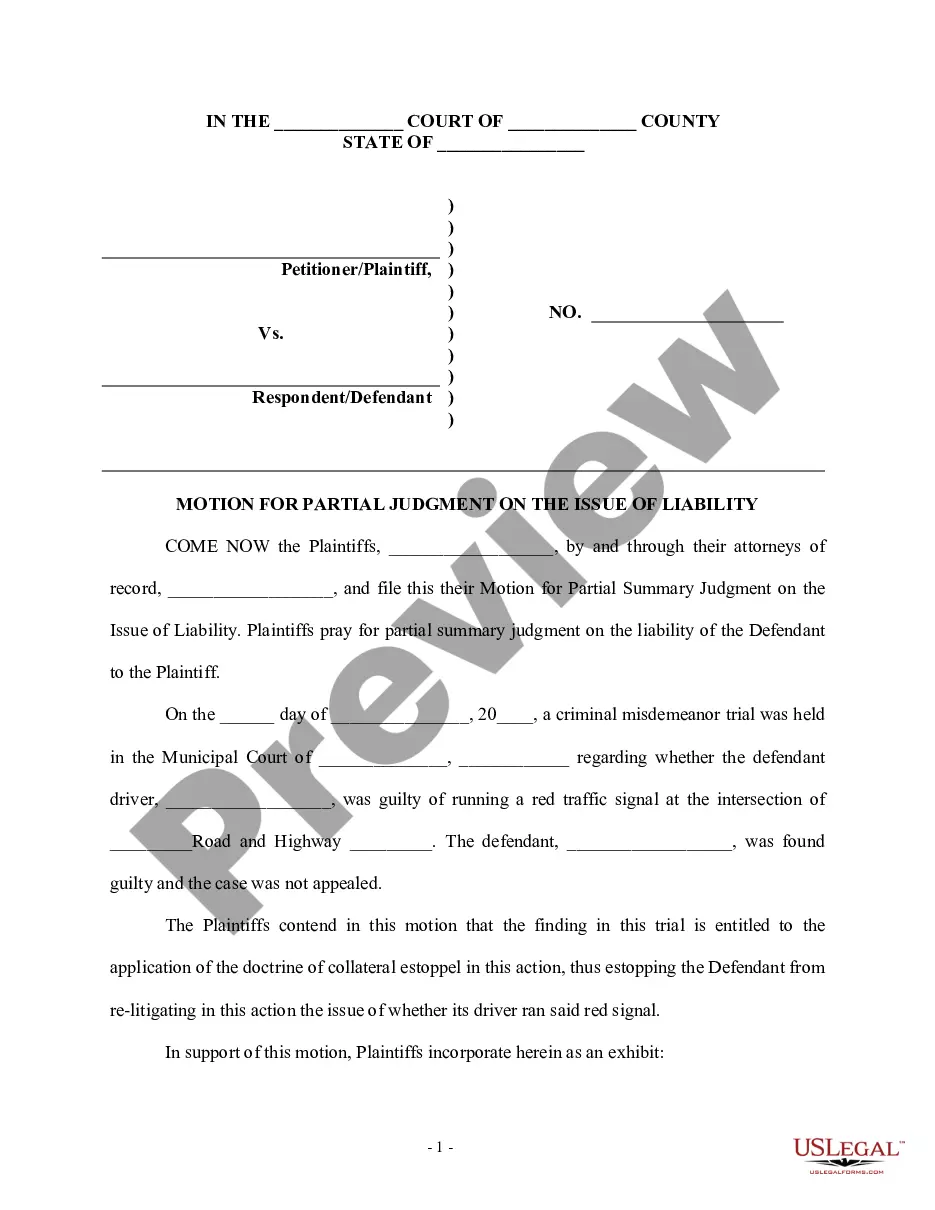
How to fill out Motion For Summary Judgment On Behalf Of Defendant?
- If you're a returning user, log into your account and check that your subscription is active. Use the Download button to save your form template.
- For first-time users, begin by examining the form description and preview mode to select the template suitable for your needs and compliant with local jurisdiction.
- If the selected form doesn't fit, utilize the Search tab to find an appropriate alternative that meets your criteria.
- To purchase the document, click the Buy Now button and select your preferred subscription plan. Registration is required to access the extensive library.
- Complete your purchase by entering your payment details via credit card or PayPal.
- Finally, download your document to your device for completion and easy access via the My Forms section anytime.
Using US Legal Forms ensures not only quick access to an extensive library of over 85,000 forms but also support from premium experts for precise document completion.
Start your journey to effective legal documentation today with US Legal Forms. Don’t miss out on their comprehensive resources!
Form popularity
FAQ
To write a good summary judgment for debt collection, begin by crafting a clear statement of undisputed facts. Follow this with a concise analysis of the law as it applies to your case, linking the evidence to legal standards. Finally, conclude with a compelling request for relief, explaining why the judgment should favor your position. Using resources from USLegalForms can help provide a structured approach to your writing, ensuring you cover all critical elements.
An example of a summary judgment for debt collection may involve a creditor providing sufficient proof that a debtor failed to make payments as agreed within a contract. If the debtor does not dispute the facts and it is clear that the creditor complies with legal procedures, the court may rule in favor of the creditor. Such rulings illustrate the importance of presenting clear, unambiguous evidence. Platforms like USLegalForms offer examples and guidance to help you understand how to establish your case effectively.
To write a good judgment for a summary judgment for debt collection, clarity and precision are key. Focus on summarizing the facts of the case accurately and systematically addressing each legal argument. Clearly state the reasons for your decision, citing applicable laws and precedents, which can enhance the strength of your judgment. Utilizing USLegalForms can guide you in structuring your judgment effectively, ensuring all necessary components are included.
Winning on summary judgment for debt collection requires a solid understanding of the evidence and legal standards applicable to your case. Start by gathering all relevant documentation, such as contracts, payment records, and communication logs, to establish your claims clearly. Make sure to articulate how the evidence supports your position, demonstrating that no genuine disputes of material fact exist. Utilizing USLegalForms can streamline this process by providing templates and resources tailored for debt collection cases.
Requesting a summary judgment for debt collection involves filing a specific motion with the court, where you argue that there are no issues of material fact. You will need to submit all pertinent evidence along with your motion to back up your claims. It's essential to adhere to the legal standards in your jurisdiction, and platforms like US Legal can provide templates and legal instructions to help you navigate this process effectively.
Seeking summary judgment for debt collection can be beneficial as it may bring a swift resolution to your case. It allows you to avoid a lengthy trial by having the court rule in your favor based on clear evidence. This can save you time and legal costs, making it an appealing option if you believe the facts are strongly on your side. Engaging with US Legal forms can streamline this process for you.
The '777 rule' refers to a guideline used by debt collectors that emphasizes regulations around debt collection practices. It suggests that communication should be limited to seven instances, and they must ensure compliance with state and federal laws. Understanding this rule can help protect your rights during debt collection efforts and can guide your approach if facing a lawsuit. Knowledge of these rules is crucial when seeking summary judgment for debt collection.
In debt collection cases, the creditor or their attorney typically files for summary judgment. This occurs when they believe the evidence clearly supports their claim, and there are no disputes regarding key facts. However, defendants can also file for summary judgment if they can demonstrate that the creditor lacks a valid claim. Utilizing tools from US Legal can assist in this process for either party.
You can find out if you have a judgment against you for debt collection by checking public court records in your area. Many courts provide online databases where you can search for judgments using your name. Additionally, if a creditor has pursued legal action, they may notify you of a court date. Regularly monitoring your credit report can also help identify any judgments.
The odds of obtaining summary judgment for debt collection depend on the specific circumstances of your case. Generally, courts grant summary judgment when there are clear facts that favor one party and no material issues to resolve. To improve your chances, ensure you present strong evidence and compelling legal arguments. Consulting with an expert in debt collection can also enhance your prospects.