Wrongful Termination For Retaliation
Description
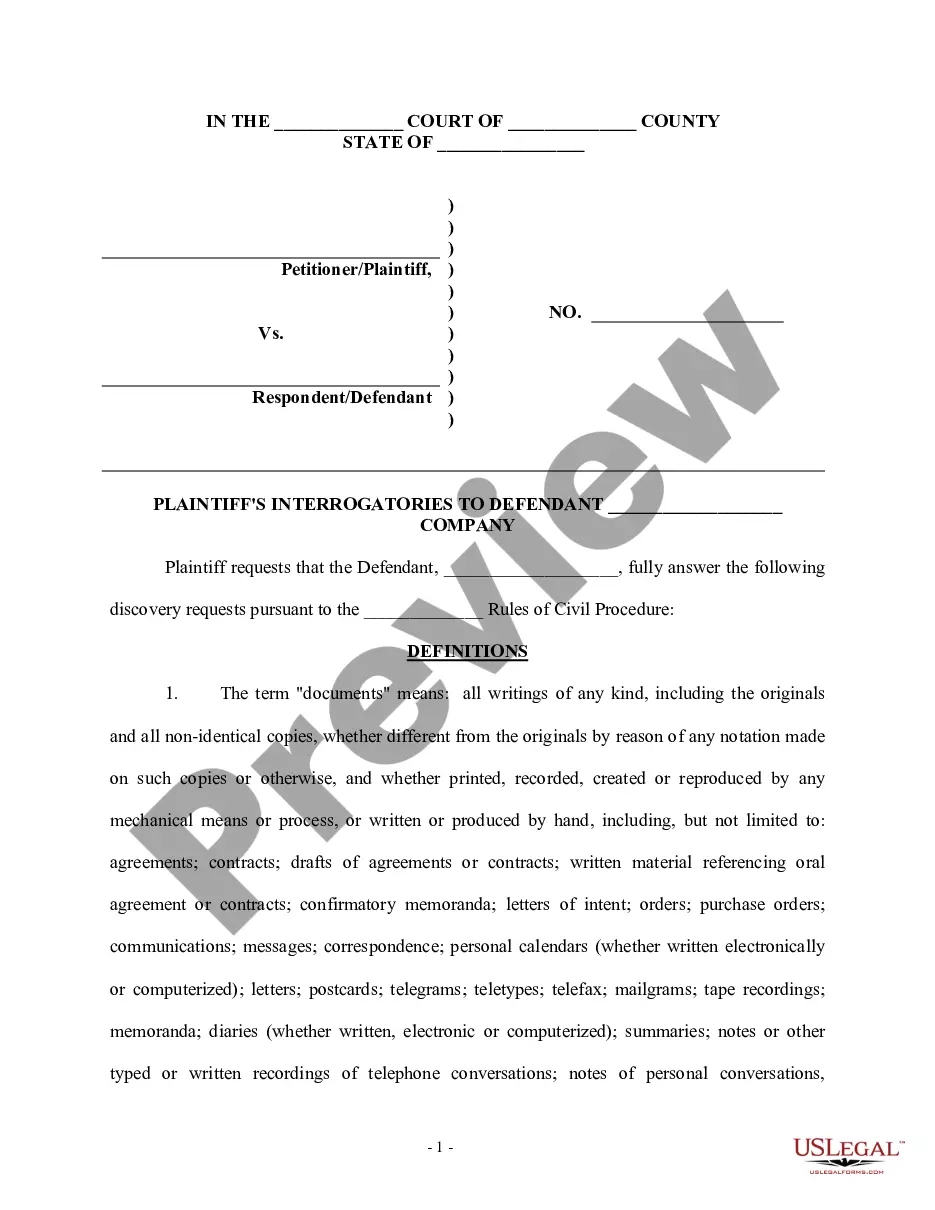
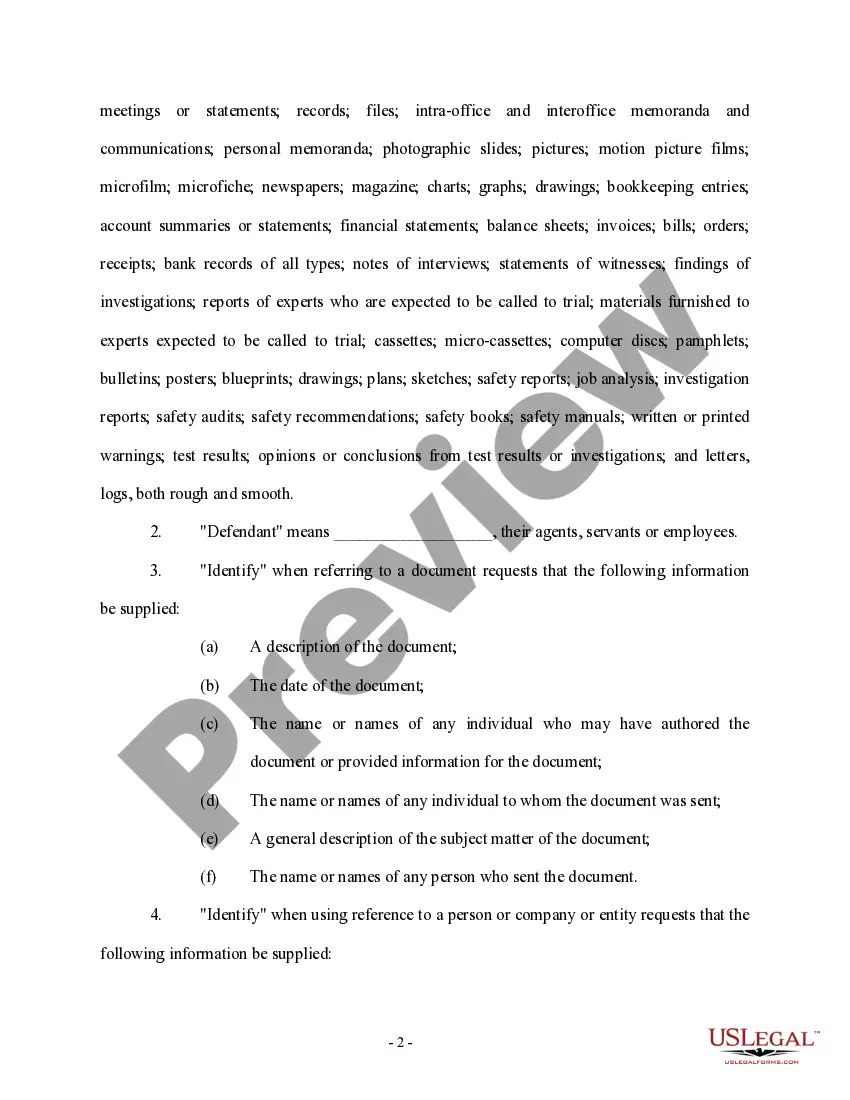
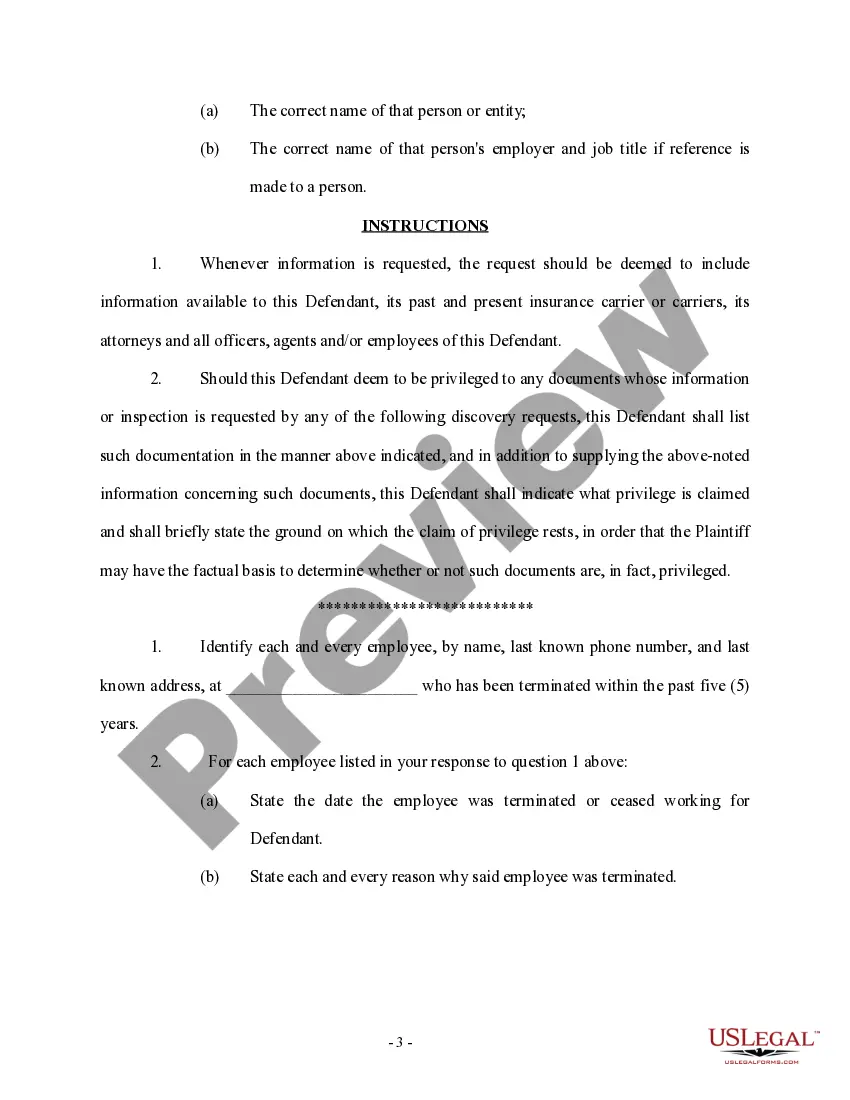
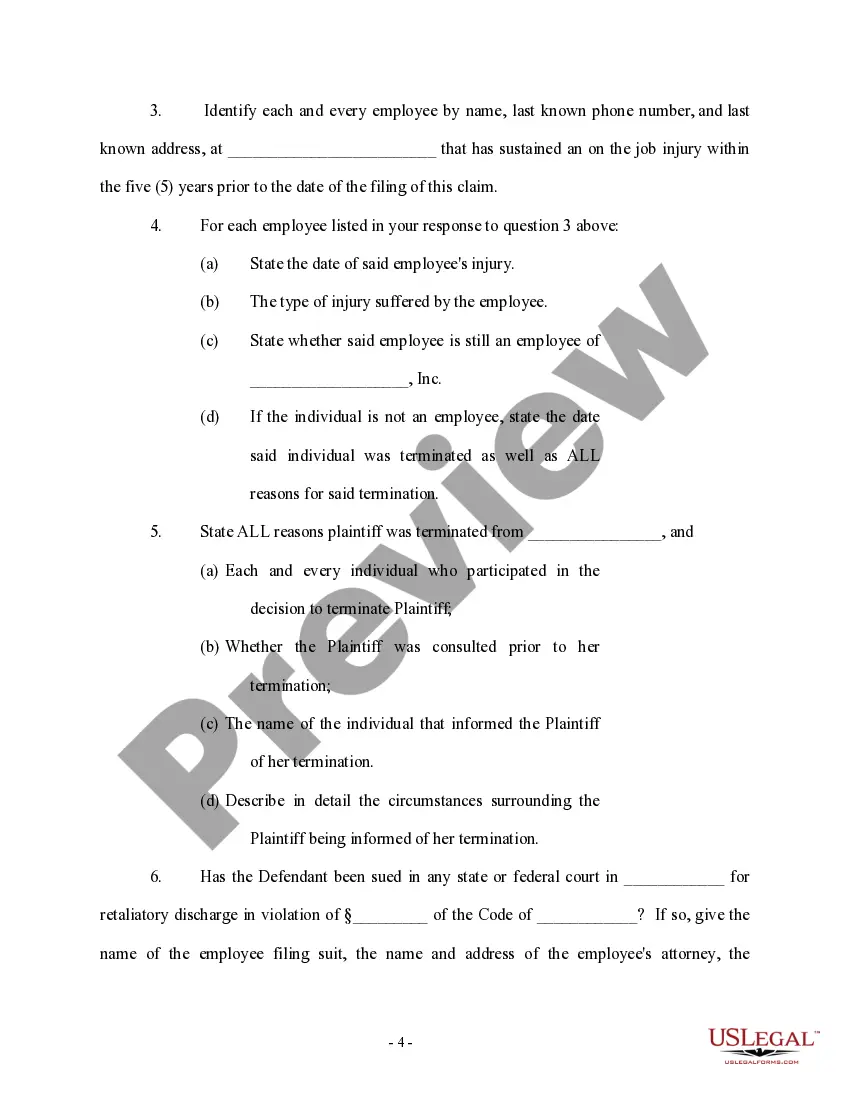
Get your form ready online
Our built-in tools help you complete, sign, share, and store your documents in one place.
Make edits, fill in missing information, and update formatting in US Legal Forms—just like you would in MS Word.
Download a copy, print it, send it by email, or mail it via USPS—whatever works best for your next step.
Sign and collect signatures with our SignNow integration. Send to multiple recipients, set reminders, and more. Go Premium to unlock E-Sign.
If this form requires notarization, complete it online through a secure video call—no need to meet a notary in person or wait for an appointment.
We protect your documents and personal data by following strict security and privacy standards.

Make edits, fill in missing information, and update formatting in US Legal Forms—just like you would in MS Word.

Download a copy, print it, send it by email, or mail it via USPS—whatever works best for your next step.

Sign and collect signatures with our SignNow integration. Send to multiple recipients, set reminders, and more. Go Premium to unlock E-Sign.

If this form requires notarization, complete it online through a secure video call—no need to meet a notary in person or wait for an appointment.

We protect your documents and personal data by following strict security and privacy standards.
Looking for another form?


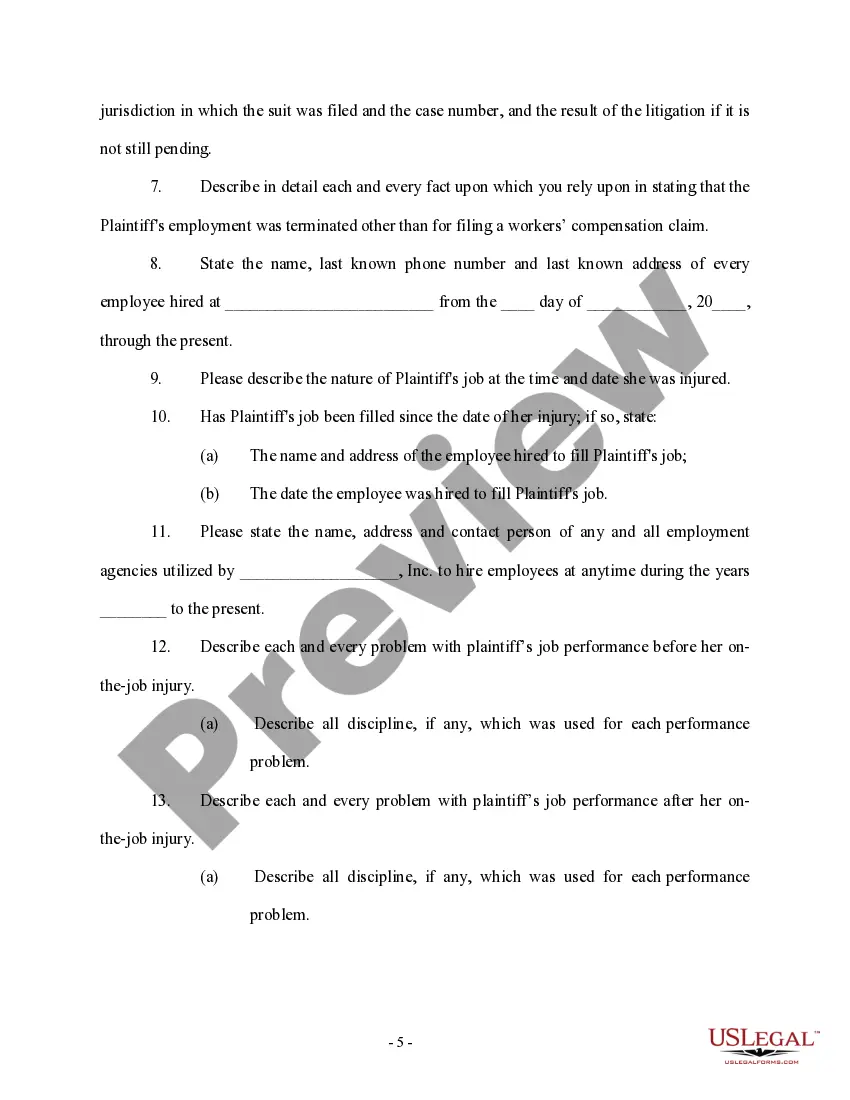
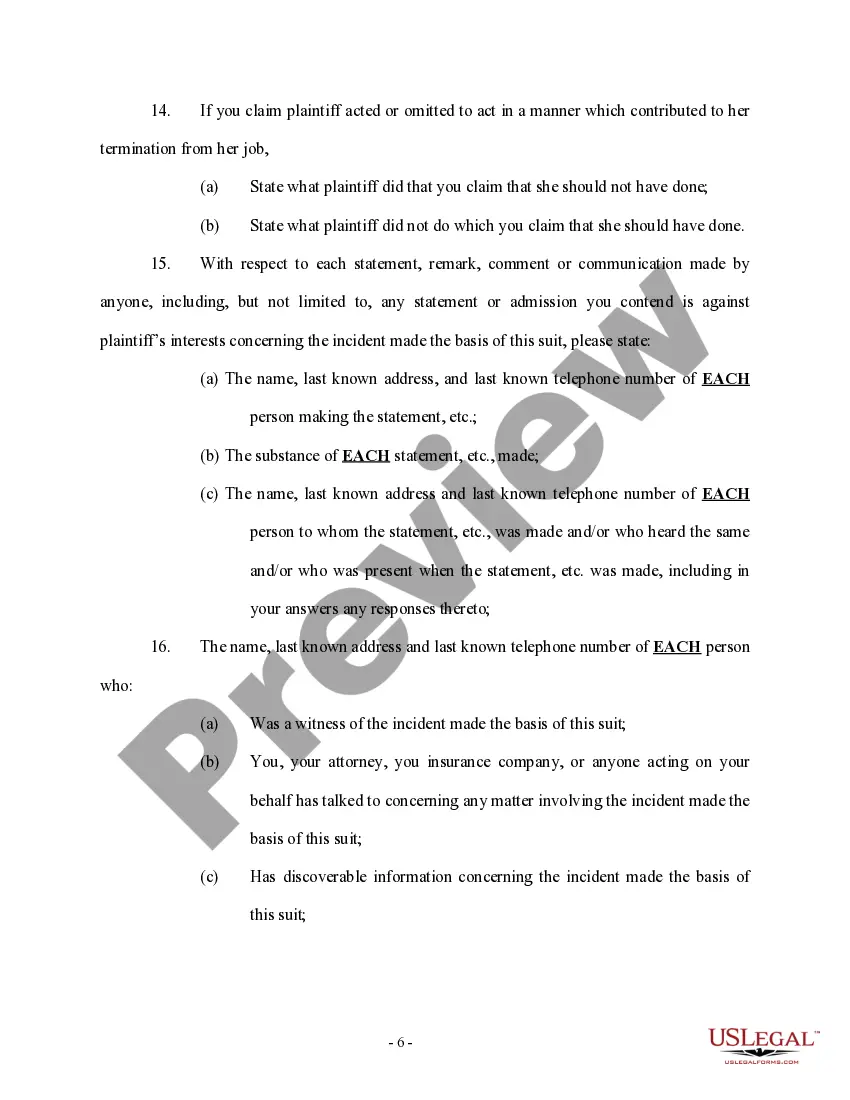
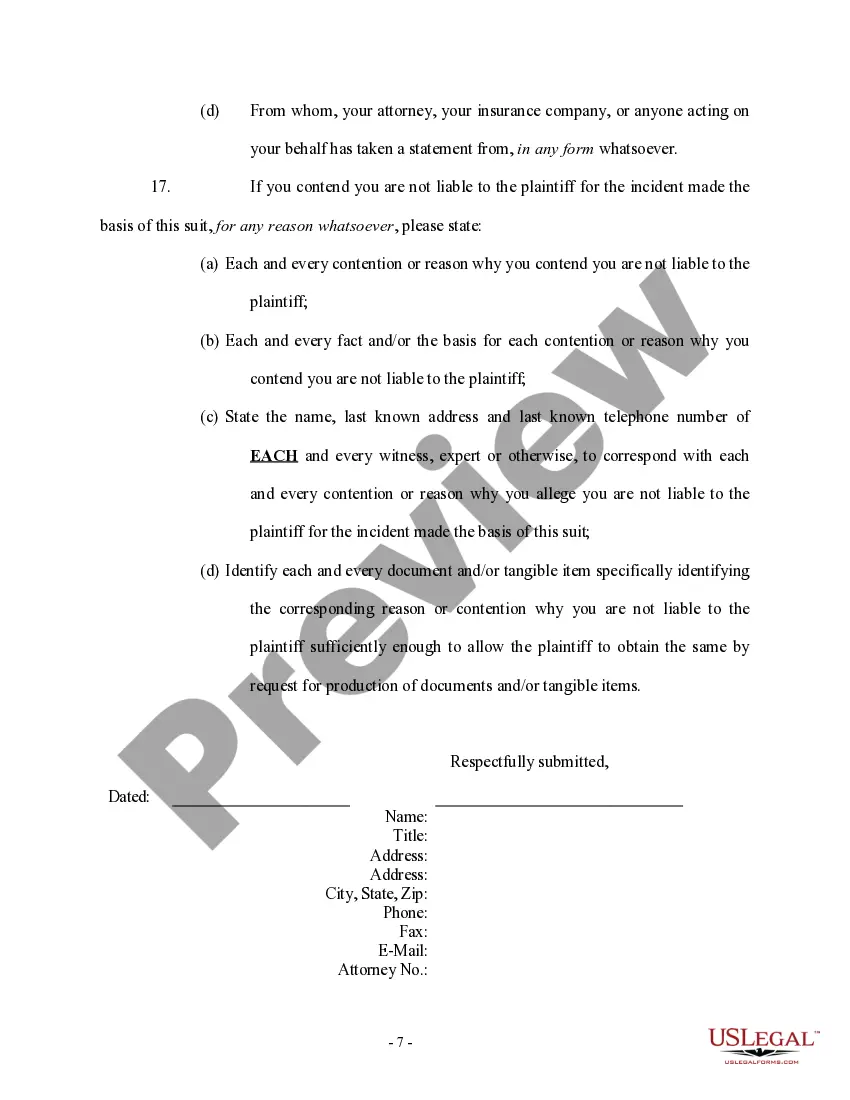
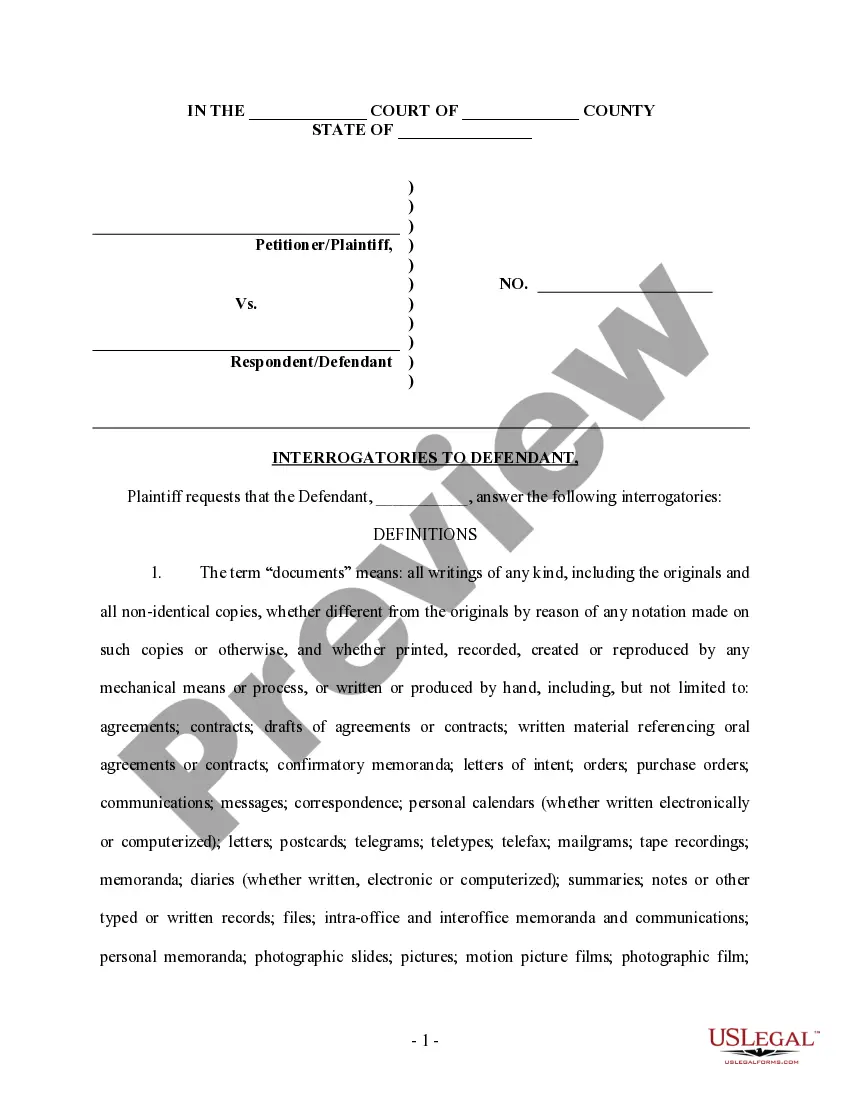
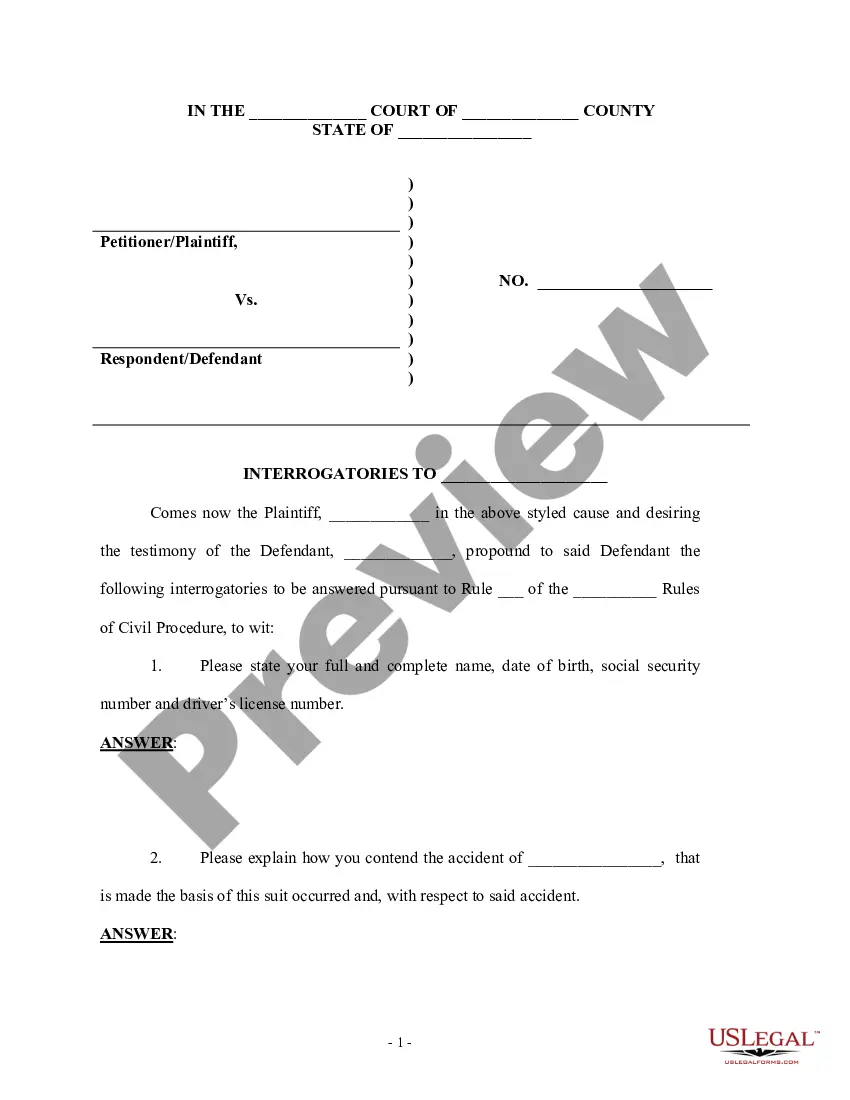
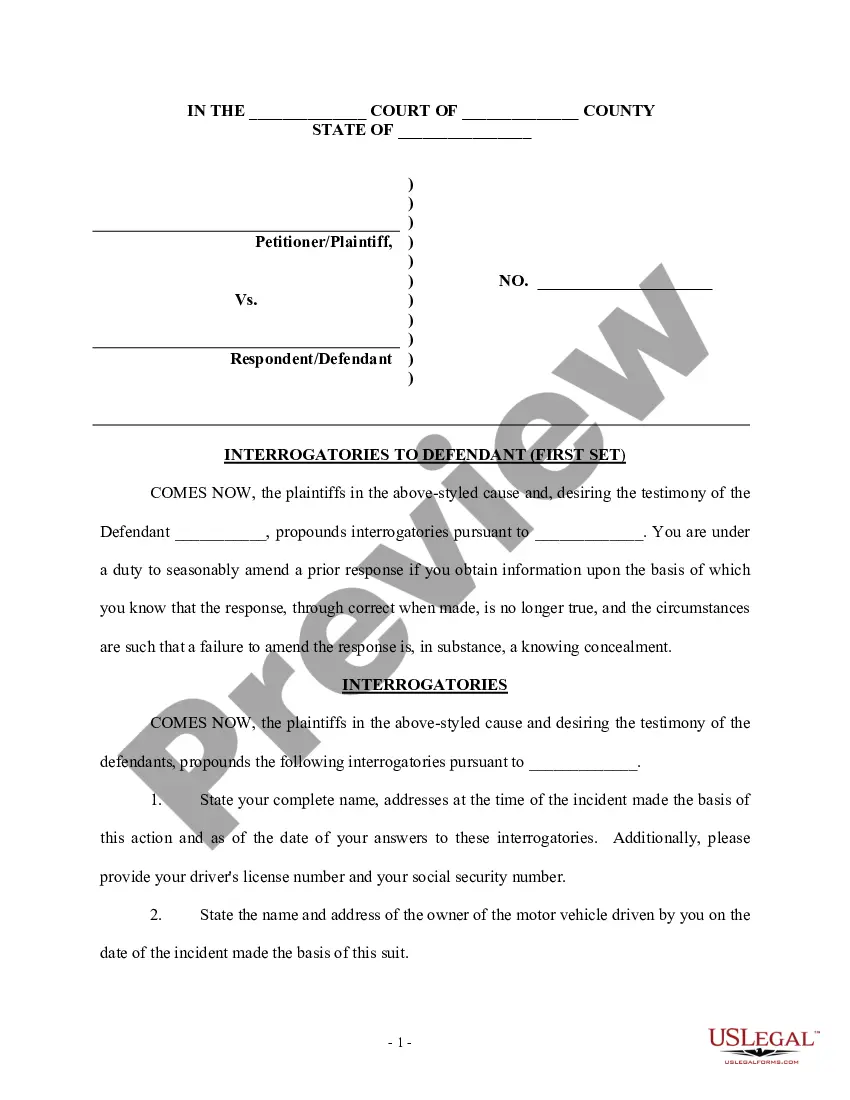
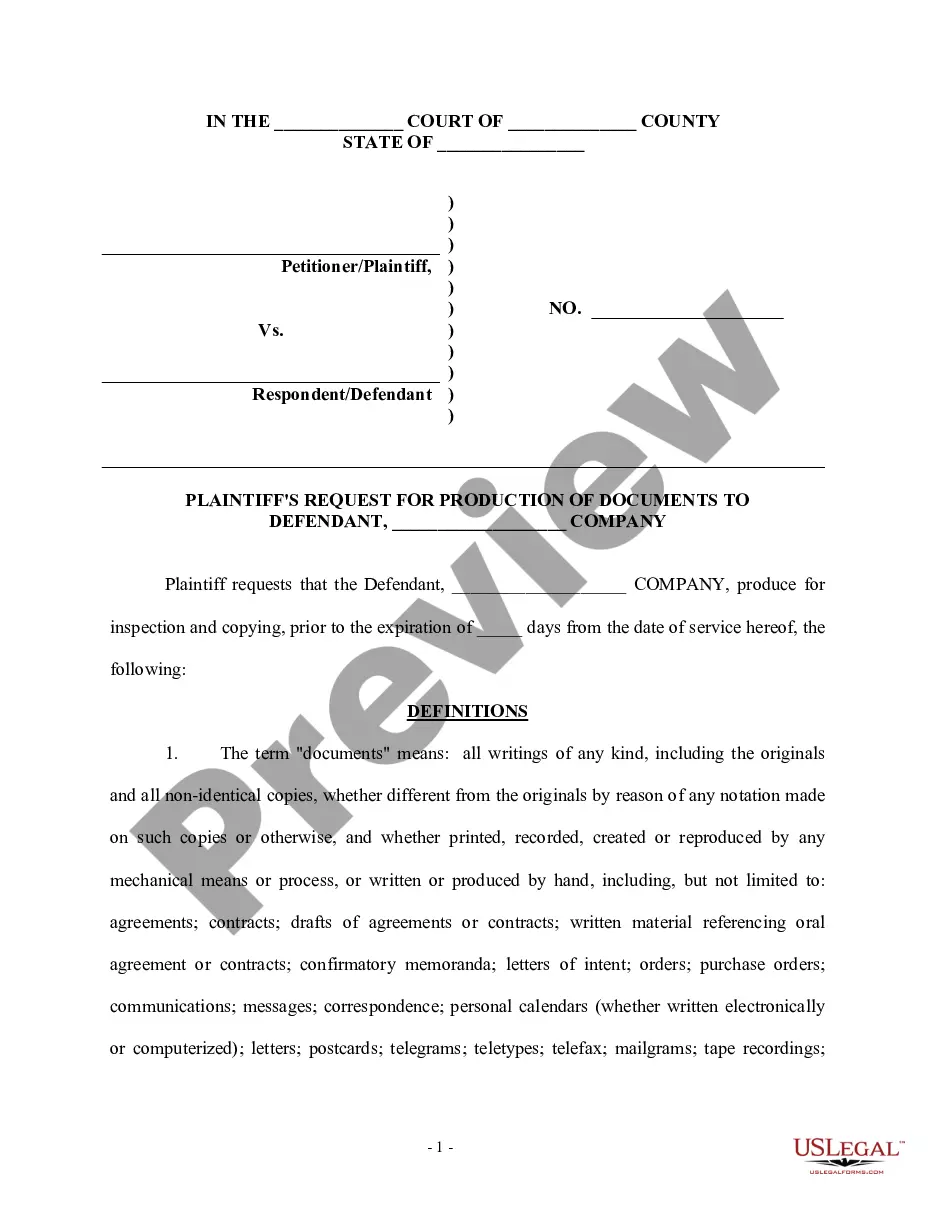
How to fill out Interrogatories To Defendant - Worker's Compensation - Wrongful Termination?
- If you are a returning user, log in to your account and locate the required form by selecting the Download button. Verify that your subscription is current; renew if necessary.
- For new users, begin by reviewing the preview mode and form description to confirm that you have selected a document that aligns with your needs and local jurisdiction.
- If you identify any inconsistencies in your selection, utilize the Search tab above to explore additional templates until you find an appropriate match.
- To acquire the document, click on the Buy Now button and select your desired subscription plan. Registration is essential to unlock access to the extensive library.
- Proceed to make your payment using a credit card or PayPal account for the subscription.
- Finally, download your form and save it to your device. You can always access it later from the My Forms section of your profile.
US Legal Forms distinguishes itself with a robust collection of over 85,000 legal forms, offering more choices than competitors at comparable rates. This ensures you find exactly what you need.
Moreover, users can receive guidance from premium experts to ensure their documents are completed accurately and legally sound. Don't wait—start securing your rights today!
Form popularity
FAQ
No, wrongful termination is not the same as retaliation, though they are closely related concepts. Wrongful termination refers to the illegal firing of an employee, while retaliation occurs when an employer punishes an employee for exercising their rights, such as reporting discrimination or harassment. In cases of wrongful termination for retaliation, an employee may be unjustly fired specifically because they took a stand against unlawful practices. Understanding these differences is essential, and US Legal Forms can help you navigate the complexities of wrongful termination claims.
Retaliation at work occurs when an employer takes adverse action against an employee for engaging in a protected activity. This can include being fired, demoted, or facing harassment after filing a complaint or participating in investigations. These actions must have a clear cause-and-effect relationship with your protective disclosures. US Legal Forms offers tools and information that can help clarify what constitutes retaliation in your specific situation.
Direct evidence of retaliation includes statements or actions from your employer that explicitly indicate your termination was a result of your protected activity. This could involve the employer admitting their intent to fire you based on your complaints or providing negative feedback linked directly to your complaints. Clear documentation, such as emails or recorded conversations, can serve as powerful proof. Access to resources on US Legal Forms can aid in organizing such evidence effectively.
To prove wrongful termination for retaliation, you need to gather evidence that links your termination to an action you took, such as reporting misconduct or participating in a discrimination investigation. Document any communication with your employer related to your complaint and keep records of your employment history. Witness statements can also help establish a connection between your protected activity and your dismissal. If you need assistance, US Legal Forms can guide you through the documentation process.
An example of retaliatory termination is when an employee is fired shortly after reporting discrimination or harassment. This termination can indicate that the employer acted out of spite for the complaint. Such actions may form the basis of a wrongful termination for retaliation claim, especially if you have supporting evidence.
Evidence of retaliation can include emails, performance reviews, witness statements, and records of conversations regarding the adverse action. Documentation showcasing a timeline of events, particularly showing activities leading to your complaint, is crucial. Each piece of evidence should collectively demonstrate a pattern leading to wrongful termination for retaliation.
A strong retaliation case typically involves clear evidence linking the employer's actions to a protected activity, such as filing a complaint. Showing that the employer had motive, followed by adverse action, adds weight to your argument. If you gather strong documentation that illustrates this connection, you will build a compelling case for wrongful termination for retaliation.
To document employer retaliation, start by keeping a detailed record of incidents that occur. Note the dates, times, individuals involved, and any witnesses present. Collect relevant emails, texts, or performance reviews that support your claim of wrongful termination for retaliation. This documentation will strengthen your case if you decide to take legal action.
The odds of winning a wrongful termination for retaliation case vary depending on the strength of your evidence and circumstances. Generally, cases with substantial documentation and clear connections to the retaliatory act have a higher chance of success. Consulting with experienced professionals through our platform can significantly enhance your chances of a favorable outcome.
HR typically needs a valid reason backed by evidence to fire someone legally. This might include documented performance issues, violation of workplace policies, or other legitimate reasons unrelated to retaliation. However, if you suspect retaliation, it’s important to consult resources that can help you assess the situation clearly.