Responding To Request For Production California
Description
Get your form ready online
Our built-in tools help you complete, sign, share, and store your documents in one place.
Make edits, fill in missing information, and update formatting in US Legal Forms—just like you would in MS Word.
Download a copy, print it, send it by email, or mail it via USPS—whatever works best for your next step.
Sign and collect signatures with our SignNow integration. Send to multiple recipients, set reminders, and more. Go Premium to unlock E-Sign.
If this form requires notarization, complete it online through a secure video call—no need to meet a notary in person or wait for an appointment.
We protect your documents and personal data by following strict security and privacy standards.

Make edits, fill in missing information, and update formatting in US Legal Forms—just like you would in MS Word.

Download a copy, print it, send it by email, or mail it via USPS—whatever works best for your next step.

Sign and collect signatures with our SignNow integration. Send to multiple recipients, set reminders, and more. Go Premium to unlock E-Sign.

If this form requires notarization, complete it online through a secure video call—no need to meet a notary in person or wait for an appointment.

We protect your documents and personal data by following strict security and privacy standards.
Looking for another form?
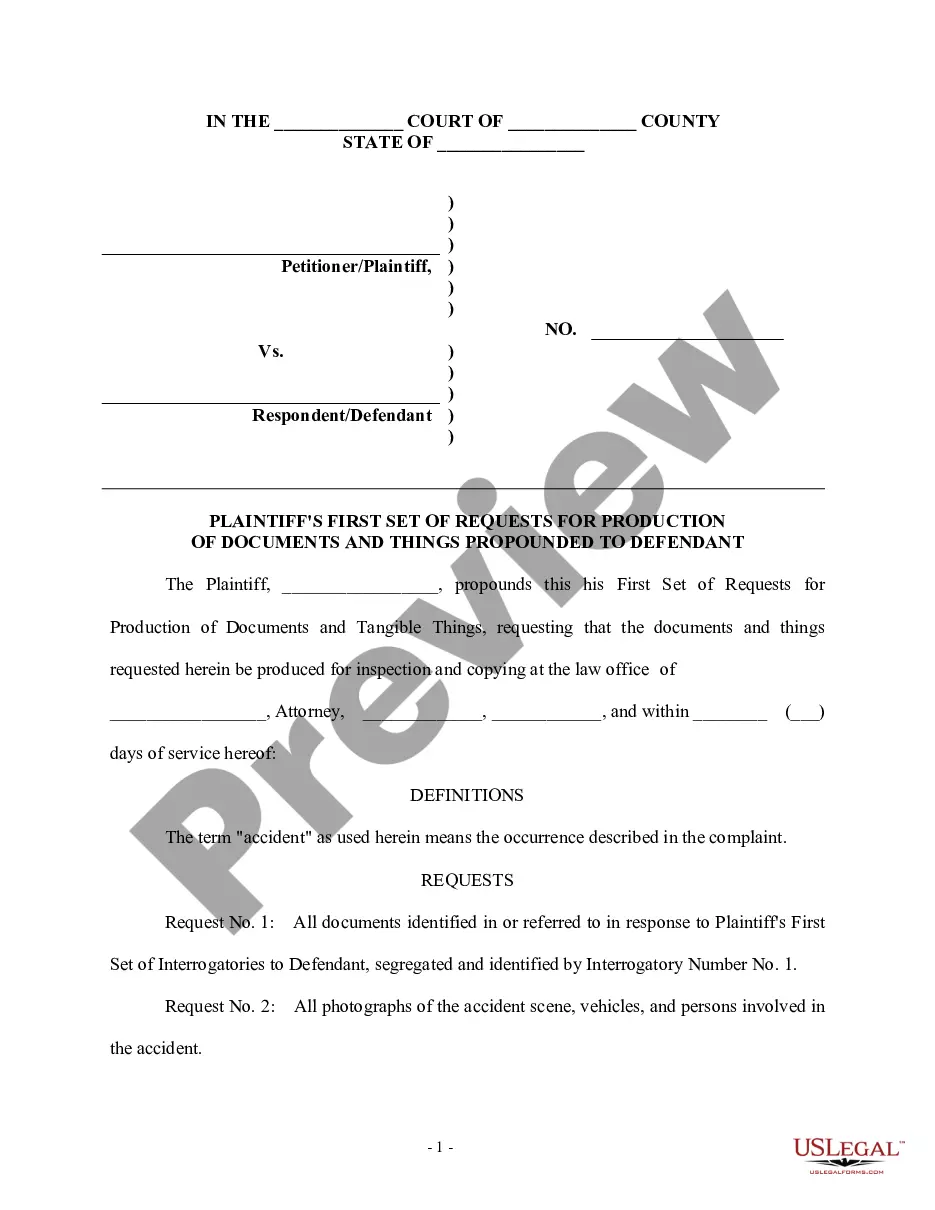
How to fill out Plaintiff's First Set Of Requests For Production Of Documents And Things Propounded To Defendant?
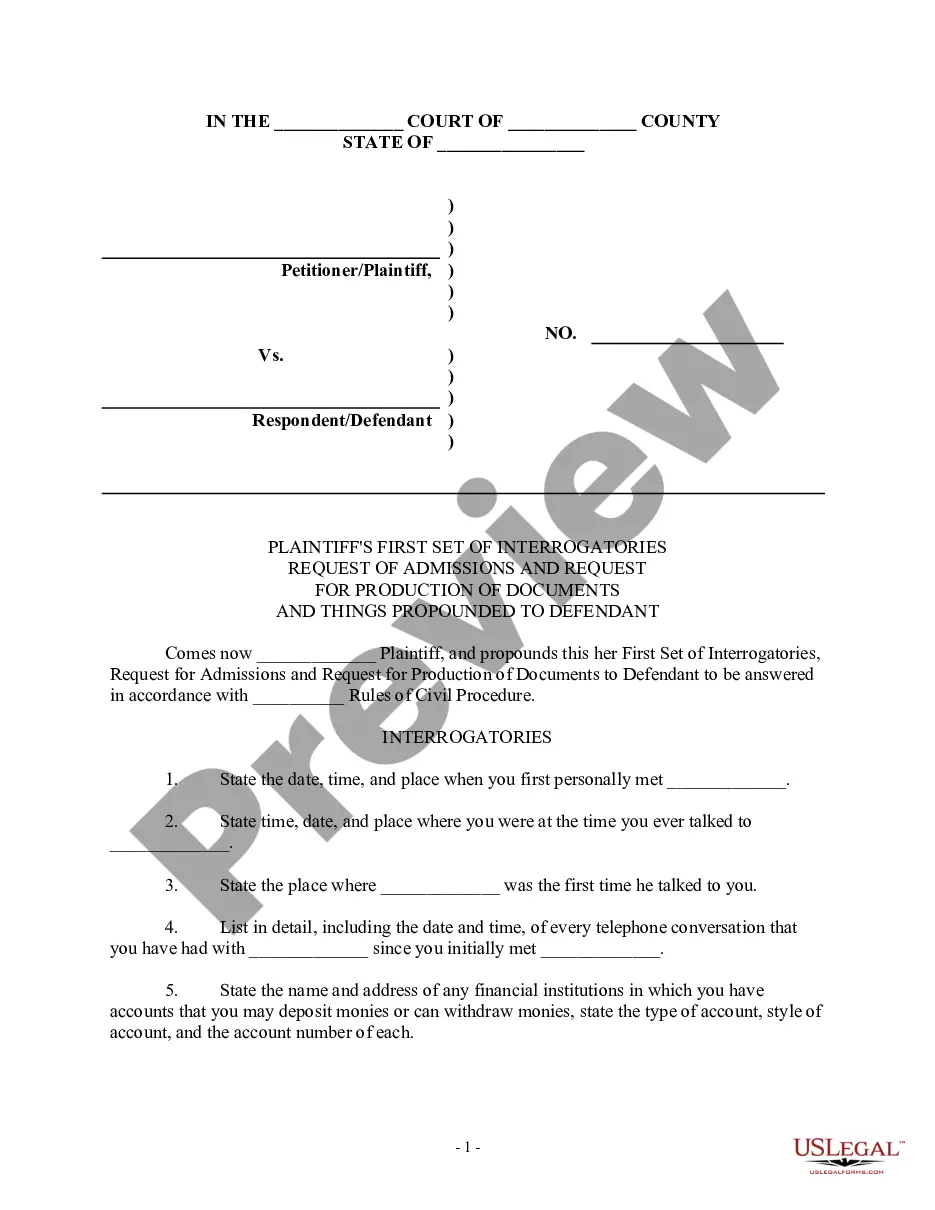
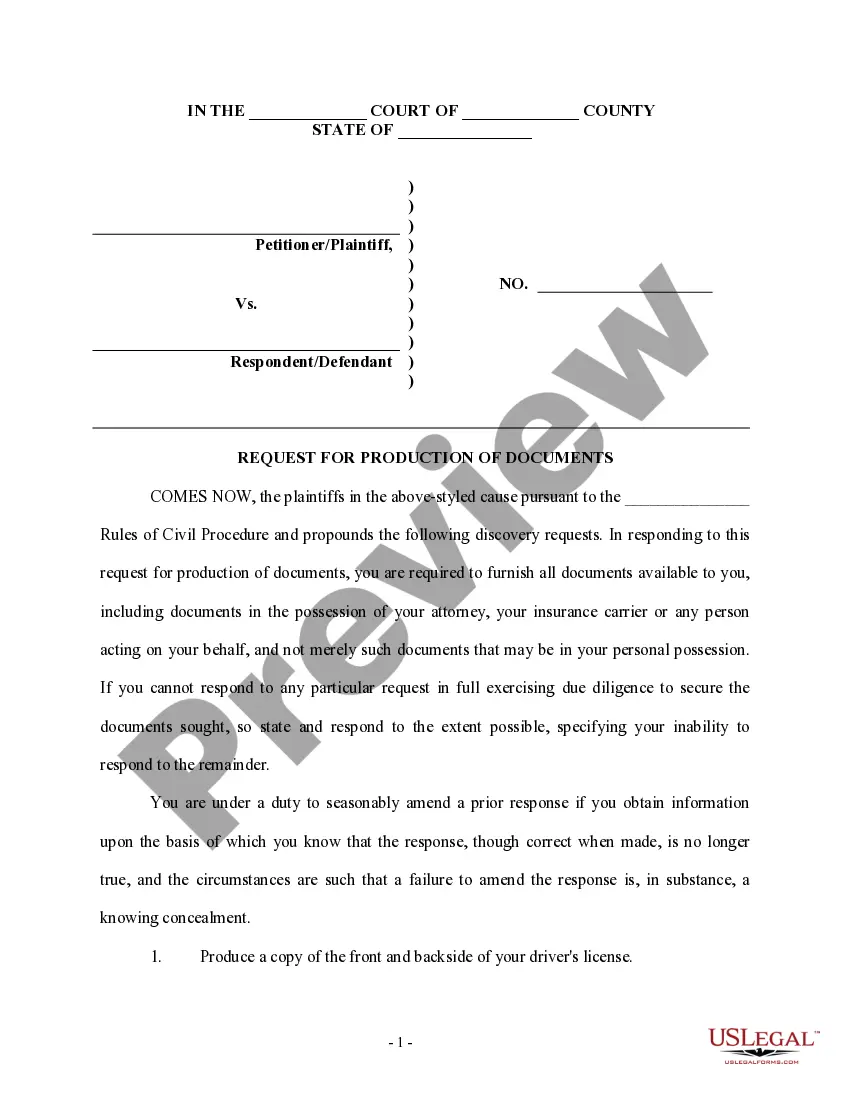
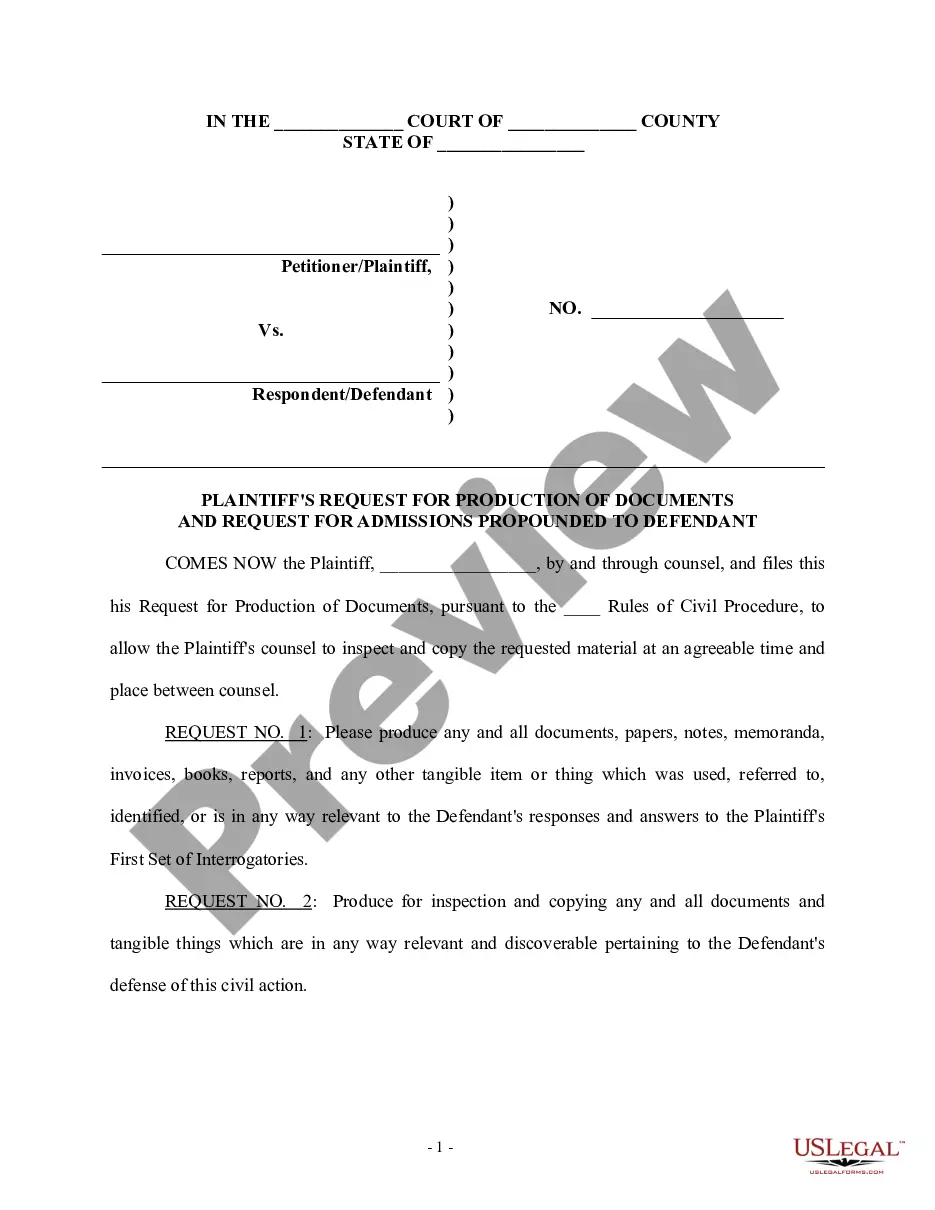
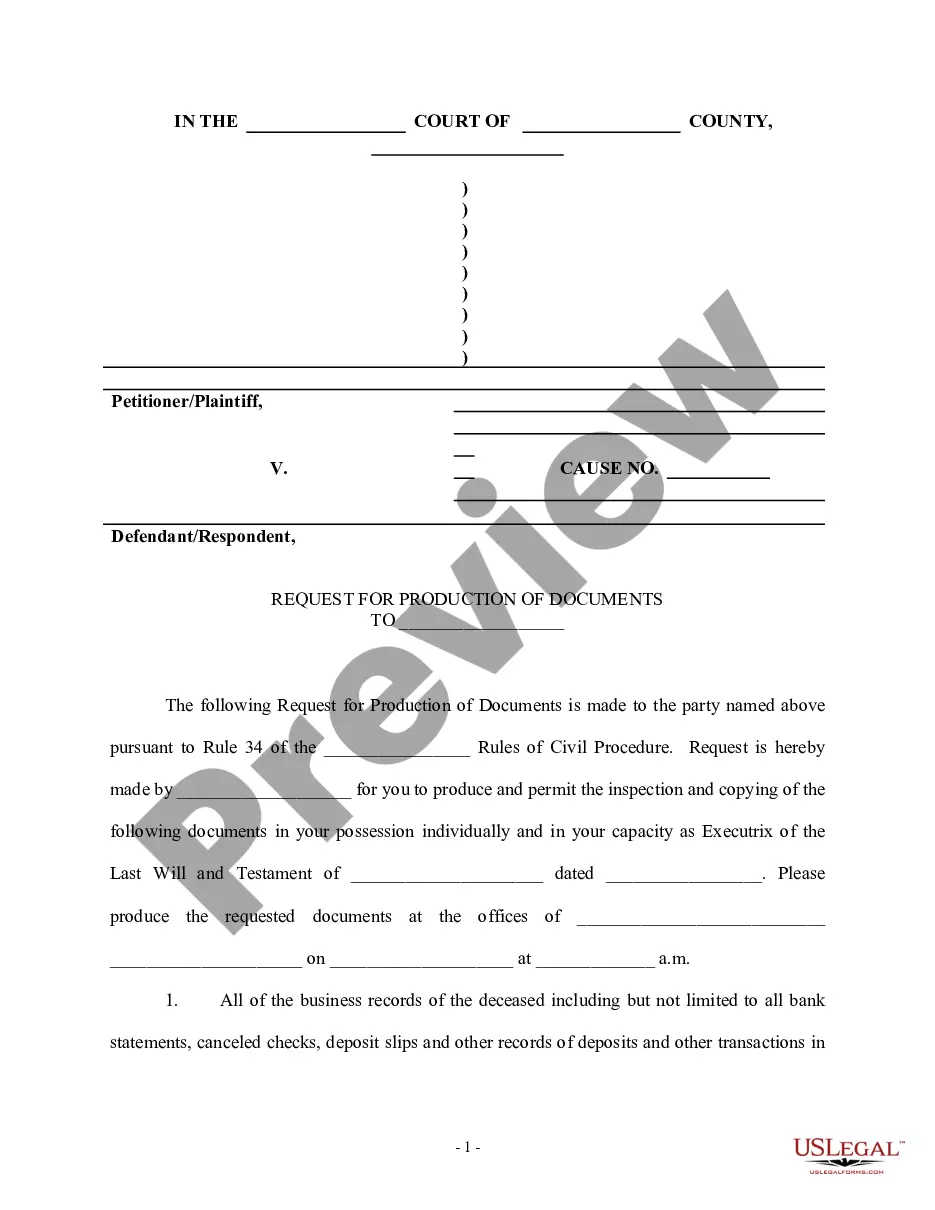
The Responding To Request For Production California visible on this page is a reusable legal model created by experienced attorneys in accordance with federal and state laws.
For over 25 years, US Legal Forms has supplied individuals, businesses, and legal practitioners with more than 85,000 validated, state-specific documents for any professional and personal needs. It’s the fastest, simplest, and most reliable method to acquire the forms you require, as the service ensures bank-level data security and anti-malware safeguards.
Select the format you desire for your Responding To Request For Production California (PDF, Word, RTF) and download the sample onto your device. Fill out and sign the document. Print the template to fill it out by hand. Alternatively, use an online versatile PDF editor to swiftly and accurately complete and sign your form with an electronic signature. Download your documents again whenever necessary. Use the same document again at any time. Access the My documents tab in your profile to redownload any forms previously acquired. Subscribe to US Legal Forms to have validated legal templates for all of life's circumstances readily available.
- Search for the document you require and review it.
- Browse through the sample you sought and preview it or examine the form description to verify it meets your specifications. If it doesn’t, use the search feature to find the correct one. Click Buy Now after locating the template you need.
- Register and Log Into your account.
- Choose the pricing option that best fits you and create an account. Use PayPal or a credit card to make an immediate payment. If you already possess an account, Log In and verify your subscription to proceed.
- Obtain the editable template.
Form popularity
FAQ
In California, you generally have 30 days to respond to Requests for Production (RFPs) after receiving them. This timeline is crucial for your compliance and is part of the broader process of responding to request for production in California. If you need additional time, you may request an extension, but ensure you communicate this properly. Utilizing services like USLegalForms can help you understand your obligations and manage your responses effectively.
Filing a response to a request for order in California involves drafting a written response that addresses the issues raised in the request. You must file this response with the court and serve it to the opposing party within the specified timeframe. Being precise in your response is vital, especially when responding to request for production in California, to avoid complications in your case. USLegalForms can assist you with the necessary forms and instructions to streamline this process.
To file a response to a lawsuit in California, you need to prepare an answer or a motion and file it with the appropriate court. Make sure to include all required information and respond specifically to each allegation made against you. It is essential to adhere to the guidelines for responding to request for production in California, as failure to do so may impact your case. USLegalForms offers templates and guidance to make this process smoother and more efficient.
In California, you typically have 30 days to file a responsive pleading after being served with a complaint. This timeframe is crucial for effectively responding to request for production in California, as it ensures you comply with legal deadlines. If you miss this deadline, you may lose your right to contest the lawsuit. To stay informed and organized, consider using platforms like USLegalForms, which provide resources for timely responses.
In California, responding to requests for production of documents requires careful attention to detail. First, evaluate the request to understand what documents are necessary. You must respond within the stipulated timeframe, indicating whether you will produce the documents or object to the request. Utilizing US Legal Forms can assist you in generating a comprehensive response that meets California's legal requirements, making your process more efficient.
When responding to a Request for Production, start by thoroughly reviewing the documents requested. It's essential to identify which documents you possess and can provide. Next, organize the materials in a clear manner, ensuring you comply with deadlines. For a smoother process, consider using platforms like US Legal Forms, which can help you streamline your response while adhering to legal standards.
Responding to a Request to Admit Admit: the responding party may admit that a fact is true or that a document is authentic. ... Deny: the responding party may deny the truth of a fact or the authenticity of a document. ... Refuse: the responding party may refuse to admit the truth of a fact or the authenticity of a document.
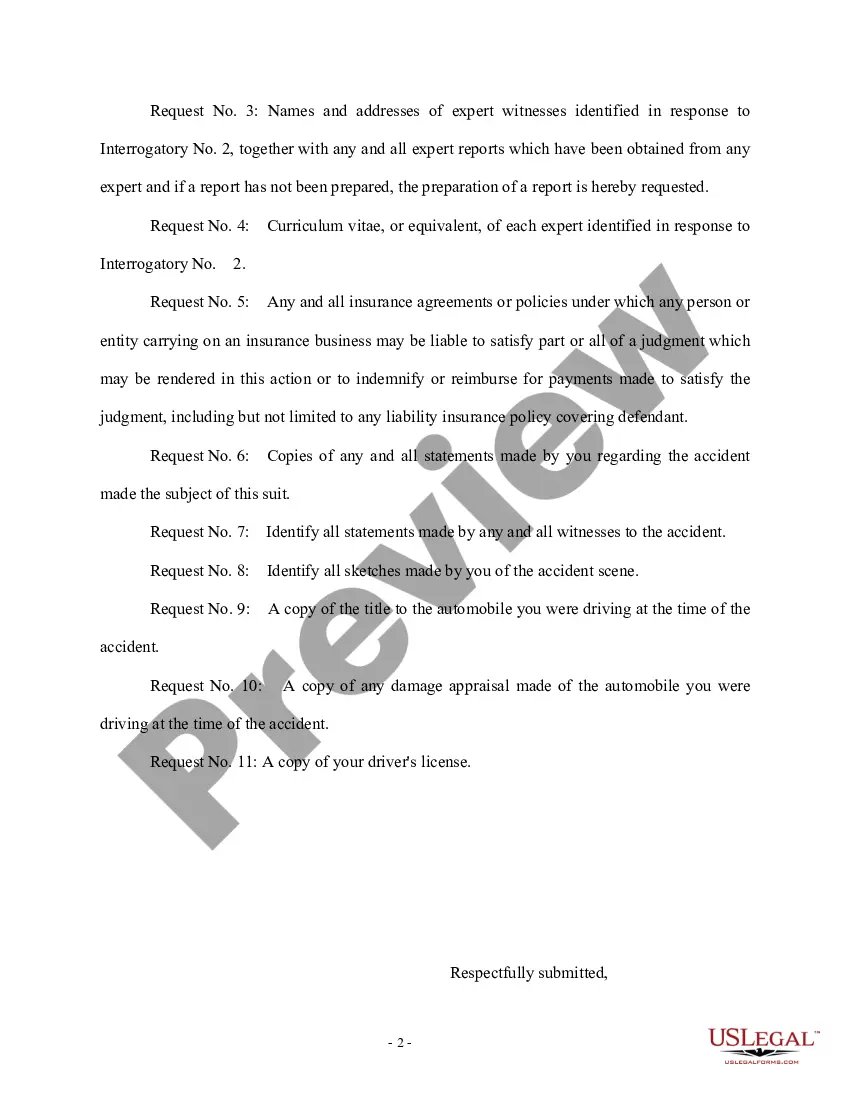
Answer. Requests for the Production of Documents. Definition: A written list of documents, electronic files, and audio and video recordings or physical things, submitted to a party from his or her adversary to inspect and copy the requested items and that have relevance to the issues in a lawsuit.
Your response to a request for production consists of two parts: One part is a written response to the requests, in which you state under penalty of perjury that you will produce the requested items; that you will not produce and why; or that you object to a request on legal grounds.
Proper Objections A responding party has four options: (1) admit; (2) deny; (3) admit in part and deny in part; or (4) explain why the party is unable to answer. It is possible to object to all or part of a request as well, but courts do not like parties who play ?word games? to avoid responding. Further, Civ.