Summary Judgment Explained With Motion
Description
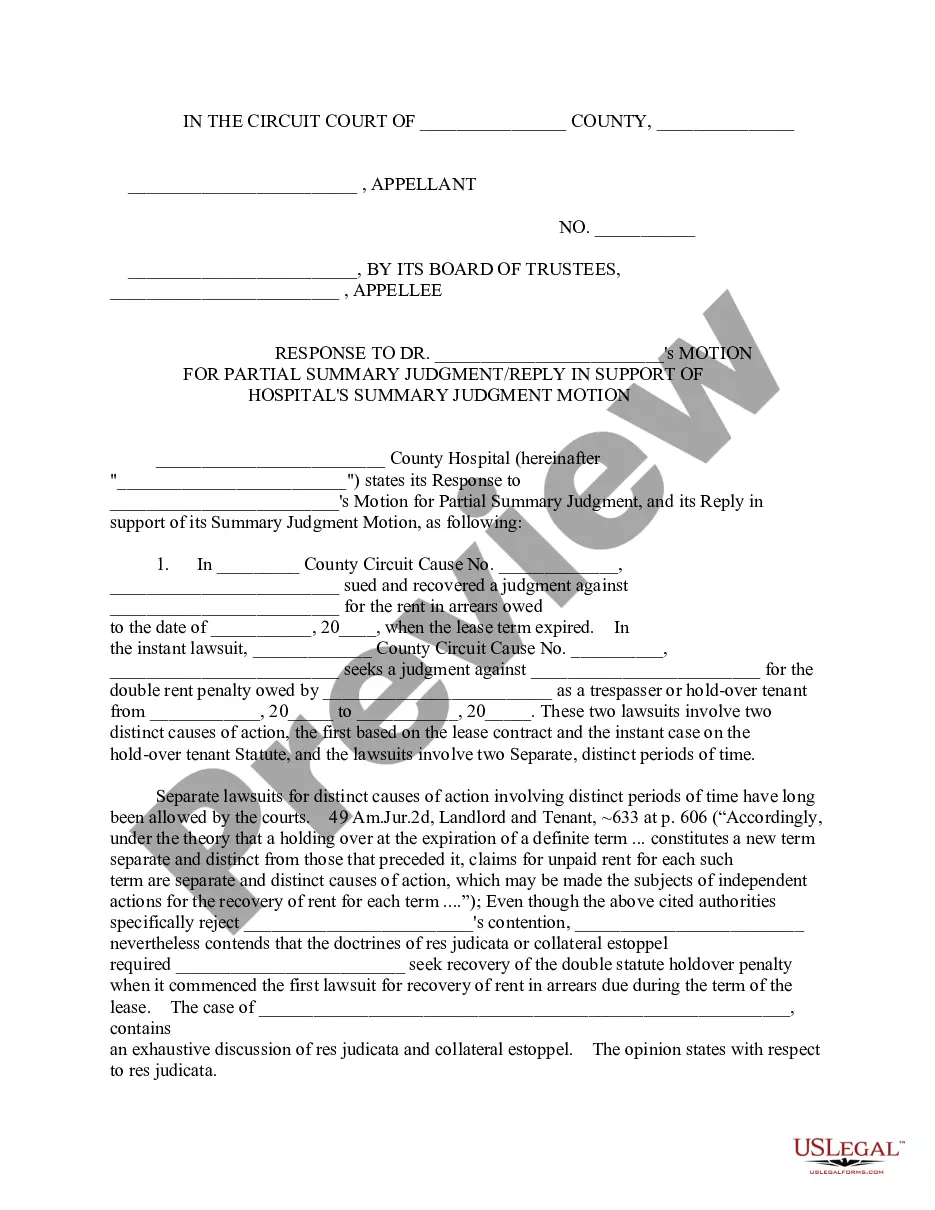
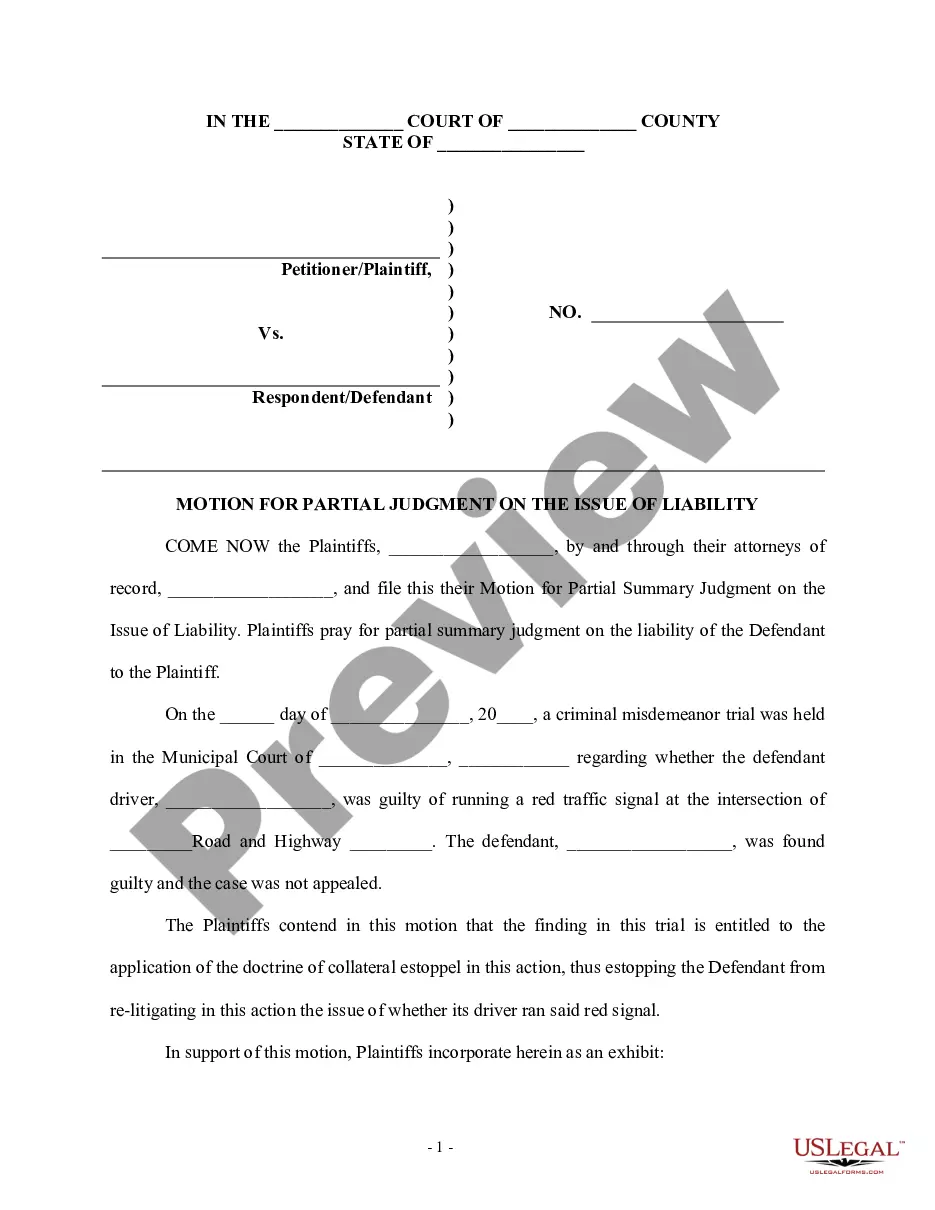
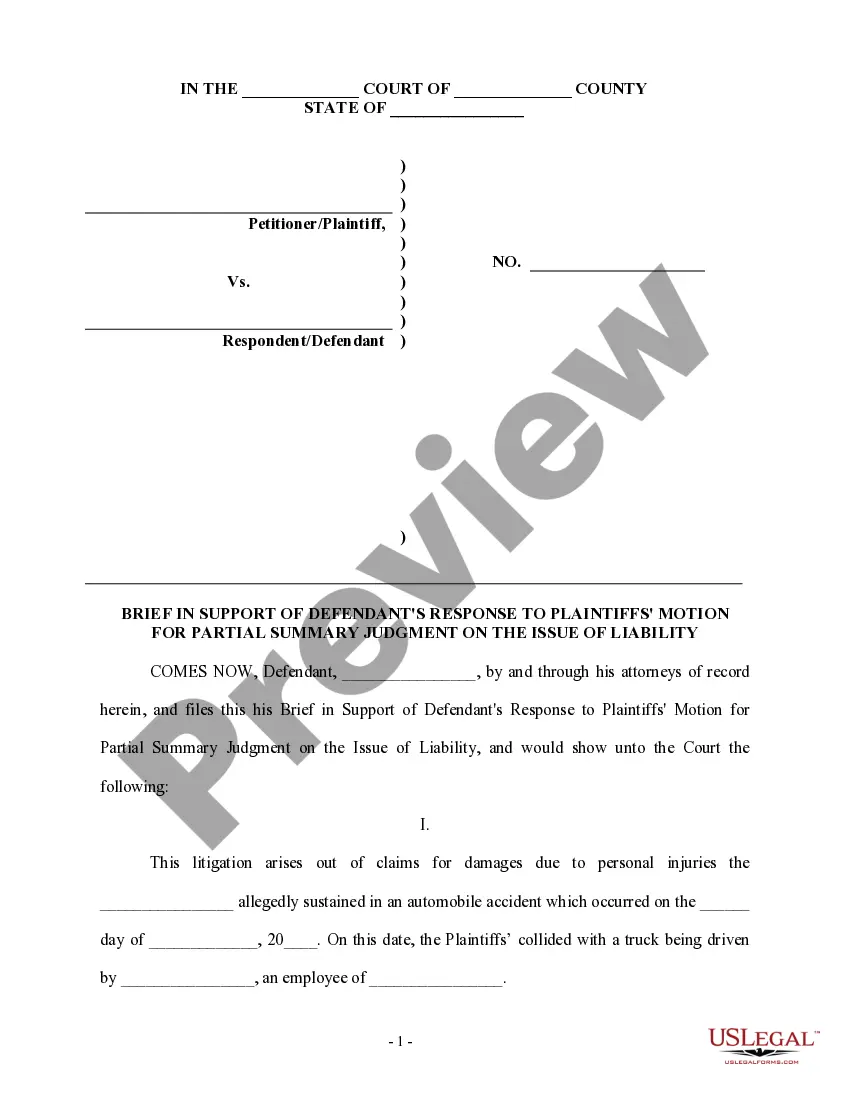
Get your form ready online
Our built-in tools help you complete, sign, share, and store your documents in one place.
Make edits, fill in missing information, and update formatting in US Legal Forms—just like you would in MS Word.
Download a copy, print it, send it by email, or mail it via USPS—whatever works best for your next step.
Sign and collect signatures with our SignNow integration. Send to multiple recipients, set reminders, and more. Go Premium to unlock E-Sign.
If this form requires notarization, complete it online through a secure video call—no need to meet a notary in person or wait for an appointment.
We protect your documents and personal data by following strict security and privacy standards.

Make edits, fill in missing information, and update formatting in US Legal Forms—just like you would in MS Word.

Download a copy, print it, send it by email, or mail it via USPS—whatever works best for your next step.

Sign and collect signatures with our SignNow integration. Send to multiple recipients, set reminders, and more. Go Premium to unlock E-Sign.

If this form requires notarization, complete it online through a secure video call—no need to meet a notary in person or wait for an appointment.

We protect your documents and personal data by following strict security and privacy standards.
Looking for another form?
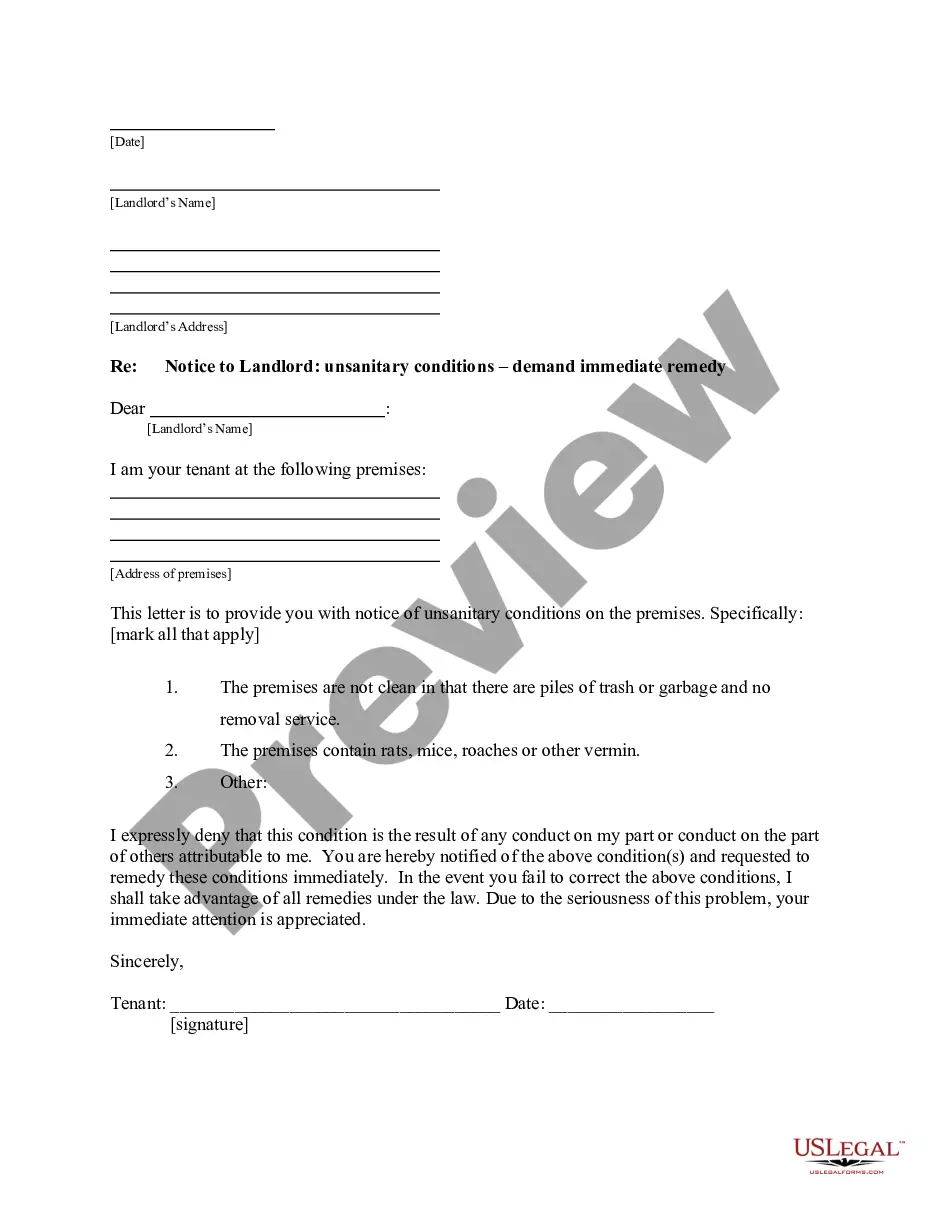
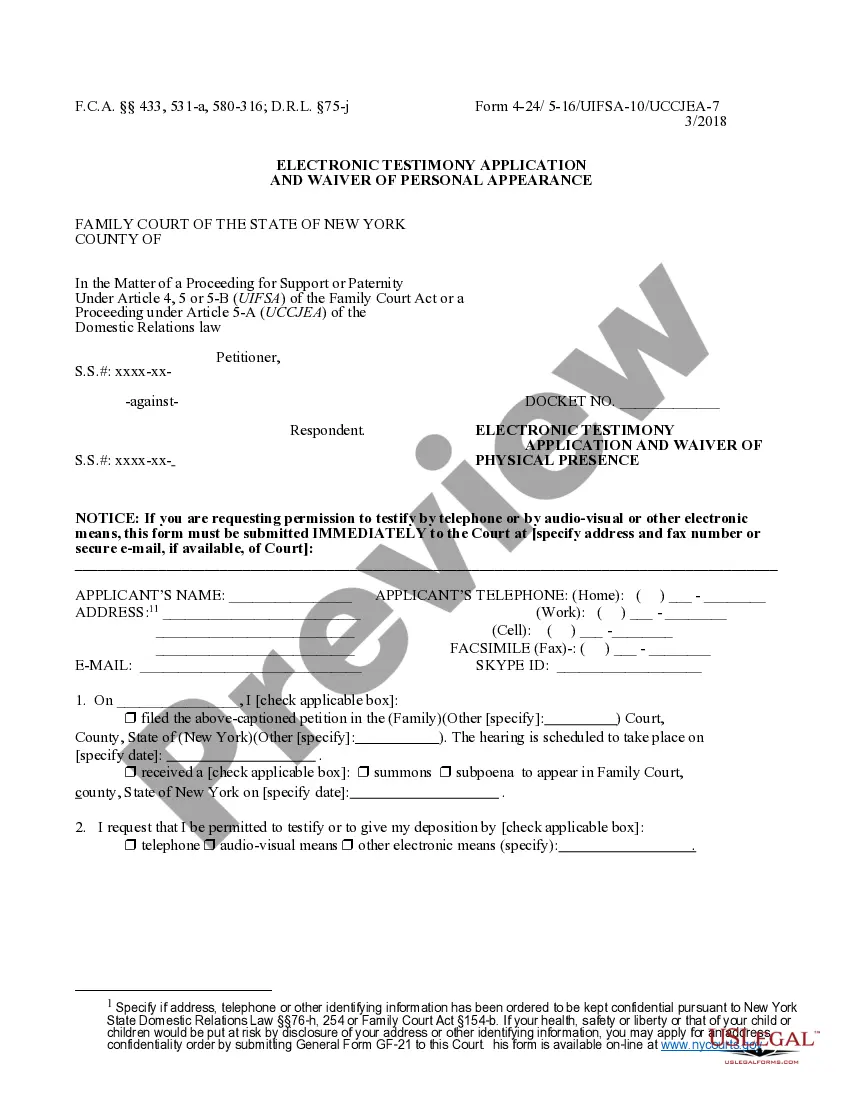
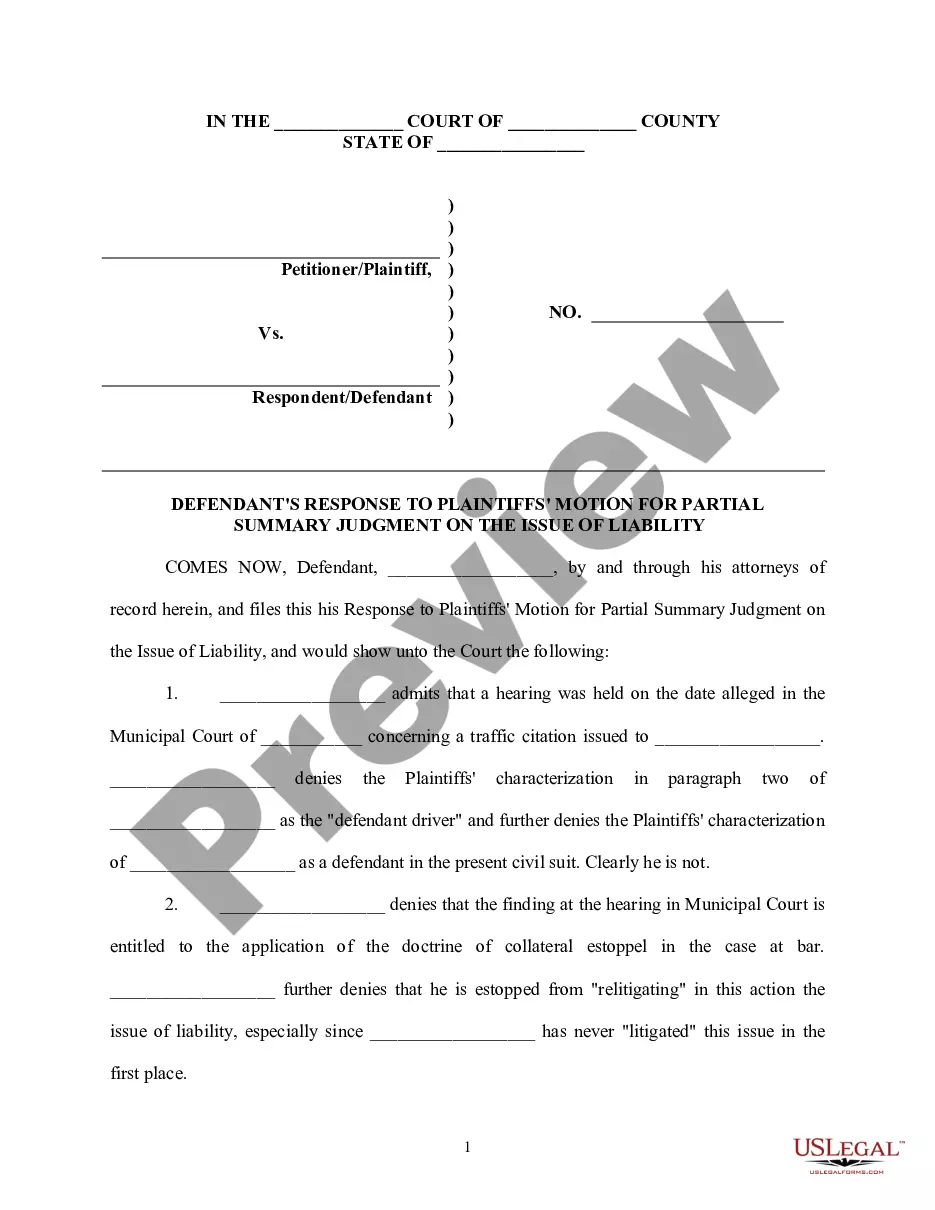
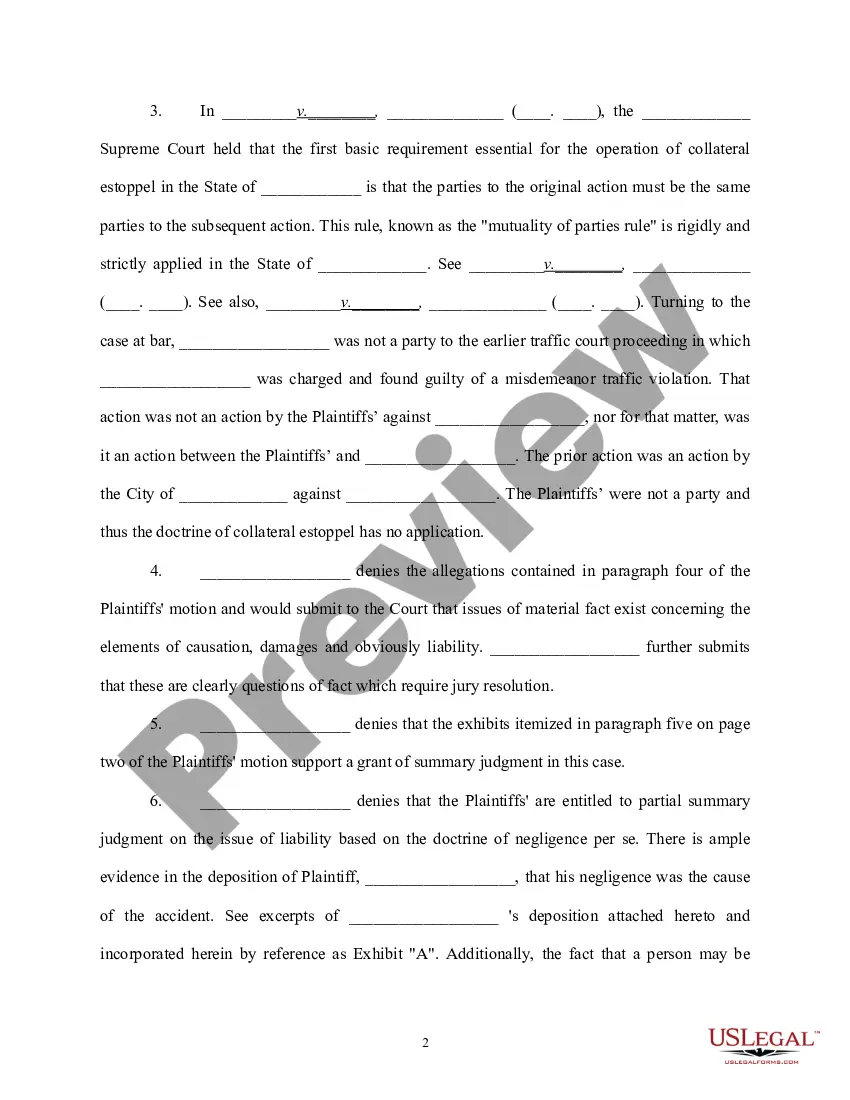
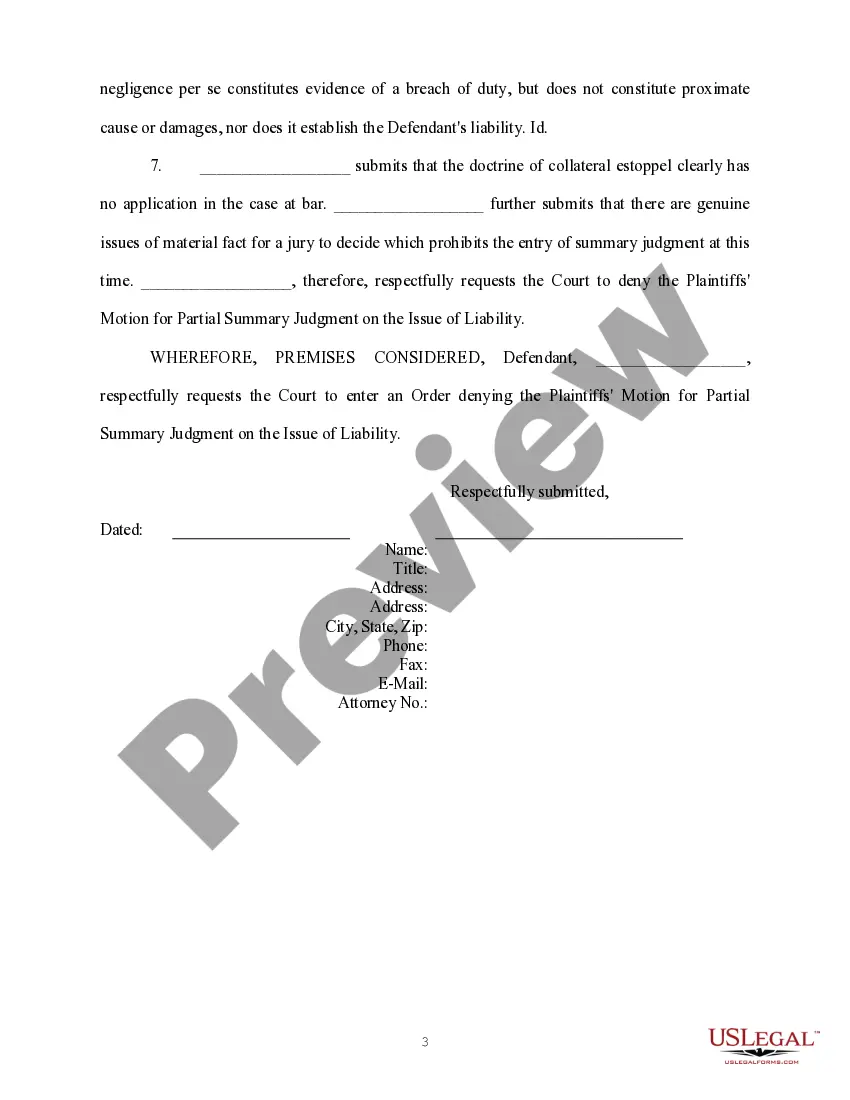
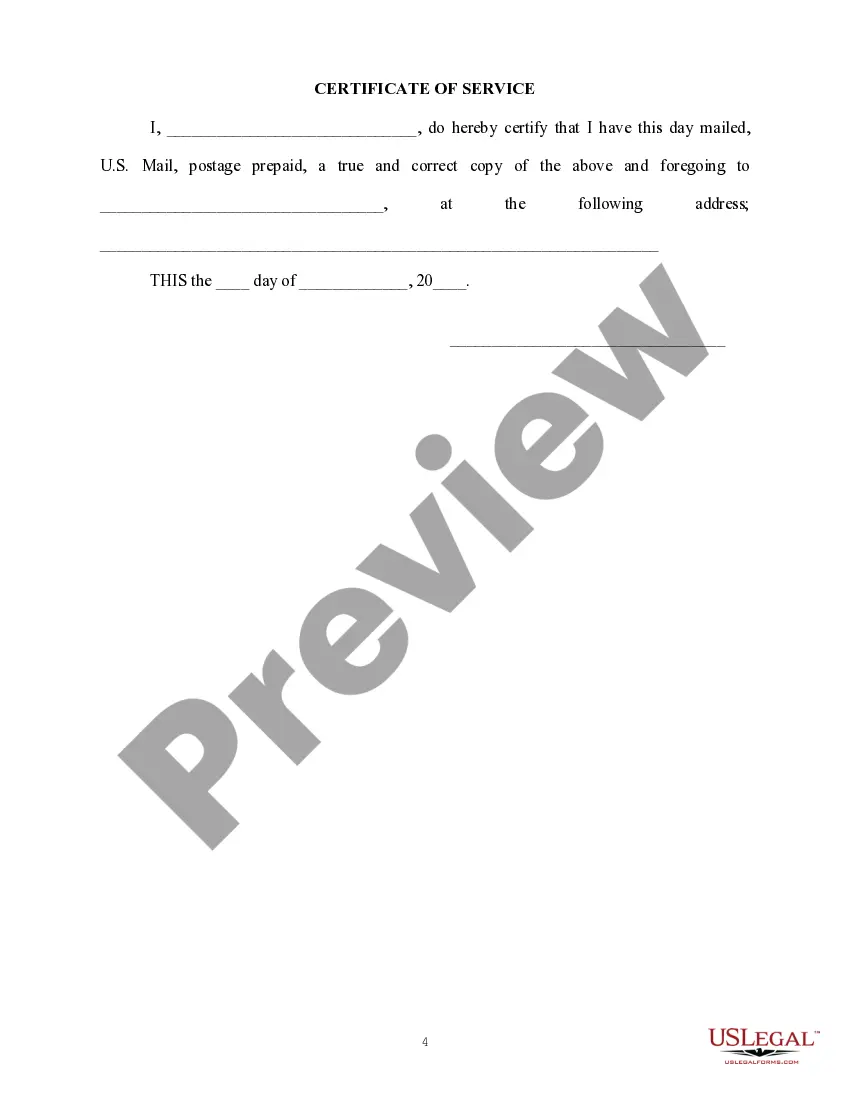
How to fill out Defendant's Response To Plaintiff's Motion For Summary Judgment On The Issue Of Liability?
Whether for commercial reasons or personal affairs, everyone must deal with legal issues eventually in their lifetime.
Filling out legal documentation demands meticulous care, beginning with selecting the appropriate form template.
With an extensive US Legal Forms library available, you do not need to waste time looking for the suitable template online. Utilize the library’s user-friendly navigation to discover the ideal form for any purpose.
- Locate the example you require by using the search bar or catalog browsing.
- Review the form’s description to ensure it corresponds to your case, jurisdiction, and area.
- Select the form’s preview to inspect it.
- If it is not the correct form, return to the search function to find the Summary Judgment Explained With Motion sample you need.
- Obtain the document if it satisfies your requirements.
- If you possess a US Legal Forms account, simply click Log in to access previously stored documents in My documents.
- If you do not have an account yet, you can download the form by clicking Buy now.
- Select the appropriate pricing option.
- Complete the account registration form.
- Choose your payment method: either a credit card or PayPal account.
- Select the document format you prefer and download the Summary Judgment Explained With Motion.
- After downloading, you can fill out the form using editing software or print it and fill it out by hand.
Form popularity
FAQ
To beat a motion for summary judgment, you must identify and present evidence that demonstrates genuine disputes over material facts. This can include witness testimony, conflicting evidence, or legal arguments that challenge the moving party's claims. Engaging with platforms like uslegalforms can provide resources and templates to help you effectively counter such motions.
The requirements for a motion for summary judgment include submitting a written motion that outlines the basis for seeking judgment, alongside supporting documents and evidence. You must also provide a statement of undisputed facts, which must be clear and concise. Meeting these requirements is crucial to effectively convey your argument and increase the likelihood of a favorable outcome.
The rule for a motion for summary judgment is primarily focused on establishing that there are no genuine disputes of material fact. Under this rule, the moving party must present evidence sufficient to support their claims while the opposing party must then demonstrate that a genuine issue exists. This legal standard aims to ensure that only cases with sufficient evidence proceed to trial.
To support a motion for summary judgment, you need to provide compelling evidence that clearly shows there are no material facts in dispute. This includes affidavits, depositions, and documentary evidence that substantiate your claims. Utilizing a platform like uslegalforms can streamline the process of gathering and organizing your evidence effectively.
You should consider bringing a summary judgment motion when you believe the evidence supports your case so strongly that a trial is unnecessary. This typically occurs after the discovery phase, when all relevant facts and evidence have been gathered. Filing a motion at the right time can save resources and expedite the resolution of your case.
The rule of law for summary judgment is established under Rule 56 of the Federal Rules of Civil Procedure. This rule states that a party may obtain summary judgment if they show that there is no genuine issue as to any material fact and that they are entitled to judgment as a matter of law. Understanding this rule helps clarify the legal standards and procedures involved in filing a motion for summary judgment.
Summary judgment explained with motion involves several grounds, primarily focusing on the absence of genuine disputes over material facts. Typically, a party must demonstrate that there is no need for a trial because the evidence overwhelmingly supports their position. Common grounds include lack of evidence, legal defenses, or factual insufficiencies that prevent a reasonable jury from deciding in favor of the opposing party.
It is crucial to respond to a motion for summary judgment within the deadline set by the court. Typically, you have a specific time frame, often 14 to 30 days, to file your response. Failing to respond can result in the court granting the motion by default. Being timely and thorough in your response is vital for your case, especially when considering the summary judgment explained with motion.
During a motion for summary judgment hearing, both parties present their arguments and evidence to the judge. The judge may ask questions to clarify points and assess the validity of the claims made. After considering the information presented, the judge will issue a ruling that could either grant or deny the motion. This hearing is an important step in the summary judgment explained with motion process.
A motion for summary judgment works by presenting evidence and legal arguments to the court to demonstrate the absence of any factual disputes. Both parties submit documents, affidavits, or depositions to support their positions. The court then reviews the evidence to determine if a trial is necessary. This process is crucial for understanding the summary judgment explained with motion in your case.