Sample Complaint For Personal Injury
Description

Get your form ready online
Our built-in tools help you complete, sign, share, and store your documents in one place.
Make edits, fill in missing information, and update formatting in US Legal Forms—just like you would in MS Word.
Download a copy, print it, send it by email, or mail it via USPS—whatever works best for your next step.
Sign and collect signatures with our SignNow integration. Send to multiple recipients, set reminders, and more. Go Premium to unlock E-Sign.
If this form requires notarization, complete it online through a secure video call—no need to meet a notary in person or wait for an appointment.
We protect your documents and personal data by following strict security and privacy standards.

Make edits, fill in missing information, and update formatting in US Legal Forms—just like you would in MS Word.

Download a copy, print it, send it by email, or mail it via USPS—whatever works best for your next step.

Sign and collect signatures with our SignNow integration. Send to multiple recipients, set reminders, and more. Go Premium to unlock E-Sign.

If this form requires notarization, complete it online through a secure video call—no need to meet a notary in person or wait for an appointment.

We protect your documents and personal data by following strict security and privacy standards.
Looking for another form?


How to fill out Motion For Leave To Amend Complaint - Personal Injury?
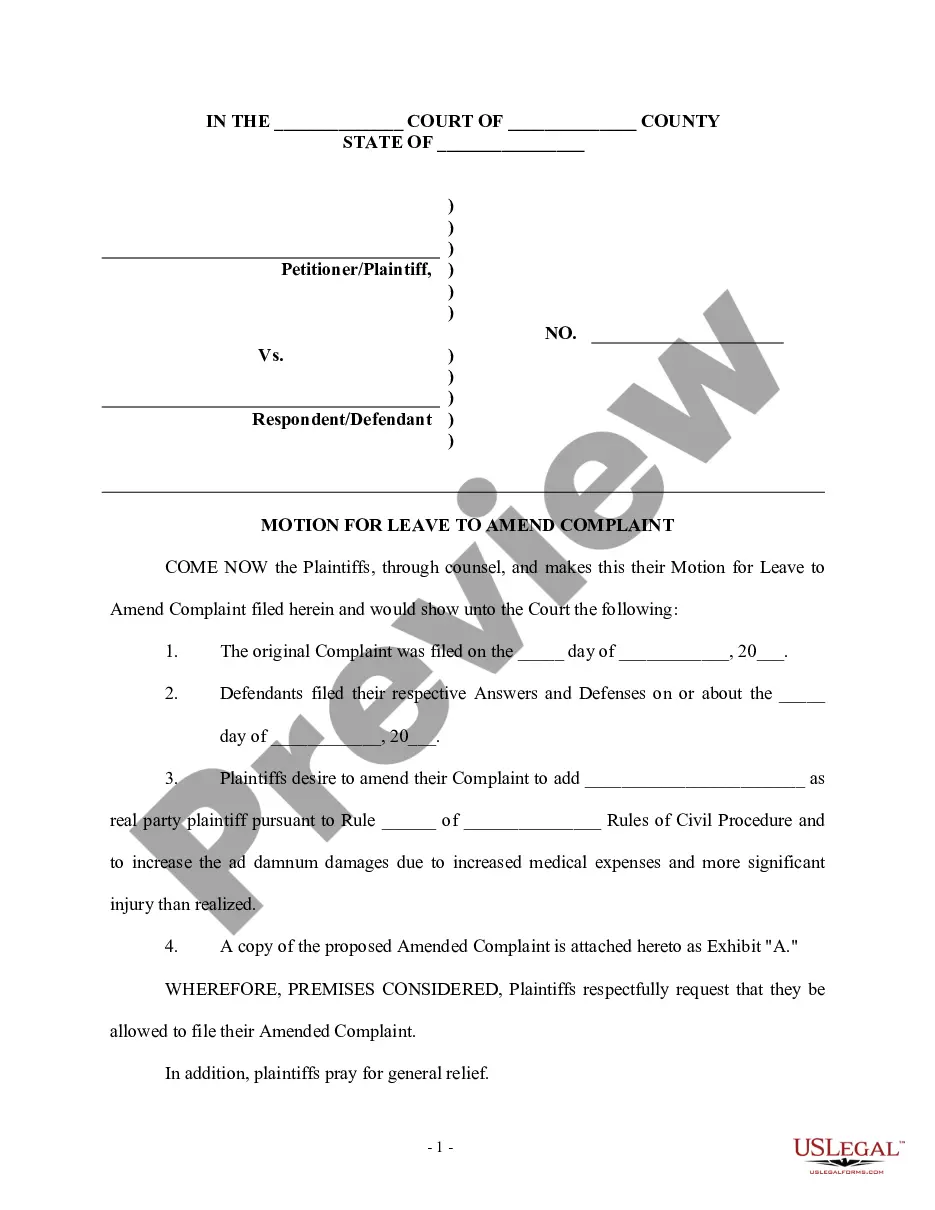
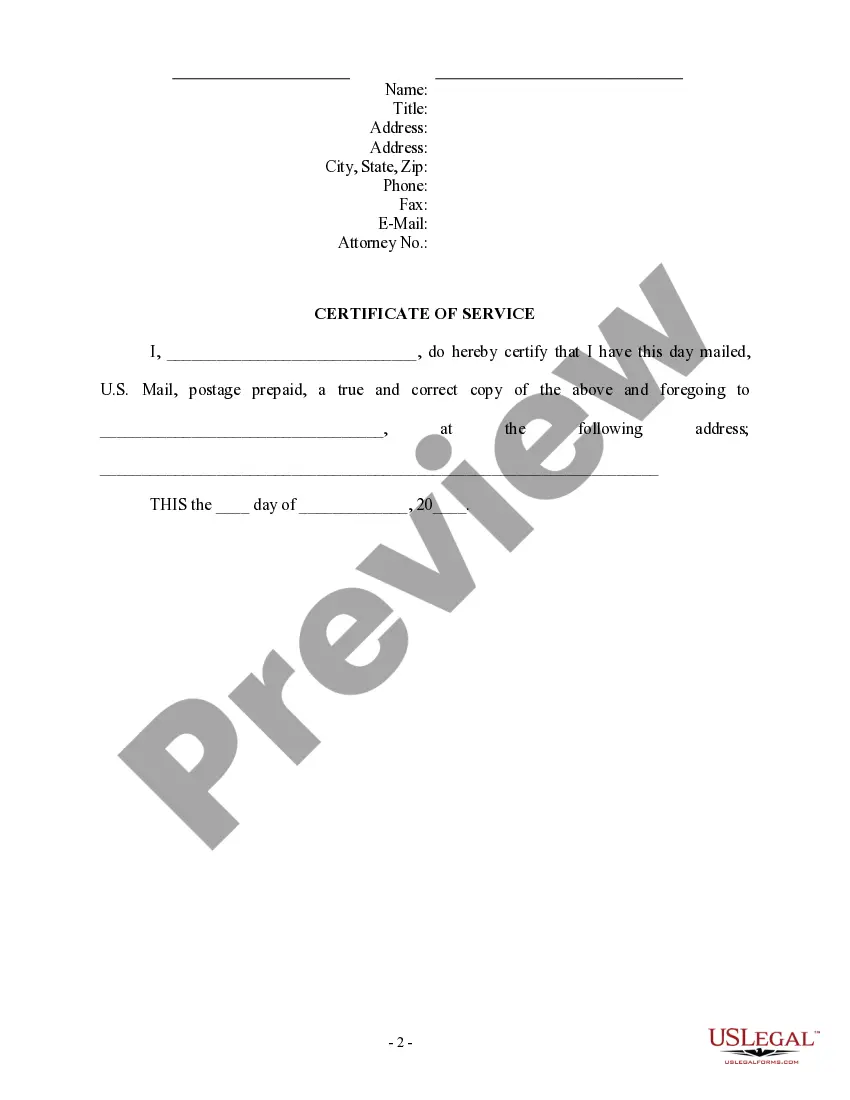
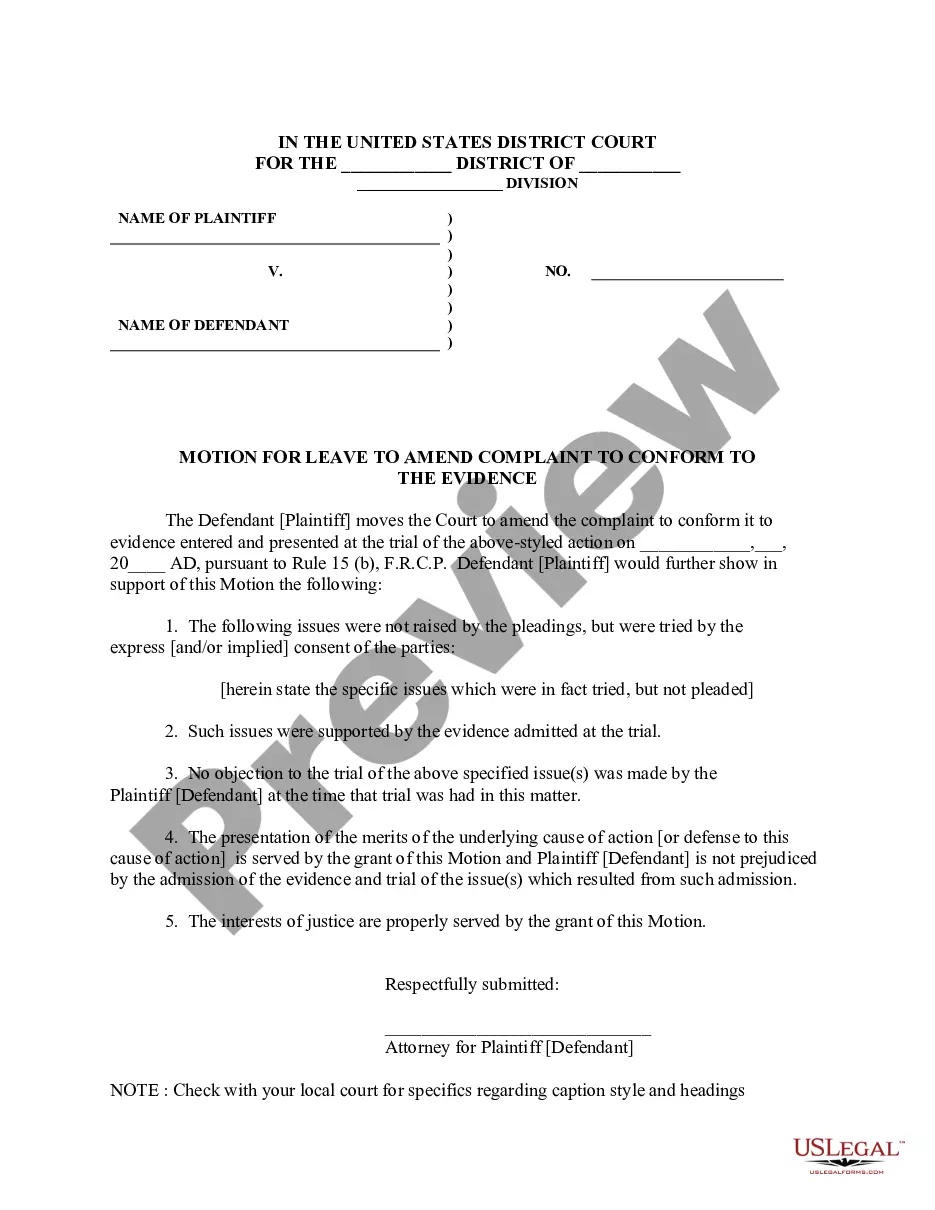
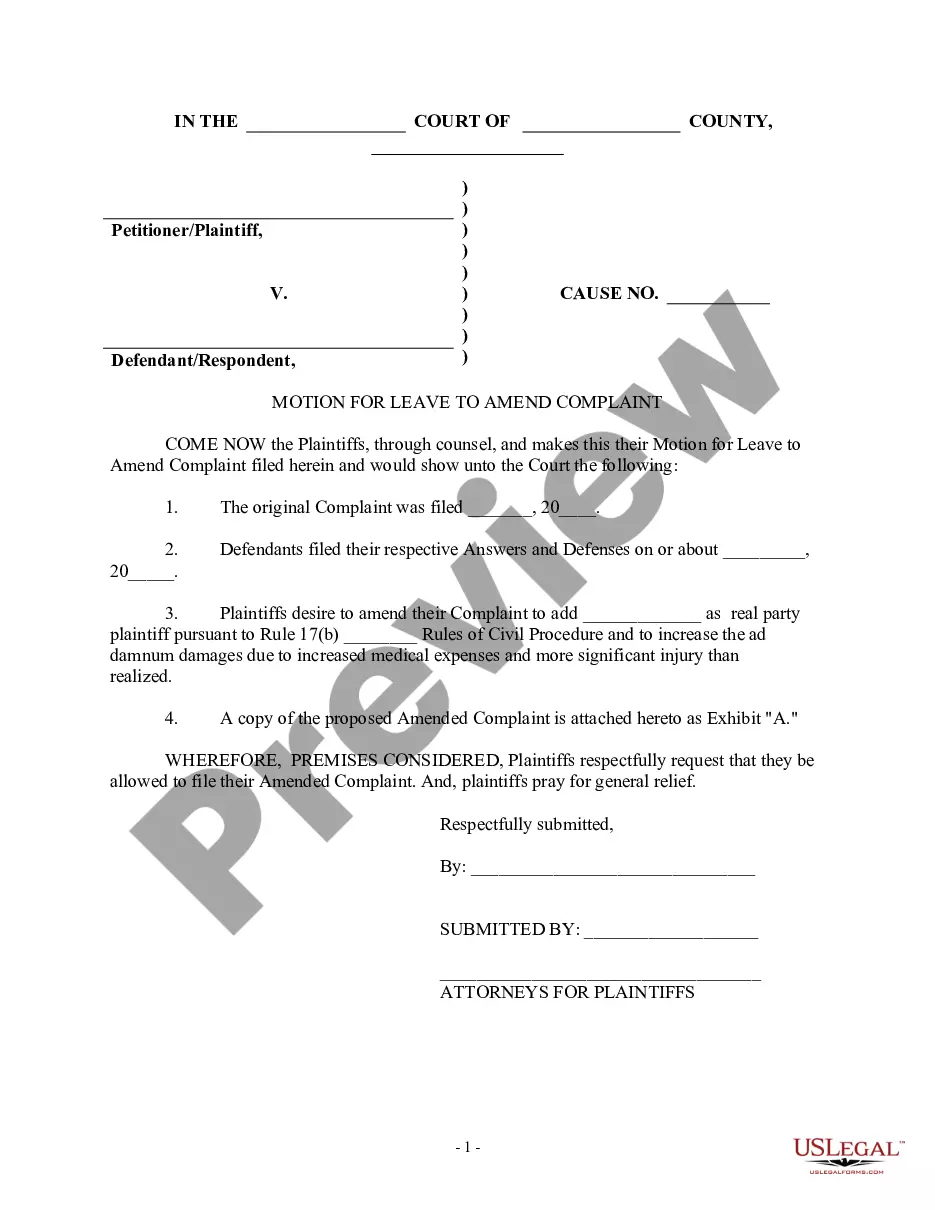
The Sample Complaint For Personal Injury that you observe on this page is a reusable legal framework created by expert attorneys in accordance with federal and state statutes and regulations.
For over 25 years, US Legal Forms has supplied individuals, entities, and legal experts with more than 85,000 authenticated, state-specific documents for any business and personal event. It’s the fastest, simplest, and most dependable method to secure the documentation you require, as the service promises bank-grade data protection and anti-malware safeguards.
Re-download your documents whenever necessary. Access the My documents section in your profile to retrieve any previously purchased forms.
- Search for the document you require and examine it.
- Browse through the sample you inquired about and preview it or check the form description to confirm it meets your requirements. If it doesn't, use the search feature to find the correct one. Click Buy Now once you have located the template you need.
- Choose a pricing plan that fits your needs and establish an account. Use PayPal or a credit card to complete a quick payment. If you already possess an account, Log In and verify your subscription to continue.
- Select your preferred format for your Sample Complaint For Personal Injury (PDF, Word, RTF) and download the sample to your device.
- Print the template to fill it out by hand. Alternatively, use an online multi-functional PDF editor to quickly and accurately complete and sign your form electronically.
Form popularity
FAQ
Writing a cause of action in a complaint involves clearly stating the legal reasons for your claims. This section should outline the facts that establish the defendant's liability within applicable laws. Referencing a sample complaint for personal injury can help ensure that your cause of action is articulated effectively and comprehensively.
When writing a complaint example, start by including the title of the document, the involved parties, and the court's jurisdiction. Follow with a clear statement of facts and the legal basis for your claims. Utilizing a well-crafted sample complaint for personal injury can provide a solid foundation for your own document, ensuring all critical elements are present.
A personal statement for a personal injury case should clearly convey how the injury affected your life. Begin with an overview of the incident, then describe your pain, emotional distress, and any impact on daily activities. Including specific examples in your personal statement will strengthen your sample complaint for personal injury and make your case more compelling.
Soft tissue injuries, like whiplash or chronic pain, are often the hardest to prove in personal injury claims. These injuries may not have clear physical evidence, making it essential to document your experiences carefully. When drafting a sample complaint for personal injury, provide as much supporting documentation as possible to substantiate your claims.
Writing a personal injury complaint involves outlining your injury, the responsible party, and the facts surrounding the incident. A well-structured document should clearly state your claims and the relief you seek. Using a sample complaint for personal injury can serve as a helpful guide to ensure you include all necessary elements in your complaint.
To maximize your personal injury claim, gather all relevant evidence to support your case, such as medical records, witness statements, and photos of the incident. Furthermore, it's essential to understand the legal process involved, which often includes filing a sample complaint for personal injury. Consider consulting with a legal expert to navigate complexities and ensure you receive fair compensation.
4 Elements of Negligence (1) Duty. In plain terms, the ?duty? element requires that the defendant owe a legal duty to the plaintiff. ... (2) Causation. The ?causation? element generally relates to whether the defendant's actions hurt the plaintiff. ... (3) Breach. Breach is simple to explain but difficult to prove. ... (4) Damages.
Unintentional failure to use reasonable care, in a situation in which you had a duty of care, can lead to liability in a negligence lawsuit. Negligence is the unintentional failure to use reasonable care. ... 10 common examples of negligence are: Car accidents are one of the most common examples of negligence.
6 Tips for Preparing for a Personal Injury Lawsuit Tip #1: Speak to a Lawyer Immediately. ... Tip #2: Head to Your Doctor for Evaluation and Treatment. ... Tip #3: Collect All Evidence. ... Tip #4: Do Not Talk About Your Injuries or Case on Social Media. ... Tip #5: Know When to Take a Settlement. ... Tip #6: Stay in Touch with Your Attorney.
Tells the other side the maximum amount of damages you are seeking in a personal injury or wrongful death case.