S Corp
Description

Get your form ready online
Our built-in tools help you complete, sign, share, and store your documents in one place.
Make edits, fill in missing information, and update formatting in US Legal Forms—just like you would in MS Word.
Download a copy, print it, send it by email, or mail it via USPS—whatever works best for your next step.
Sign and collect signatures with our SignNow integration. Send to multiple recipients, set reminders, and more. Go Premium to unlock E-Sign.
If this form requires notarization, complete it online through a secure video call—no need to meet a notary in person or wait for an appointment.
We protect your documents and personal data by following strict security and privacy standards.

Make edits, fill in missing information, and update formatting in US Legal Forms—just like you would in MS Word.

Download a copy, print it, send it by email, or mail it via USPS—whatever works best for your next step.

Sign and collect signatures with our SignNow integration. Send to multiple recipients, set reminders, and more. Go Premium to unlock E-Sign.

If this form requires notarization, complete it online through a secure video call—no need to meet a notary in person or wait for an appointment.

We protect your documents and personal data by following strict security and privacy standards.
Looking for another form?



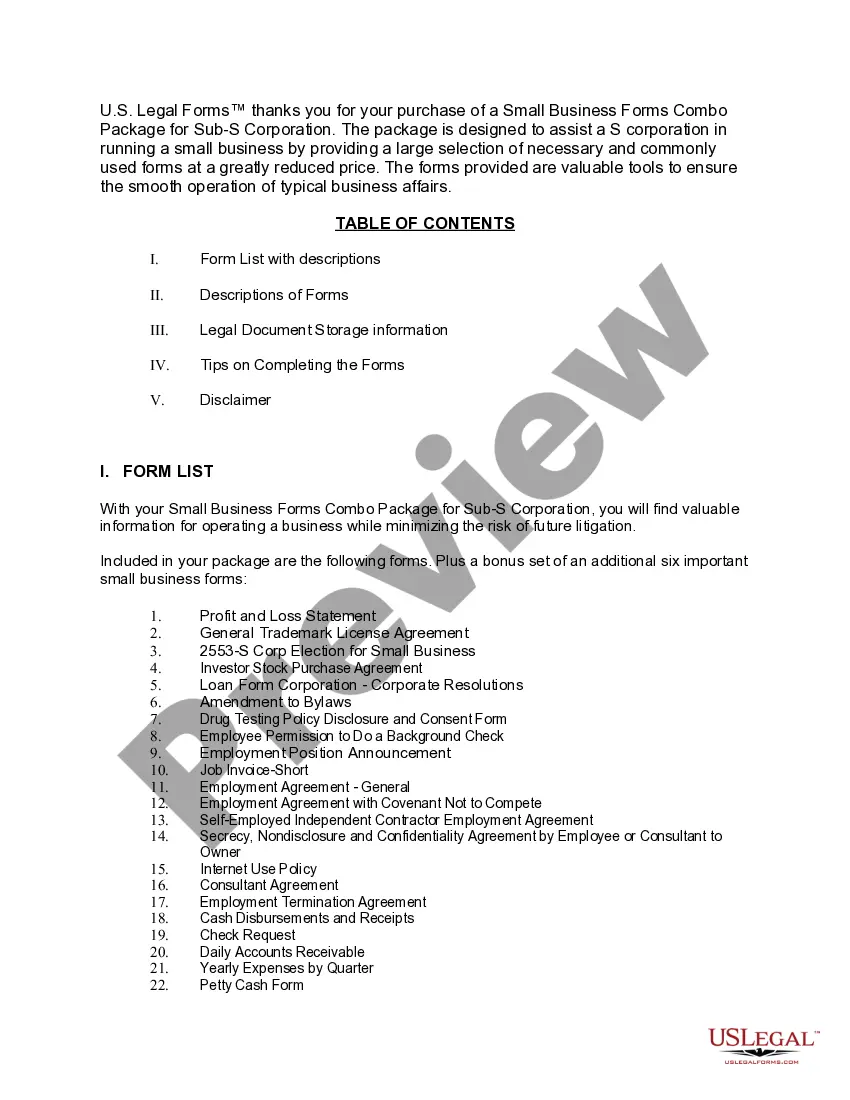
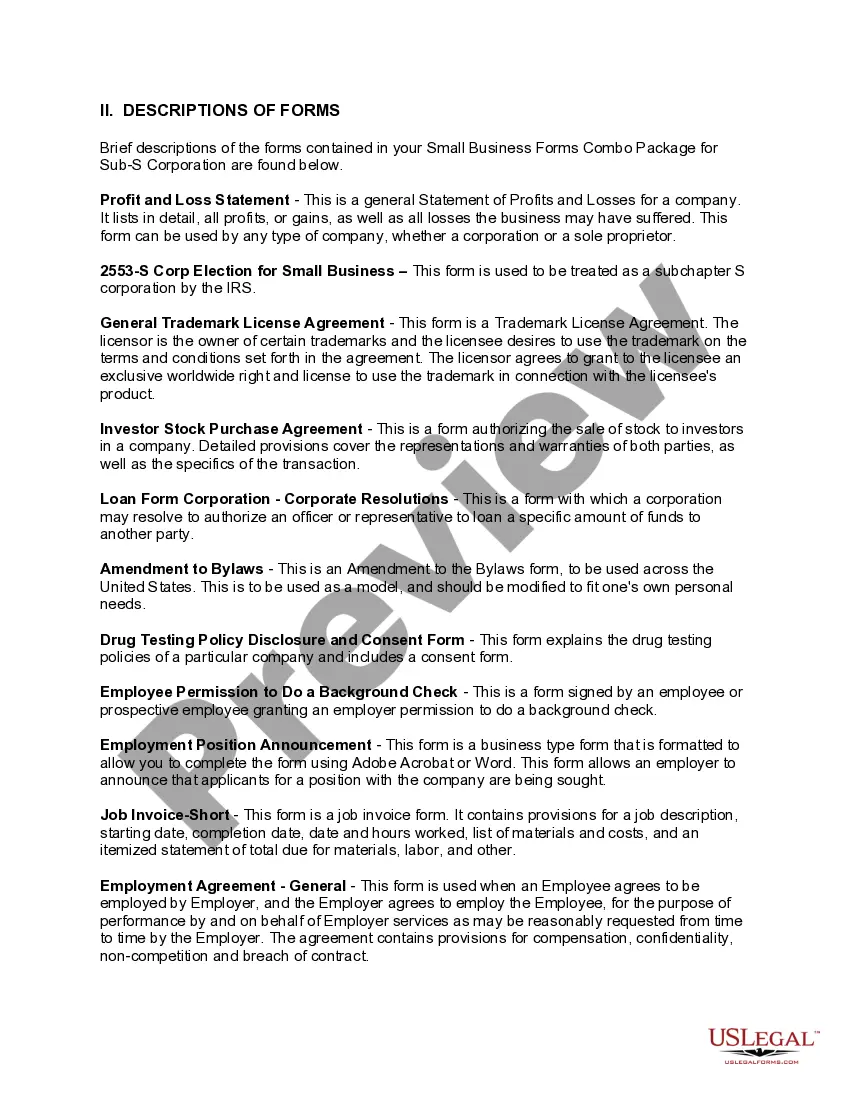
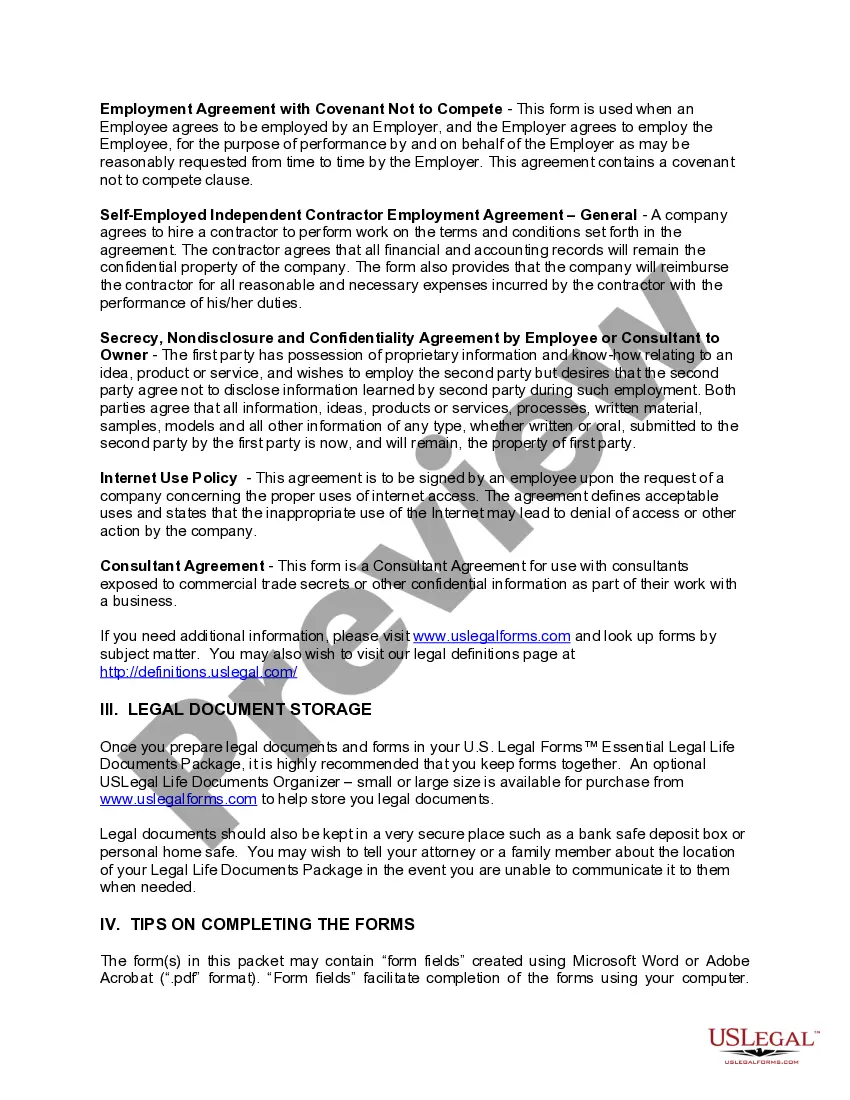
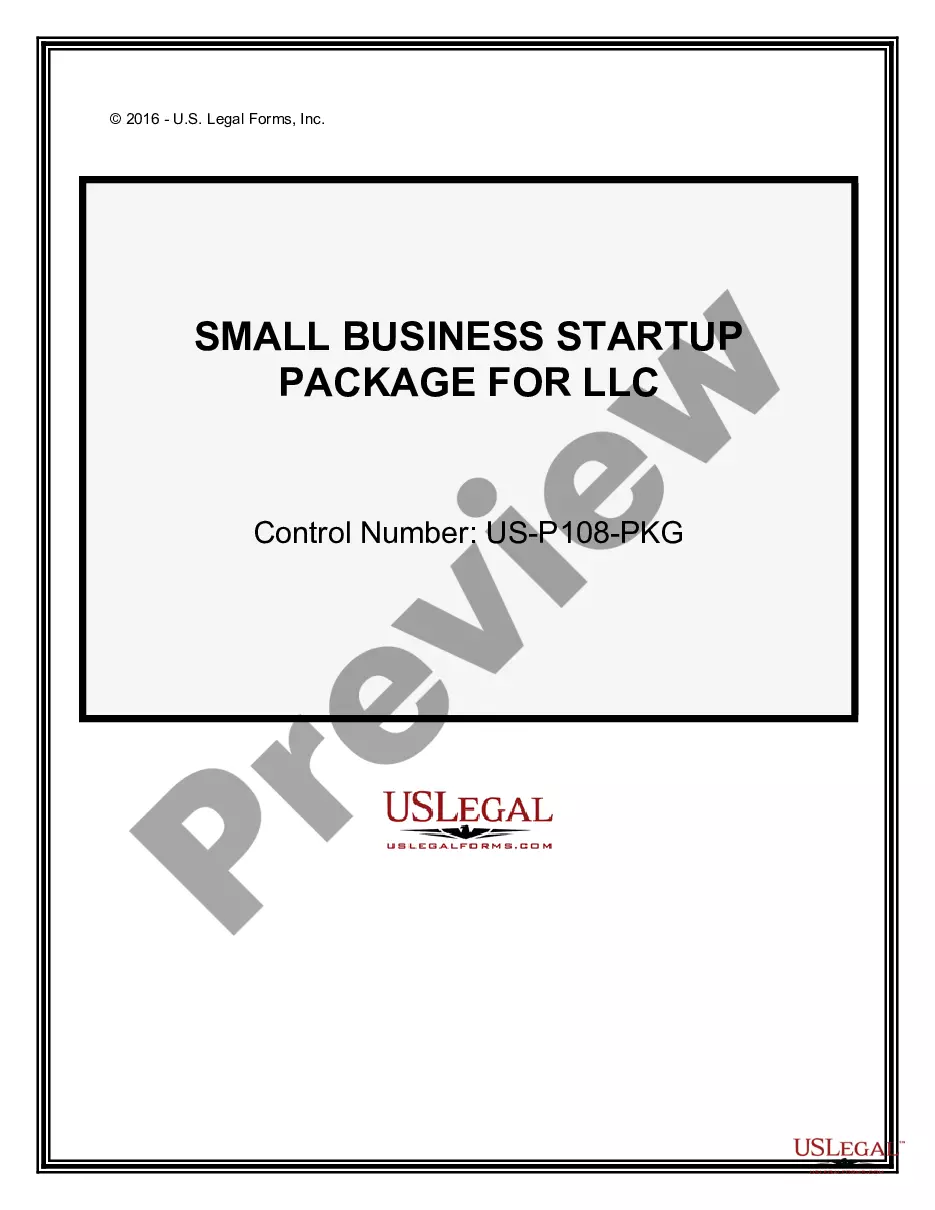
How to fill out Small Business Startup Package For S-Corporation?
- Log in to your US Legal Forms account if you're a returning user. Ensure your subscription is active before proceeding.
- If you're new, start by exploring the extensive form library and verify that you are selecting the correct documents tailored to your local jurisdiction.
- Utilize the Search feature to find alternative templates if your initial choice doesn't meet your needs.
- Once you've identified the right form, click 'Buy Now' and select your preferred subscription plan.
- Complete the payment process by entering your credit card information or using a PayPal account.
- Download the completed form to your device. Access it anytime through the 'My Forms' section in your account.
By following these steps, you can easily obtain the necessary legal documents to establish your S corporation and ensure compliance with relevant laws.
Start your journey with US Legal Forms today and take advantage of their library's benefits for a seamless legal experience!
Form popularity
FAQ
The 2% rule for S corps states that shareholders owning more than 2% of the stock cannot deduct certain employee benefits on their personal tax returns. This rule is essential for S corp owners to understand as it affects health insurance and other fringe benefits. Being aware of this limitation allows business owners to make informed decisions about compensation and benefits.
The 5-year rule for S corps refers to the requirement that an S corp must have maintained its S election for at least five years to avoid losing its status. If an S corp terminates its status before five years, it may face certain restrictions if it later applies again for S corp status. Therefore, understanding this rule is crucial for business owners considering long-term planning.
No, S corps do not file a combined tax return with the owner's personal taxes. Instead, an S corp files an informational return using Form 1120S, while owners report income pass-through on their individual tax returns. This distinction allows owners to take advantage of the benefits of S corp taxation without merging their business and personal finances.
An S corp can make sense for small business owners who want to limit personal liability while enjoying pass-through taxation. Often, it becomes beneficial when the business generates significant profits, allowing the owners to take advantage of both salary and distributions. Additionally, if you plan to reinvest profits and distribute less, an S corp offers flexibility in managing taxes.
Starting an S Corp involves various costs, including state filing fees, attorney fees, and necessary permits, which can range from a few hundred to several thousand dollars. Additionally, you may incur ongoing expenses for compliance and reporting. To help you understand these costs, uslegalforms offers comprehensive guides and resources for effectively starting your S Corp.
To qualify as an S Corp, your business must meet certain criteria set by the IRS. These include having 100 or fewer shareholders, being a domestic corporation, and having only one class of stock. Additionally, all shareholders must be U.S. citizens or residents. If you're unsure about your eligibility, uslegalforms can assist you with the qualifications needed for your S Corp.
You can set up an S Corp yourself, but it requires careful attention to detail. You'll need to file specific documents with your state and the IRS to elect S Corp status. While it is possible to navigate these steps independently, uslegalforms provides helpful templates and guidance to ensure you meet all legal requirements and avoid potential pitfalls.
Yes, you can create an S Corp for yourself. Forming an S Corp allows you to benefit from pass-through taxation, meaning the income is only taxed at the personal level. This structure can help you save on self-employment taxes compared to a sole proprietorship. To simplify this process, consider using uslegalforms, which offers resources tailored for forming an S Corp.
While it is possible to set up an S Corp on your own, consulting an accountant is highly beneficial. An accountant can help you navigate the complexities of the formation process and ensure compliance with tax regulations. They offer insights on what documents you need and can help you avoid costly mistakes. Using tools like uslegalforms can also simplify the setup process and provide guidance along the way.
Yes, you can run an S Corp by yourself, often referred to as a single-member S Corp. This structure allows you to maintain complete control while benefiting from pass-through taxation. Operating alone does not complicate the process, but you must still adhere to S Corp regulations and maintain proper records. If you're unsure about compliance, consider utilizing platforms like uslegalforms for guidance.