Trade Secret Sample For Code
Description
Get your form ready online
Our built-in tools help you complete, sign, share, and store your documents in one place.
Make edits, fill in missing information, and update formatting in US Legal Forms—just like you would in MS Word.
Download a copy, print it, send it by email, or mail it via USPS—whatever works best for your next step.
Sign and collect signatures with our SignNow integration. Send to multiple recipients, set reminders, and more. Go Premium to unlock E-Sign.
If this form requires notarization, complete it online through a secure video call—no need to meet a notary in person or wait for an appointment.
We protect your documents and personal data by following strict security and privacy standards.

Make edits, fill in missing information, and update formatting in US Legal Forms—just like you would in MS Word.

Download a copy, print it, send it by email, or mail it via USPS—whatever works best for your next step.

Sign and collect signatures with our SignNow integration. Send to multiple recipients, set reminders, and more. Go Premium to unlock E-Sign.

If this form requires notarization, complete it online through a secure video call—no need to meet a notary in person or wait for an appointment.

We protect your documents and personal data by following strict security and privacy standards.
Looking for another form?



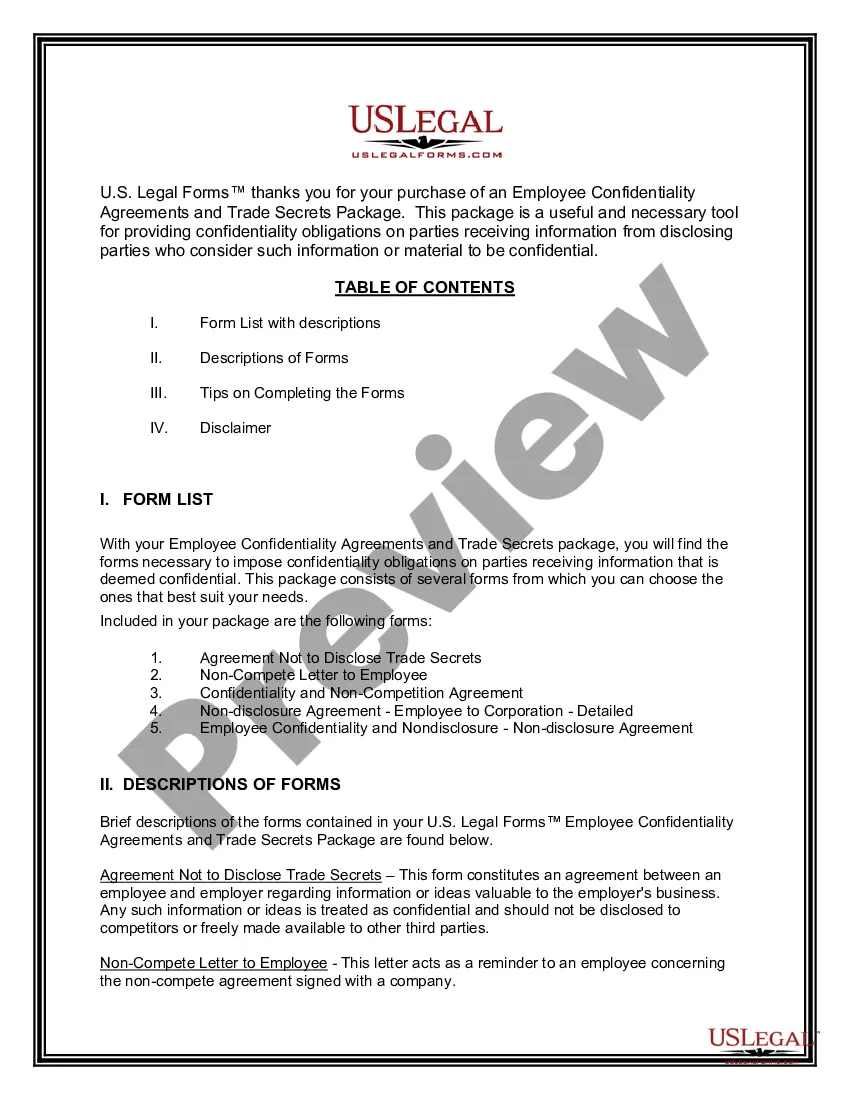
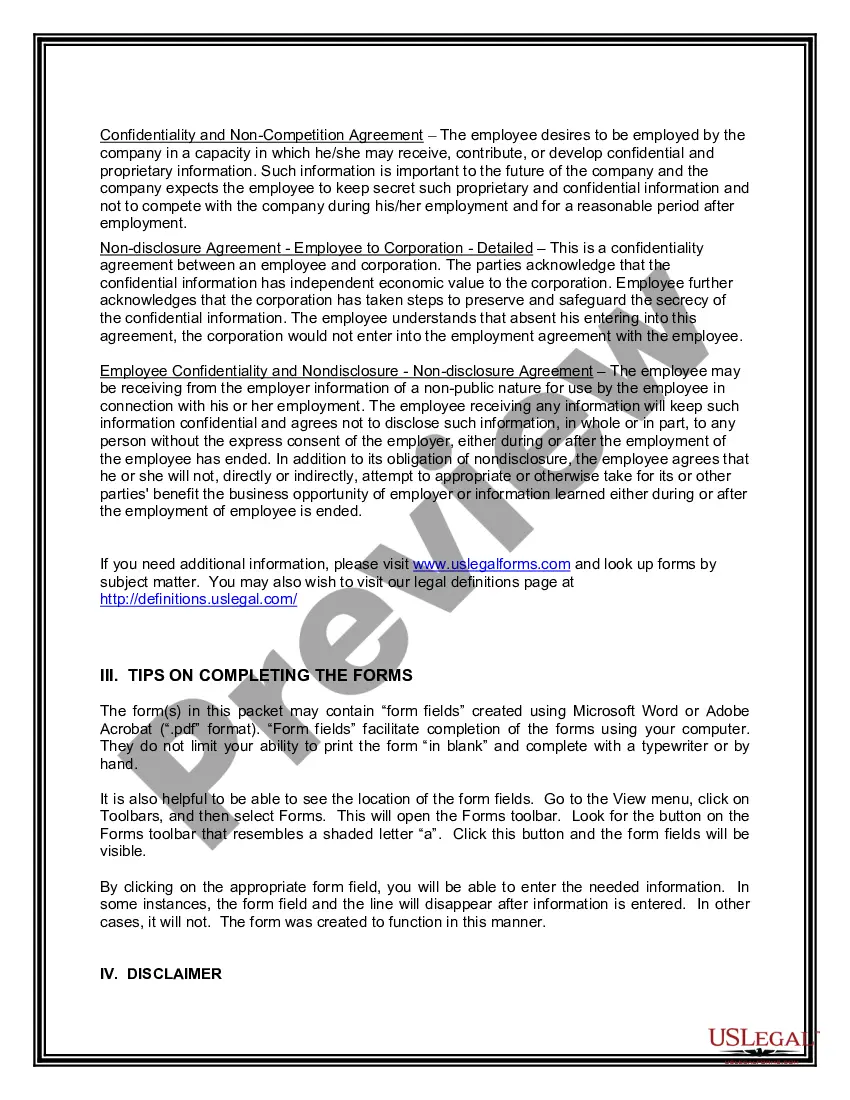
How to fill out Employee Confidentiality Agreements And Trade Secrets Package?
Creating legal documents from the ground up can frequently be a bit daunting.
Certain cases may require substantial time for research and considerable financial resources.
If you're looking for an easier and more cost-effective method for preparing Trade Secret Sample For Code or any other forms without unnecessary complications, US Legal Forms is always available to assist you.
Our online repository of over 85,000 current legal documents covers nearly every aspect of your financial, legal, and personal needs.
Before you dive into downloading the Trade Secret Sample For Code, follow these guidelines: Check the document previews and descriptions to ensure you are viewing the correct document. Confirm that the template you choose meets your state and county's requirements. Select the most appropriate subscription plan to acquire the Trade Secret Sample For Code. Download the document, then fill it out, validate it, and print it. US Legal Forms boasts a flawless reputation and over 25 years of expertise. Join us today and make form completion simple and efficient!
- With just a few clicks, you can quickly access state- and county-compliant forms meticulously prepared by our legal professionals.
- Utilize our website whenever you require a dependable and trustworthy service to help you rapidly find and download the Trade Secret Sample For Code.
- If you're already familiar with our platform and have set up an account with us before, simply Log In to your account, find the template, and download it or retrieve it anytime in the My documents section.
- Not signed up yet? No problem. Setting it up is quick and easy, allowing you to explore the library.
Form popularity
FAQ
Many well-known companies use trade secrets to maintain their market positions. For instance, the recipe for Coca-Cola is a famous trade secret that has been closely guarded for years. Another example is Google's search algorithm, which remains proprietary and contributes significantly to its success. Having access to a trade secret sample for code can help you understand how to frame your own unique information effectively.
Coca-Cola’s trade secret is famously known to be its beverage formula, which is kept under strict lock and key. This iconic recipe gives Coca-Cola a unique flavor that is integral to its brand. In this case, the trade secret sample for code is the recipe that constitutes protected intellectual property.
Examples of trade secrets include: KFC's secret blend of 11 herbs and spices. Coca-Cola's recipe for their signature drink. Google's search algorithm. McDonald's Big Mac ?special sauce.? Secret client lists at any company.
Trade secrets are information of any type that is valuable to its owner because it is not generally known in the industry and its owner has taken reasonable steps to maintain the information in confidence. Examples of trade secrets include customer lists, source code, and semiconductor manufacturing processes.
In order for information to be protected as trade secret, it shall meet the following criteria. The information must be secret (i.e., it is not generally known among, or readily accessible, to circles that normally deal with the kind of information in question). Absolute secrecy is not required.
Breaches of non-disclosure agreements, industrial espionage, theft, fraud, and bribery are all improper means of acquiring a trade secret. For example, if you hack into a company's computer and copy the files, this act of acquiring the secrets improperly is misappropriation.
Trade secrets encompass both technical information, such as information concerning manufacturing processes, pharmaceutical test data, designs and drawings of computer programs, and commercial information, such as distribution methods, list of suppliers and clients, and advertising strategies.