Employee Rights For Confidentiality
Description
Get your form ready online
Our built-in tools help you complete, sign, share, and store your documents in one place.
Make edits, fill in missing information, and update formatting in US Legal Forms—just like you would in MS Word.
Download a copy, print it, send it by email, or mail it via USPS—whatever works best for your next step.
Sign and collect signatures with our SignNow integration. Send to multiple recipients, set reminders, and more. Go Premium to unlock E-Sign.
If this form requires notarization, complete it online through a secure video call—no need to meet a notary in person or wait for an appointment.
We protect your documents and personal data by following strict security and privacy standards.

Make edits, fill in missing information, and update formatting in US Legal Forms—just like you would in MS Word.

Download a copy, print it, send it by email, or mail it via USPS—whatever works best for your next step.

Sign and collect signatures with our SignNow integration. Send to multiple recipients, set reminders, and more. Go Premium to unlock E-Sign.

If this form requires notarization, complete it online through a secure video call—no need to meet a notary in person or wait for an appointment.

We protect your documents and personal data by following strict security and privacy standards.
Looking for another form?
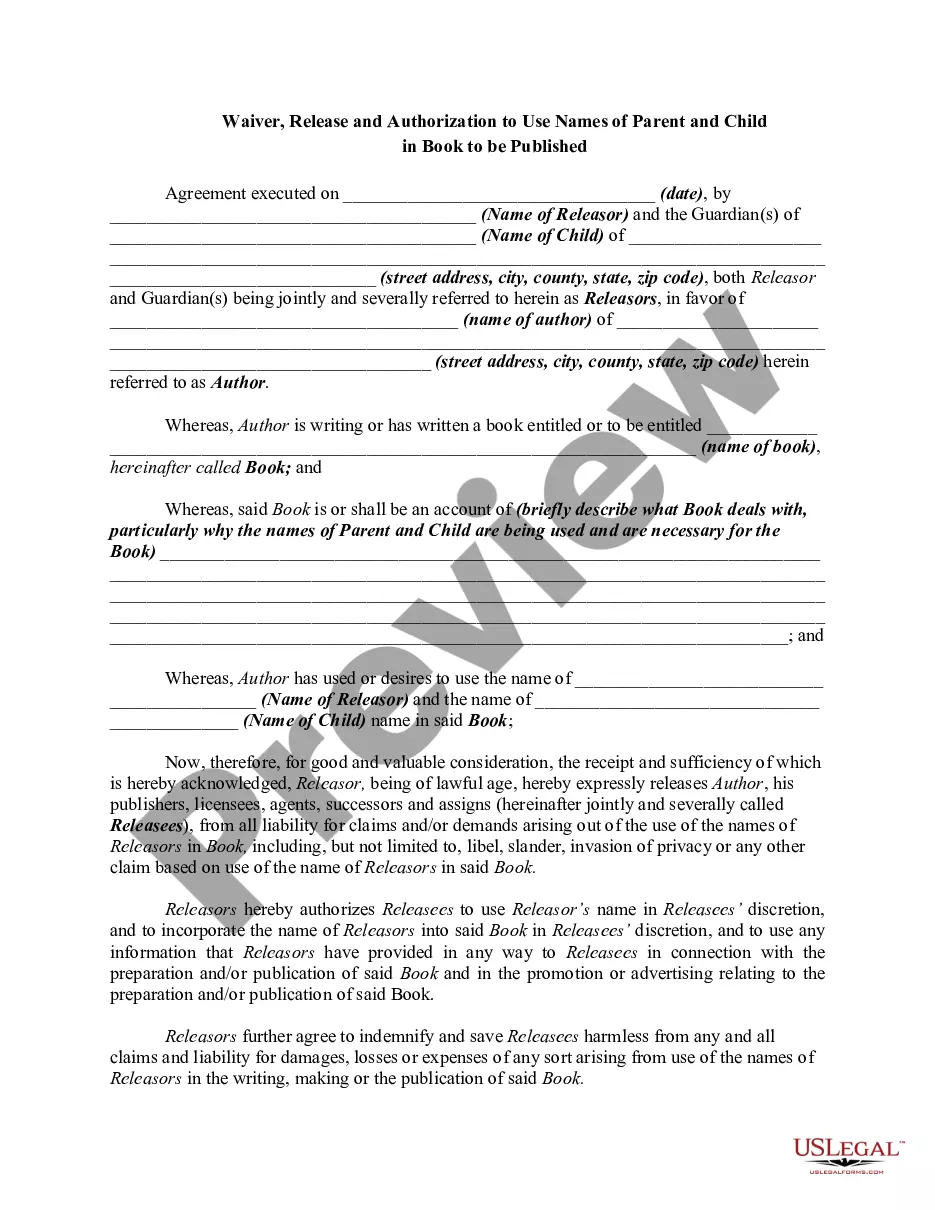



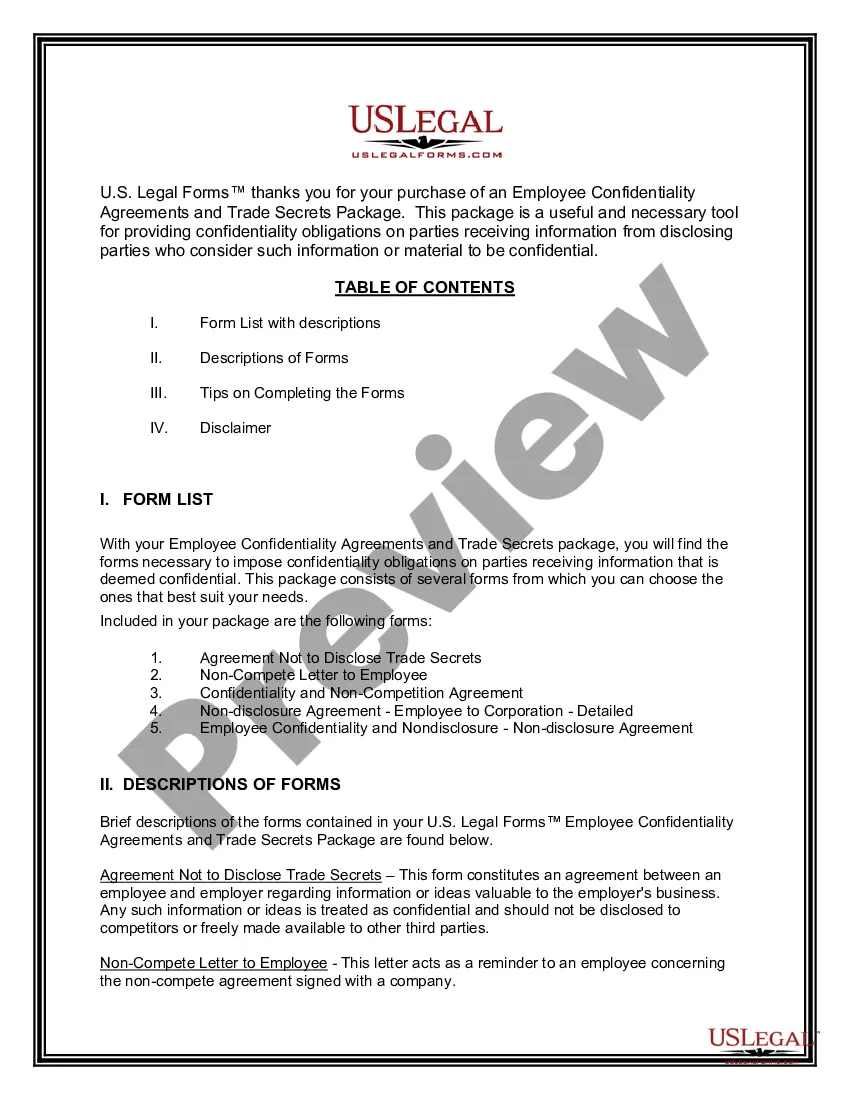
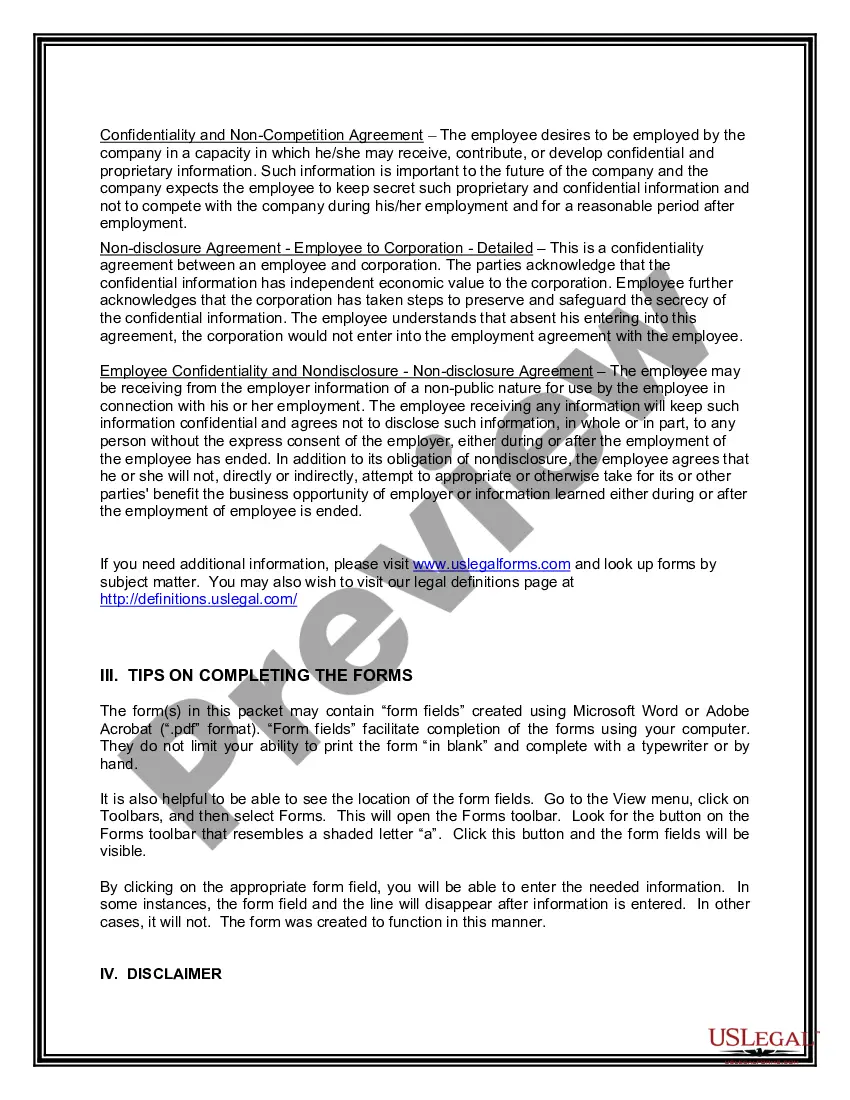
How to fill out Employee Confidentiality Agreements And Trade Secrets Package?
Managing legal documents can be challenging, even for the most skilled experts.
If you're interested in Employee Rights For Confidentiality but lack the time to find the correct and up-to-date version, the process can be overwhelming.
With US Legal Forms, you can access localized legal and organizational forms for any requirements, from personal to business documents—all in one location.
Benefit from a valuable resource library filled with articles, guides, and materials pertinent to your circumstances and requirements.
Leverage the US Legal Forms online catalog, backed by 25 years of expertise and dependability. Change your routine document management into a smooth and intuitive experience today.
- Conserve time and energy by searching for the documents you require, employing US Legal Forms’ enhanced search and Preview feature to locate Employee Rights For Confidentiality.
- If you possess a subscription, Log In to your US Legal Forms account, search for the desired form, and obtain it.
- Visit the My documents tab to review the documents you have previously saved and manage your folders accordingly.
- If it's your first time using US Legal Forms, set up a free account to enjoy limitless access to all the platform’s features.
- After downloading the form you need, follow these steps: Review it to confirm it’s the right form by previewing and checking its details.
- A comprehensive online form database could revolutionize how anyone approaches these challenges.
- US Legal Forms stands as a frontrunner in online legal documents, offering over 85,000 state-specific forms accessible anytime.
- Utilize sophisticated tools to complete and manage your Employee Rights For Confidentiality.
Form popularity
FAQ
An example of a confidentiality policy for employees could outline that all employees must not share any proprietary information without proper authorization. The policy may also state the consequences of violating confidentiality, highlighting that breaching this trust can lead to disciplinary action. This kind of policy protects employee rights for confidentiality while fostering a secure work environment.
Employees are prohibited from sharing or disclosing sensitive information to unauthorized individuals or for unauthorized purposes. Employees are required to protect the confidentiality of sensitive information by using appropriate safeguards, such as password protection and secure storage of documents and data.
What should a confidentiality policy include? The policy should define confidential information, provide clear guidelines on handling such information, outline measures for protection, and specify disciplinary actions for breaches. It should also detail any exceptions and the process for authorized disclosures.
Examples of confidential information include a person's phone number and address, medical records, and social security. Companies also have confidential information such as financial records, trade secrets, customer information, and marketing strategies.
Employee Information Social security number. Birth date. Home phone number. Home address. Health information. Passwords. Parking leases. Gender.
Employees have the right to keep private facts about themselves confidential and the right to some degree of personal space. An employer that discloses private facts or lies about an employee may be held accountable in a civil action for invasion of privacy or defamation.