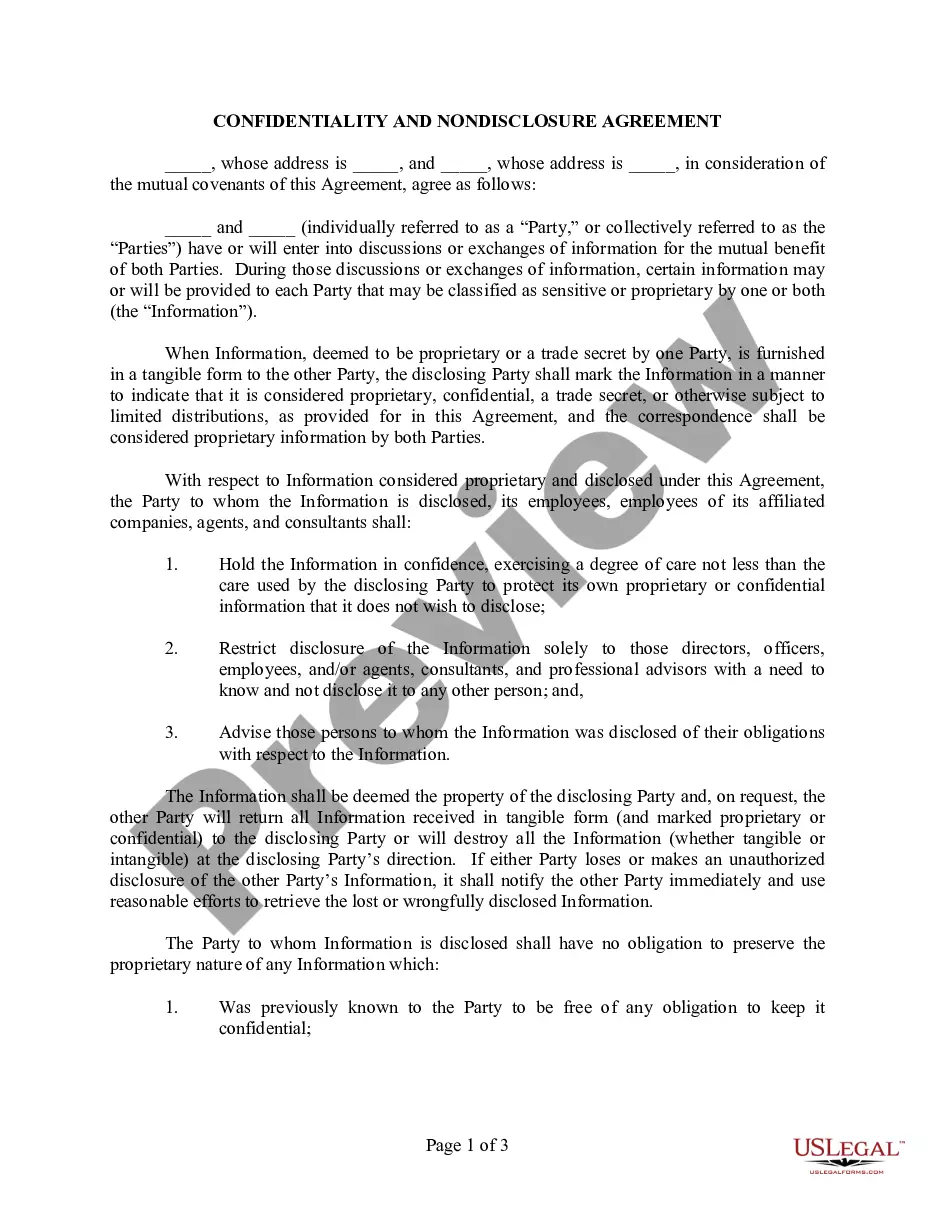
Confidentiality Between With Mentee
Description


Get your form ready online
Our built-in tools help you complete, sign, share, and store your documents in one place.
Make edits, fill in missing information, and update formatting in US Legal Forms—just like you would in MS Word.
Download a copy, print it, send it by email, or mail it via USPS—whatever works best for your next step.
Sign and collect signatures with our SignNow integration. Send to multiple recipients, set reminders, and more. Go Premium to unlock E-Sign.
If this form requires notarization, complete it online through a secure video call—no need to meet a notary in person or wait for an appointment.
We protect your documents and personal data by following strict security and privacy standards.

Make edits, fill in missing information, and update formatting in US Legal Forms—just like you would in MS Word.

Download a copy, print it, send it by email, or mail it via USPS—whatever works best for your next step.

Sign and collect signatures with our SignNow integration. Send to multiple recipients, set reminders, and more. Go Premium to unlock E-Sign.

If this form requires notarization, complete it online through a secure video call—no need to meet a notary in person or wait for an appointment.

We protect your documents and personal data by following strict security and privacy standards.
Looking for another form?

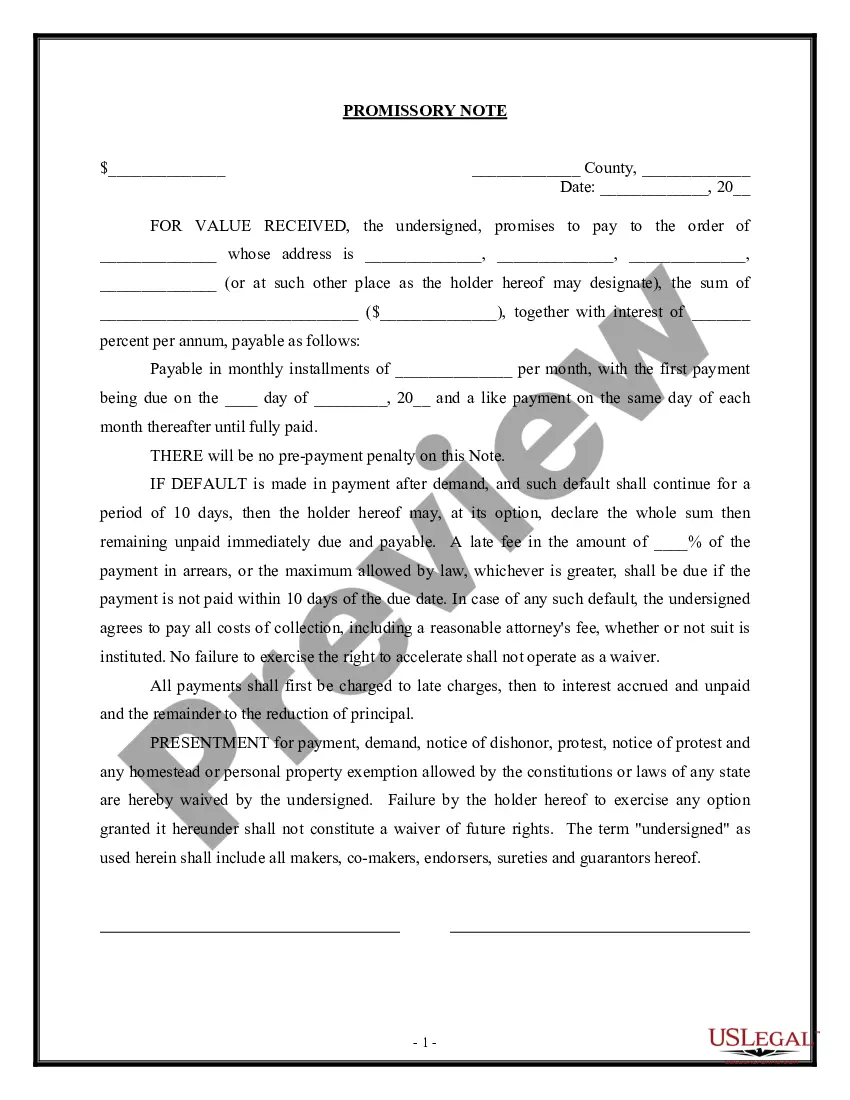






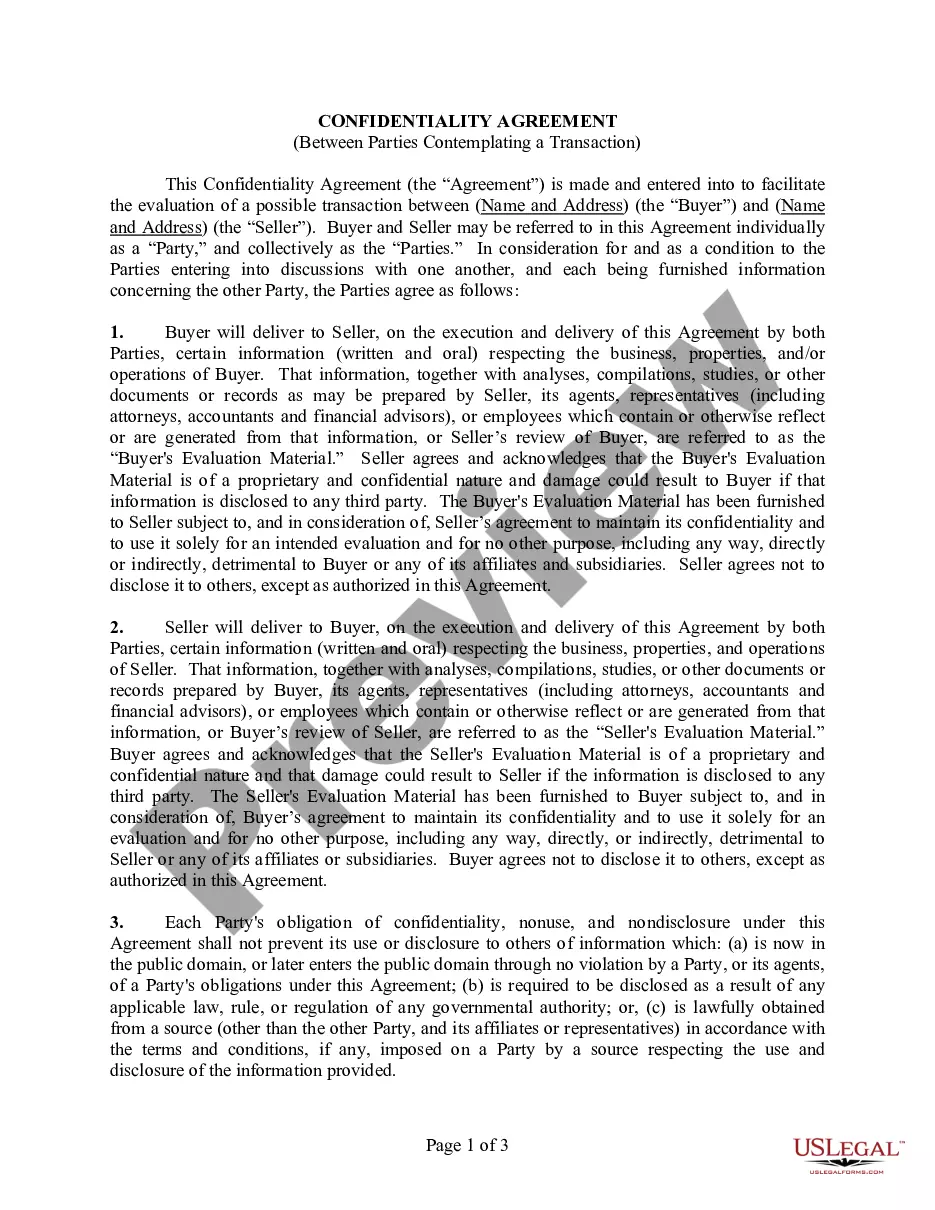
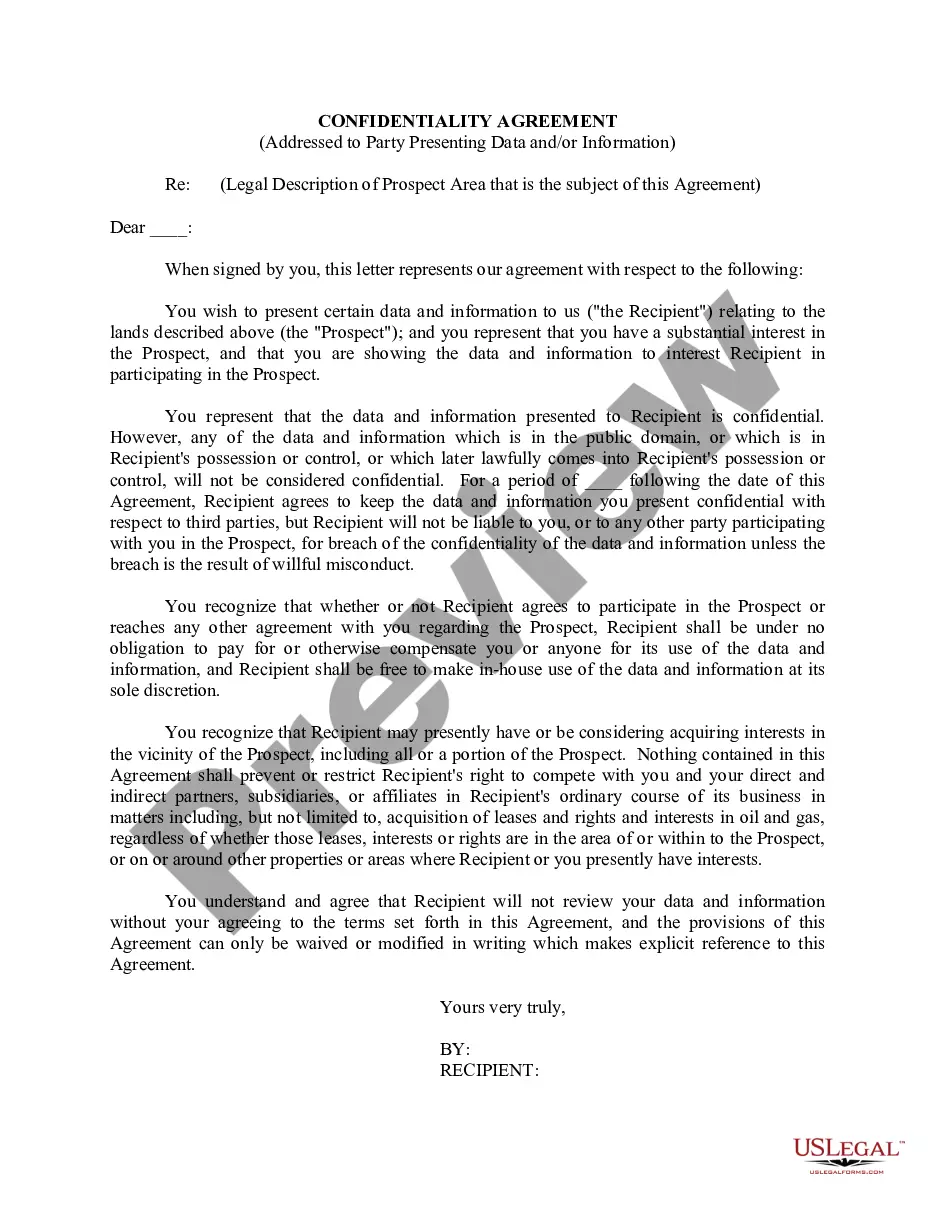
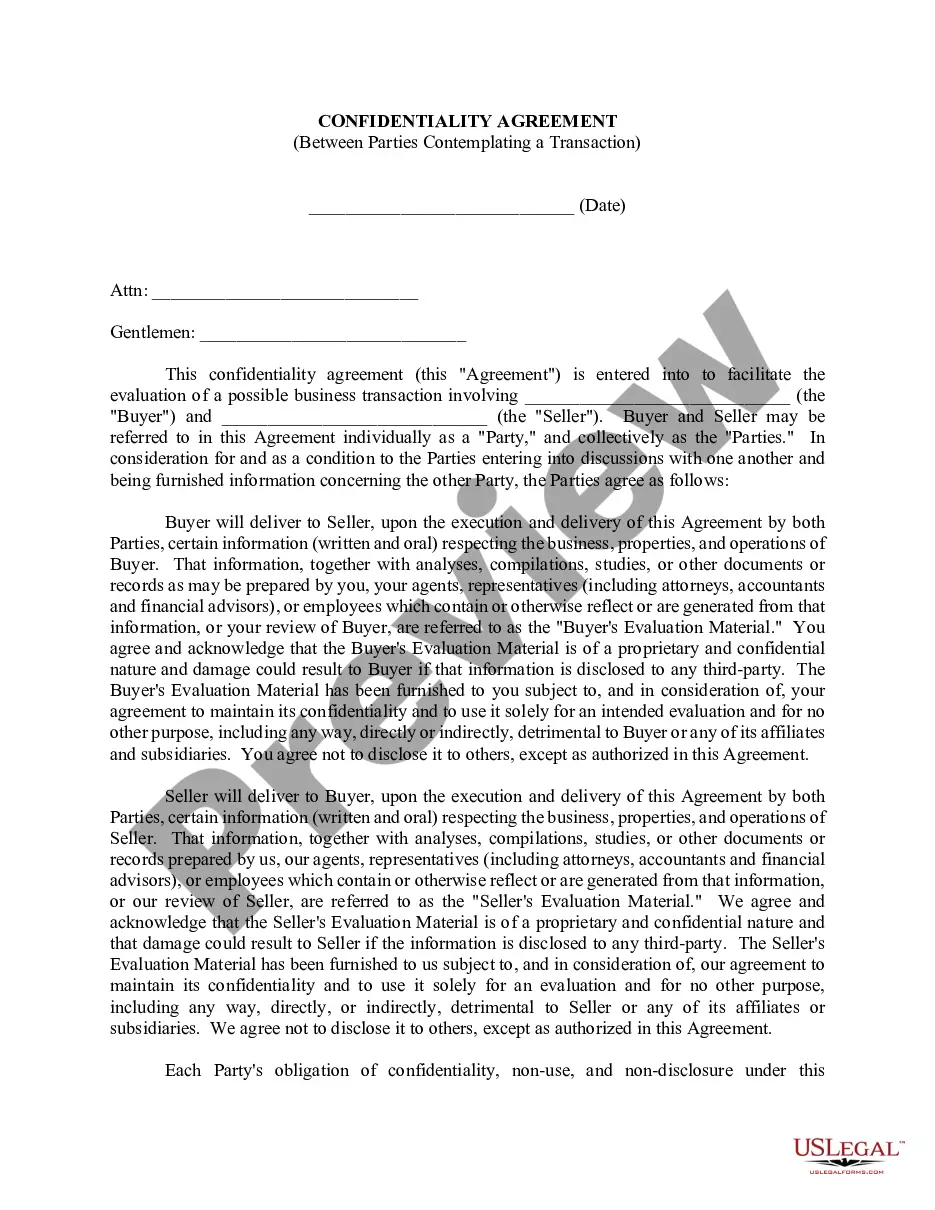
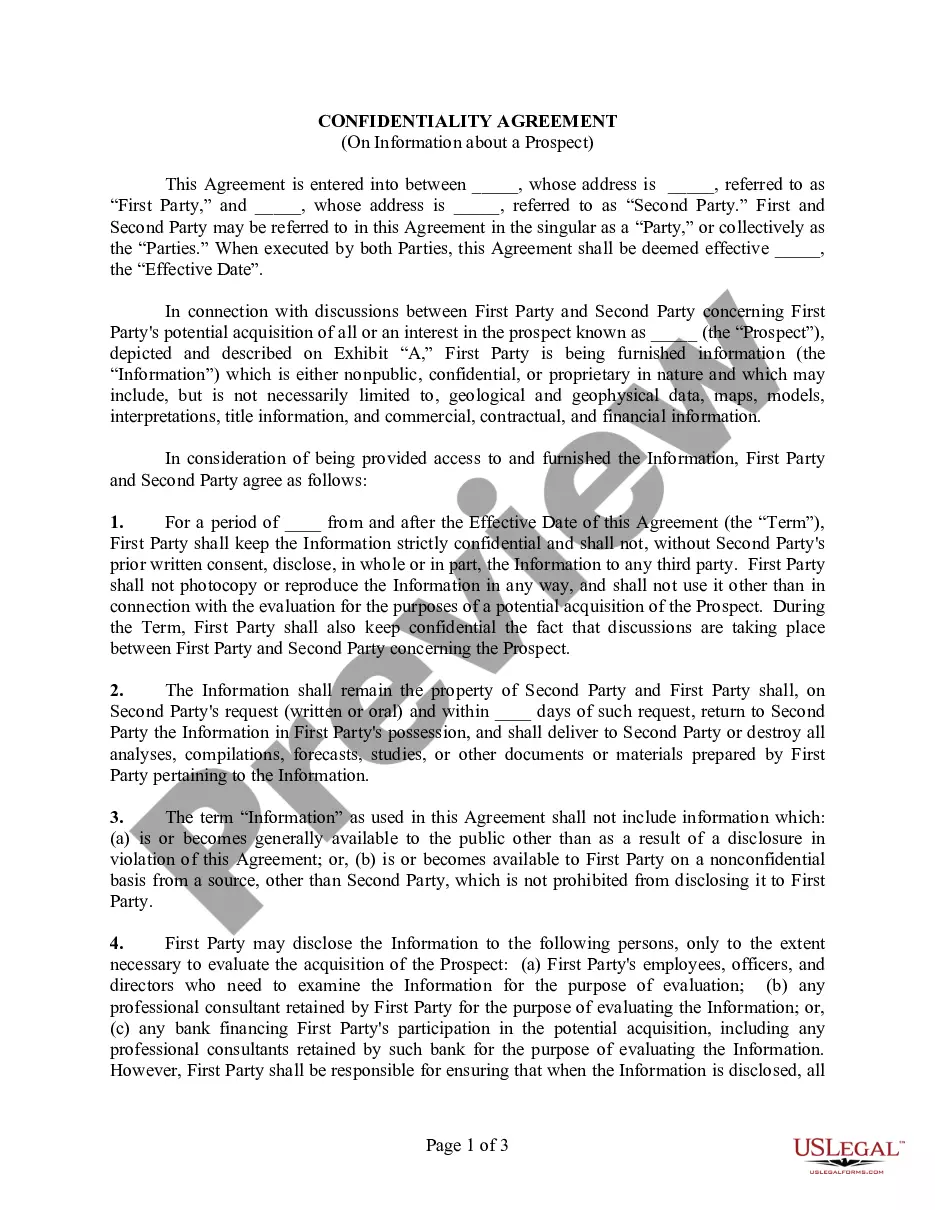
How to fill out Confidentiality Agreement (Between Parties Contemplating A Transaction)?
Whether for corporate reasons or for individual matters, everyone must confront legal issues sooner or later in their lifetime.
Completing legal paperwork necessitates meticulous care, starting from selecting the suitable form template. For instance, if you choose an incorrect version of a Confidentiality Agreement With Mentee, it will be rejected upon submission. Therefore, it is vital to have a reliable source of legal documents such as US Legal Forms.
With an extensive US Legal Forms catalog available, you never have to waste time searching for the correct template online. Utilize the library’s straightforward navigation to find the right document for any situation.
- Locate the template you require by employing the search field or browsing through the catalog.
- Review the form’s description to confirm it aligns with your situation, jurisdiction, and county.
- Click on the form’s preview to assess it.
- If it is not the correct document, return to the search feature to locate the Confidentiality Agreement With Mentee sample you seek.
- Download the document once it fulfills your criteria.
- If you already possess a US Legal Forms account, simply click Log in to access previously saved files in My documents.
- Should you not have an account yet, you can acquire the form by clicking Buy now.
- Select the appropriate payment option.
- Fill out the profile registration form.
- Choose your payment method: utilize a credit card or PayPal account.
- Select the file format you desire and download the Confidentiality Agreement With Mentee.
- Once downloaded, you can fill out the form using editing software or print it and complete it by hand.
Form popularity
FAQ
Lesson Summary. Confidentiality in mentoring involves responsibility by the mentor and the mentee to ensure that information discussed between the two should be treated with the utmost confidence. Confidentiality is important for the protection of both and for building a trusting relationship.
For example, many mentors set a boundary that they will not give or loan money to the mentee. If this is your boundary and your mentee asks for money for lunch, you might remind him that you are not comfortable lending money, but offer to pick up a sandwich for lunch if you are worried that she is hungry.
Address confidentiality within a written mentor/mentee agreement. It may be as simple as stating, in writing, what sensitive issues are off-limits for discussion or those which will be held in confidence. Both parties should stay true to whatever agreement is made, written or not. Over time, this will build trust.
To avoid this problem, the mentee and mentor should discuss boundaries at the onset of the relationship. Different people may have different ideas about what the boundaries should be. For instance, is it appropriate for a mentor to ask a mentee to give a talk that the mentor agreed to give?
Talk about your responsibilities, what you can and can't do. Agree on frequency, duration and intervals of meetings/communications and how this will occur.