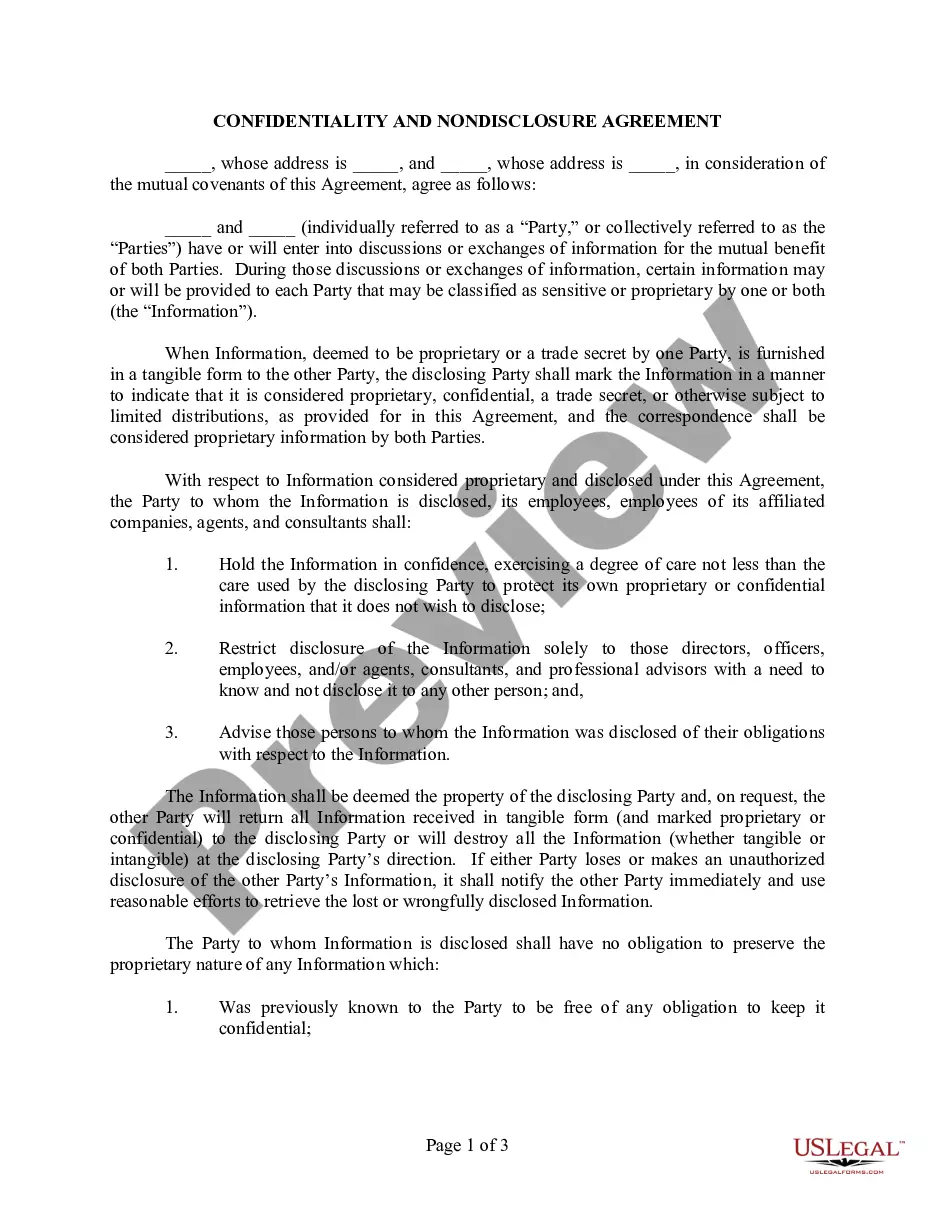
Confidentiality Agreement Between Within Company
Description


Get your form ready online
Our built-in tools help you complete, sign, share, and store your documents in one place.
Make edits, fill in missing information, and update formatting in US Legal Forms—just like you would in MS Word.
Download a copy, print it, send it by email, or mail it via USPS—whatever works best for your next step.
Sign and collect signatures with our SignNow integration. Send to multiple recipients, set reminders, and more. Go Premium to unlock E-Sign.
If this form requires notarization, complete it online through a secure video call—no need to meet a notary in person or wait for an appointment.
We protect your documents and personal data by following strict security and privacy standards.

Make edits, fill in missing information, and update formatting in US Legal Forms—just like you would in MS Word.

Download a copy, print it, send it by email, or mail it via USPS—whatever works best for your next step.

Sign and collect signatures with our SignNow integration. Send to multiple recipients, set reminders, and more. Go Premium to unlock E-Sign.

If this form requires notarization, complete it online through a secure video call—no need to meet a notary in person or wait for an appointment.

We protect your documents and personal data by following strict security and privacy standards.
Looking for another form?







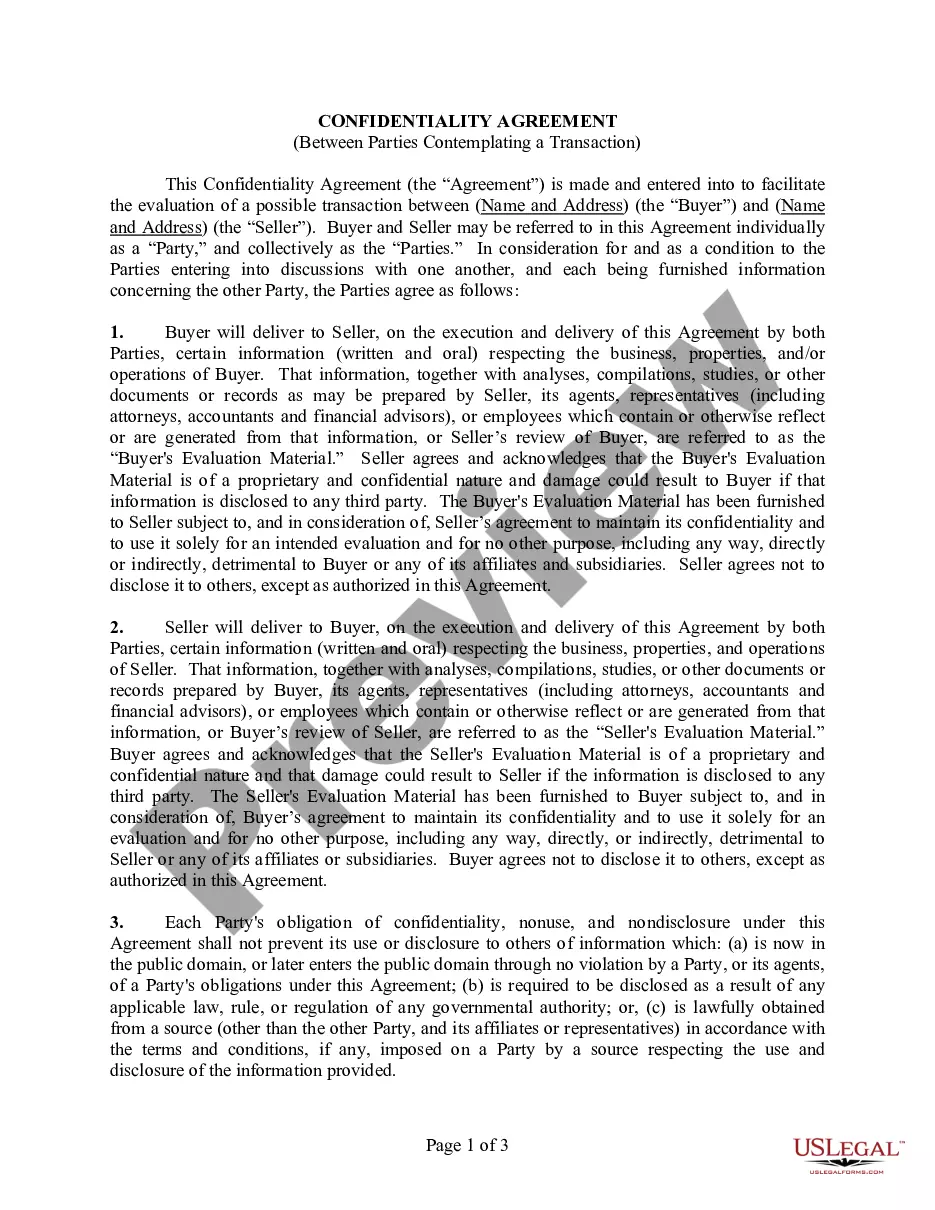
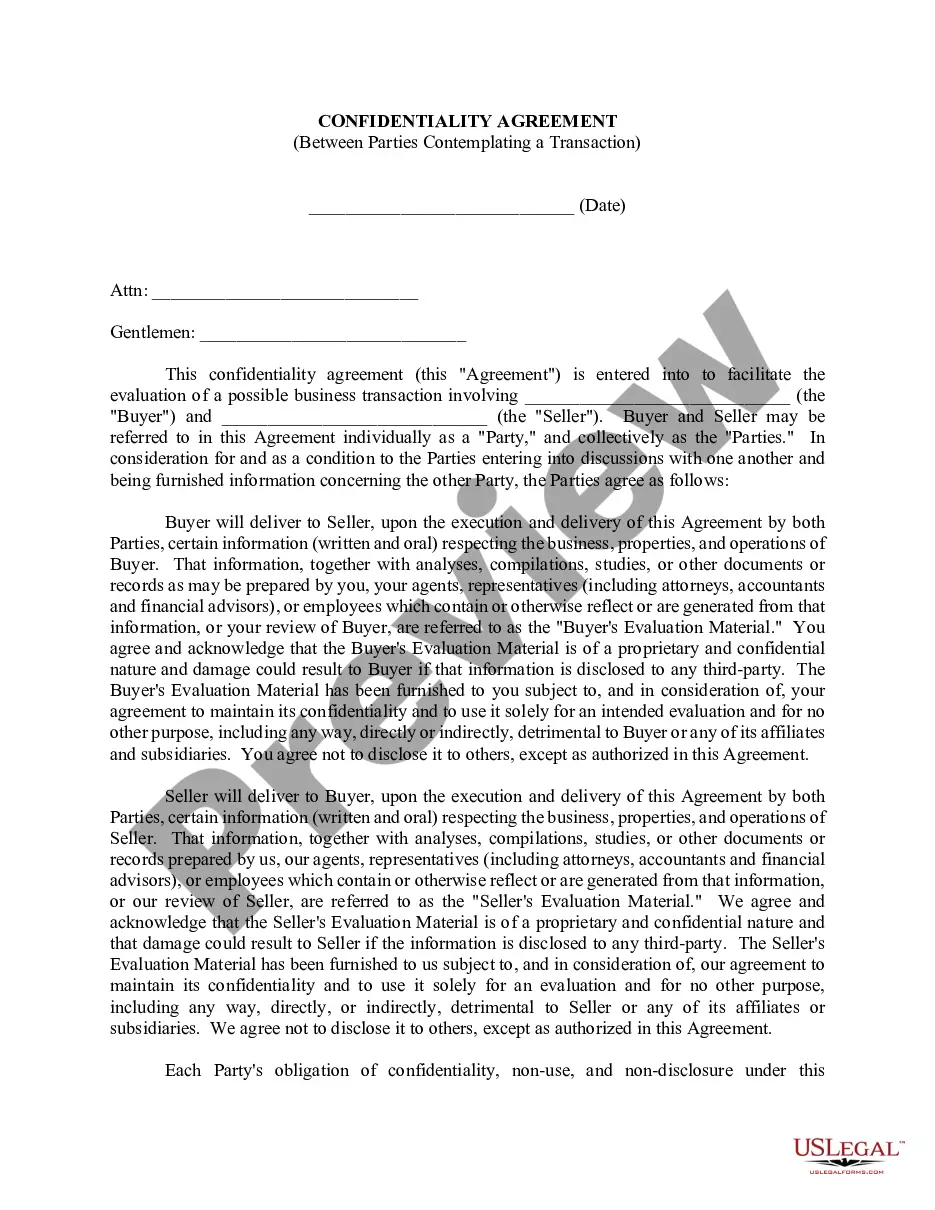
How to fill out Confidentiality Agreement (Between Parties Contemplating A Transaction)?
Regardless of whether for commercial objectives or for personal matters, everyone must navigate legal scenarios at some point in their lives.
Filling out legal documents requires meticulous focus, beginning with selecting the appropriate form model.
With an extensive catalog from US Legal Forms available, you don't need to waste time searching for the right sample online. Utilize the library's straightforward navigation to find the suitable template for any circumstance.
- Locate the sample you require by using the search bar or browsing the catalog.
- Review the form’s description to ensure it aligns with your situation, state, and locality.
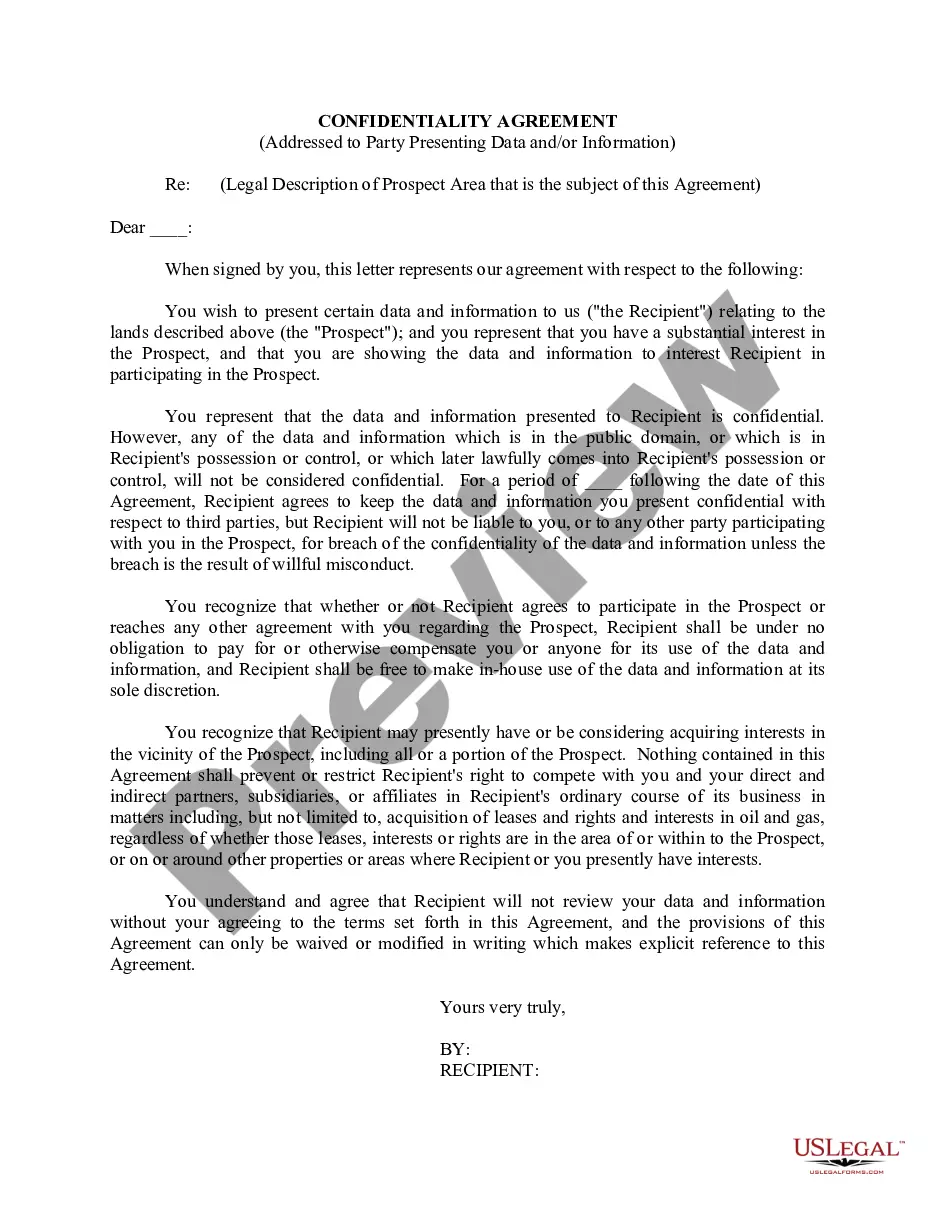
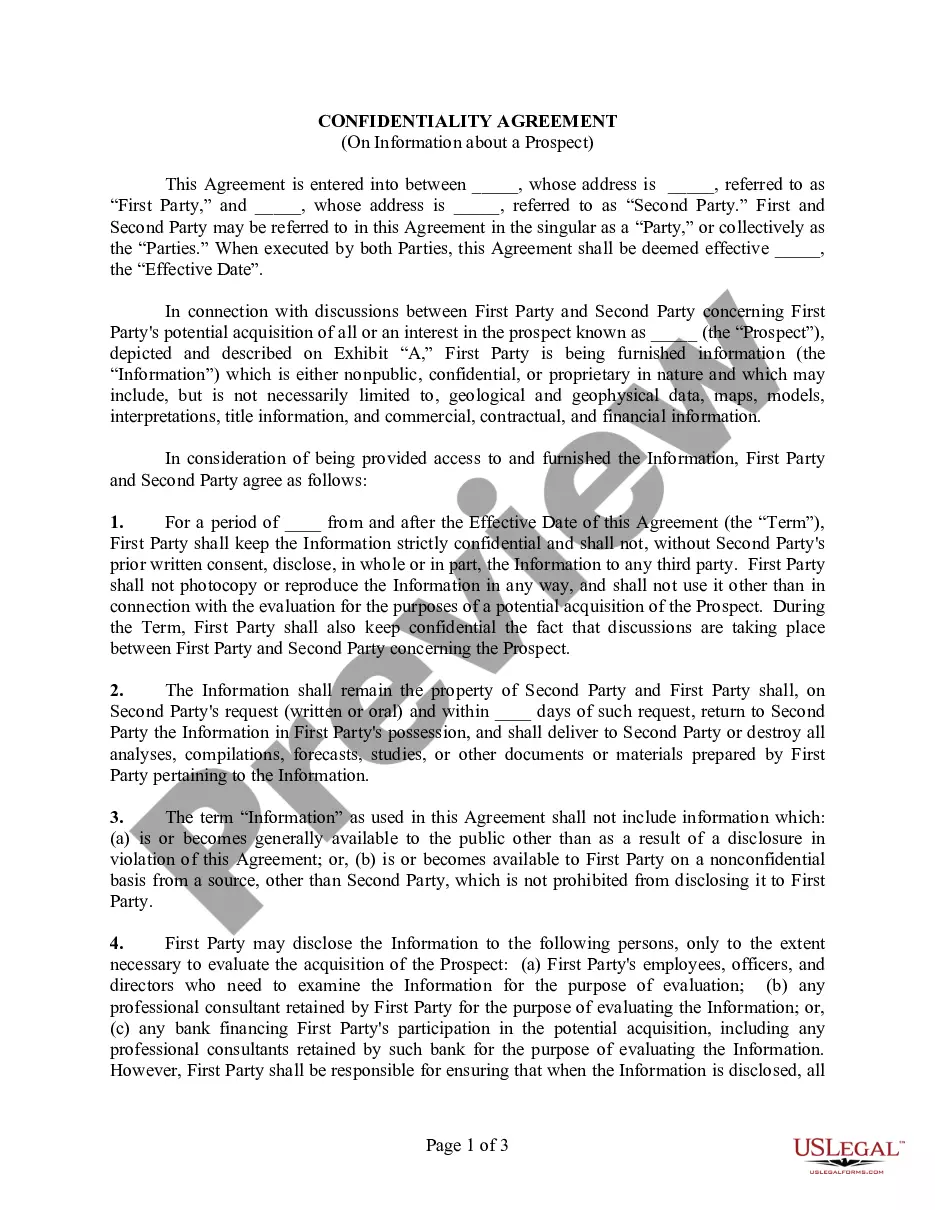
- Click on the form’s preview to examine it.
- If it is the wrong document, return to the search function to find the Confidentiality Agreement Between Within Company sample you need.
- Download the template once it satisfies your requirements.
- If you already possess a US Legal Forms account, simply click Log in to access previously stored documents in My documents.
- If you don’t have an account yet, you can acquire the form by clicking Buy now.
- Select the correct pricing option.
- Complete the profile registration form.
- Choose your payment method: you can utilize a credit card or PayPal account.
- Choose the file format you prefer and download the Confidentiality Agreement Between Within Company.
- Once downloaded, you can fill out the form using editing software or print it and complete it by hand.
Form popularity
FAQ
Writing a confidentiality agreement between within company requires clear and precise language to prevent any misunderstandings. First, identify the parties involved and clearly state what information will be protected. Next, establish the duration of the agreement and any exceptions that may apply. You can use platforms like US Legal Forms to access templates that simplify this process, ensuring your agreement meets all legal requirements and protects your interests.
Yes, a confidentiality agreement between within company is often used when two companies want to share sensitive information without risking exposure. This type of NDA ensures that both parties agree to protect each other's confidential data. Typically, the agreement outlines the information considered confidential, the obligations of each party, and the consequences of any breach. It is essential to draft this agreement carefully, as it can safeguard your business interests effectively.
Yes, it is generally illegal for HR to break confidentiality as outlined in a confidentiality agreement within a company. HR professionals handle sensitive employee data and are expected to uphold privacy standards. Violating this confidentiality can lead to legal repercussions for both the individual and the company. Companies must maintain strict protocols to ensure that all employees understand the importance of confidentiality and the legal implications of breaching such agreements.
A confidentiality agreement within a company, often called a non-disclosure agreement, is a legal contract that ensures sensitive information remains protected. This agreement outlines the types of information considered confidential and restricts employees from sharing this information outside the organization. By implementing a confidentiality agreement within a company, businesses safeguard their trade secrets, proprietary information, and internal processes. It fosters a culture of trust and security, allowing teams to collaborate openly.
A confidentiality agreement between an employer and employee outlines the expectations regarding the handling of sensitive company information. This agreement typically covers trade secrets, client contacts, and internal processes. By establishing clear guidelines, both parties understand the importance of maintaining confidentiality and protecting the business interests.
An NDA between a company and an individual stipulates that the individual will keep certain information confidential. This agreement safeguards secrets related to business strategies, customer data, and proprietary technology. Both parties must understand their responsibilities under the agreement to ensure smooth operations and protect valuable company assets.
The three primary types of NDAs include unilateral, bilateral, and multilateral agreements. A unilateral NDA involves one party disclosing information, while a bilateral NDA requires both parties to share confidential details. Meanwhile, a multilateral NDA involves three or more parties, all of whom agree to protect shared information, making it a comprehensive solution for complex business arrangements.
Signing an NDA is significant, as it establishes a legal commitment to confidentiality between the parties involved. This agreement holds both parties accountable for protecting sensitive information, which can impact business operations and reputations. Understanding its implications helps you appreciate the value of the confidentiality agreement between within company settings.
A NDA, or Non-Disclosure Agreement, between a company and a person serves to protect sensitive information shared during their relationship. This agreement ensures that the individual does not disclose or misuse the confidential information. It is crucial to establish trust, particularly in working relationships where valuable company data is involved.
Yes, you can create your own confidentiality agreement between companies. However, it's essential to ensure that it includes the necessary elements to be enforceable, such as the definition of confidential information, obligations of both parties, and the duration of the agreement. Using templates from platforms like USLegalForms can help you cover all aspects effectively and save time.