How Is A Life Estate Terminated
Description
Get your form ready online
Our built-in tools help you complete, sign, share, and store your documents in one place.
Make edits, fill in missing information, and update formatting in US Legal Forms—just like you would in MS Word.
Download a copy, print it, send it by email, or mail it via USPS—whatever works best for your next step.
Sign and collect signatures with our SignNow integration. Send to multiple recipients, set reminders, and more. Go Premium to unlock E-Sign.
If this form requires notarization, complete it online through a secure video call—no need to meet a notary in person or wait for an appointment.
We protect your documents and personal data by following strict security and privacy standards.

Make edits, fill in missing information, and update formatting in US Legal Forms—just like you would in MS Word.

Download a copy, print it, send it by email, or mail it via USPS—whatever works best for your next step.

Sign and collect signatures with our SignNow integration. Send to multiple recipients, set reminders, and more. Go Premium to unlock E-Sign.

If this form requires notarization, complete it online through a secure video call—no need to meet a notary in person or wait for an appointment.

We protect your documents and personal data by following strict security and privacy standards.
Looking for another form?
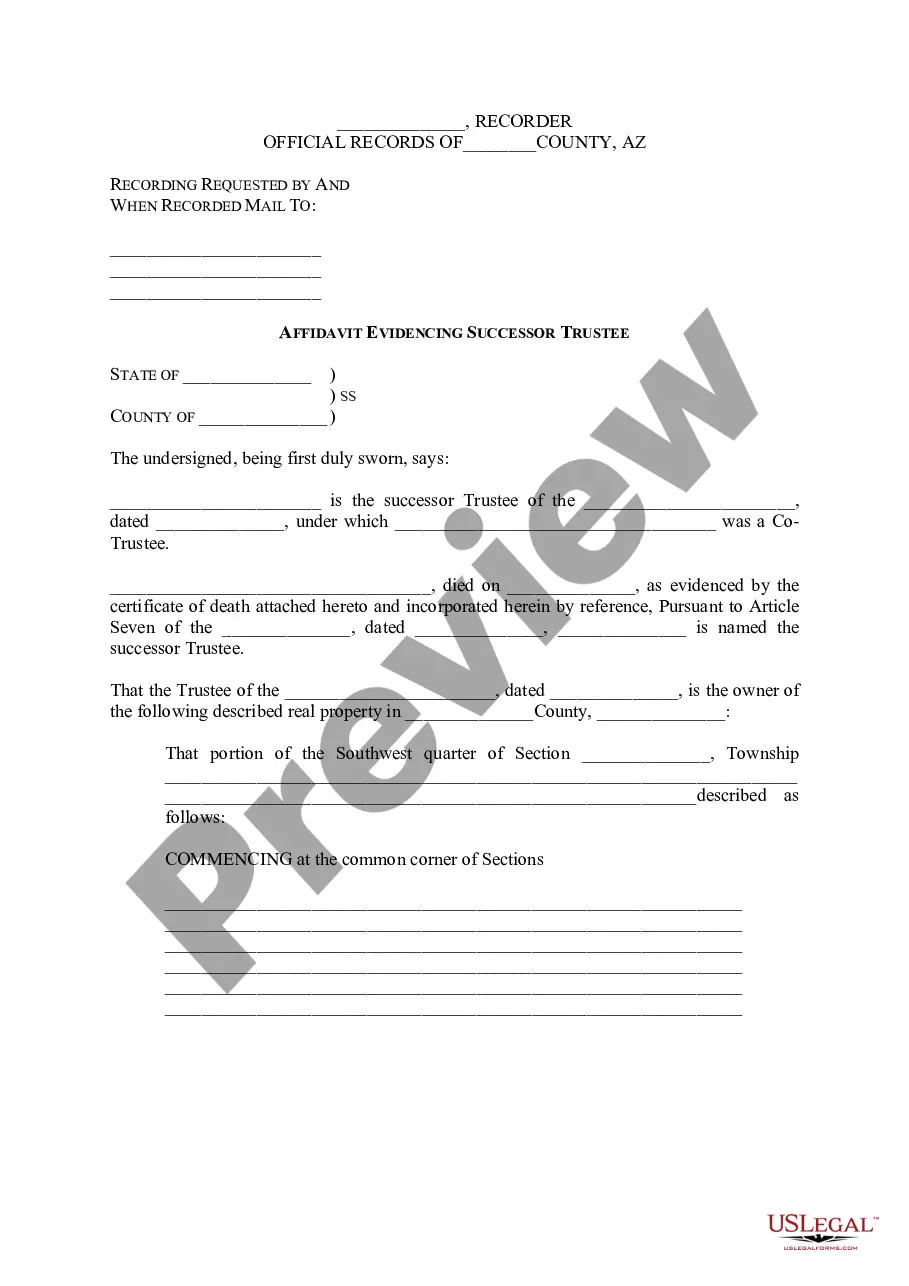
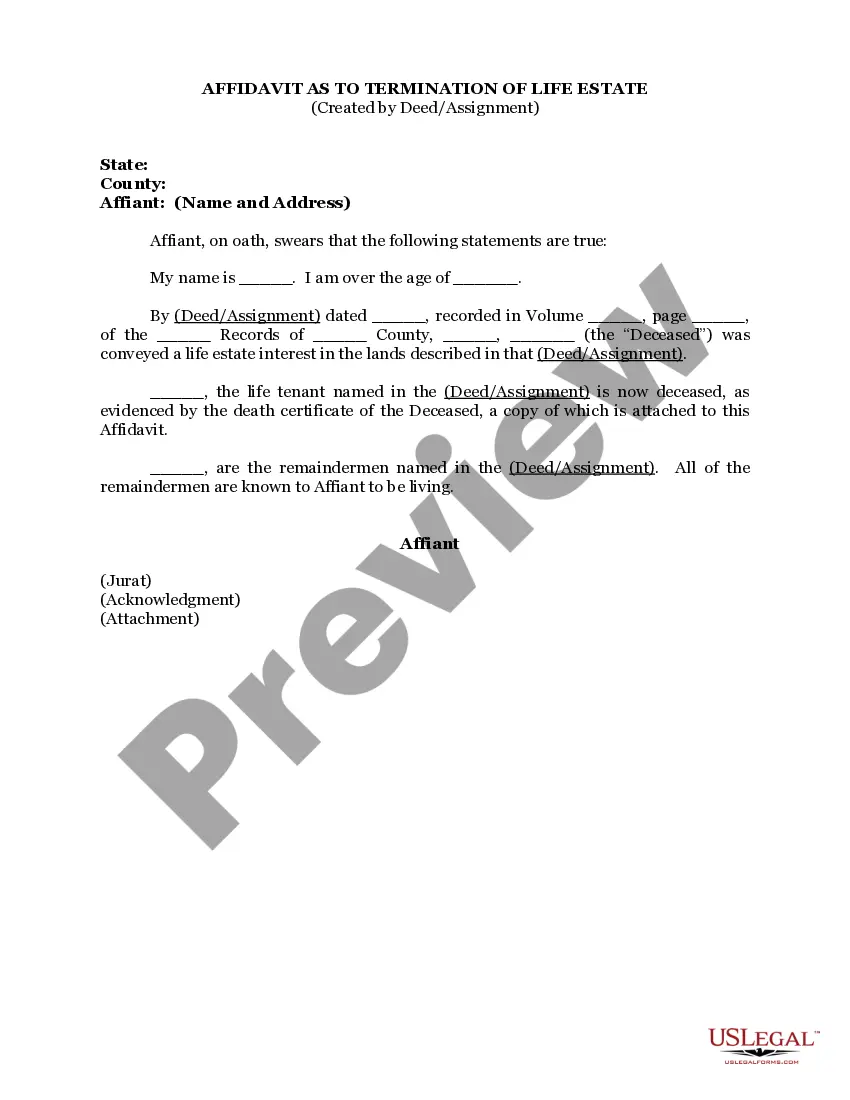
How to fill out Affidavit As To Termination Of Life Estate Created By Deed / Assignment?
- If you are a returning user, log in to your account and directly download the required form template by clicking the Download button after ensuring your subscription remains active.
- For first-time users, begin by reviewing the Preview mode and form description to confirm you have selected a document that aligns with your specific needs and adheres to local jurisdiction standards.
- Should you need a different template, utilize the Search tab to find alternatives that might suit your requirements better before proceeding.
- Once you have identified the necessary document, select the Buy Now button and choose your preferred subscription plan; creating an account is essential to access the library.
- Complete your transaction by entering your payment details, either via credit card or PayPal, based on your chosen subscription option.
- Finally, download the form to your device for completion; you can revisit it whenever necessary through the My Forms section in your profile.
In conclusion, US Legal Forms simplifies the process of acquiring legal documents, making it accessible for both individuals and legal professionals. Their extensive library and support services ensure that you can create precise and legally sound documents with ease. Ready to get started? Access US Legal Forms today!
Form popularity
FAQ
To protect your estate from creditors, consider utilizing legal strategies like establishing trusts or setting up a solid estate plan. These tools can separate your assets from personal liabilities. It’s wise to talk to an attorney who can guide you through the specific steps based on your situation. Remember, understanding how a life estate is terminated can also play an essential role in your overall estate protection strategy.
Whether a life estate is protected from creditors varies based on state law and the nature of the debts. Generally, a life estate may offer some protection, but it is not absolute. For instance, some creditors can still claim against the property if the life tenant has outstanding debts. Knowing how a life estate is terminated can protect your rights, so seeking professional advice is often beneficial.
One downside of a life estate is that it can complicate the transfer of property. When a life estate exists, the rights of the life tenant and the remaindermen can create conflicts. Additionally, if you wish to sell or mortgage the property, you may need consent from the remaindermen. Ultimately, understanding how a life estate is terminated is crucial to navigating these challenges.
To remove a life estate from a deed following the death of the life tenant, the remainderman should consult with a legal professional to prepare a new deed. This process involves formally recording the new deed with local authorities to reflect the full transfer of ownership. This action is crucial to clear any confusion about property rights. Knowing how a life estate is terminated streamlines this removal process effectively.
The right to property after the termination of a life estate is called a remainder interest. This interest belongs to the remainderman, who receives full ownership upon the life tenant's death or upon the termination of the estate. Understanding this concept can help you plan effectively for future property needs. Learning how a life estate is terminated reveals the transition of property rights in clear terms.
A life estate lasts for the duration of the life tenant's lifetime. Once the life tenant passes away, the life estate concludes, and the property reverts to the remainderman. This structure allows for clear planning of property succession. Grasping how a life estate is terminated ensures that all parties are aware of their rights and responsibilities regarding timelines.
When the life tenant dies, the life estate automatically terminates. The property then transfers directly to the remainderman, who gains full ownership rights without needing probate. This seamless transition underscores one of the key benefits of life estates. Understanding how a life estate is terminated helps clarify property ownership after death.
Yes, foreclosure can occur on a life estate if the life tenant defaults on obligations such as mortgage payments. However, the remainderman’s interest in the property is protected until the life tenant passes away or voluntarily terminates the life estate. It's essential to consult a legal expert to navigate this complex situation. Knowing how a life estate is terminated can aid in defining your rights in foreclosure cases.
To terminate a life estate, the life tenant must formally surrender their interest in the property, or both the life tenant and the remainderman can agree to sell or transfer the property. An agreement document should be executed to indicate this mutual decision. In some cases, a court may be involved to finalize the termination process, especially if disputes arise. Understanding how a life estate is terminated helps ensure clarity in property ownership.
A life estate may be deemed invalid if it does not meet certain legal requirements, such as lacking clear intent or failing to properly describe the property. Additionally, if the parties involved were not legally capable of creating the life estate, it may also be considered invalid. Familiarity with how a life estate is terminated can help avoid future complications in property ownership.