Transfer On Death Accounts With Probate
Description

Get your form ready online
Our built-in tools help you complete, sign, share, and store your documents in one place.
Make edits, fill in missing information, and update formatting in US Legal Forms—just like you would in MS Word.
Download a copy, print it, send it by email, or mail it via USPS—whatever works best for your next step.
Sign and collect signatures with our SignNow integration. Send to multiple recipients, set reminders, and more. Go Premium to unlock E-Sign.
If this form requires notarization, complete it online through a secure video call—no need to meet a notary in person or wait for an appointment.
We protect your documents and personal data by following strict security and privacy standards.

Make edits, fill in missing information, and update formatting in US Legal Forms—just like you would in MS Word.

Download a copy, print it, send it by email, or mail it via USPS—whatever works best for your next step.

Sign and collect signatures with our SignNow integration. Send to multiple recipients, set reminders, and more. Go Premium to unlock E-Sign.

If this form requires notarization, complete it online through a secure video call—no need to meet a notary in person or wait for an appointment.

We protect your documents and personal data by following strict security and privacy standards.
Looking for another form?

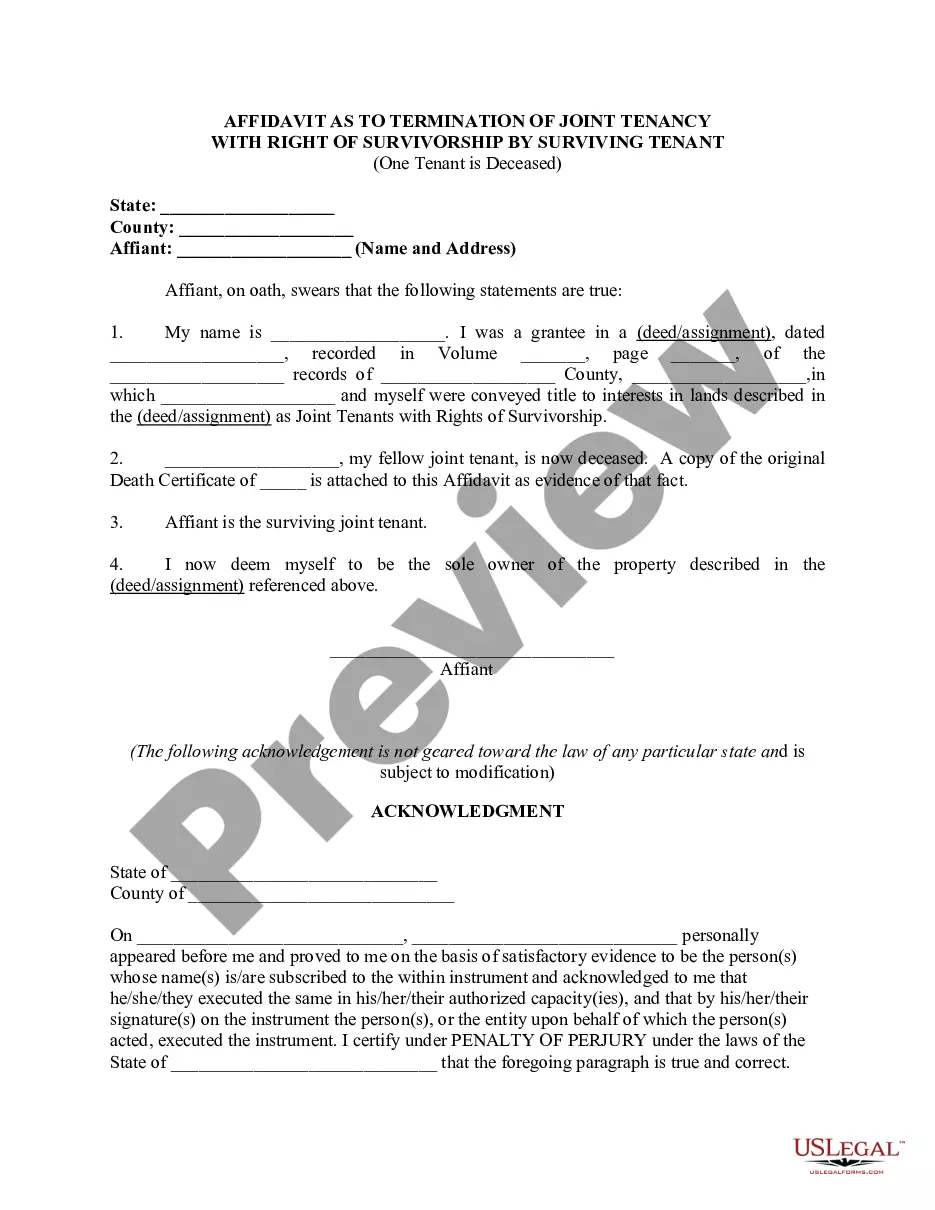
How to fill out Affidavit For Transferring Property After Death In Joint Tenancy With Right Of Survivorship By Surviving Tenant When One Tenant Is Deceased?
Identifying a reliable location to obtain the latest and suitable legal templates constitutes a significant portion of navigating bureaucratic challenges. Selecting the appropriate legal documents necessitates precision and meticulous attention to detail, which is why it's crucial to obtain Transfer On Death Accounts With Probate samples exclusively from credible sources, such as US Legal Forms. An incorrect template can squander your time and delay your current situation. With US Legal Forms, you have minimal concerns.
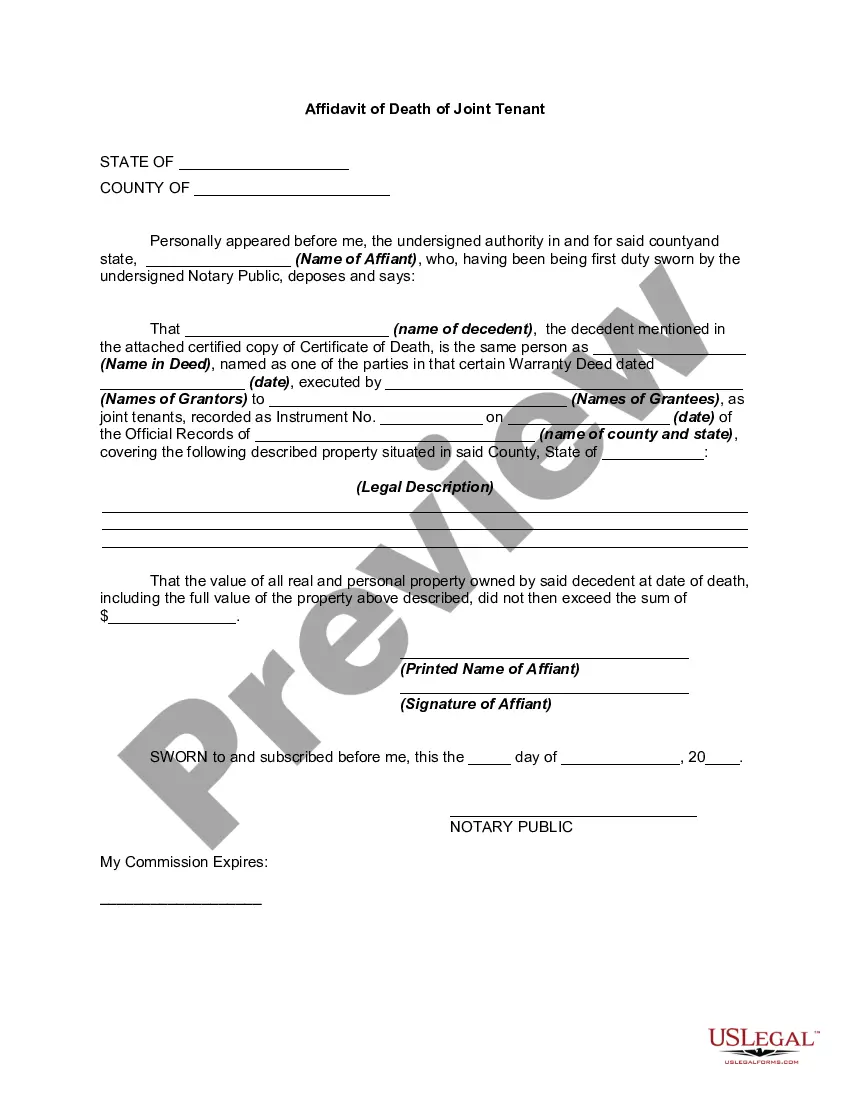
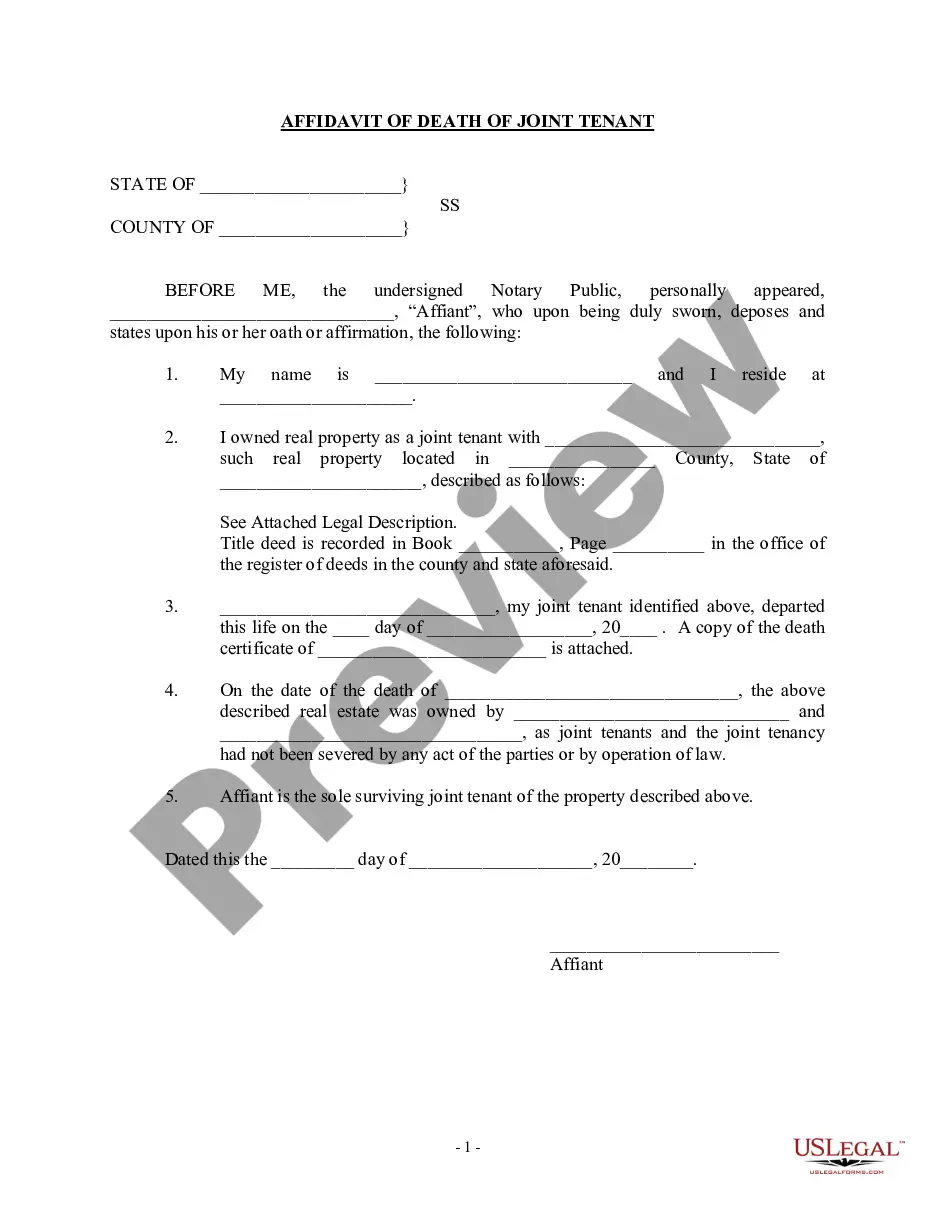
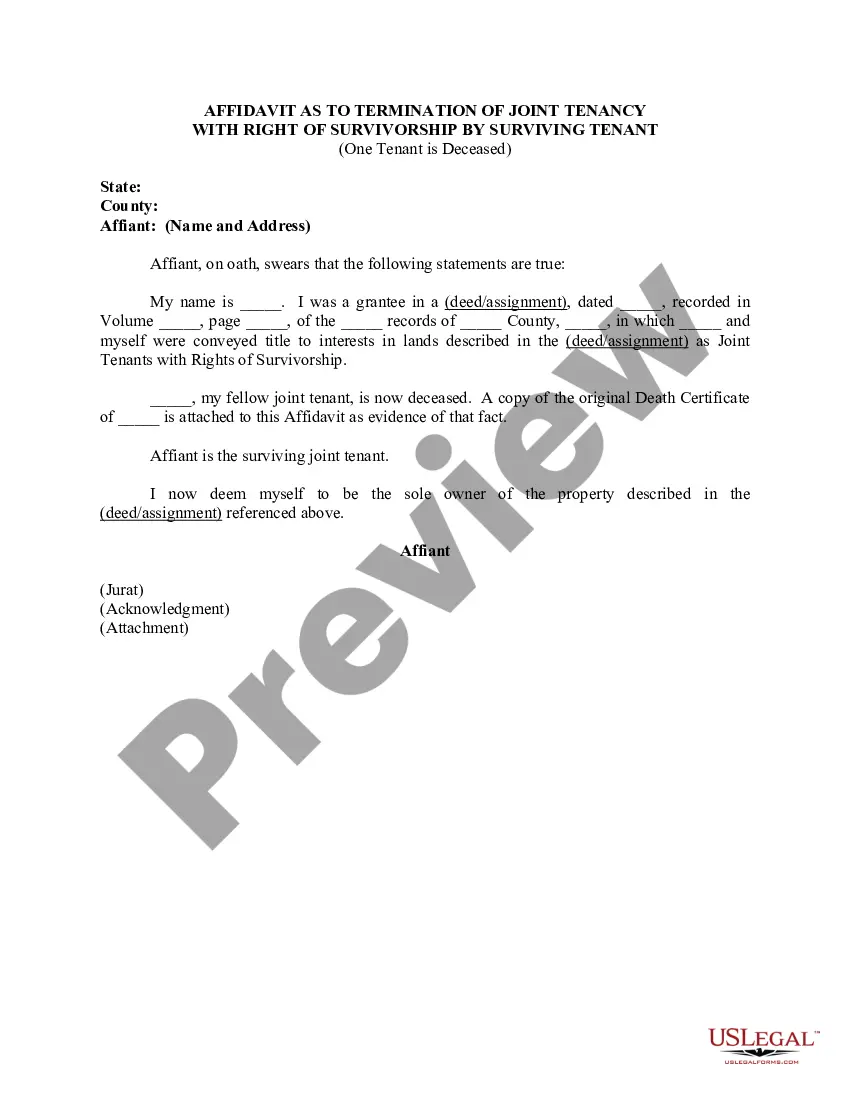
You can access and examine all the details regarding the document’s applicability and significance for your situation and in your jurisdiction.
Eliminate the stress associated with your legal paperwork. Explore the extensive US Legal Forms archive to discover legal samples, assess their relevance to your situation, and download them instantly.
- Utilize the library navigation or search bar to locate your sample.
- Review the form’s details to ensure it meets the requirements of your state and locality.
- View the form preview, if provided, to confirm the template is what you need.
- If the Transfer On Death Accounts With Probate does not suit your needs, continue searching for the correct document.
- When you are certain of the form’s suitability, proceed to download it.
- If you are a registered user, click Log in to verify and access your selected forms in My documents.
- If you have not yet created an account, click Buy now to secure the form.
- Choose the pricing option that aligns with your needs.
- Continue to the registration to complete your purchase.
- Finalize your purchase by selecting a payment method (credit card or PayPal).
- Choose the document format for downloading Transfer On Death Accounts With Probate.
- Once the form is on your device, you can modify it using the editor or print it to fill out manually.
Form popularity
FAQ
While transfer on death accounts with probate have clear advantages, they also come with some drawbacks. One significant concern is that if you do not designate a beneficiary, your assets may end up in probate. Additionally, managing multiple TOD accounts can complicate your overall estate plan. It is essential to weigh these factors and ensure that your decisions align with your overall financial strategy.
Transfer on death accounts with probate offer several key benefits. First, they allow you to designate who will receive your assets without having to go through the lengthy probate process. This can ensure that your chosen beneficiaries receive funds quickly. Additionally, a TOD account can help maintain privacy since probate proceedings are public records, while your TOD transactions remain private.
Transfer on death accounts with probate hold distinct advantages over traditional beneficiary accounts. While both allow you to transfer assets, a TOD account can simplify the process and often avoid probate entirely. This can result in faster access to funds for your loved ones. Furthermore, choosing a TOD account can provide you with more control over how and when your assets are distributed.
While transfer on death accounts with probate offer benefits, they also come with potential negatives. One downside is the lack of flexibility, as once you designate a beneficiary, changing it can require more legal steps than simply updating a will. Additionally, if the beneficiary predeceases you without a secondary designation, the account could complicate the distribution, leading to unintended delays.
The choice between transfer on death accounts with probate and designated beneficiaries often depends on your specific circumstances and estate plans. Tod accounts provide a clear method for asset transfer, while beneficiary designations can apply to various asset types, including life insurance and retirement accounts. Evaluate your assets and how you want them distributed to determine which option best suits your needs.
Transfer on death accounts with probate do not inherently avoid inheritance tax; the tax implications depend on your state's laws and the value of the estate. Beneficiaries may still be subject to inheritance taxes based on their relationship to the deceased and the amount they receive. To navigate these complexities effectively, consider consulting a tax professional to understand the tax ramifications associated with TOD accounts.
Transfer on death accounts with probate can be a good idea for many individuals as they provide a straightforward way to transfer assets to beneficiaries without extensive probate proceedings. These accounts allow you to retain control over your assets during your lifetime and simplify the transition after death. However, it's crucial to consider your unique financial situation and consult with a financial advisor to ensure this option aligns with your estate planning goals.
Transfer on Death (TOD) accounts, while beneficial, have some drawbacks. They may pass assets directly to beneficiaries, potentially leading to unintended consequences in family dynamics or estate plans. Additionally, if a beneficiary is unable to manage inherited assets, it could create financial strain or disputes.
Assets such as Transfer on Death (TOD) accounts, joint tenancy properties, and life insurance proceeds typically do not go through probate. These assets have designated beneficiaries who receive them directly. This feature makes them highly efficient for estate planning.
While an attorney is not required to complete a Transfer on Death (TOD) deed, having professional guidance can be beneficial. An attorney can assist in ensuring that the deed is completed correctly, thereby preventing potential complications in the future. Services like UsLegalForms can also help you navigate this process smoothly without legal representation.