Motion For Summary Judgment In Lieu Of Complaint
Description
Get your form ready online
Our built-in tools help you complete, sign, share, and store your documents in one place.
Make edits, fill in missing information, and update formatting in US Legal Forms—just like you would in MS Word.
Download a copy, print it, send it by email, or mail it via USPS—whatever works best for your next step.
Sign and collect signatures with our SignNow integration. Send to multiple recipients, set reminders, and more. Go Premium to unlock E-Sign.
If this form requires notarization, complete it online through a secure video call—no need to meet a notary in person or wait for an appointment.
We protect your documents and personal data by following strict security and privacy standards.

Make edits, fill in missing information, and update formatting in US Legal Forms—just like you would in MS Word.

Download a copy, print it, send it by email, or mail it via USPS—whatever works best for your next step.

Sign and collect signatures with our SignNow integration. Send to multiple recipients, set reminders, and more. Go Premium to unlock E-Sign.

If this form requires notarization, complete it online through a secure video call—no need to meet a notary in person or wait for an appointment.

We protect your documents and personal data by following strict security and privacy standards.
Looking for another form?
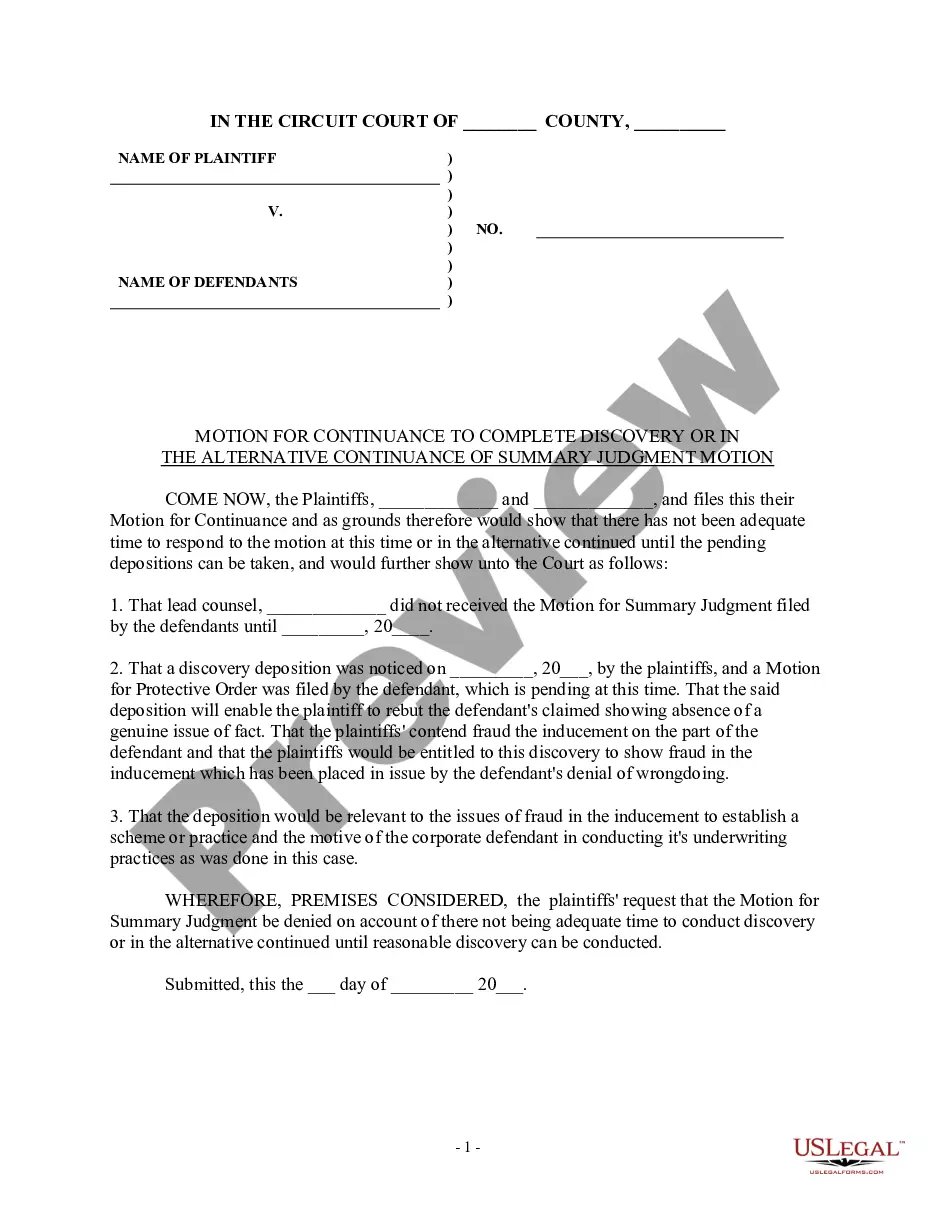
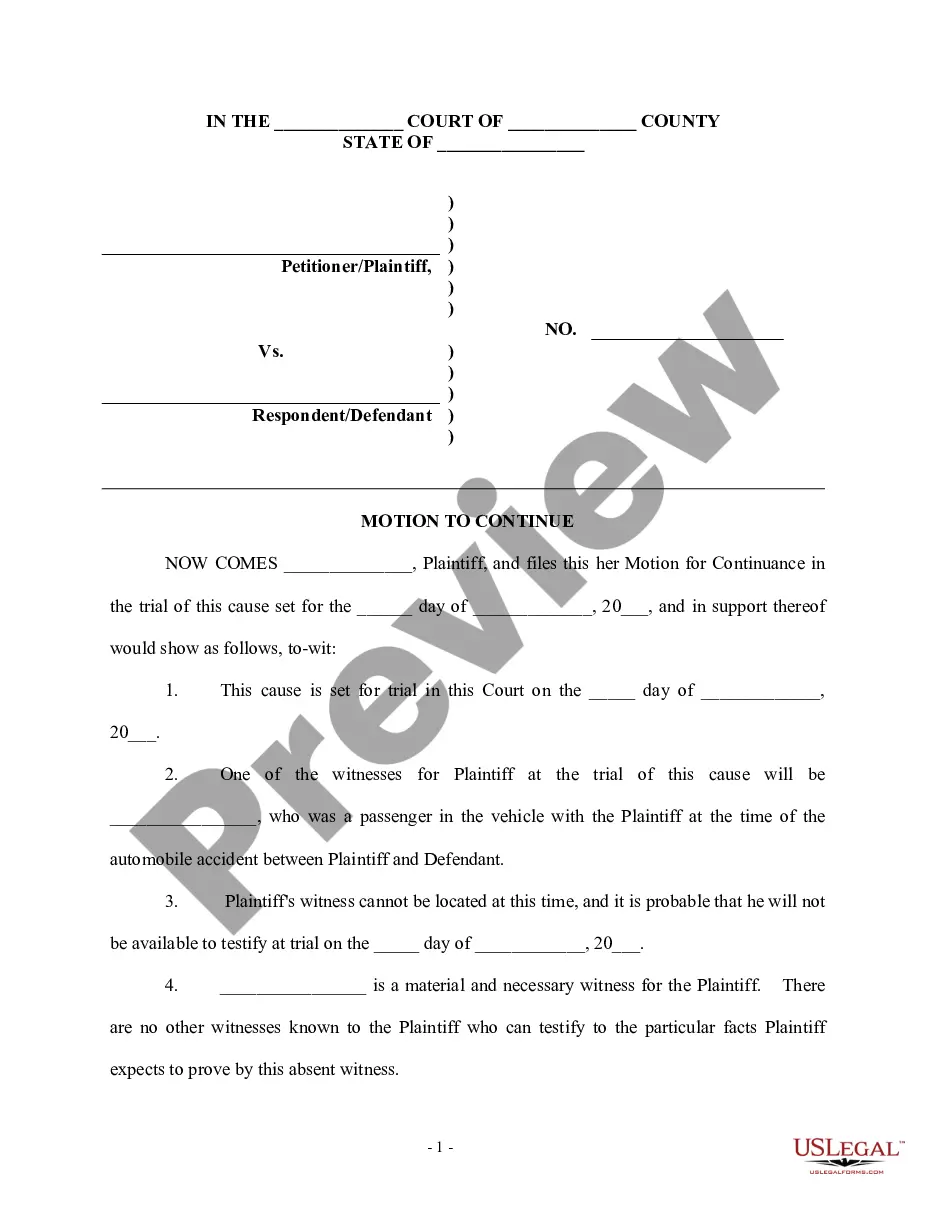
How to fill out Motion For Continuance To Complete Discovery Or In The Alternative Continuance Of Summary Judgment Motion?
Accessing samples of legal documents that comply with federal and local regulations is essential, and the internet provides numerous options to choose from.
However, why spend time searching for the appropriate Motion For Summary Judgment In Lieu Of Complaint template online when the US Legal Forms online library has collected such forms in one location.
US Legal Forms is the largest online legal repository with more than 85,000 fillable templates created by attorneys for various professional and personal circumstances.
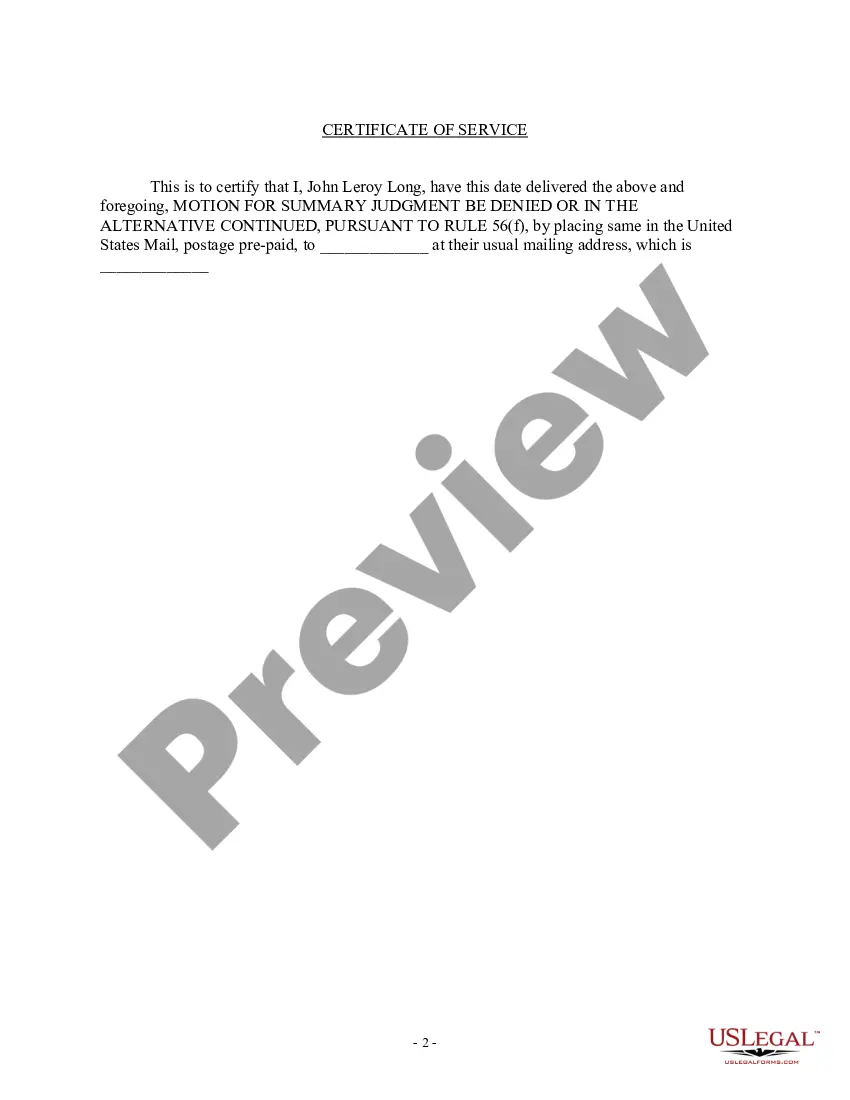
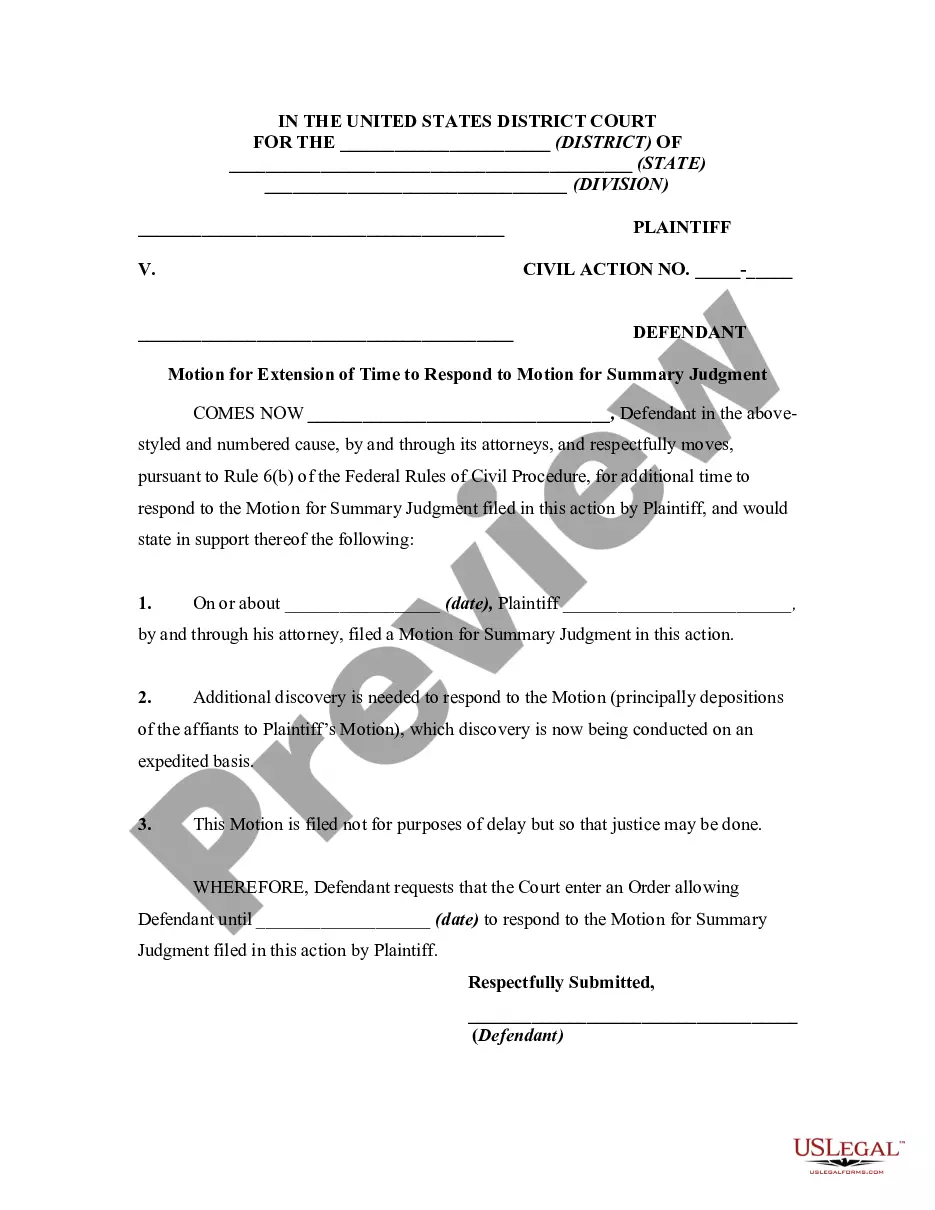
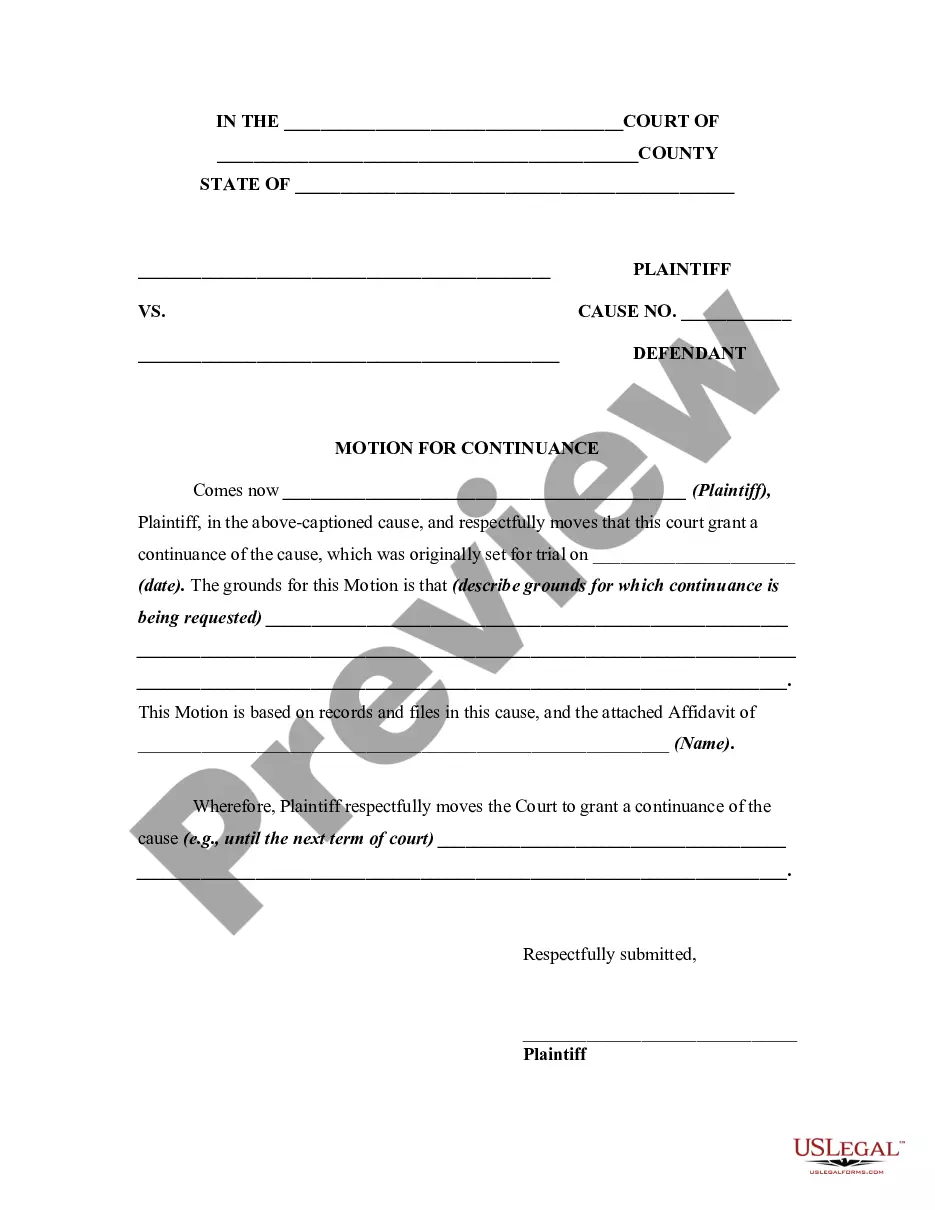
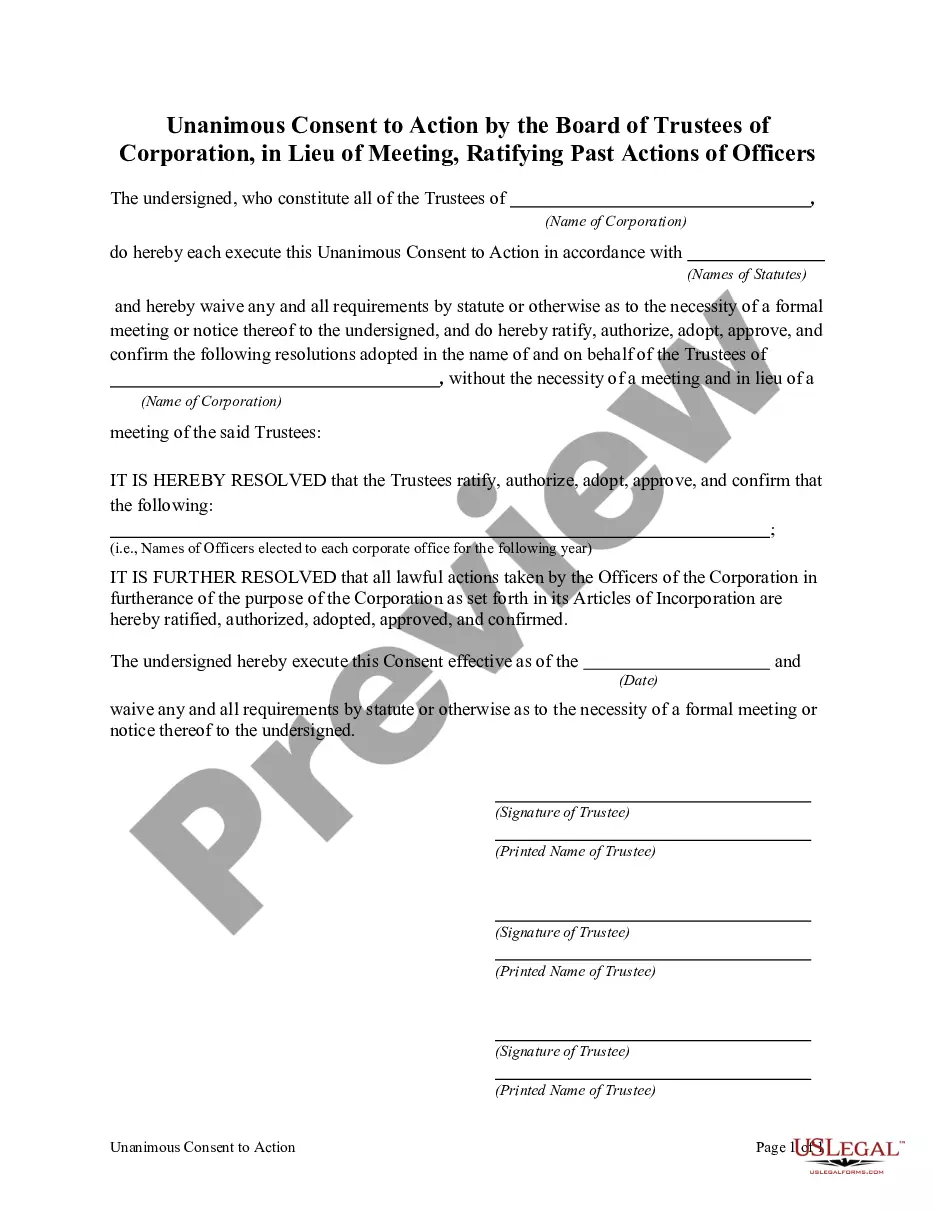
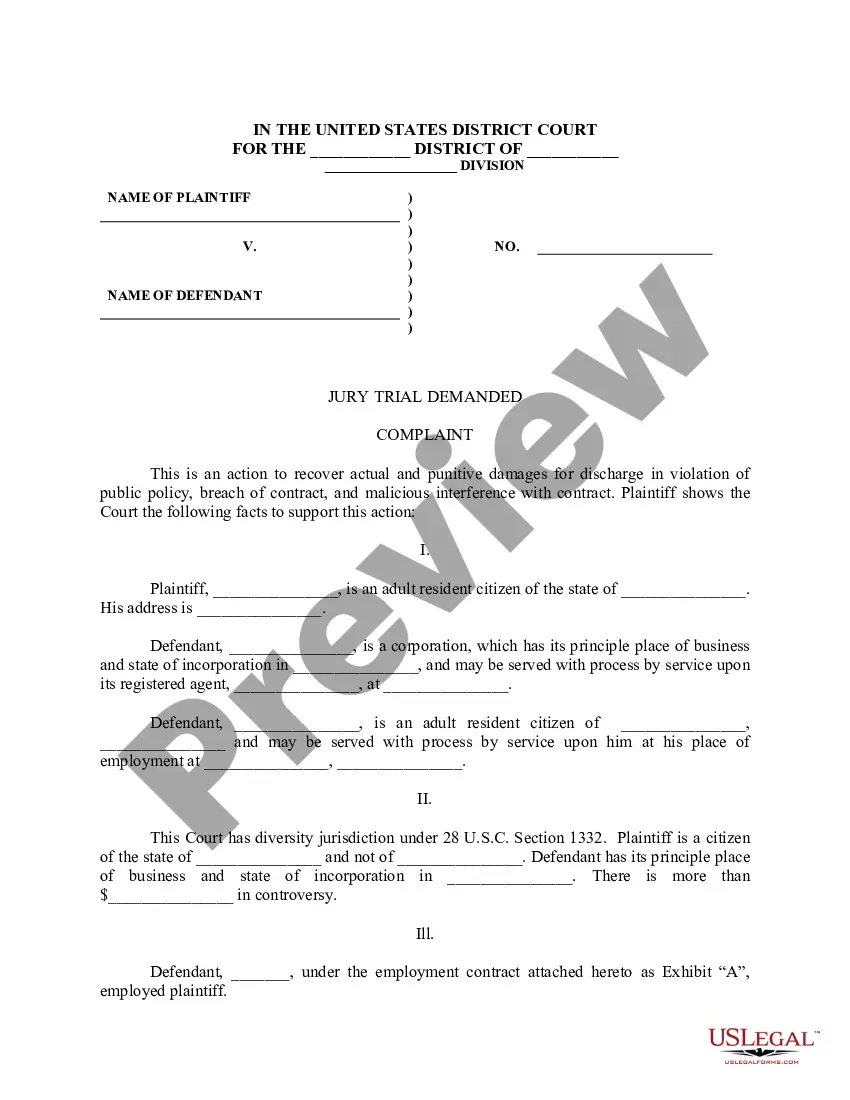
Review the template using the Preview feature or via the text description to ensure it fits your requirements.
- They are easy to navigate, with all documents categorized by state and intended use.
- Our experts keep abreast of changes in legislation, ensuring that your documents are always current and compliant when you obtain a Motion For Summary Judgment In Lieu Of Complaint from our site.
- Acquiring a Motion For Summary Judgment In Lieu Of Complaint is fast and simple for both existing and new users.
- If you already possess an account with an active subscription, Log In and download the document sample you need in your desired format.
- If you are a newcomer to our website, follow the steps outlined below.
Form popularity
FAQ
Yes, you can file a motion to dismiss in lieu of an answer under specific circumstances. This motion allows you to challenge the legal sufficiency of a complaint before addressing its merits. It can be an effective strategy if you believe that the plaintiff's claims lack foundational support. Resources available through US Legal Forms can guide you in determining when this is the best approach for your case.
The odds of winning a motion for summary judgment largely depend on the strength of the evidence presented and the clarity of your arguments. Courts typically grant summary judgment in cases where there is no genuine issue of material fact. Therefore, establishing a solid factual basis is essential to increase your chances. Leveraging resources like those from US Legal Forms can significantly improve your understanding and strategy.
Writing a good motion for summary judgment involves clearly articulating your arguments based on factual evidence. You should clearly outline the key issues, support your claims with relevant facts and legal precedents, and ensure proper formatting according to court rules. Remember, the goal is to show that there is no genuine dispute and you are entitled to judgment as a matter of law. Utilizing US Legal Forms can provide templates and advice to enhance your writing.
To answer a plaintiff's motion for summary judgment, you must present clear evidence that disputes the claims made against you. This evidence typically includes affidavits, documents, and depositions that counter the plaintiff's assertions. It’s crucial to respond comprehensively to establish that there are genuine issues of material fact. Consulting the resources available on the US Legal Forms platform can guide you through this process.
Evidence used in a motion for summary judgment may include depositions, documents, affidavits, and discovery materials that articulate the facts of the case. Each piece of evidence must be relevant and admissible to support the arguments made by the moving party. Understanding how to compile and present this evidence is key when submitting a motion for summary judgment in lieu of complaint.
To defeat a motion for summary judgment, you must demonstrate the existence of factual disputes that require a trial. Presenting credible evidence, such as affidavits, depositions, and documents, can be pivotal in achieving this. You can leverage services like USLegalForms to strengthen your case and ensure you provide sufficient support for your arguments.
A court may deny a motion for summary judgment if there is a material fact that remains in dispute or if the law does not favor the moving party. Additionally, if the evidence presented raises reasonable doubts about the conclusions drawn, the court will likely deny the motion. Understanding these circumstances can guide your strategy when considering a motion for summary judgment in lieu of complaint.
A plaintiff's opposition to a motion for summary judgment typically involves presenting evidence and arguments to show that there are unresolved factual issues. This opposition must be well-articulated and backed by relevant evidence to persuade the court. Tools available through platforms like USLegalForms can help in preparing this critical documentation.
The two types of summary judgment include partial summary judgment and complete summary judgment. Partial summary judgment addresses specific claims or defenses, whereas complete summary judgment resolves all issues in the case. Understanding these distinctions is crucial when you decide on a motion for summary judgment in lieu of complaint.
To argue against a motion for summary judgment effectively, you should focus on establishing that genuine issues of material fact exist. Present counter-evidence and clarify how it contradicts the moving party's claims. Utilizing resources like USLegalForms can aid you in gathering evidence and structuring a strong opposition.