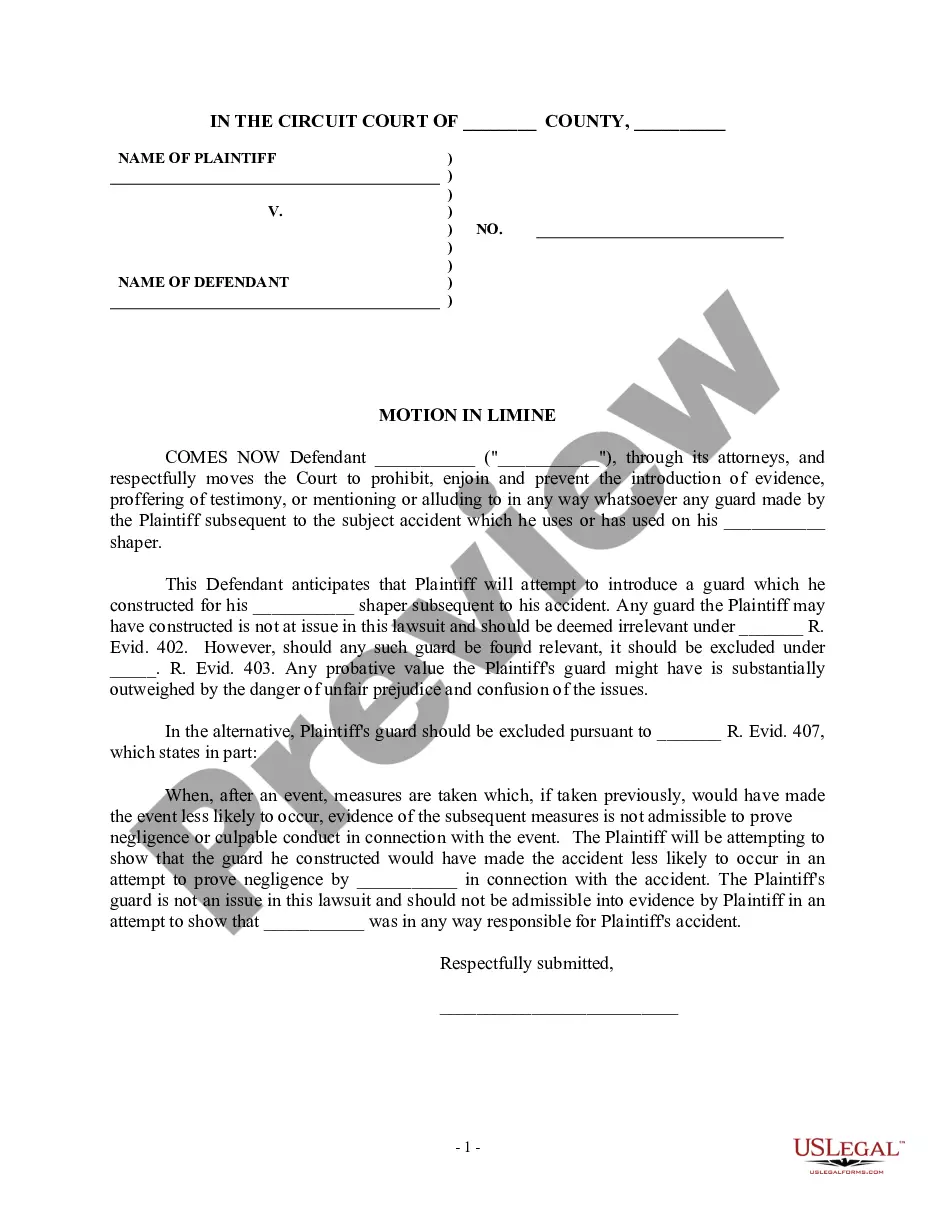
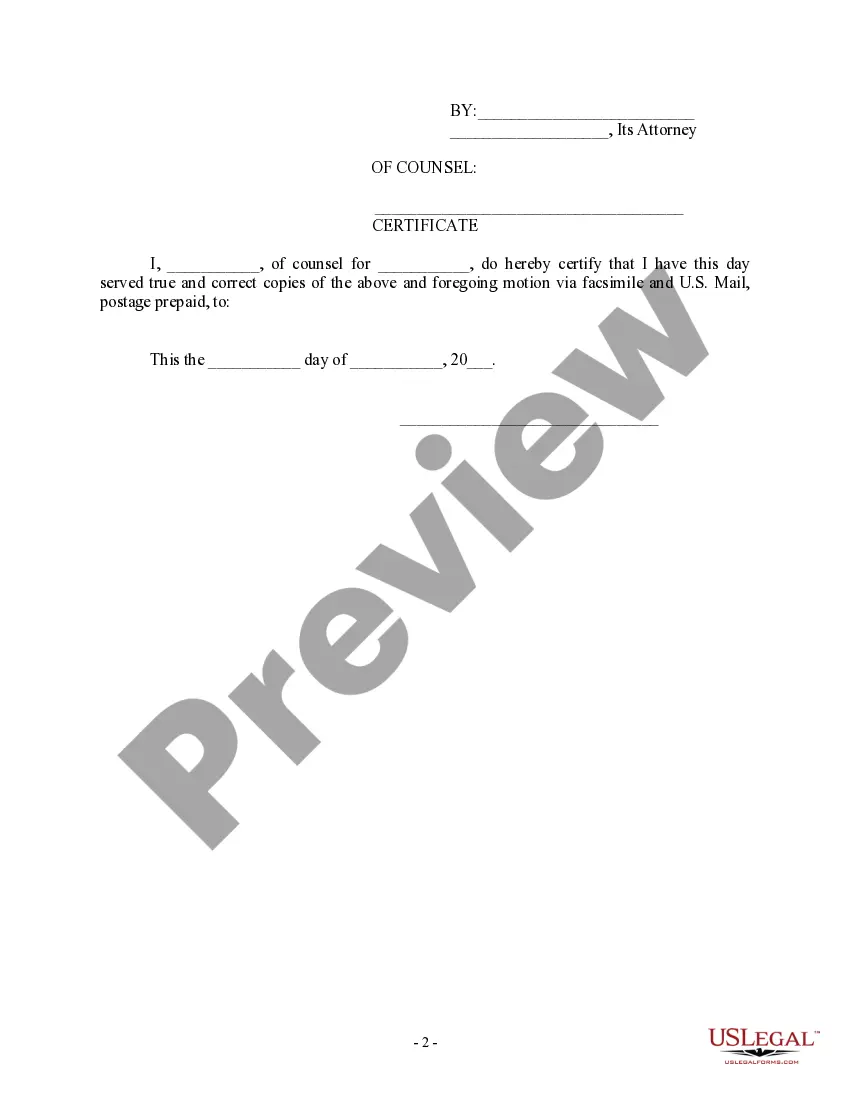
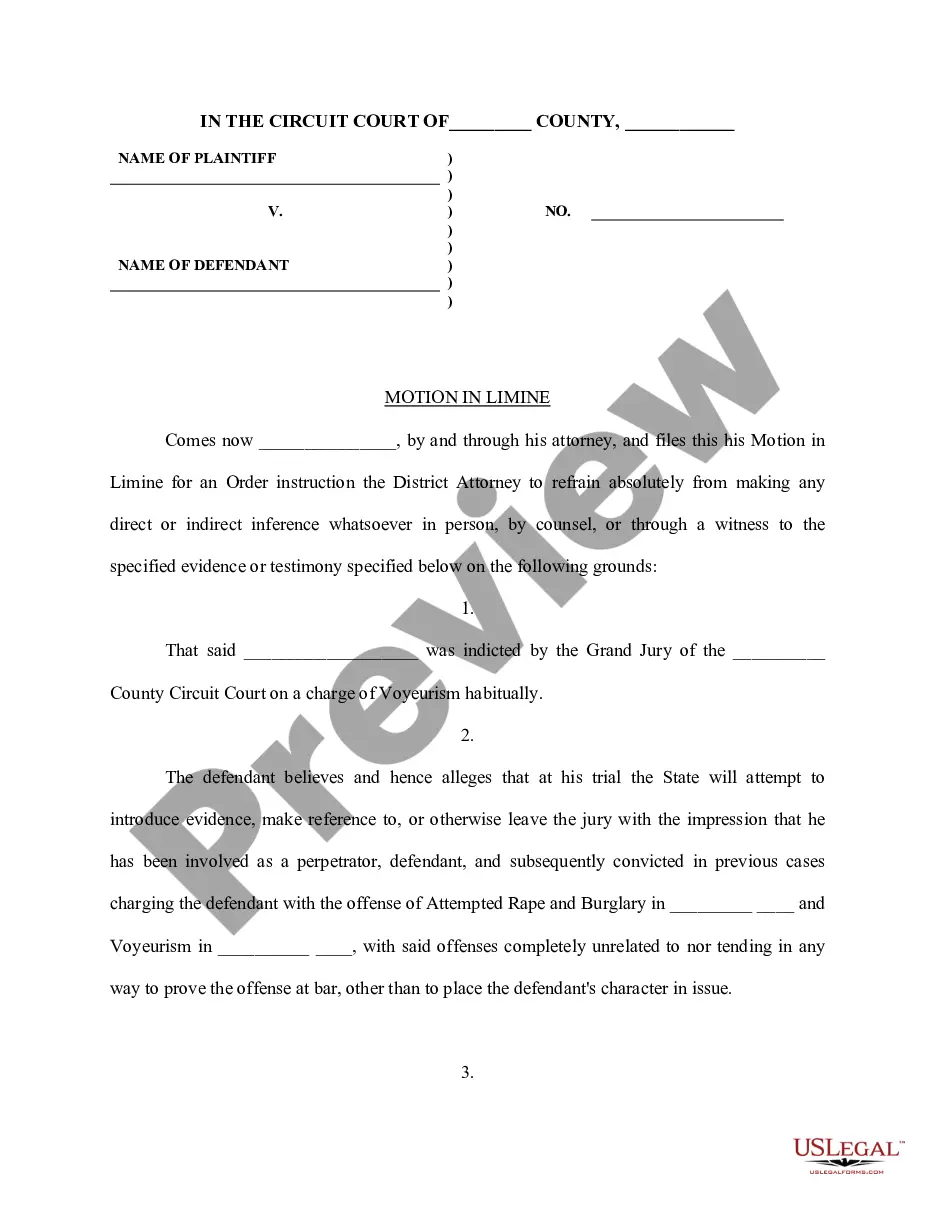
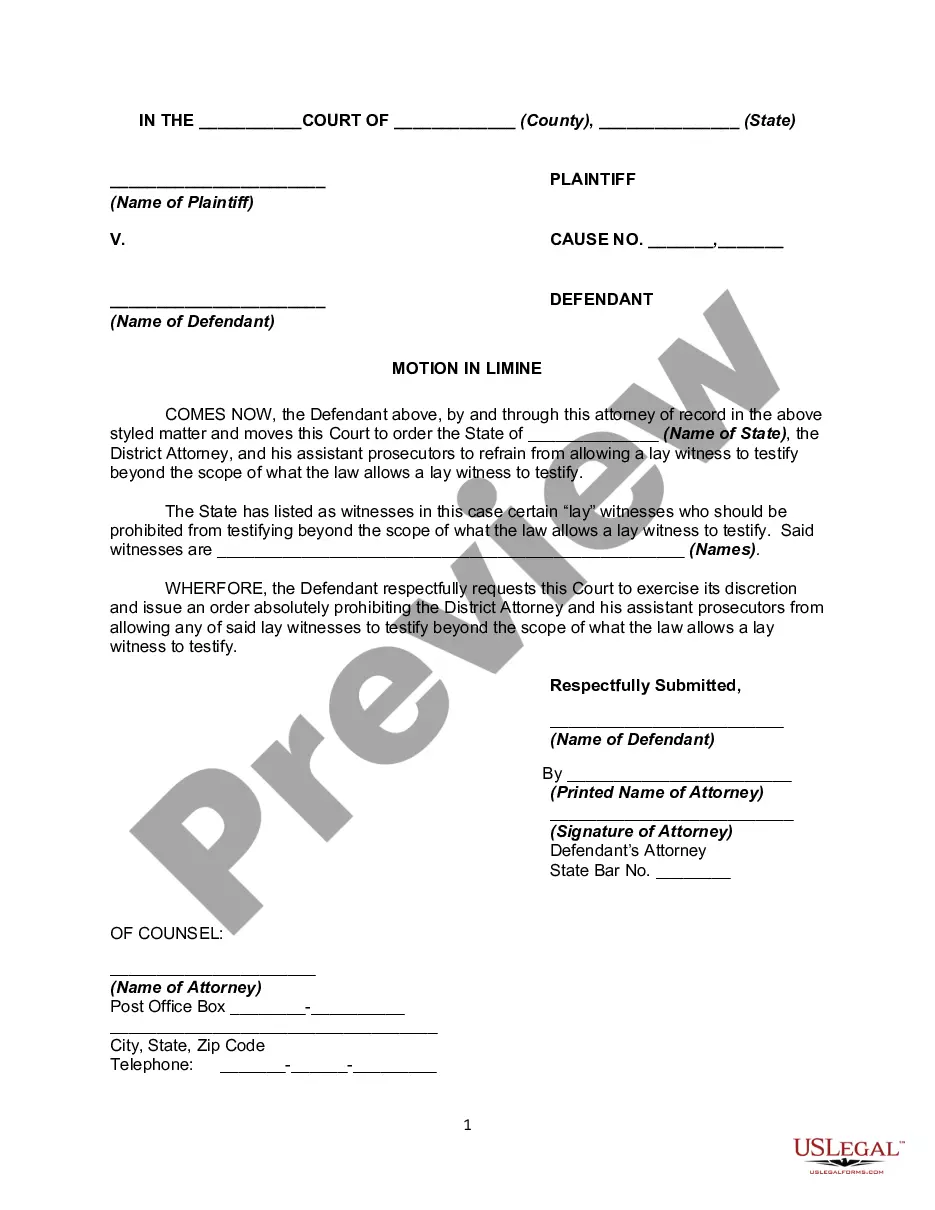
Limine Form Without Evidence
Description
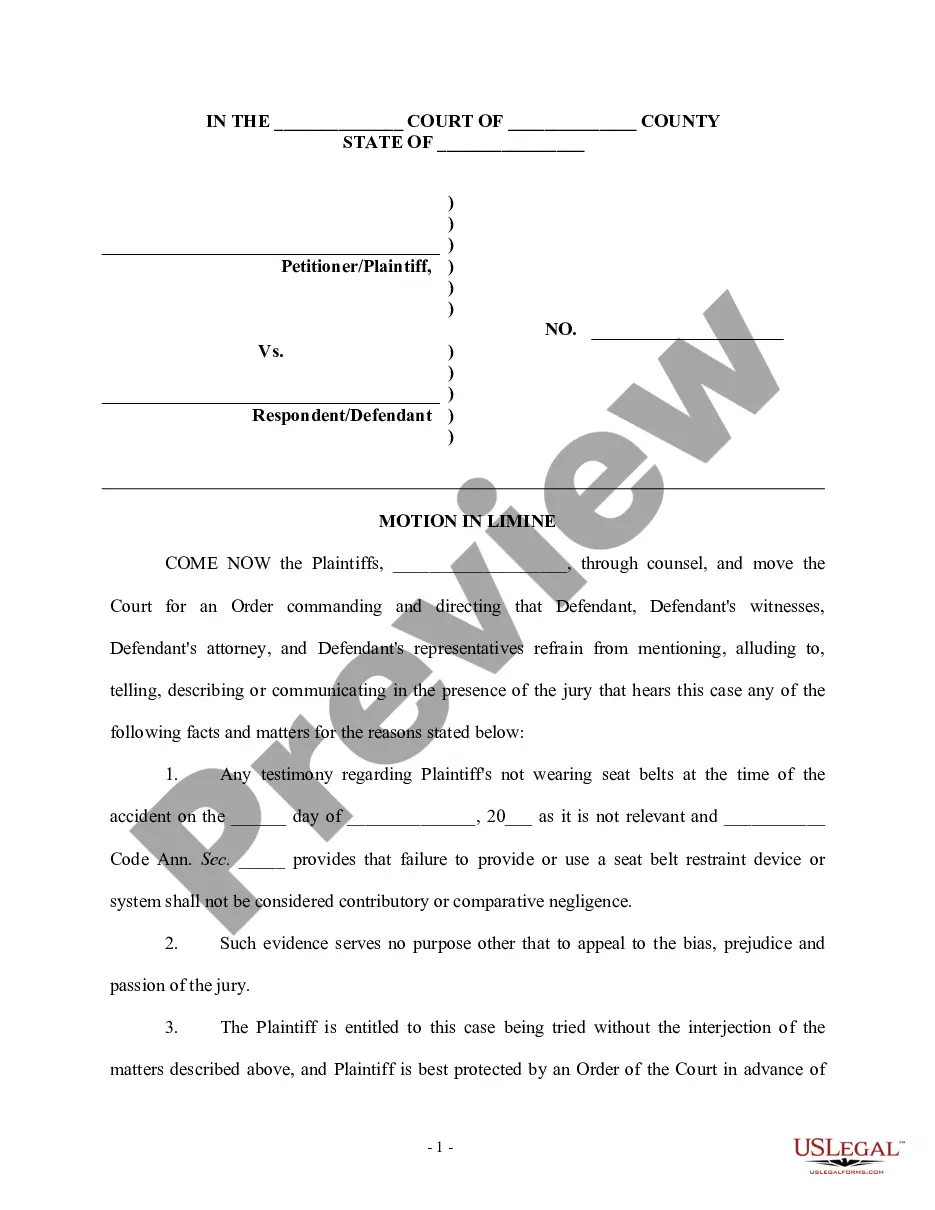
Get your form ready online
Our built-in tools help you complete, sign, share, and store your documents in one place.
Make edits, fill in missing information, and update formatting in US Legal Forms—just like you would in MS Word.
Download a copy, print it, send it by email, or mail it via USPS—whatever works best for your next step.
Sign and collect signatures with our SignNow integration. Send to multiple recipients, set reminders, and more. Go Premium to unlock E-Sign.
If this form requires notarization, complete it online through a secure video call—no need to meet a notary in person or wait for an appointment.
We protect your documents and personal data by following strict security and privacy standards.

Make edits, fill in missing information, and update formatting in US Legal Forms—just like you would in MS Word.

Download a copy, print it, send it by email, or mail it via USPS—whatever works best for your next step.

Sign and collect signatures with our SignNow integration. Send to multiple recipients, set reminders, and more. Go Premium to unlock E-Sign.

If this form requires notarization, complete it online through a secure video call—no need to meet a notary in person or wait for an appointment.

We protect your documents and personal data by following strict security and privacy standards.
Looking for another form?

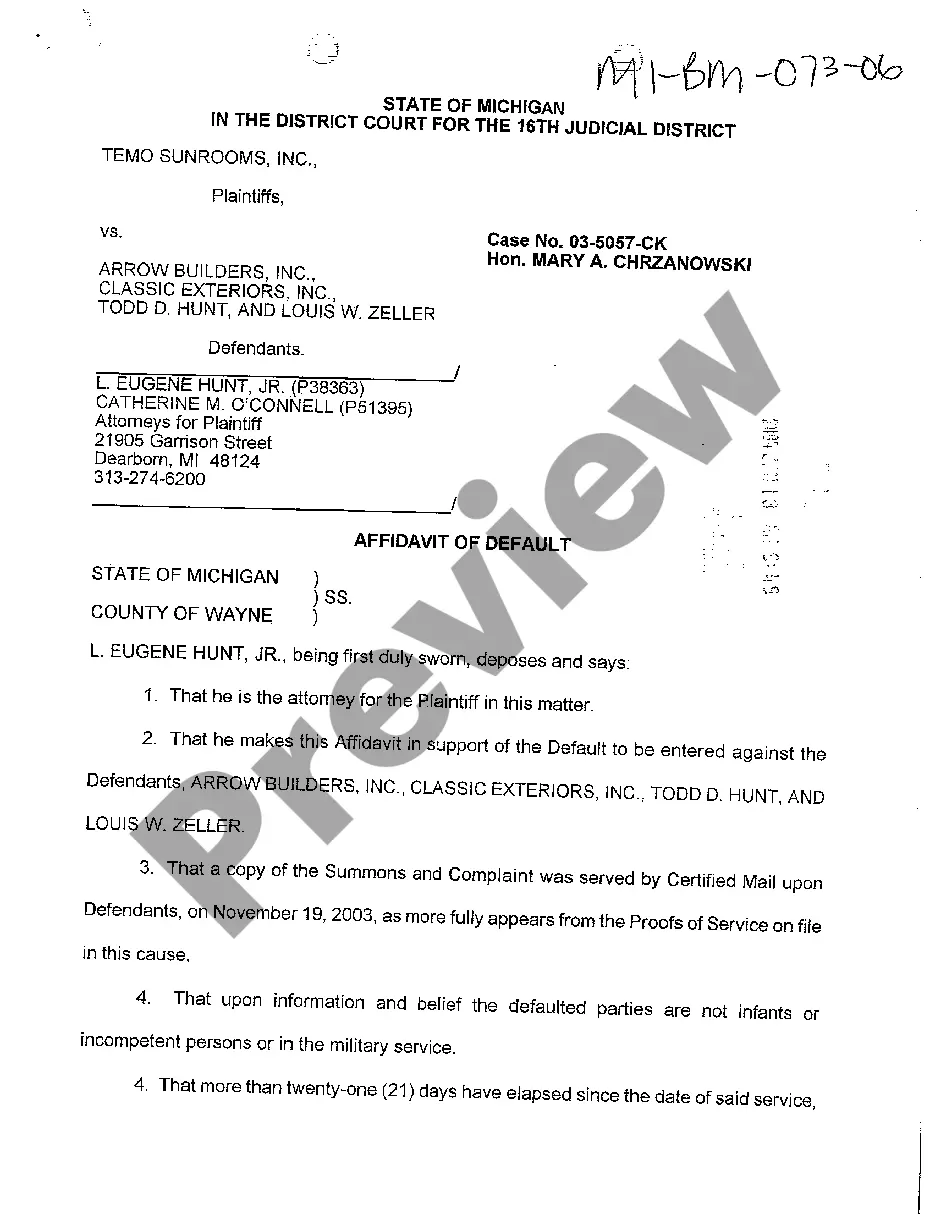

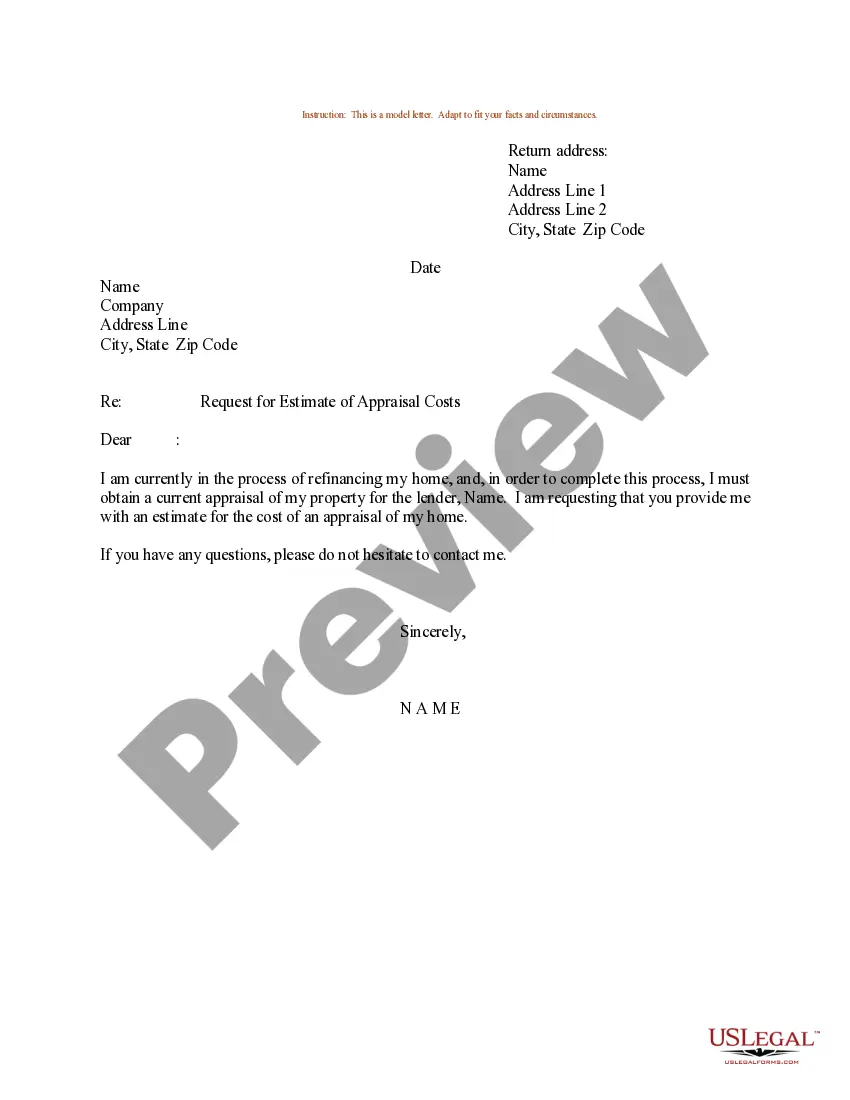
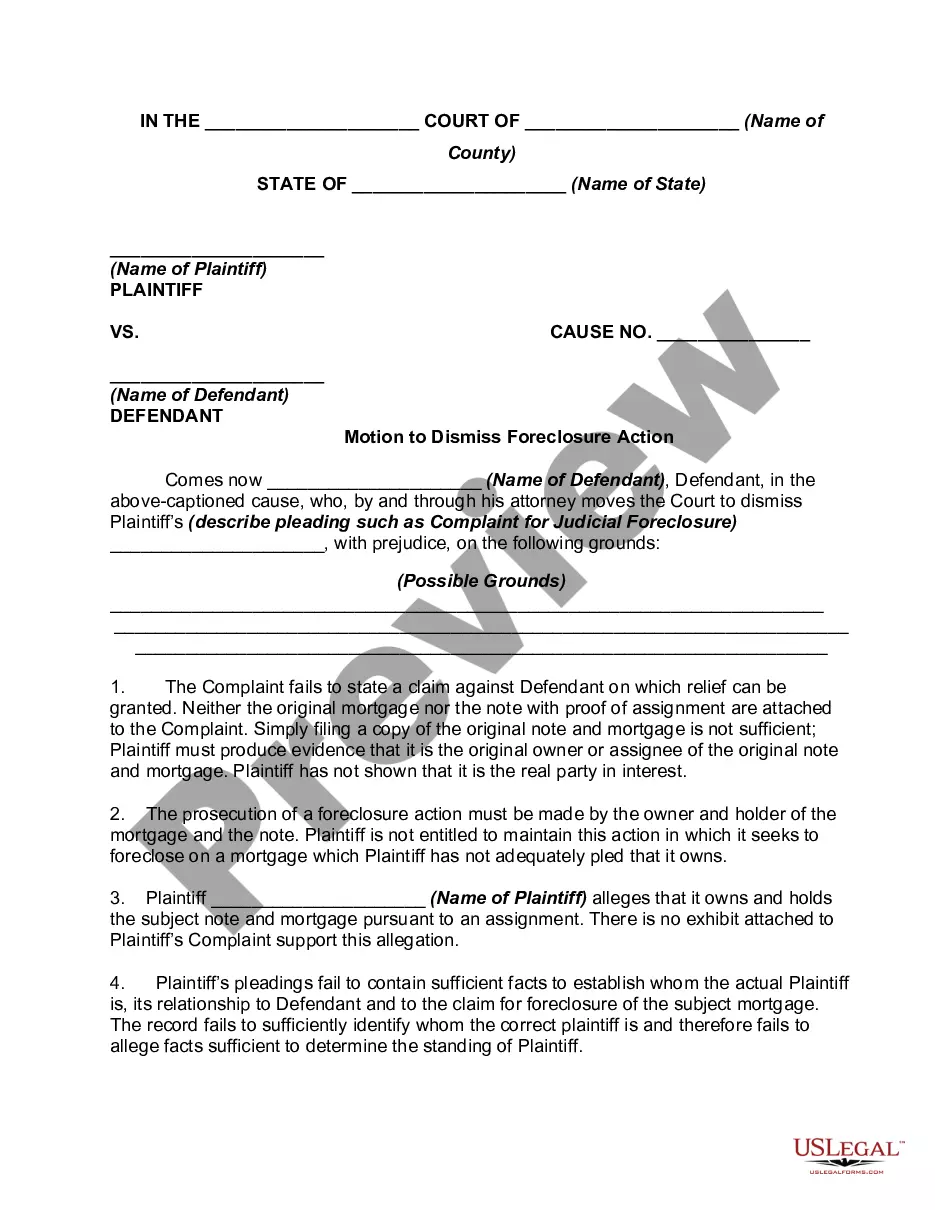

How to fill out Motion In Limine To Prevent Evidence Of Remedial Measures?
Identifying a preferred location to obtain the latest and pertinent legal documents constitutes a significant portion of dealing with bureaucracy.
Locating the appropriate legal files requires accuracy and carefulness, which is why it is essential to source Limine Form Without Evidence only from reliable providers, such as US Legal Forms. An inadequate template will squander your time and delay your current situation.
Eliminate the complications associated with your legal documents. Browse through the extensive US Legal Forms catalog where you can discover legal templates, assess their applicability to your situation, and download them instantly.
- Utilize the catalog navigation or search function to discover your template.
- Access the form’s details to confirm if it meets the mandates of your state and locality.
- Open the form preview, if available, to ensure it's the document you're seeking.
- Return to the search and find the appropriate document if the Limine Form Without Evidence does not satisfy your requirements.
- If you are confident about the form’s applicability, proceed to download it.
- As an authorized user, click Log in to verify and access your chosen forms in My documents.
- If you are yet to create an account, click Buy now to acquire the form.
- Select the pricing package that best aligns with your requirements.
- Proceed to the registration to finalize your purchase.
- Complete your transaction by selecting a payment method (credit card or PayPal).
- Choose the file format for downloading the Limine Form Without Evidence.
- Once you have the form on your device, you can edit it with the editor or print it for manual completion.
Form popularity
FAQ
You should explain why the other side's motion in limine should be denied and why you should be free to introduce the evidence at trial if you choose. Try to support your argument with citations to court rules or to case opinions which support your argument.
Generally, a motion in limine is used to exclude evidence that a party believes to be irrelevant or unfairly prejudicial. Often, motions in limine may also be dispositive in nature by seeking to exclude evidence necessary to prove a key aspect of an opponent's case.
Your motion in limine should be broken into two sections: (1) Factual Background and (2) Argument. The ?Factual Background? section of your Memorandum should include all of the facts necessary for the judge to resolve every issue raised in your motion. appropriate, include procedural posture, as well.
Motions in limine should be carefully drafted to make clear precisely what evidence should be excluded and to explain with as much clarity as possible why the inadmissible evidence is so damaging that its mere mention would be unfairly prejudicial.
A motion in limine is decided by the judge outside of the presence of the jury. The purpose of a motion in limine is to address potentially prejudicial, irrelevant, or inadmissible information that could unduly influence a jury or hinder the fair administration of justice.