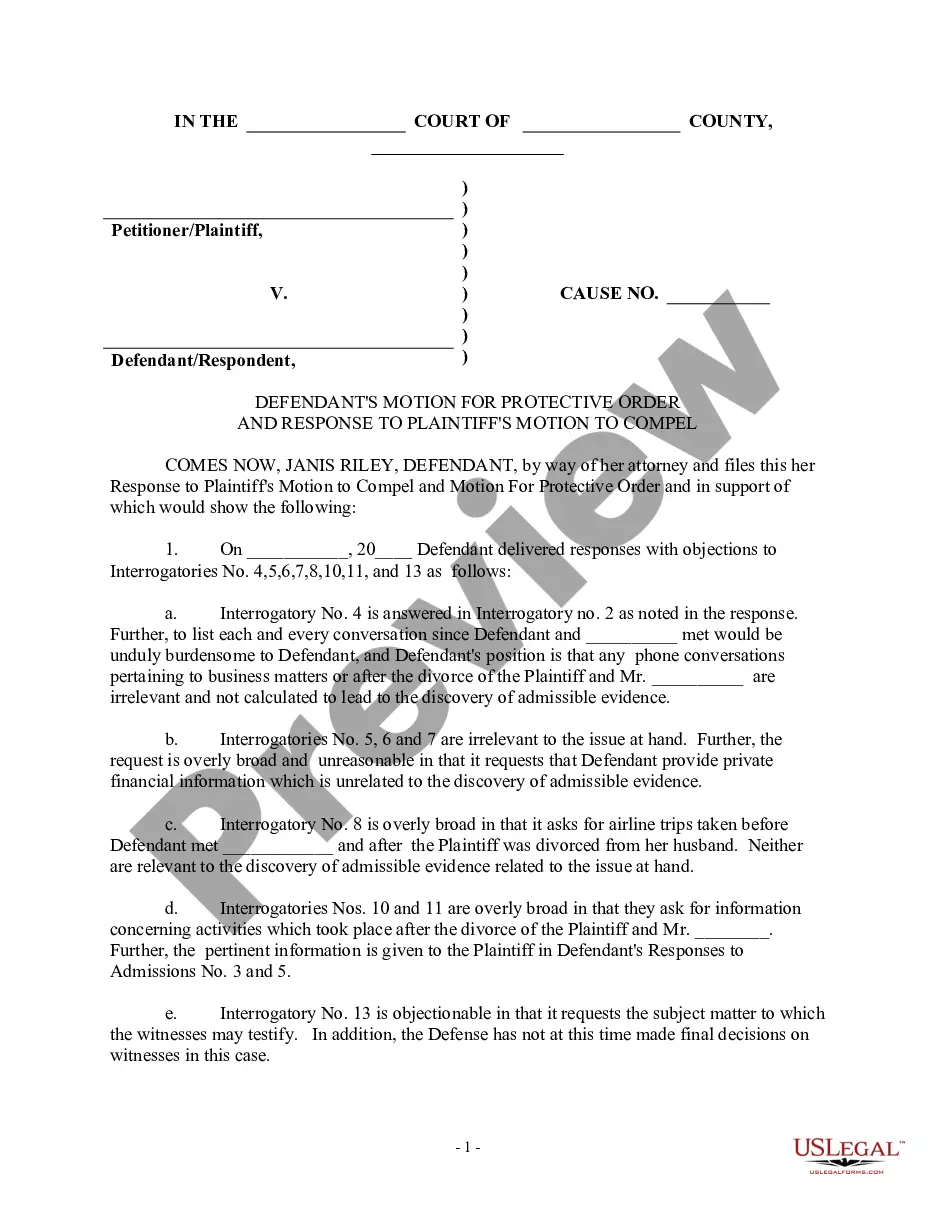
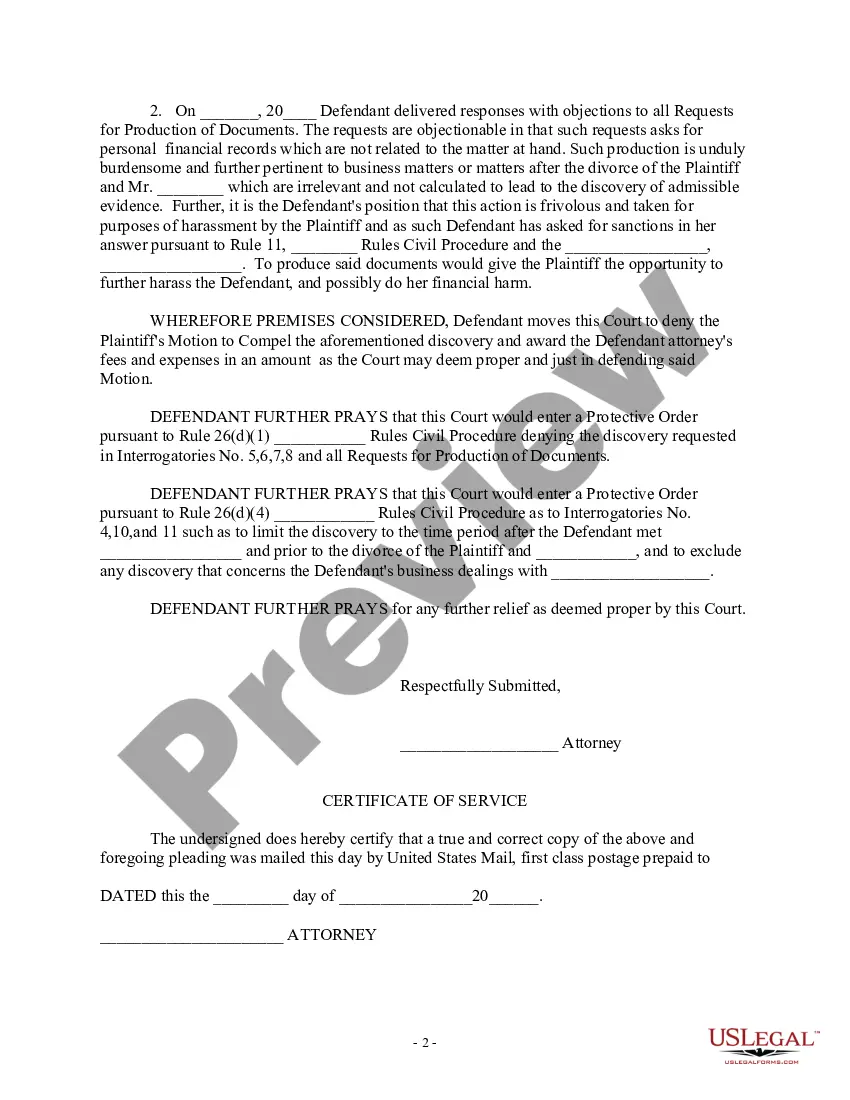
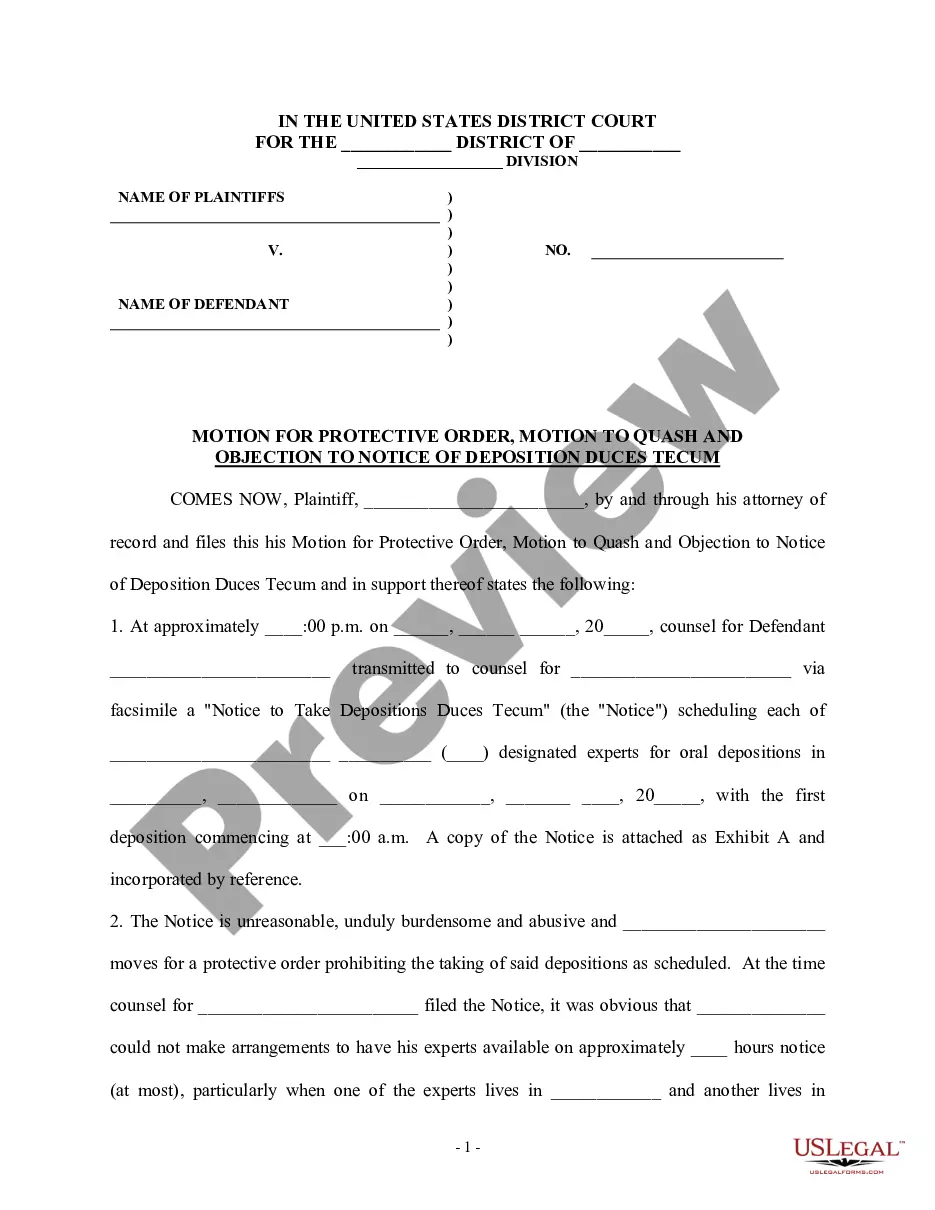
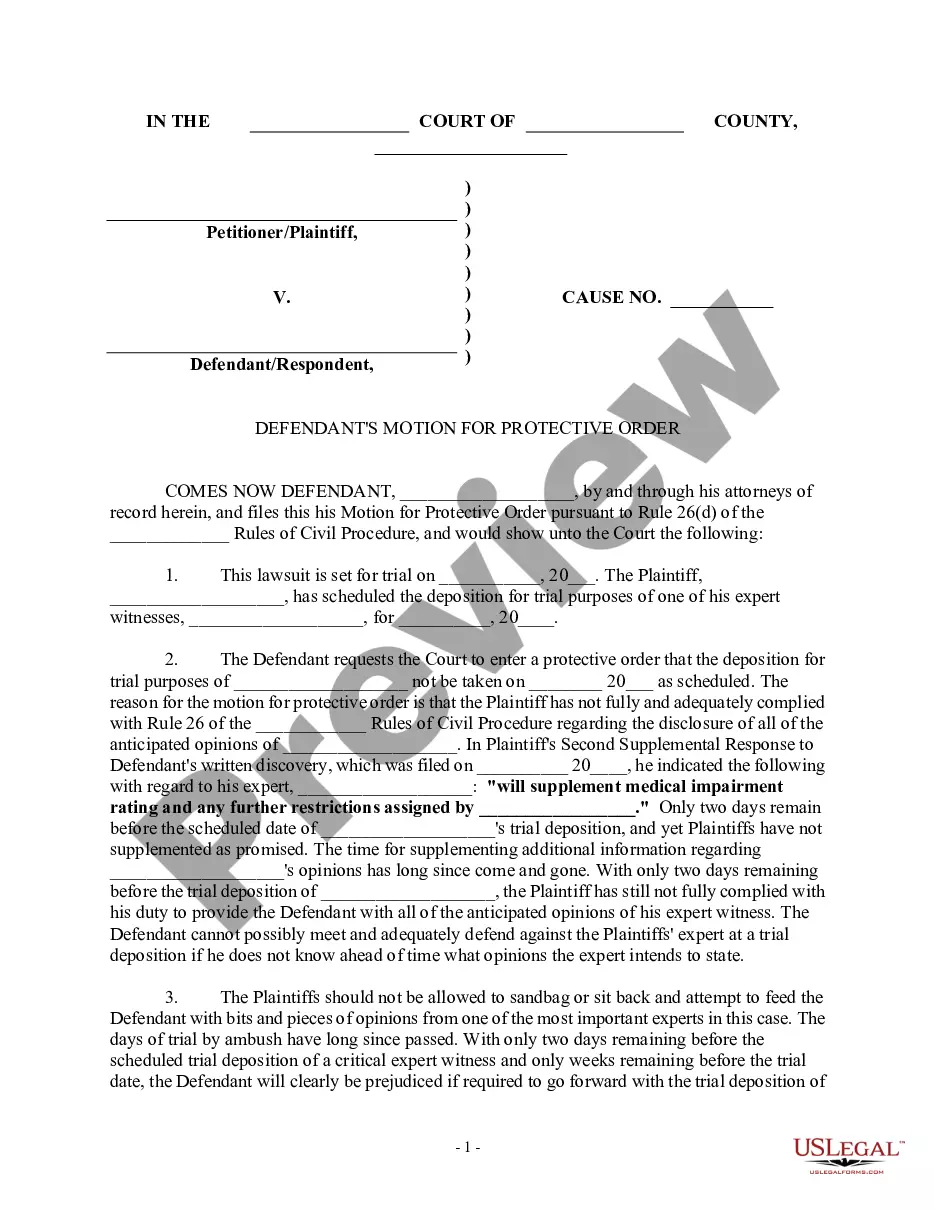
Motion For Protective Order Sample California
Description
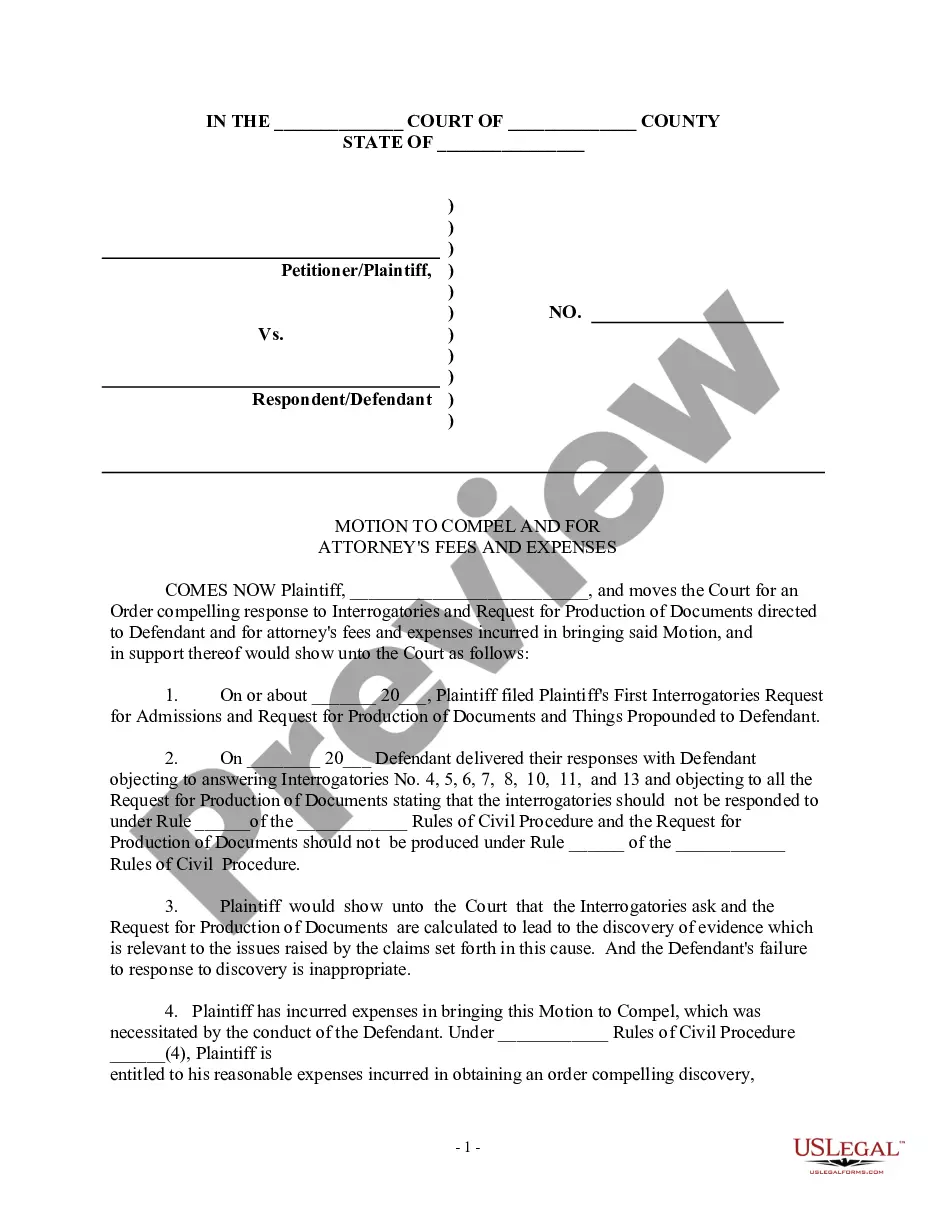
Get your form ready online
Our built-in tools help you complete, sign, share, and store your documents in one place.
Make edits, fill in missing information, and update formatting in US Legal Forms—just like you would in MS Word.
Download a copy, print it, send it by email, or mail it via USPS—whatever works best for your next step.
Sign and collect signatures with our SignNow integration. Send to multiple recipients, set reminders, and more. Go Premium to unlock E-Sign.
If this form requires notarization, complete it online through a secure video call—no need to meet a notary in person or wait for an appointment.
We protect your documents and personal data by following strict security and privacy standards.

Make edits, fill in missing information, and update formatting in US Legal Forms—just like you would in MS Word.

Download a copy, print it, send it by email, or mail it via USPS—whatever works best for your next step.

Sign and collect signatures with our SignNow integration. Send to multiple recipients, set reminders, and more. Go Premium to unlock E-Sign.

If this form requires notarization, complete it online through a secure video call—no need to meet a notary in person or wait for an appointment.

We protect your documents and personal data by following strict security and privacy standards.
Looking for another form?
How to fill out Defendant's Motion For Protective Order And Response To Plaintiff's Motion To Compel?
Locating a reliable resource to obtain the latest and suitable legal templates is a significant part of managing bureaucratic processes.
Selecting the appropriate legal documents requires accuracy and meticulousness, which is why sourcing Motion For Protective Order Sample California from trustworthy providers like US Legal Forms is essential.
After obtaining the form on your device, you can modify it using the editor or print it out to fill it in manually. Eliminate the stress related to your legal documentation. Explore the comprehensive US Legal Forms library where you can discover legal templates, assess their suitability for your situation, and download them instantly.
- Utilize the library navigation or search function to find your template.
- Examine the form’s details to determine if it meets the specifications of your state and county.
- Check the form preview, if available, to confirm that it is indeed the template you are looking for.
- Return to the search and find the correct document if the Motion For Protective Order Sample California does not fulfill your criteria.
- Once you are certain about the form’s applicability, download it.
- If you are a registered member, click Log in to verify your identity and access your chosen templates in My documents.
- If you don't have an account yet, click Buy now to acquire the form.
- Choose the subscription plan that suits your requirements.
- Proceed with the registration to complete your purchase.
- Finish your transaction by selecting a payment method (credit card or PayPal).
- Select the document format for downloading Motion For Protective Order Sample California.
Form popularity
FAQ
To file a motion for ineffective counsel, you need to present clear evidence demonstrating that your legal representation fell below an acceptable standard, impacting the outcome of your case. This may require a detailed analysis of your situation and might benefit from consulting a Motion for protective order sample California to clarify the process and format. Proper documentation and adherence to procedural guidelines are essential to ensure your motion is taken seriously.
The federal rule concerning withdrawing as counsel requires that a lawyer must provide notice to the client and consider any potential impact on the client's case. If presented correctly, the court may grant the motion, allowing the lawyer to withdraw. Utilizing a Motion for protective order sample California can help guide you in drafting your request, ensuring that you meet all necessary legal standards.
A motion for entry of protective order is a formal request asking the court to limit or prevent certain types of discovery to protect confidential information. This is essential when sensitive information is at stake, such as trade secrets or personal data. By referencing a Motion for protective order sample California, you can better understand how to craft your motion to effectively protect your interests.
To serve a motion to be relieved as counsel in California, you must file the motion with the court and provide proper notice to your client and other parties involved in the case. Following the guidelines found in a Motion for protective order sample California can ensure that you complete this process correctly and maintain compliance with legal standards. This procedure helps avoid any interruption in the proceedings and keeps all parties informed.
In California, filing a motion for protective order can temporarily halt depositions. This allows a party to contest the appropriateness of the deposition or seek relief from potentially burdensome requests. It is important to refer to a Motion for protective order sample California to understand the specific requirements and implications for your situation, ensuring you take the right legal steps.
Withdrawing as counsel can be necessary due to ethical obligations, such as conflicts of interest, inability to represent the client competently, or if the client insists on pursuing an objective that is unlawful. If you feel you cannot ethically continue representing a client, it is crucial to review the Motion for protective order sample California, as it guides you through formal procedures in such situations. By taking these steps, you ensure compliance with legal standards and protect your professional integrity.
In California, the three types of protection typically refer to protective orders concerning emotional distress, physical safety, and confidentiality. Each type serves a different purpose, focusing on safeguarding individuals and sensitive information. To navigate the specifics of each type effectively, reviewing a motion for protective order sample California can provide useful templates and legal phrasing.
The basis for a protective order in California includes preventing the abuse of the discovery process and safeguarding legitimate privacy interests. Courts evaluate motions for protective orders based on demonstrated harm versus the relevance of the requested information. For assistance in formulating your motion, examining a motion for protective order sample California can offer practical examples and clarity.
When filing a motion to quash, the burden of proof rests with the party opposing the discovery request. It is essential to show that the request imposes an unreasonable burden or is not relevant to the case. Understanding how to articulate these arguments can significantly influence the outcome, and consulting a motion for protective order sample California can guide you through this process.
In California, grounds for a motion for protective order may include preventing the disclosure of confidential information, protecting trade secrets, or avoiding harassment or undue burden. Each request must be substantiated with clear and convincing arguments that justify the need for protection. Utilizing a motion for protective order sample California can help illustrate the effective presentation of these grounds in court.