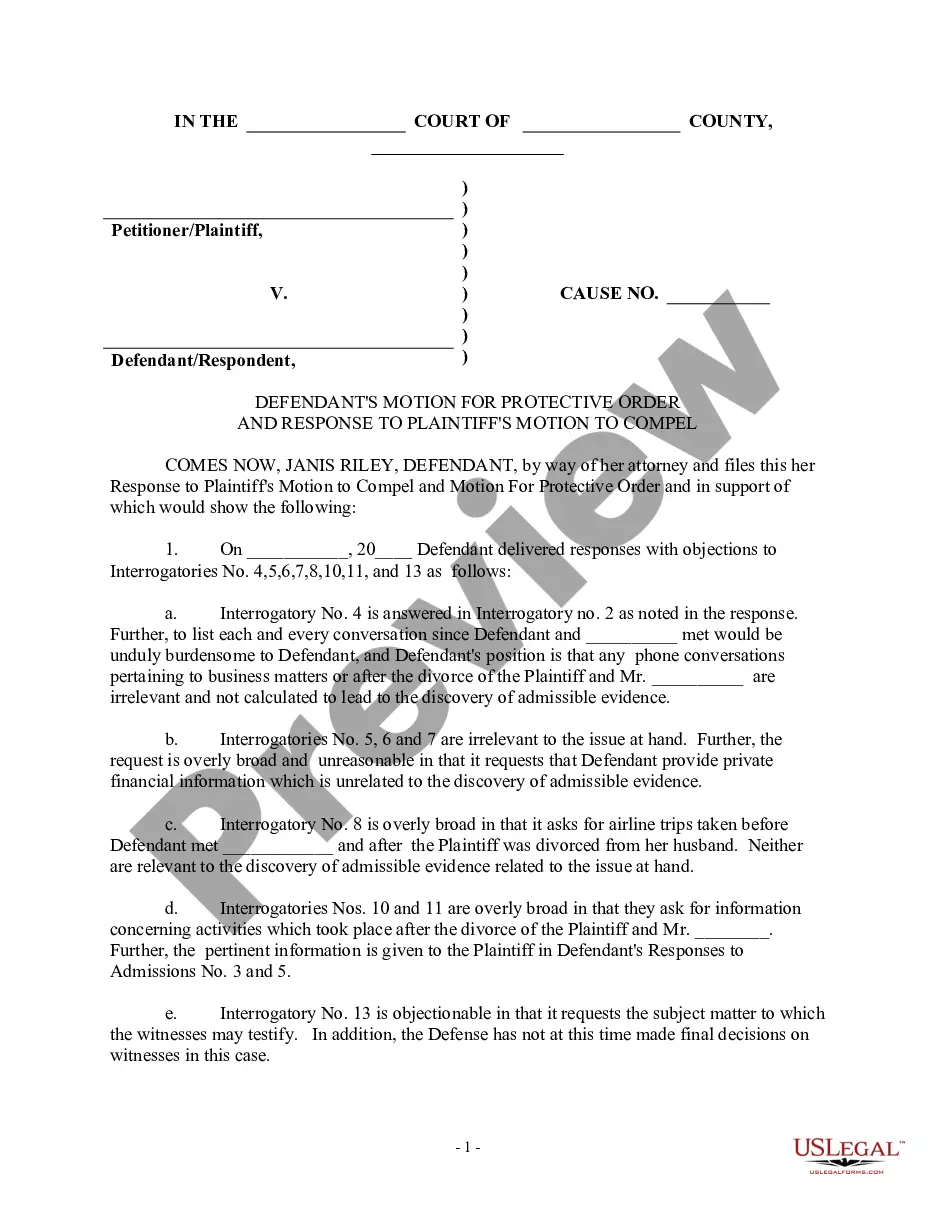
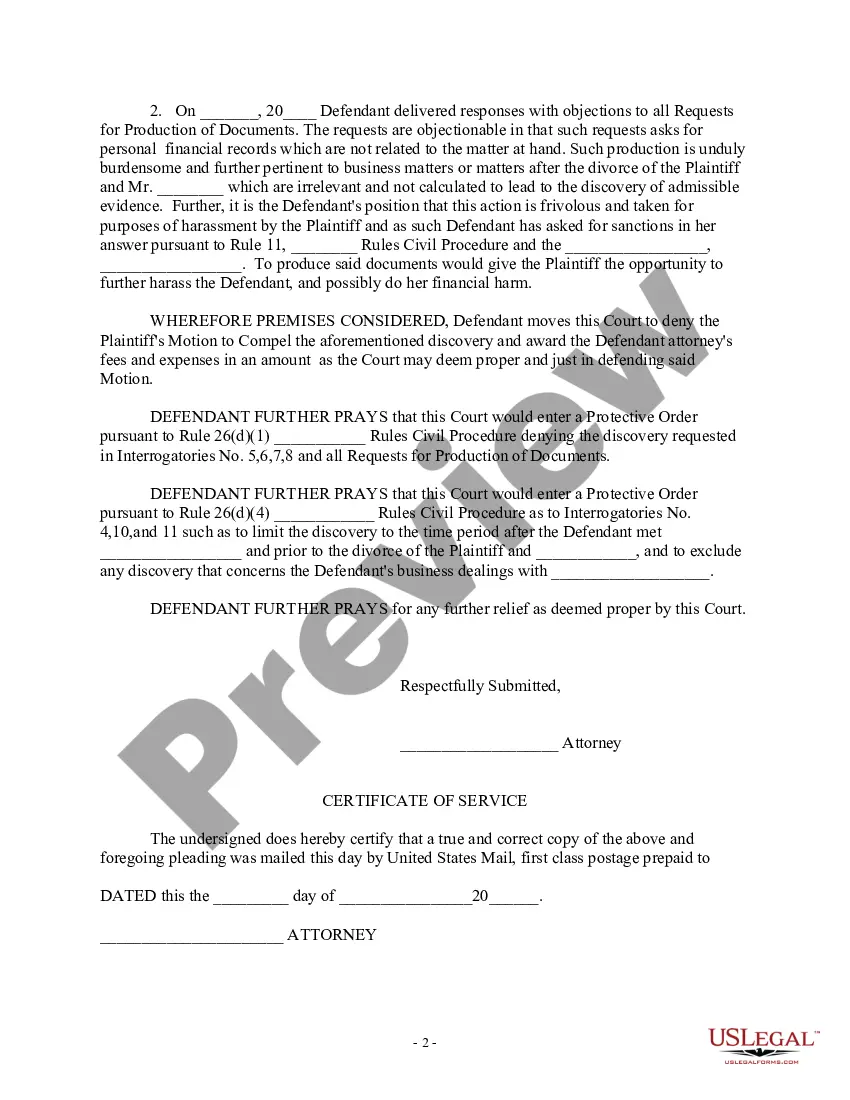
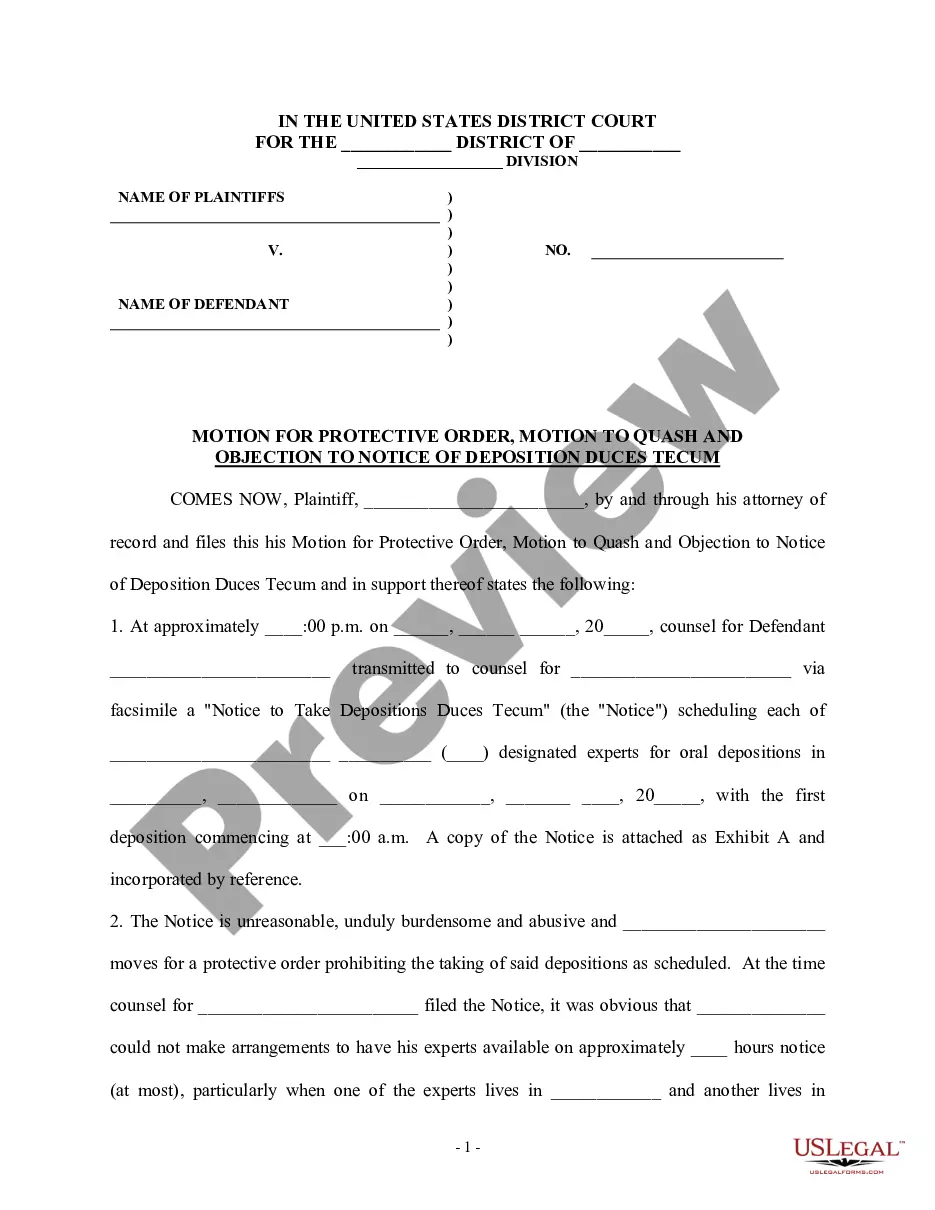
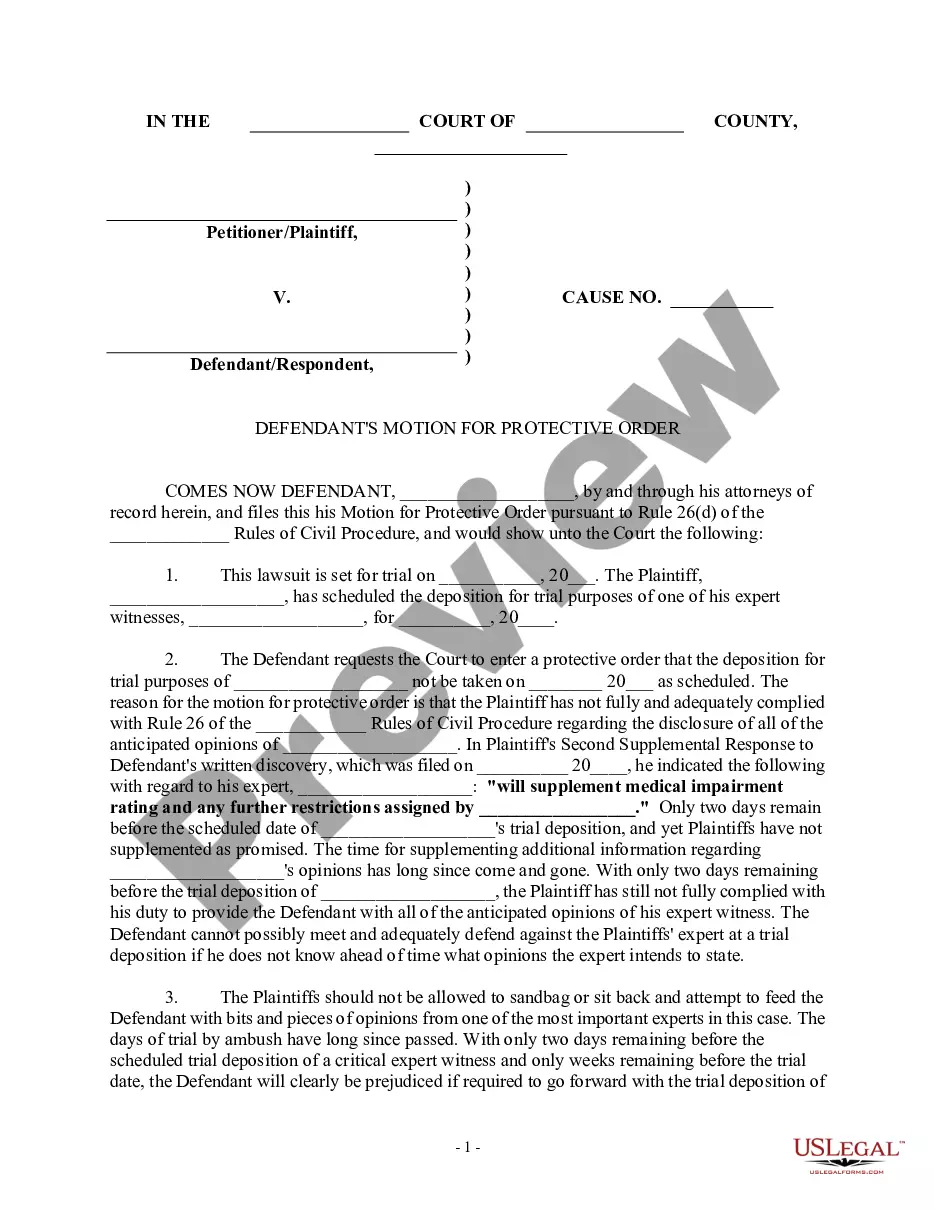
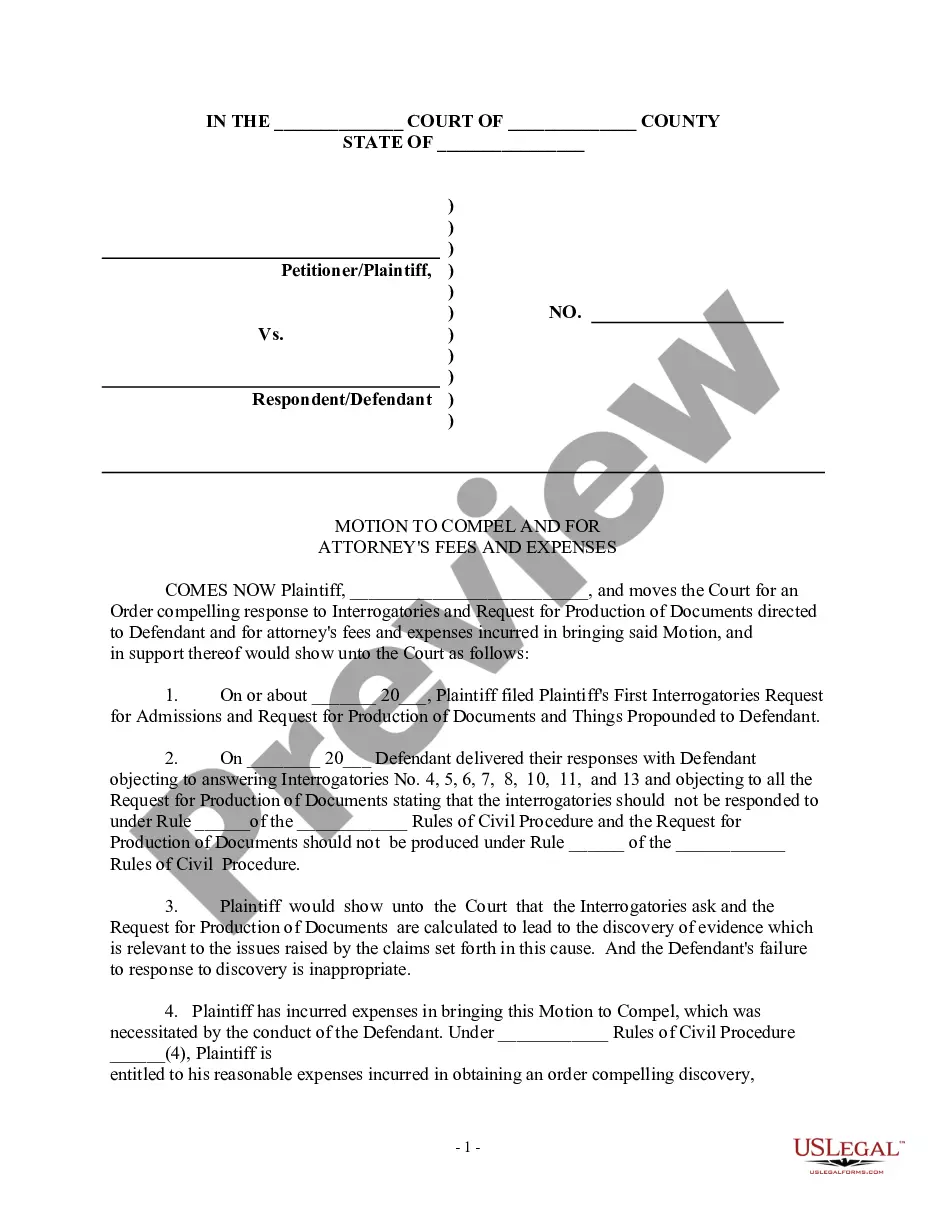
Motion For Protective Order Discovery
Description
Get your form ready online
Our built-in tools help you complete, sign, share, and store your documents in one place.
Make edits, fill in missing information, and update formatting in US Legal Forms—just like you would in MS Word.
Download a copy, print it, send it by email, or mail it via USPS—whatever works best for your next step.
Sign and collect signatures with our SignNow integration. Send to multiple recipients, set reminders, and more. Go Premium to unlock E-Sign.
If this form requires notarization, complete it online through a secure video call—no need to meet a notary in person or wait for an appointment.
We protect your documents and personal data by following strict security and privacy standards.

Make edits, fill in missing information, and update formatting in US Legal Forms—just like you would in MS Word.

Download a copy, print it, send it by email, or mail it via USPS—whatever works best for your next step.

Sign and collect signatures with our SignNow integration. Send to multiple recipients, set reminders, and more. Go Premium to unlock E-Sign.

If this form requires notarization, complete it online through a secure video call—no need to meet a notary in person or wait for an appointment.

We protect your documents and personal data by following strict security and privacy standards.
Looking for another form?







How to fill out Defendant's Motion For Protective Order And Response To Plaintiff's Motion To Compel?
Whether for commercial reasons or for personal issues, everyone must confront legal challenges at some point in their lives.
Filling out legal documents requires meticulous attention, beginning with choosing the suitable form template.
With the extensive US Legal Forms catalog available, you do not have to waste time searching for the correct template online. Leverage the library’s straightforward navigation to find the right template for any situation.
- Locate the template you require by utilizing the search bar or catalog navigation.
- Review the form’s details to confirm it aligns with your circumstances, state, and locality.
- Click on the form’s preview to examine it.
- If it is the incorrect form, return to the search function to find the Motion For Protective Order Discovery sample you need.
- Obtain the template if it satisfies your requirements.
- If you already possess a US Legal Forms profile, click Log in to retrieve previously saved documents in My documents.
- If you do not have an account yet, you can download the form by selecting Buy now.
- Select the appropriate pricing option.
- Fill out the profile registration form.
- Choose your payment method: you can utilize a credit card or PayPal account.
- Select the file format you desire and download the Motion For Protective Order Discovery.
- Once downloaded, you can complete the form using editing software or print it out and fill it in manually.
Form popularity
FAQ
To file a motion to compel discovery, first ensure that you have made reasonable attempts to obtain the requested information from the other party. Next, draft a motion outlining what you seek and why the other party's noncompliance warrants court intervention. After you prepare the motion, submit it to the court and serve the other party. For assistance and templates, consider visiting US Legal Forms to streamline the filing process.
A motion for protective order in discovery is a legal request made to the court to limit or prevent the disclosure of certain information during the discovery phase of litigation. This motion aims to protect sensitive or confidential information from being shared. When a party believes that discovery requests are overly broad or invasive, they can file this motion. Utilizing platforms like US Legal Forms can help you navigate the rules and procedures involved.
To request a motion for discovery, start by drafting a formal request that clearly states the information or documents you need from the opposing party. Include relevant details such as case number and parties involved. Once you prepare the motion, file it with the court and serve it to the other party. Consulting resources like US Legal Forms can simplify this process and provide the necessary templates.
The discovery process typically starts with the exchange of initial disclosures, followed by written discovery requests. Next, depositions may be conducted to gather verbal testimony. Finally, all parties review and respond to document requests, culminating in a comprehensive collection of evidence that supports each side’s case.
To request a motion, you must draft a formal written request that specifies the type of motion you seek. Include relevant details and any supporting evidence necessary to justify your request. It's essential to file this motion with the court and serve it to all relevant parties involved in the case.
Yes, a motion for protective order is classified as a type of discovery motion. This motion seeks to protect a party from excessive or burdensome requests during the discovery phase. By filing this motion, you can safeguard sensitive information and ensure that discovery is conducted fairly and appropriately.
During the discovery process, you can legally obtain a variety of evidence, including documents, records, emails, and witness statements. Depositions are also common, allowing you to gather verbal testimony under oath. Depending on the case, expert reports and physical evidence may also be included in the scope of discovery.
If a party refuses to comply with proper discovery requests, you must file a motion to compel discovery. This motion aims to compel the obstructing party to produce the requested documents or information. Additionally, you can seek a motion for protective order discovery to limit or modify the scope of what is requested.
To request a motion for protective order discovery, you typically need to file a written motion with the court. This motion must outline your specific request and explain why the protective order is necessary. Be sure to provide supporting documentation to strengthen your case and establish the need for this motion.
Certain types of information are protected from discovery, including privileged communications, personal data, and confidential business information. This protection ensures that sensitive information is not disclosed inappropriately. Recognizing what qualifies for protection is essential when filing a motion for protective order discovery. USLegalForms provides useful materials to help clarify these distinctions.