Wrongful Single Actions Statement With Evidence
Description
Get your form ready online
Our built-in tools help you complete, sign, share, and store your documents in one place.
Make edits, fill in missing information, and update formatting in US Legal Forms—just like you would in MS Word.
Download a copy, print it, send it by email, or mail it via USPS—whatever works best for your next step.
Sign and collect signatures with our SignNow integration. Send to multiple recipients, set reminders, and more. Go Premium to unlock E-Sign.
If this form requires notarization, complete it online through a secure video call—no need to meet a notary in person or wait for an appointment.
We protect your documents and personal data by following strict security and privacy standards.

Make edits, fill in missing information, and update formatting in US Legal Forms—just like you would in MS Word.

Download a copy, print it, send it by email, or mail it via USPS—whatever works best for your next step.

Sign and collect signatures with our SignNow integration. Send to multiple recipients, set reminders, and more. Go Premium to unlock E-Sign.

If this form requires notarization, complete it online through a secure video call—no need to meet a notary in person or wait for an appointment.

We protect your documents and personal data by following strict security and privacy standards.
Looking for another form?





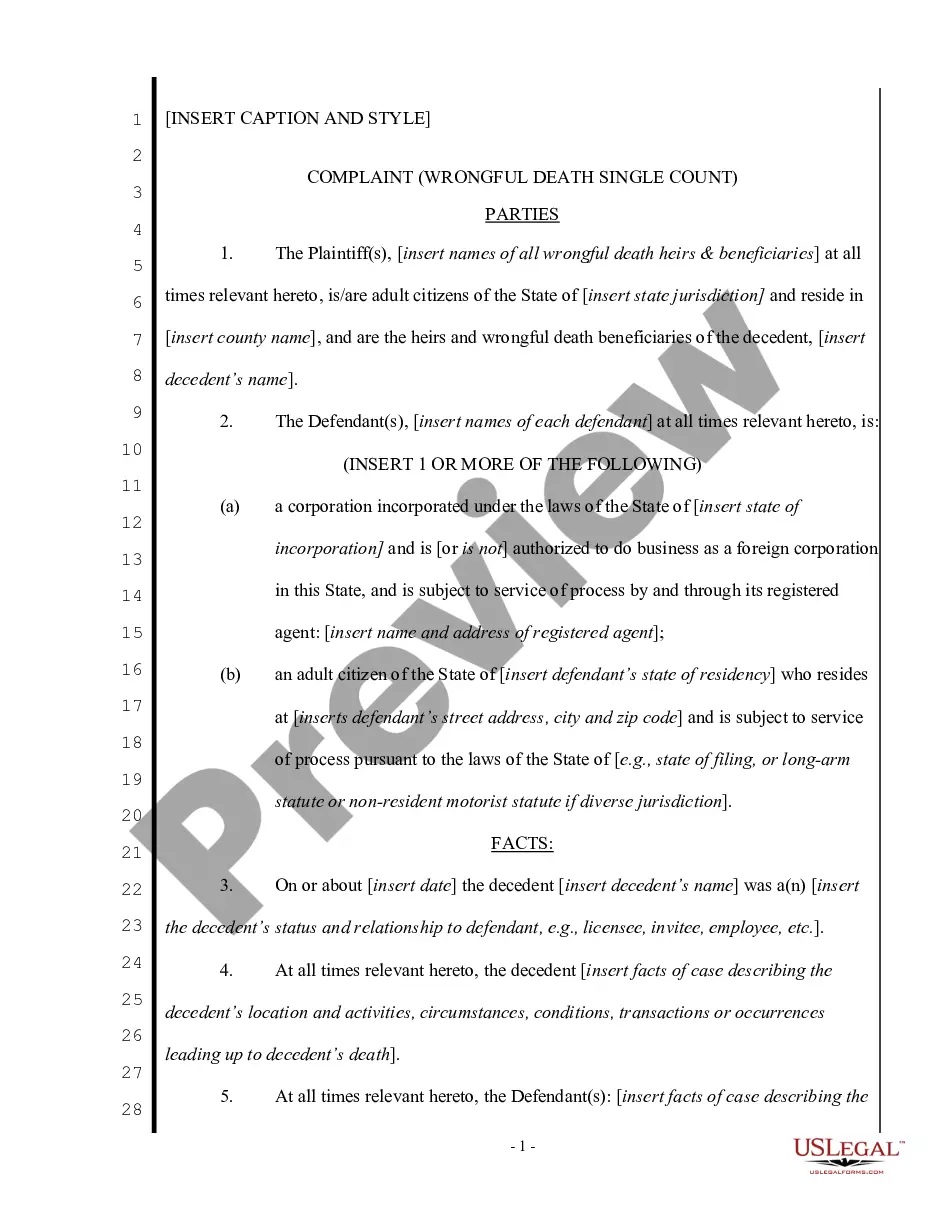
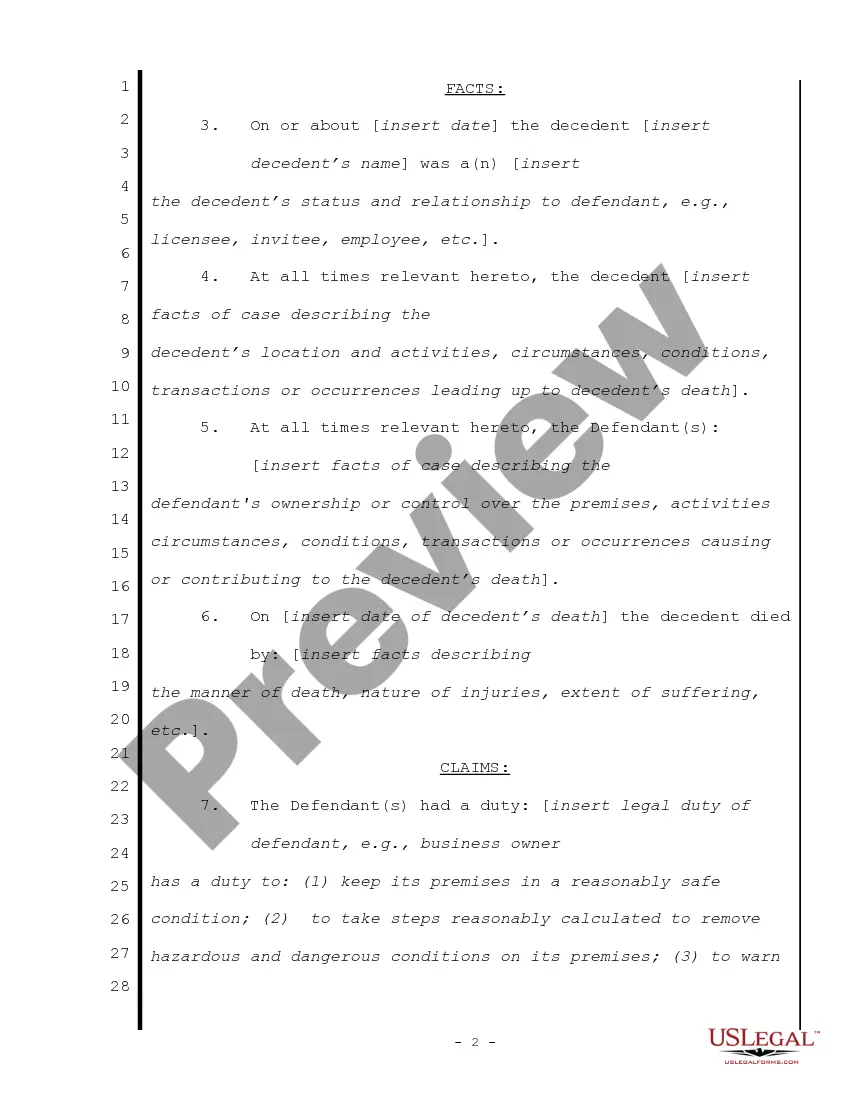
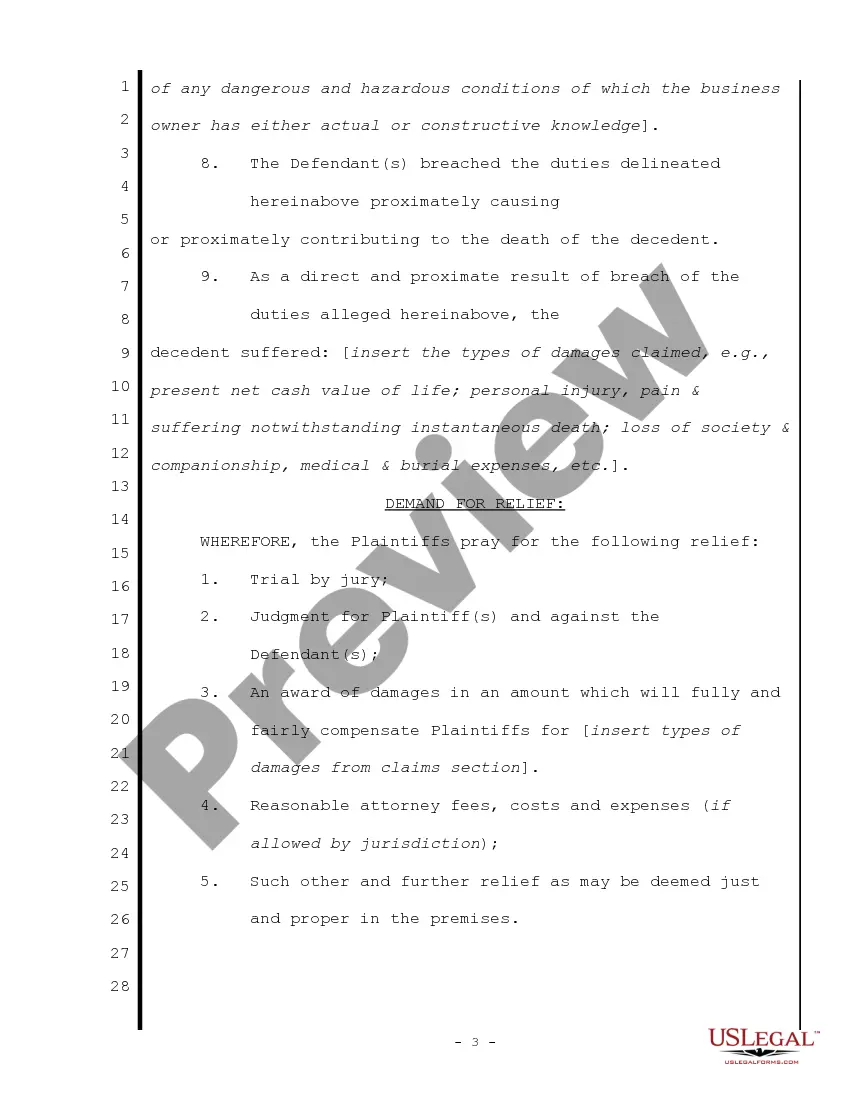
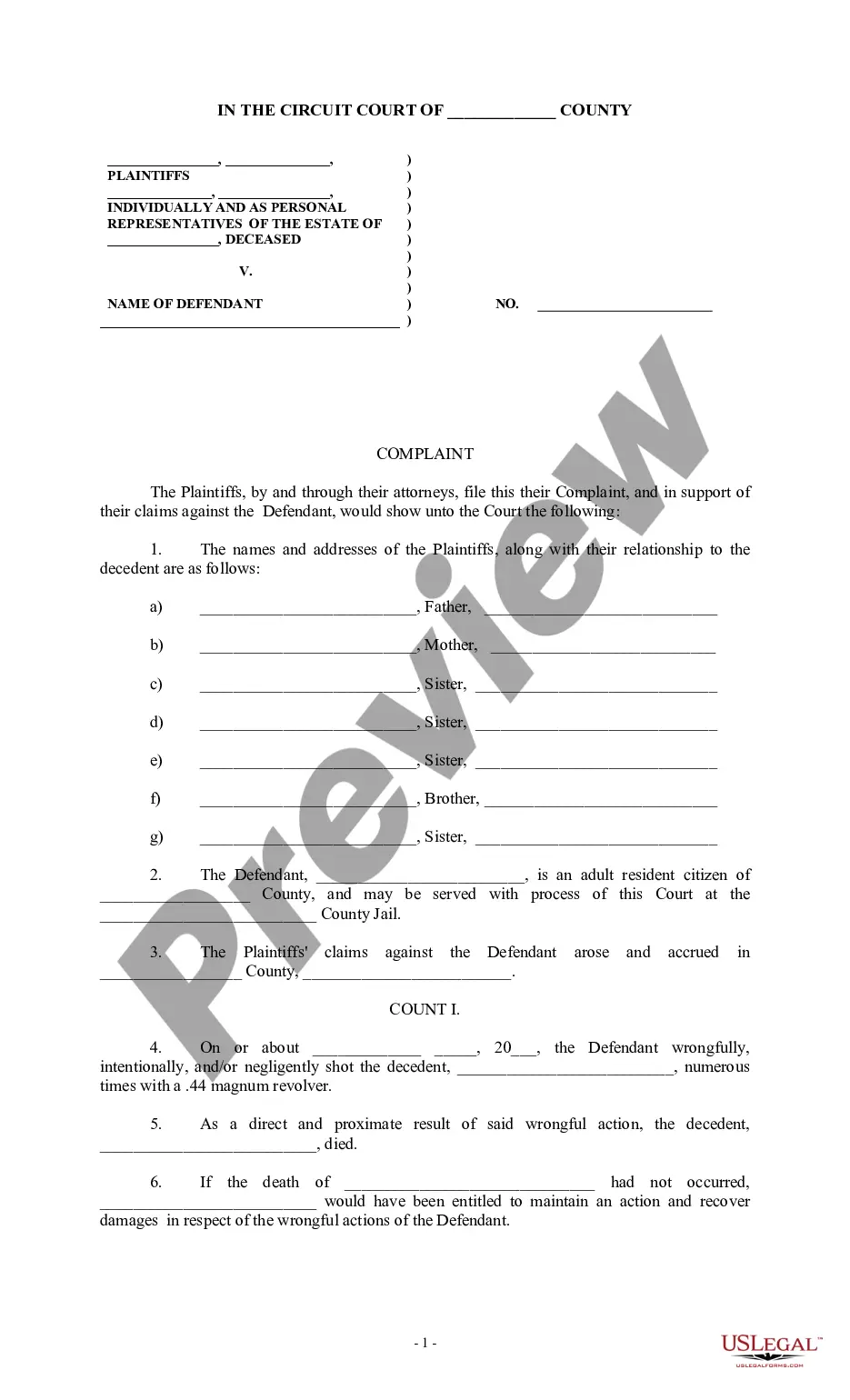
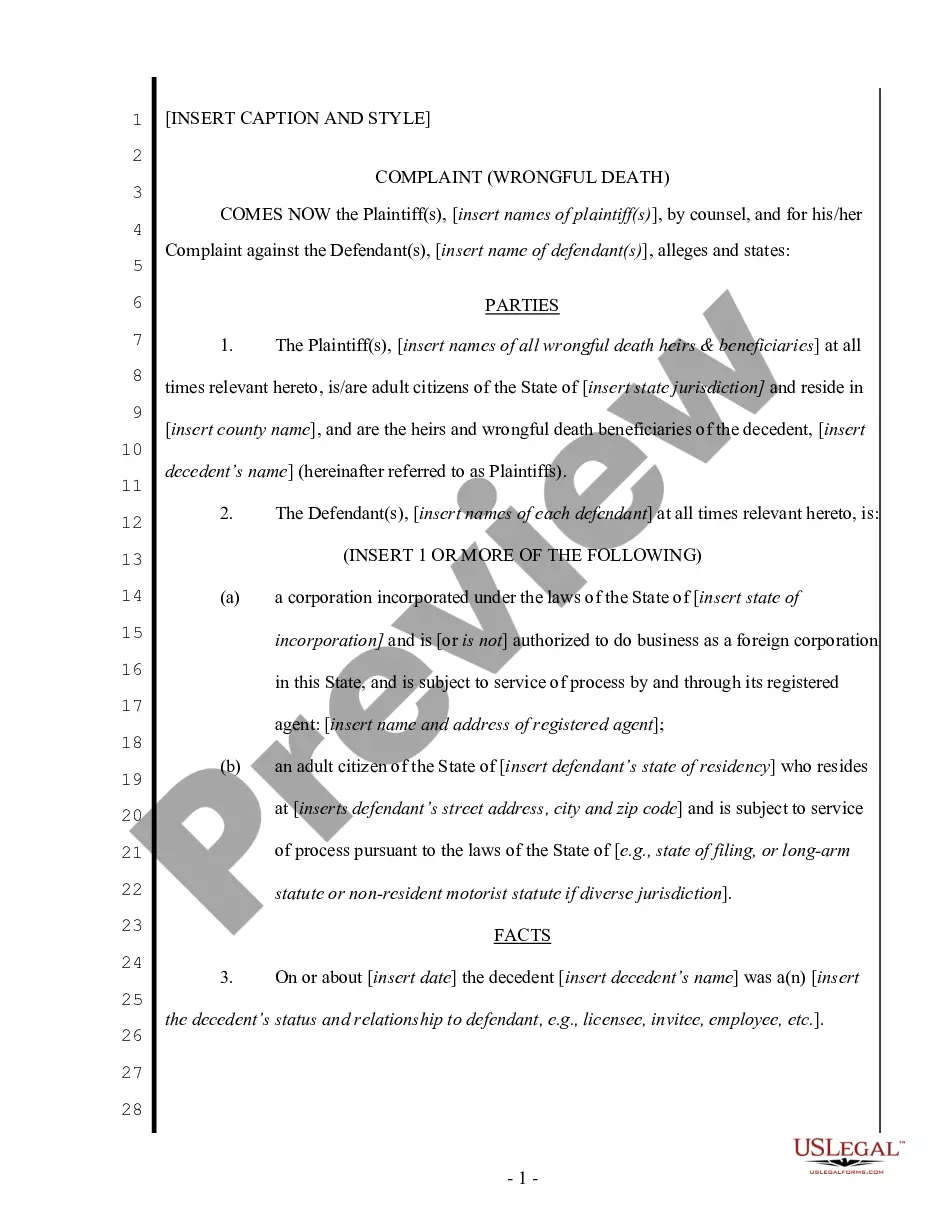
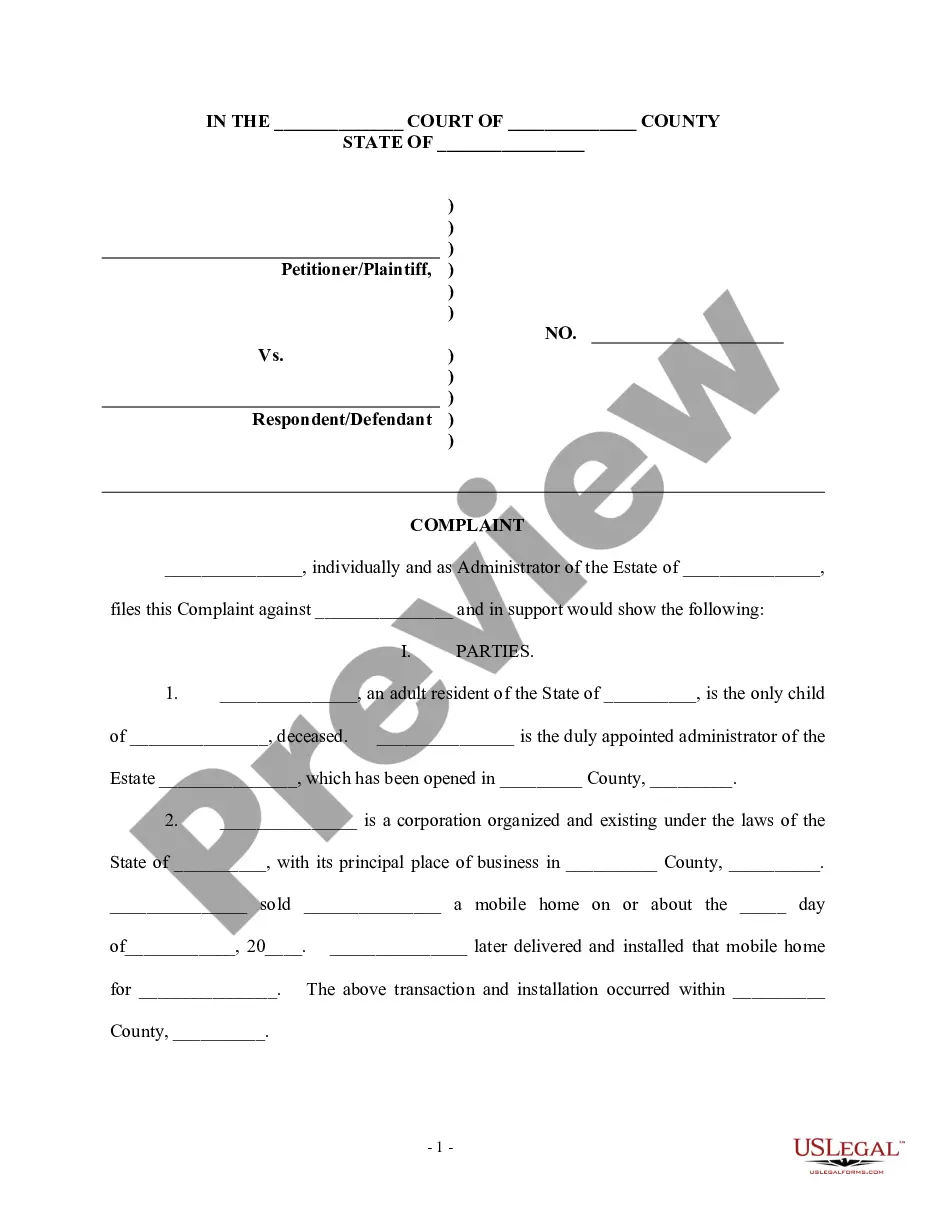
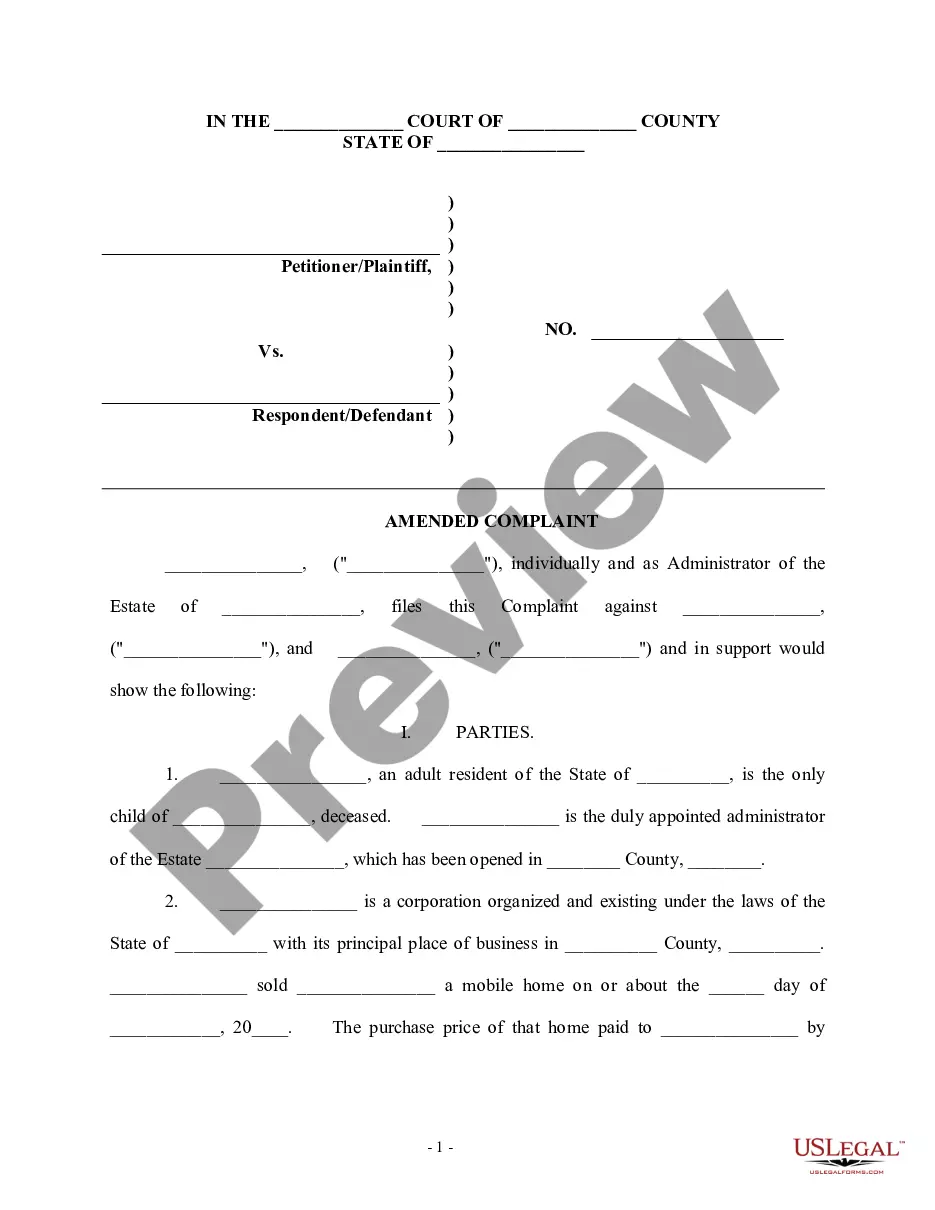
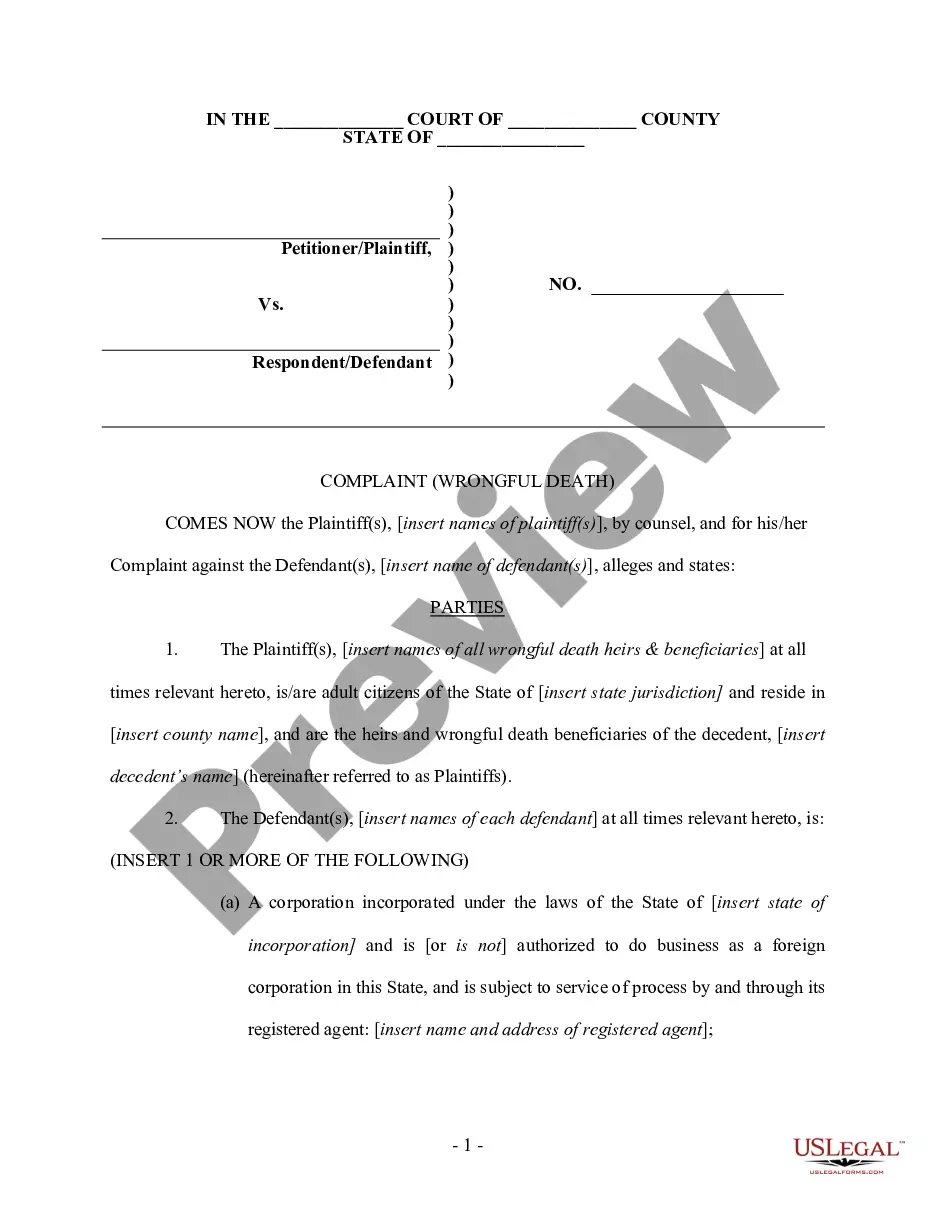
How to fill out Complaint For Wrongful Death - Single Count?
- Visit the US Legal Forms website and, if you’re a returning user, log in to access your account.
- Ensure your subscription is active. If your plan has expired, renew it promptly to avoid interruptions.
- Browse the online library and preview the desired document. Confirm it matches your specific needs and complies with your local jurisdiction.
- If necessary, use the Search tab to find alternative templates that suit your requirements more precisely.
- Once you've identified the correct form, click 'Buy Now' and select a subscription plan that works for you. Registration is required for full access.
- Complete your purchase using a credit card or your PayPal account to finalize your subscription.
- Download the form directly to your device and access it anytime through the My Forms section.
With US Legal Forms, you not only gain access to a vast collection of over 85,000 editable legal forms but also the support of premium experts to ensure your documents are completed correctly. This makes navigating your legal needs accessible and reliable.
Don't wait any longer to protect your rights. Start utilizing US Legal Forms today for all your legal documentation needs!
Form popularity
FAQ
The rule of evidence regarding prior bad acts allows courts to consider past behavior when it is relevant to current accusations. This rule is vital in cases involving wrongful single actions statements with evidence, as it helps establish a pattern of behavior. However, such evidence must pass certain standards to avoid prejudicing the jury unfairly. By navigating these rules carefully, legal professionals can effectively present a stronger case.
When someone provides a false statement, they may face legal repercussions, including charges of perjury or fraud. In cases involving wrongful single actions statements with evidence, this can significantly affect the credibility of the statement and the outcome of the case. False statements undermine the integrity of the judicial process, and courts take such actions seriously. Establishing the truth becomes paramount to ensure justice is served.
The five rules of evidence admissibility generally include relevance, authenticity, hearsay exceptions, witness testimony, and expert opinion. Each rule ensures that only pertinent and reliable information reaches the courtroom, which is crucial in wrongful single actions statements with evidence. Following these rules allows the court to focus on credible information to make informed decisions. Adhering to these standards prevents misleading or irrelevant content from impacting the outcome.
The mimic rule of evidence is essential for understanding how prior acts may influence current behavior in a legal context. It addresses when evidence of similar actions can be introduced to demonstrate a pattern or motive. In cases involving wrongful single actions statements with evidence, this rule can clarify whether someone’s actions were a direct result of prior behavior. This understanding assists courts in evaluating the legitimacy of claims.
The 404 rule of evidence restricts the use of a person's character to prove they acted in a specific way on a particular occasion. This rule is significant in wrongful single actions statements with evidence, as it helps ensure that courts focus on relevant facts rather than past conduct. By limiting character evidence, the rule helps maintain fairness in trial proceedings. It allows the jury to judge the case based solely on the evidence presented.
In legal terms, mimic refers to the act of imitating or resembling something. This can be relevant in cases involving wrongful single actions statements with evidence. Understanding how actions can be mimicked helps clarify motives and intent in legal arguments. Courts often scrutinize such behavior to determine liability.
Evidence that cannot be used in court often includes hearsay, opinion evidence lacking factual backing, and irrelevant materials. For example, emotions or personal opinions without factual support are typically not admissible. When addressing wrongful single actions statements, it’s vital to focus on concrete, admissible evidence to ensure your point is effectively communicated. Platforms such as US Legal Forms provide resources to help you understand your evidence.
Inadmissible evidence varies depending on the case's context but generally includes hearsay, irrelevant information, and evidence obtained illegally. Knowing what qualifies as inadmissible is essential, especially when dealing with wrongful single actions statements with evidence. This awareness helps you present a stronger case by focusing on legally accepted proof. Consulting with platforms like US Legal Forms can clarify these legal distinctions.
Certain types of evidence cannot be used in court, particularly if they do not relate directly to the case. For instance, irrelevant information, hearsay, and evidence obtained unlawfully are all excluded from court proceedings. In cases dealing with wrongful single actions statements, presenting correct and admissible evidence can significantly impact your outcomes. Always ensure that your evidence aligns with legal standards.
Improper character evidence refers to information that tries to establish someone's character rather than the facts of the case at hand. For example, introducing a defendant's past criminal record in a case unrelated to that conduct can be considered improper. This type of evidence is typically inadmissible in cases involving wrongful single actions statements, which focus on specific facts. Therefore, it’s crucial to understand what constitutes permissible evidence in court.