Wrongful Single Actions Statement With Employer
Description

Get your form ready online
Our built-in tools help you complete, sign, share, and store your documents in one place.
Make edits, fill in missing information, and update formatting in US Legal Forms—just like you would in MS Word.
Download a copy, print it, send it by email, or mail it via USPS—whatever works best for your next step.
Sign and collect signatures with our SignNow integration. Send to multiple recipients, set reminders, and more. Go Premium to unlock E-Sign.
If this form requires notarization, complete it online through a secure video call—no need to meet a notary in person or wait for an appointment.
We protect your documents and personal data by following strict security and privacy standards.

Make edits, fill in missing information, and update formatting in US Legal Forms—just like you would in MS Word.

Download a copy, print it, send it by email, or mail it via USPS—whatever works best for your next step.

Sign and collect signatures with our SignNow integration. Send to multiple recipients, set reminders, and more. Go Premium to unlock E-Sign.

If this form requires notarization, complete it online through a secure video call—no need to meet a notary in person or wait for an appointment.

We protect your documents and personal data by following strict security and privacy standards.
Looking for another form?





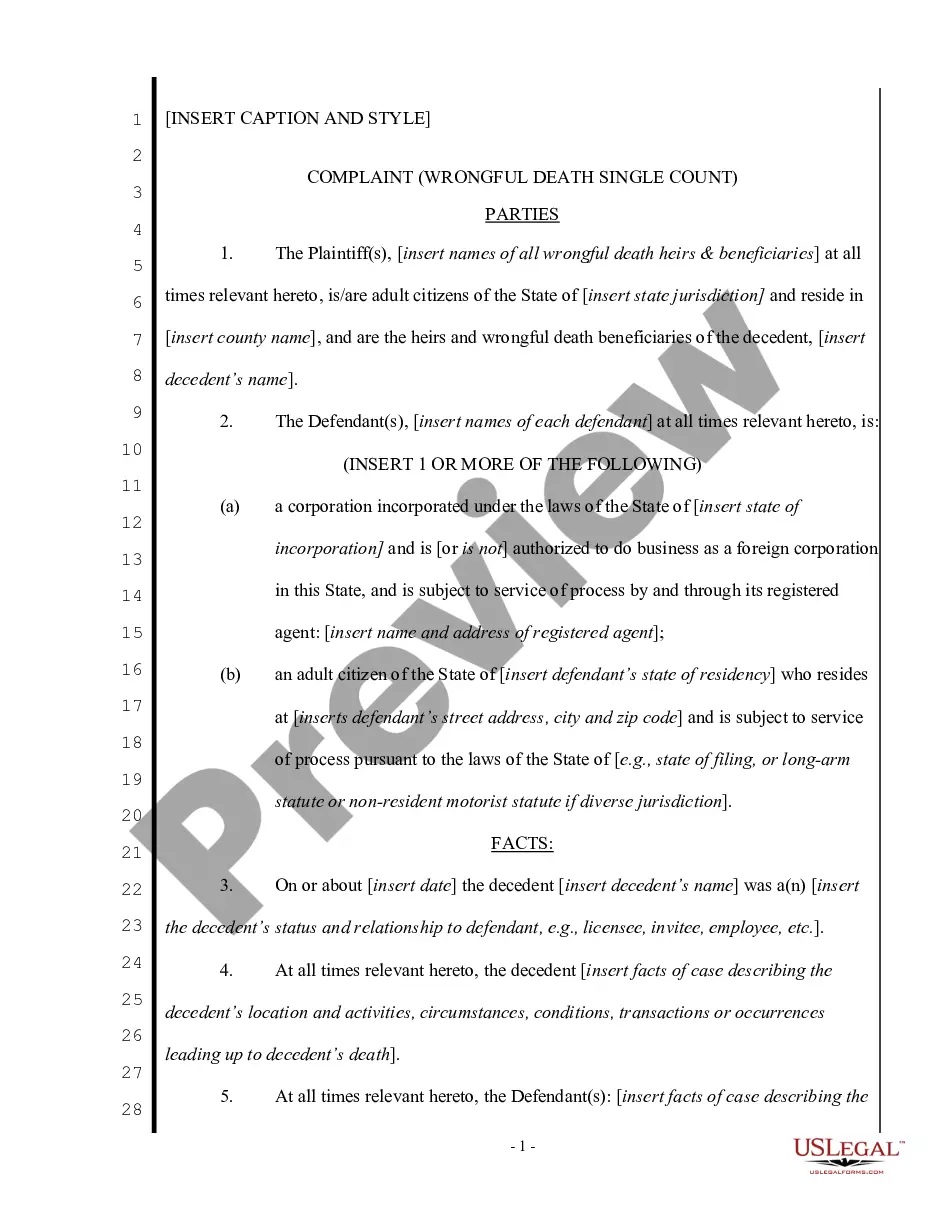
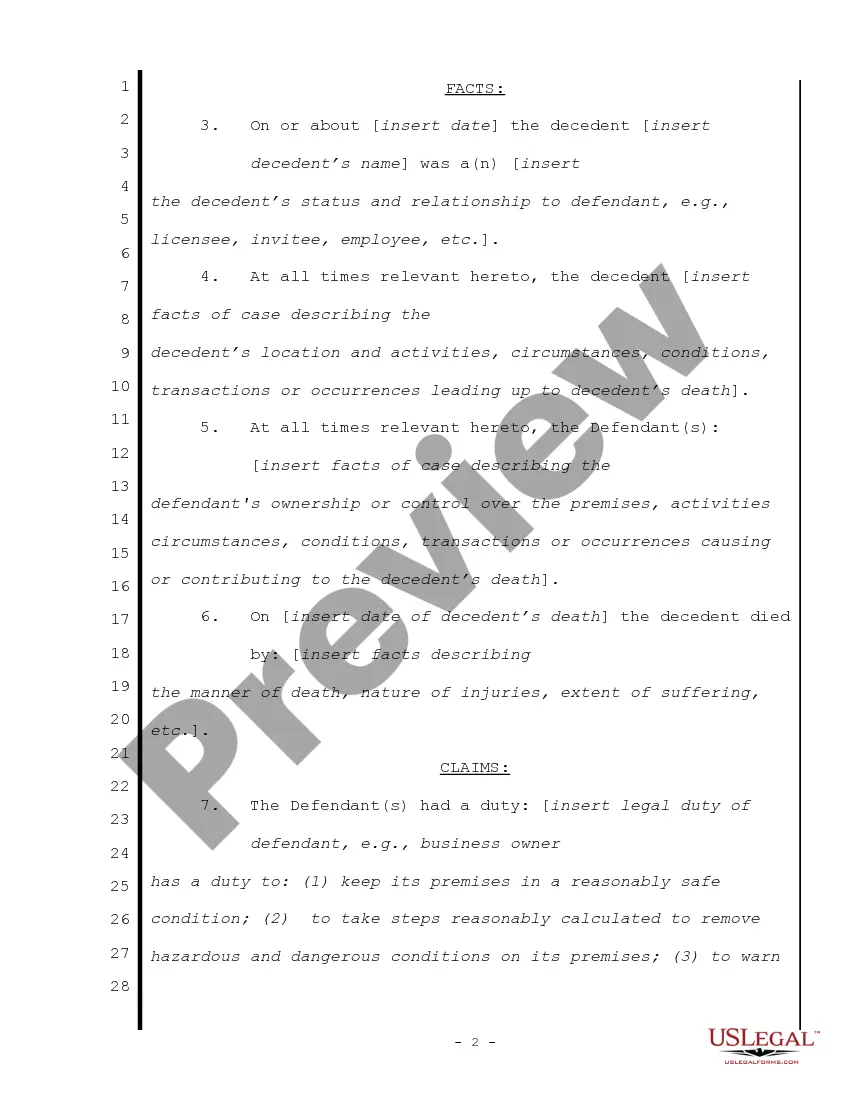
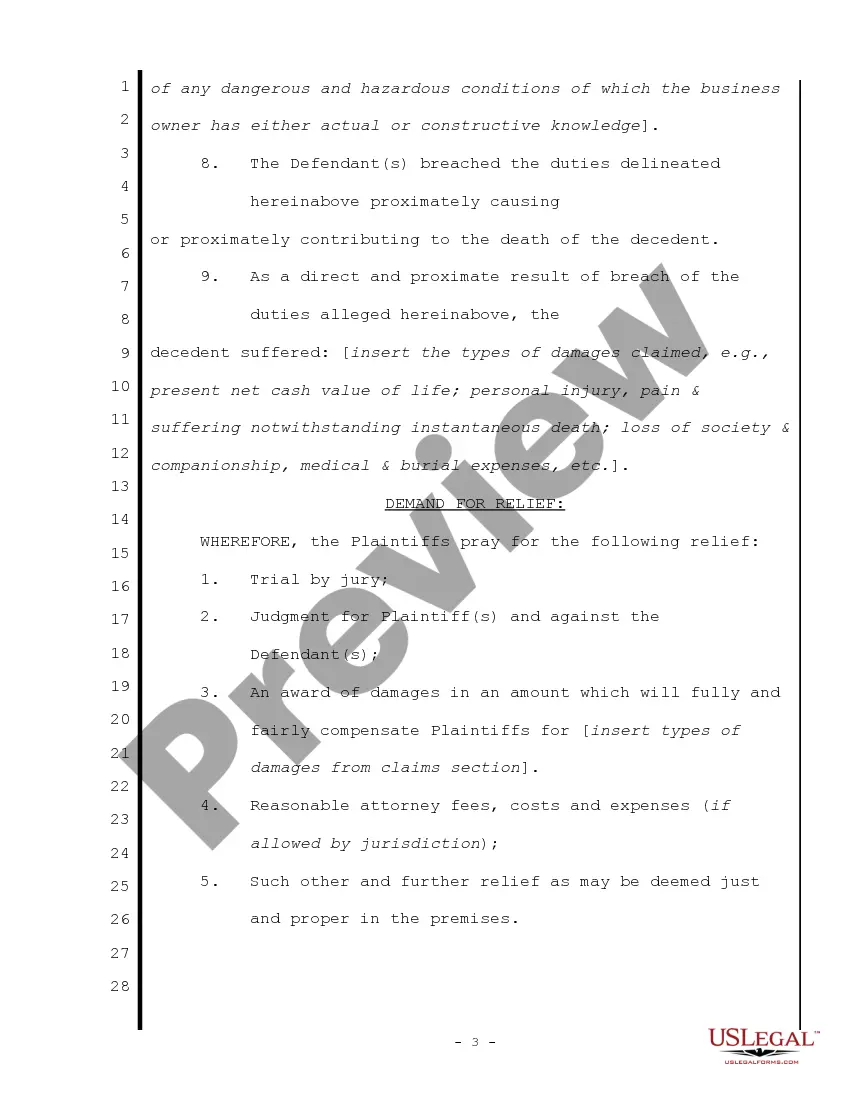
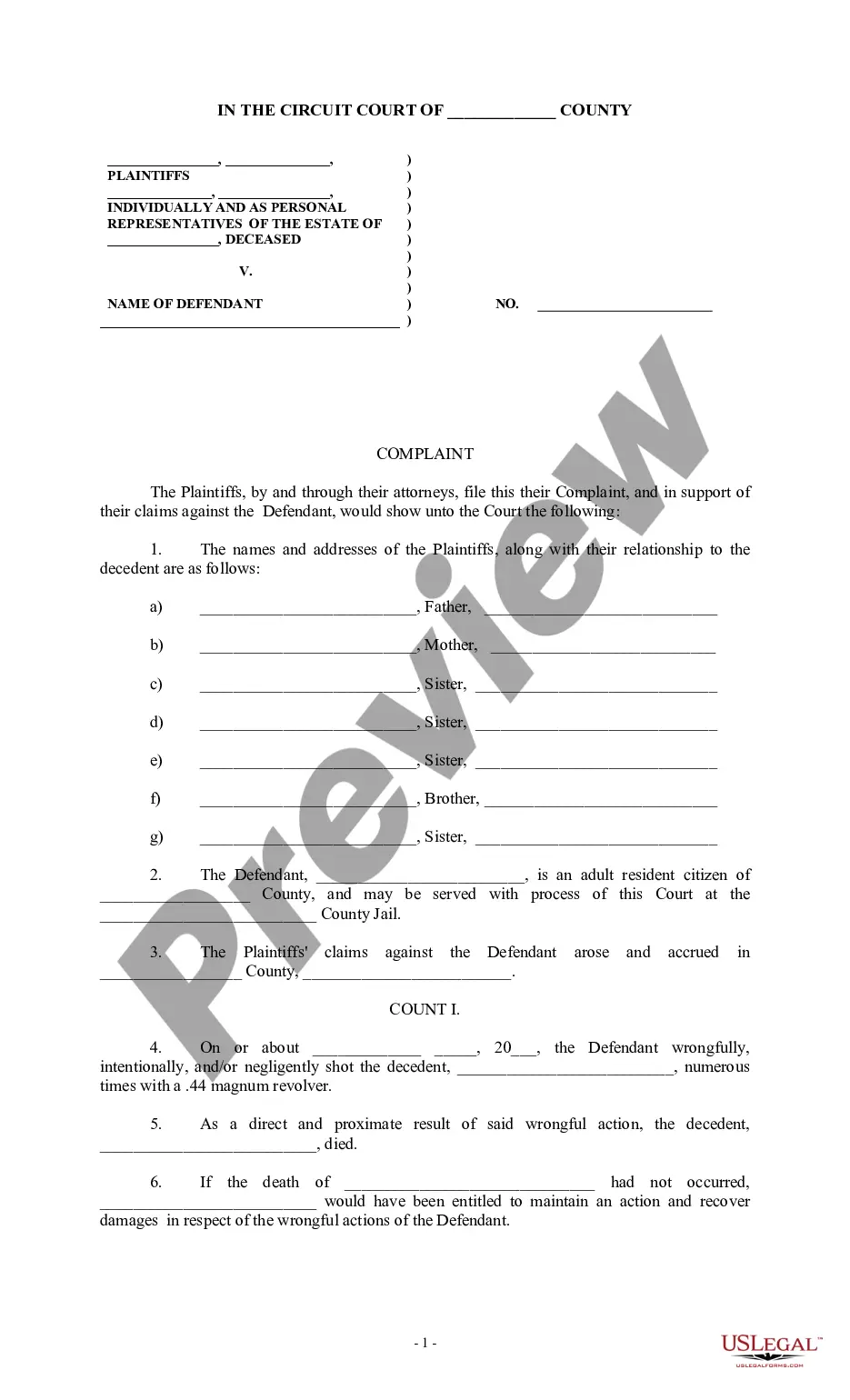
How to fill out Complaint For Wrongful Death - Single Count?
- Log in to your US Legal Forms account if you've used the service before; if not, create a new account.
- Preview the legal form and read the description to confirm it meets your needs and is compliant with local regulations.
- Search for alternate templates if necessary, using the Search feature to find the exact document you require.
- Select your desired subscription plan by clicking the Buy Now button to access the document.
- Complete your purchase through credit card or PayPal for immediate access.
- Download the form to your device, ensuring you can fill it out and manage it through the My Forms section of your profile.
Whether you're addressing a legal concern for the first time or you're familiar with legal documentation, US Legal Forms simplifies the process while ensuring that you have access to high-quality forms at a competitive price.
Take action today and explore the robust collection of legal forms available at US Legal Forms to effectively manage your legal needs with confidence.
Form popularity
FAQ
Defending yourself against false accusations at work involves gathering support and creating a solid defense. Start by documenting incidents and witnesses, as well as reviewing your company's policies. A thorough wrongful single actions statement with employer can provide clarity and demonstrate your commitment to a fair resolution.
If someone makes false accusations against you, take action quickly to protect your reputation. Collect any evidence that contradicts the claims and consider discussing the matter with your employer. By drafting a wrongful single actions statement with employer, you can clarify the situation and outline the impact of the accusations on your professional life.
Writing up an employee for disruptive behavior requires a clear and factual approach. Document specific incidents, including dates and witness accounts, to support your case effectively. This record will be invaluable whenever you discuss the wrongful single actions statement with employer, ensuring all parties understand the underlying issues.
When faced with false accusations, it is essential to respond thoughtfully. Begin by calmly addressing the accusation with clear evidence, as this will strengthen your wrongful single actions statement with employer. Additionally, consider seeking guidance from legal professionals who can help navigate the complexities of your situation.
To withstand false accusations, maintain your composure and gather any evidence that supports your truth. Document any relevant interactions with your employer, as this could serve as a crucial component of your wrongful single actions statement with employer. By staying focused and honest, you can effectively counter misinformation.
Proving workplace defamation involves showing that false statements were made to a third party that harmed your reputation. Gather all supporting documentation, such as emails and witness testimonies, to enhance your case. When pursuing this validation, a wrongful single actions statement with your employer can be an effective tool to clarify your side of the story. A legal platform like US Legal Forms can provide resources to help you through this process.
When faced with false accusations from an employer, it’s crucial to remain calm and document everything. Collect any relevant communication and reach out to HR or a legal advisor about your situation. You might consider filing a wrongful single actions statement with your employer to formally respond to the claims. This approach not only addresses the accusations but also protects your rights.
Defending yourself against false accusations requires a clear strategy. Start by gathering evidence that supports your position, such as emails, texts, and witness statements. Consult with a legal professional who can guide you on preparing a wrongful single actions statement with your employer. A strong defense can help clear your name and protect your reputation.
Documenting unfair treatment at work is crucial to build a strong case if you decide to take action against your employer. Start by keeping a detailed record of incidents, including dates, times, and the individuals involved, as this can serve as a wrongful single actions statement with employer. Consider using professional platforms, like USLegalForms, to organize your documentation effectively. This evidence can significantly strengthen your claim and help you seek the justice you deserve.
You can pursue legal action against your employer for false promises if those promises directly impacted your employment situation. A wrongful single actions statement with employer may form the basis of your claim. It's essential to gather evidence, such as emails or witness accounts, to support your case. Consulting a legal professional can help clarify your rights and options.