Wrongful Count Form Statement For Insurance
Description

Get your form ready online
Our built-in tools help you complete, sign, share, and store your documents in one place.
Make edits, fill in missing information, and update formatting in US Legal Forms—just like you would in MS Word.
Download a copy, print it, send it by email, or mail it via USPS—whatever works best for your next step.
Sign and collect signatures with our SignNow integration. Send to multiple recipients, set reminders, and more. Go Premium to unlock E-Sign.
If this form requires notarization, complete it online through a secure video call—no need to meet a notary in person or wait for an appointment.
We protect your documents and personal data by following strict security and privacy standards.

Make edits, fill in missing information, and update formatting in US Legal Forms—just like you would in MS Word.

Download a copy, print it, send it by email, or mail it via USPS—whatever works best for your next step.

Sign and collect signatures with our SignNow integration. Send to multiple recipients, set reminders, and more. Go Premium to unlock E-Sign.

If this form requires notarization, complete it online through a secure video call—no need to meet a notary in person or wait for an appointment.

We protect your documents and personal data by following strict security and privacy standards.
Looking for another form?




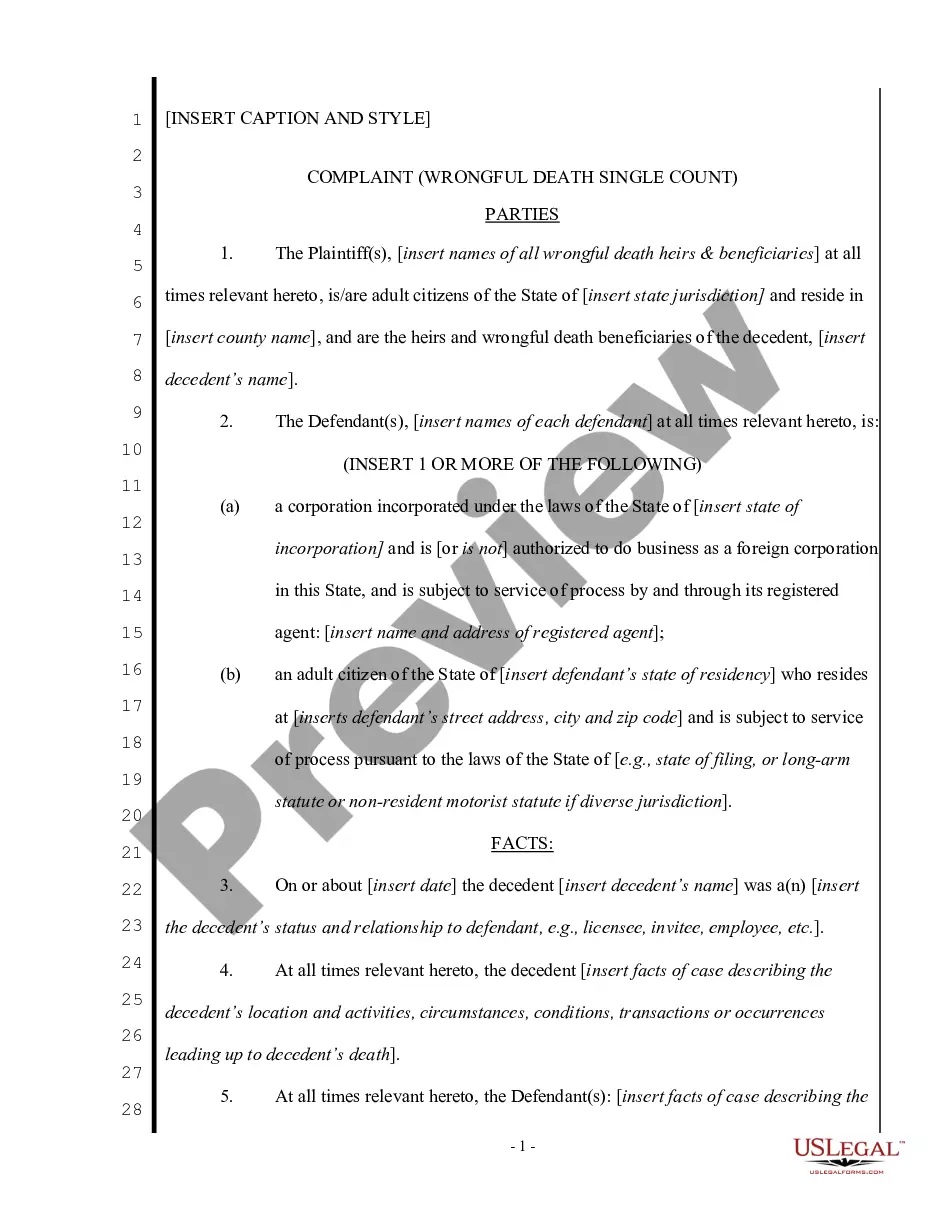
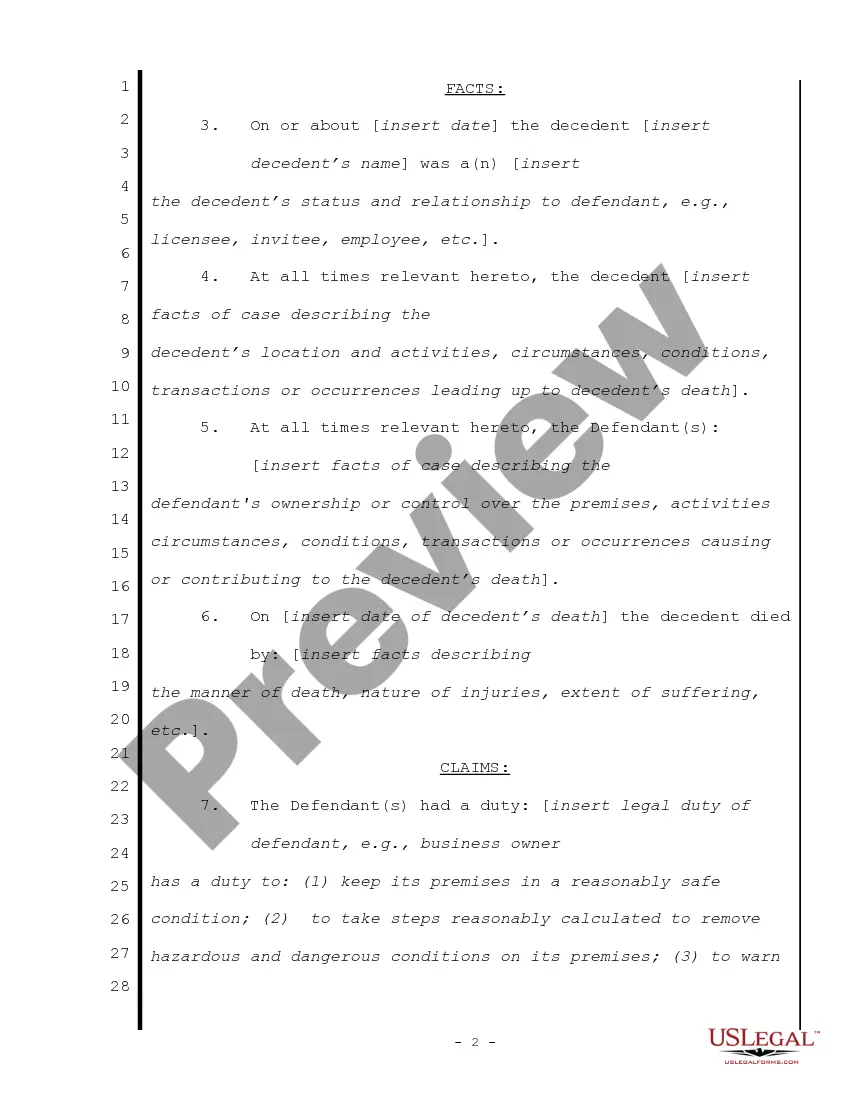
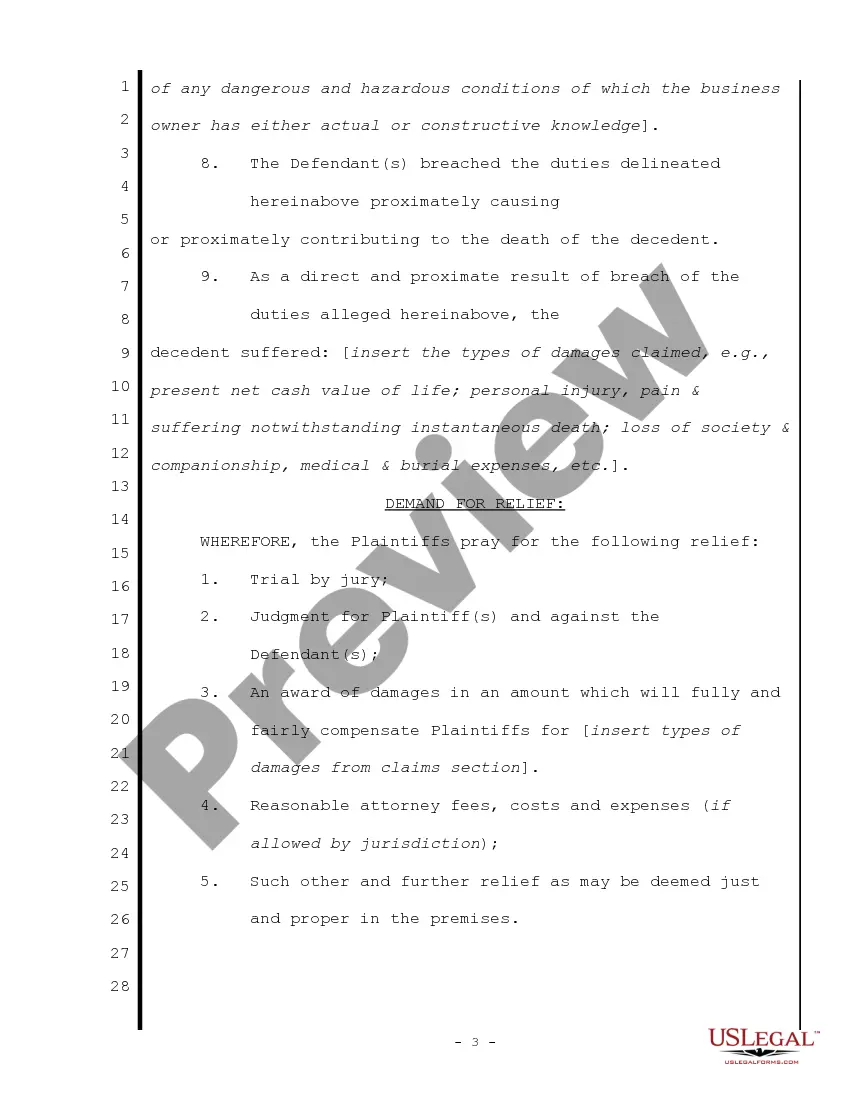
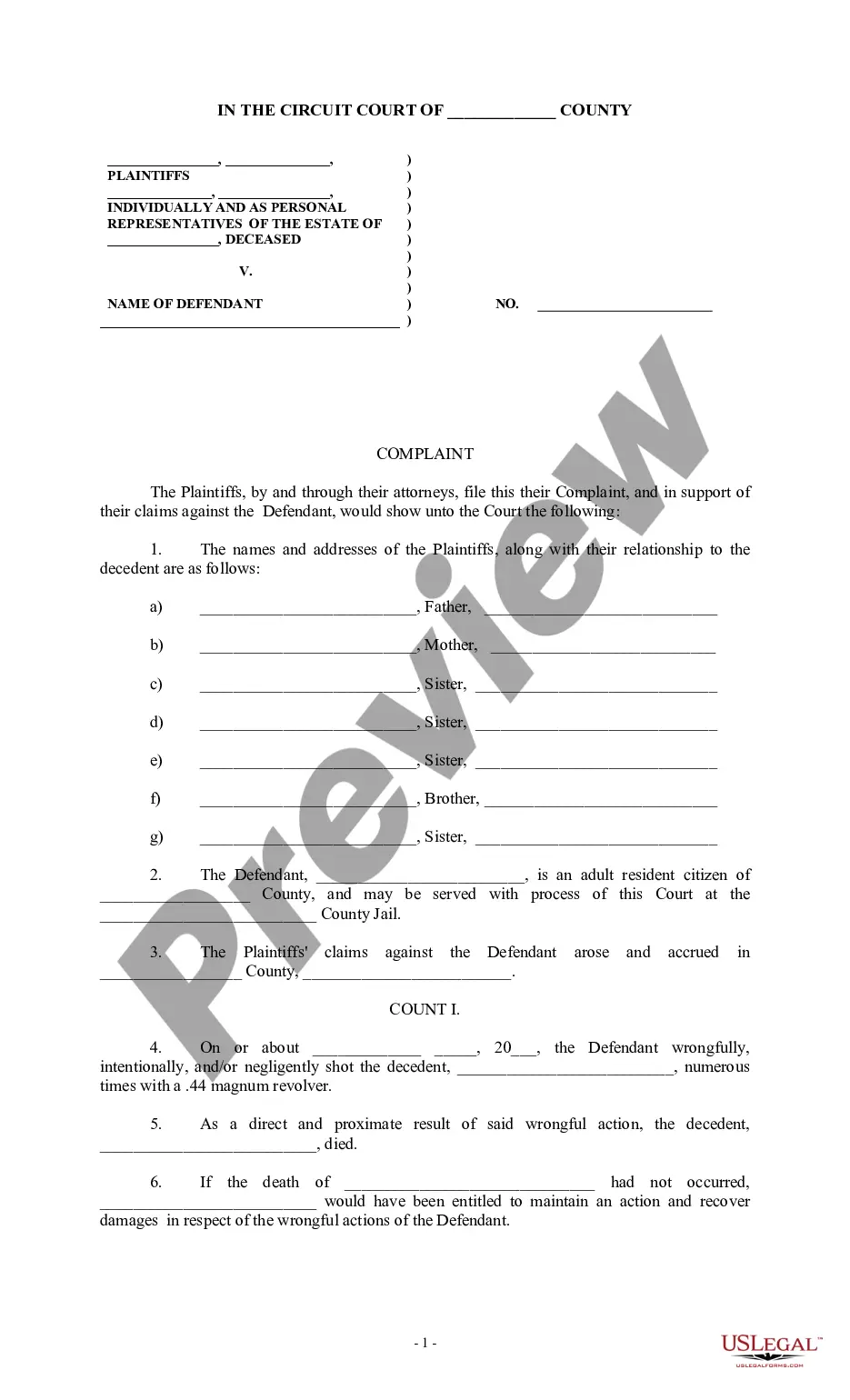
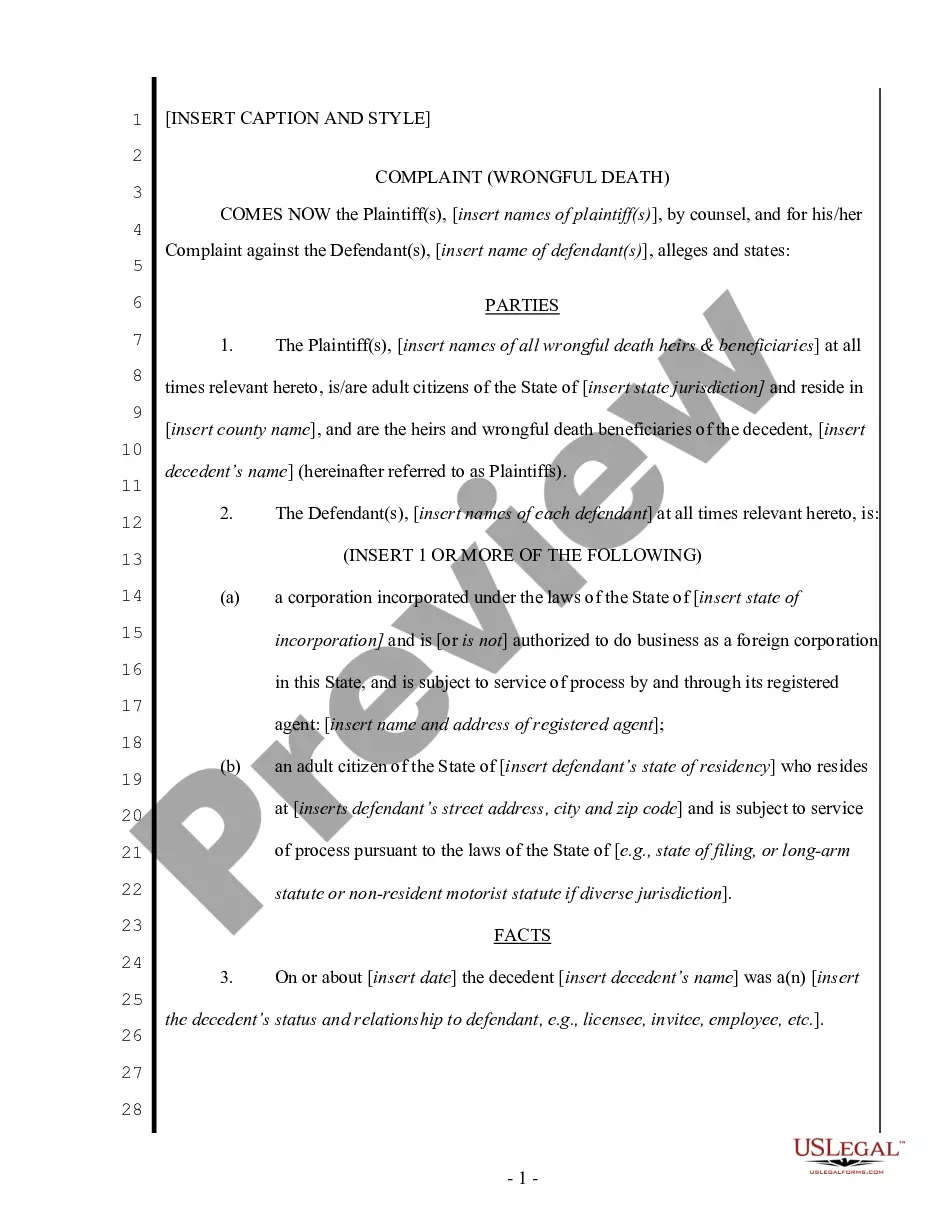
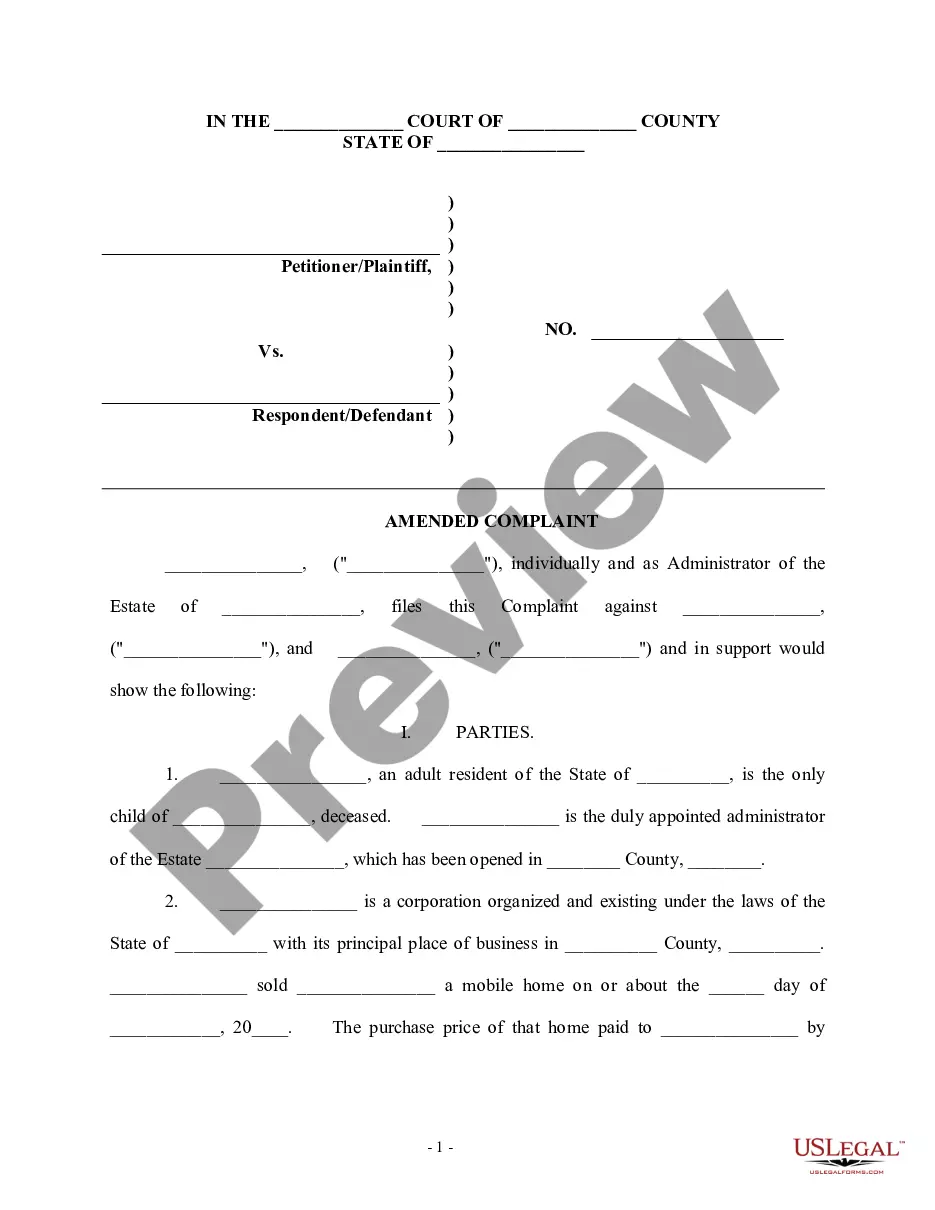
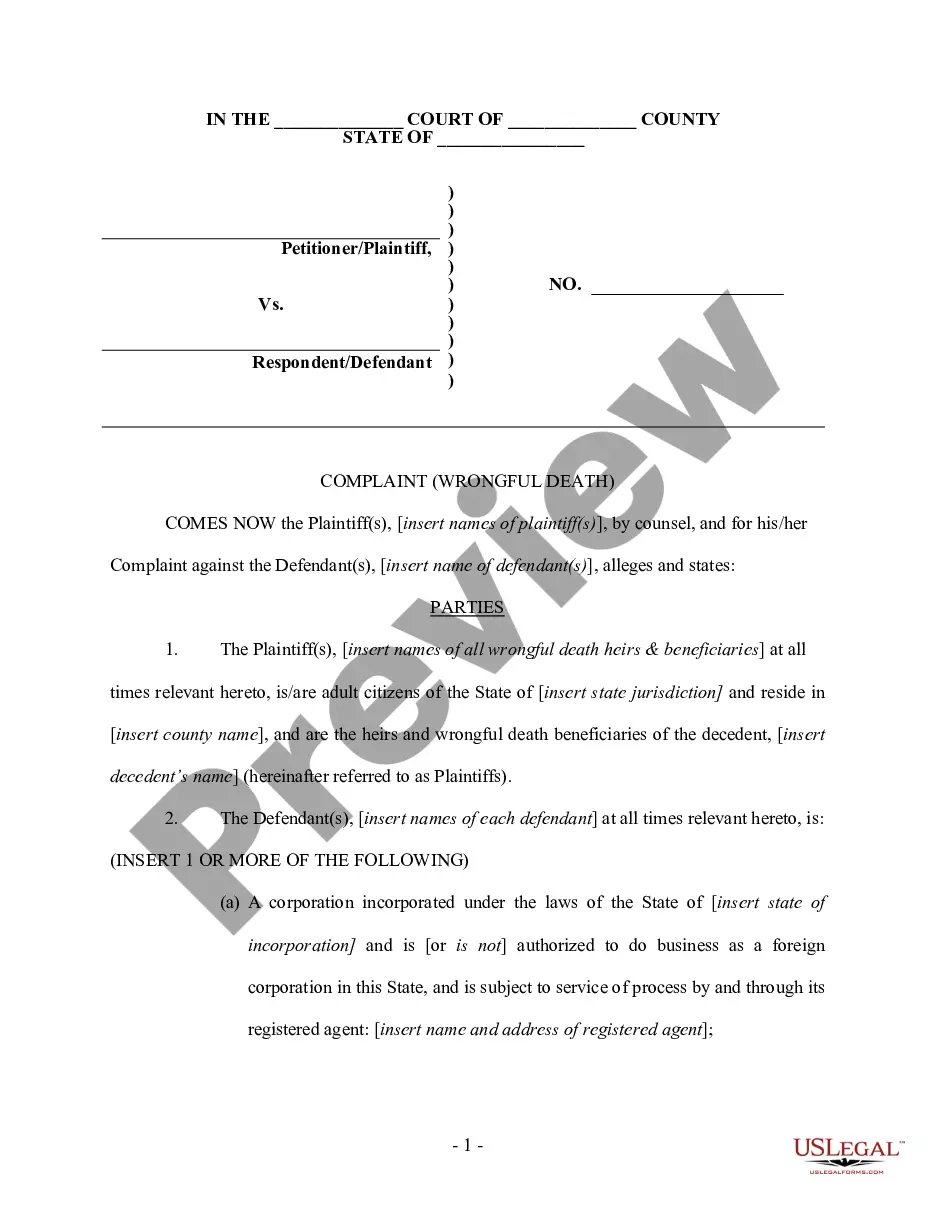
How to fill out Complaint For Wrongful Death - Single Count?
- Log in to your US Legal Forms account if you are a returning user and check your subscription validity.
- If you're new, start by exploring the extensive online library. Search for the wrongful count form statement for insurance and review the preview for accuracy.
- Confirm that the selected template complies with your local jurisdiction's requirements.
- If necessary, utilize the Search tab to find alternative templates that may better suit your needs.
- Select 'Buy Now' after locating the correct form and choose a suitable subscription plan.
- Complete the registration process, providing payment details via credit card or PayPal.
- Finally, download the form to your device and access it anytime through the 'My Forms' menu on your profile.
US Legal Forms stands out with an extensive selection of over 85,000 fillable and editable legal documents. This ensures that individuals and attorneys have access to a wealth of resources tailored to their unique legal needs.
Don't navigate your legal journey alone. Explore US Legal Forms today and ensure your documents are precise and legally sound. Start streamlining your legal processes now!
Form popularity
FAQ
In an insurance statement, provide clear, concise details about the incident, your claims, and any relevant facts. Stick to the truth, focusing on straightforward information that directly supports your claim. A well-crafted wrongful count form statement for insurance not only presents your case effectively but also helps in maintaining transparency and trust with your insurer.
Misrepresentation occurs when an applicant provides false or misleading information on an insurance application. This can be intentional or unintentional, and both situations can lead to significant ramifications. To protect yourself, always ensure your wrongful count form statement for insurance reflects the truth and completeness of your situation.
Lying on an insurance application is referred to as insurance fraud. This act can lead to severe consequences, including denial of claims or cancellation of your policy. It's crucial to provide accurate information to avoid any wrongful count form statement for insurance that might jeopardize your coverage.
Untrue statements on an insurance application can occur due to misunderstandings or lack of knowledge about specific details. For example, forgetting medical history or not fully understanding coverage may lead to misleading information. It’s essential to review your application carefully to avoid any wrongful count form statement for insurance that might affect your coverage.
To write a declaration letter for insurance, start by clearly stating your purpose. Mention your policy details and the incident that prompted your claim. Ensure you include any supporting documentation, such as receipts or photographs. Remember, a well-structured wrongful count form statement for insurance can strengthen your case.
To write a statement for an insurance claim, start by providing basic information such as your policy number and the type of claim. Describe the event leading to the claim in a straightforward manner. Always remember that a complete and well-structured wrongful count form statement for insurance can significantly enhance the approval chances of your claim.
Filling out a sworn statement in proof of loss involves detailing the specifics of the loss, including the value and circumstances. Be honest and precise, ensuring all pertinent information is captured. A thorough approach in this document aids in reinforcing the validity of your wrongful count form statement for insurance.
To write an accident statement for insurance, include the date, time, and location of the incident. Describe what happened in clear, straightforward terms and mention any witnesses. Importantly, ensure your statement aligns with the necessary wrongful count form statement for insurance to support your claim effectively.
To start a sworn statement, begin by stating your name and address, followed by a declaration of the facts you are about to present. Clearly indicate that you are making this statement under oath. This approach helps establish credibility, especially when using the wrongful count form statement for insurance.
An example of a sworn statement might be one declaring that you lost your vehicle registration documents. This statement would include details about the loss and your affirmation of its authenticity. Such sworn statements can be crucial when you need to submit a wrongful count form statement for insurance.