Wrongful Count Civil With A Warrant
Description
Get your form ready online
Our built-in tools help you complete, sign, share, and store your documents in one place.
Make edits, fill in missing information, and update formatting in US Legal Forms—just like you would in MS Word.
Download a copy, print it, send it by email, or mail it via USPS—whatever works best for your next step.
Sign and collect signatures with our SignNow integration. Send to multiple recipients, set reminders, and more. Go Premium to unlock E-Sign.
If this form requires notarization, complete it online through a secure video call—no need to meet a notary in person or wait for an appointment.
We protect your documents and personal data by following strict security and privacy standards.

Make edits, fill in missing information, and update formatting in US Legal Forms—just like you would in MS Word.

Download a copy, print it, send it by email, or mail it via USPS—whatever works best for your next step.

Sign and collect signatures with our SignNow integration. Send to multiple recipients, set reminders, and more. Go Premium to unlock E-Sign.

If this form requires notarization, complete it online through a secure video call—no need to meet a notary in person or wait for an appointment.

We protect your documents and personal data by following strict security and privacy standards.
Looking for another form?






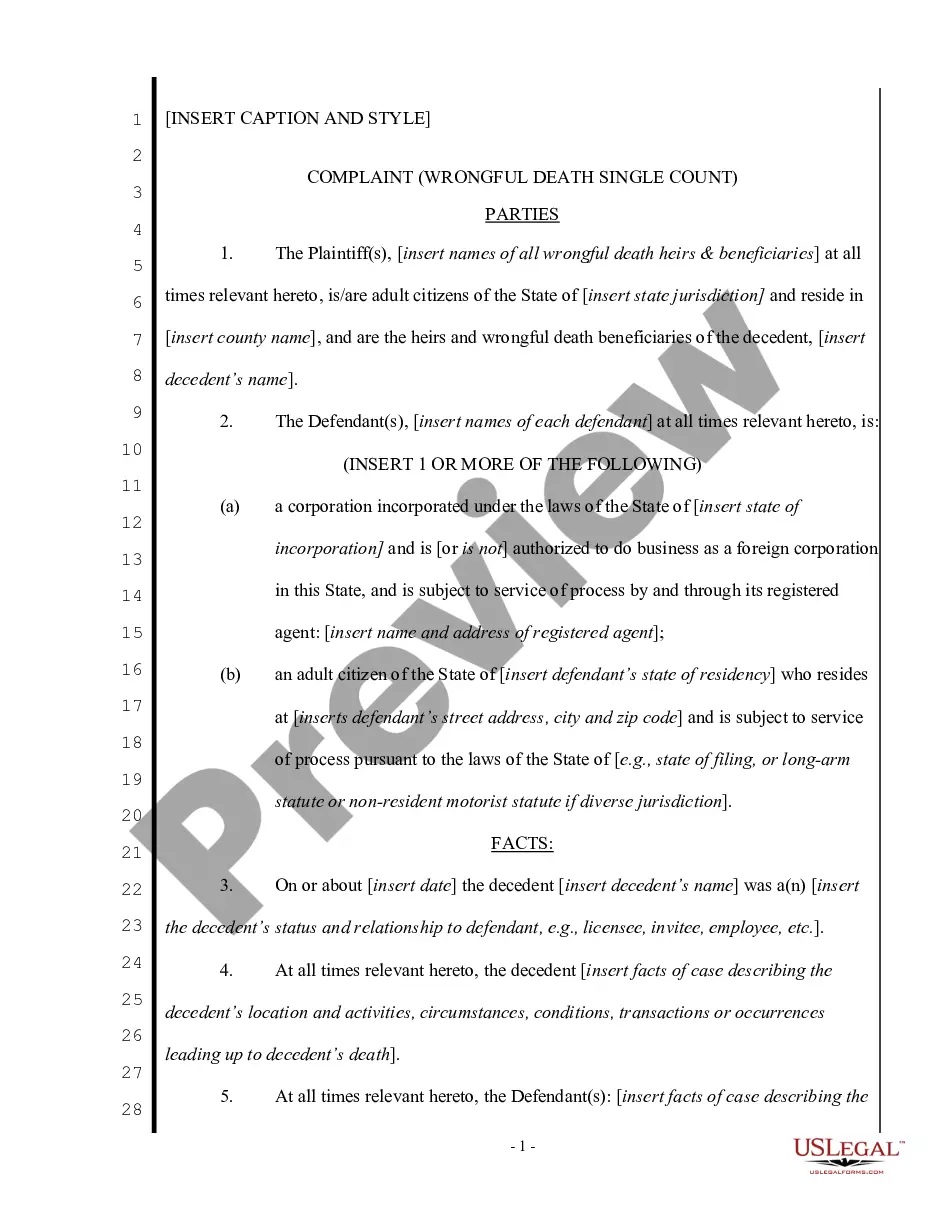
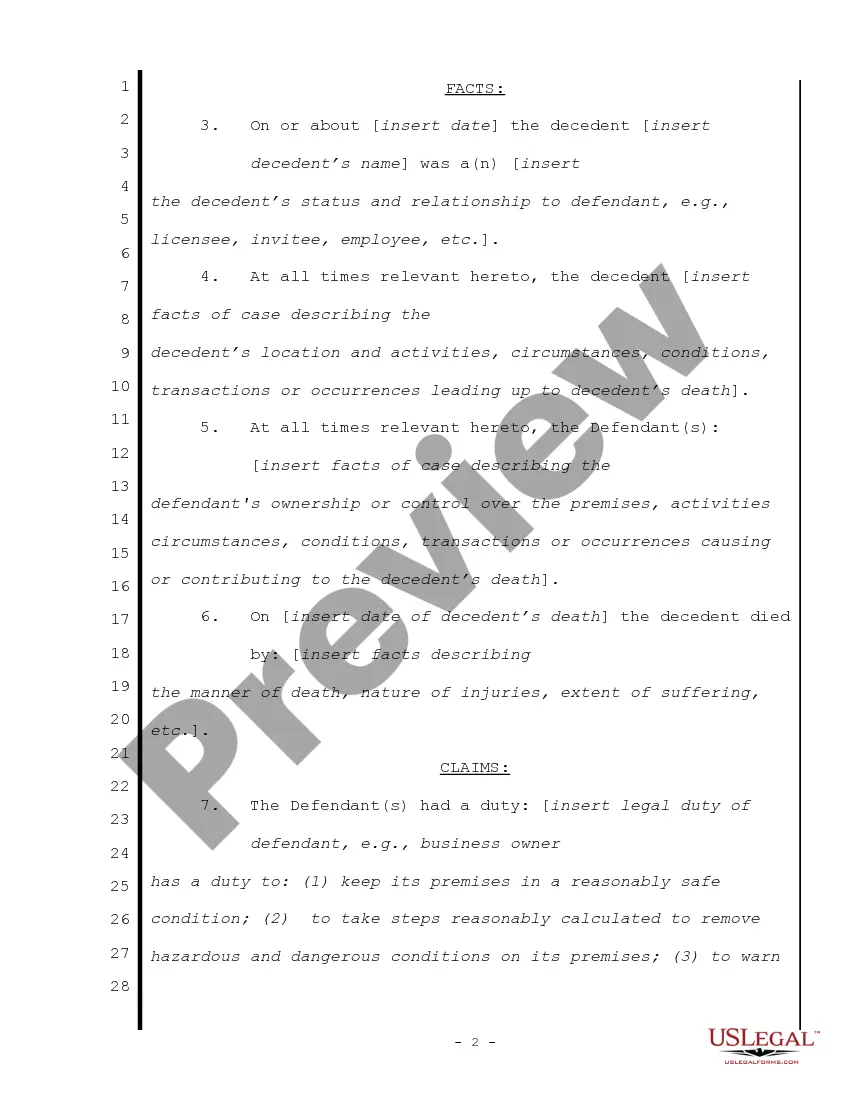
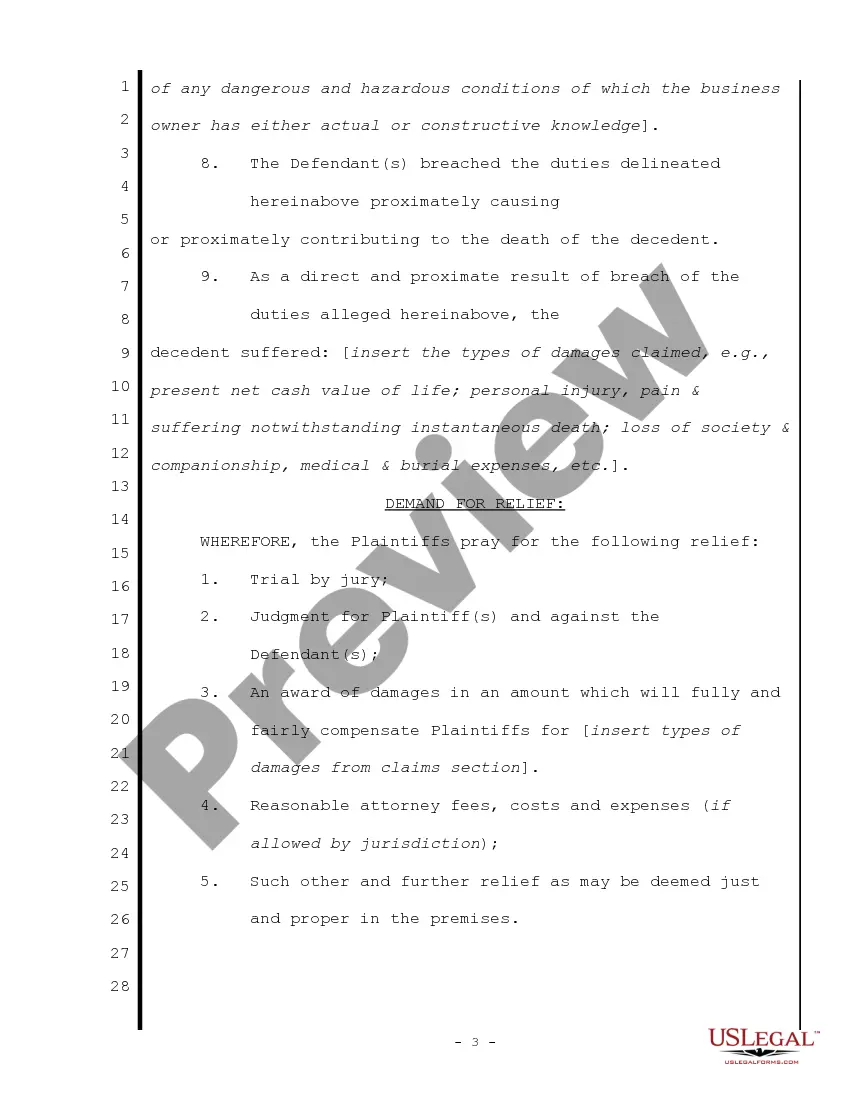
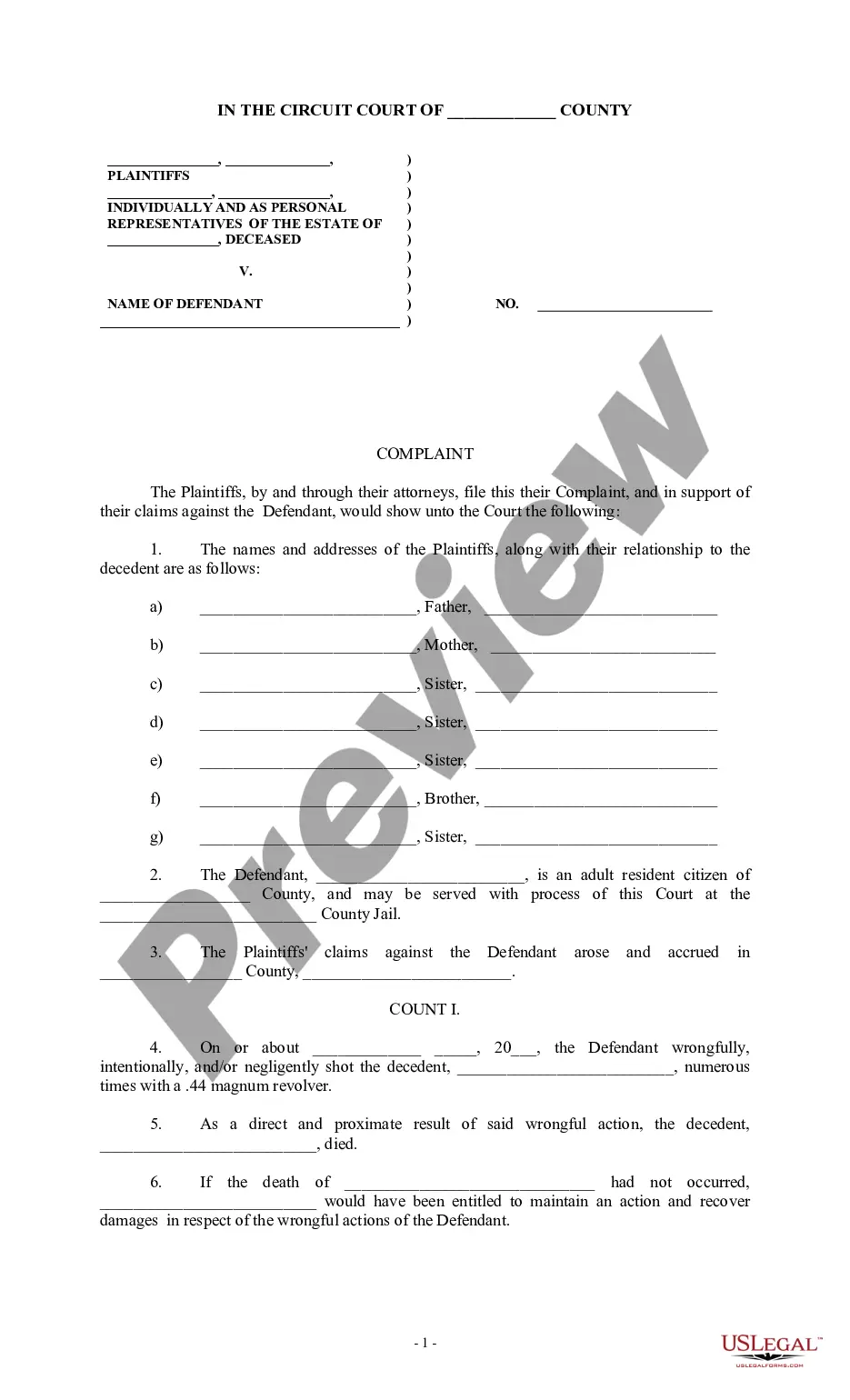
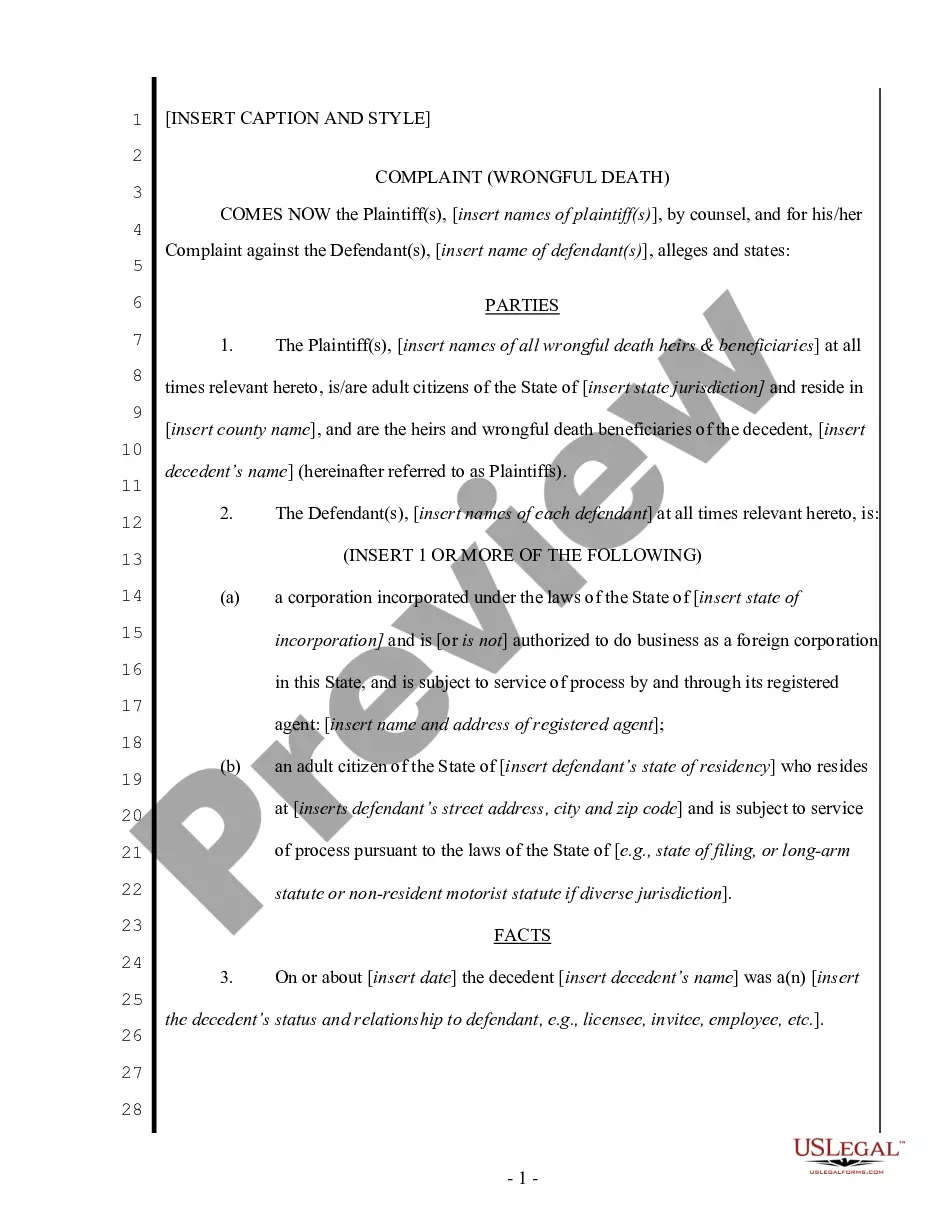
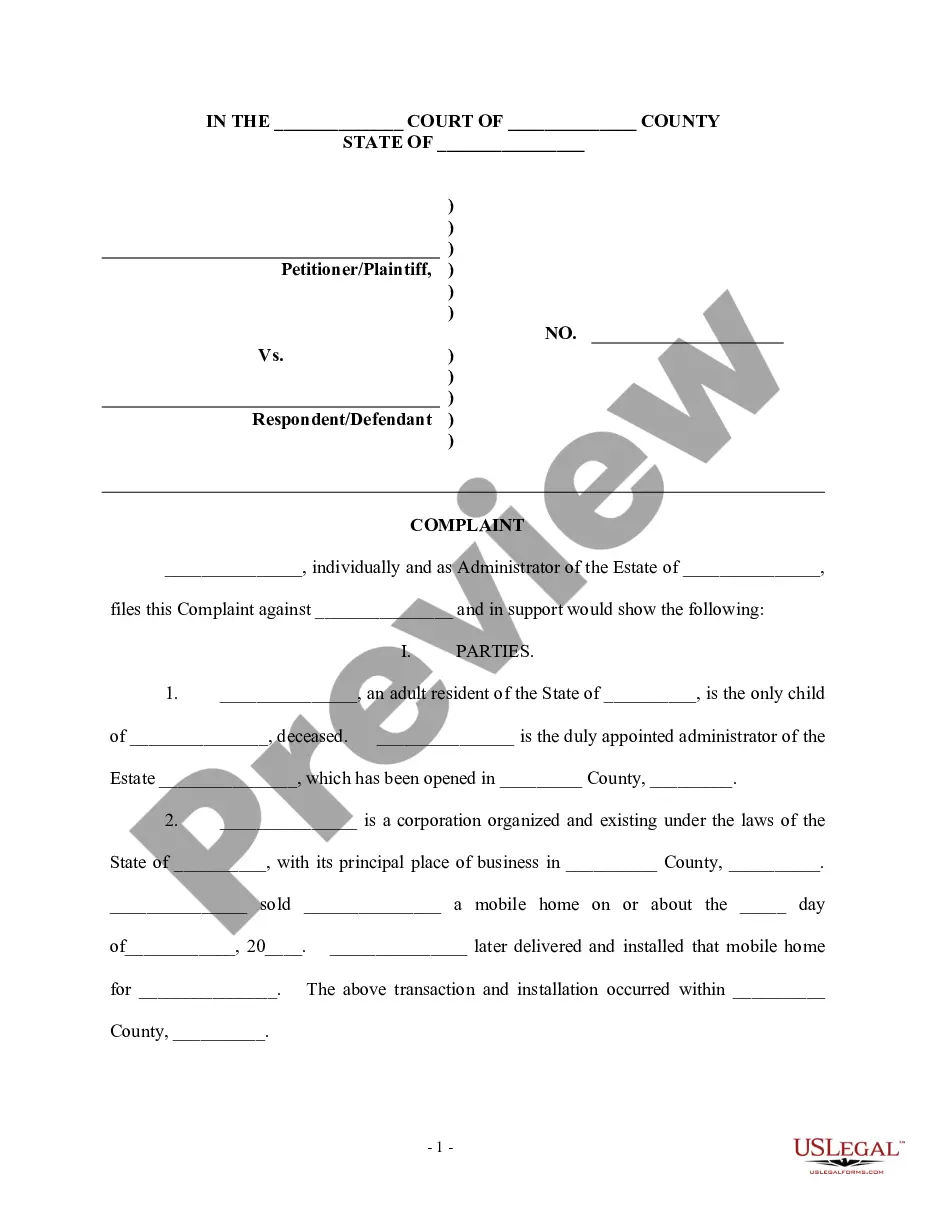
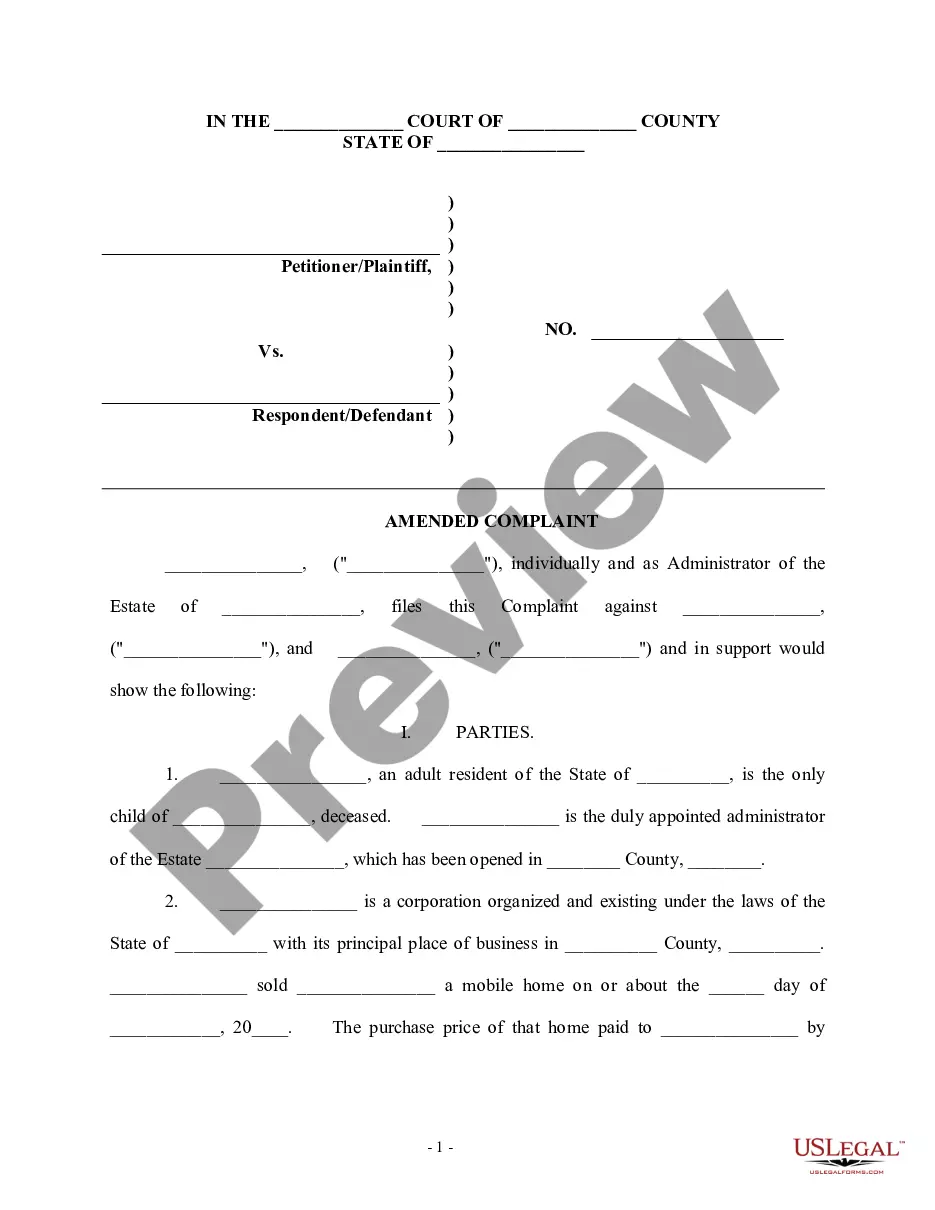
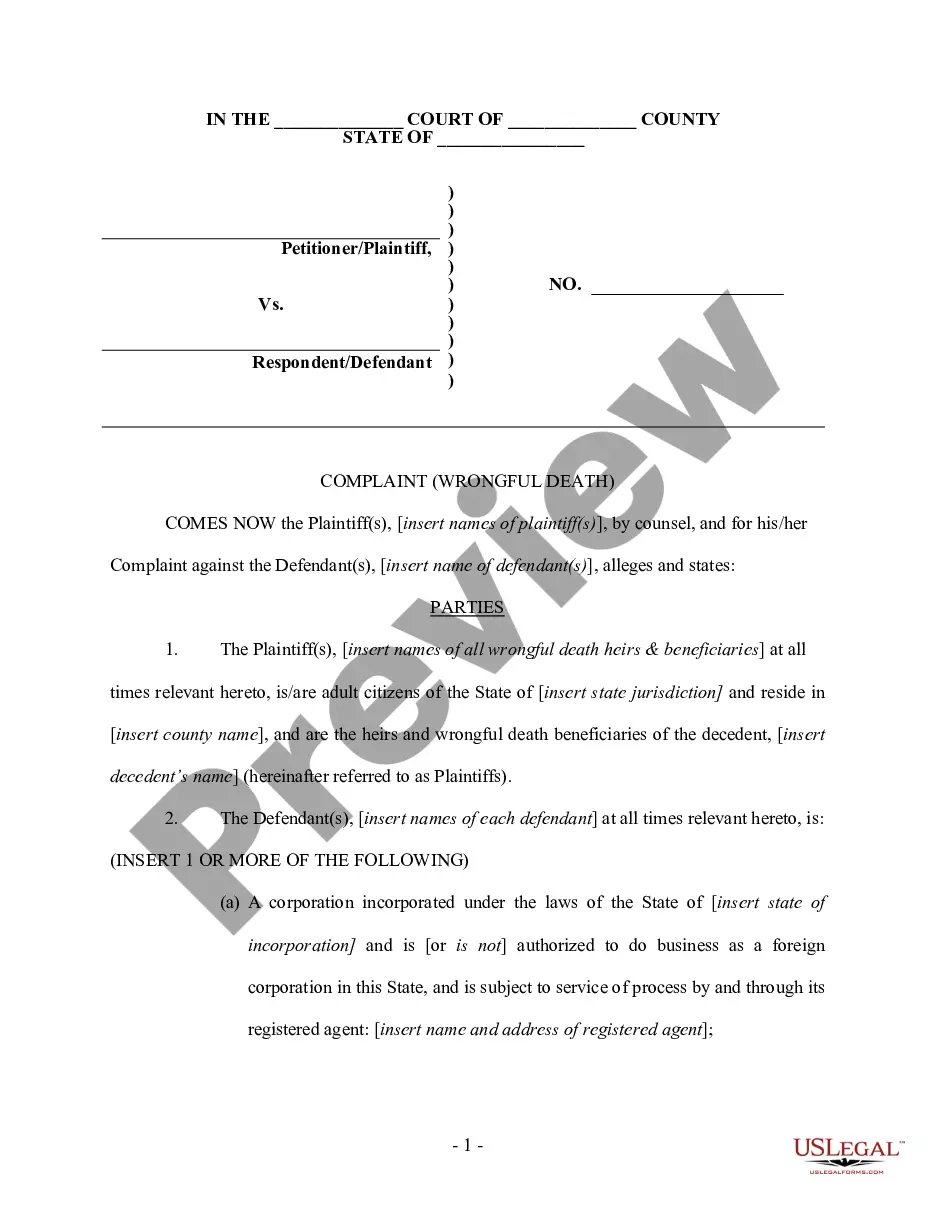
How to fill out Complaint For Wrongful Death - Single Count?
- Log in to your US Legal Forms account if you are a returning user. If your subscription is inactive, renew it as per your payment plan.
- For first-time users, start by reviewing the types of documents available. Ensure you select one that complies with your local jurisdiction's requirements.
- If the form you need isn’t available, utilize the search feature to find the right template tailored to your needs.
- To proceed with your chosen document, click the Buy Now button and select a suitable subscription plan. Registration is required to access the full library.
- Complete your purchase by entering your payment details via credit card or PayPal.
- Finally, download the form to your device and access it anytime from the My Forms section of your account.
By relying on US Legal Forms, you benefit from a robust collection of over 85,000 easily fillable legal forms, backed by an assurance of accuracy and legal soundness.
Start your journey to securing the correct wrongful count civil document today! Visit US Legal Forms to explore your options.
Form popularity
FAQ
Yes, you can look up warrants in New Mexico through the New Mexico Courts website or other legal resources. Many counties provide online databases that allow you to search for active warrants. Knowing how to access this information is vital, especially if you are concerned about potential wrongful count civil with a warrant.
A civil warrant is a legal document that allows a party to enforce a court ruling, typically in civil matters rather than criminal ones. It may be issued to allow for the collection of a debt or to ensure compliance with a court order. If you are dealing with wrongful count civil with a warrant, you must understand the implications of civil warrants on your rights.
To get a warrant struck, you typically need to file a motion in the court that issued the warrant. This motion should explain the reasons for requesting the warrant's removal, often citing legal grounds such as lack of probable cause. Utilizing platforms like US Legal Forms can help you prepare the necessary documents to navigate the process of addressing wrongful count civil with a warrant.
In Connecticut, warrants do not have an expiration date; they remain valid until they are executed or recalled by the court. This means that even if you are unaware of a warrant, it can still be enforced at any time. Understanding this is crucial, especially for those facing wrongful count civil with a warrant.
The two most common types of warrants are arrest warrants and search warrants. Arrest warrants allow law enforcement to take a person into custody based on probable cause of a crime, while search warrants enable officials to search specific locations for evidence of a crime. Both types are essential in cases related to wrongful count civil with a warrant.
To obtain a warrant, law enforcement must meet four key requirements: the offense must be specified, probable cause must be demonstrated, the supporting evidence must be presented to a judge, and the warrant must clearly describe the place to be searched and the items to be seized. These requirements help protect individuals against unreasonable searches, especially in cases involving wrongful count civil with a warrant.
Filing a warrant against someone requires submitting a request to a court, accompanied by sufficient evidence to justify the warrant. This often includes filling out specific forms and providing supporting documentation. If you're facing issues related to wrongful counts civil with a warrant, understanding how to properly file can make a significant difference. You can find the necessary forms and guidance on platforms like uslegalforms to streamline the process.
To obtain a warrant, law enforcement typically needs probable cause, which means they must show sufficient evidence to suggest criminal activity. This evidence can include witness accounts, physical evidence, or documented behavior. Understanding this requirement can help you assess situations involving wrongful counts civil with a warrant. If you're unsure, consult with legal professionals who can clarify the standards in your area.
Reporting someone with a warrant involves contacting local law enforcement or the appropriate authority handling the warrant. Provide them with as much information as possible about the individual, including their location and any potentially relevant circumstances. Ensuring that this is done correctly helps uphold the justice system and addresses wrongful counts civil with a warrant matters effectively. For guidance on this process, visit uslegalforms.
Proving a false affidavit requires gathering credible evidence that shows the information presented is inaccurate or misleading. This often involves presenting witness statements, documents, or records that contradict the affidavit's claims. Addressing potential wrongful counts civil with a warrant requires attention to detail and strong evidence to support your case. If needed, consider seeking assistance from legal professionals.