Wrongful Count Civil Contract For Service
Description
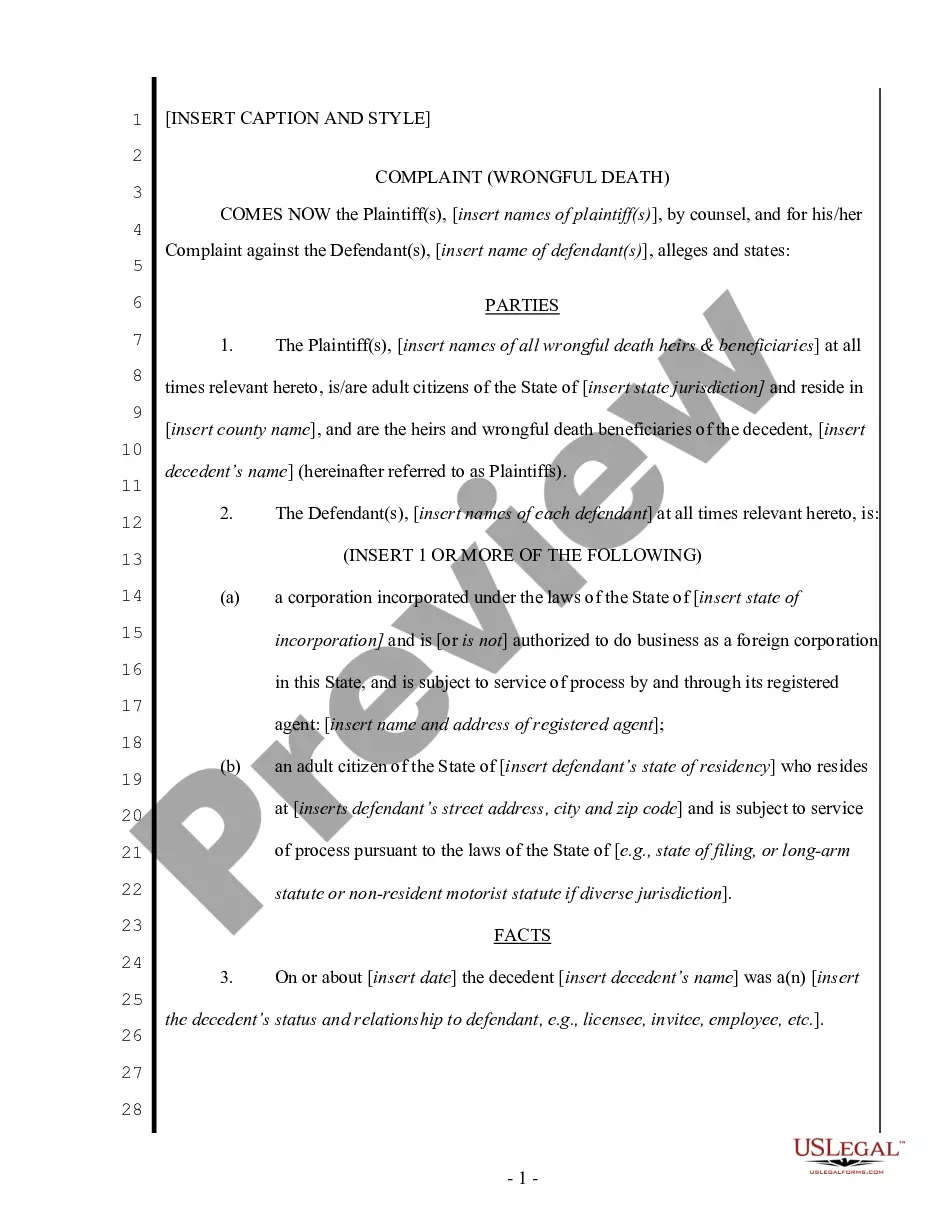

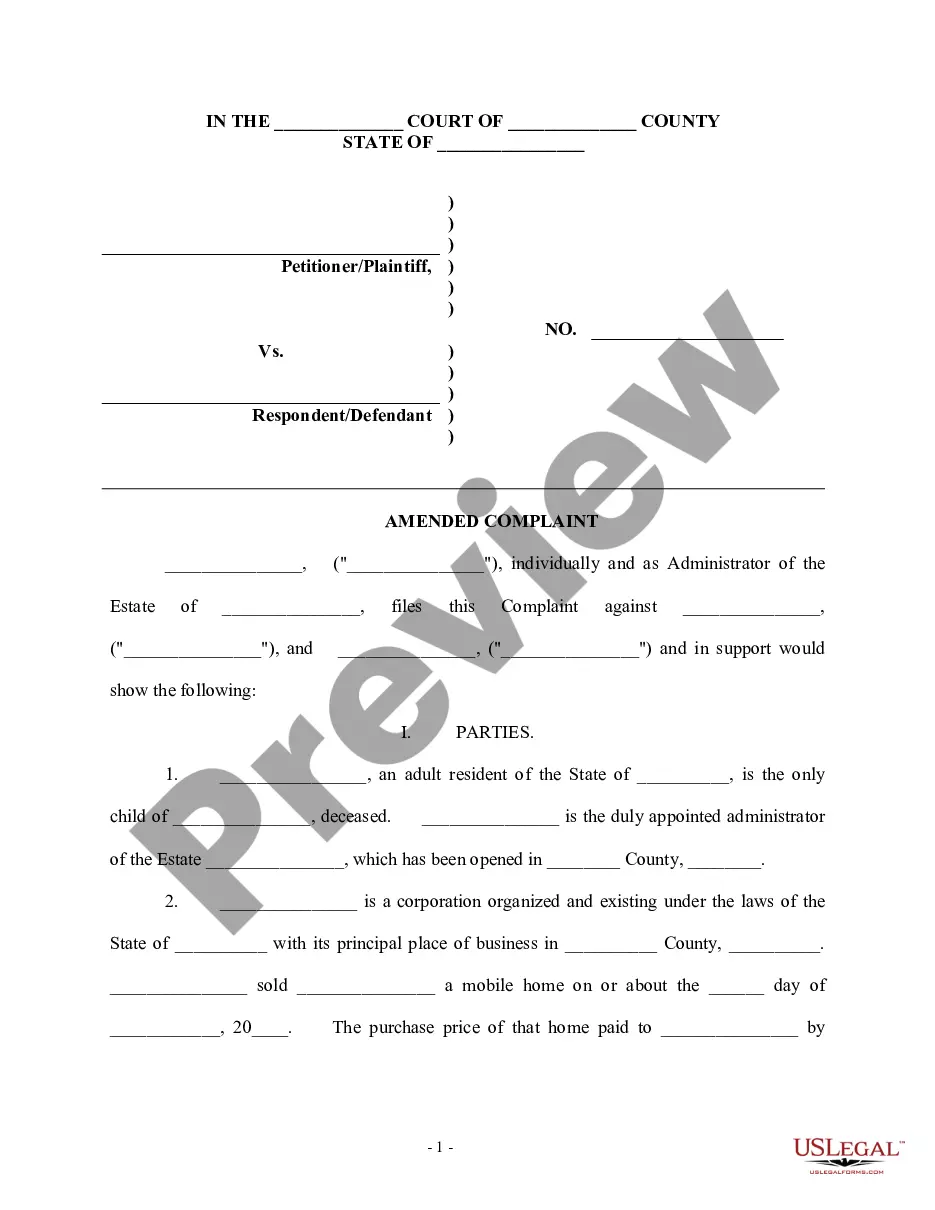
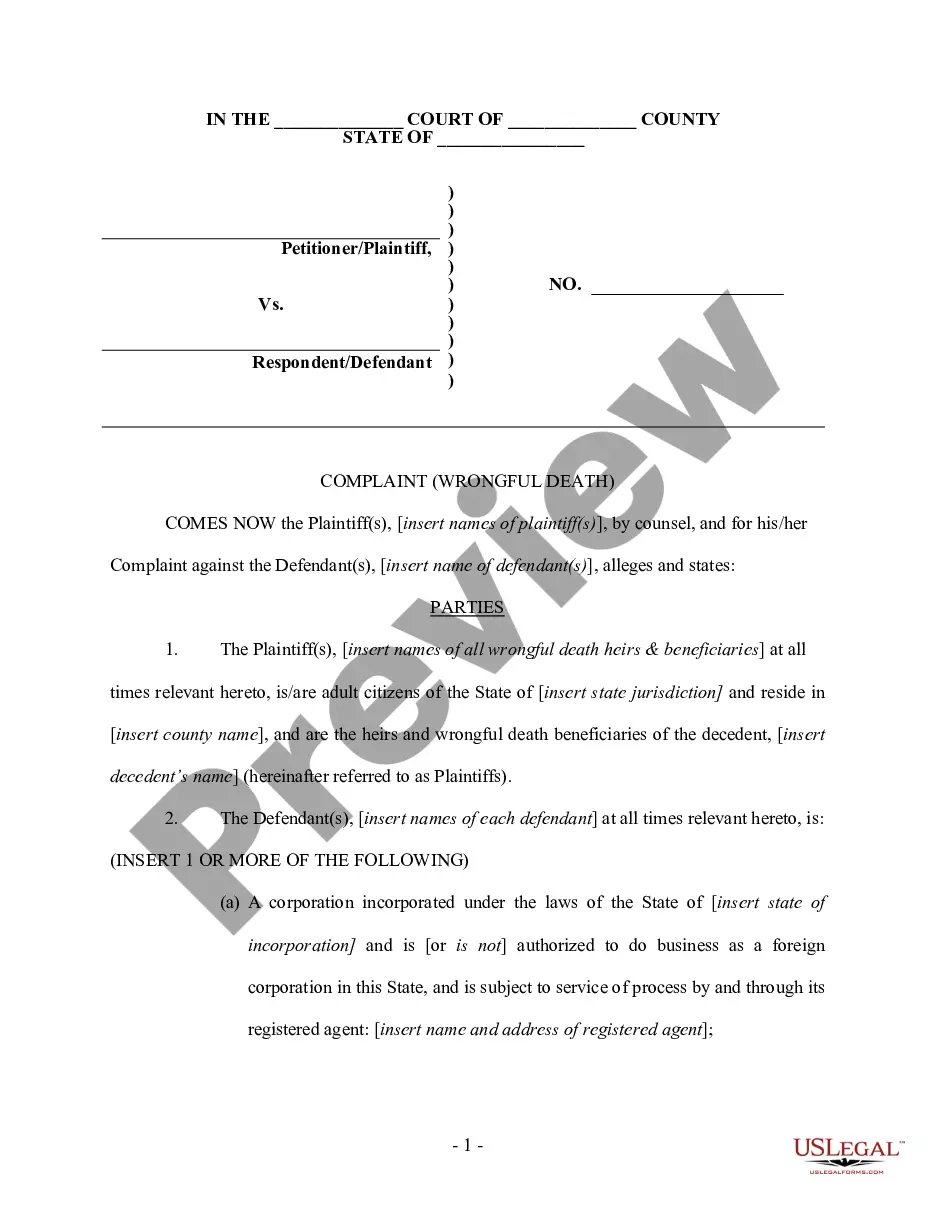
Get your form ready online
Our built-in tools help you complete, sign, share, and store your documents in one place.
Make edits, fill in missing information, and update formatting in US Legal Forms—just like you would in MS Word.
Download a copy, print it, send it by email, or mail it via USPS—whatever works best for your next step.
Sign and collect signatures with our SignNow integration. Send to multiple recipients, set reminders, and more. Go Premium to unlock E-Sign.
If this form requires notarization, complete it online through a secure video call—no need to meet a notary in person or wait for an appointment.
We protect your documents and personal data by following strict security and privacy standards.

Make edits, fill in missing information, and update formatting in US Legal Forms—just like you would in MS Word.

Download a copy, print it, send it by email, or mail it via USPS—whatever works best for your next step.

Sign and collect signatures with our SignNow integration. Send to multiple recipients, set reminders, and more. Go Premium to unlock E-Sign.

If this form requires notarization, complete it online through a secure video call—no need to meet a notary in person or wait for an appointment.

We protect your documents and personal data by following strict security and privacy standards.
Looking for another form?


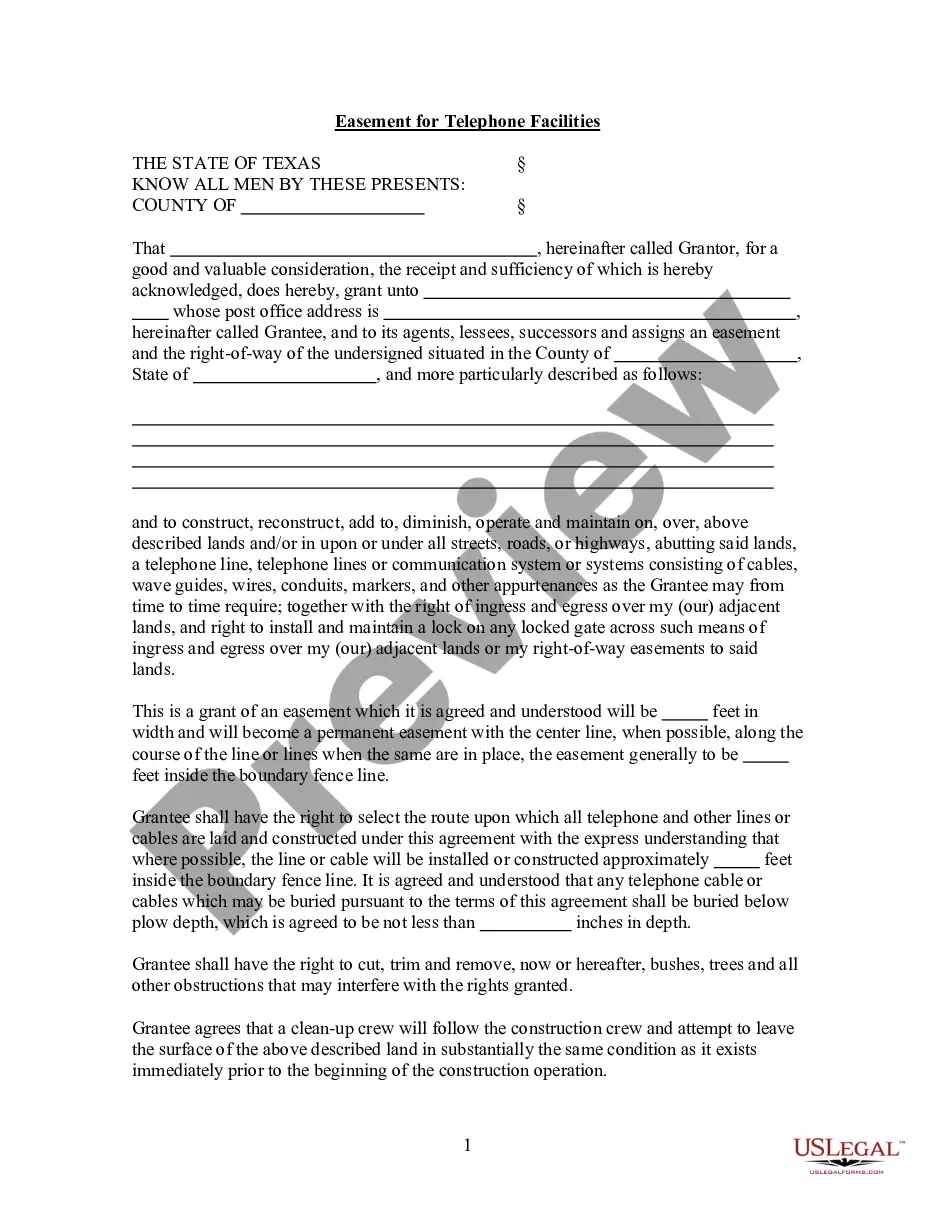


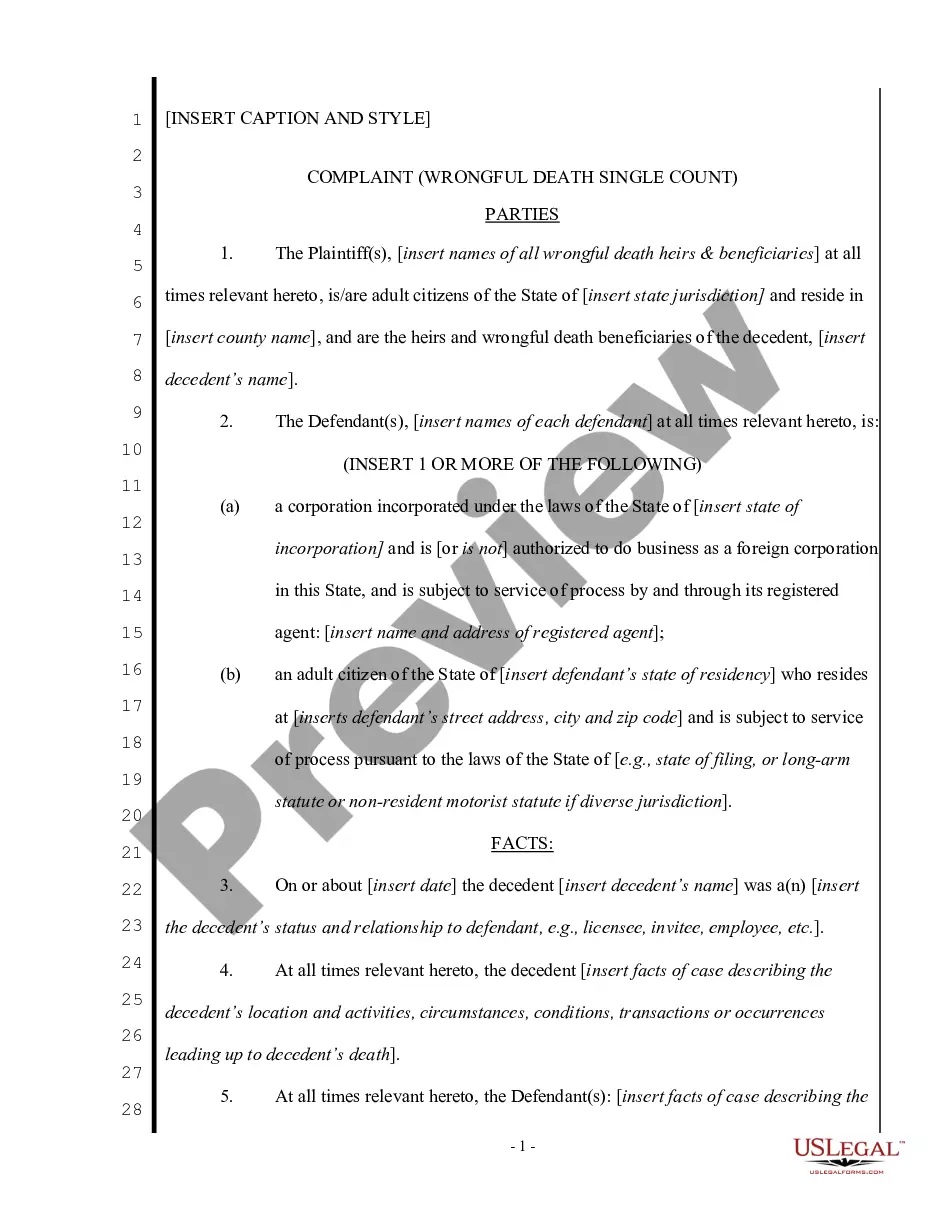
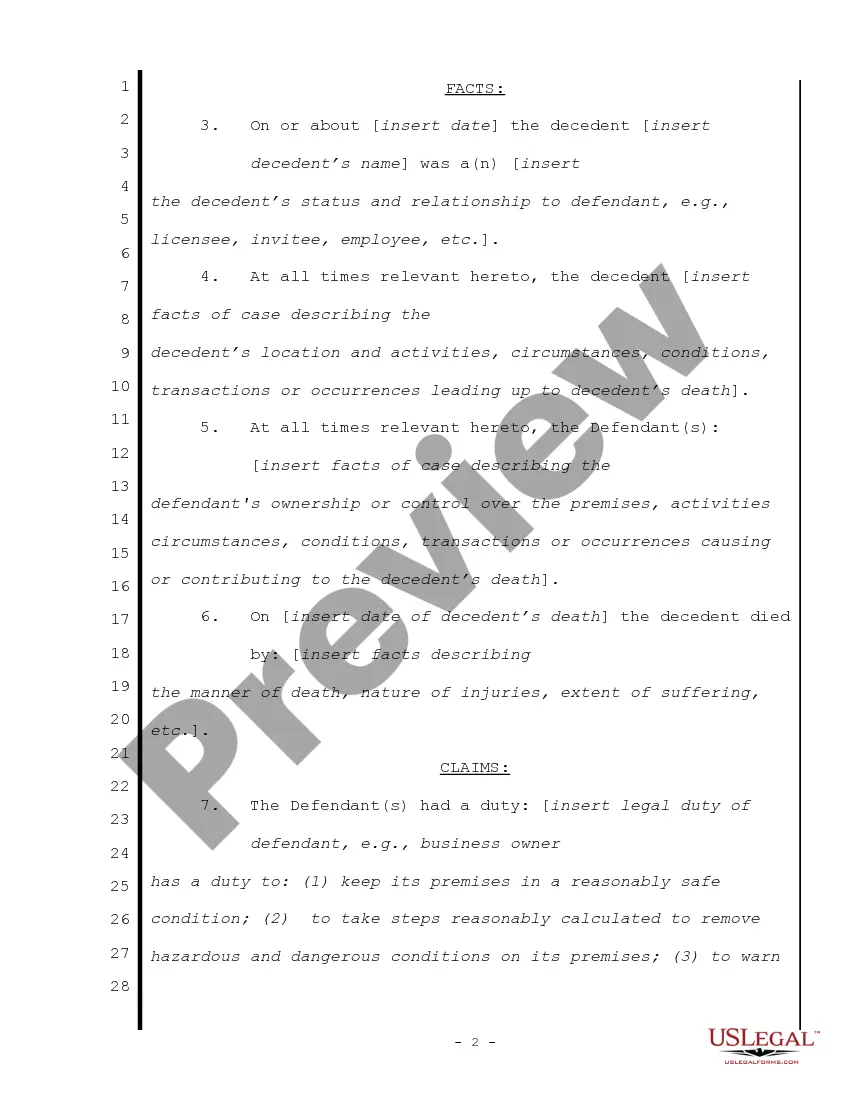
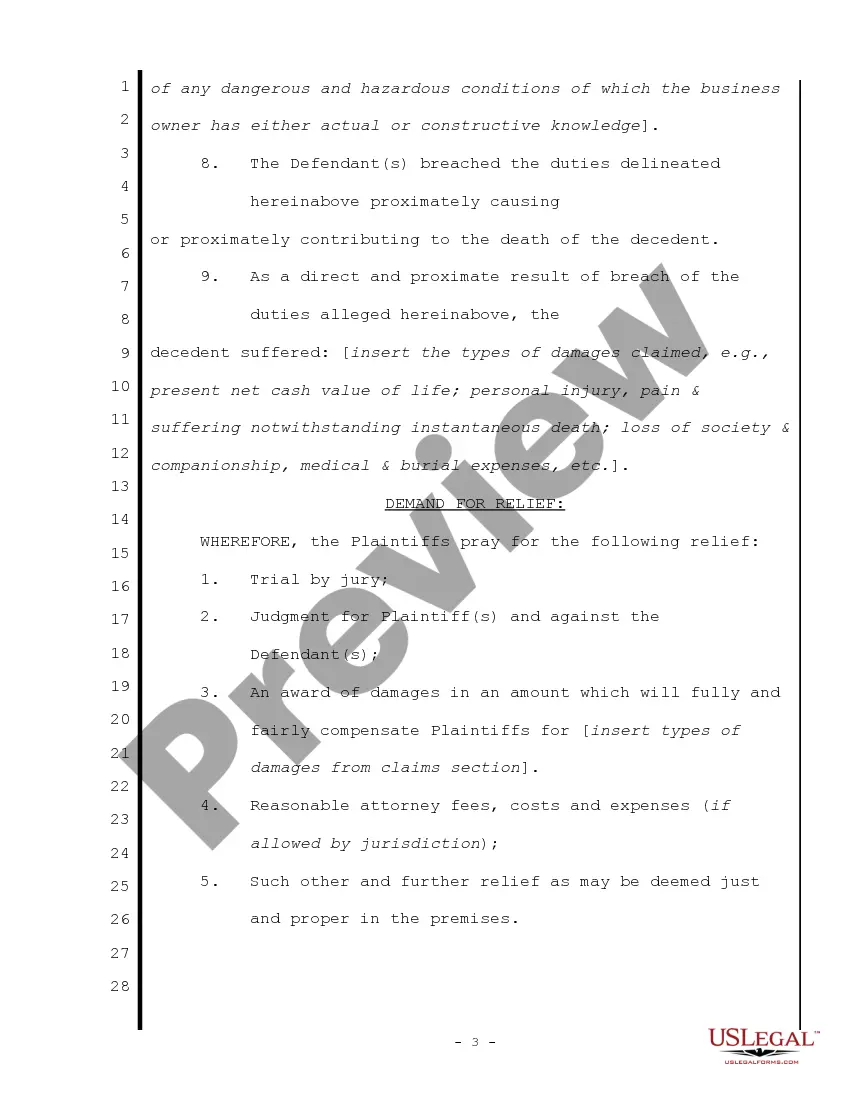
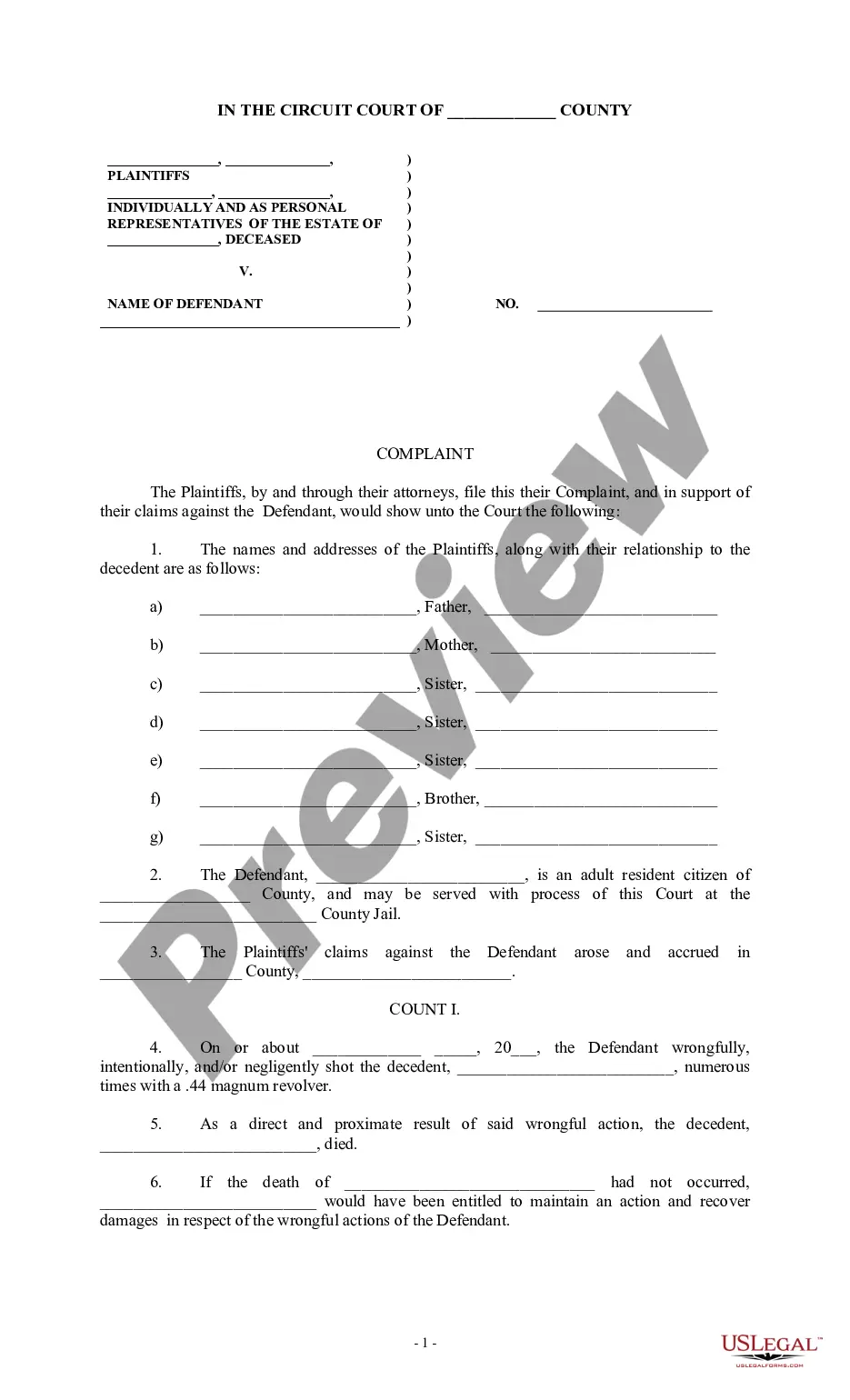
How to fill out Complaint For Wrongful Death - Single Count?
- If you're a returning user, log in to your account and retrieve the required form template by selecting the Download button. Ensure your subscription is current or renew it according to your selected payment plan.
- For first-time users, begin by checking the Preview mode to assess the form description. Verify that the chosen document aligns with your requirements and local regulations.
- Search for additional templates as needed. If you encounter discrepancies, utilize the Search tab to find the accurate document that suits your needs.
- Proceed to purchase the document. Click on the Buy Now button and select your preferred subscription plan, creating an account for library access.
- Complete your purchase by entering your credit card information or opting for PayPal for subscription payment.
- Download the finalized form onto your device, making it available for completion. Access it anytime under the My Forms section in your profile.
With US Legal Forms, you can be confident in the accuracy and legality of your documents. Our service empowers you with extensive resources and expert assistance, making legal documentation straightforward.
Take control of your legal needs today and experience the simplicity of US Legal Forms for all your legal document requirements!
Form popularity
FAQ
A contract is often deemed unconscionable when it involves a significant imbalance of power, when one party lacks meaningful choice, or when the terms are excessively unfair. In the context of wrongful count civil contract for service cases, these elements can invalidate a contract if they create an unjust situation. Consulting with a legal platform like US Legal Forms can aid in ensuring your contracts are fair and enforceable.
Yes, the Statute of Frauds can apply to certain service contracts, particularly when the agreement is not expected to be completed within a year. This means if the service duration is lengthy or involves significant financial implications, it may need to be in writing. Knowing how the Statute of Frauds affects your wrongful count civil contract for service can help ensure you are on firm legal ground.
The Statute of Frauds applies primarily to contracts that involve the sale of real estate, agreements that cannot be performed within one year, and contracts involving the sale of goods over a certain amount. Additionally, it covers contracts related to marriage and surety agreements. Understanding these specifics is crucial, especially regarding wrongful count civil contract for service cases, where clarity in contract terms can prevent legal disputes.
Legal grounds for making a contract invalid include lack of capacity, illegality, absence of consent, and noncompliance with applicable laws. For instance, a wrongful count civil contract for service may be invalid if one party is underage or mentally incapacitated. Furthermore, if the terms violate existing laws, the contract will not be enforceable. Hence, understanding these grounds can help ensure that your contracts are valid and secure.
Contracts can be invalidated due to mistakes in fact, mutual mistake, unilateral mistake, or mistakes about the value of the contract. If all parties are mistaken about a key fact related to a wrongful count civil contract for service, the contract may not hold up in court. Furthermore, misunderstandings about the obligations or benefits can lead to disputes. Being thorough during contract discussions can help avoid these situations.
A breach of an employment contract is generally treated as a civil offense. This means that the affected party may seek damages or specific performance through a civil lawsuit. In the case of a wrongful count civil contract for service, it is crucial to understand your rights and obligations to avoid legal complications. Consulting with a legal expert can provide clarity on these issues.
The statute of frauds mandates that certain types of contracts, including those for services lasting more than a year, must be in writing to be enforceable. This requirement helps prevent misunderstandings and fraudulent claims in agreements like a wrongful count civil contract for service. It’s essential to document the terms and conditions clearly to protect both parties. Thus, always consider formalizing agreements in writing.
A contract can be void for several reasons including illegality, lack of capacity, and mutual mistake. If the contract involves illegal terms or if one party does not have the legal ability to agree, it becomes void. Additionally, if both parties misunderstood a fundamental aspect, such as the service to be provided, the agreement may be deemed void. Understanding these pitfalls can help you avoid potential legal issues.
Tortious interference occurs when a third party intentionally disrupts an existing contract between two parties. For instance, if a competitor persuades one party to breach a wrongful count civil contract for service, this can result in liability for the third party. Such actions are unlawful and can lead to legal disputes. Protecting your contracts from outside interference is essential for maintaining business integrity.
A contract becomes legally invalid when it lacks essential elements such as mutual consent, capacity, lawful purpose, and consideration. If any of these elements are absent, particularly in a wrongful count civil contract for service, the contract cannot be enforced in a court of law. Additionally, if one party was coerced or deceived into agreeing, the contract is void. Thus, understanding the components of a valid contract is crucial.