Wrongful Count Civil Actions For Theft
Description

Get your form ready online
Our built-in tools help you complete, sign, share, and store your documents in one place.
Make edits, fill in missing information, and update formatting in US Legal Forms—just like you would in MS Word.
Download a copy, print it, send it by email, or mail it via USPS—whatever works best for your next step.
Sign and collect signatures with our SignNow integration. Send to multiple recipients, set reminders, and more. Go Premium to unlock E-Sign.
If this form requires notarization, complete it online through a secure video call—no need to meet a notary in person or wait for an appointment.
We protect your documents and personal data by following strict security and privacy standards.

Make edits, fill in missing information, and update formatting in US Legal Forms—just like you would in MS Word.

Download a copy, print it, send it by email, or mail it via USPS—whatever works best for your next step.

Sign and collect signatures with our SignNow integration. Send to multiple recipients, set reminders, and more. Go Premium to unlock E-Sign.

If this form requires notarization, complete it online through a secure video call—no need to meet a notary in person or wait for an appointment.

We protect your documents and personal data by following strict security and privacy standards.
Looking for another form?







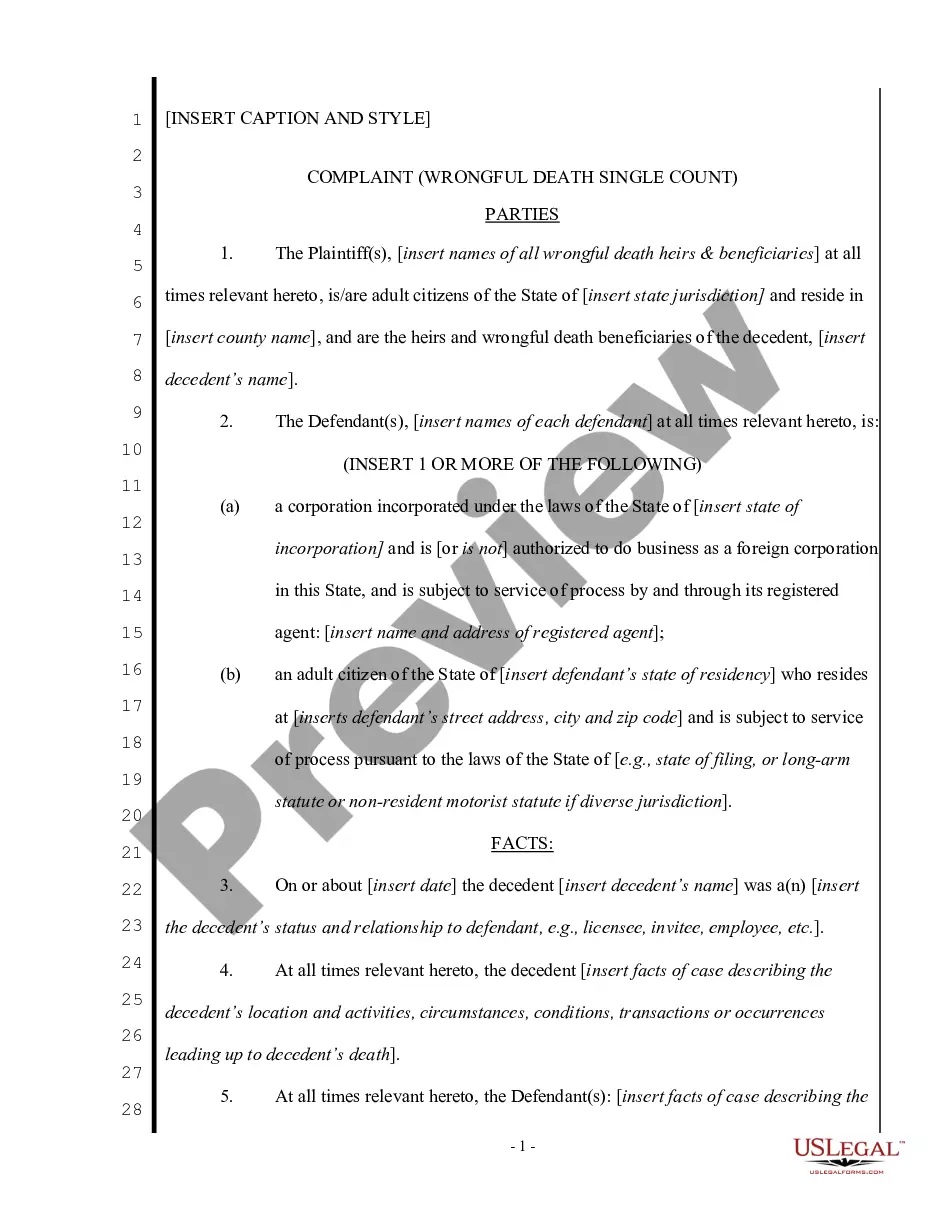
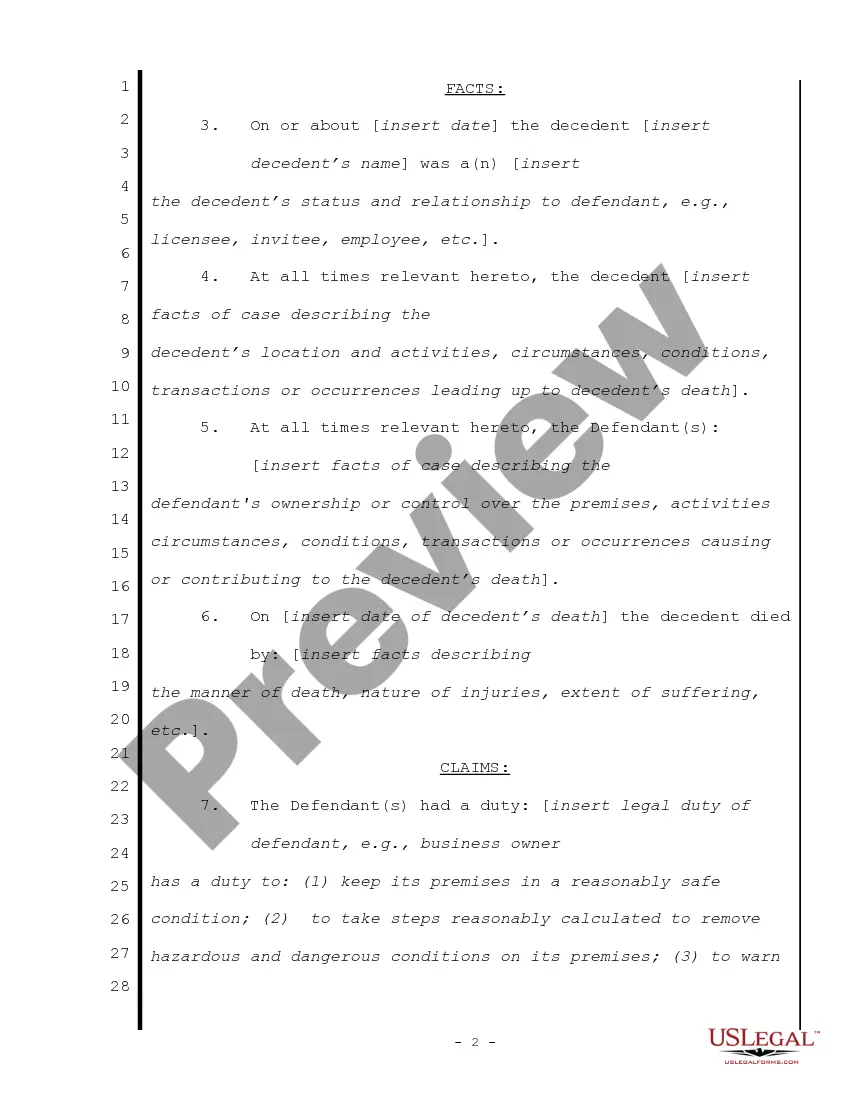
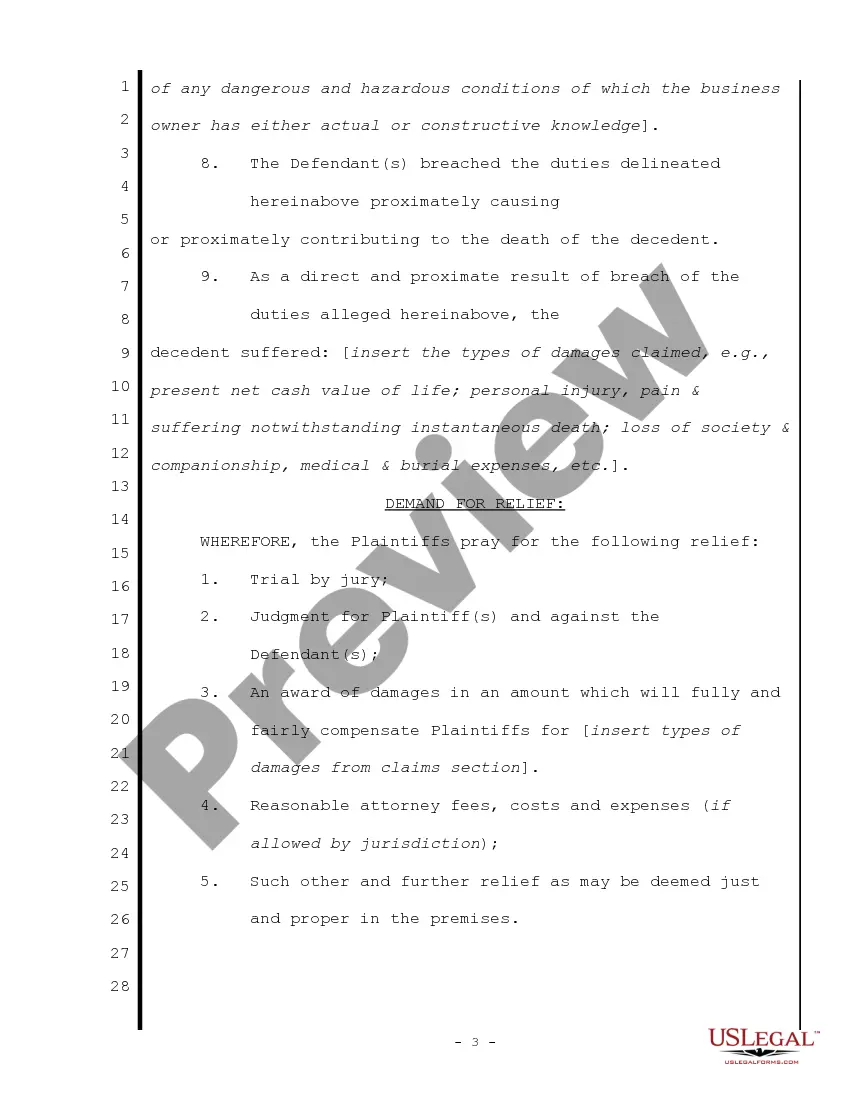
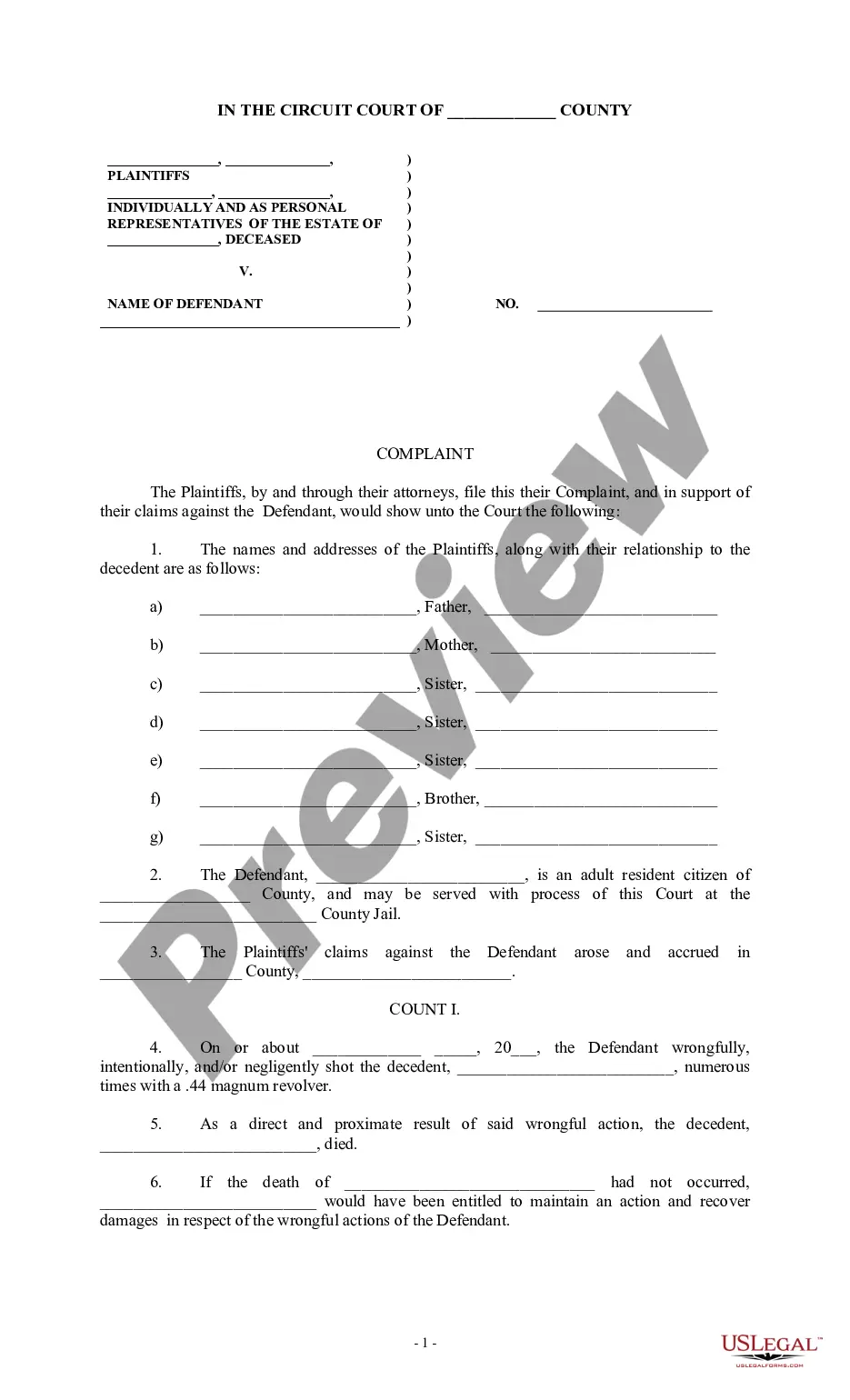
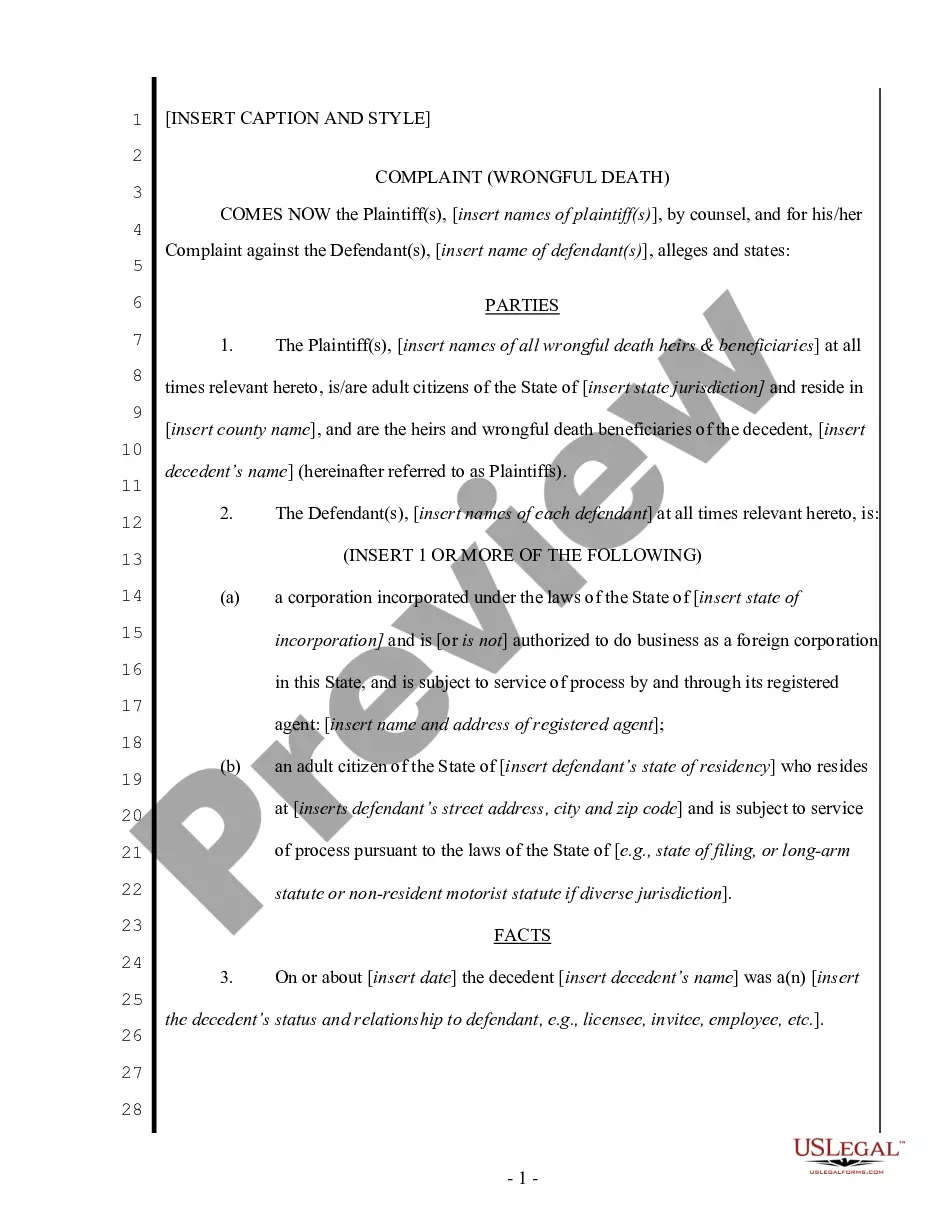
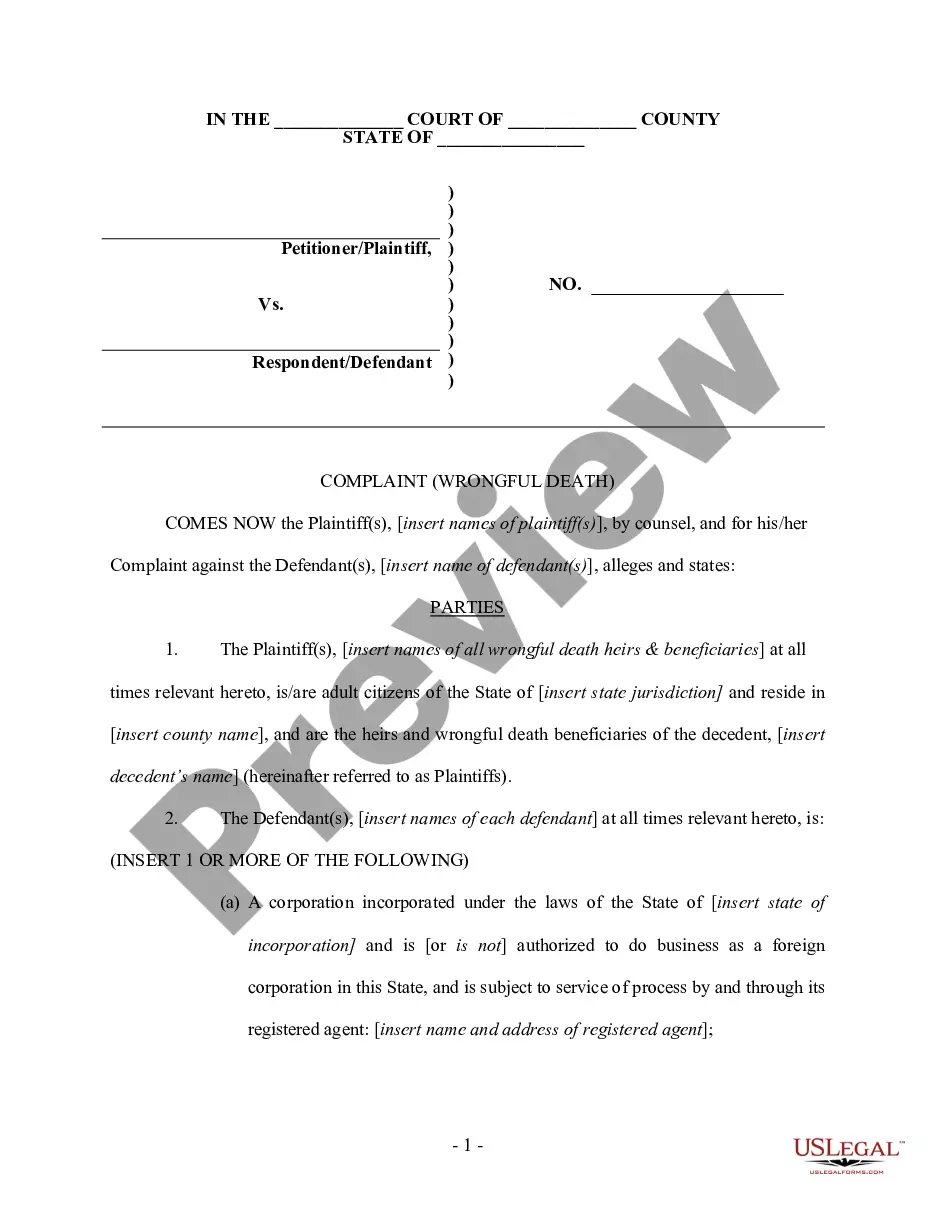
How to fill out Complaint For Wrongful Death - Single Count?
- Log in to your US Legal Forms account if you're a returning user and download the necessary form template by clicking the Download button. Ensure that your subscription is active or renew it if needed.
- For new users, start by selecting the 'Preview' feature to review the form's description. Confirm that it meets your legal requirements and is appropriate for your jurisdiction.
- If the preferred template does not meet your needs, utilize the Search tab to discover additional options that may better fit your situation.
- To purchase the needed document, click on the Buy Now button and select your subscription plan. This will require account registration for full access to the library.
- Complete your transaction by entering your payment information, either via credit card or PayPal, to finalize your subscription.
- After purchase, download the form directly to your device. You can access your documents anytime through the 'My Forms' section in your profile.
By following these steps, you can efficiently navigate the complexities of preparing legal documents related to wrongful count civil actions for theft.
Start empowering yourself today with US Legal Forms' vast collection of legal resources. Visit the site and explore your options!
Form popularity
FAQ
The proper term for stealing can vary, but theft and larceny are widely accepted in legal contexts. These terms indicate the wrongful taking of property. If you're facing situations involving these terms, wrongful count civil actions for theft may be your recourse. By understanding these definitions, you are better equipped to take action and protect your rights.
The civil term for stealing is often referred to as a trespass to chattels. This phrase signifies the unlawful interference with someone's personal property. When wrongful count civil actions for theft are on the table, knowing your rights helps you take appropriate steps. Legal resources, like USLegalForms, empower you to navigate this terrain effectively.
The act of stealing is commonly called theft. In legal terms, theft encompasses a range of unlawful actions involving personal property. If you have experienced theft, you might consider pursuing wrongful count civil actions for theft. This can provide a pathway to recover your losses and restore your peace of mind.
The legal term for stealing is larceny. Larceny refers to the unlawful taking of someone else's belongings with the intent to permanently deprive them of it. Engaging in wrongful count civil actions for theft may arise if you are a victim of larceny. Seeking legal guidance ensures that you navigate the complexities of your case effectively.
In civil law, theft is often referred to as conversion. This term describes the wrongful act of taking or using someone else's property without permission. If you find yourself involved in wrongful count civil actions for theft, understanding this terminology is crucial. Legal proceedings can help you seek restitution and ensure your rights are upheld.
Theft itself typically falls under criminal law, but it can lead to wrongful count civil actions for theft. In these cases, a victim may seek compensation from the offender through a civil lawsuit, claiming damages for the financial losses incurred. Understanding the distinction between criminal and civil actions is essential, as the standards of proof and potential outcomes differ significantly. If you find yourself needing assistance with wrongful count civil actions for theft, consider utilizing the resources available on the Uslegalforms platform to help you navigate the legal process.
Yes, you can sue someone civilly for theft. Engaging in wrongful count civil actions for theft provides a legal avenue for you to recover your losses. It's essential to gather evidence and document the events surrounding the theft to strengthen your case. Utilizing platforms like UsLegalForms can simplify the preparation of your lawsuit and help you navigate the legal process.
The civil version of theft is often referred to as conversion. In wrongful count civil actions for theft, conversion occurs when someone's property is taken without consent, and the owner is denied use or possession. This action allows the rightful owner to seek damages, including the fair market value of the stolen property. Understanding this concept helps you to navigate your claims effectively.
Wrongful acts that lead to civil lawsuits include theft, fraud, negligence, and breach of contract. Specifically, wrongful count civil actions for theft arise when a person unlawfully takes someone else's property. It’s important to know that civil law aims to provide remedies for such wrongs rather than punish the offender. Identifying the right type of action is key to your legal strategy.
The maximum amount you can sue for in civil court varies depending on the jurisdiction and the nature of the claim. In cases involving wrongful count civil actions for theft, the goal is often to recover the value of the stolen property and any additional damages. It is advisable to consult legal resources or platforms, like UsLegalForms, to better understand your limits and options for pursuing your claim.