Wrongful Counts With Police
Description
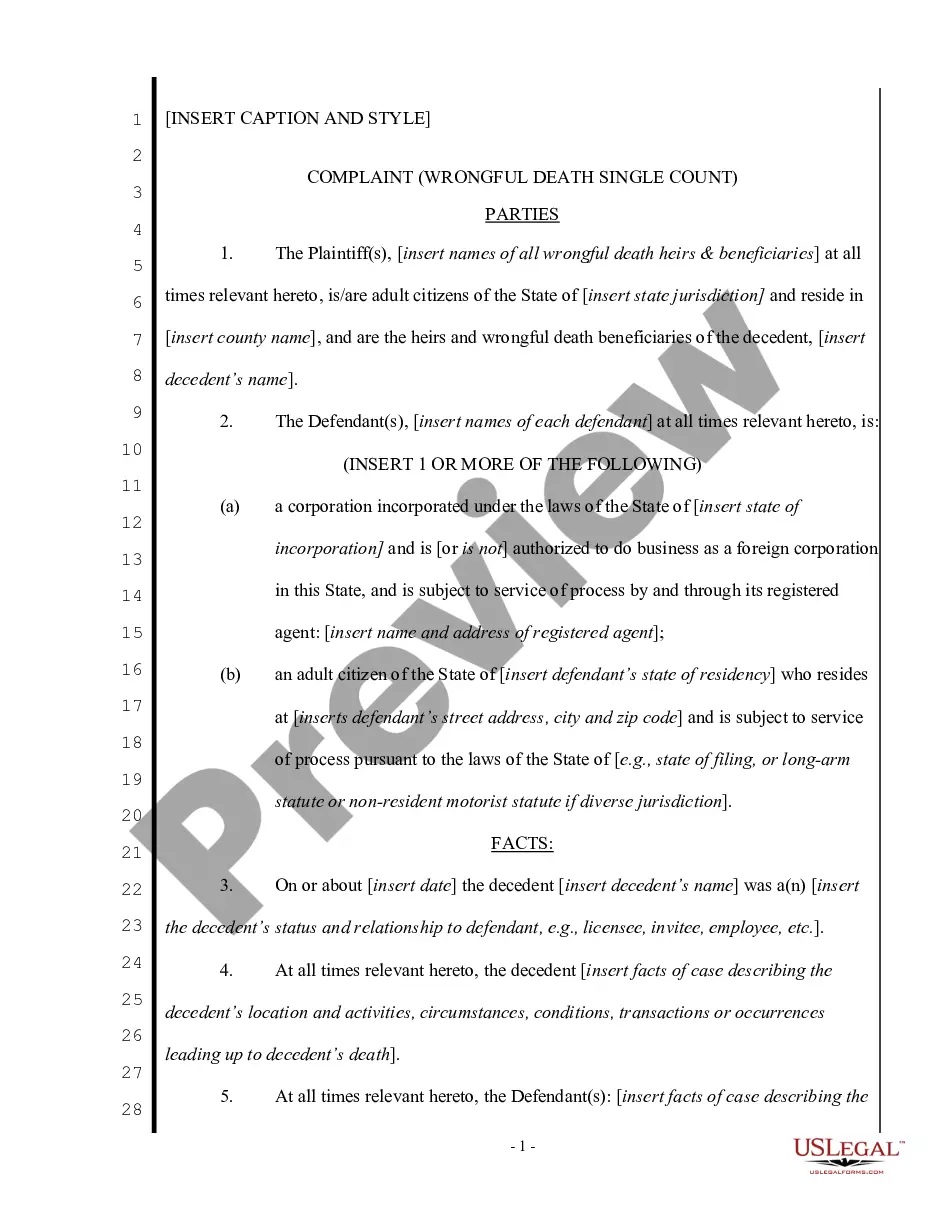

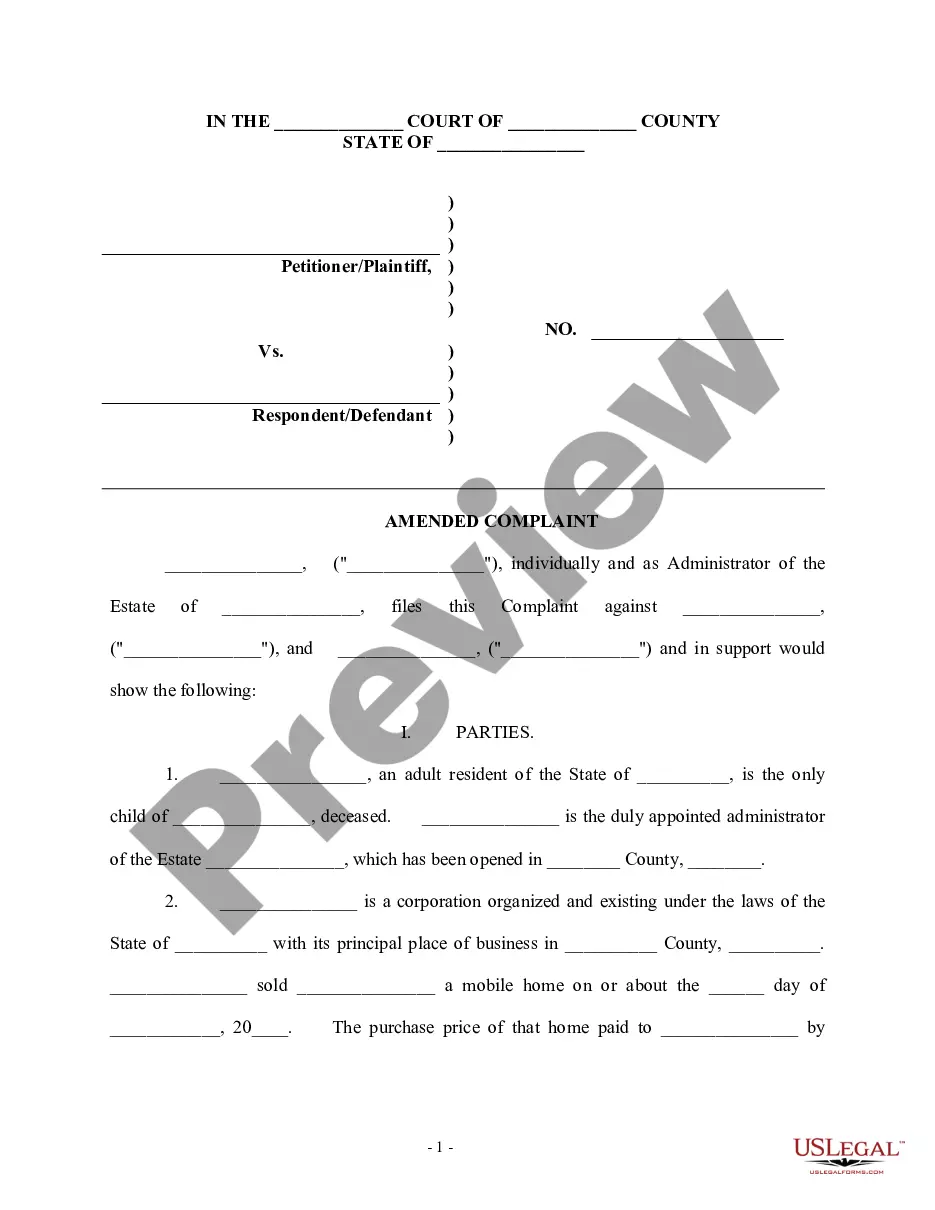
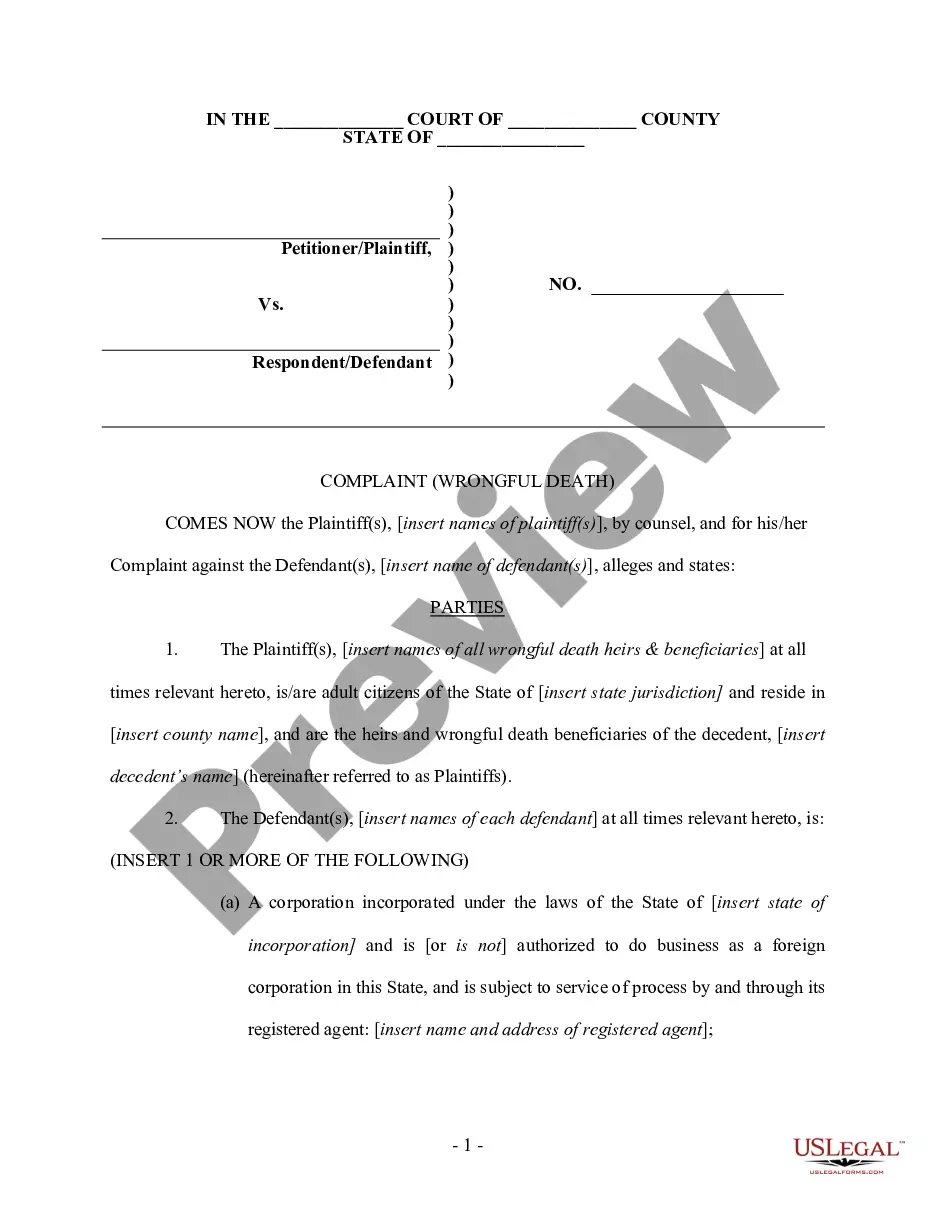
Get your form ready online
Our built-in tools help you complete, sign, share, and store your documents in one place.
Make edits, fill in missing information, and update formatting in US Legal Forms—just like you would in MS Word.
Download a copy, print it, send it by email, or mail it via USPS—whatever works best for your next step.
Sign and collect signatures with our SignNow integration. Send to multiple recipients, set reminders, and more. Go Premium to unlock E-Sign.
If this form requires notarization, complete it online through a secure video call—no need to meet a notary in person or wait for an appointment.
We protect your documents and personal data by following strict security and privacy standards.

Make edits, fill in missing information, and update formatting in US Legal Forms—just like you would in MS Word.

Download a copy, print it, send it by email, or mail it via USPS—whatever works best for your next step.

Sign and collect signatures with our SignNow integration. Send to multiple recipients, set reminders, and more. Go Premium to unlock E-Sign.

If this form requires notarization, complete it online through a secure video call—no need to meet a notary in person or wait for an appointment.

We protect your documents and personal data by following strict security and privacy standards.
Looking for another form?










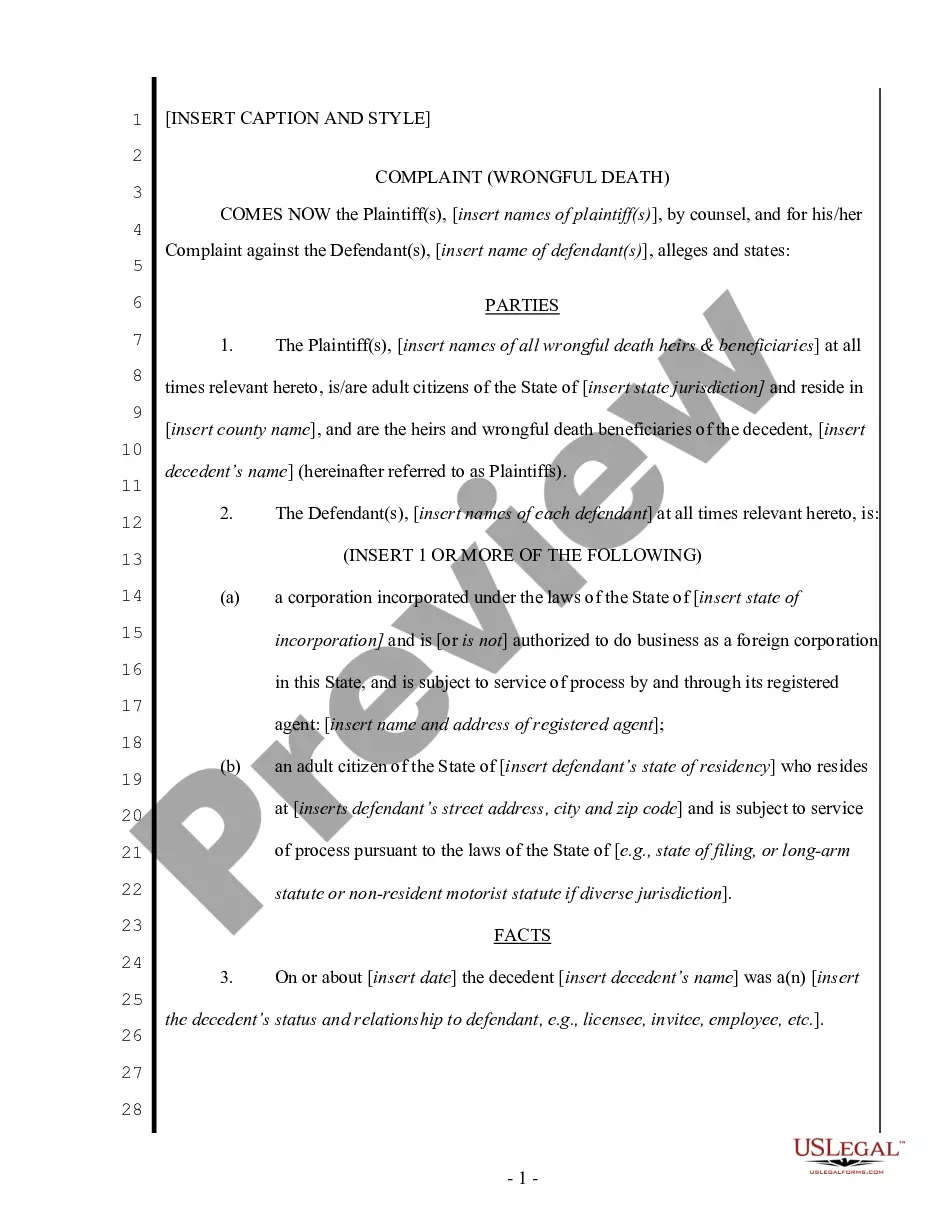
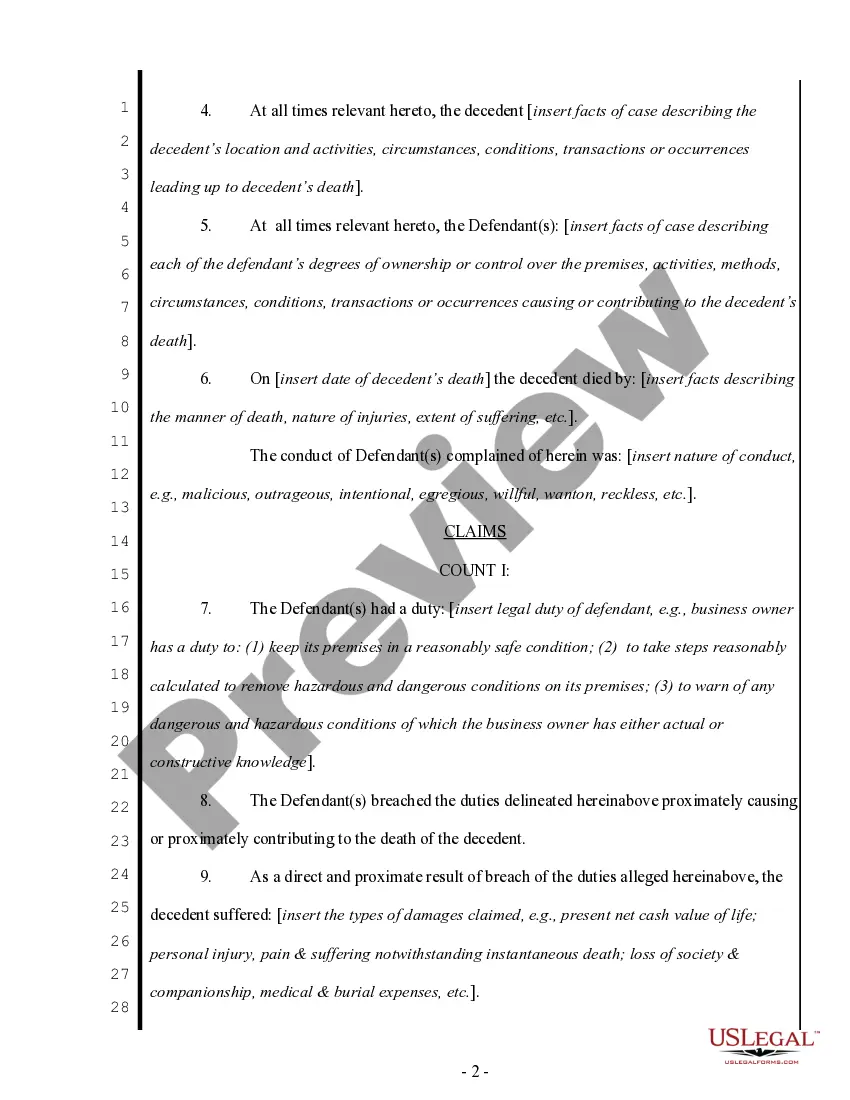
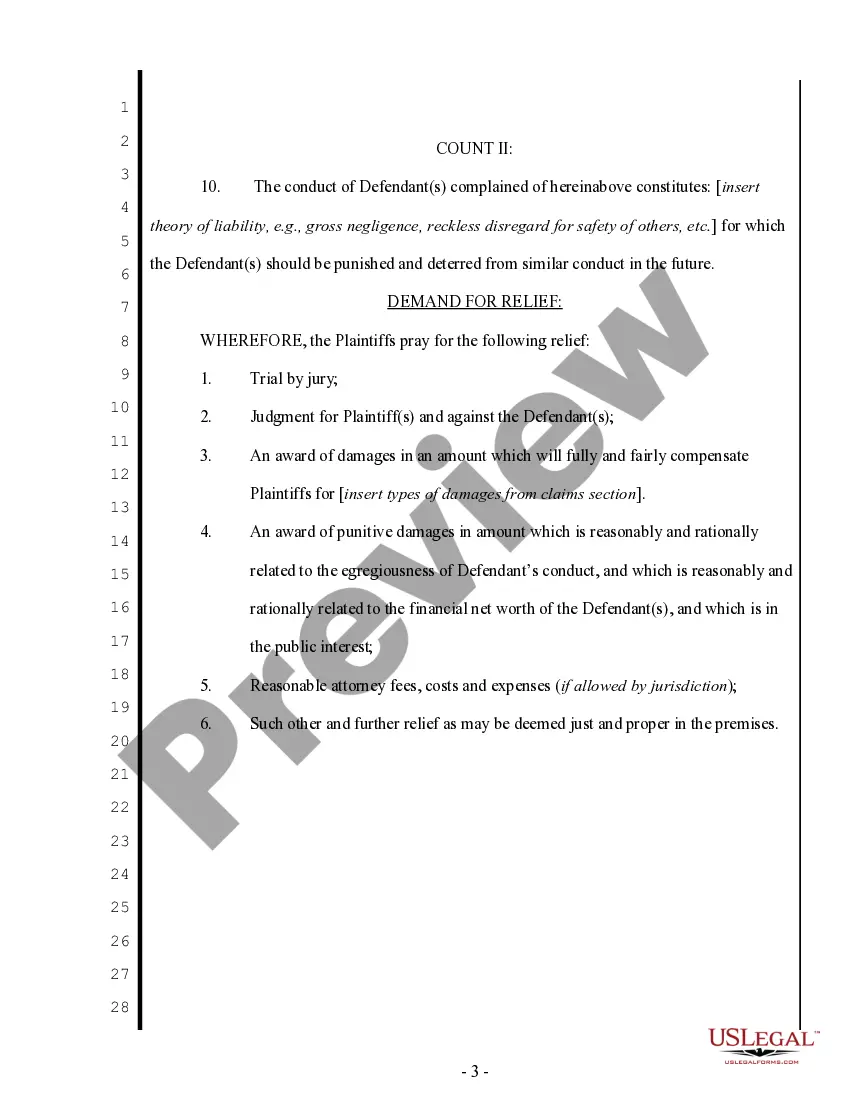
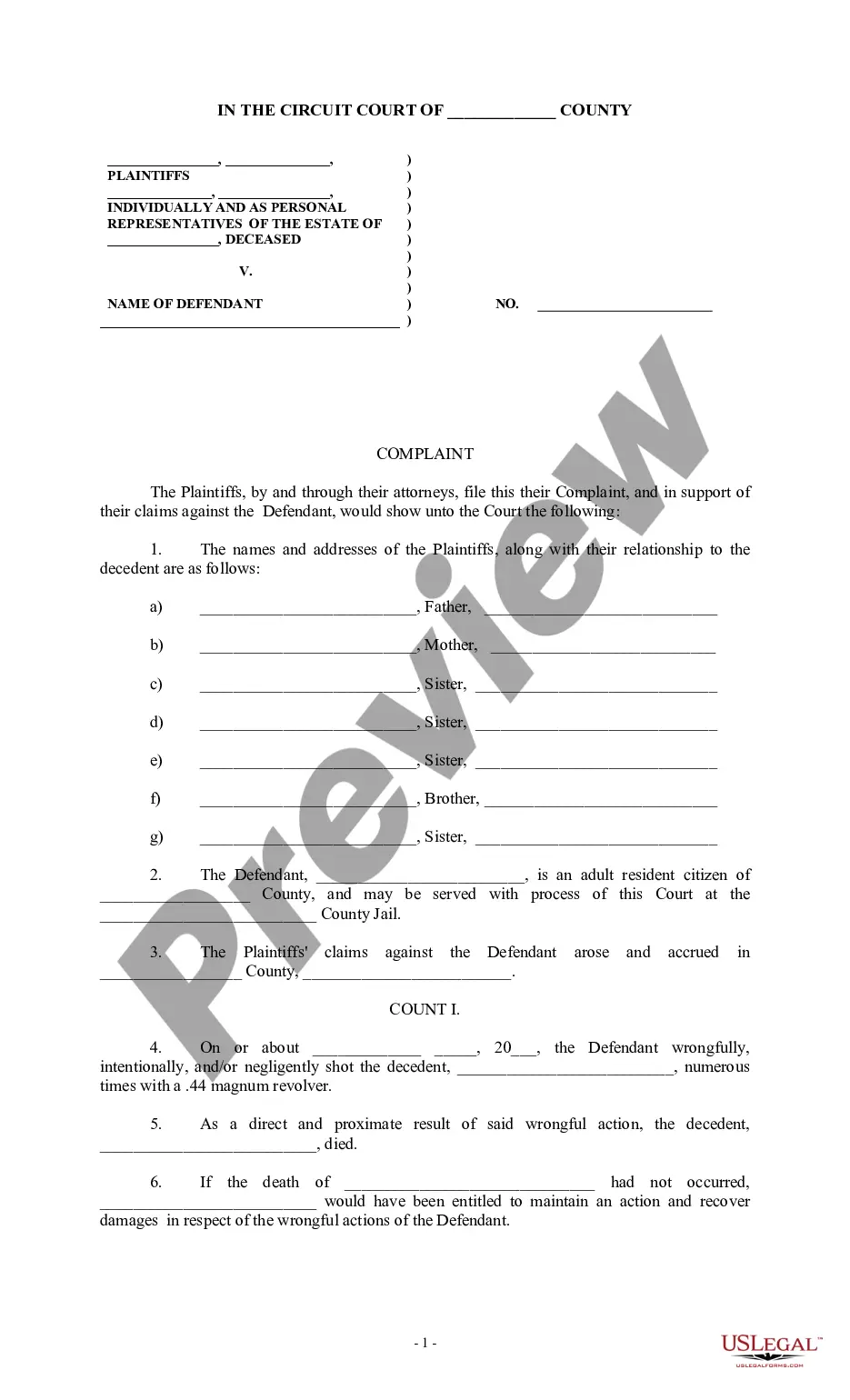
How to fill out Complaint For Wrongful Death - Multiple Counts?
Obtaining legal document samples that adhere to federal and state laws is essential, and the web presents numerous alternatives to select from.
However, what is the benefit of spending time searching for the properly formatted Wrongful Counts With Police template online when the US Legal Forms digital repository already consolidates such documents in one location.
US Legal Forms is the largest digital legal repository featuring over 85,000 customizable templates prepared by attorneys for various business and personal situations. They are easy to navigate, with all forms categorized by state and intended use. Our specialists keep up with legal updates, so you can confidently ensure your documents are current and compliant when obtaining a Wrongful Counts With Police from our site.
All templates available on US Legal Forms are reusable. To re-download and complete previously acquired forms, visit the My documents tab in your profile. Experience the most extensive and user-friendly legal documentation service!
- Acquiring a Wrongful Counts With Police is quick and straightforward for both existing and new customers.
- If you already possess an account with an active subscription, Log In and retrieve the document sample you require in your chosen format.
- If you're a newcomer to our platform, follow the steps outlined below.
- Review the template using the Preview option or through the text description to confirm it fits your needs.
- Utilize the search feature at the top of the page to find another sample if needed.
- Click Buy Now once you've located the appropriate form and select a subscription plan.
- Create an account or Log In and process your payment through PayPal or a credit card.
- Select the format for your Wrongful Counts With Police and download it.
Form popularity
FAQ
To prove police harassment, gather evidence such as recorded conversations, photographs, and any documentation of incidents that demonstrate inappropriate behavior. Witness statements can also lend credence to your claims. Being well-prepared with this evidence can help you combat wrongful counts with police effectively and assert your rights.
To properly fill out a police report, take your time and provide accurate answers to each question. Follow the format laid out by the police department, including all necessary details like names, addresses, and a description of the incident. A well-completed report can reduce misunderstandings and prevent wrongful counts with police.
The first step in filing a police report is to contact the appropriate law enforcement agency, either by going to the station or calling for assistance. Provide them with your personal details and a brief overview of the incident. Taking this initial step carefully helps prevent any wrongful counts with police, ensuring that your story is accurately captured.
To make a detailed police report, begin with a straightforward introduction that outlines the incident. Then, dive into specifics, including dates, times, locations, and witness statements. The more detailed your report, the less likely there will be wrongful counts with police, so always include relevant evidence and avoid any vague language.
The five basic steps in investigative report writing include: identifying the problem, collecting information, analyzing the data, drawing conclusions, and preparing the final report. Each step requires attention to detail and clarity, especially to avoid any potential wrongful counts with police. Following these steps ensures that the report is both comprehensive and understandable.
A false police report occurs when someone intentionally provides incorrect information to law enforcement. For example, if an individual claims they were robbed at gunpoint but later admits it never happened, that constitutes a false police report. Such actions can lead to wrongful counts with police, causing serious legal consequences.
If you notice inaccuracies in a police report, it's important to act quickly. Gather any evidence or documentation that supports your claim and contact the authorities to request a correction. Understanding the implications of wrongful counts with police can help you take the right steps to rectify the situation.
To write a good police report, start with accurate details and a clear structure. Begin by recording the date, time, and location of the incident. Next, include the names of everyone involved and a factual account of what happened. Avoid personal opinions; focus on what you observed to prevent any wrongful counts with police.