Insurance Policy With Example
Description
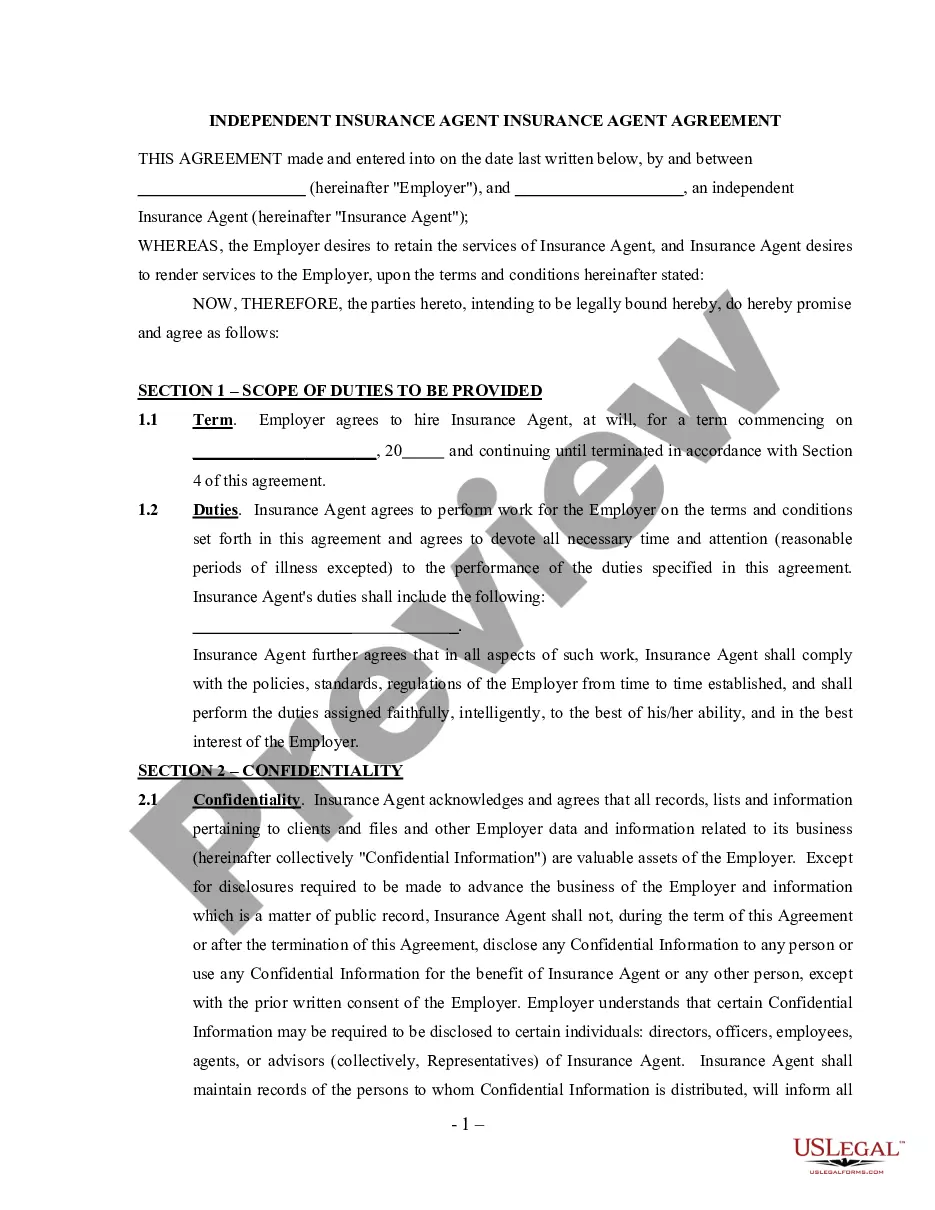
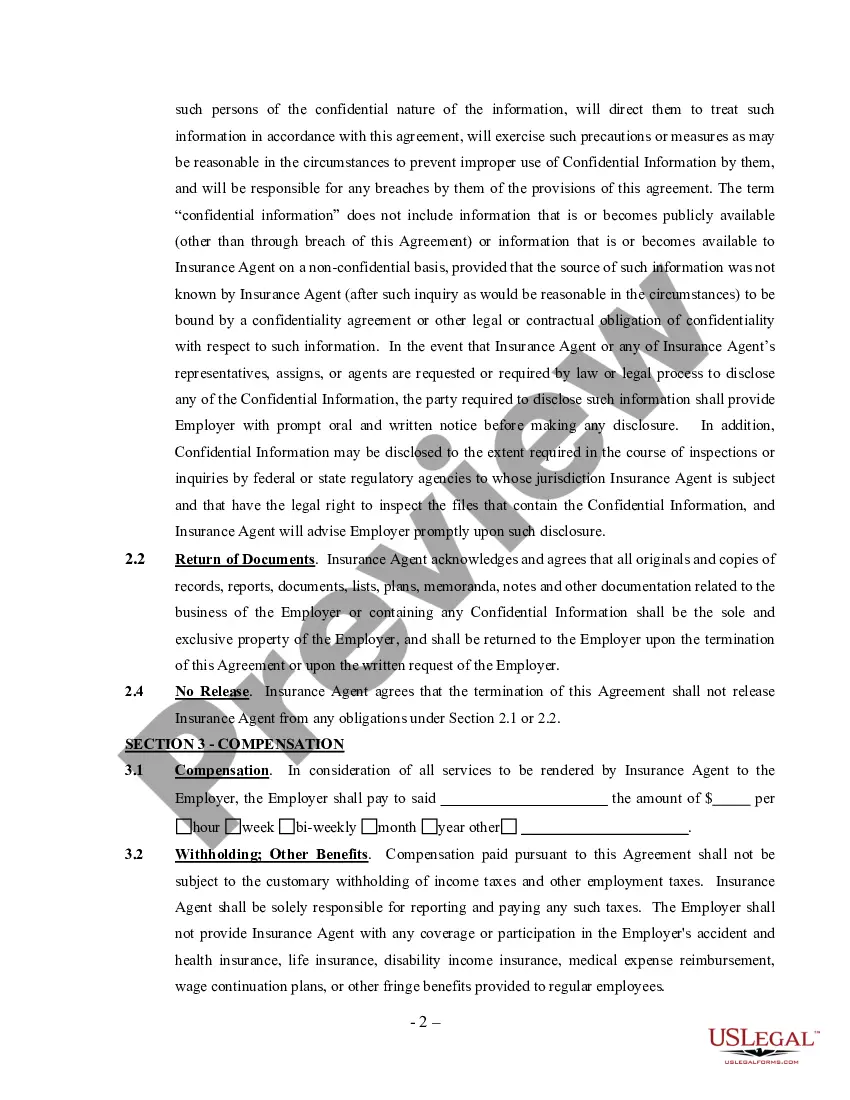
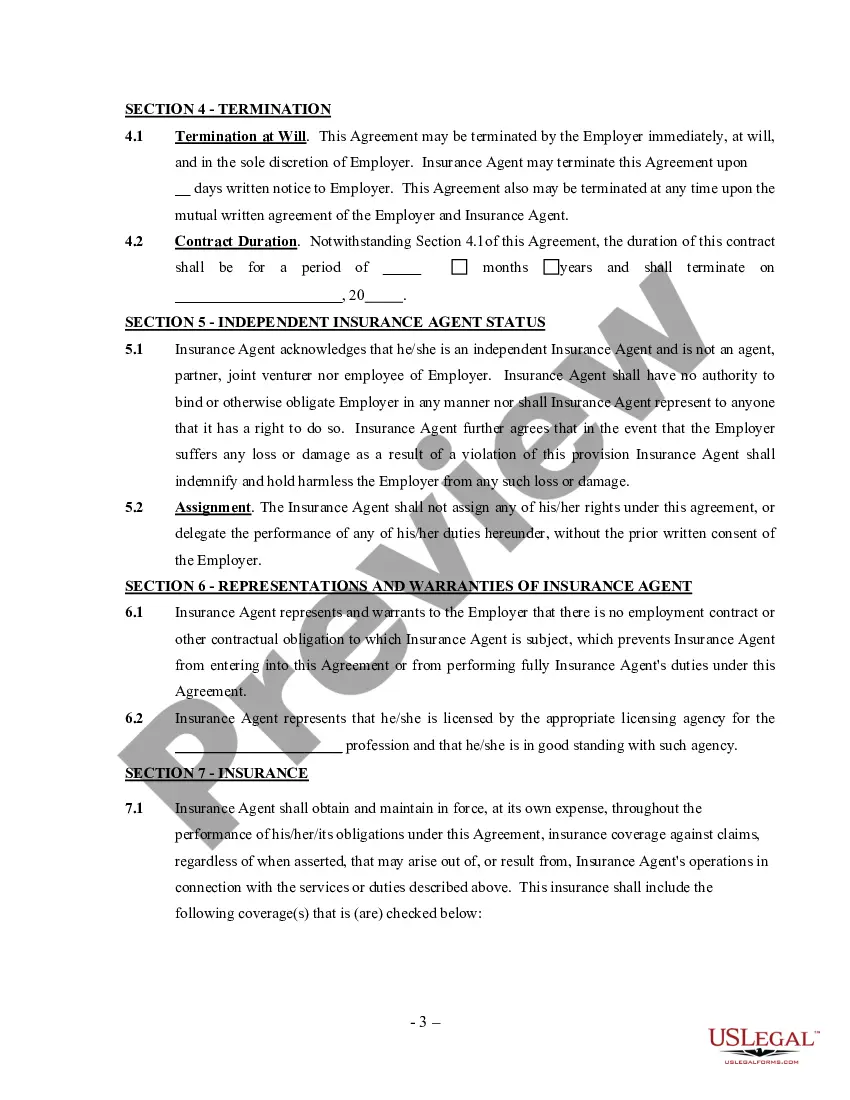
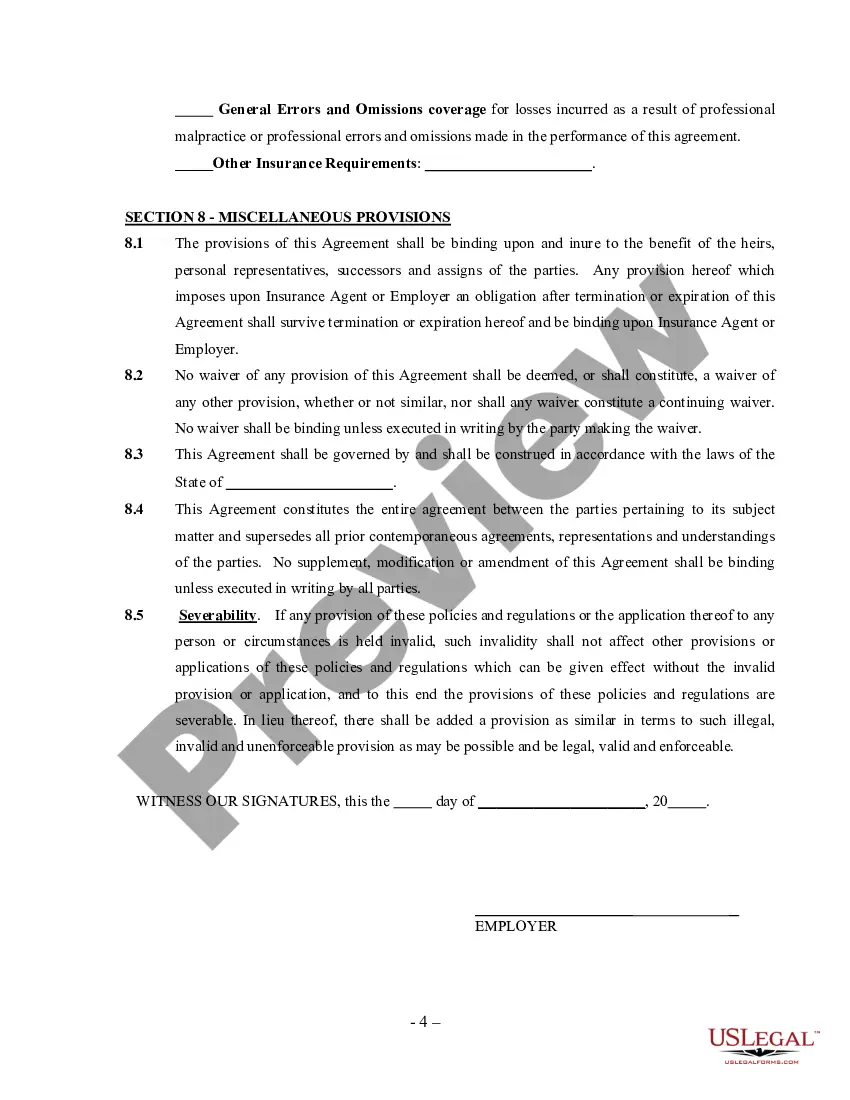

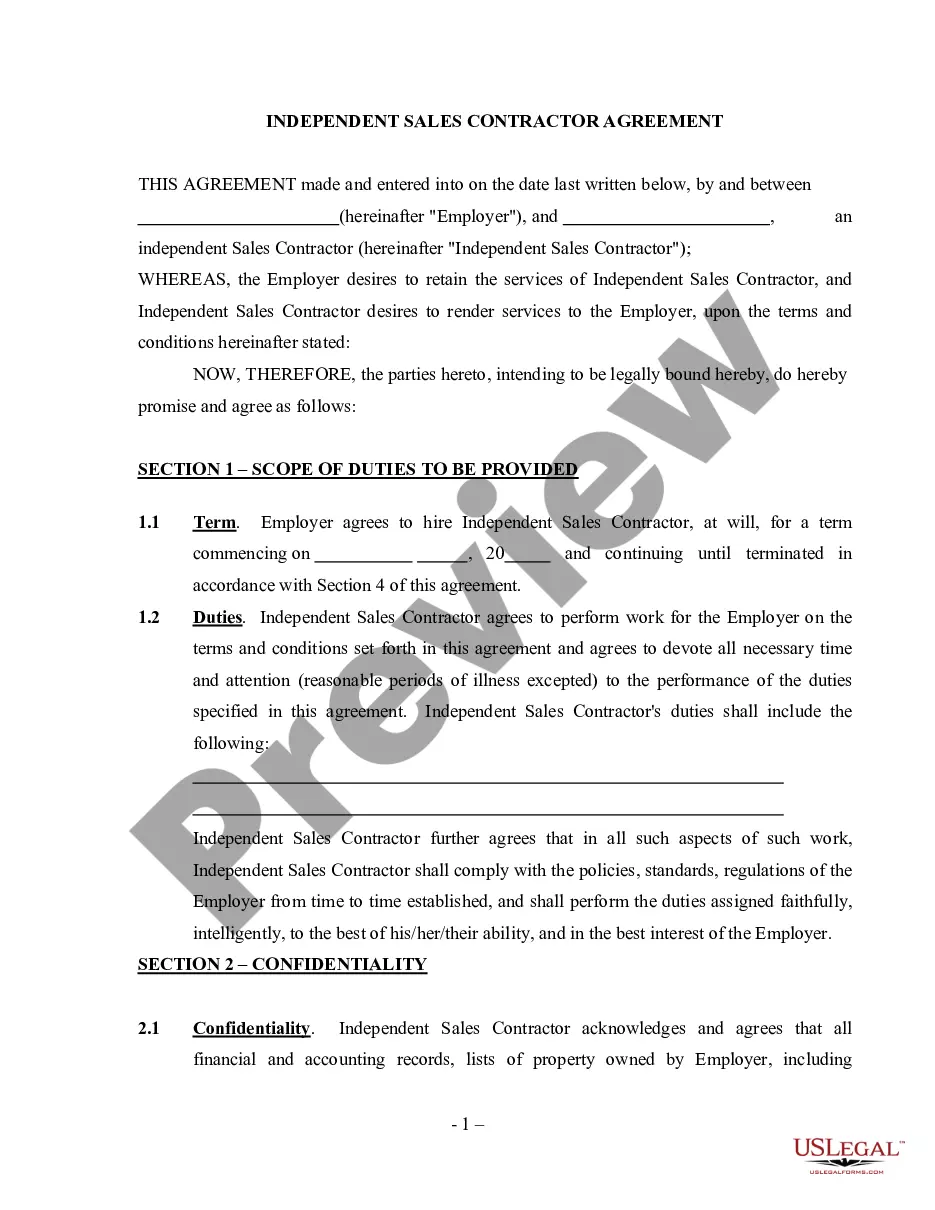
Get your form ready online
Our built-in tools help you complete, sign, share, and store your documents in one place.
Make edits, fill in missing information, and update formatting in US Legal Forms—just like you would in MS Word.
Download a copy, print it, send it by email, or mail it via USPS—whatever works best for your next step.
Sign and collect signatures with our SignNow integration. Send to multiple recipients, set reminders, and more. Go Premium to unlock E-Sign.
If this form requires notarization, complete it online through a secure video call—no need to meet a notary in person or wait for an appointment.
We protect your documents and personal data by following strict security and privacy standards.

Make edits, fill in missing information, and update formatting in US Legal Forms—just like you would in MS Word.

Download a copy, print it, send it by email, or mail it via USPS—whatever works best for your next step.

Sign and collect signatures with our SignNow integration. Send to multiple recipients, set reminders, and more. Go Premium to unlock E-Sign.

If this form requires notarization, complete it online through a secure video call—no need to meet a notary in person or wait for an appointment.

We protect your documents and personal data by following strict security and privacy standards.
Looking for another form?
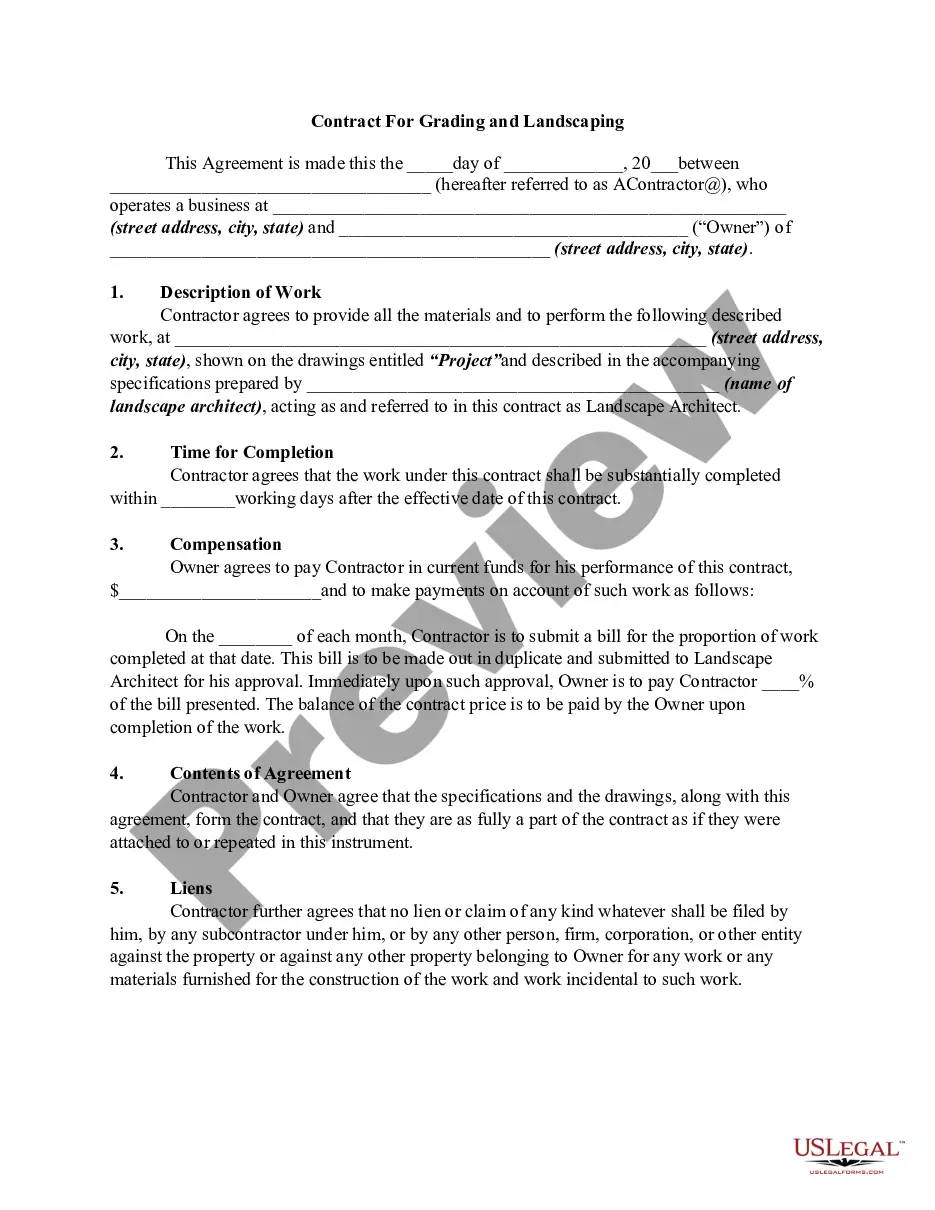
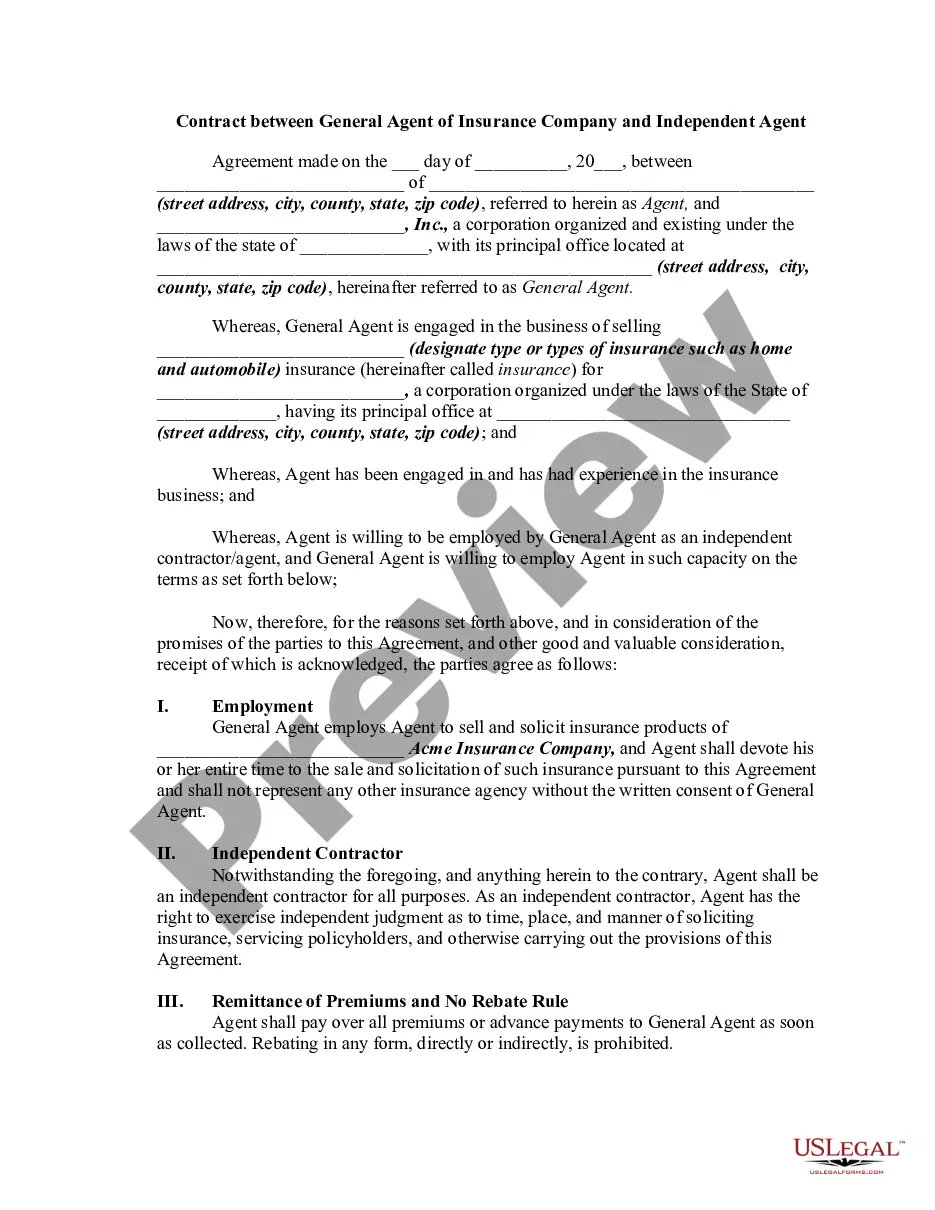
How to fill out Insurance Agent Agreement - Self-Employed Independent Contractor?
Locating a reliable source for obtaining the most up-to-date and suitable legal templates is part of the challenge of navigating bureaucracy.
Identifying the appropriate legal documents requires precision and meticulousness, which is why it is essential to obtain samples of Insurance Policy With Example exclusively from trustworthy providers, like US Legal Forms.
Eliminate the complications associated with your legal documentation. Explore the extensive US Legal Forms library to locate legal templates, assess their applicability to your situation, and download them immediately.
- Utilize the library navigation or search bar to locate your template.
- Access the form’s details to determine if it meets the requirements for your state and county.
- View the form preview, if available, to confirm that it is indeed the document you are looking for.
- Return to the search and find the correct template if the Insurance Policy With Example does not fulfill your needs.
- Once you are certain about the document’s relevance, download it.
- If you are a registered user, click Log in to verify and access your selected forms in My documents.
- If you do not have an account yet, click Buy now to obtain the form.
- Select the pricing option that fits your needs.
- Proceed to the registration to complete your order.
- Finalize your transaction by choosing a payment method (credit card or PayPal).
- Choose the file format for downloading Insurance Policy With Example.
- After you have the form on your device, you can edit it using the editor or print it and complete it manually.
Form popularity
FAQ
A typical life insurance policy example is a term life insurance plan that provides coverage for 20 years with a benefit amount of $500,000. If the insured person dies during this period, the beneficiaries receive the full death benefit. This type of insurance policy with example ensures peace of mind for both the insured and their family, knowing that financial support is available when needed.
The four types of insurance policies include life insurance, health insurance, auto insurance, and homeowners insurance. Life insurance secures your loved ones financially in the event of your death. Health insurance helps with medical expenses, auto insurance protects your vehicle, and homeowners insurance covers your home and its contents, all falling under the umbrella of an insurance policy with example.
Insurance is a contractual agreement that provides financial protection against potential losses or damages. Common examples include health insurance, which covers medical expenses, and auto insurance, which protects against vehicle damage and liability. Essentially, an insurance policy with example segments your financial risk, allowing you to recover from unforeseen events.
To take an insurance policy, start by evaluating your needs and the type of coverage you require. Research various insurance providers and their offers to find one that suits you. After settling on a provider, you can apply online or through an agent, presenting the necessary documents for a smooth process.
To obtain an insurance policy on someone, you must secure their consent and provide relevant information, including their medical history. You can work with an insurance agent who can guide you through the process and ensure all legal requirements are met. It's vital to openly communicate with the person involved to promote transparency.
You cannot legally take out a life insurance policy on someone without their knowledge and consent. Most insurance companies require the insured person to sign the application and acknowledge the policy. Doing so without consent could lead to legal issues and ethical concerns.
Generally, you cannot look up someone's life insurance policy due to privacy laws. However, you may ask the individual directly for information or contact their insurance provider with the necessary details if you are a beneficiary. It's crucial to respect privacy and only seek information through appropriate channels.
An insurance policy example is a term life insurance policy, which provides coverage for a specific period. If the insured passes away during this term, the policy pays a death benefit to the beneficiaries. This type of policy is popular due to its affordability and straightforward structure.
Getting your own insurance policy is straightforward. First, assess your insurance needs and research the types of policies available. Once you choose a provider, you can apply online or through an agent, providing necessary documentation, such as your identification and health information.
To get an insurance policy on someone, you typically need their consent and some personal information. You can consult your insurance provider for specific requirements, such as their age and health status. It's essential to ensure that the person understands the policy and agrees to have it taken out in their name.