State Statute Law For Battery
Description
Get your form ready online
Our built-in tools help you complete, sign, share, and store your documents in one place.
Make edits, fill in missing information, and update formatting in US Legal Forms—just like you would in MS Word.
Download a copy, print it, send it by email, or mail it via USPS—whatever works best for your next step.
Sign and collect signatures with our SignNow integration. Send to multiple recipients, set reminders, and more. Go Premium to unlock E-Sign.
If this form requires notarization, complete it online through a secure video call—no need to meet a notary in person or wait for an appointment.
We protect your documents and personal data by following strict security and privacy standards.

Make edits, fill in missing information, and update formatting in US Legal Forms—just like you would in MS Word.

Download a copy, print it, send it by email, or mail it via USPS—whatever works best for your next step.

Sign and collect signatures with our SignNow integration. Send to multiple recipients, set reminders, and more. Go Premium to unlock E-Sign.

If this form requires notarization, complete it online through a secure video call—no need to meet a notary in person or wait for an appointment.

We protect your documents and personal data by following strict security and privacy standards.
Looking for another form?










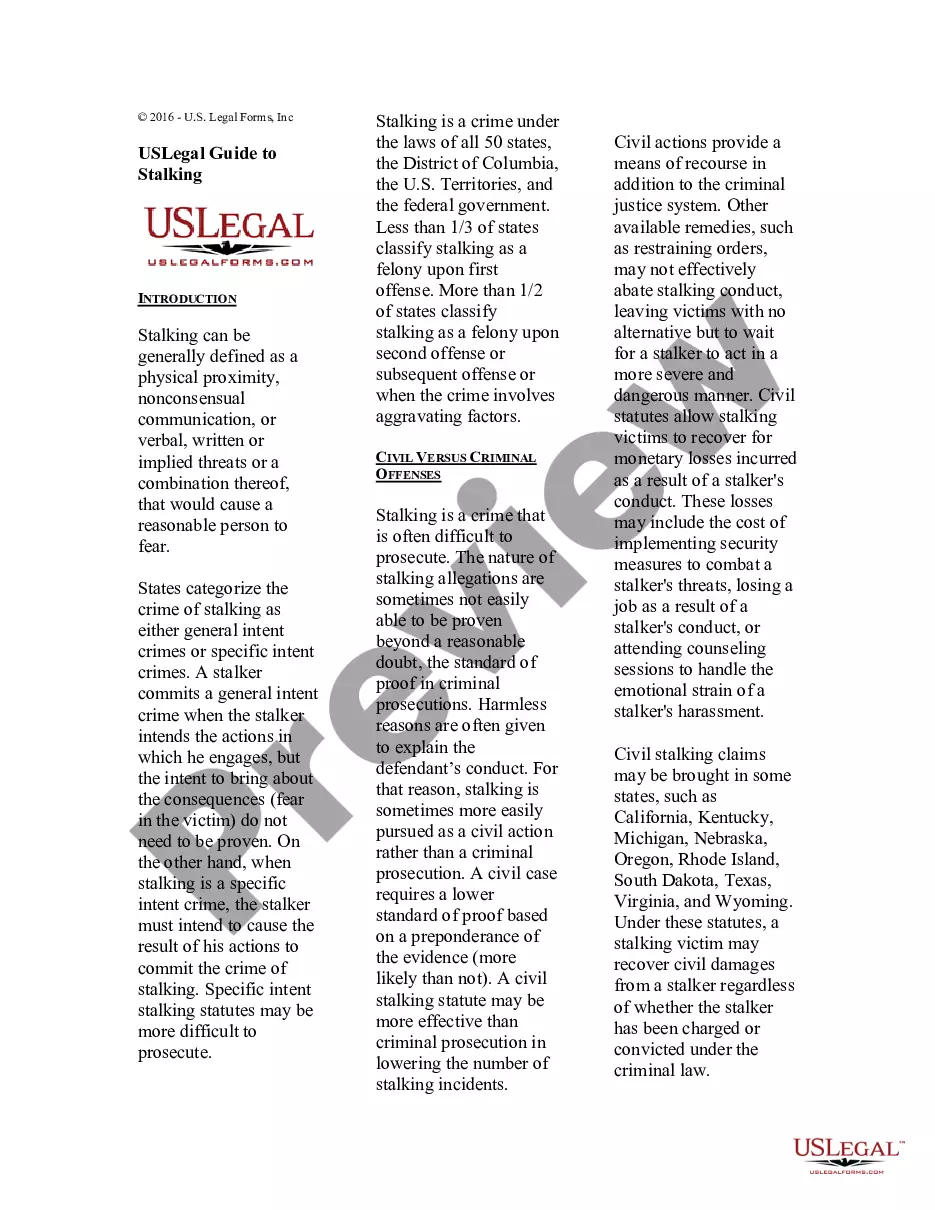
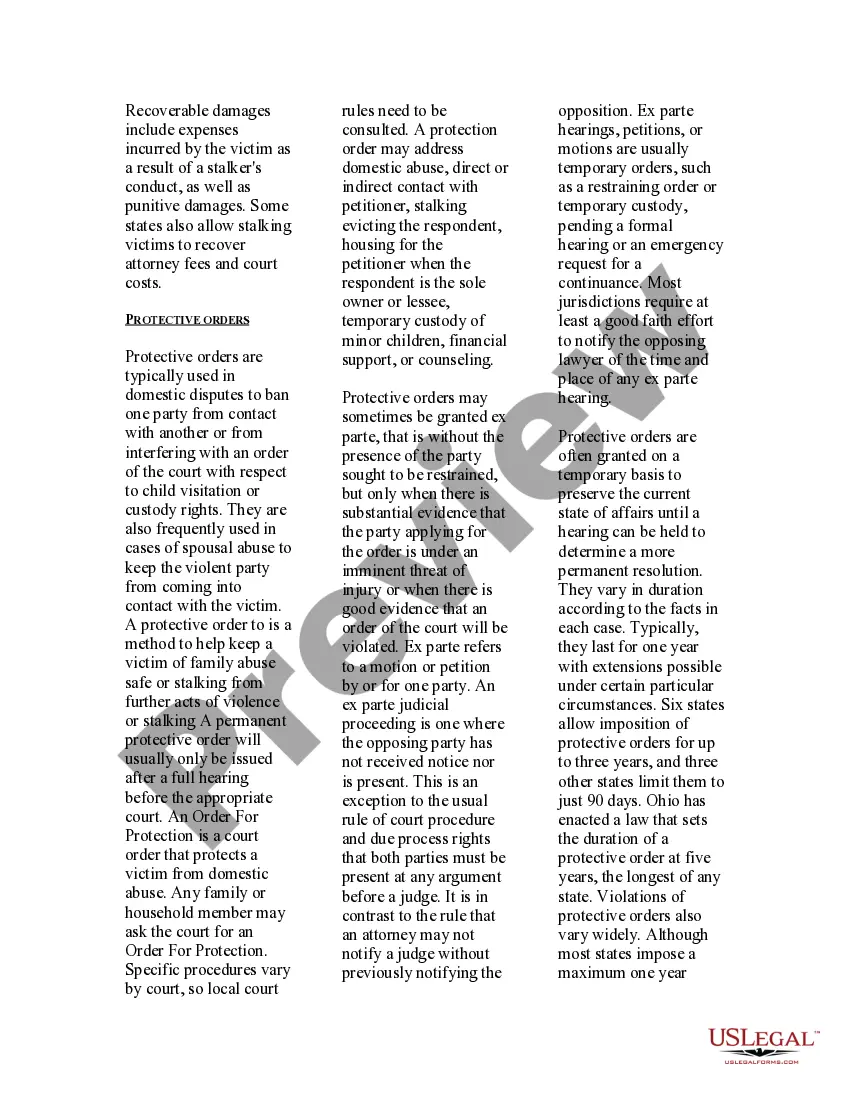
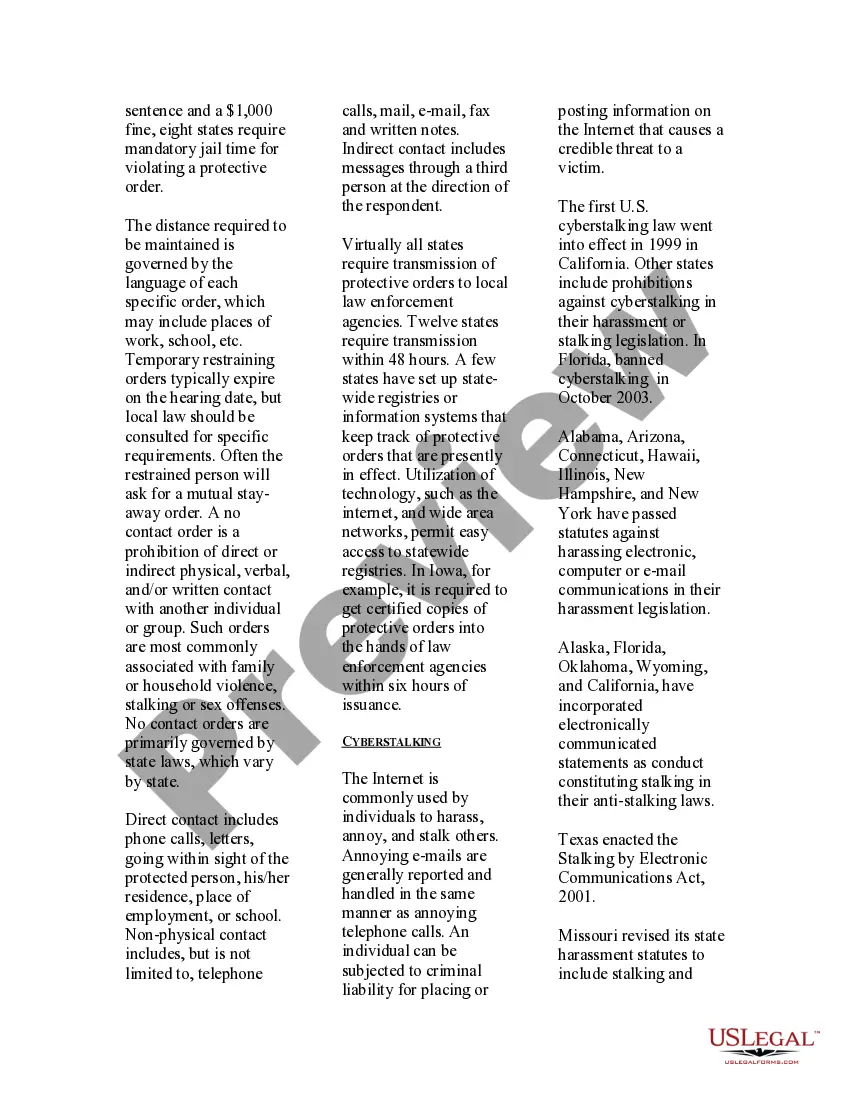
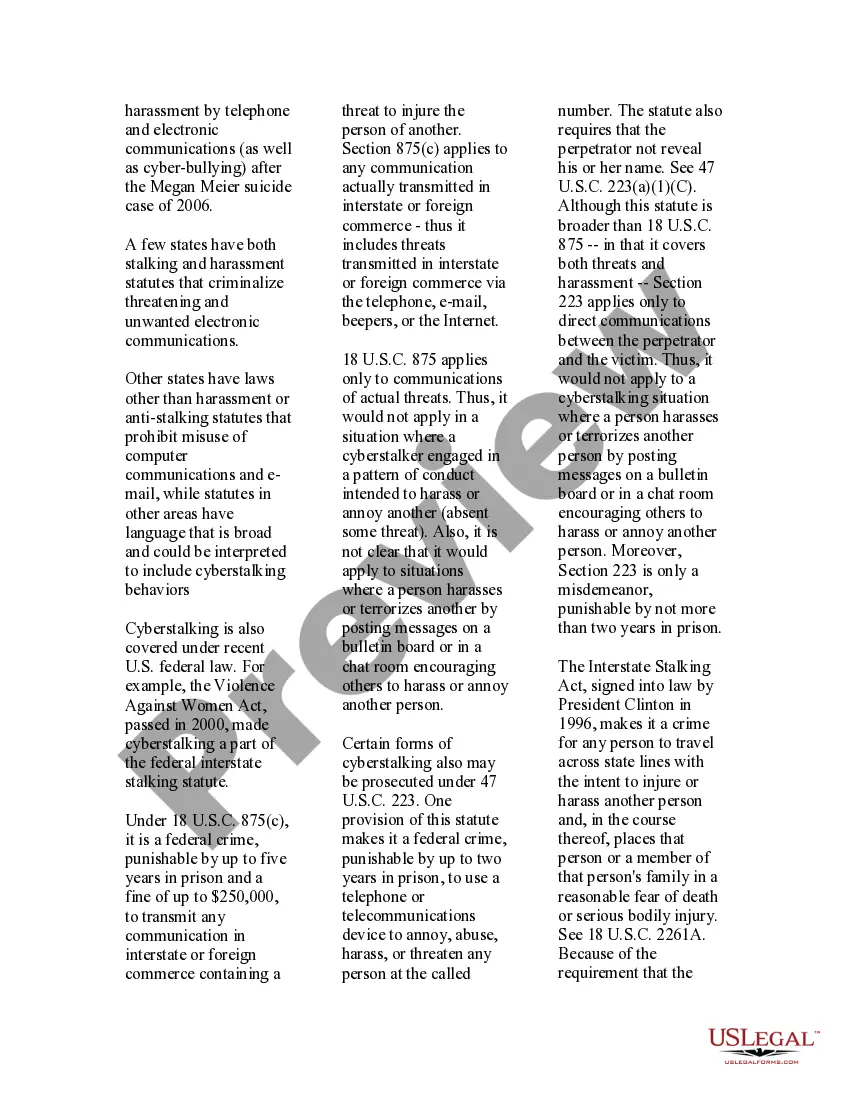
How to fill out USLegal Guide To Stalking?
It’s no secret that you can’t become a law expert immediately, nor can you grasp how to quickly prepare State Statute Law For Battery without having a specialized set of skills. Creating legal forms is a long process requiring a certain training and skills. So why not leave the preparation of the State Statute Law For Battery to the professionals?
With US Legal Forms, one of the most extensive legal document libraries, you can find anything from court documents to templates for in-office communication. We understand how important compliance and adherence to federal and local laws and regulations are. That’s why, on our platform, all forms are location specific and up to date.
Here’s how you can get started with our platform and get the form you require in mere minutes:
- Discover the document you need by using the search bar at the top of the page.
- Preview it (if this option available) and check the supporting description to figure out whether State Statute Law For Battery is what you’re looking for.
- Begin your search again if you need any other template.
- Set up a free account and select a subscription plan to purchase the template.
- Pick Buy now. Once the transaction is through, you can download the State Statute Law For Battery, fill it out, print it, and send or mail it to the necessary people or entities.
You can re-gain access to your forms from the My Forms tab at any time. If you’re an existing customer, you can simply log in, and find and download the template from the same tab.
No matter the purpose of your paperwork-whether it’s financial and legal, or personal-our platform has you covered. Try US Legal Forms now!
Form popularity
FAQ
Definition of Battery For a defendant to be convicted of misdemeanor battery under Florida Statute 784.03, the prosecutor must show: The defendant intentionally touched or hit another person against the other person's will; or. The defendant intentionally caused physical injury to another person.
For a defendant to be convicted of felony battery under Florida Statute 784.041, the prosecutor must prove: The defendant actually and intentionally touched or hit the victim against the will of the victim; and. The defendant caused great physical injury, lasting disability, or permanent mutilation.
What is substantial battery? Section 940.19(2) of the Wisconsin Statutes provides the current definition of substantial battery: ?(2) Whoever causes substantial bodily harm to another by an act done with intent to cause bodily harm to that person or another is guilty of a Class I felony.?
Some common types of battery include: Pushing someone. Hitting or kicking someone. Attacking someone with a weapon.
Any type of touching that the victim considers harmful or offensive can be sufficient. For example, if a woman pours a mug of hot water on someone else, this could be a battery. To go even further, a classic case of a battery that does not result in pain or injury is when the perpetrator spits on the victim.