Stalking For Dummies
Description
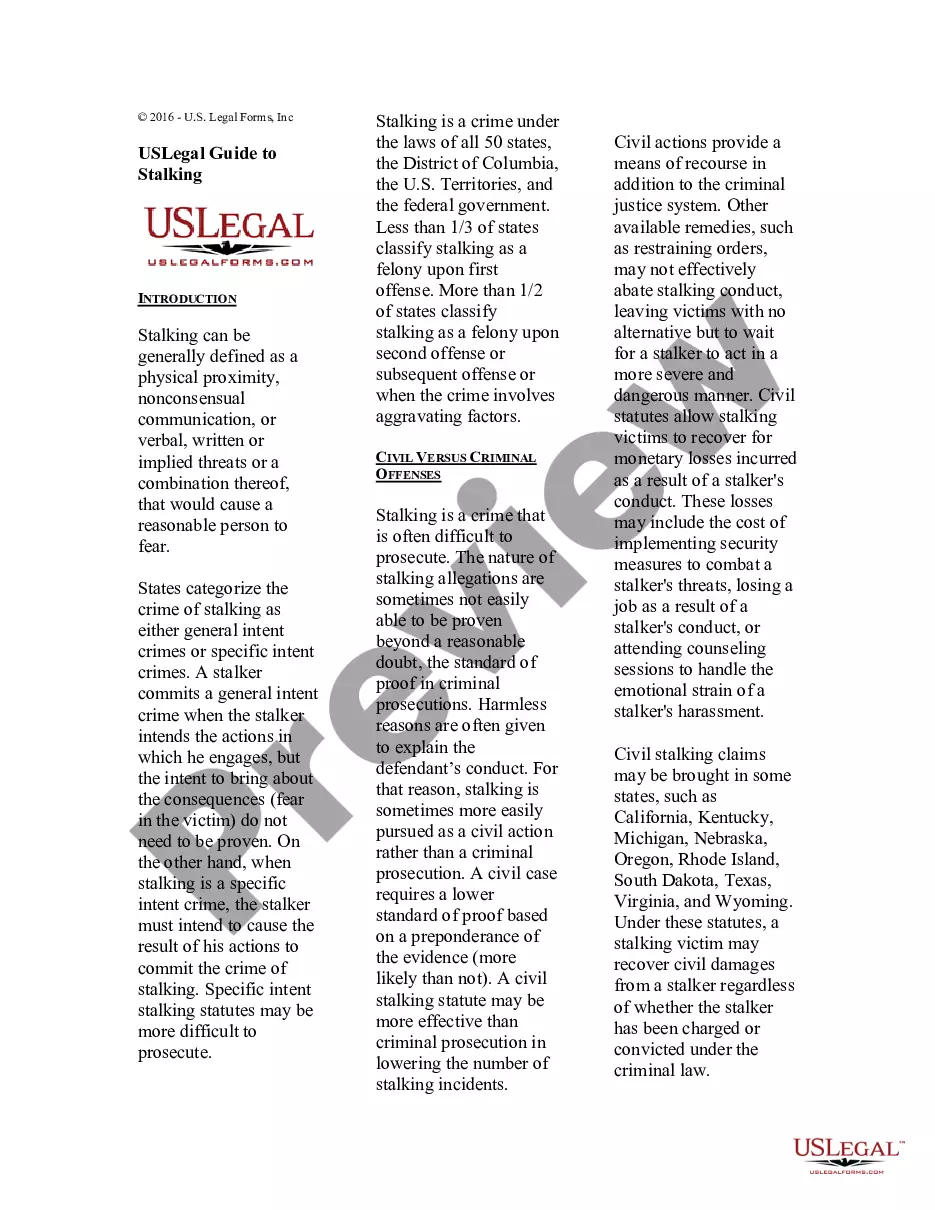
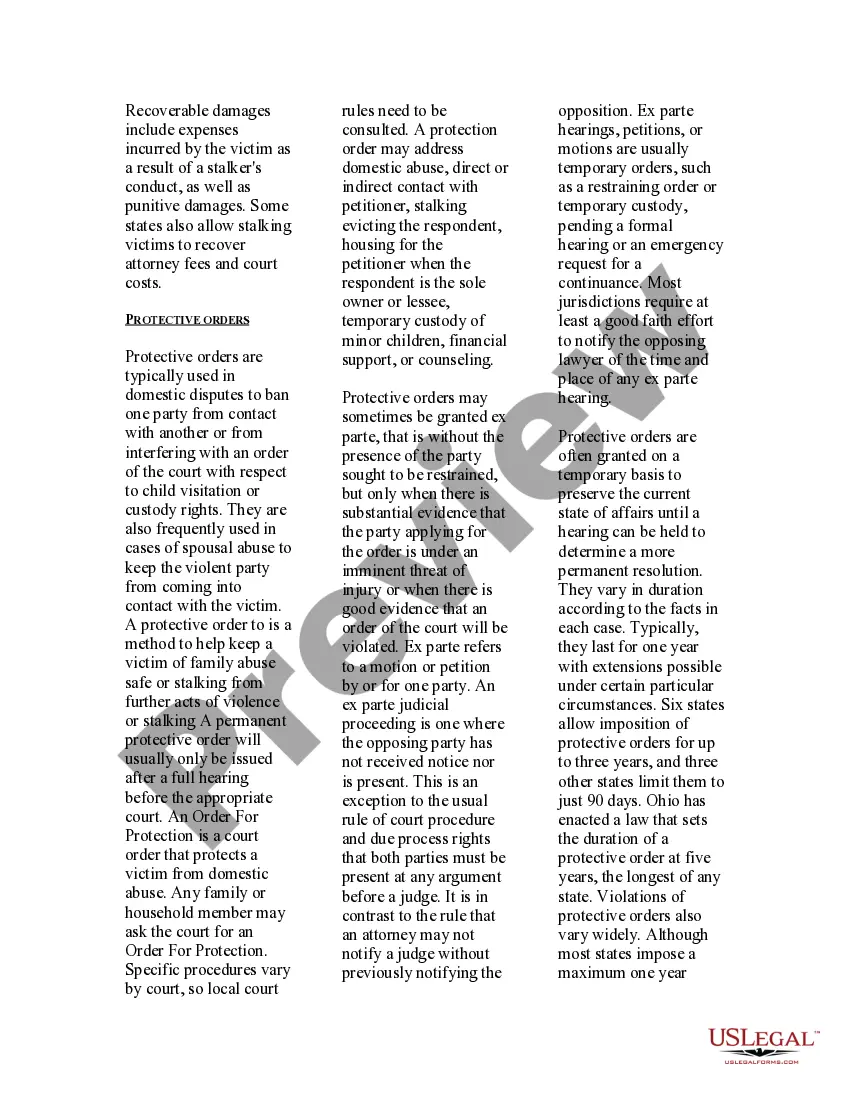
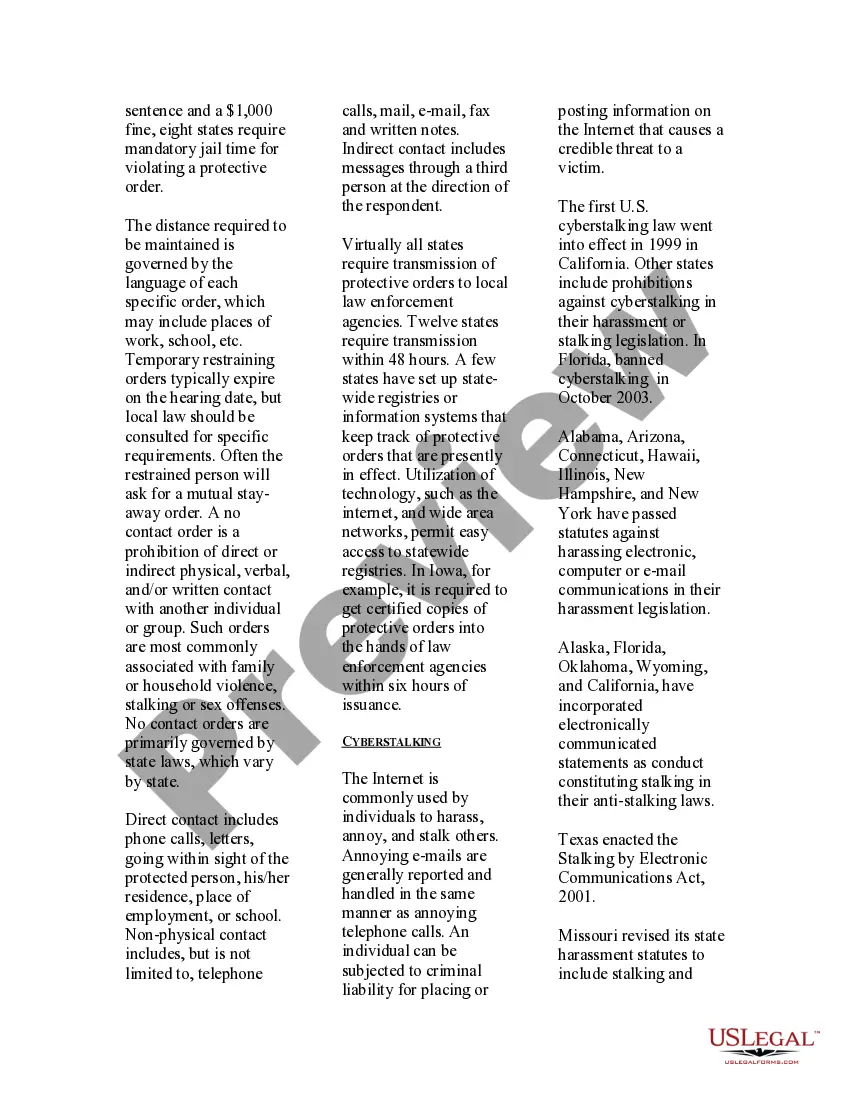
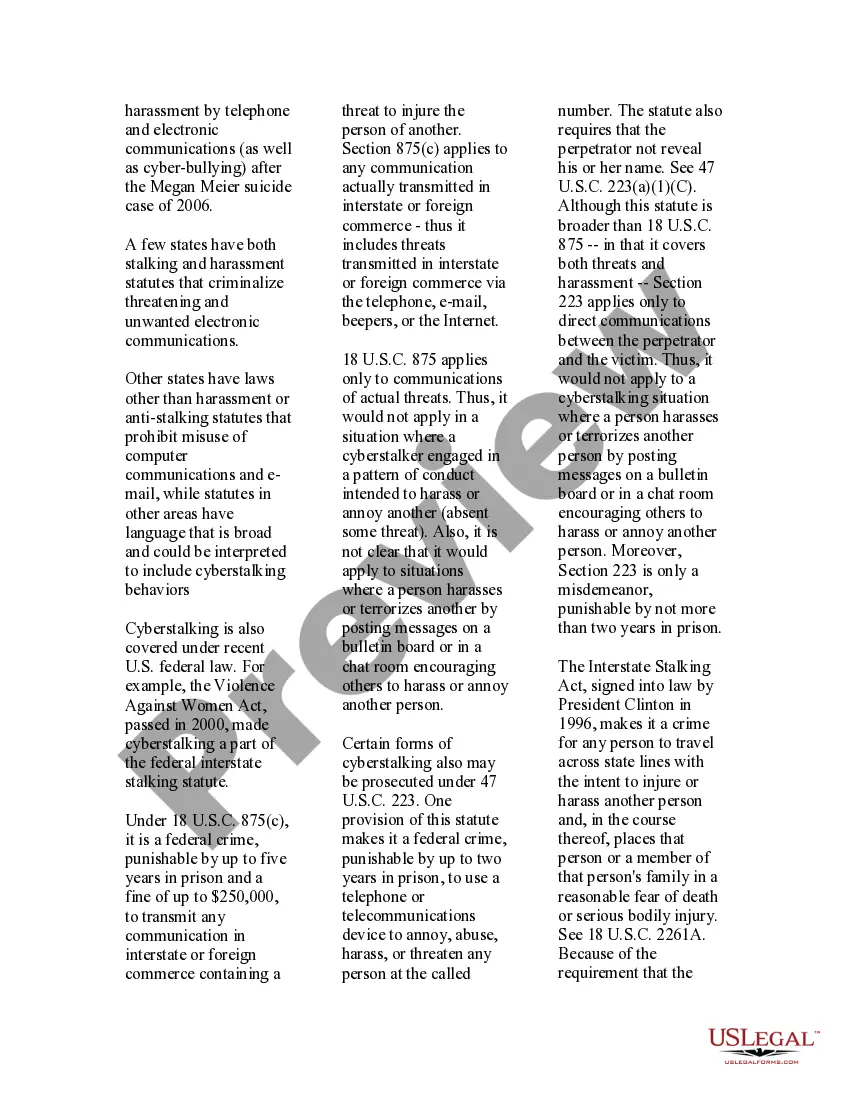
Get your form ready online
Our built-in tools help you complete, sign, share, and store your documents in one place.
Make edits, fill in missing information, and update formatting in US Legal Forms—just like you would in MS Word.
Download a copy, print it, send it by email, or mail it via USPS—whatever works best for your next step.
Sign and collect signatures with our SignNow integration. Send to multiple recipients, set reminders, and more. Go Premium to unlock E-Sign.
If this form requires notarization, complete it online through a secure video call—no need to meet a notary in person or wait for an appointment.
We protect your documents and personal data by following strict security and privacy standards.

Make edits, fill in missing information, and update formatting in US Legal Forms—just like you would in MS Word.

Download a copy, print it, send it by email, or mail it via USPS—whatever works best for your next step.

Sign and collect signatures with our SignNow integration. Send to multiple recipients, set reminders, and more. Go Premium to unlock E-Sign.

If this form requires notarization, complete it online through a secure video call—no need to meet a notary in person or wait for an appointment.

We protect your documents and personal data by following strict security and privacy standards.
Looking for another form?
How to fill out USLegal Guide To Stalking?
Whether for commercial objectives or personal matters, everyone must deal with legal issues at some point in their lives.
Filling out legal documents requires meticulous care, starting with selecting the appropriate form template.
With a vast US Legal Forms collection at your disposal, you won’t have to waste time looking for the correct template online. Utilize the library’s easy navigation to find the right form for any situation.
- Locate the template you require using the search bar or catalog browsing.
- Review the form’s details to confirm it aligns with your situation, jurisdiction, and area.
- Click on the form’s preview to examine it.
- If it is the incorrect form, return to the search feature to find the Stalking For Dummies template you need.
- Download the document if it fulfills your specifications.
- If you possess a US Legal Forms account, click Log in to retrieve previously saved templates in My documents.
- If you do not yet have an account, you can download the form by clicking Buy now.
- Choose the suitable pricing option.
- Complete the account registration form.
- Select your payment option: you can pay with a credit card or PayPal account.
- Choose the file format you desire and download the Stalking For Dummies.
- Once saved, you can fill out the form using editing software or print it and complete it by hand.
Form popularity
FAQ
Enough evidence for stalking typically includes a combination of documented incidents showing repeated and unwanted contact. This may involve a history of threats, harassment, or pursuit. With the guidance of 'Stalking for Dummies', you can learn how to compile sufficient evidence to support your claim effectively and strengthen your case.
Proving stalking can be challenging, as it often relies on showing a pattern of behavior. You must establish that the stalker’s actions caused you to feel fear or anxiety. Resources like 'Stalking for Dummies' break down the legal standards for evidence, making the process clearer and helping you navigate the complexities of your case.
Stalking can be categorized into four main types: physical stalking, cyberstalking, intimate partner stalking, and workplace stalking. Each type has distinct behaviors and contexts, which are crucial to understanding your specific situation. For more in-depth information, 'Stalking for Dummies' offers a detailed exploration of these categories, helping you identify the type that applies.
To effectively handle a stalking case, you must gather clear documentation of your interactions. This includes saving messages, emails, or any surveillance footage that supports your claim. Additionally, consulting resources like 'Stalking for Dummies' can provide valuable insights into the legal framework and strategies to navigate your situation.
In Oregon, stalking is defined as engaging in a course of conduct that is targeted at a specific person and causes them to fear for their safety. This includes repeated, unwanted attention, following, or harassing behaviors. Victims in Oregon can seek protection orders and legal remedies to address stalking issues. For those wanting to navigate legal action, UsLegalForms offers valuable resources to help users understand their rights and options.
Individuals who stalk often exhibit traits of narcissism, obsession, and a lack of empathy. They may have difficulties with relationships and exhibit controlling behaviors. Understanding these personality traits can help individuals recognize potential red flags in their lives. Therefore, it is beneficial for readers of stalking for dummies to explore the psychological aspects of stalking.
There are several types of stalking, including intimate partner stalking, social media stalking, and cyberstalking. Intimate partner stalking usually occurs in relationships and often involves possessive or controlling behavior. Social media stalking involves monitoring someone's online activities and interactions. Learning these types can deepen your understanding of stalking for dummies.
Stalking is defined as a pattern of behavior in which an individual repeatedly follows, harasses, or threatens another person. This behavior can cause the victim to feel fear for their safety or the safety of others. It can include actions such as unwanted communication, showing up uninvited, or monitoring someone's activities. Understanding this concept is essential for anyone diving into the subject of stalking for dummies.
The most commonly diagnosed mental disorder is anxiety disorder, which affects millions of individuals across the United States. People with anxiety disorders often struggle with excessive worry and fear that can impact various aspects of their lives. Understanding the link between anxiety and behaviors like stalking can be beneficial. Engaging with concepts from stalking for dummies may help to highlight how different mental health issues can intertwine in real-life situations.
Stalking behaviors can be categorized into four main types: intimate partner stalking, stranger stalking, acquaintance stalking, and cyberstalking. Each category presents unique challenges and dynamics, which are crucial to understand. With resources like stalking for dummies, you can learn how to identify these behaviors and how to respond effectively. Elevating awareness surrounding these categories can aid in prevention and safety.